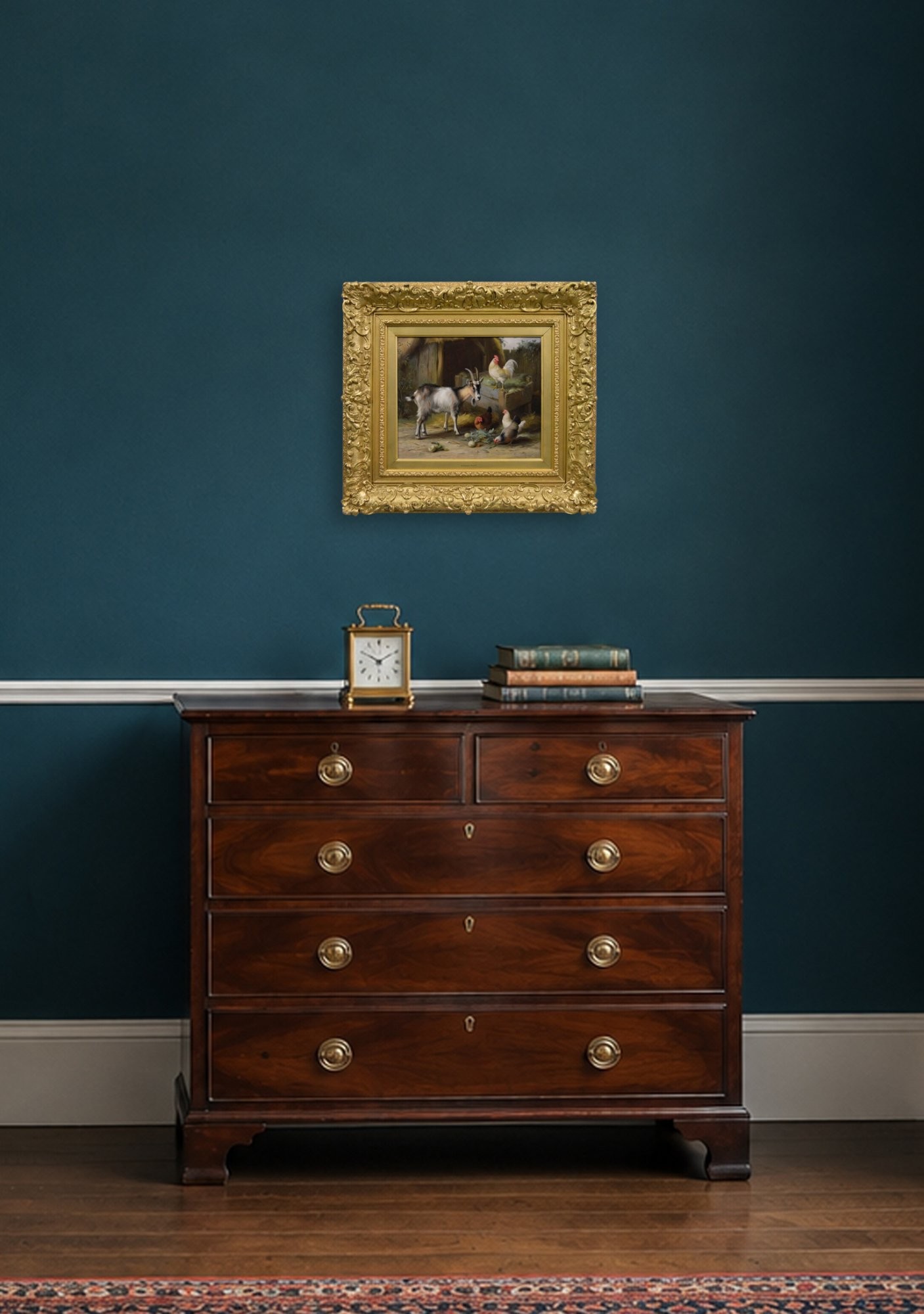
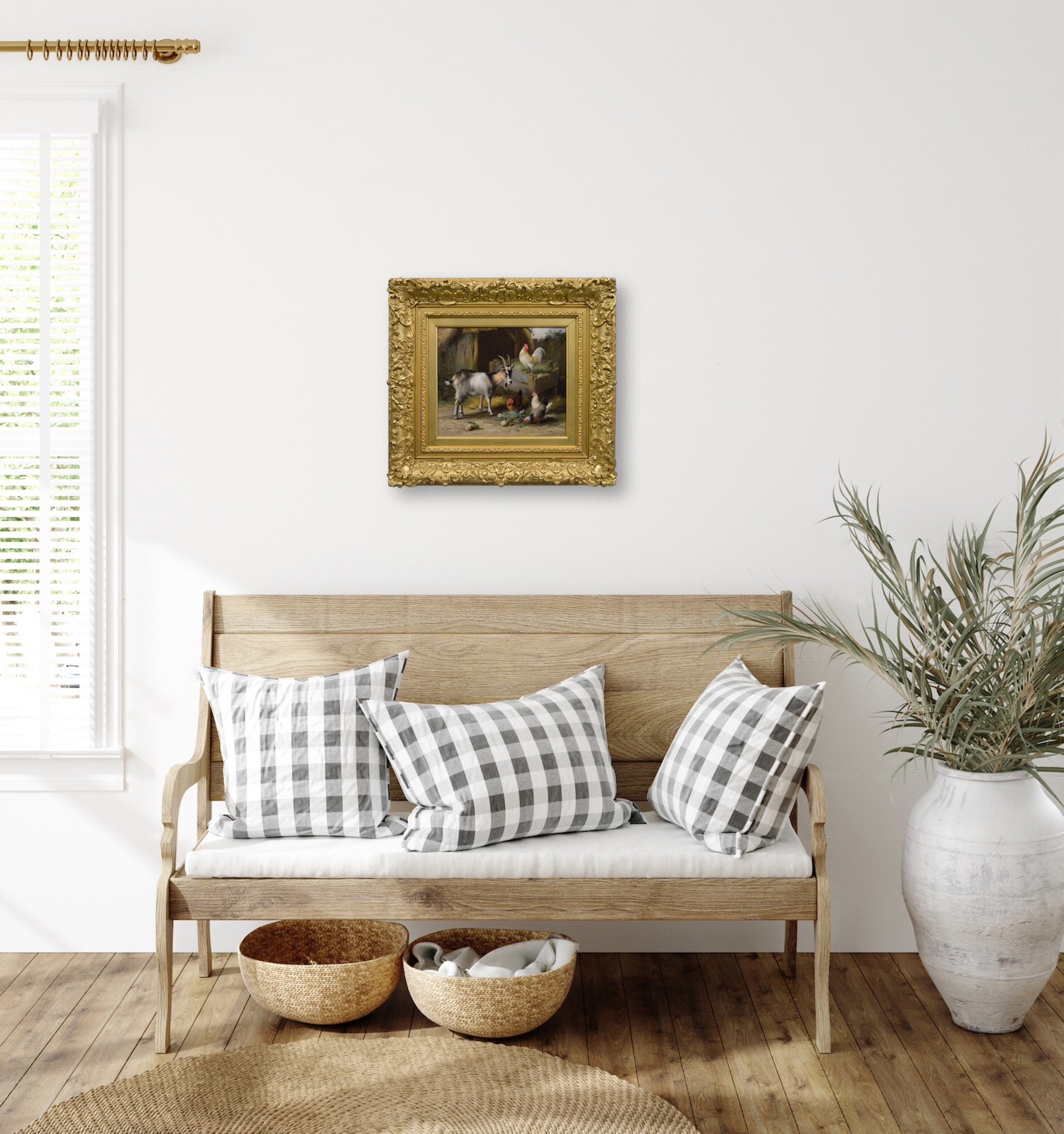
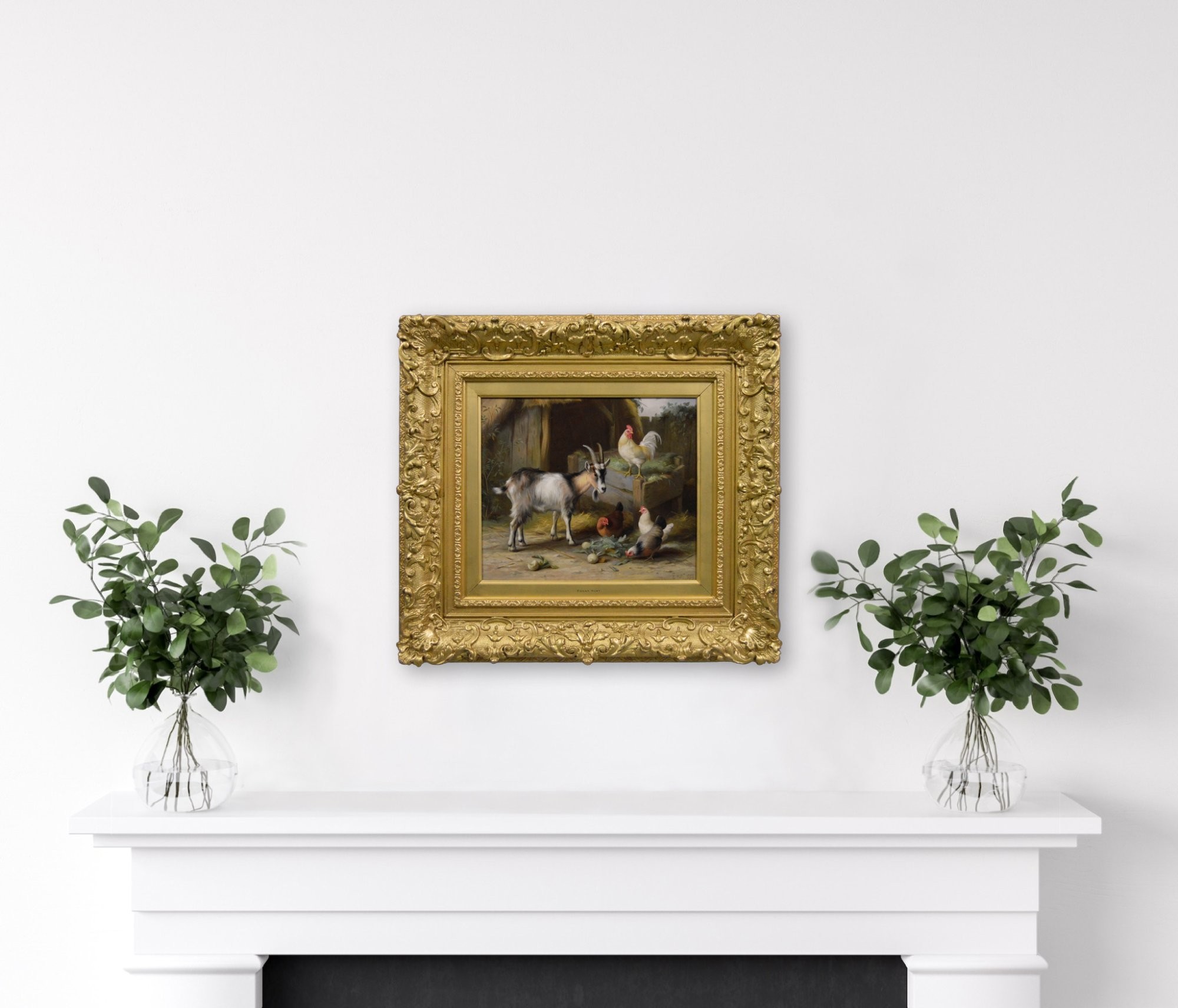
Benton Fine Art has dated this piece to the 1900s.
British, (1876-1955)
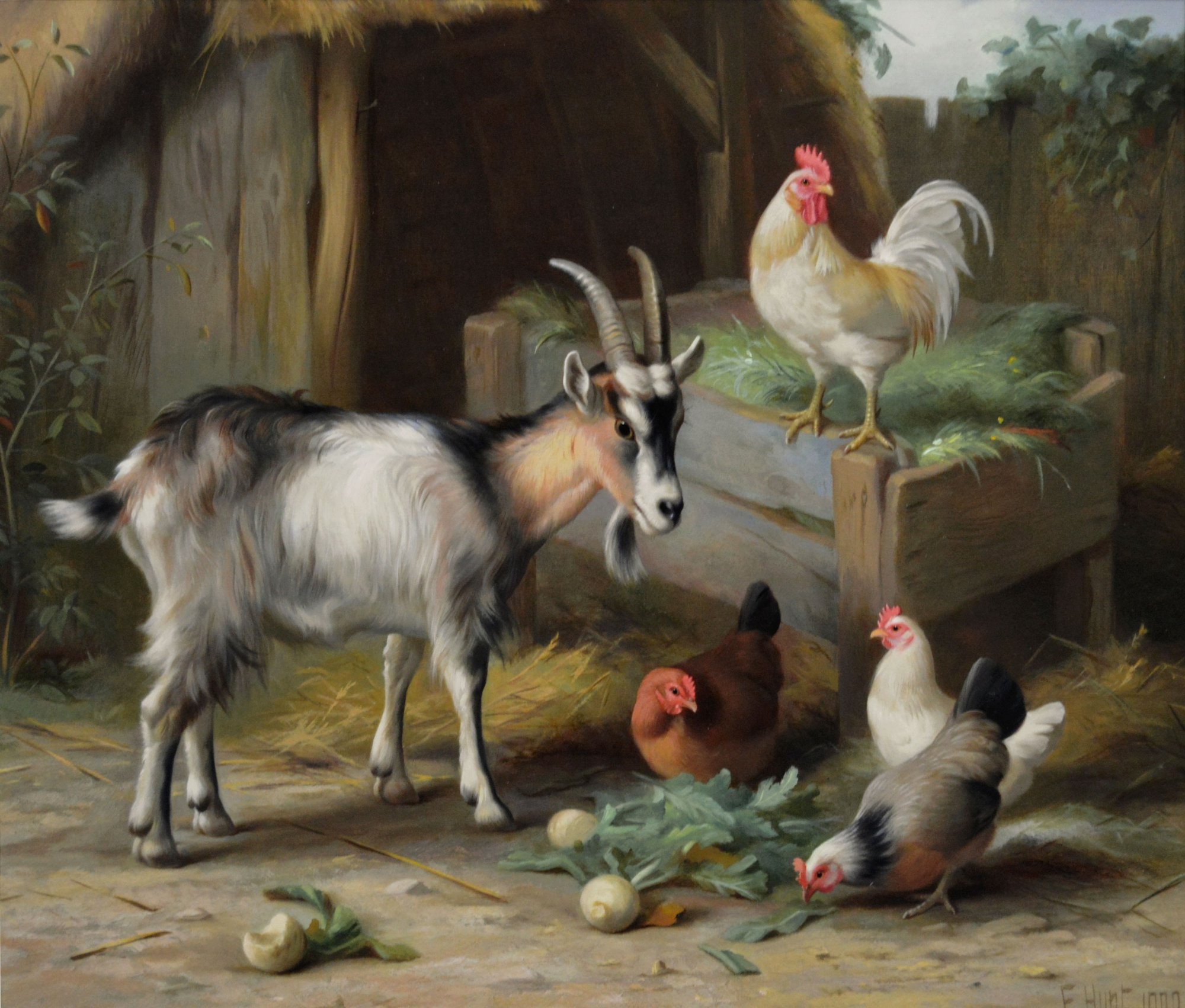
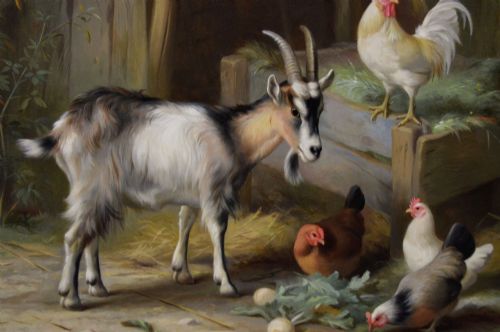
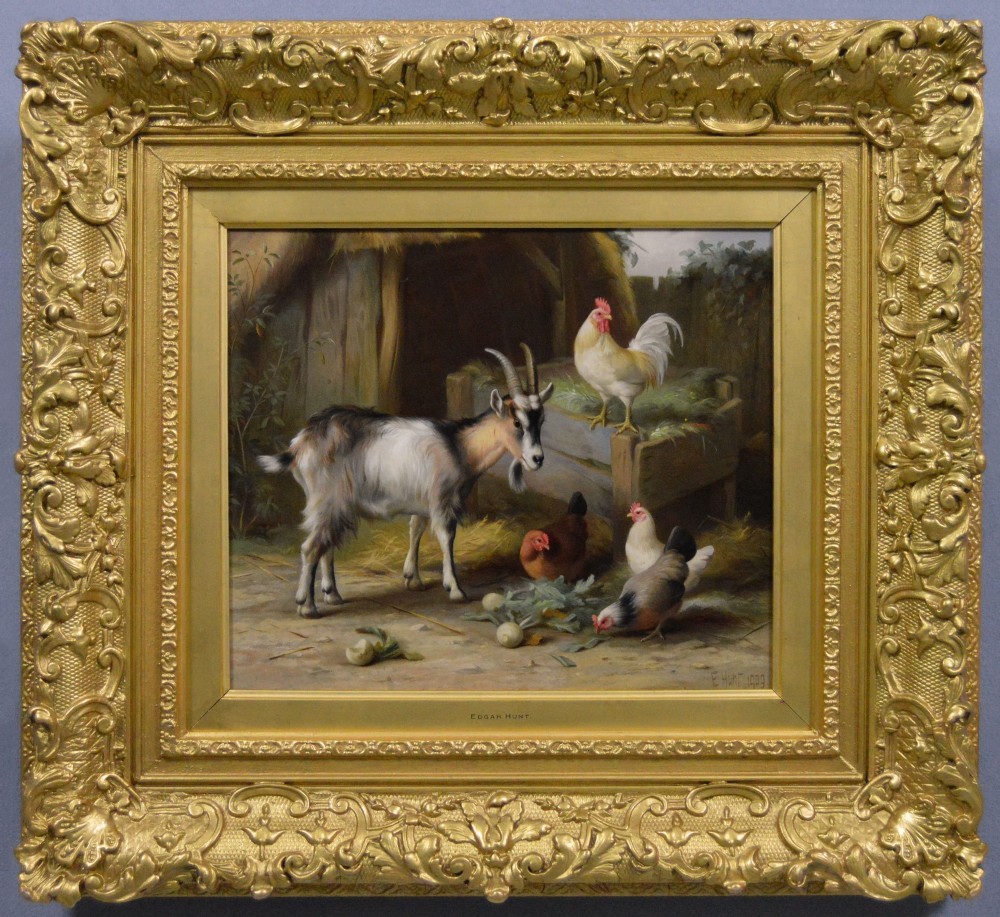
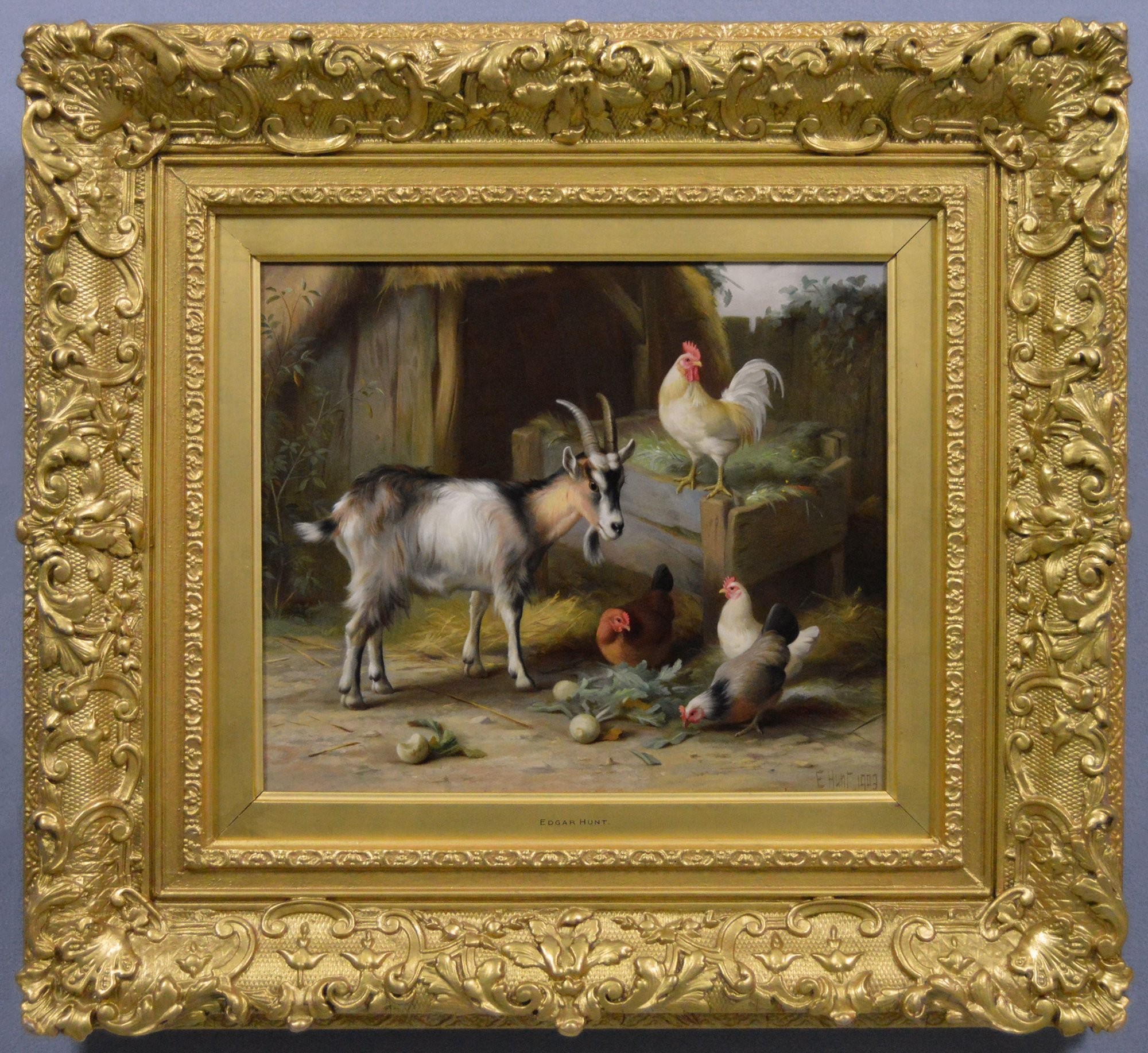
Corner of the Farmyard
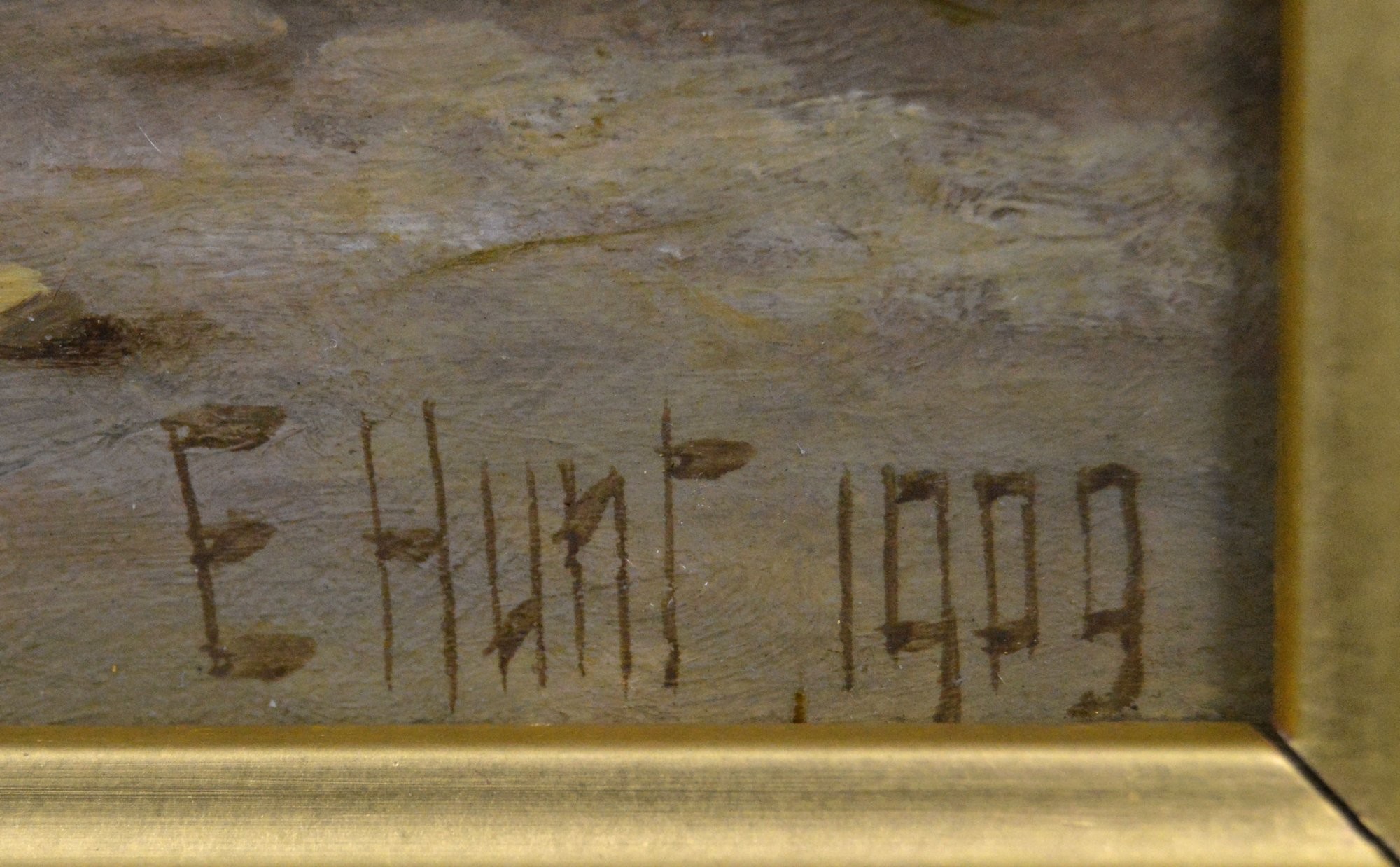
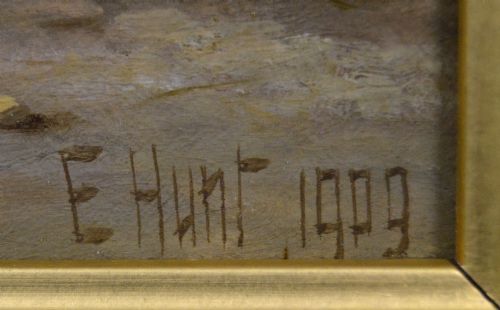
Oil on canvas, signed & dated 1909
Image size: 11.5 inches x 13.5 inches
Size including frame: 22 inches x 24 inches
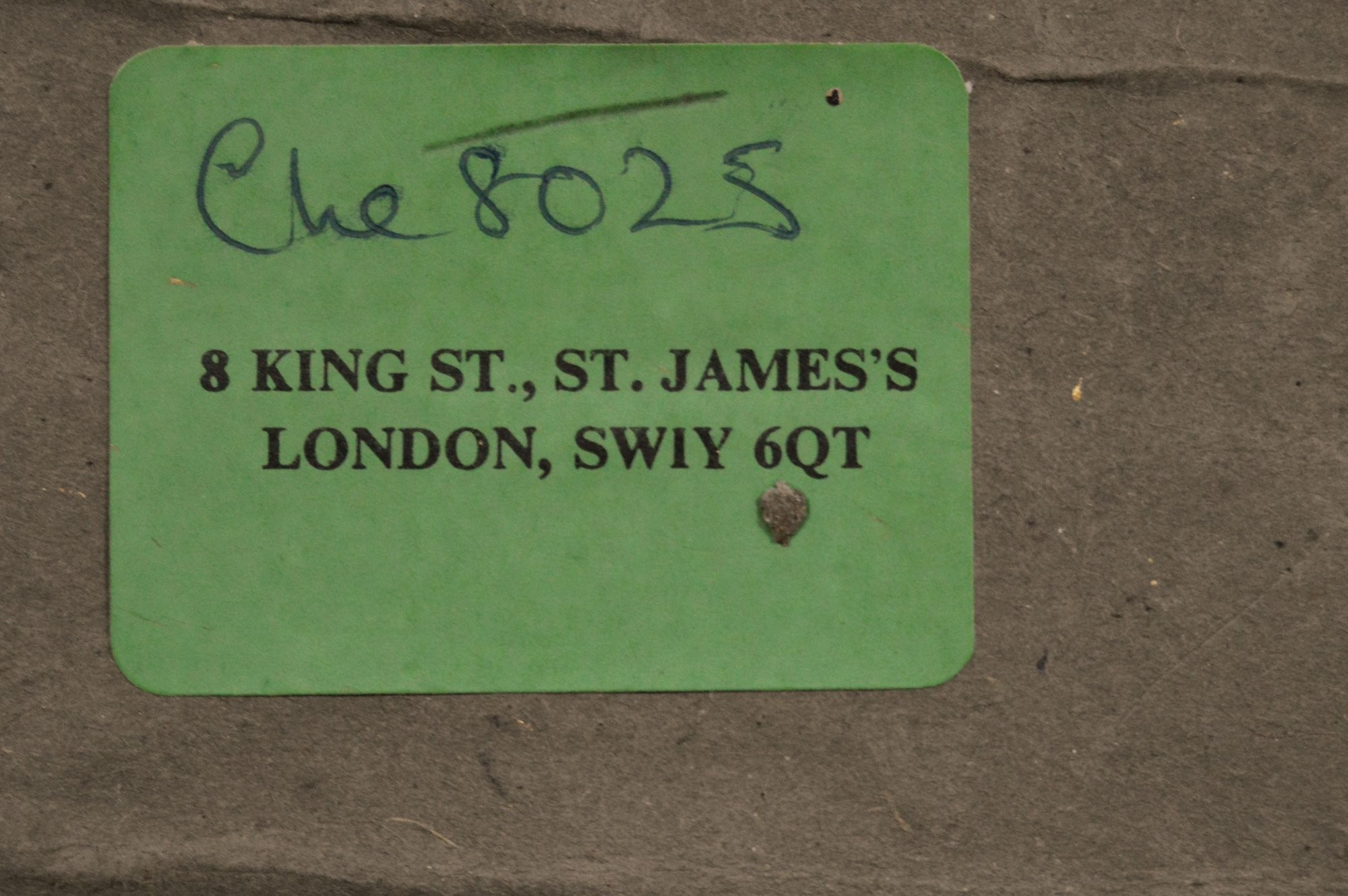
Provenance: Frost & Reed, London; Christie's, King Street, London
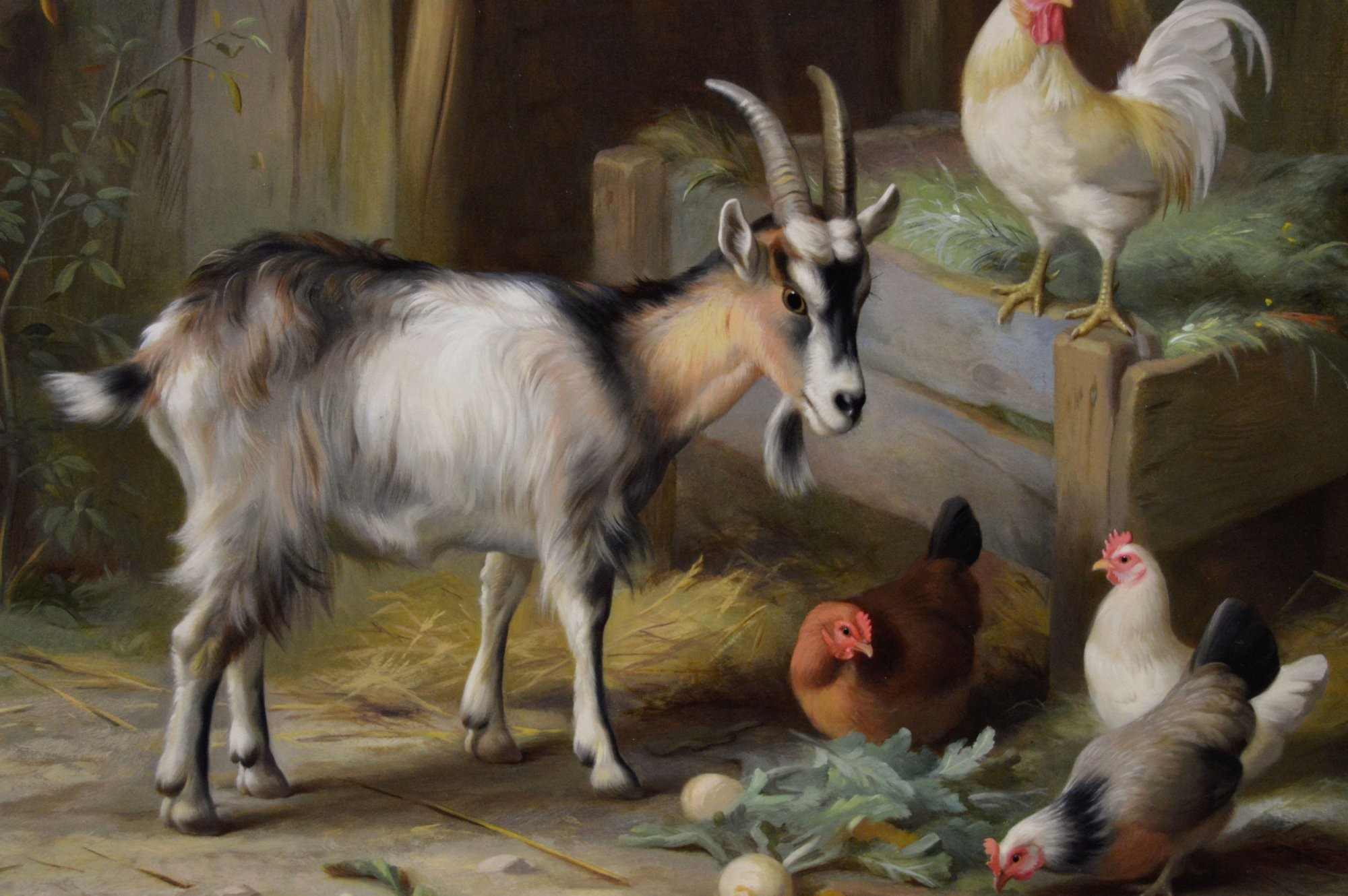
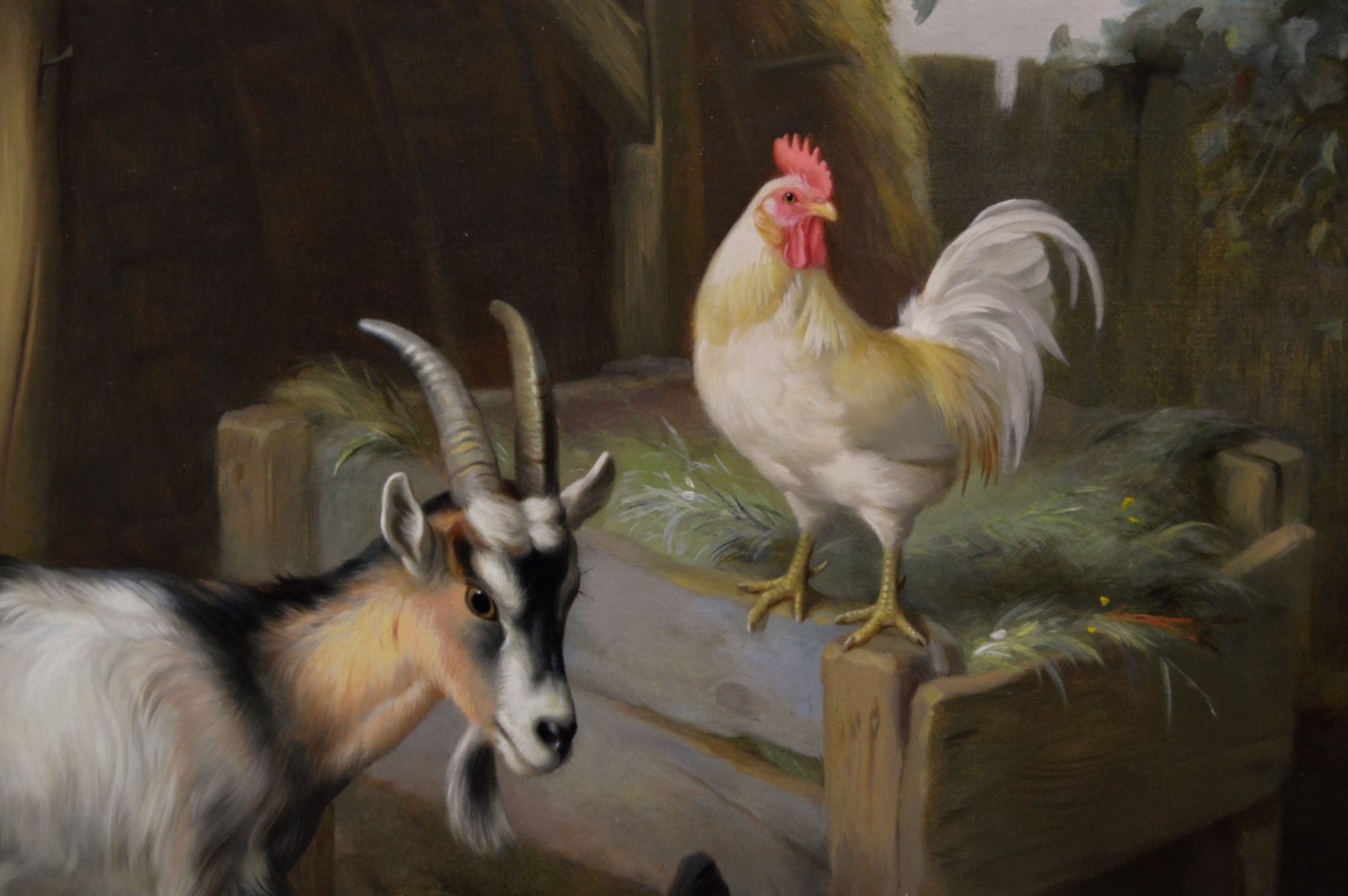
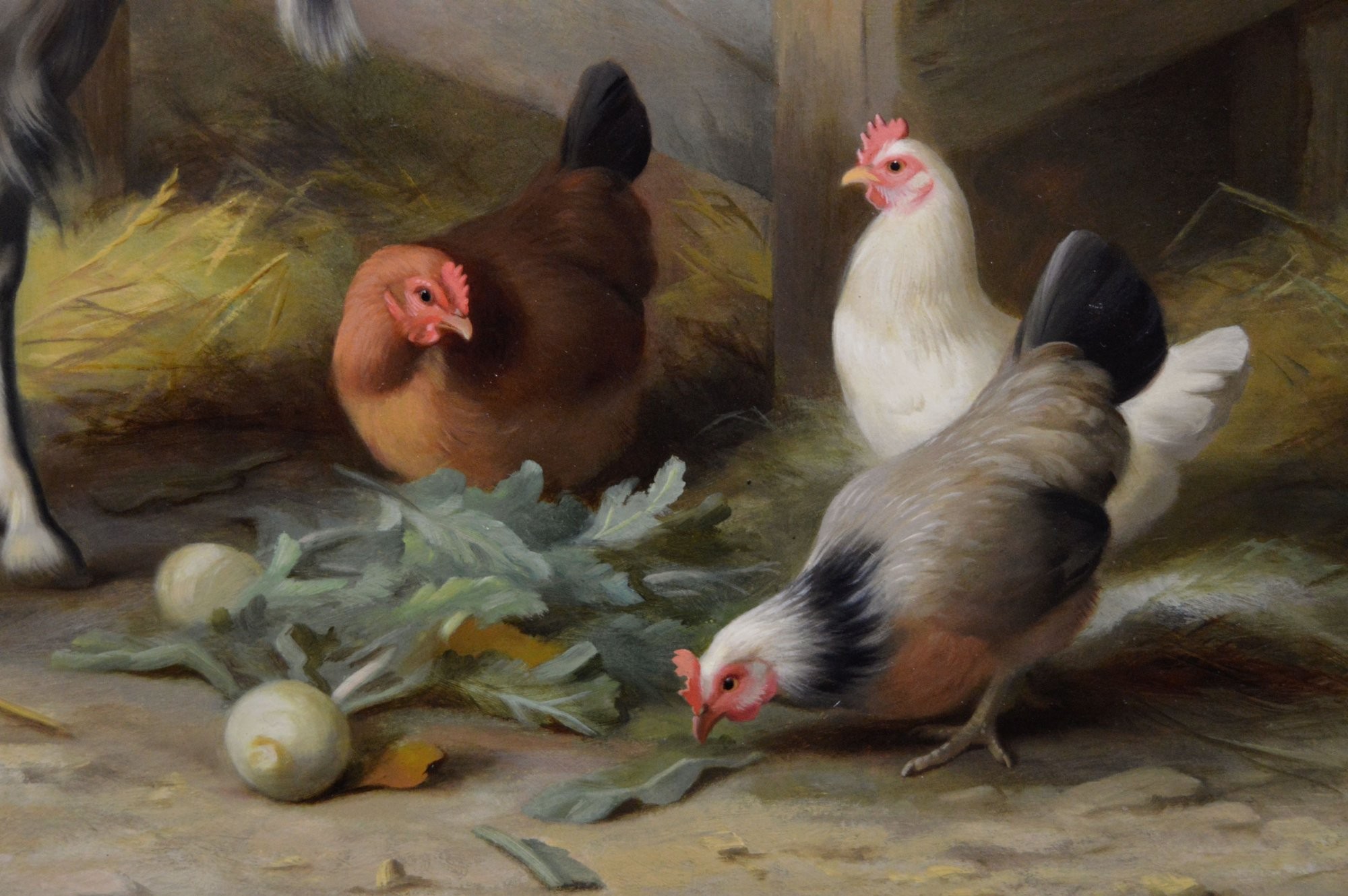
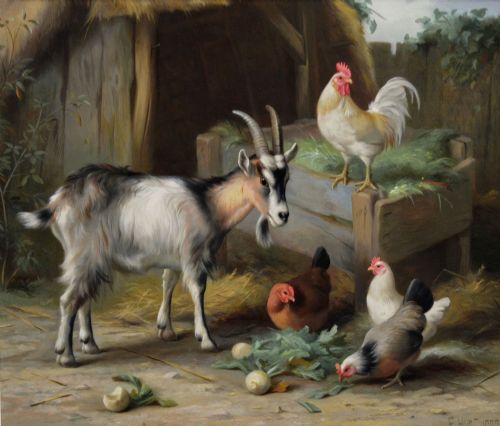
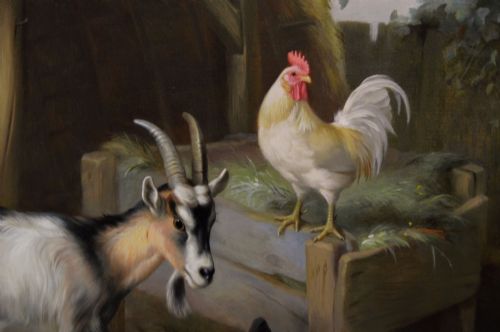
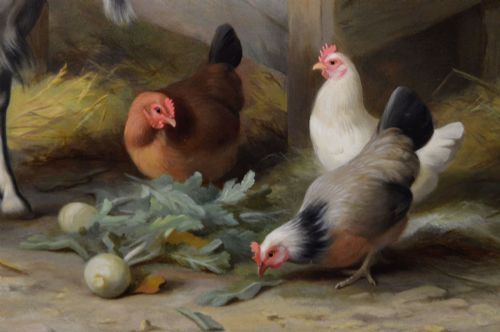
A charming scene of a goat, cockerel and hens in front of a barn by Edgar Hunt.
The goat watches on, ready to claim the bounty for himself.
Edgar Hunt was born in Fulham, London on 10 March 1876 to the genre artist Charles Hunt (1829-1900) and his wife Anne Sarah Kilbee. His brothers Reuben Hunt (1857-1938), Walter Hunt (1860-1941) and Claud Hunt (1863-1948) also inherited their father’s talent and became successful artists. The family lived at 8 Granville Road in Wandsworth where his father kept a studio. Hunt and his brothers were all tutored by Charles and his influence can be seen in their style and subject matter. However, it was his older brother Walter who inspired him to specialise in animal paintings and whilst young, he began sketching farm animals, developing a life-long interest in their care.
On reaching adulthood, Hunt began specialising in highly detailed and finely painted works featuring animals, particularly poultry. His passion for animals led him to working on a farm near Lewes in Sussex, exchanging his labour for the cost of painting materials. Although he often stayed in Sussex, his base was at Granville Road with his family. After the death of his father in 1900, he continued to live with his mother and two brothers, Walter and Claud, at the family home.
At some point, he met the artist John Frederick Herring Jnr, whom he much admired and the two became great friends. Herring was an enormous influence on his life both artistically and socially. When Herring died in 1907, Hunt was distraught and became a recluse for a few years. In 1910, he married Theodore Wyatt and the couple moved to Inglewood on Record Road in Emsworth near Portsmouth. Most of his paintings were based upon vivid and careful drawings of animals made from life and his observations were enhanced by a meticulous attention to detail and finish. He is said to have used a magnifying glass for some of the most intricate details. Aside from a few facts, very little is known of his private life and he rarely exhibited in the London art world. He did however, exhibit eleven animal scenes at the Royal Society of Artists, Birmingham and ‘Feathered Friends’ was shown at the Walker Art Gallery, Liverpool.
Hunt continued living in the Portsmouth area until his death on 29 May, 1955. He remains one of the most popular animal artists of his era. His work is represented in a number of public collections including the Dover Museum, Low Parks Museum, Sunderland Museum, Whitaker and Wolverhampton Art Gallery.
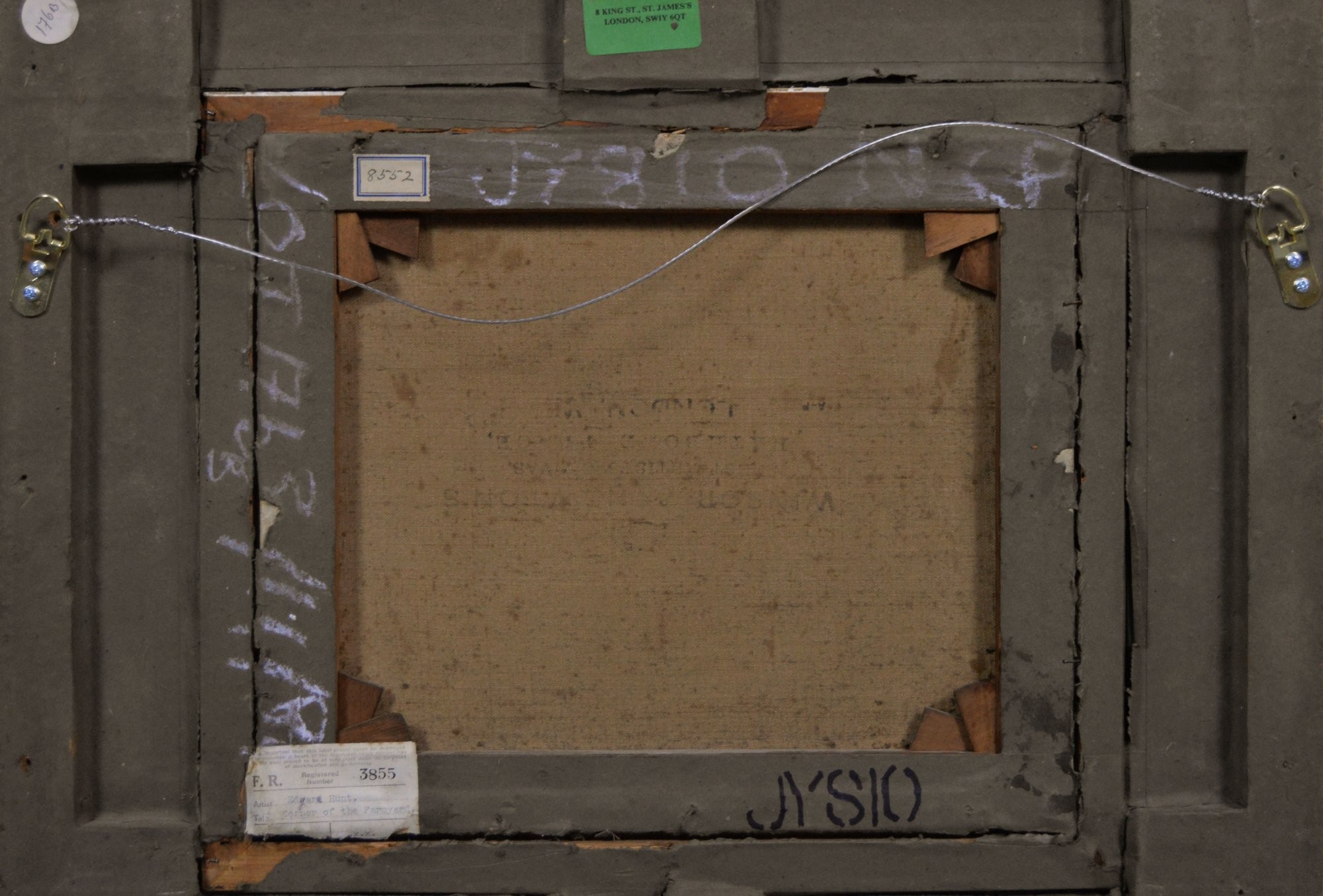
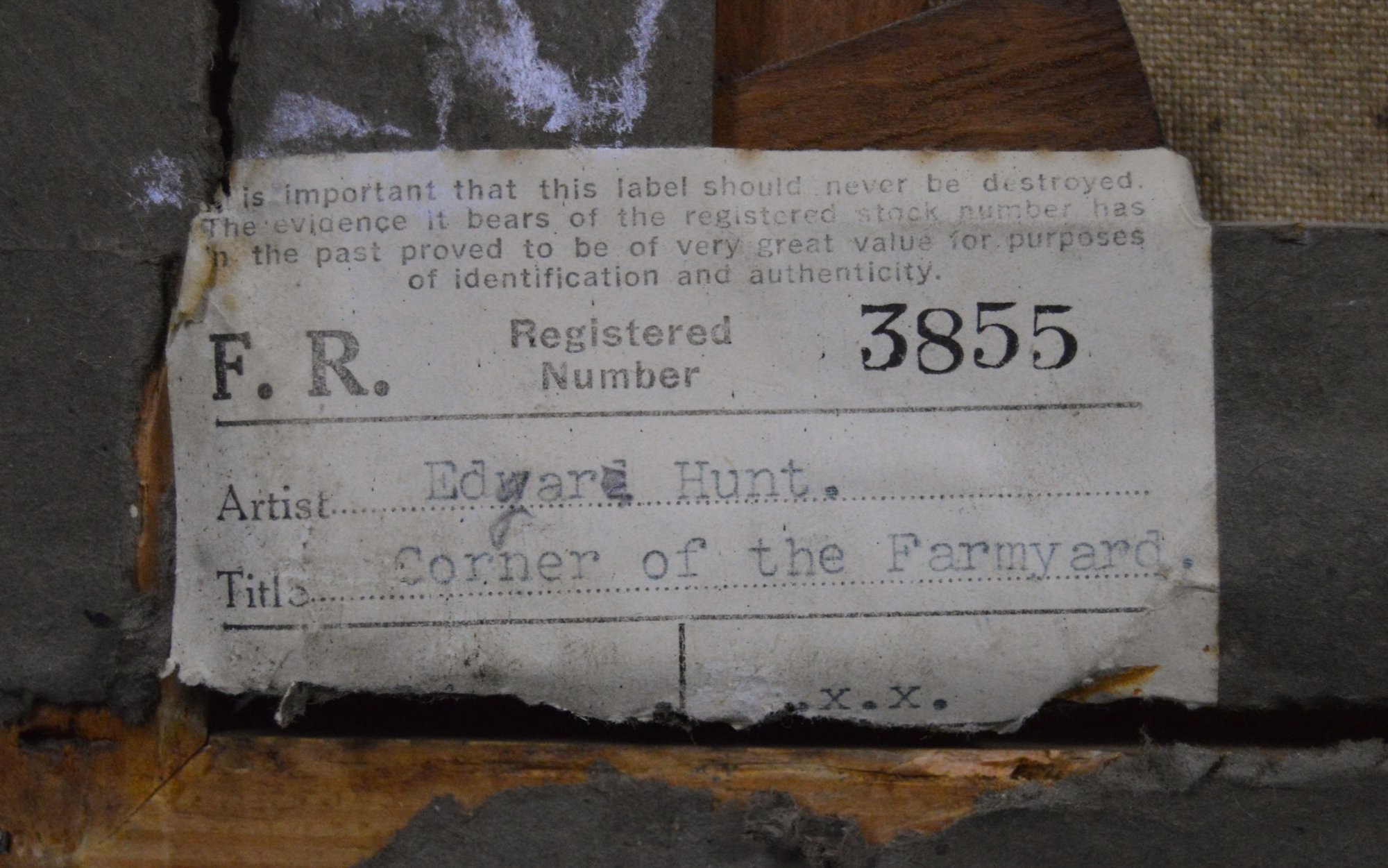
Presentation: The work is housed in its original gilt frame which is in excellent condition. The reverse bears a label for Frost & Reed, a well-known fine Art Gallery founded in Bristol in 1808 by William Hill. The business was bought by John Frost in 1859 who ran it until his death in 1875. His nephew Walter Frost took over the business and in 1881 brought in William Reed as a partner. They opened a branch in London in 1908 at Duke Street, St James’s, later relocating to 26c Kings Street in 1927. After the building was damaged by bombing in 1943 they moved to 41, New Bond Street. From the turn of the millennium they were based in King Street, but by 2010, the business had closed.
Condition: As with all of our original antique oil paintings, this work is offered in ready to hang gallery condition, having been professionally cleaned, restored and revarnished.
© Benton Fine Art
Benton Fine Art has dated this piece to the 1900s.
Specialists in 19th & early 20th century original oil paintings by listed artists
You can view the stock and full dealer information on the Benton Fine Art Profile Page
Benton Fine Art is a registered member of LAPADA BADA CINOA
Animal Oil Painting of a Goat, Cockerel & Hens in Front of a Barn by Edgar Hunt