


A 2026 Guide by Sellingantiques

Antique English Porcelain Jug and Bowl, 1920
Priced at £395 from Rebecca Sarah Antiques
Hard-paste production started in China long before European factories caught on.
Look at eighteenth-century examples to see the shift from imported Asian wares to domestic British and Continental output.
Most early antique porcelain jugs were part of larger tea or coffee services rather than standalone items.
Often developed in France and England to replicate the translucent qualities of Eastern imports through soft-paste formulas.
Meissen led the way in Europe from 1710, producing hard-paste jugs with painted harbour scenes or botanical subjects.
Worcester focused heavily on steatite-infused soft paste between 1751 and the late eighteenth century. Their early milk jugs often survive.
Identify Sèvres soft-paste wares by their ground colours and factory marks, though nineteenth-century copies complicate matters.
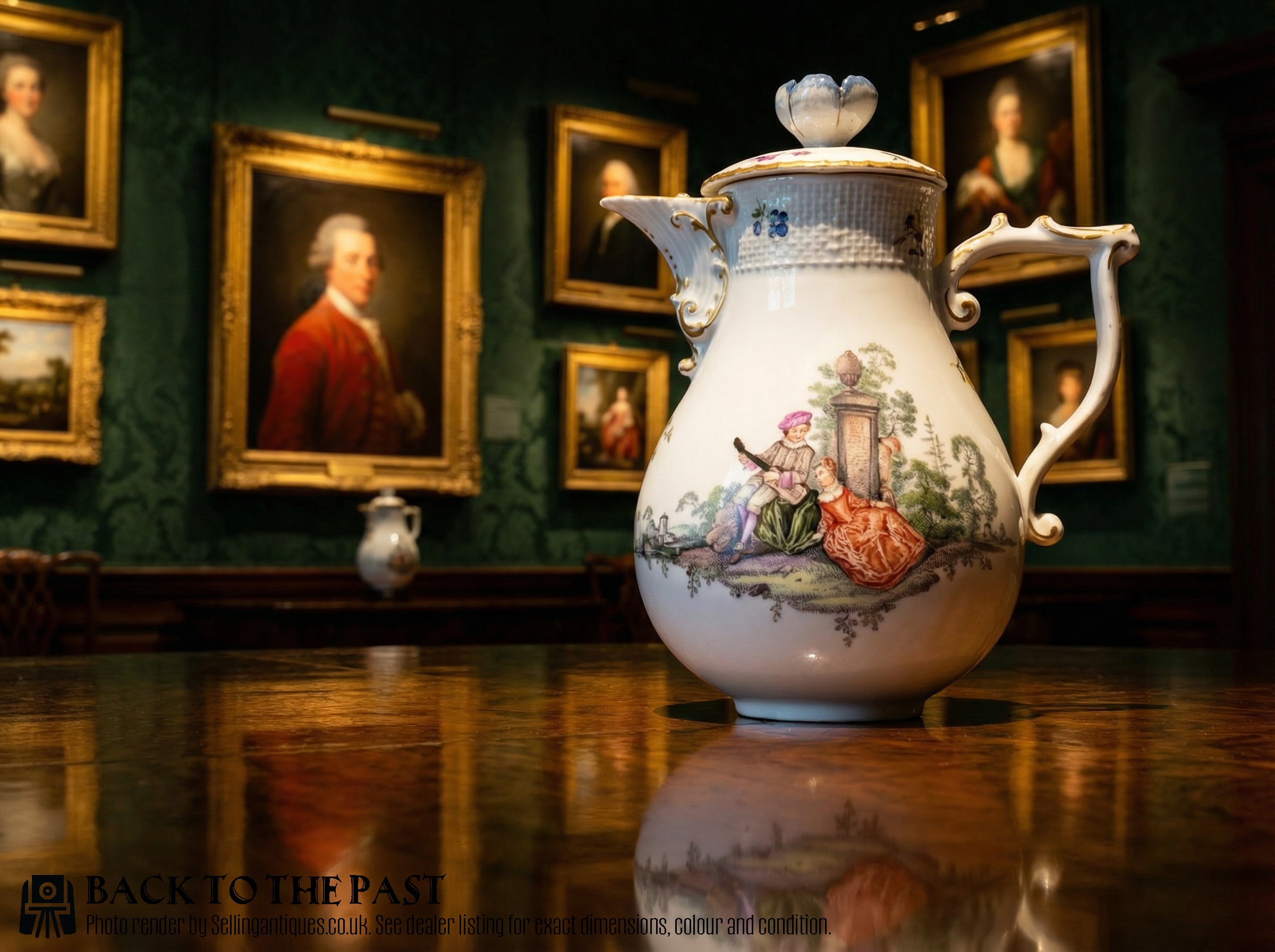
Meissen Milk Jug and Cover, Circa 1760, 1750
Priced at £2,500 from Treaders Collectables
The 2026 retail price guide for Antique Porcelain Jugs is drawn from a proprietary archive of over 1.1 million retail prices indexed by Sellingantiques since 2003. This guide relies exclusively on their own internal data; no external sources or auction records are used.
Analysing nearly 25 years of UK antique market history alongside current retail values, the data indicates that typical UK retail prices for Antique Porcelain Jugs range between £200 and £900. Entry-level prices generally fall under £200 and premium examples upwards of £900.
Pear-shaped bodies dominate the earlier eighteenth-century production across many European factories.
Notice the handle terminals. Some are simple applied loops, while others have moulded acanthus leaf attachments where they join the body.
A prominent pouring lip, sometimes called a sparrow beak, features heavily on smaller cream jugs from this period.
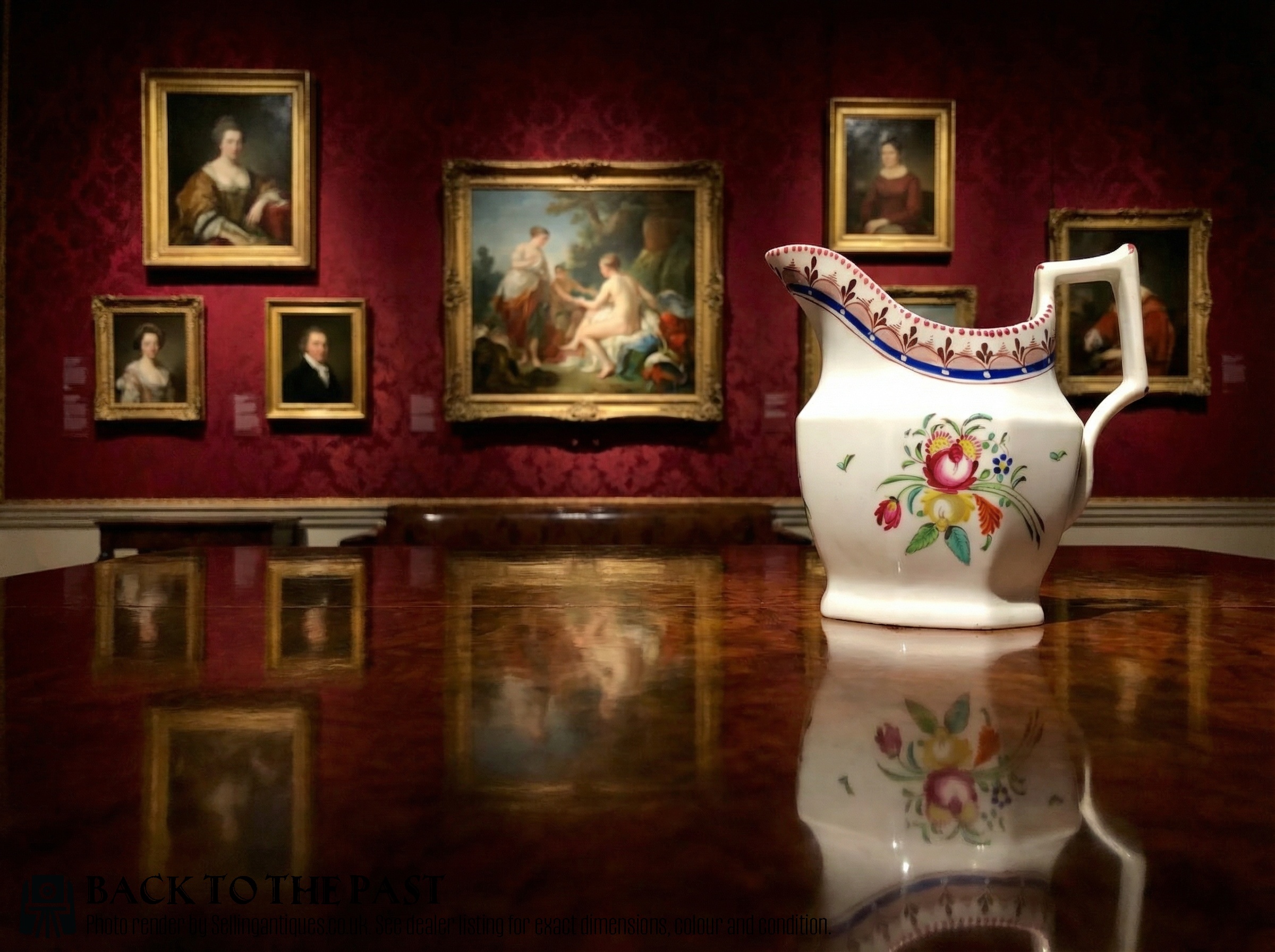
A Rare 18th Century Liverpool/ Herculaneum Porcelain Cream Jug, 18th Century
Priced at £325 from Robert Belcher Antiques
Throwing on a wheel was standard for simple round bodies, later finished on a lathe for a smooth profile.
Slip casting became common when factories wanted complex shapes. Liquid clay was poured into plaster moulds to dry.
Handles were always formed separately. The maker scored the attachment points and applied liquid slip to weld the parts together before firing.
"Small holes inside the body where the handle joins were sometimes pierced to vent air during firing."
"Painters occasionally used the factory mark as part of the exterior decoration rather than hiding it underneath."
"Many handle shapes were adapted directly from contemporary silver designs of the period."
Based on almost 25 years of Sellingantiques UK antique market data, Antique Porcelain Jugs appeared 405 times (out of 1,100,000 antiques) which gives it a rarity score of 92/100.
This score measures scarcity within the Sellingantiques archive only and is not a survey of the entire antiques market, so these statistics may not be indicative of the general availability of Antique Porcelain Jugs elsewhere.
That's the foot rim. When a jug goes into the kiln, any glaze on the resting surface melts and fuses the piece to the shelf.
Factories wiped the glaze off this lower edge before firing. On hard-paste examples, this exposed clay feels smooth.
Elaborate handle replacements were a common nineteenth-century fix for dropped vessels. You'll often see silver or brass mounts, but sometimes a restorer adapted a handle from a broken piece.
If the paste and the painted decoration clash, it's a marriage of two separate items. It kept a useful object in service rather than throwing it away.
Tea was a costly luxury in the eighteenth century. Vessels made to serve it were scaled down to match the small teapots of the time.
Services grew larger as imports increased. Later jugs hold far more volume.
You're looking at a transfer-printed design. Makers applied a tissue paper print from an engraved copper plate directly to the ceramic body before glazing it.
Blurring happens when the glaze is applied over the print and melts in the kiln. It's a regular feature on early underglaze printed wares.
Please note: This Antique Porcelain Jugs guide and its associated pricing data are provided for general informational purposes only. It does not constitute formal financial, investment, or appraisal advice and should not be relied upon as the sole basis for any commercial activity, purchasing, or sales decisions. Sellingantiques.co.uk accepts no liability for any actions taken in reliance on this information. Always consult with a qualified professional or independent appraiser.
