

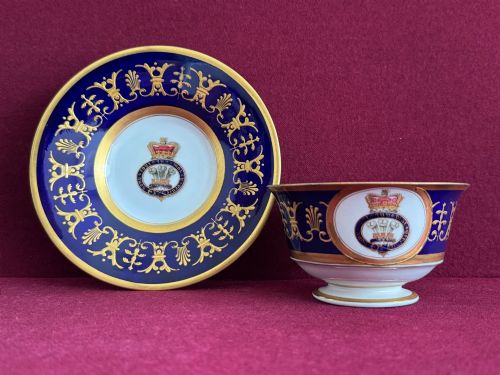
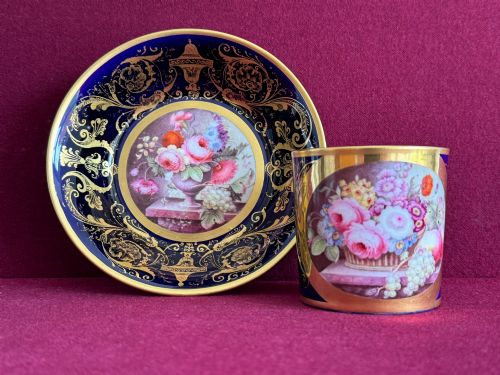
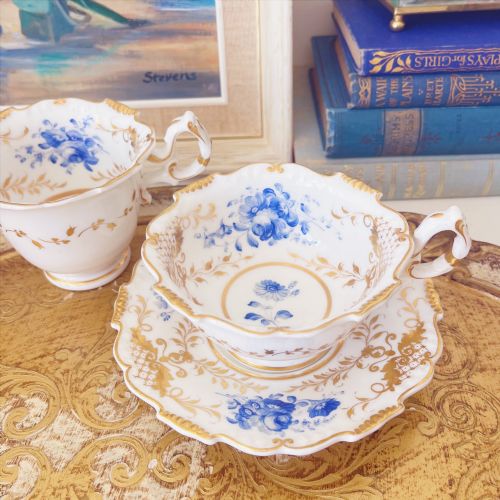
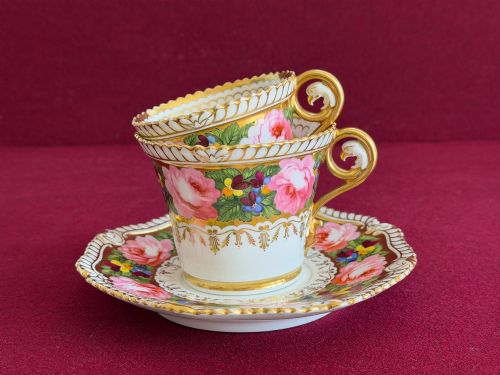
Antique Coffee Cups
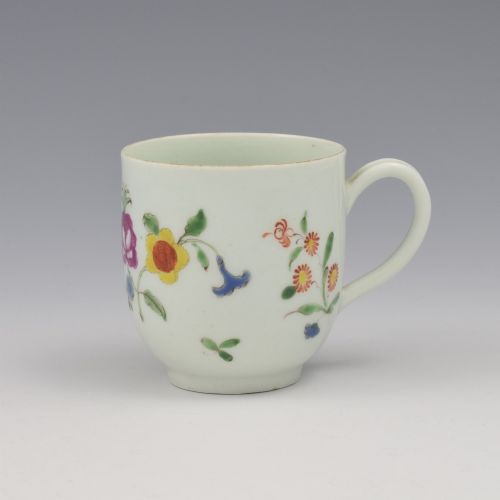
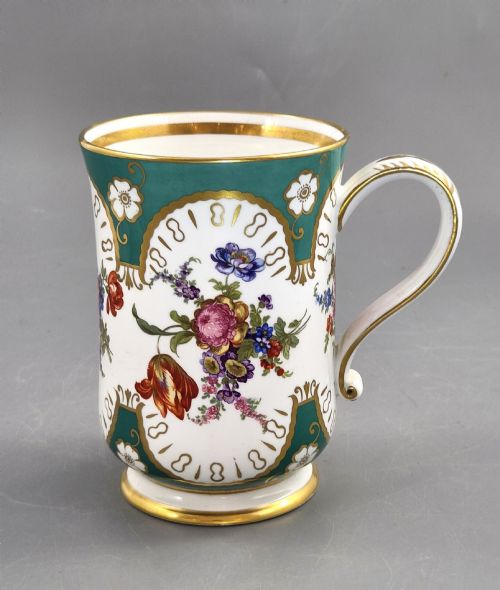
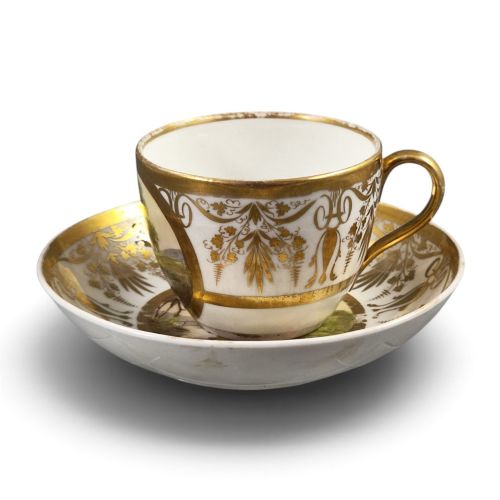
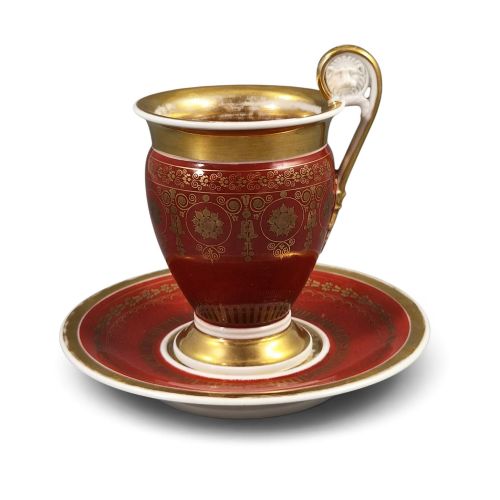
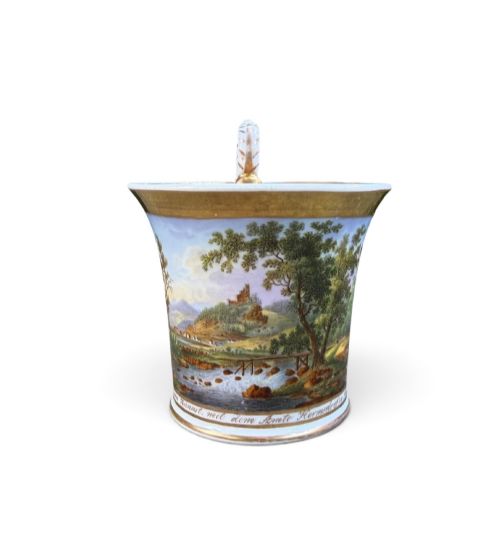
Small porcelain cups made for coffee, straight-sided cans or flared cups, made as part of larger tea and coffee services and now sold mostly one at a time with a saucer.
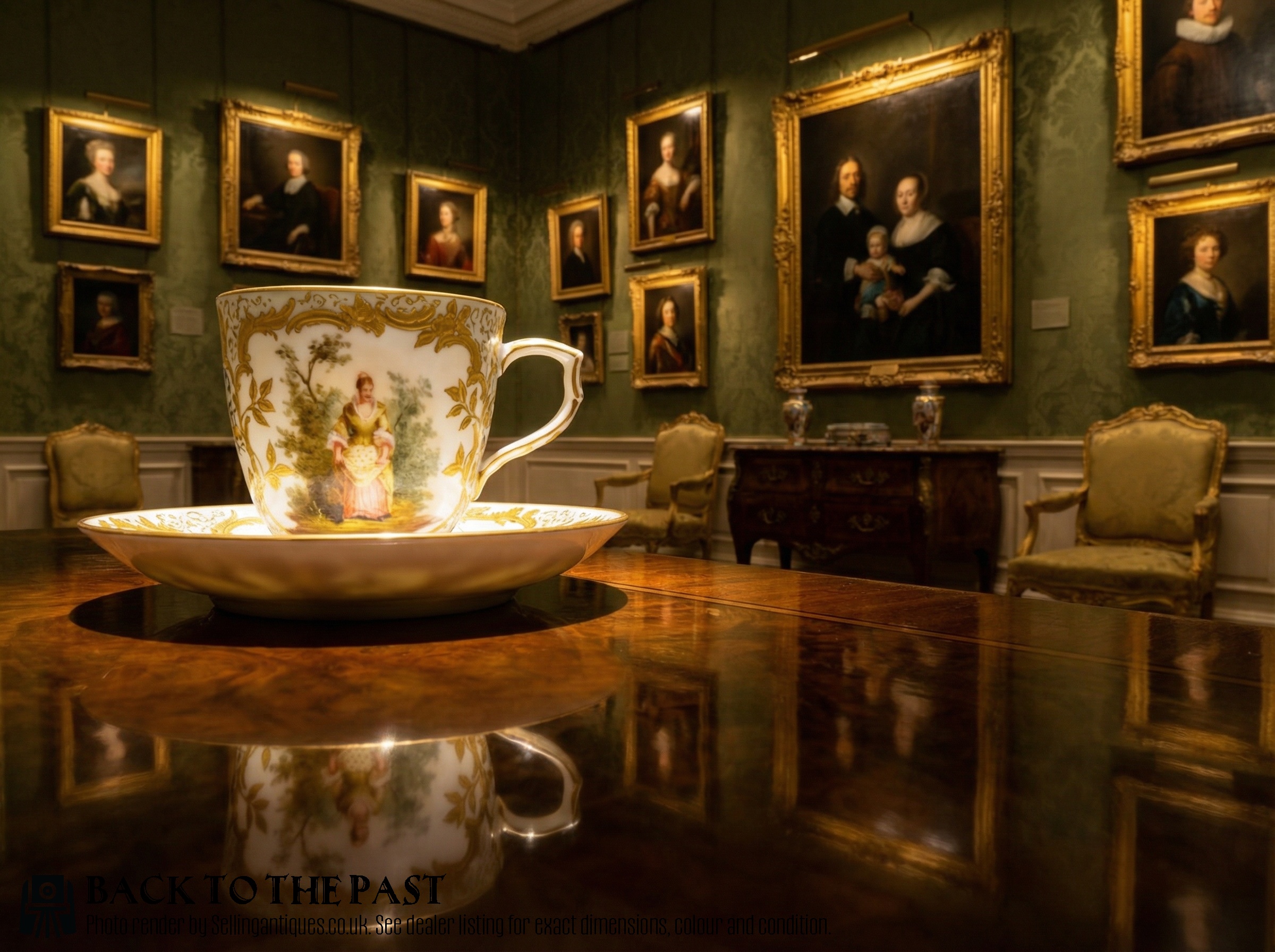
Antique Coffee Cups
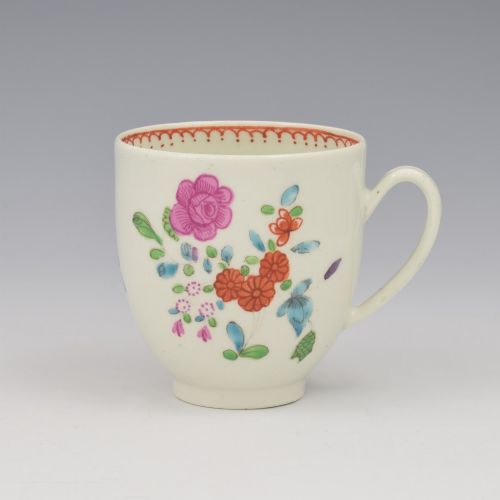
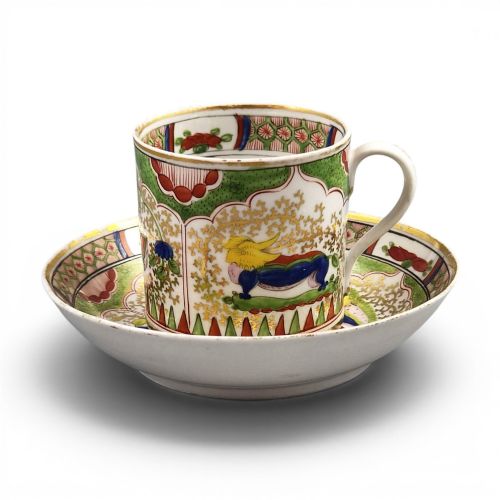
Almost always English porcelain, and almost always small. Porcelain is named in over half the titles on Sellingantiques, and a saucer comes with the cup in a similar proportion. Titles use two body shapes: the straight-sided, flat-based "coffee can" and the flared "coffee cup". Demitasse cups and a few cabinet cups fill in the rest.
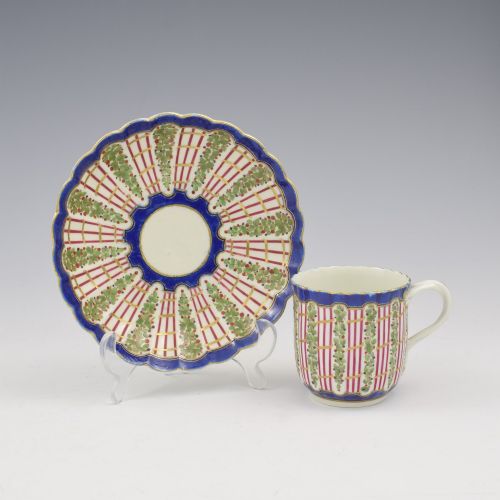
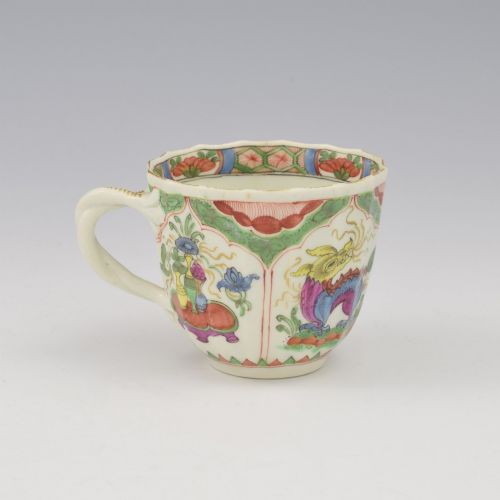
The version you'll meet most often is a Worcester cup or can with its saucer, 18th or early 19th century. Worcester appears in 44 of every hundred titles, and "First Period" or "Dr Wall" in a fifth. Named Worcester patterns recur: Fisherman, Kempthorne, Candle Fence, Staghunt, Hop Trellis, Compagnie des Indes, Dragon in Compartments.
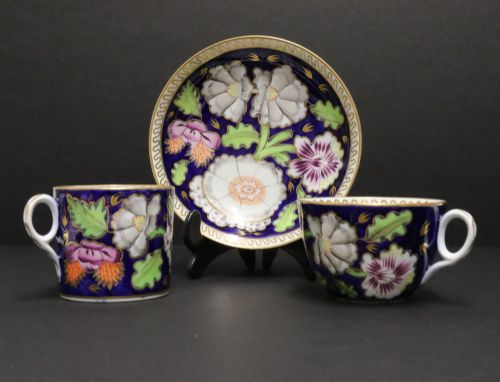
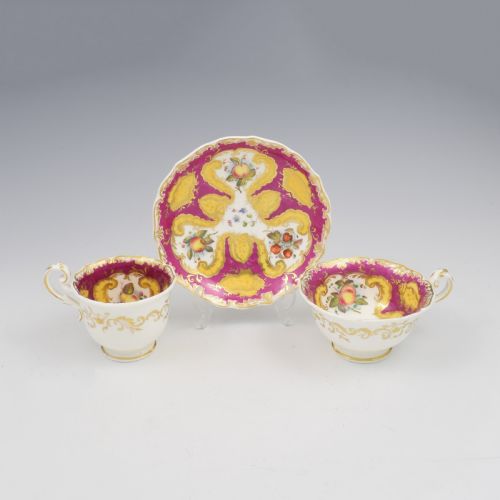
Coffee reached European tables in the 17th century, and dedicated small cups followed once European porcelain was being made in the 18th. They were made as part of full services, which is why survivors come as single cups, cup-and-saucer pairs, or trios of teacup, coffee cup and one shared saucer. Trios account for nine titles.
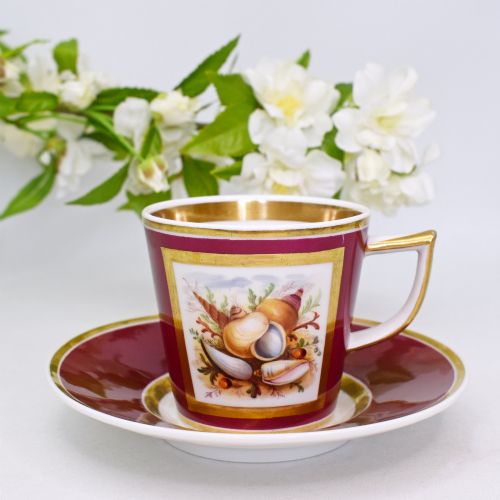
Beyond Worcester, two other strands turn up throughout. Georgian and Regency factory cups quote a pattern number in the title, from Coalport, Derby, Spode, Ridgway, H & R Daniel and Rockingham. Then there are 20th-century Royal Worcester cups with painted fruit, Imari and Japan patterns, and a persistent minority of Continental porcelain: KPM Berlin, Meissen, Sèvres, Old Paris, Vienna, Doccia.
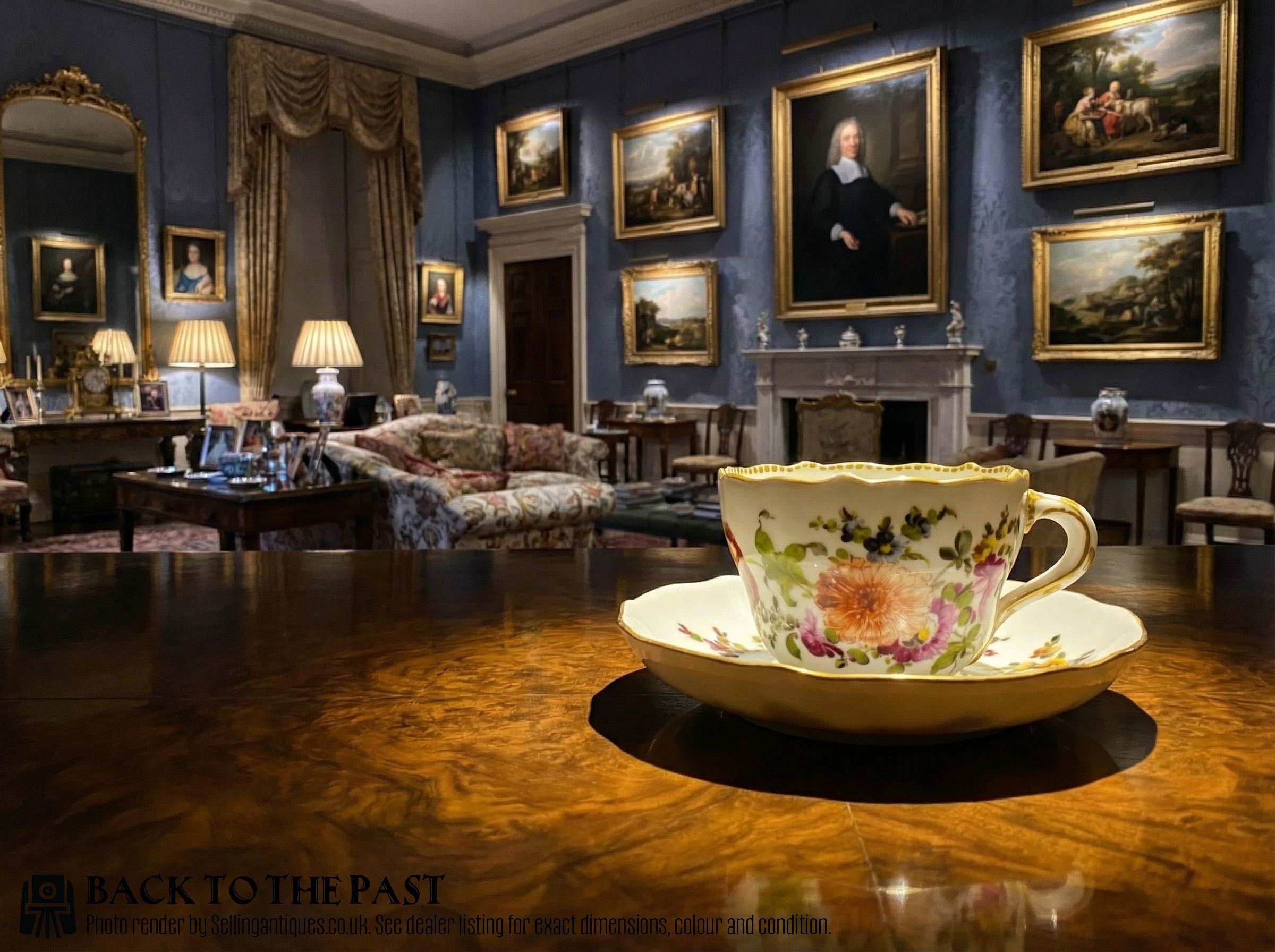
The Range
Identification does most of the work. Cups carrying a specific named pattern, Waiting Chinaman, Warbler, Goose, Neuzierat, Hop Trellis, sit in the upper reaches, while listings that read simply "miniature cup and saucer" or "pair of 19th century teacups and saucers" cluster at the bottom. A quoted pattern number does the same job for the Georgian and Regency factories.
Date and the precision of it pull in the same direction. Cups titled c.1752-1754, c.1754-55 and c.1757-60 hold the upper part of the range; broad labels like "19th Century" or "Victorian" sit low, and two thirds of the period entries on Sellingantiques are labels of that kind rather than a year.
Painting and completeness separate the top from the middle. Signed or attributed hand painting, including titles naming a painted-fruit hand, ranks above white glazed and undecorated moulded cups. Single cups fill the lower and middle ground, trios sit higher, and the highest-priced pieces are sets of six: Royal Worcester fruit-painted cups and cans, and a Sèvres set of 1846.
Antique Coffee Cups Retail Price Guide 2026
Typical UK retail prices for coffee cups, calculated from the Sellingantiques database of over a million retail prices indexed since 2003. This retail price guide relies exclusively on Sellingantiques data; no external sources or auction records are used, so the figures do not describe the wider market.
The most expensive antique coffee cups ever sold on Sellingantiques were a Royal Worcester fruit decorated set of coffee cans and saucers, in April 2018.
The Antique Coffee Cups Glossary
- Coffee can
- A straight-sided, flat-based cup for coffee, cylindrical rather than flared. One of the two shapes named in titles.
- Coffee cup
- The flared or bell-shaped alternative to the can. Both words are used for pieces in this category.
- Trio
- A teacup, a coffee cup and one saucer shared between them, sold as a unit. Nine titles in the archive.
- First Period
- The earliest Worcester production, also written "Dr Wall". It appears in a fifth of titles here.
- Pattern number
- The factory's own decoration number, quoted in nearly a fifth of titles: Spode 2215, Ridgway 2/835, H & R Daniel 4058 and a long run of others.
- Cabinet cup
- Made for display rather than use, usually elaborately painted or gilded. Continental examples in particular are sold this way.
Antique Coffee Cups: Frequently Asked Questions
What is the difference between a can and a cup?
A can is straight-sided with a flat base, cylindrical all the way up. A cup flares out, sometimes to a bell shape.
Both were made as parts of the same tea and coffee services, and both terms turn up in titles across this category.
Why are so many sold as single cups?
They started life in full tea and coffee services. Services broke up over two centuries, and single cups, cup-and-saucer pairs and trios are what survived.
Single cups fill the lower and middle of the range on Sellingantiques. Sets of six are the exception, and they hold the top.
Which factory turns up most often?
Worcester, by a wide margin. The name is in 44 of every hundred titles, with "First Period" or "Dr Wall" in a fifth of them.
After that come the Georgian and Regency factories whose cups are listed with pattern numbers, then Royal Worcester painted-fruit pieces of the 1920s to 1960s.
How old are these cups?
The dealers' own dating leans hard on the 18th and early 19th centuries: 18th Century, Georgian and Regency together account for most of the dated entries.
The earliest are Worcester cups given as c.1752-1754 and c.1754-55, within the first years of English porcelain. A 20th-century tail runs through the 1920s and 1930s to Royal Worcester fruit cups dated 1960.
Do any come with silver mounts?
Occasionally rather than as a rule. A small group of cans and saucers are fitted with sterling silver holders.
That group includes an American set of holders with saucers, and a George Jones Crescent can sitting in a Walker & Hall holder.
Is Continental porcelain found in this category?
Yes, as a small and persistent minority, roughly one in eight. KPM Berlin and Meissen account for a few cups each.
Single examples of Doccia, Vienna, Sèvres and Old Paris also appear, along with Limoges. Continental cabinet cups show up disproportionately in the top quarter of the range.