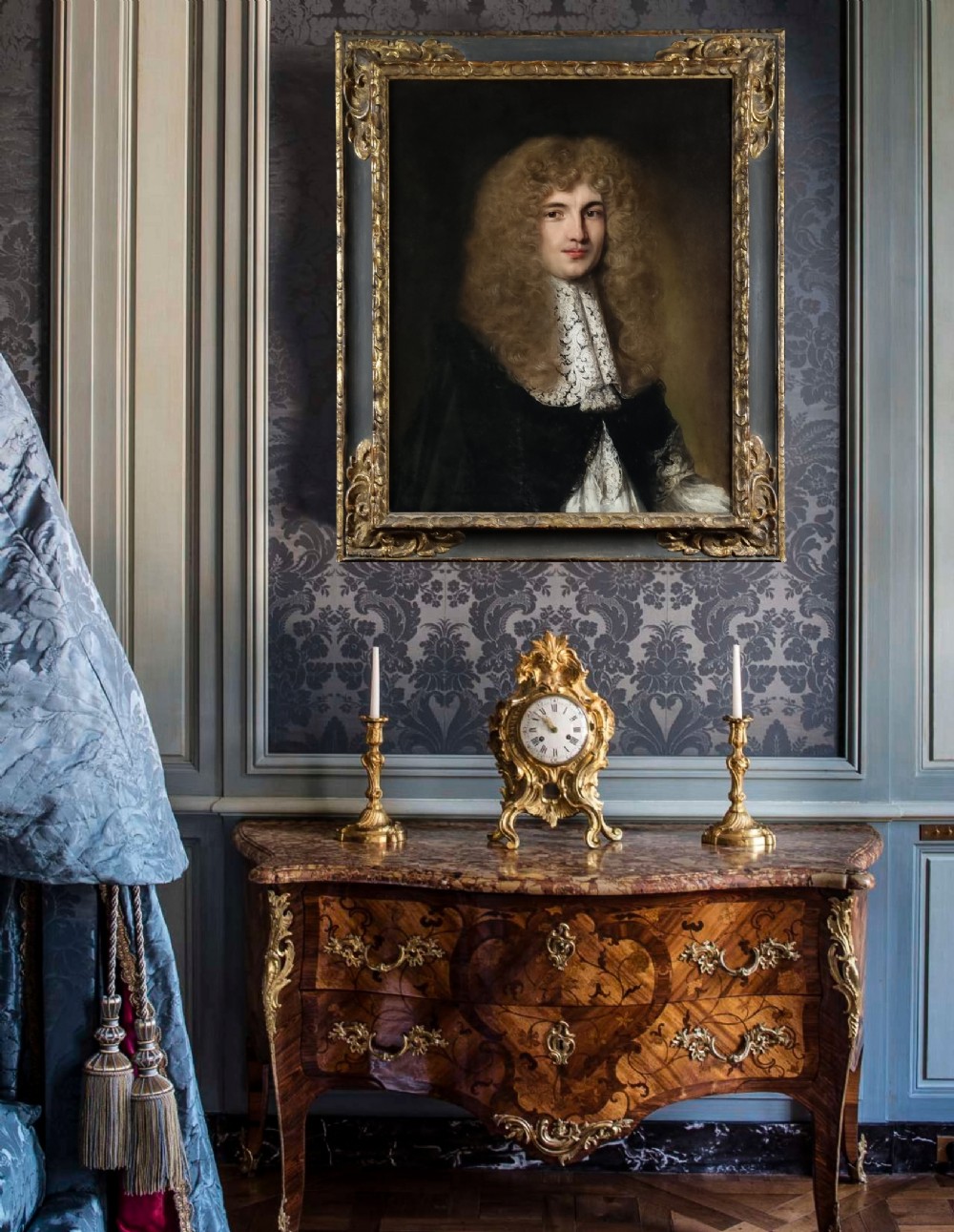
Titan Fine Art has dated this piece to the 17th Century.
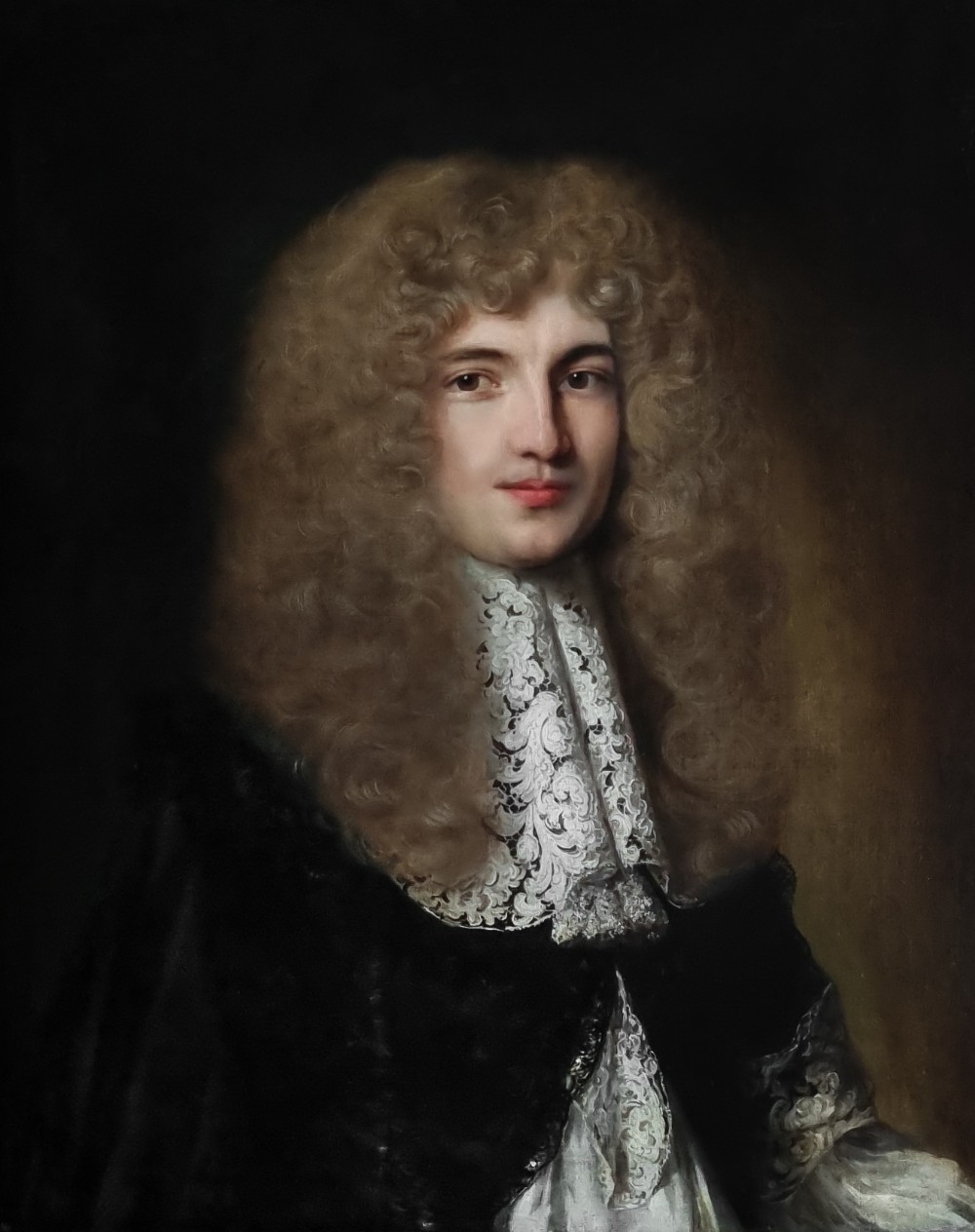
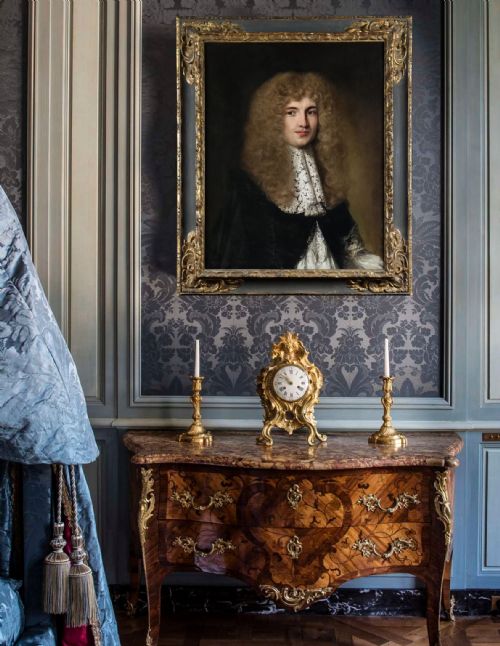
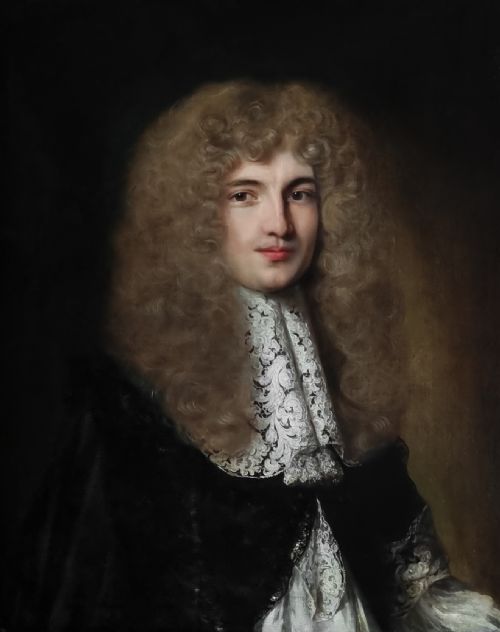
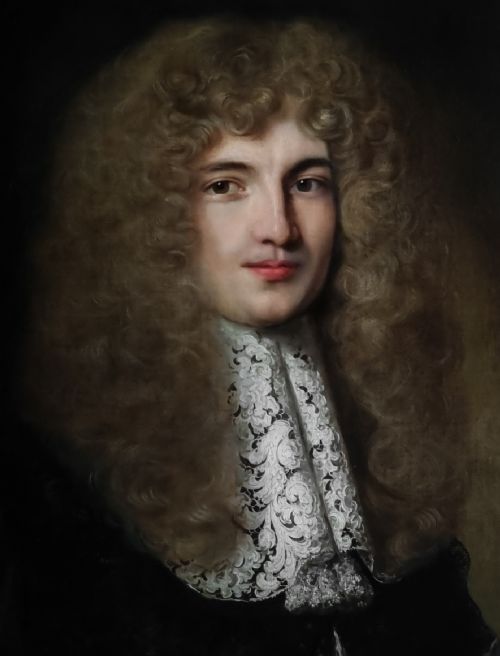
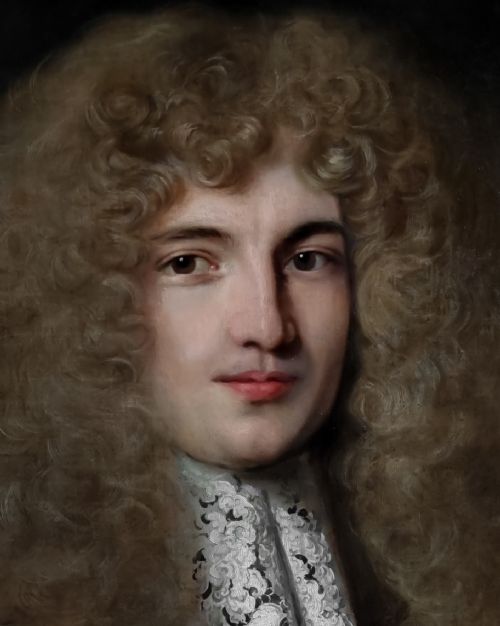
This exquisite portrait of a young nobleman, formerly in the collection of a Prussian noble family, sits within the best examples of the artist’s work and was painted when Voet was at the height of his artistic powers in the early to mid-1670s. It is a fine recording of the character of the gentleman and it displays a great sensitivity and sophisticated technique - it is not surprising that the artist was one of the most important and fashionable portrait painters of his day.
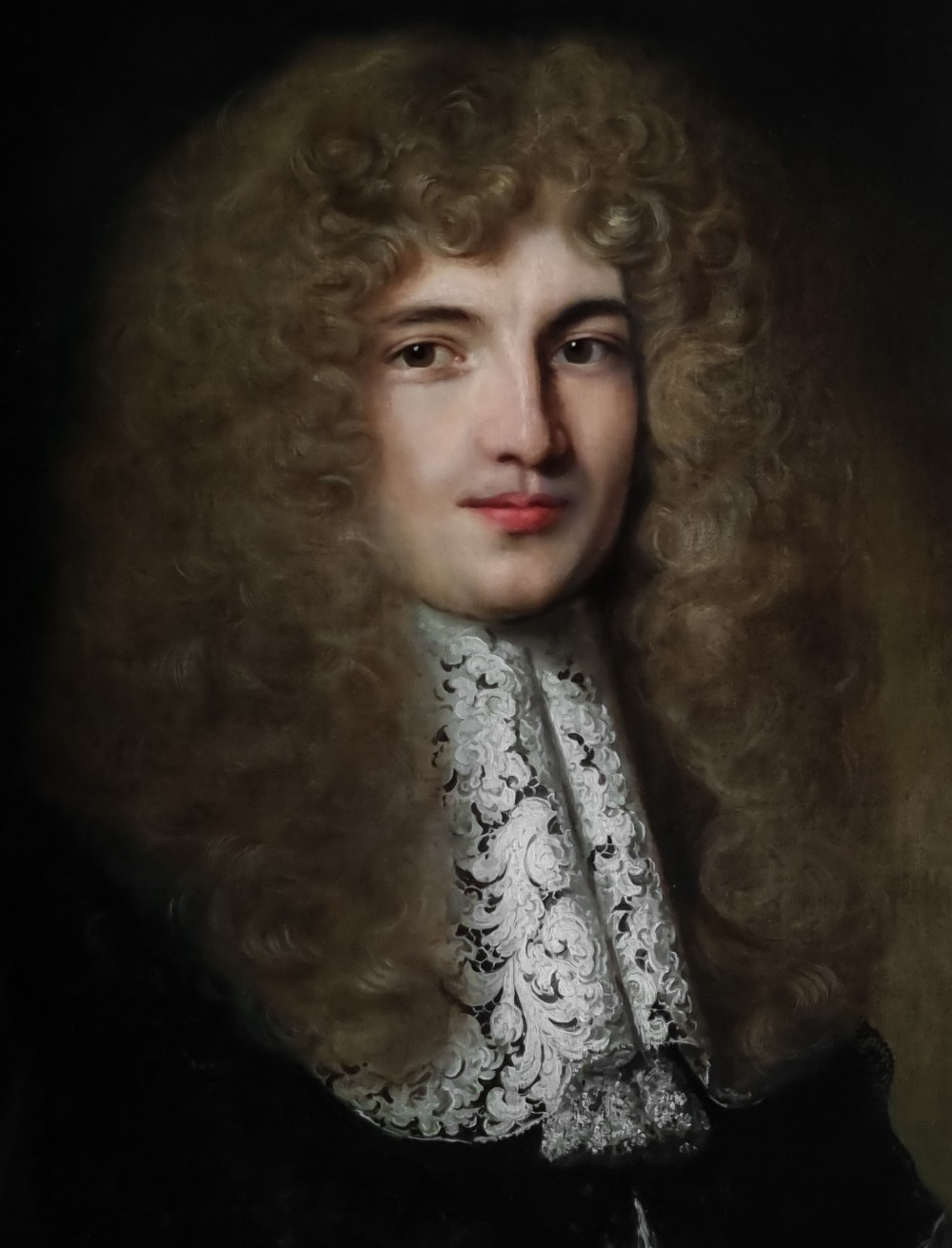
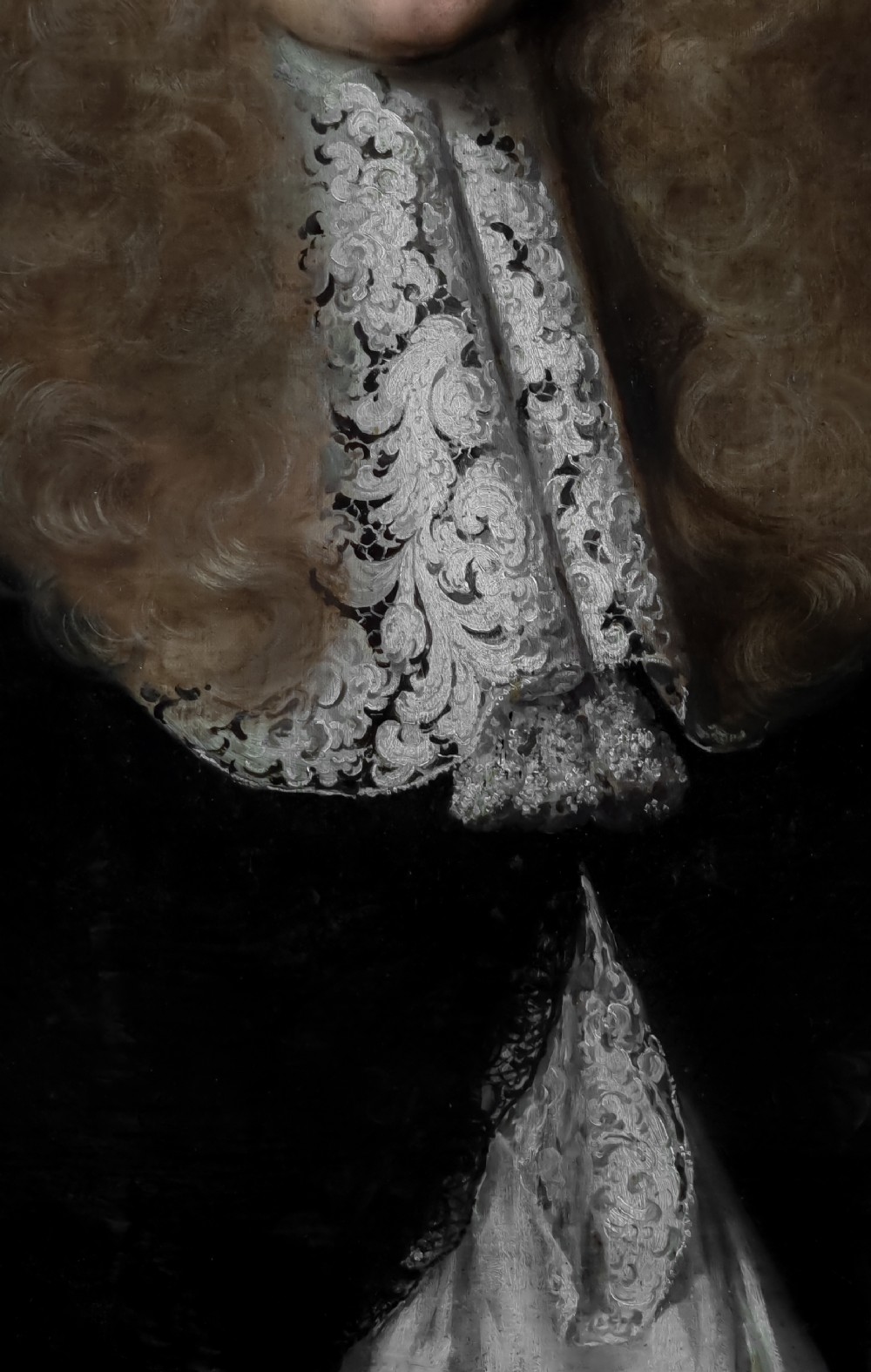
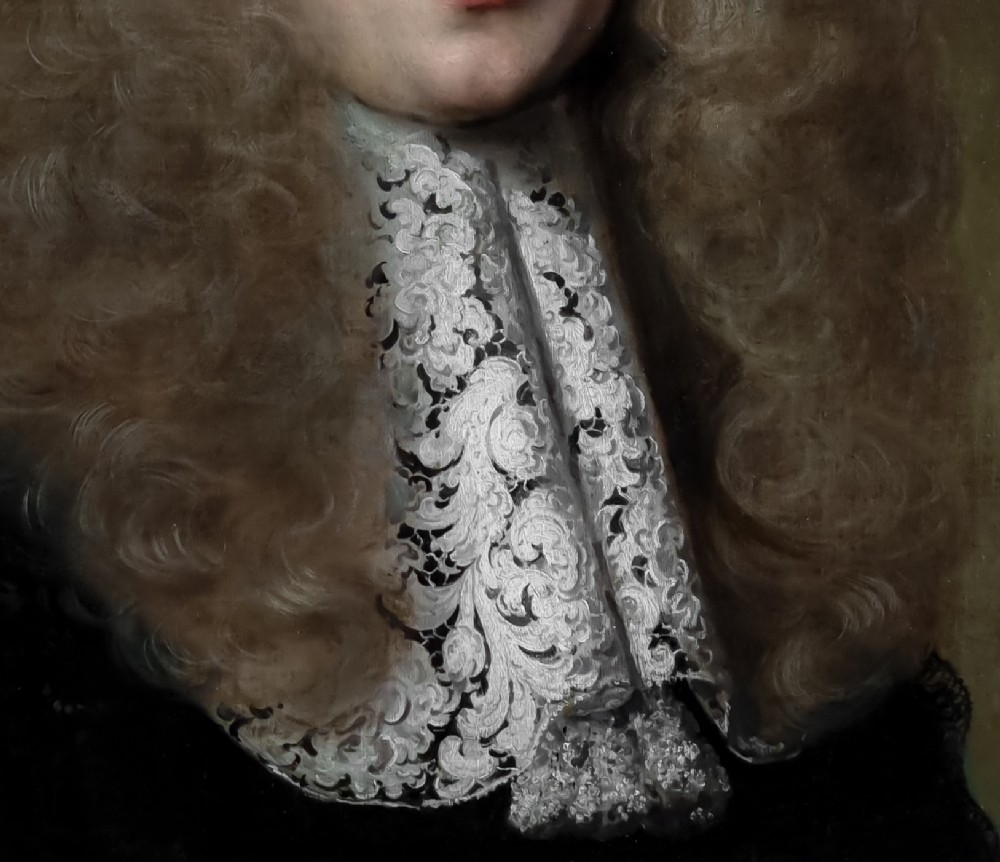
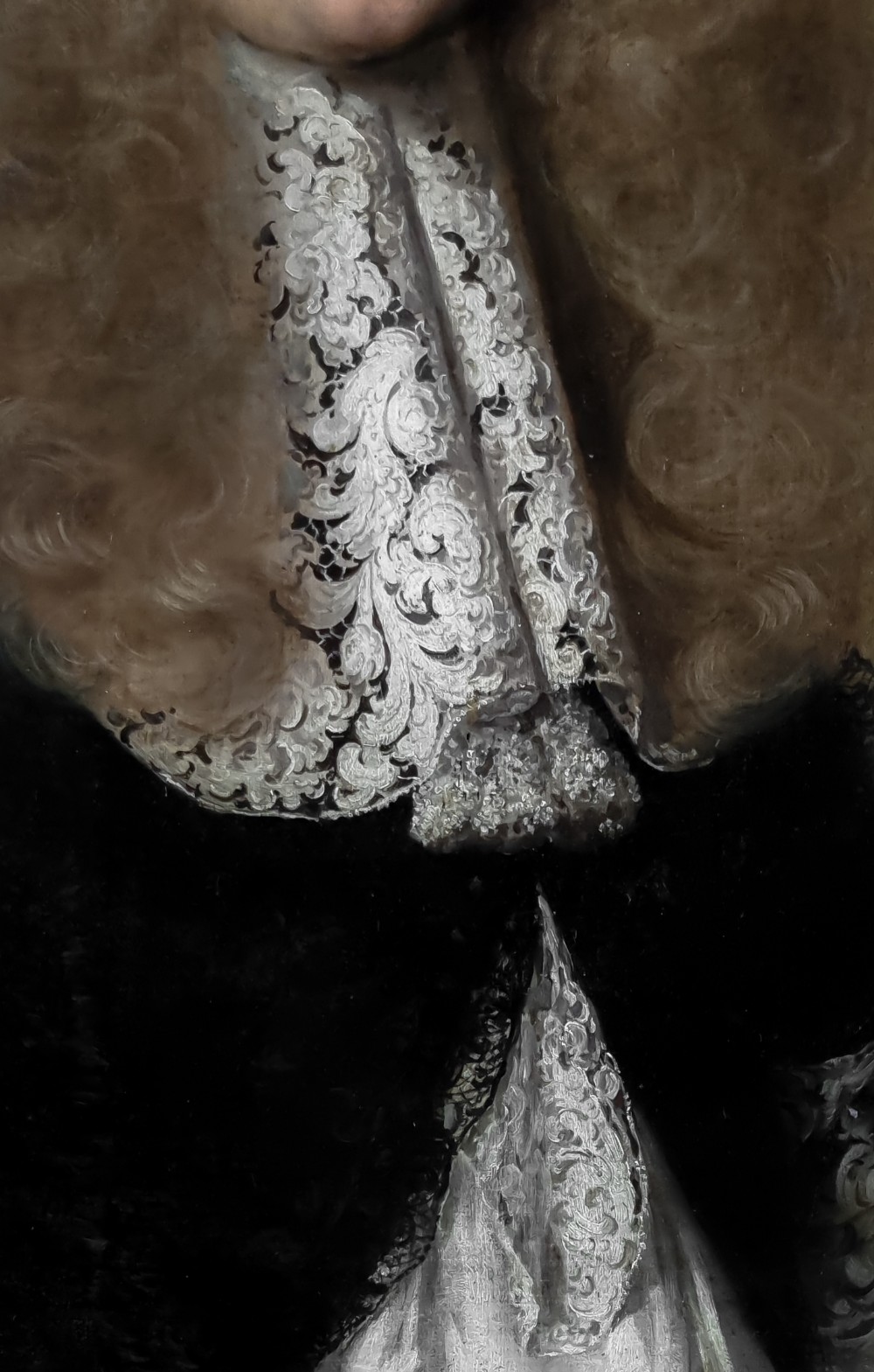
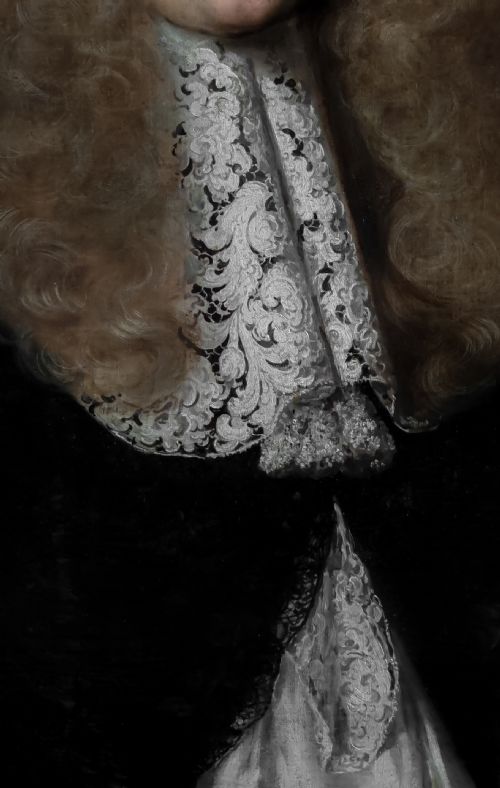
In accordance with the latest fashion, originating from the French court of Louis XIV, the sitter wears a black coat embellished with an elegant lace fringe, an elaborate cravat of Venetian lace, and a splendid wig of brown curls. The stature of the sitter and his fashionable attire boldly demonstrate his wealth and status.
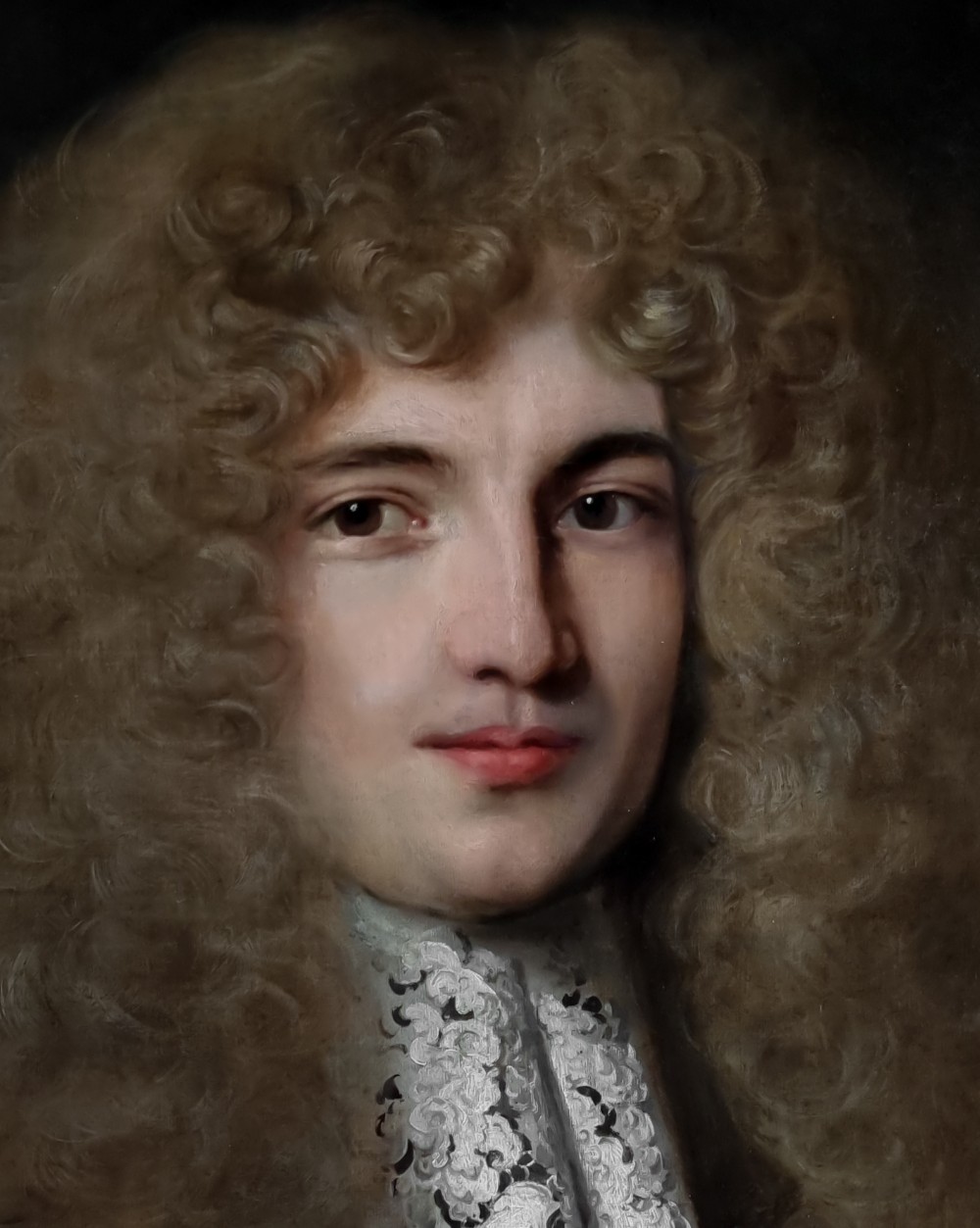
The finely depicted face, the softly curling hair, and the resplendent lace collar are exemplary, and indicative of an artist that knew how to depict the heart-and-sole of his subject.
This dashing young gentleman most likely had this portrait painted upon his stay in Rome on his Grand Tour. The Grand Tour which is most commonly thought to have occurred from about 1550 up to 1850, was a journey to primarily France and Italy to improve the sartorial, social and cultural awareness studying art, geography, law, languages, learning dancing and fencing, of well-born young men and to enable them to make useful contacts and to introduce them to foreign lands and cultures. Gentleman from many countries took the tour but it was particularly popular in Britain and it had a huge impact on Britain’s cultural, social, political, architectural, gastronomic, sartorial and artistic evolution. Among its many and far-reaching influences, it fuelled the transformation of Britain’s finest historic houses and provided much of their contents, defined the syllabi of many English preparatory schools, and introduced the authoritative architectural language of neoclassicism to British governmental and institutional buildings.
Jacob Ferdinand Voet (c1639-1689) is regarded as one of the best and most fashionable portrait painters of the Late Baroque. Born in Antwerp, his ambition led him to Rome in 1663. There, he enjoyed phenomenal success, in part due to his renowned affability but also his stylish technique and attention to costume, and worked for the Papal court and the Roman nobility including the Mancini and Colonna families. He was also favoured by aristocratic foreign tourists conducting their Grand Tours of Italy. After 1679 he travelled extensively in Italy, executing numerous commissions in Como and Milan and it is probable that he also travelled to Genoa, and certainly to Florence, Modena and Parma, before again working in Rome in 1680 and 1681.
By 1686 he was in Paris where he became court painter to Louis XIV and he also worked for the most fashionable and eminent sitters right up to his death in 1689.
Examples of the artist’s work can be found in many of the best international art museums including the Prado Spain, Royal Collection UK, National Portrait Gallery UK, Hermitage Museum, Versailles France, and Rijksmuseum The Netherlands.
Provenance:
Countess Hedwig-Huberta Maria von Bressler (nee von Matuschka) (born 1869), who was the wife of Baron Karl von Bressler (d.1894) and the daughter of Count Matthias von Matuschka, Baron of Toppolczan and Spaetgen (b.1840) and Countess Hedwig Henriette Friederike Dorothea Rosalie Erdmantine of Matuschka (b.1844).
The House of Matuschka is an old aristocratic family, originating in the 13th century in Bohemia, family seat Toppolczan castle. Since 1747 the family has held the title Count von Matuschka, Freiherr von Toppolczan and Spaetgen.
Titan Fine Art has dated this piece to the 17th Century.
Specialist in 17th & 18thc portraits. Highly curated selection, museum-level research & pro conservation. Exceptional art, expertly vetted.
You can view the stock and full dealer information on the Titan Fine Art Profile Page

Portrait of a Gentleman with Long Hair and an Elaborate Lace Collar C.1670-1675; by Jacob Ferdinand Voet (1639-1689), Oil on Canvas Painting