It was listed by Regent Antiques. Sold pieces stay on Sellingantiques as a record of what has passed through, and the next one is rarely far away.
Regent Antiques has dated this piece to the 18th Century.
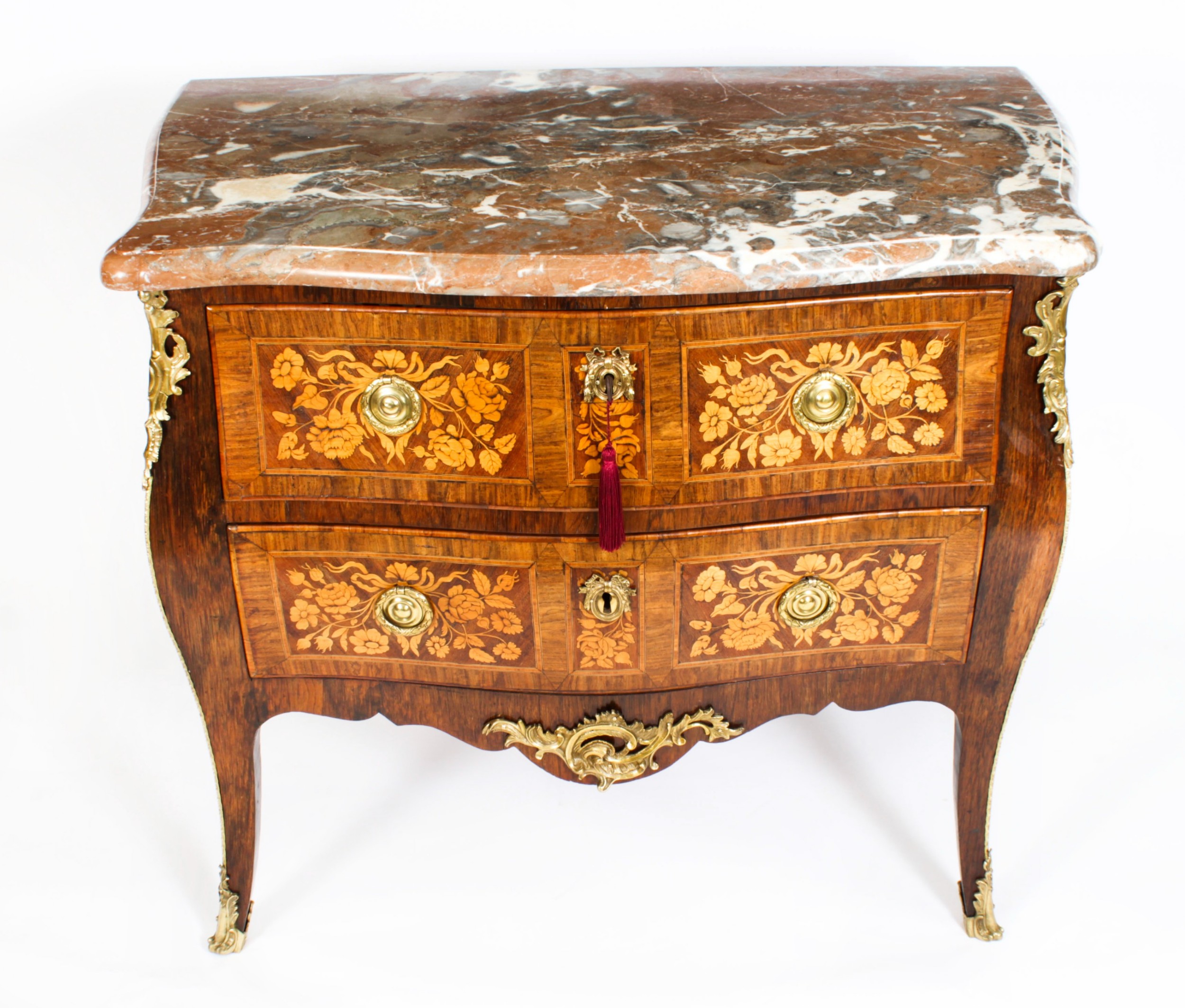
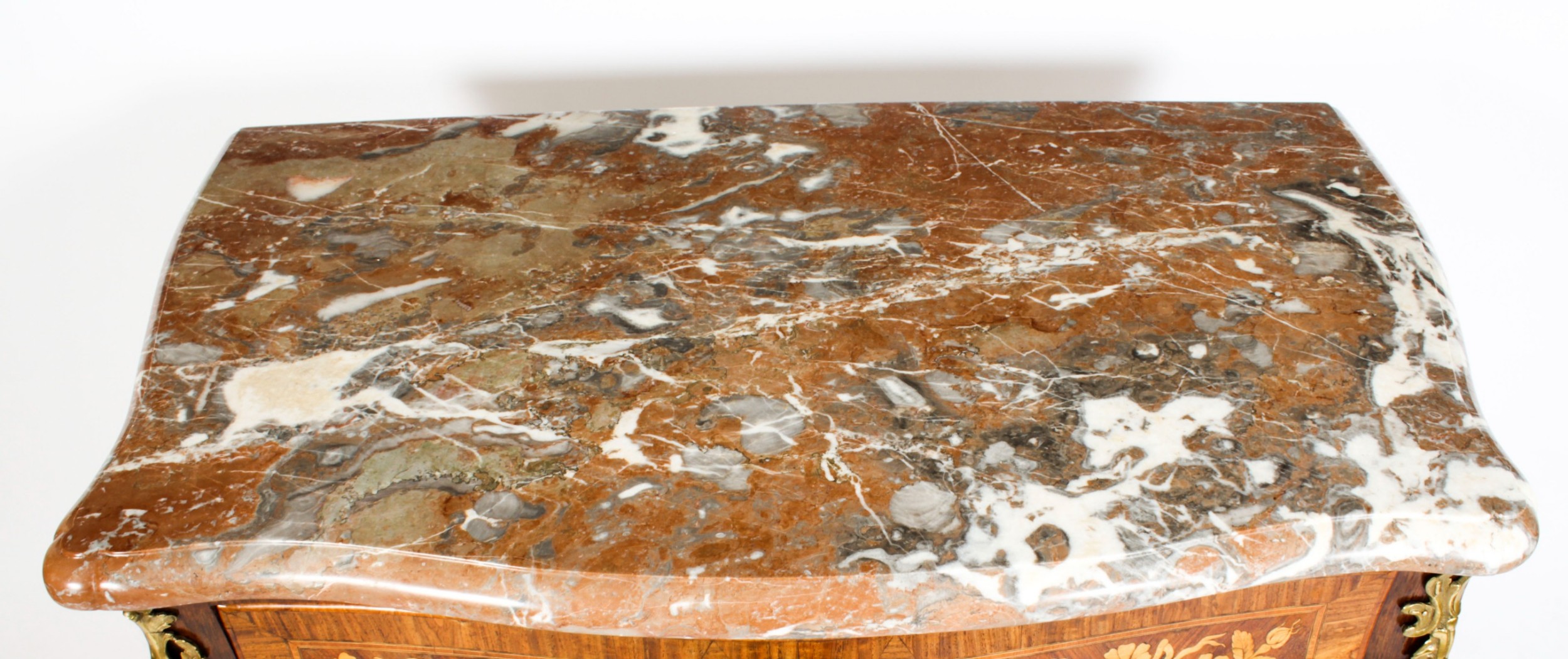
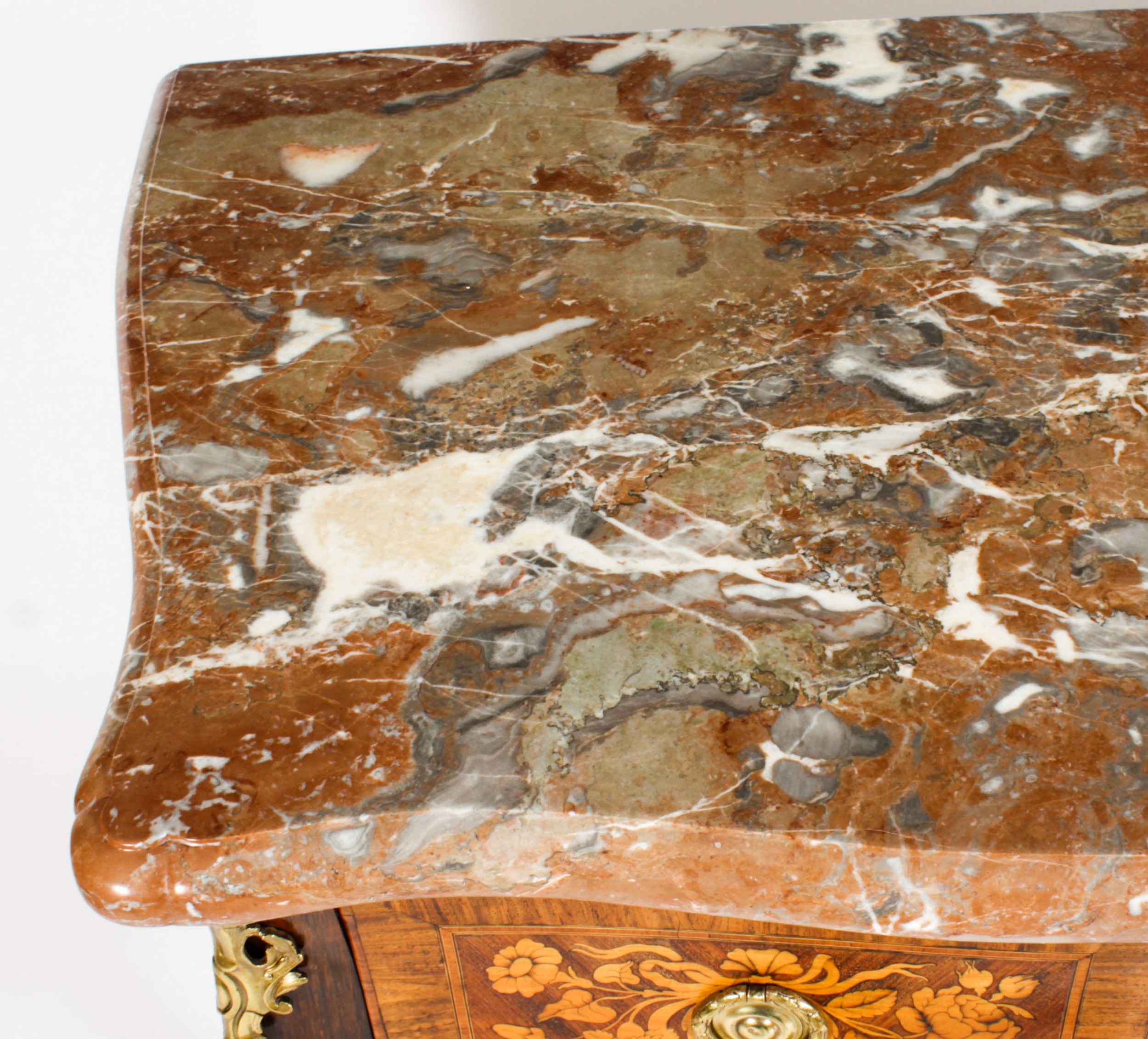
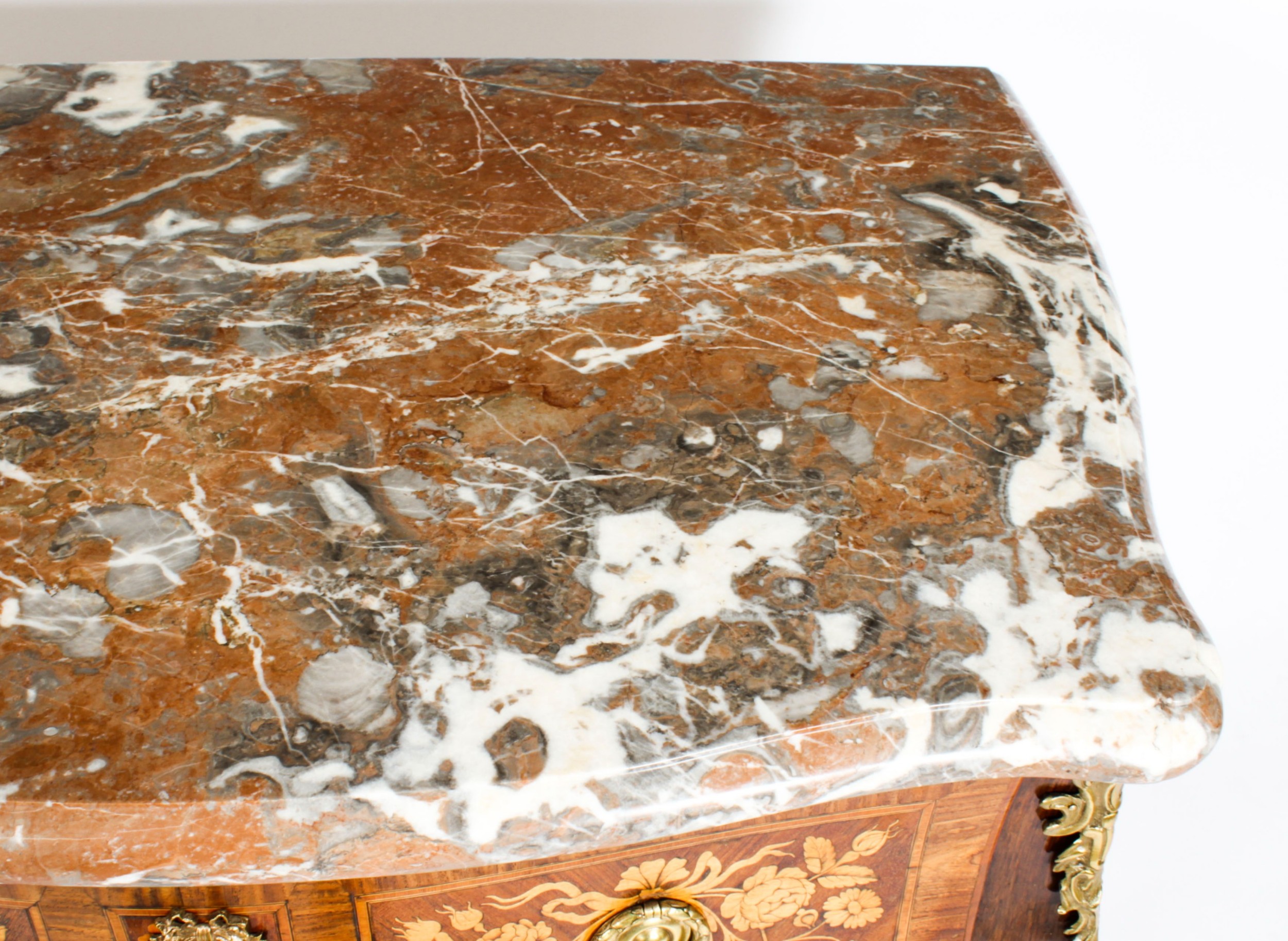
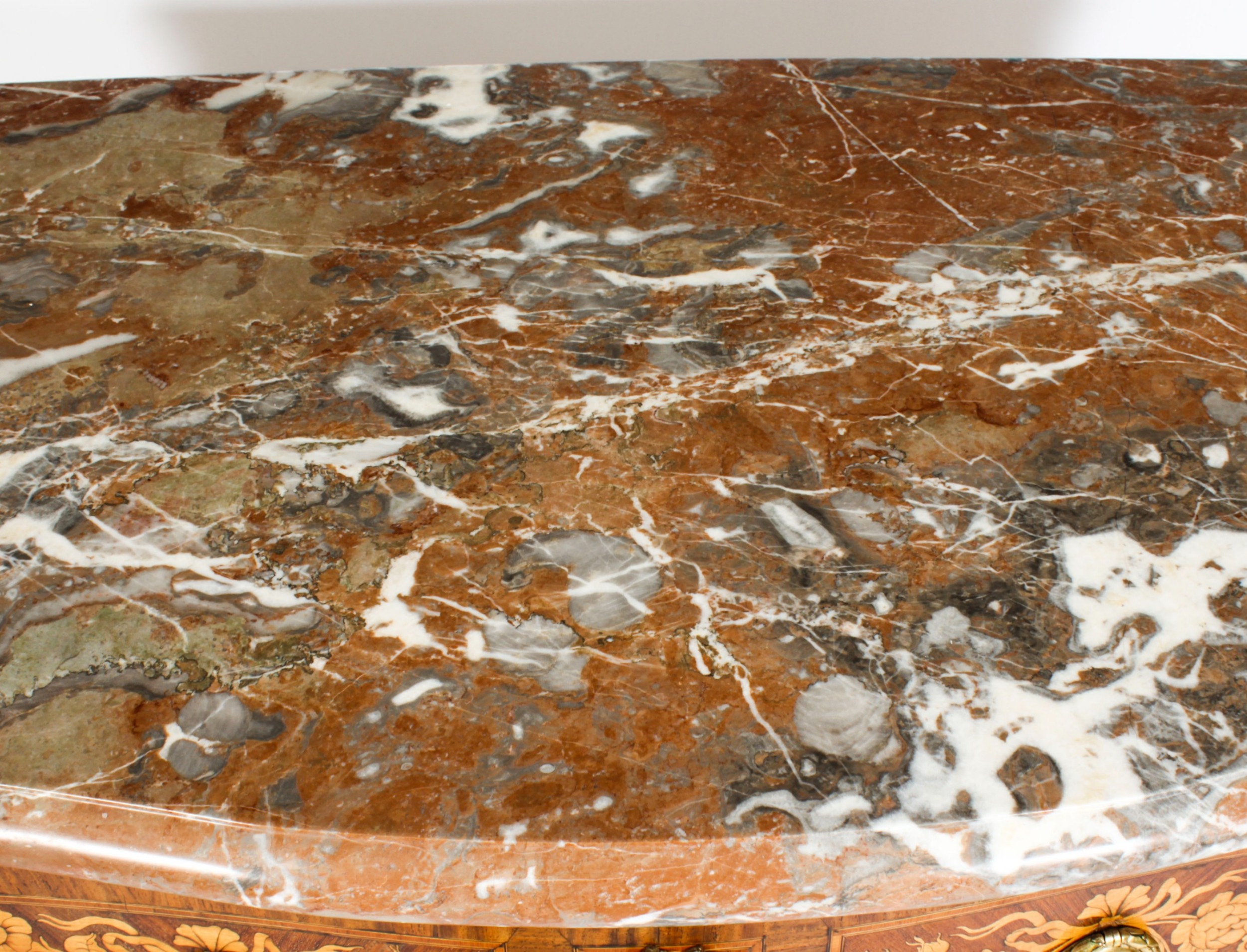
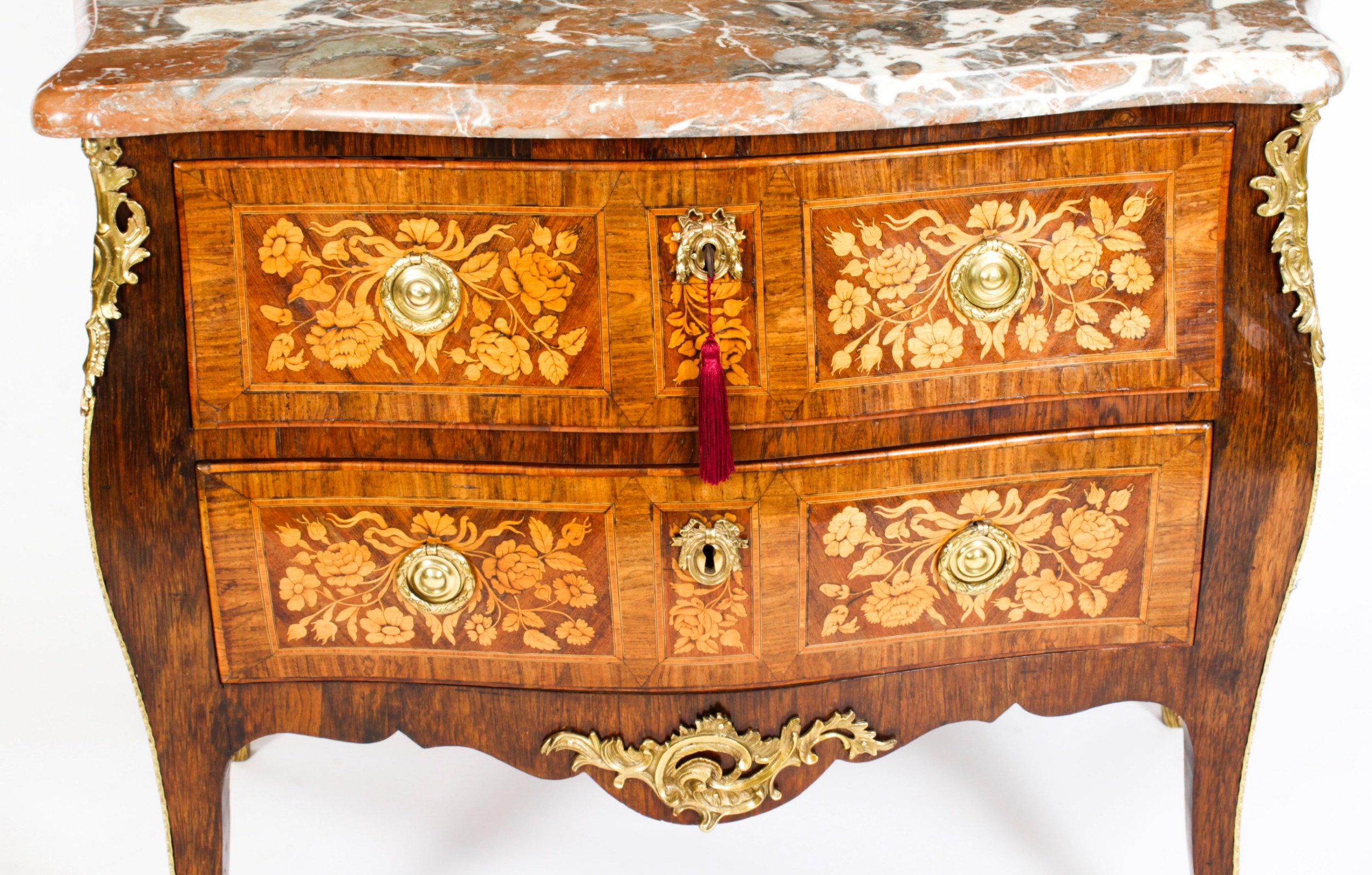
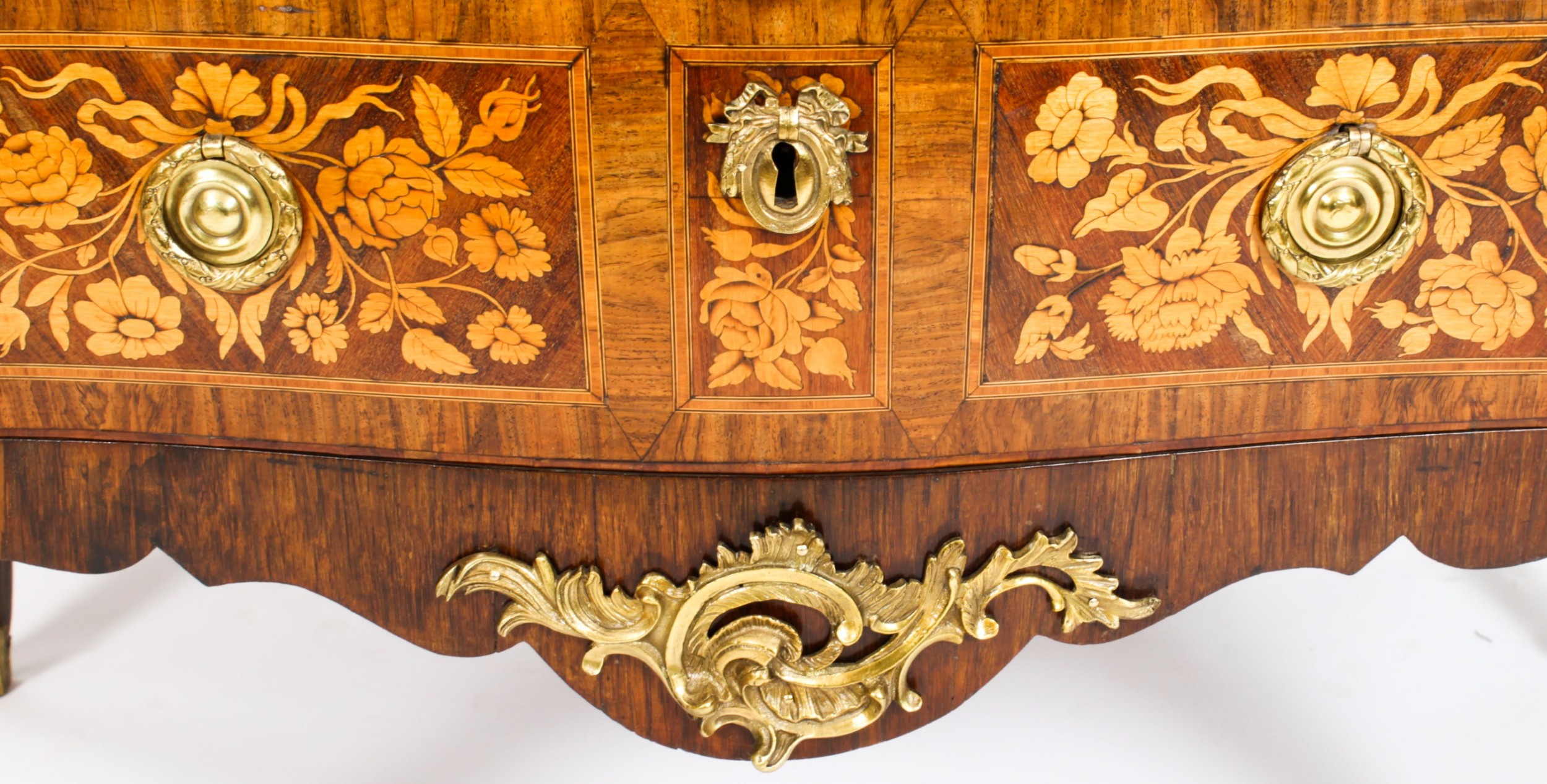
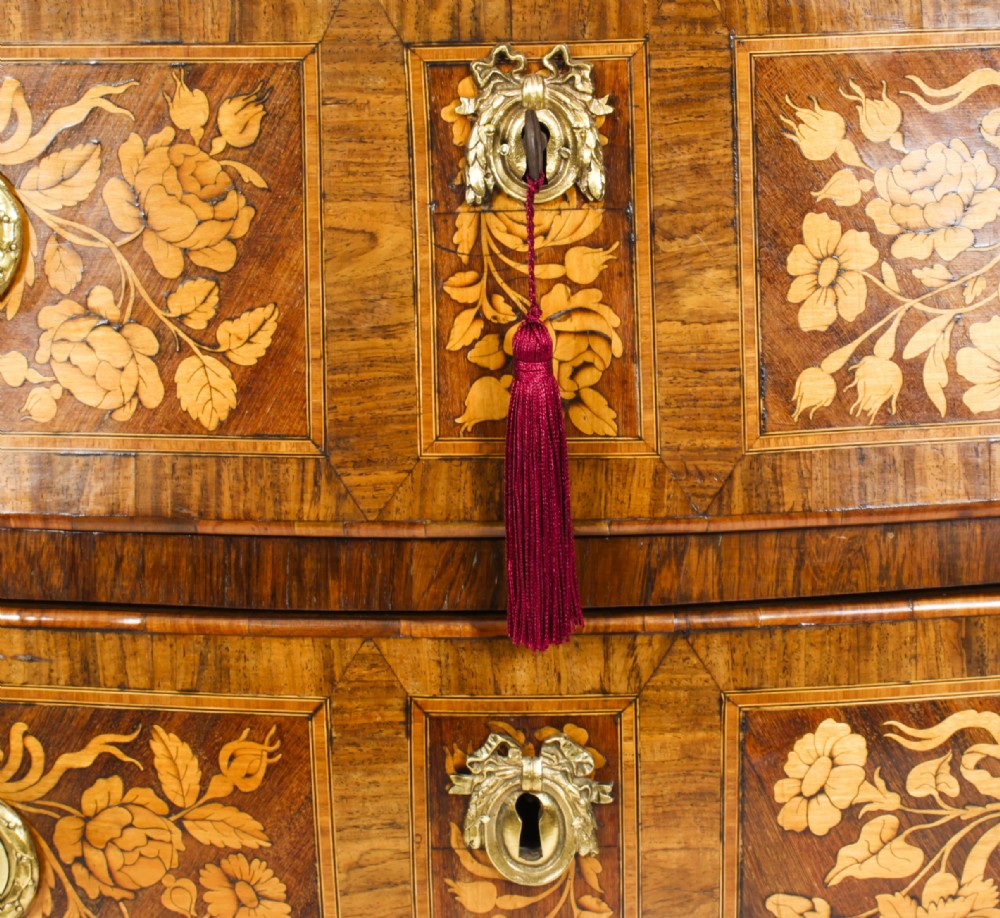
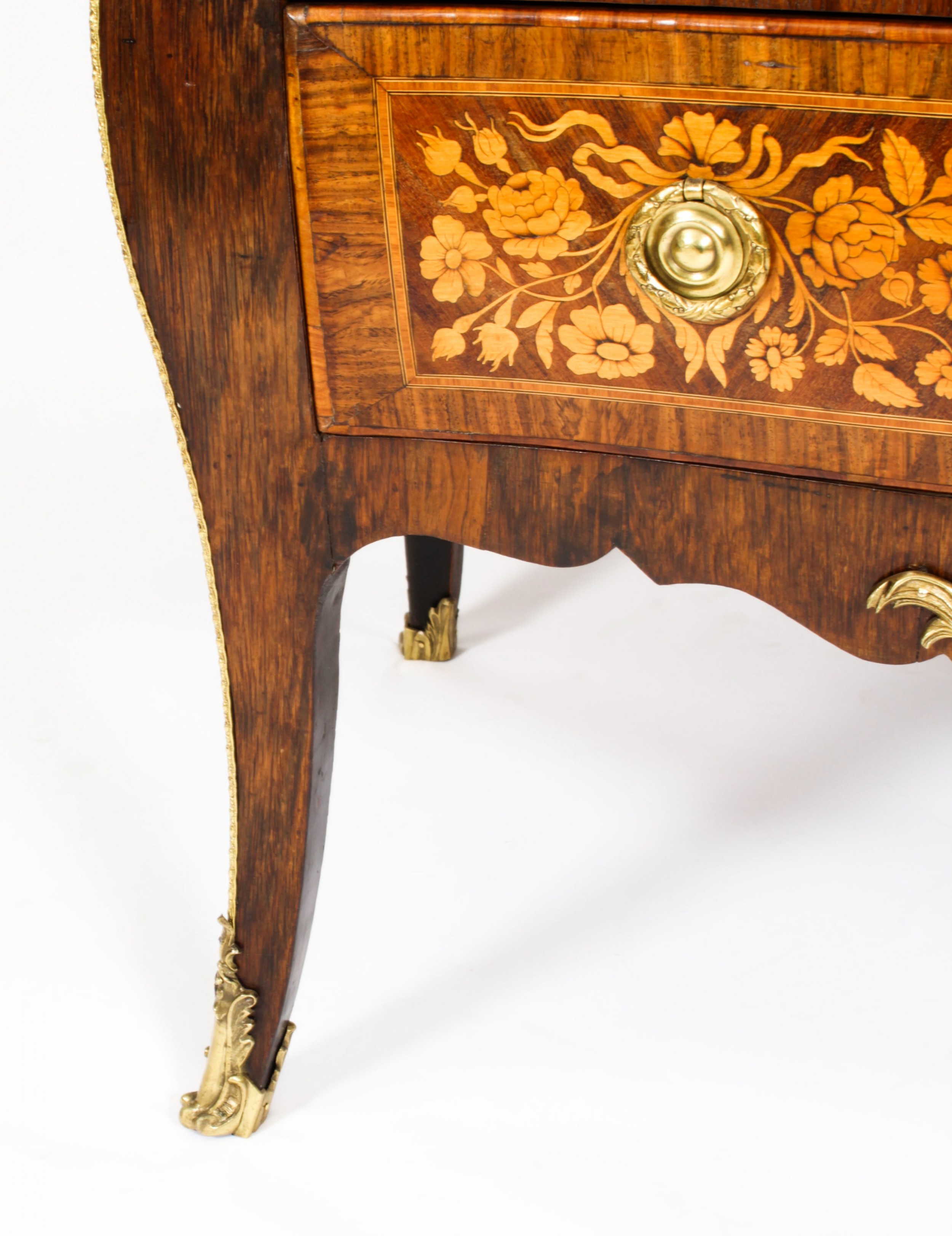
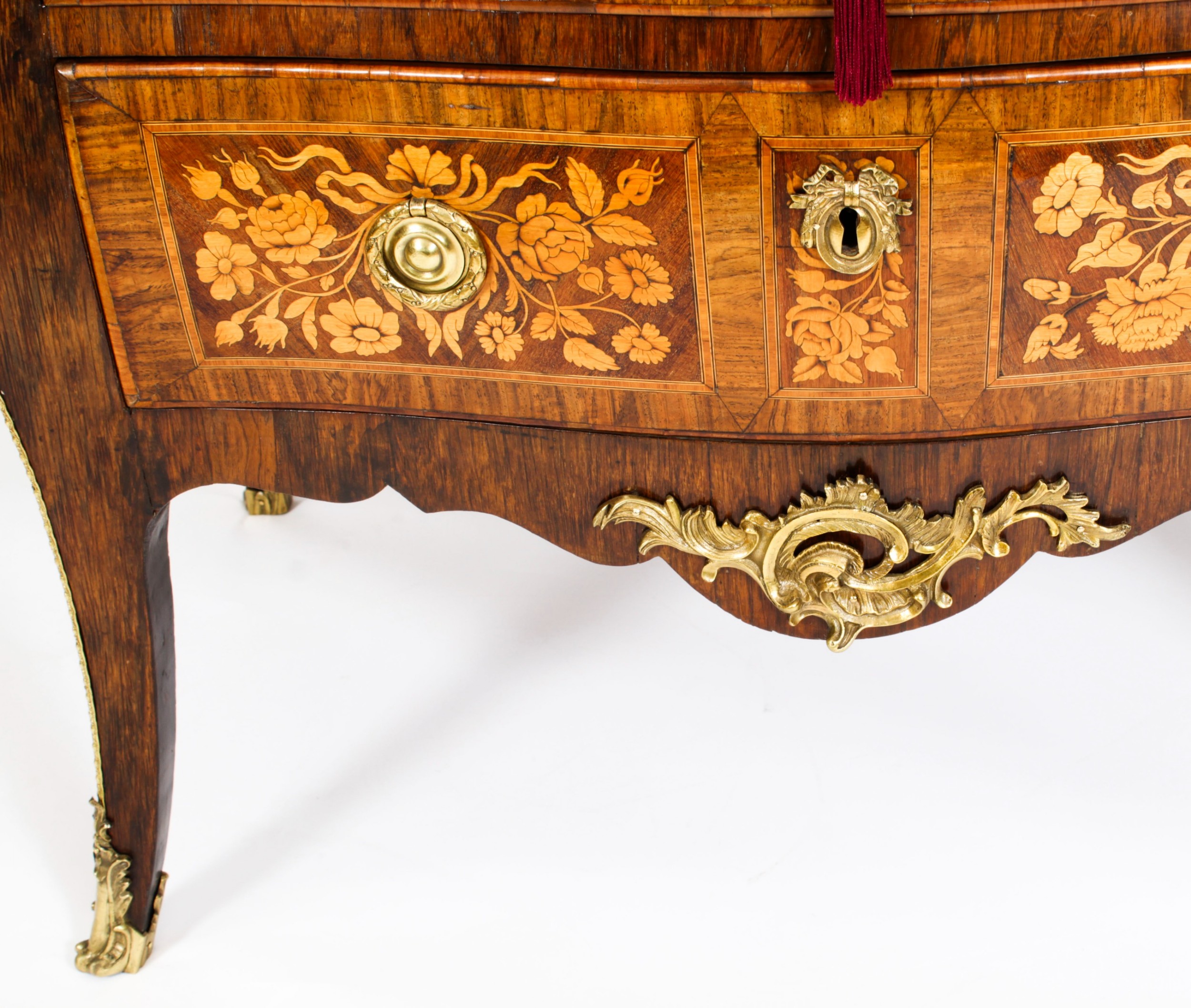
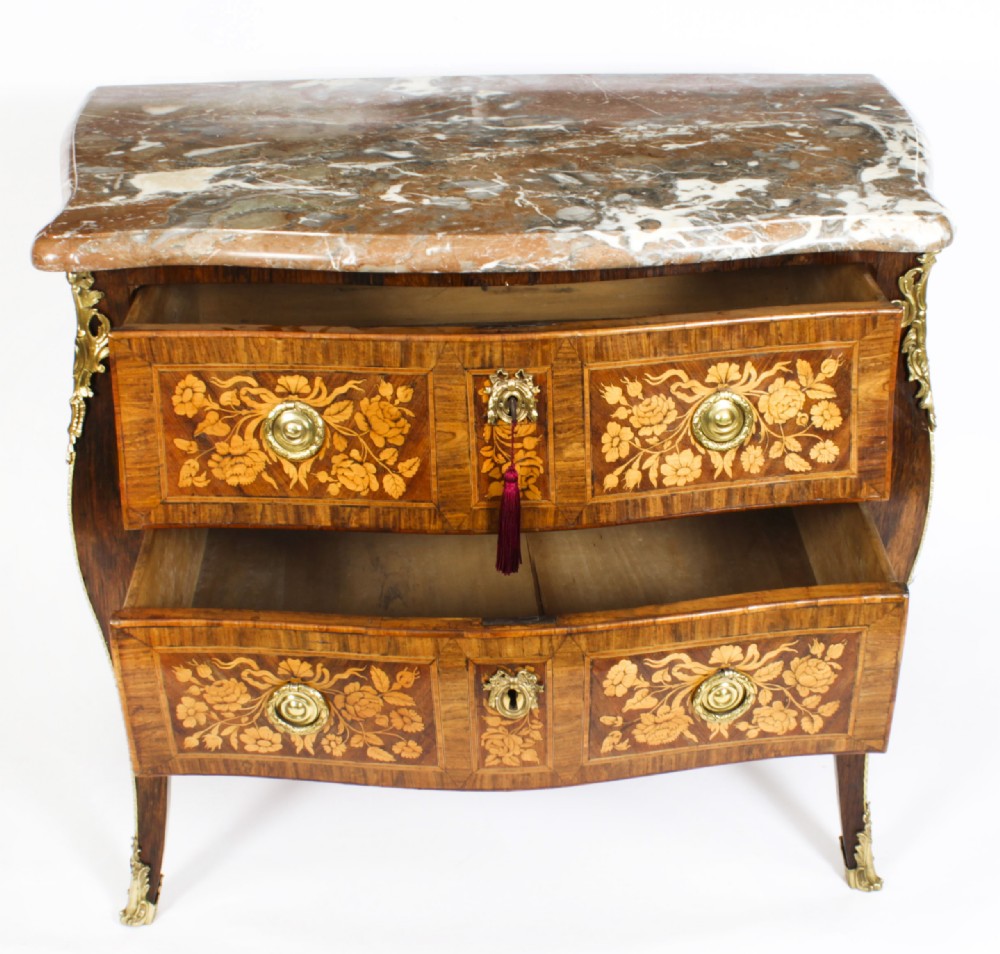
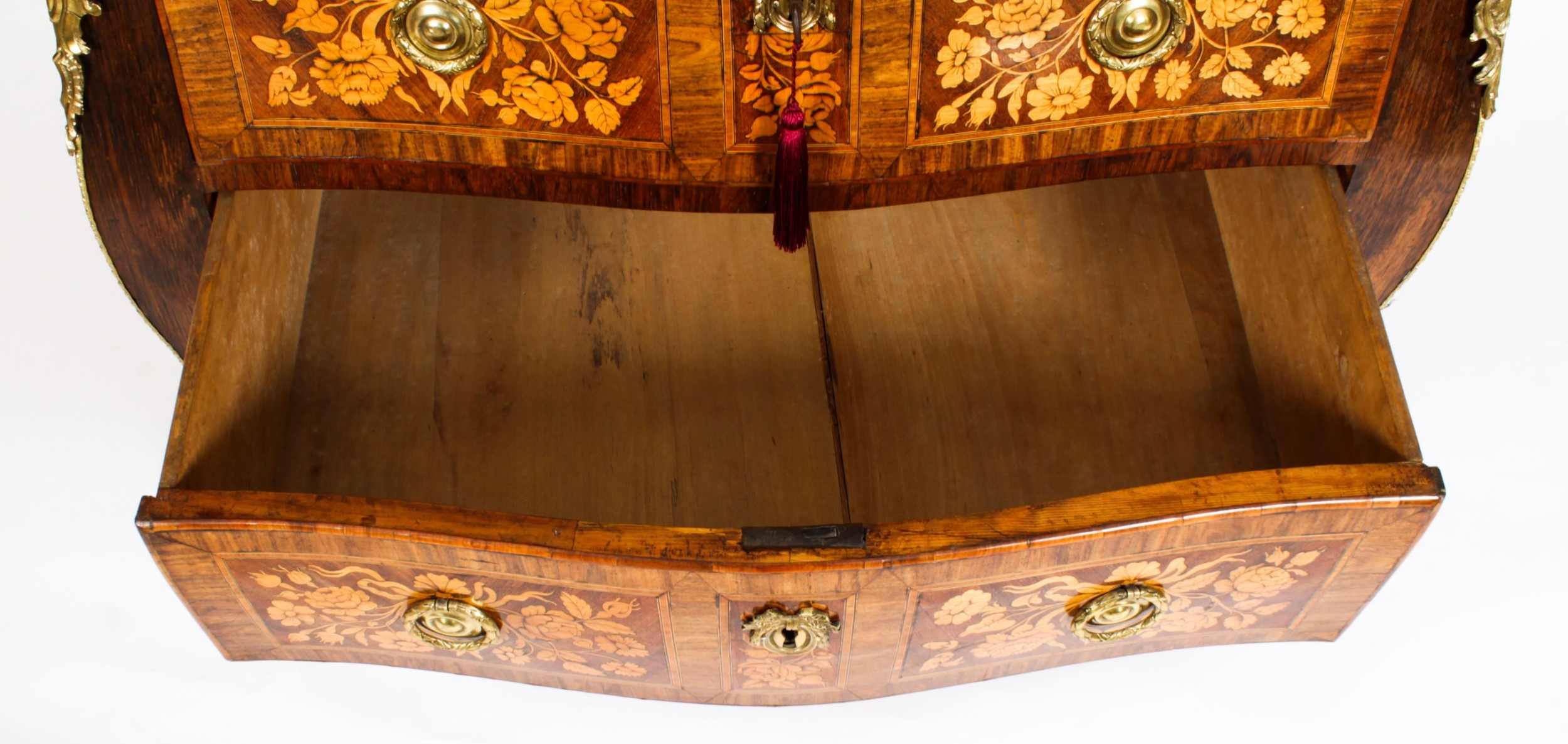
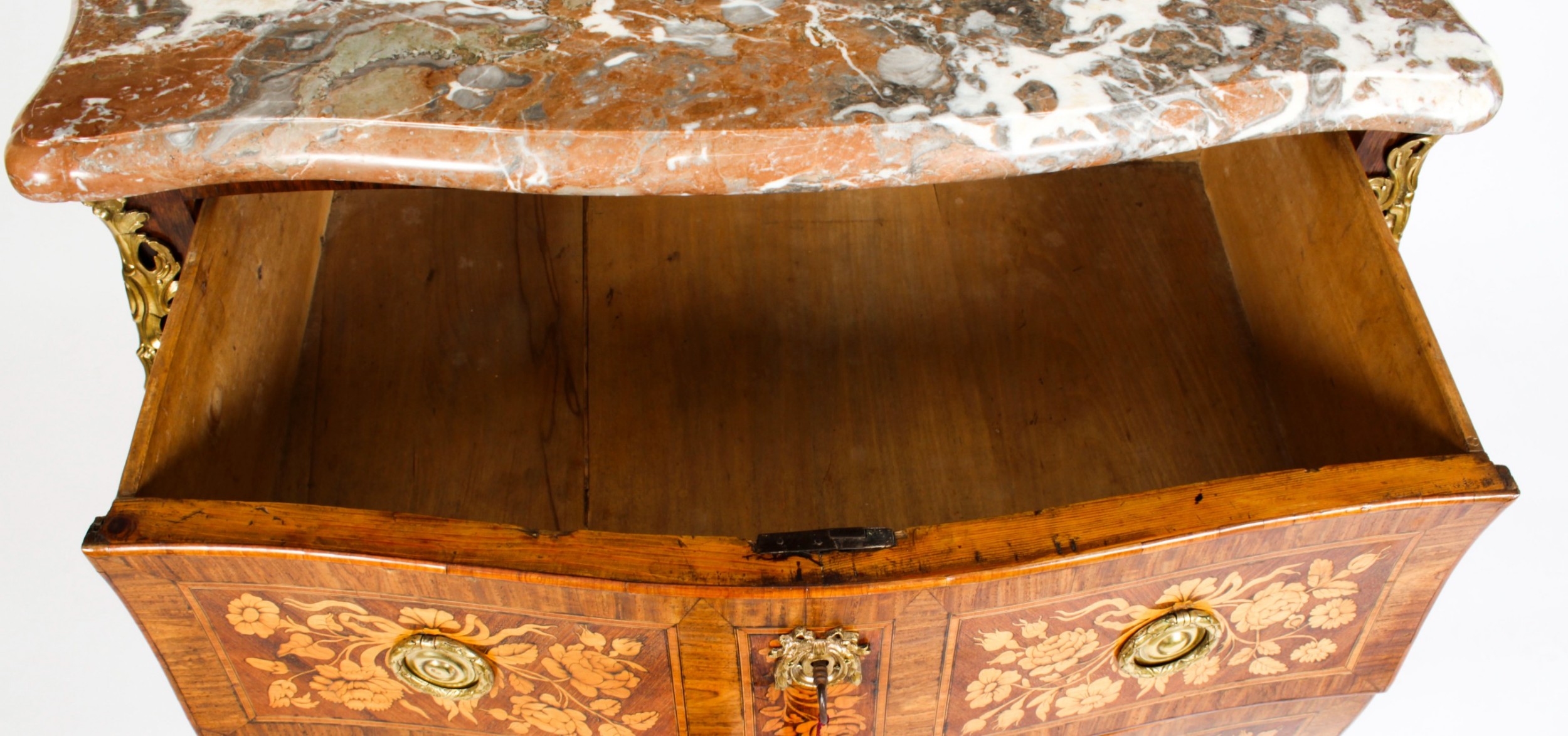
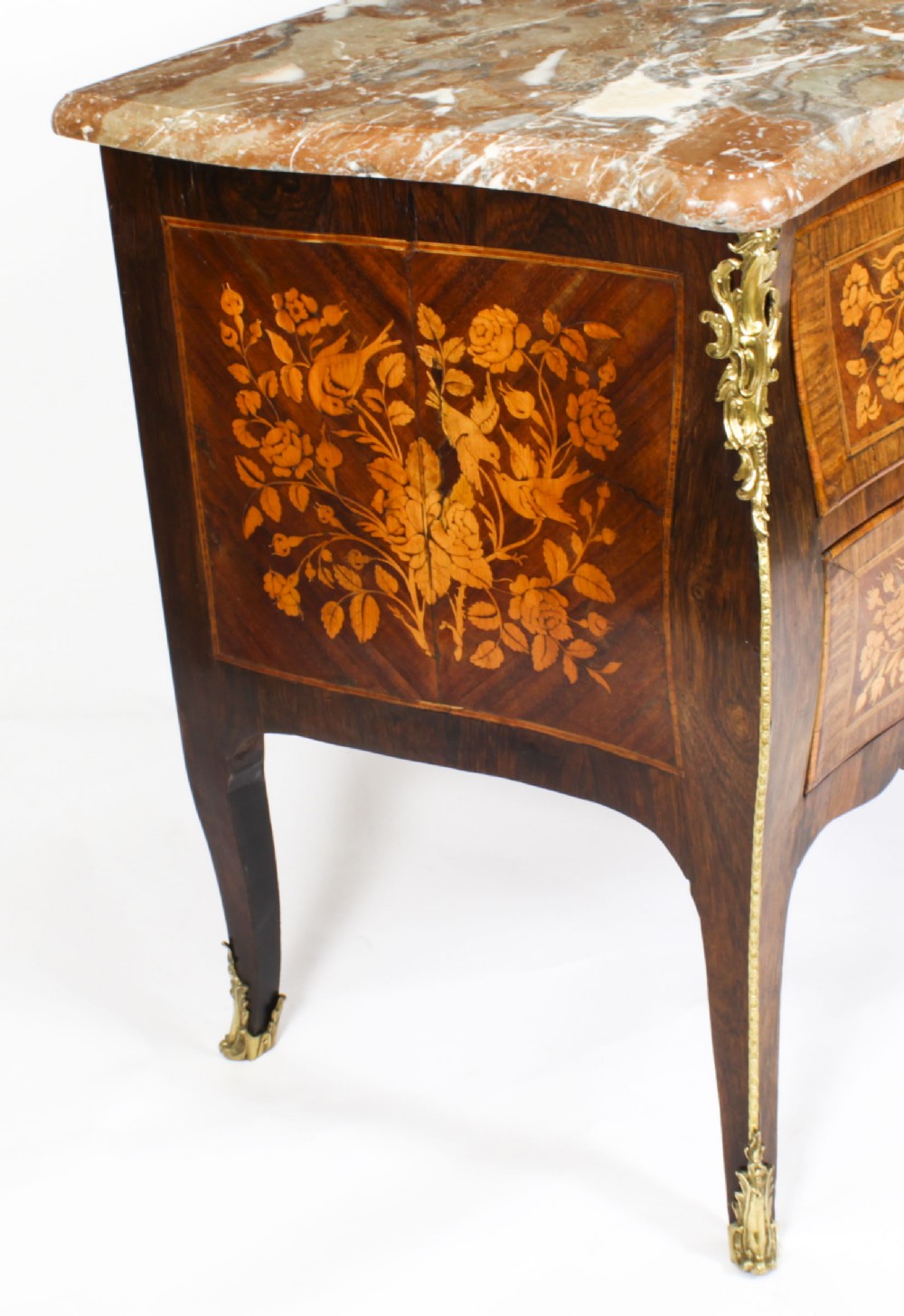
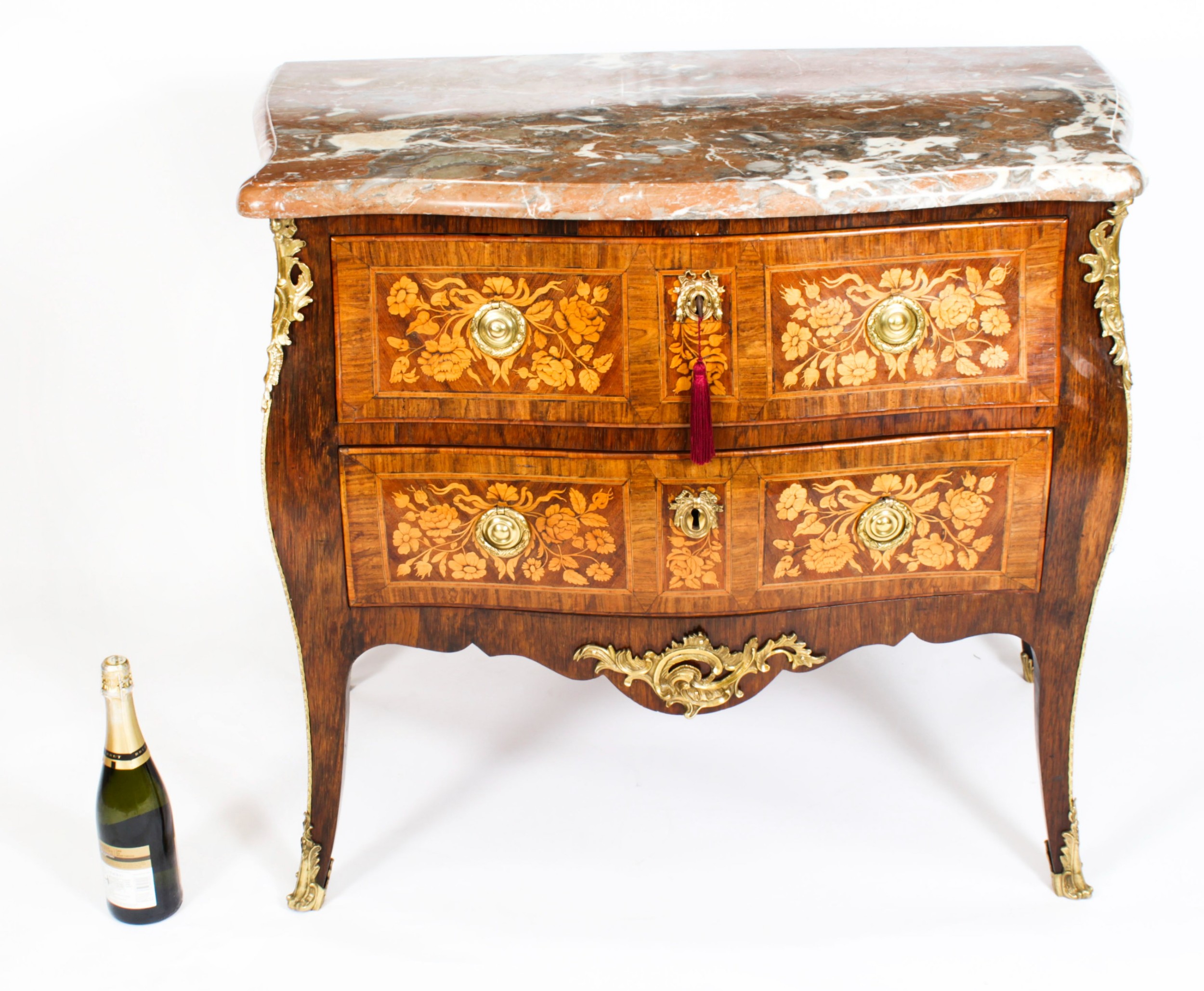
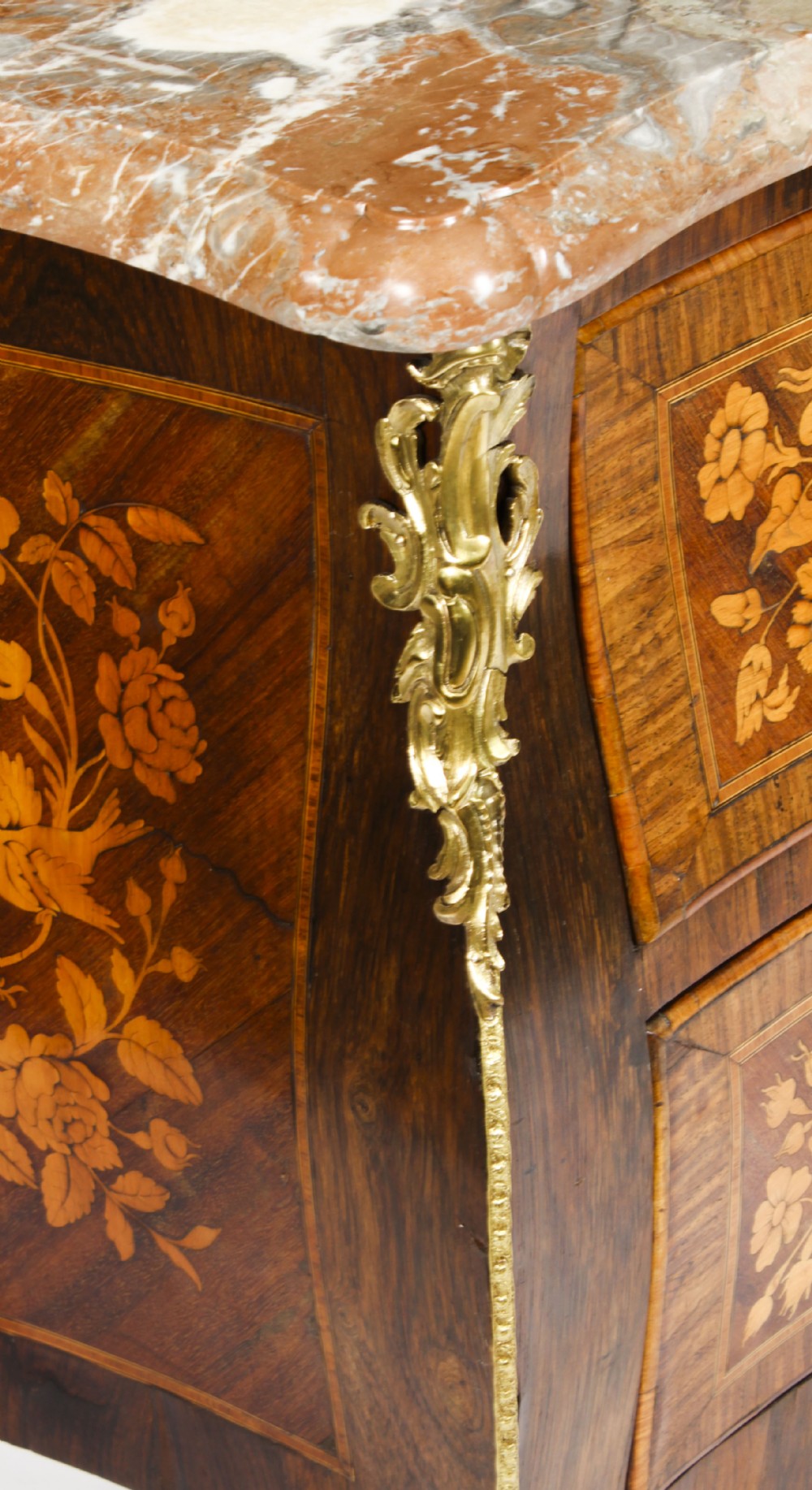
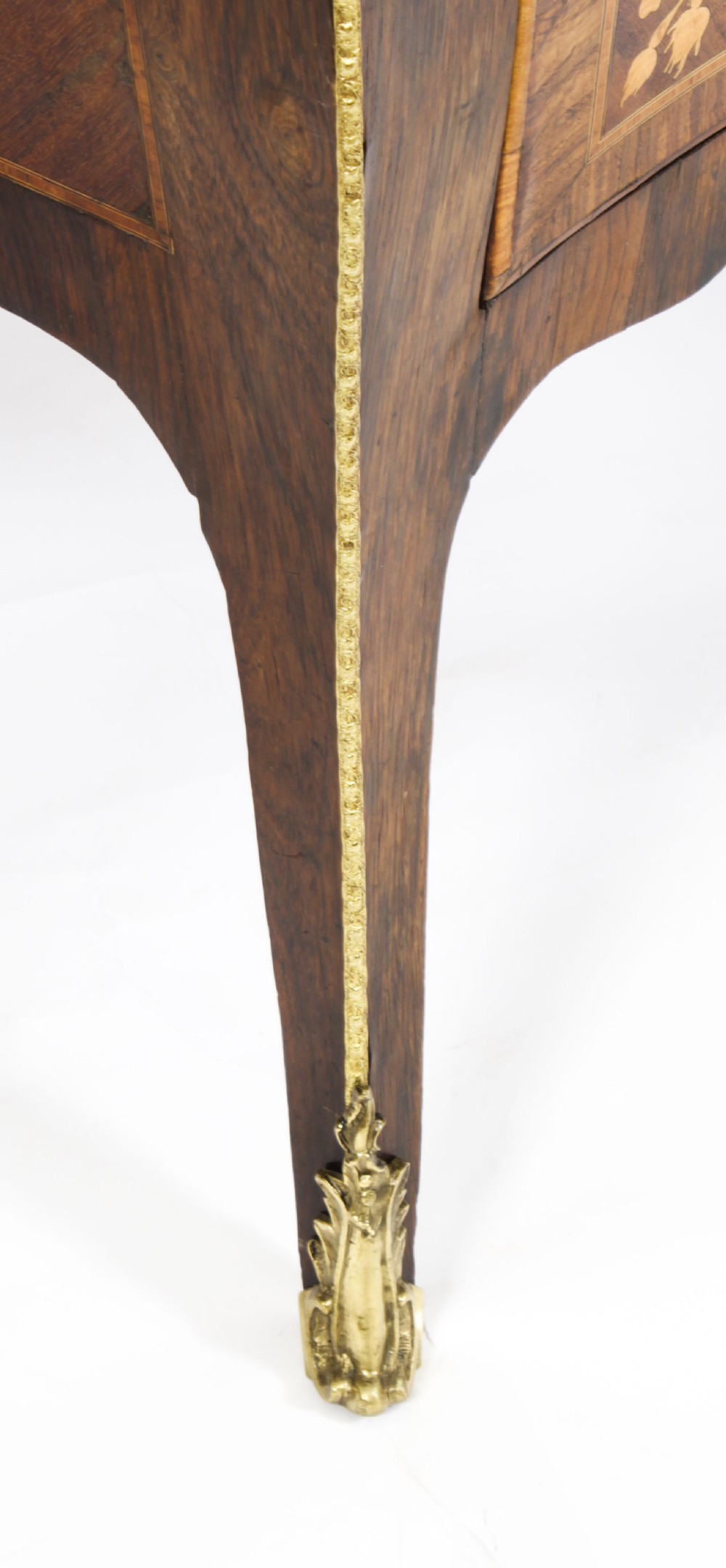
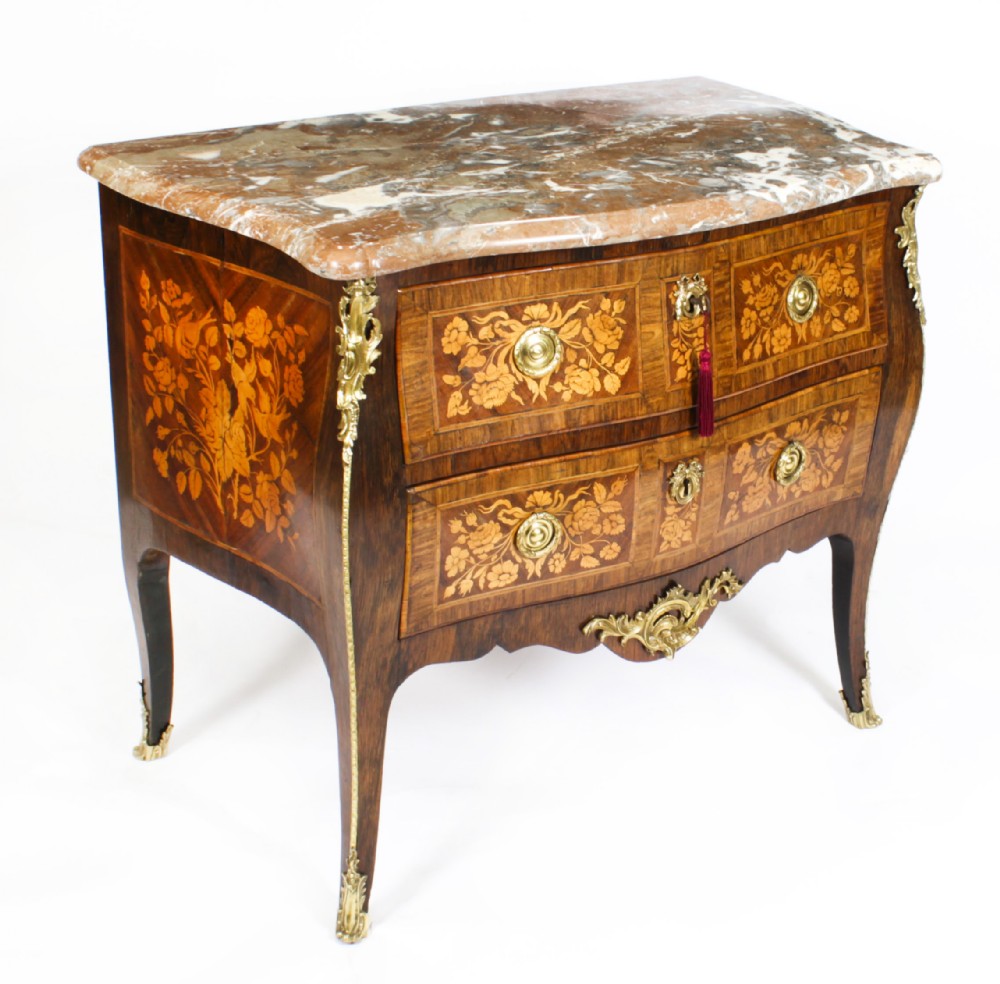
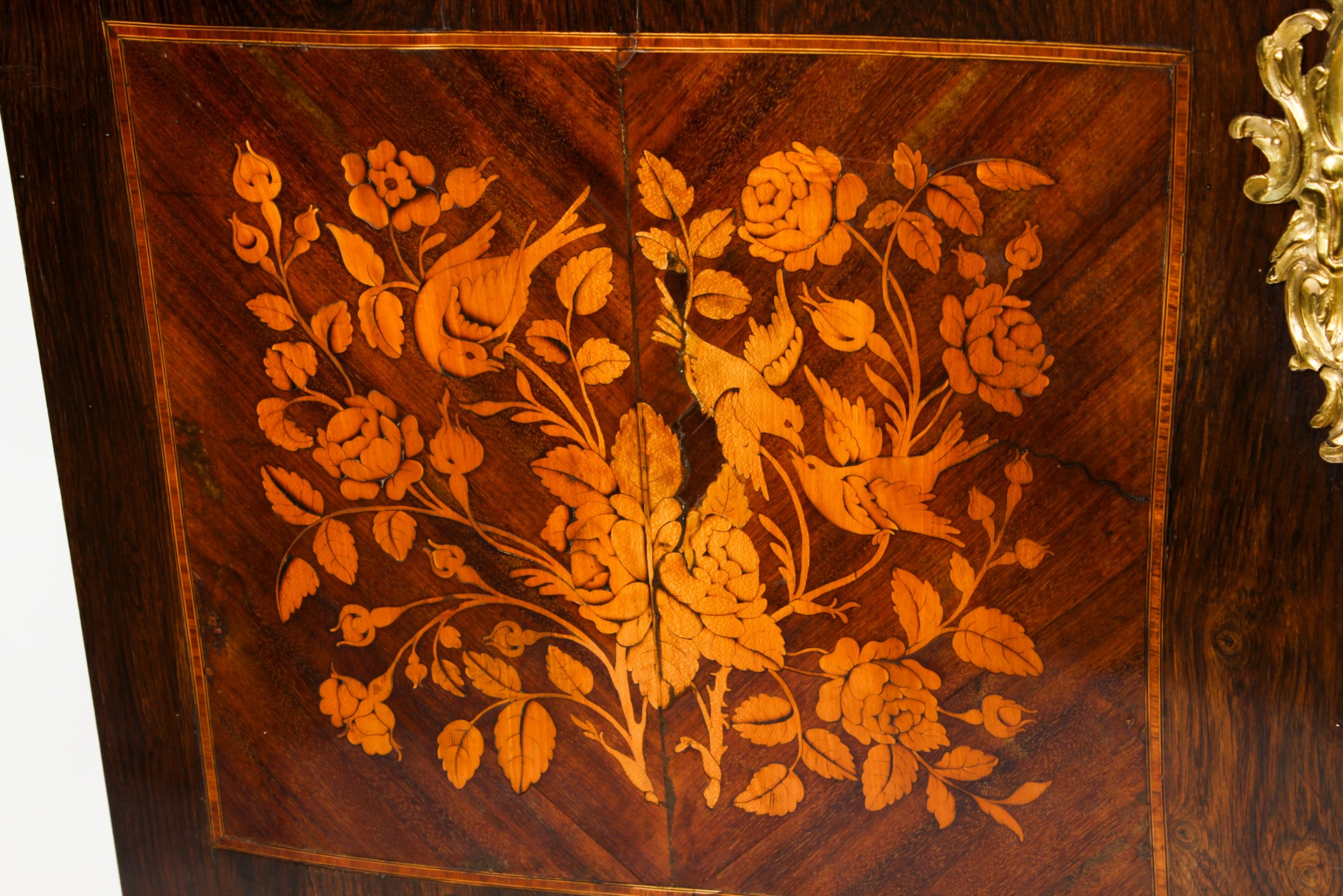
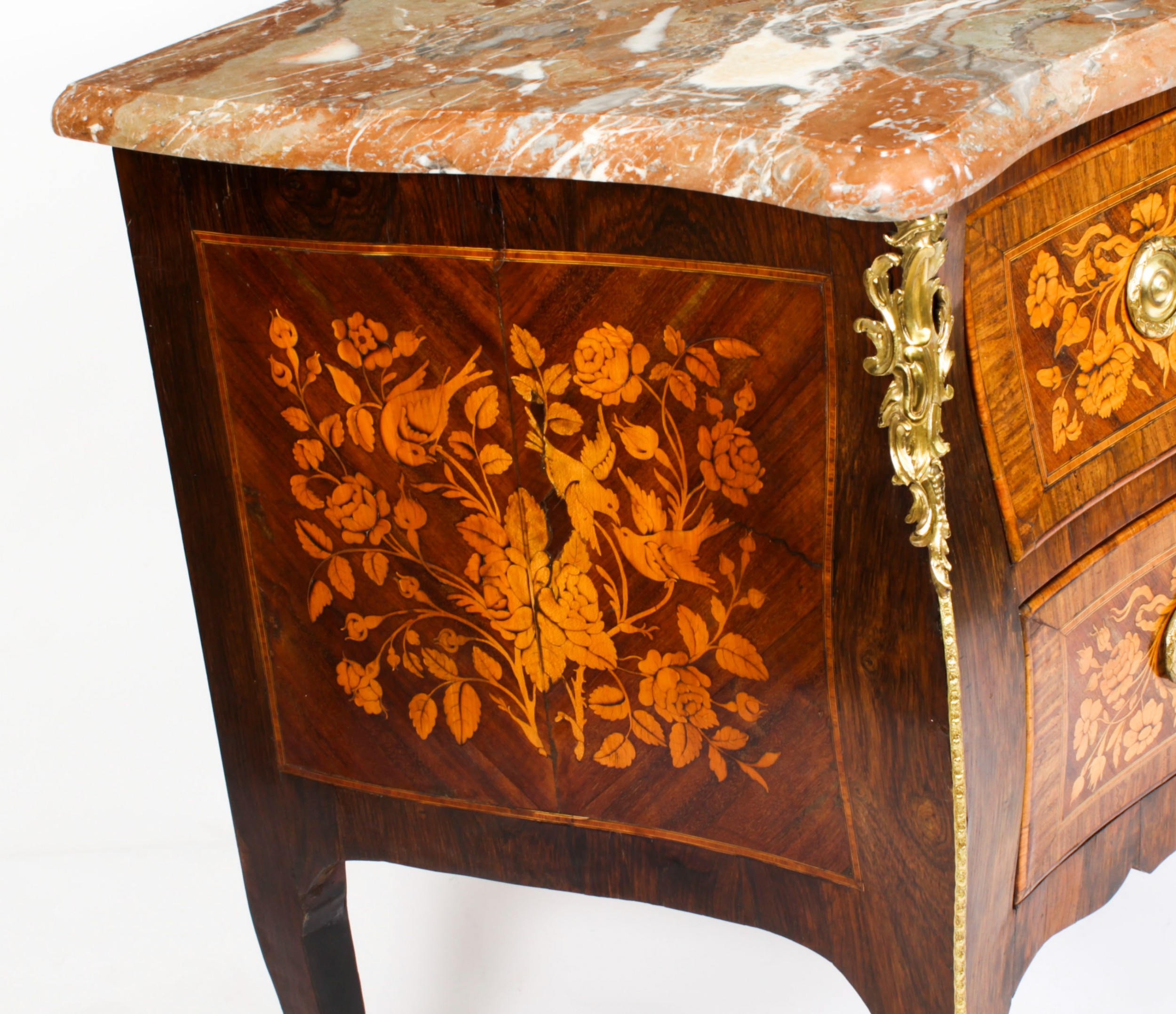
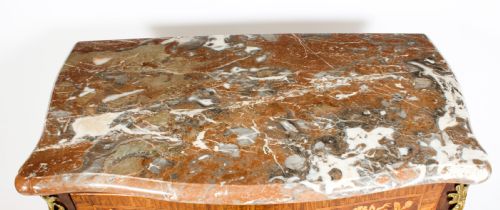
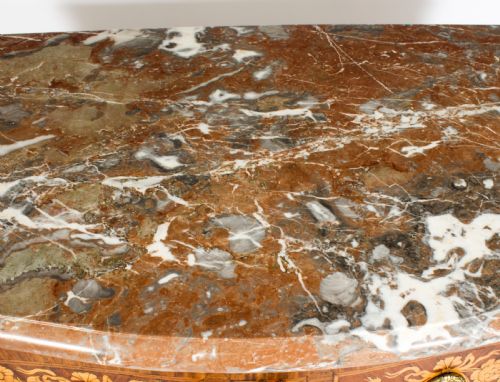
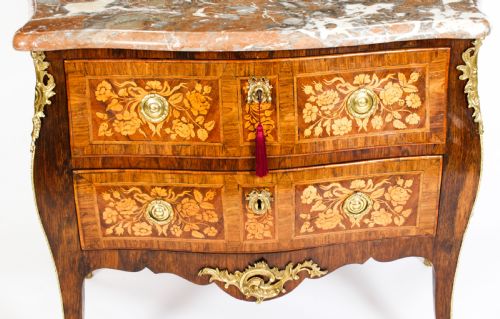
It has a stunning shaped Rouge de Rance marble top above two full width drawers finely inlaid with scrolling foliate and floral marquetry and featuring unusual ormolu corner mounts featuring acanthus scrolls.
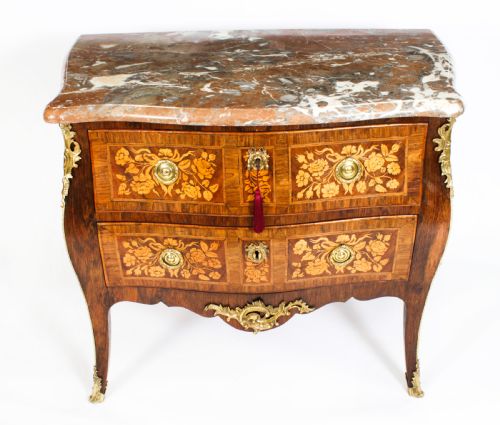
A lot of intricate workmanship by a master craftsman has gone into the creation of this wonderful commode.
Complete with working locks and key.
Condition:
In really excellent condition having been beautifully cleaned, French polished and waxed in our workshops, please see photos for confirmation.
Dimensions in cm:
Height 85 x Width 101 x Depth 59
Dimensions in inches:
Height 2 foot, 9 inches x Width 3 foot, 4 inches x Depth 1 foot, 11 inches
Rouge de Rance
is a reddish marble from the town of Rance in the province of Hainaut Belgium.
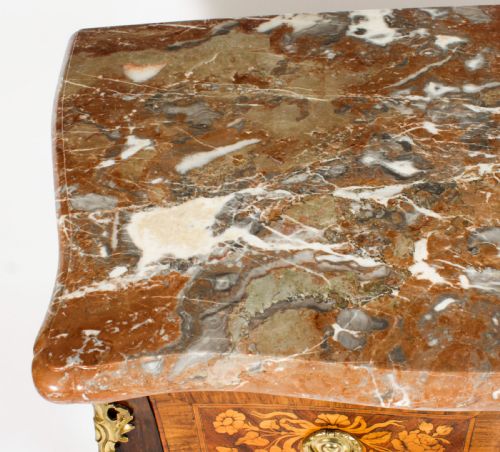
The red "marble" of Rance was very popular as a prestigious building material for decorative use. Although it has been exploited since Roman Antiquity it became most renowned since the 17th century because of its prolific use in the Royal Chateau of Versailles built for the French king Louis XIV. Large quantities were used for the most prestigious parts of the building, including the interior wall decoration of the "Galerie des Glaces" and the columns of the main portico on the "Cour des Marbres". To satisfy the vast demand needed for Versailles and other French royal residences a new quarry was opened and subsequently named "Trou de Versailles"
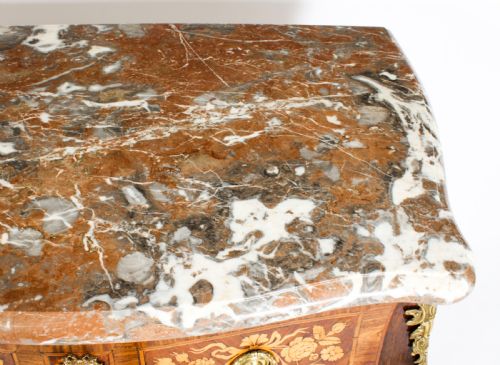
Since the 18th century "Rouge de Rance" was also very popular as a material for fireplaces and clocks, and as a top for furniture such as commodes.
The exploitation of the quarries in Rance stopped in the 1950s. A museum on Belgian Marbles was opened in Rance in 1979.
Marquetry
is decorative artistry where pieces of material of different colours are inserted into surface wood veneer to form intricate patterns such as scrolls or flowers.
The technique of veneered marquetry had its inspiration in 16th century Florence. Marquetry elaborated upon Florentine techniques of inlaying solid marble slabs with designs formed of fitted marbles, jaspers and semi-precious stones. This work, called opere di commessi, has medieval parallels in Central Italian "Cosmati"-work of inlaid marble floors, altars and columns. The technique is known in English as pietra dura, for the "hardstones" used: onyx, jasper, cornelian, lapis lazuli and colored marbles. In Florence, the Chapel of the Medici at San Lorenzo is completely covered in a colored marble facing using this demanding jig-sawn technique.
Techniques of wood marquetry were developed in Antwerp and other Flemish centers of luxury cabinet-making during the early 16th century. The craft was imported full-blown to France after the mid-seventeenth century, to create furniture of unprecedented luxury being made at the royal manufactory of the Gobelins, charged with providing furnishings to decorate Versailles and the other royal residences of Louis XIV. Early masters of French marquetry were the Fleming Pierre Golle and his son-in-law, André-Charles Boulle, who founded a dynasty of royal and Parisian cabinet-makers (ébénistes) and gave his name to a technique of marquetry employing brass with pewter in arabesque or intricately foliate designs.
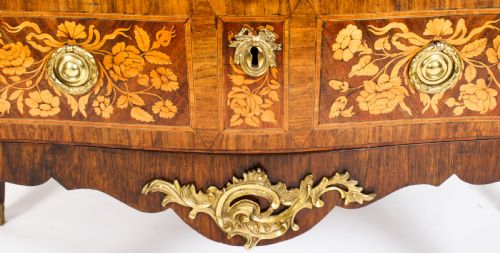
Ormolu - Gilt Bronze (from French 'or moulu', signifying ground or pounded gold) is an 18th-century English term for applying finely ground, high-carat gold in a mercury amalgam to an object of bronze.The mercury is driven off in a kiln leaving behind a gold-coloured veneer known as 'gilt bronze'.
The manufacture of true ormolu employs a process known as mercury-g
Regent Antiques has dated this piece to the 18th Century.
We specialise in english and continental furniture, silver, porcelain and decorative items.
You can view the stock and full dealer information on the Regent Antiques Profile Page
Regent Antiques is a registered member of LAPADA CINOA
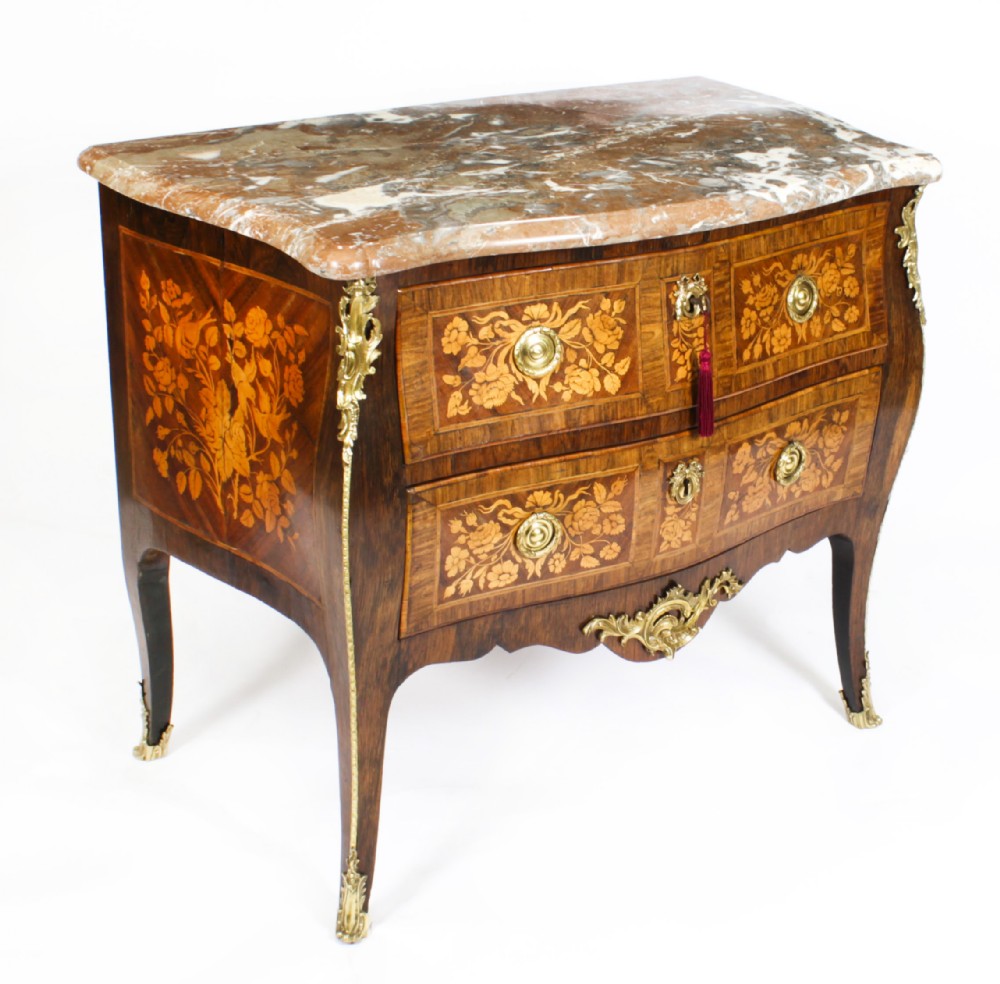
Antique French Louis XVI Marquetry Commode Chest 18th C