43,311  PAGES BROWSED TODAY PAGES TODAY • 200 ANTIQUES UPLOADED TODAYNEW ARRIVALS
GIFTS
200 ITEMS ADDED TODAY
Sort Order
Items Per Page
Antiques dealer?
Join as a Seller
Browse Categories
Sort order
Relevant Links
Items per page
ID #SA938856
SOLD
Email Phone
Save
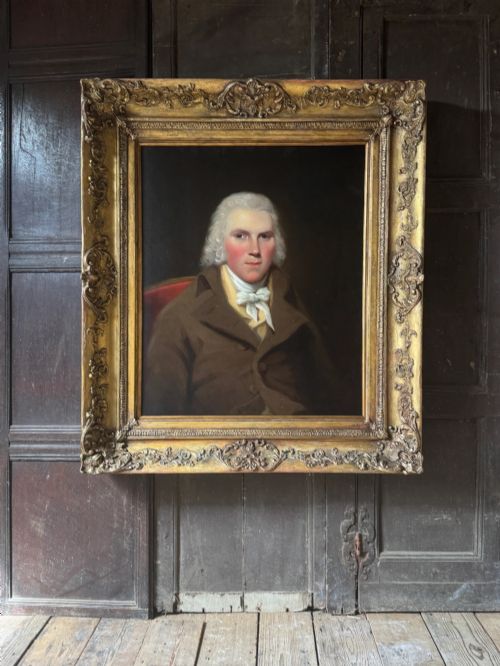
Portrait of a Gentleman in a Blue Coat and Powdered Wig C.1775; by Henry Walton (1746-1813), Oil on Panel, Rare Example of the Artist's Work
Sold by Titan Fine Art
sold SA938856
Sorry, but this item has been sold.
Titan Fine Art

Titan Fine Art

Sellingantiques Verified Since Jul 2016
Browse dealers 20 items
  • About Us
    Specialist in 17th & 18thc portraits. Highly curated selection, museum-level research & pro conservation. Exceptional art, expertly vetted.
Id #SA938856
PDF SHARE
SAVE

Portrait of a Gentleman in a Blue Coat and Powdered Wig C.1775; by Henry Walton (1746-1813), Oil on Panel, Rare Example of the Artist's Work

18th century
Sold 13 November 2024 · Titan Fine Art
This “Portrait of a Gentleman in a Blue Coat and Powdered Wig C.1775; by Henry Walton (1746-1813), Oil on Panel, Rare Example of the Artist's Work” found a buyer.

It was listed by Titan Fine Art. Sold pieces stay on Sellingantiques as a record of what has passed through, and the next one is rarely far away.

Description

A superb and rare example of the artist’s work

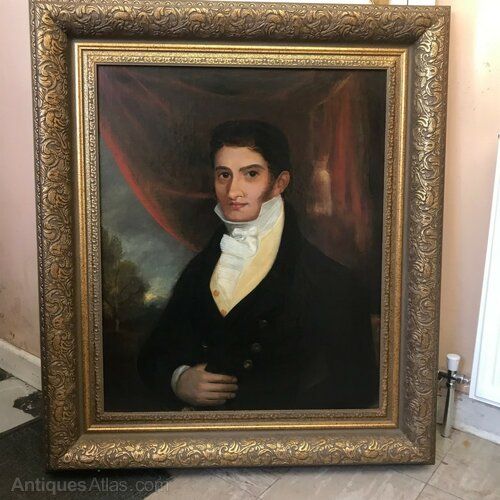
This portrait is a fine example of the late 18th century English school, where the sitter is portrayed in a standard gentlemanly manner. Depicted in a blue coat with large gold buttons, white cravat, and a fashionable powdered wig which has been tied at the nape of the neck in a queue, it is striking in its recording of the respectable, learned, and amiable character of the sitter. It has been very finely painted, similar in detail to the work of a miniaturist, in the mid to late 1770’s when Walton had established a reputation as a fine painter. The format, overall style, and the finely rendered face are characteristic features of his work.

Henry Walton (1746–1813) was a most pleasing and exquisite English painter, art dealer, art connoisseur, and art expert. He was a man whose company was much sought after because of his pleasant disposition a fact to be deduced from his paintings his high spirits, and his amusing anecdotal conversation. Walton was a friend of most of the English artists of his day, and it is probable that, since he was a friend of Gainsborough and was known to cherish a great admiration for that painter's work, he was the same Walton who purchased the contents of Gainsborough's studio after his death.

Born at Dickleburgh near Diss in Norfolk, in 1746, he was brought up and lived in easy circumstances; his great-uncle being the famous admiral, Sir George Walton.

In 1765, aged nineteen, Walton moved to London and in 1770 he enrolled at the Maiden Lane Academy, in Covent Garden, London, to study Art, and while there became a pupil of Johan Zoffany. After quitting the studio of that painter and setting up on his own, he married a neighbour, Miss Rust, who was also a painter and miniaturist, and soon after purchased a freehold estate, the Oak Tree Farm at Burgate in Suffolk. Here he lived and worked for many years, though he also travelled much and worked regularly and at frequent intervals in London. He exhibited for a few years at the Royal Academy.

By 1771 he was living at Great Chandos Street, Covent Garden, painting portraits in oil and miniatures, often featuring close friends and family, and later that year he was elected a fellow of the Society of Artists, and exhibited two portraits. During the early to mid-1770s Walton seems to have concentrated on working as a portrait painter, presumably because it was easier to get commissions for these from the Suffolk gentry.

By the 1790’s he had also obtained an unusually high reputation as connoisseur and expert. It was said that hardly a picture of any note existed in England with which he was not acquainted. He helped to form several famous contemporary collections, among that of Lord Fitzwilliam, now the nucleus of the Fitzwilliam Museum at Cambridge. The first Lord Lansdowne was reputed never to buy a picture without Walton's advice.

Walton continued to paint well into the early 1800’s. He died on his way back from a party on the 19th of May 1813 in New Bond Street.

Past sales of his work:-

• A Portrait of a Gentleman and a Portrait of a Lady, oil on panels (9.1 x 6.7 in) sold at Sotheby's London 21 March 2001 [Lot 33] for £13,725.

• A portrait of Admiral Sir Thomas Frankland, 5th Bt. of Kirby Hall, Berkshire, and Thirkleby, near Thirsk wearing naval uniform” oil on panel (9.4 x 7.3 in) sold at Sotheby's London 24 Nov 1999 [Lot 43] for £7,475.

• Portrait of Sir Thomas Frankland, 6th Bt. wearing a red coat and white stock, Oil on Panel, 9.1 x 7.3 in) sold at Sotheby's London 24 November 1999 [Lot 45] for £9,200.

His paintings are in the National Portrait Gallery London, the Tate Museum London, Victoria and Albert Museum, Dulwich Picture Gallery, and the Yale Centre for British Art.

Held in a good quality and condition period gilded frame.

More info at: www.titanfineart.com

Date of Manufacture

Titan Fine Art has dated this Georgian Oil Painting to the 18th Century.

Physical Dimensions
Height
33cm (12.99")
Width
28cm (11.02")
Depth
3.5cm (1.38")
Reference Numbers
Sellingantiques Reference
SA938856
Dealers Notes

Much more info about this item at: www.titanfineart.com

In a market saturated with available paintings, Titan Fine Art offers a specially curated selection. Each piece is meticulously chosen based on technical merit, provenance, and decorative appeal, professionally conserved and researched, ensuring our clients view only the finest examples of British and European art.

With over 20 years of expertise and 1,000+ works placed with collectors and institutions, we are one of the most prolific specialists in 17th and 18th-century portraiture. We combine a scholarly approach with museum-level rigor to replace the uncertainty of the open market with absolute confidence.

Why Buy From Titan Fine Art?

• Expertly Curated Selection

We act as your expert eye, selecting only high-quality works that offer genuine historical and artistic value.

• Museum-Level Research

Each portrait is supported by extensive academic research, often exceeding 40 hours, to establish attribution, sitter identity, and historical context.

• Professional Conservation

All paintings are carefully cleaned and stabilised by professional conservators, and are presented ready to hang.

• Transparent Pricing

No buyer’s premium or hidden fees—unlike auction houses, where additional costs can add 25–35%.

• Export Pricing Advantage

Reduced pricing is available for works exported outside the UK.

• Specialist Global Shipping

We manage the entire process, including custom crating, export documentation, and fully tracked delivery worldwide.

• Buy with Confidence

A 7-day return policy and the option to pay in GBP, USD, or EUR for convenience and transparency.

• Original Period Frames

Many works retain their original carved and gilded frames, which are works of art in their own right and enhance both historical authenticity and decorative impact.

• Personal Advisory Service

We work directly with collectors and interior designers, offering guidance on selection, scale, and placement—including bespoke room mock-ups on request.

Subscribe to our monthly 'new item alert' to be the first to hear about new works

Description
A superb and rare example of the artist’s work
“
This portrait is a fine example of the late 18th century English school, where the sitter is portrayed in a standard gentlemanly manner.
Titan Fine Art

Depicted in a blue coat with large gold buttons, white cravat, and a fashionable powdered wig which has been tied at the nape of the neck in a queue, it is striking in its recording of the respectable, learned, and amiable character of the sitter. It has been very finely painted, similar in detail to the work of a miniaturist, in the mid to late 1770’s when Walton had established a reputation as a fine painter. The format, overall style, and the finely rendered face are characteristic features of his work.

fig 1. An 18th-century oil painting on panel depicting a gentleman in a blue coat and powdered wig, set inside an ornate gilded wooden frame.
fig 1. Portrait of a Gentleman in a Blue Coat and Powdered Wig C.1775; by Henry Walton (1746-1813), Oil on Panel, Rare Example of the Artist's Work

Henry Walton (1746–1813) was a most pleasing and exquisite English painter, art dealer, art connoisseur, and art expert. He was a man whose company was much sought after because of his pleasant disposition a fact to be deduced from his paintings his high spirits, and his amusing anecdotal conversation. Walton was a friend of most of the English artists of his day, and it is probable that, since he was a friend of Gainsborough and was known to cherish a great admiration for that painter's work, he was the same Walton who purchased the contents of Gainsborough's studio after his death.

fig 2. An 18th-century oil painting on panel depicting a gentleman in a blue coat and powdered wig, set inside an ornate gilded wooden frame.
fig 2. Portrait of a Gentleman in a Blue Coat and Powdered Wig C.1775; by Henry Walton (1746-1813), Oil on Panel, Rare Example of the Artist's Work

Born at Dickleburgh near Diss in Norfolk, in 1746, he was brought up and lived in easy circumstances; his great-uncle being the famous admiral, Sir George Walton.

In 1765, aged nineteen, Walton moved to London and in 1770 he enrolled at the Maiden Lane Academy, in Covent Garden, London, to study Art, and while there became a pupil of Johan Zoffany. After quitting the studio of that painter and setting up on his own, he married a neighbour, Miss Rust, who was also a painter and miniaturist, and soon after purchased a freehold estate, the Oak Tree Farm at Burgate in Suffolk. Here he lived and worked for many years, though he also travelled much and worked regularly and at frequent intervals in London. He exhibited for a few years at the Royal Academy.

fig 3. An 18th-century oil painting on panel depicting a gentleman in a blue coat and powdered wig, set inside an ornate gilded wooden frame.
fig 3. Portrait of a Gentleman in a Blue Coat and Powdered Wig C.1775; by Henry Walton (1746-1813), Oil on Panel, Rare Example of the Artist's Work

By 1771 he was living at Great Chandos Street, Covent Garden, painting portraits in oil and miniatures, often featuring close friends and family, and later that year he was elected a fellow of the Society of Artists, and exhibited two portraits. During the early to mid-1770s Walton seems to have concentrated on working as a portrait painter, presumably because it was easier to get commissions for these from the Suffolk gentry.

By the 1790’s he had also obtained an unusually high reputation as connoisseur and expert. It was said that hardly a picture of any note existed in England with which he was not acquainted. He helped to form several famous contemporary collections, among that of Lord Fitzwilliam, now the nucleus of the Fitzwilliam Museum at Cambridge. The first Lord Lansdowne was reputed never to buy a picture without Walton's advice.

Walton continued to paint well into the early 1800’s. He died on his way back from a party on the 19th of May 1813 in New Bond Street.

Past sales of his work:-

• A Portrait of a Gentleman and a Portrait of a Lady, oil on panels (9.1 x 6.7 in) sold at Sotheby's London 21 March 2001 [Lot 33] for £13,725.

• A portrait of Admiral Sir Thomas Frankland, 5th Bt. of Kirby Hall, Berkshire, and Thirkleby, near Thirsk wearing naval uniform” oil on panel (9.4 x 7.3 in) sold at Sotheby's London 24 Nov 1999 [Lot 43] for £7,475.

• Portrait of Sir Thomas Frankland, 6th Bt. wearing a red coat and white stock, Oil on Panel, 9.1 x 7.3 in) sold at Sotheby's London 24 November 1999 [Lot 45] for £9,200.

His paintings are in the National Portrait Gallery London, the Tate Museum London, Victoria and Albert Museum, Dulwich Picture Gallery, and the Yale Centre for British Art.

Held in a good quality and condition period gilded frame.

More info at: www.titanfineart.com

Date of Manufacture

Titan Fine Art has dated this Georgian Oil Painting to the 18th Century.

Height
33cm (12.99")
Width
28cm (11.02")
Depth
3.5cm (1.38")
Reference Numbers
Sellingantiques Ref
SA938856
Titan Fine Art
Titan Fine Art
Sellingantiques verified Since Jul 2016

Specialist in 17th & 18thc portraits. Highly curated selection, museum-level research & pro conservation. Exceptional art, expertly vetted.

Dealer Profile

You can view the stock and full dealer information on the Titan Fine Art Profile Page

PDF SHARE
SAVE
An 18th-century oil painting on panel depicting a gentleman in a blue coat and powdered wig, set inside an ornate gilded wooden frame. SOLD6+ MONTHS AGO
1 / 4
Archive I An 18th-century oil painting on panel depicting a gentleman in a blue coat and powdered wig, set inside an ornate gilded wooden frame. SOLD6+ MONTHS AGO

Portrait of a Gentleman in a Blue Coat and Powdered Wig C.1775; by Henry Walton (1746-1813), Oil on Panel, Rare Example of the Artist's Work

Archive II An 18th-century oil painting on panel depicting a gentleman in a blue coat and powdered wig, set inside an ornate gilded wooden frame. View II
Archive III An 18th-century oil painting on panel depicting a gentleman in a blue coat and powdered wig, set inside an ornate gilded wooden frame. View III
Archive IV An 18th-century oil painting on panel depicting a gentleman in a blue coat and powdered wig, set inside an ornate gilded wooden frame. View IV
FURTHER BROWSING

Visitors also looked at these ⇣

Enlarged Archival View
Telephone 07875 412 111
Location
London
United Kingdom
Dealer Profile Page sellingantiques.co.uk/titan
Verified Since Jul 2016
Items For Sale 20
Items Sold 407
Titan Fine Art
Titan Fine Art
Verified Since Jul 2016
View Dealer Info
Location: London, United Kingdom
Verified
Jul 2016
For Sale
20
Sold
407
An 18th-century oil painting on panel depicting a gentleman in a blue coat and powdered wig, set inside an ornate gilded wooden frame.
Portrait of a Gentleman in a Blue Coat and Powdered Wig c.1775; By Henry Walton (1746-1813), Oil on Panel, Rare example of the artist's work
Ref: SA938856
An 18th-century oil painting on panel depicting a gentleman in a blue coat and powdered wig, set inside an ornate gilded wooden frame.
Detail View 1
Detail View 2
Detail View 3
Archival Detail
Every single antique dealer on our platform is individually approved by our internal team. We verify their professional trade history, ethical standards, and photographic quality to ensure a secure, high-standard buying environment. Upon joining, every dealer agrees to a strict 9-point code of conduct. While issues can occasionally arise, our dealers typically resolve them swiftly and directly with the buyer. In fact, since our founding in 2002, Sellingantiques has only had to step in to help resolve an issue on roughly five occasions—a true testament to the quality of our dealers and their dedication to your happiness.
Our dealers are highly experienced in packing and shipping fragile, high-value antiques. Because you are in direct contact with the dealer, you will be able to easily go through all available shipping and insurance options together to ensure your item arrives safely.
Antiques are the ultimate green purchase. By choosing historical pieces over newly manufactured goods, you completely eliminate the carbon footprint of modern mass production while preserving exceptional, timeless craftsmanship.
Written by Sellingantiques from the dealer’s photographs and listing
  • ObjectPaintings
  • Period18th century
  • StyleGeorgian
  • MaterialOil, Wood, Gilt
  • ColourBlue
  • MotifsOval aperture, Powdered wig, Gilt frame
  • SizeH 33 cm (13 in) x W 28 cm (11 in) x D 3.5 cm (1 in)

Georgian portrait painting spans the reigns of the four King Georges from 1714 to 1830, characterised by a focus on realism, status, and classical composition.

Artists during this period commonly utilised oil paints applied to canvas, wood panels, or copper sheets, housed within hand-carved and gilded wooden frames.

Authentication involves examining the craquelure of the paint, testing the ground layer, inspecting the panel or canvas backing for age-related oxidisation, and consulting stylistic provenance.

Pairing a traditional gilt-framed oil painting with minimalist contemporary furniture creates a striking contrast that highlights the artworks historical depth and craftsmanship.

Keep paintings away from direct sunlight and fluctuating humidity levels, and ensure professional cleaning is undertaken only by a qualified conservator.
items
Add keywords to the filter
Price
£100
£250000
Era
Period
Style
Material
Origin
Stock Location
Recently Added
Online Payments
Categories