It was listed by Titan Fine Art. Sold pieces stay on Sellingantiques as a record of what has passed through, and the next one is rarely far away.
Titan Fine Art has dated this piece to the 18th Century.
The fact that the artist was painter to the French King and court during the last half of the eighteenth century, underlines his ability to render skilful and beautiful images. Duplessis’ depiction of Benjamin Franklin fixed Franklin’s image for posterity – it is reproduced on the U.S. one-hundred-dollar bill.
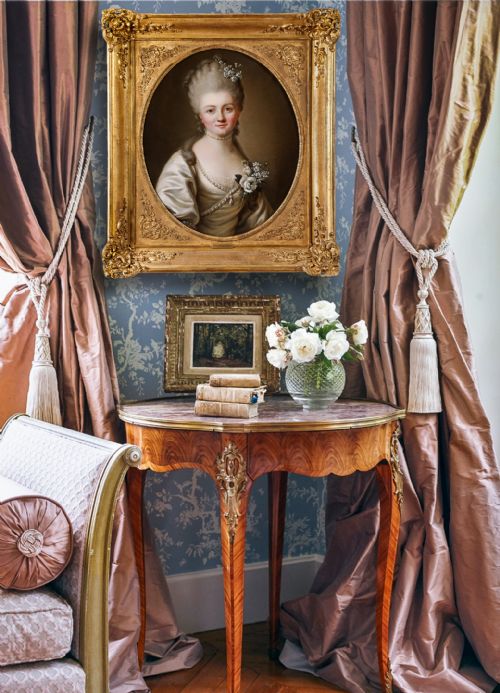
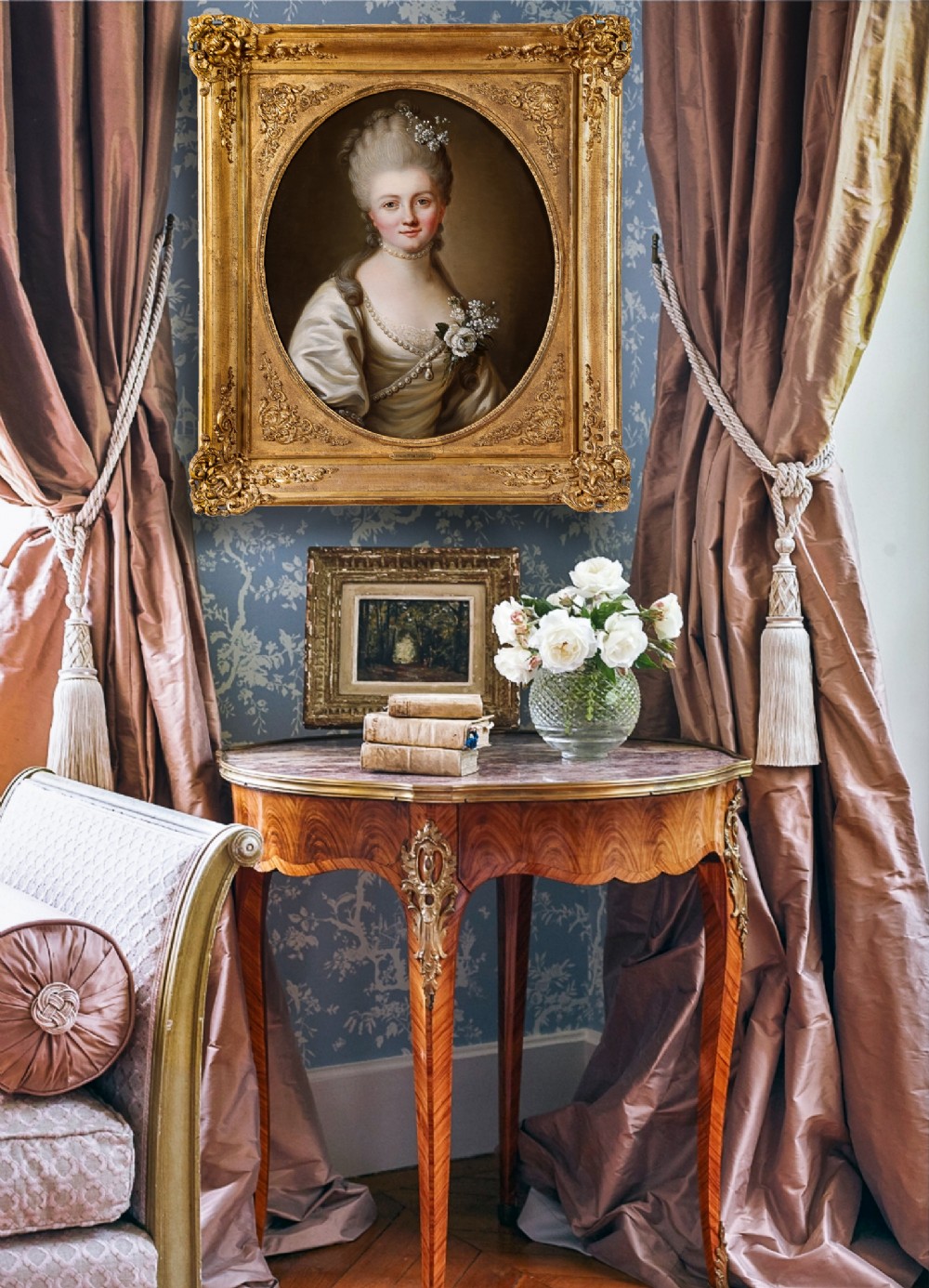
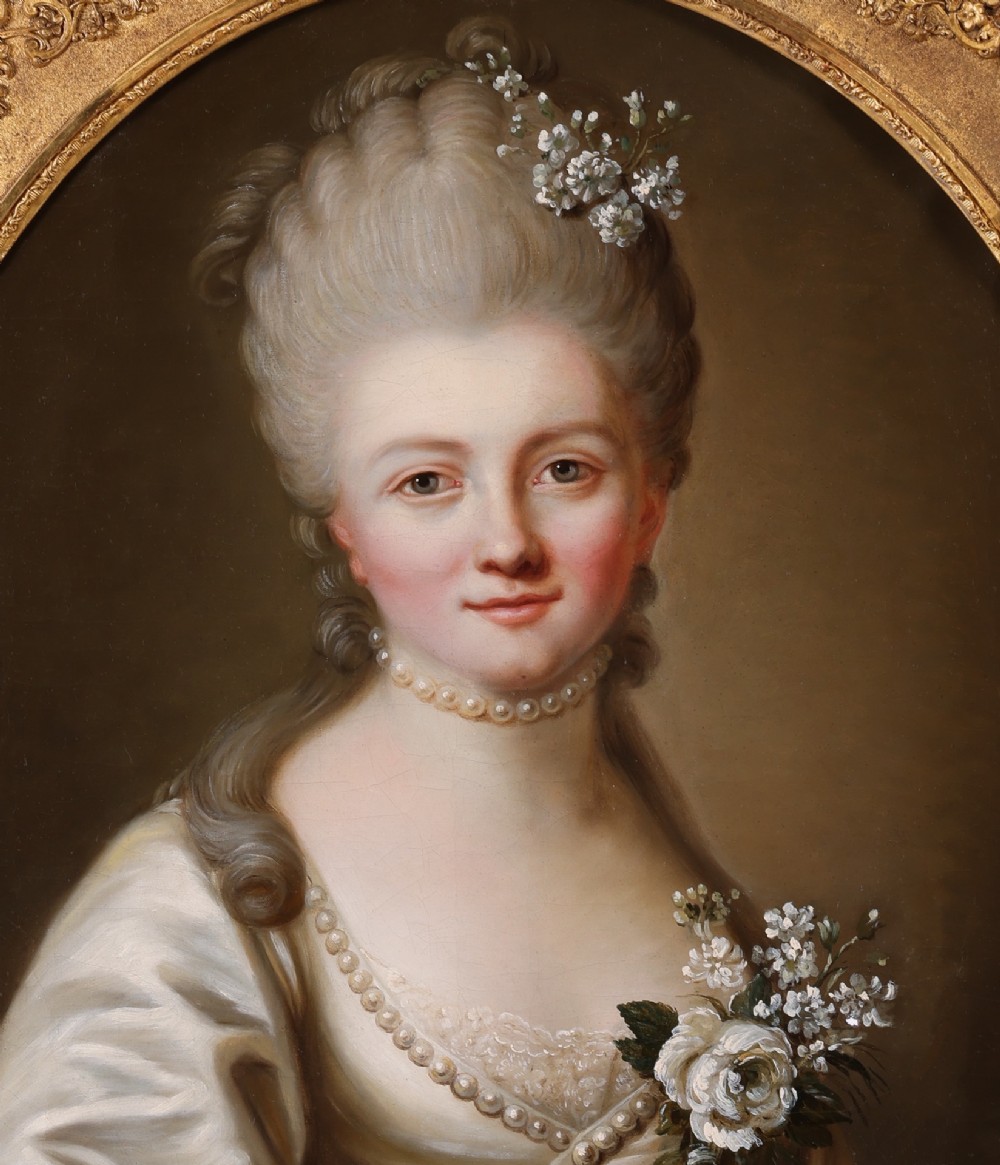
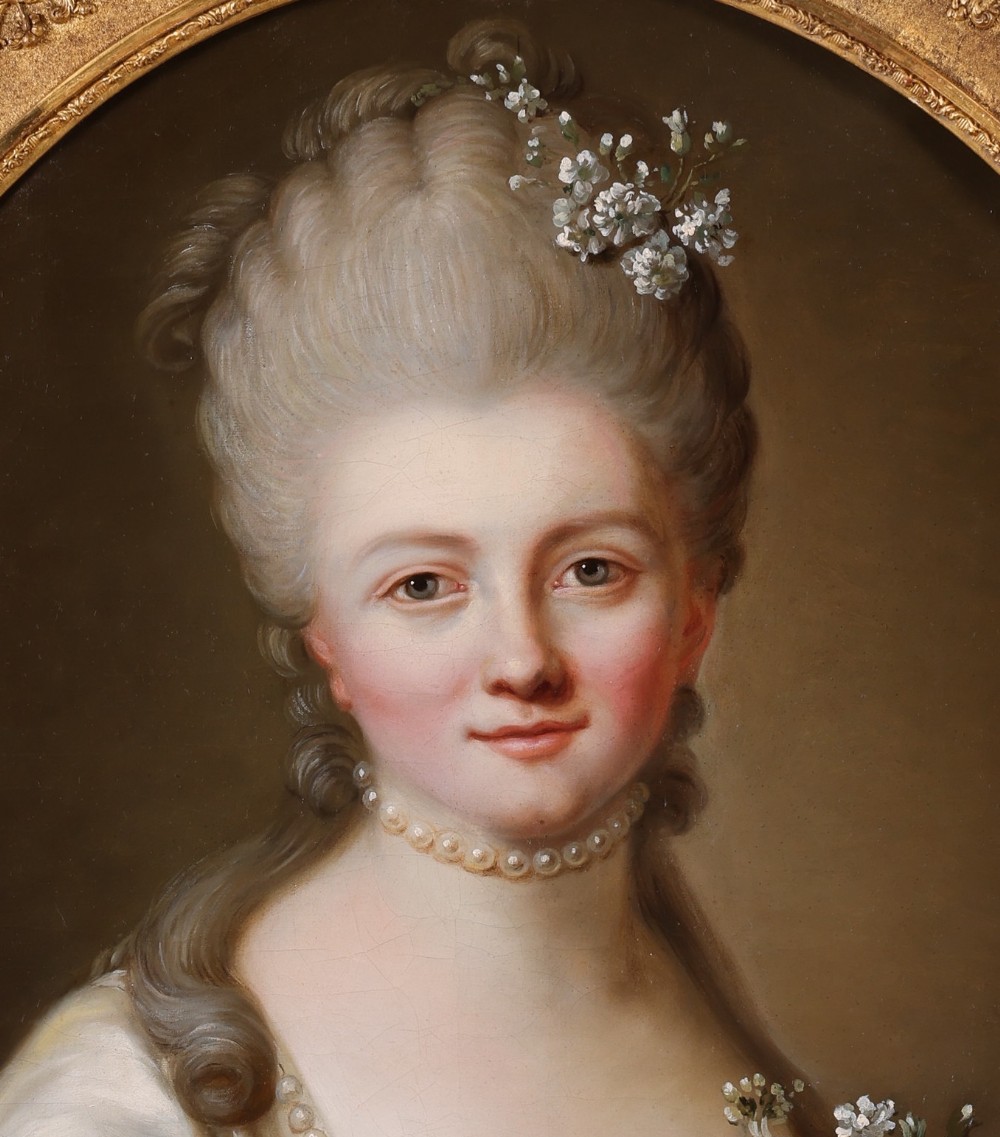
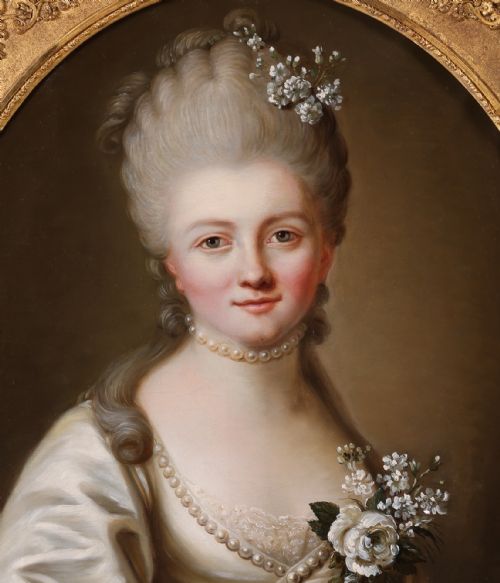
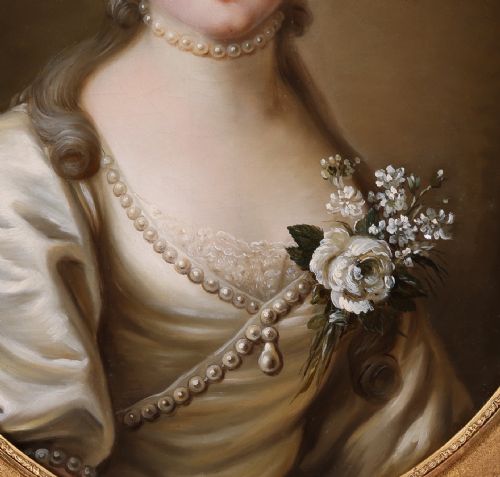
The sitter is Marie Anisson du Perron, who after her marriage, became Marquise de Lambert. Born in 1745 her father, Jacques du Perron, was Director of the Royal Printing Office in 1733. On 26th March 1765, around the time that the portrait was painted, she married Henri Joseph de Lambert (1738-1808) who was Field Marshall, Inspector General of the Cavalry, Member of the Council of War, and Governor of the Citadel of Arras. The couple had six children: Maurice de Lambert (d.1792), Marie Louise de Lambert (1766-1837), Marie Charles de Lambert (1772-1843) (who was Lieutenant General, General Aide to the Emperor of Russia), Henri Jacques de Lambert (1778-1803) (who was State Counsellor to HM the Emperor of Russia), Henriette Françoise Cécile de Lambert (1780-1849), and Louise Marie Henriette de Lambert). It is thought that the Marquis and Marquise resided at Château de Saint-Fargeau.
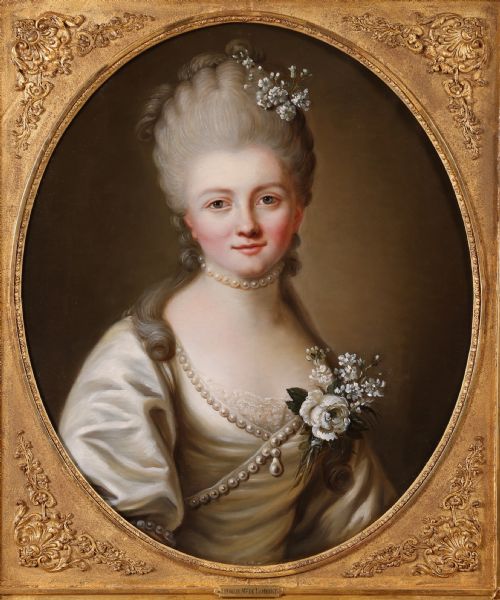
The French Revolution soon ravaged France and ultimately led to the execution of Louis XVI in 1793. The power of the nobility – with its privileges and immunity from taxation – is broken and the absolute monarchy is abolished. The revolution had a massive impact on the destiny of this family. Henri-Joseph fled the country in the company of his youngest son Charles-Marie and, at first, enters the service of the contra-revolutionary army of the princes (1792), before eventually going into exile in Russia. It is then that the Marquis and our sitter divorce, in an effort to protect the sizable maternal estates of the family, which were threatened with confiscation.
In later years Charles-Marie held considerable titles and honours such as lieutenant-general and inspector-general of the cavalry, and he became ‘general in service of Czar Alexander I’. In 1795 he became a highly regarded and exclusive Knight in the ‘Military Order of St. George’ Fourth Class.
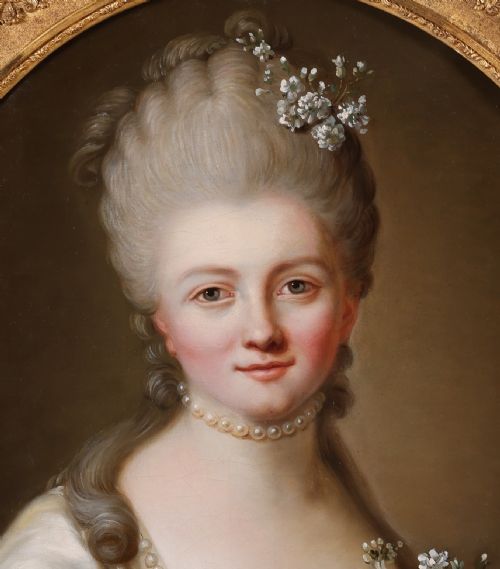
Our sitter died on the 5th August 1803, aged 58 years old.
Works by the artist are held in many French and foreign museums, testifying of his ability and fame - the Musée du Louvre, the Musée National du Château de Versailles, the Musée Condé in Chantilly, the Musée Carnavalet in Paris, the Musée Calvet in Avignon and the Musée Duplessis in Carpentras, and abroad, the Museum of Fine Arts in Boston, the Metropolitan Museum of Art in New York, the Nelson Gallery-Atkins Museum of Art in Kansas City, the Musée Royal des Beaux-Arts in Copenhagen and the Kunsthistorisches Museum in Vienna.
Born 22nd September 1725 in Carpenters (France), Joseph-Siffred Duplessis was son of a surgeon. After receiving his firsts apprenticeship from his father he gained experience from the painter Joseph-Gabriel Imbert (1666-1749), who was a student of Charles Le Brun. In 1744 Duplessis was sent to Rome, where he learned history, portrait and landscape painting, and met Joseph Vernet (1714-1789) – this was to become a long-lasting friendship.
He returned to France around 1748 and worked for the nobility before received official commissions from the Dauphine Marie-Antoinette in 1771, and Louis XVI in 1774. He acquired the privilege to live in Le Louvre and received numerous commissions from the Court of France (and Benjamin Franklin).
Held in its original superb gilded period frame.
Provenance: UK private collection of a gentleman of title
Much more info on our website
Titan Fine Art has dated this piece to the 18th Century.
Specialist in 17th & 18thc portraits. Highly curated selection, museum-level research & pro conservation. Exceptional art, expertly vetted.
You can view the stock and full dealer information on the Titan Fine Art Profile Page
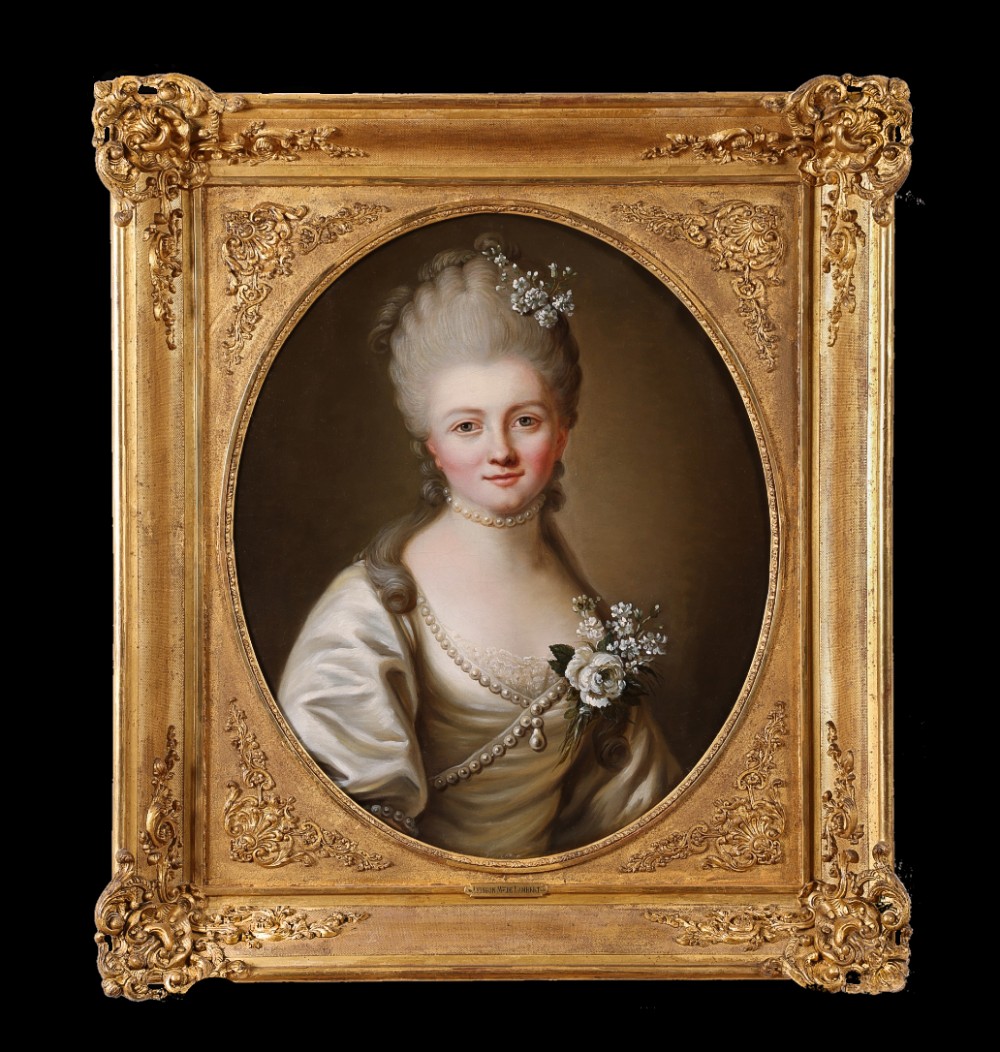
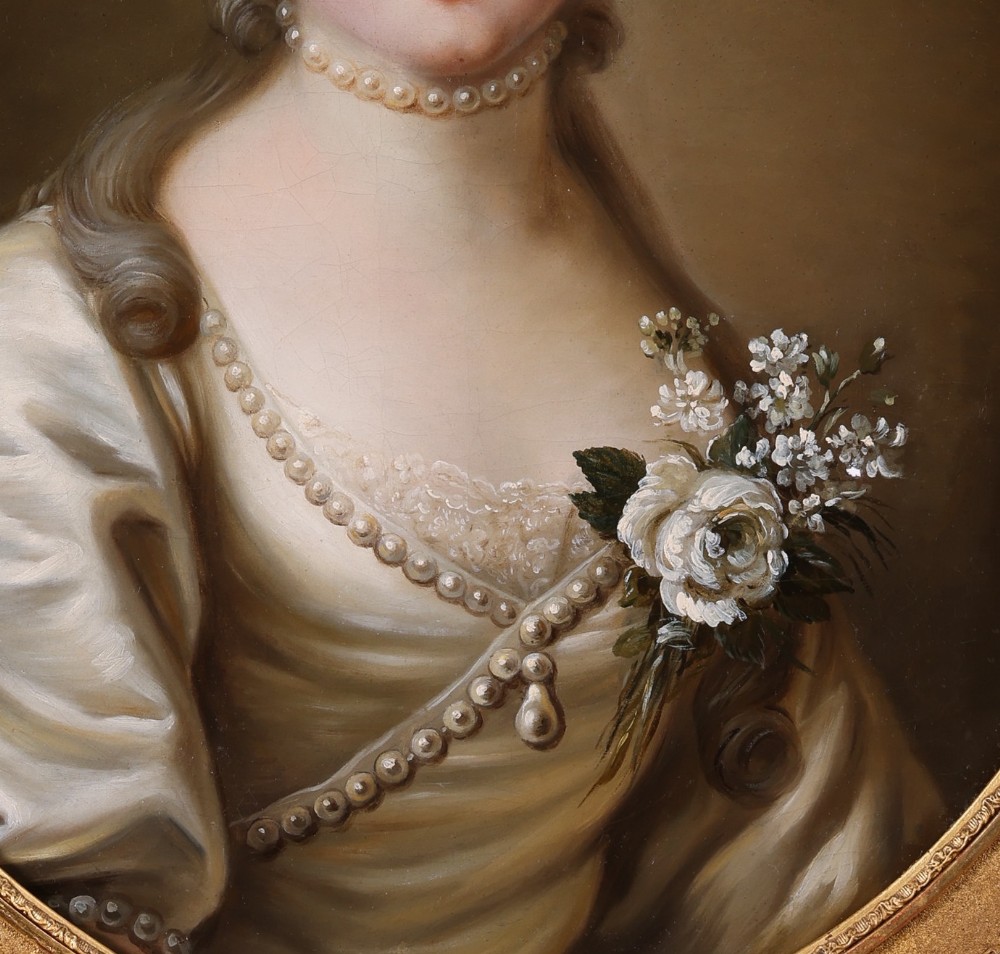
Portrait of Marie Anisson Du Perron, Marquise De Lambert, C.1765; Attributed to Joseph Duplessis (1725-1802), Antique Oil on Canvas Painting