Regent Antiques has dated this piece to the 18th Century.
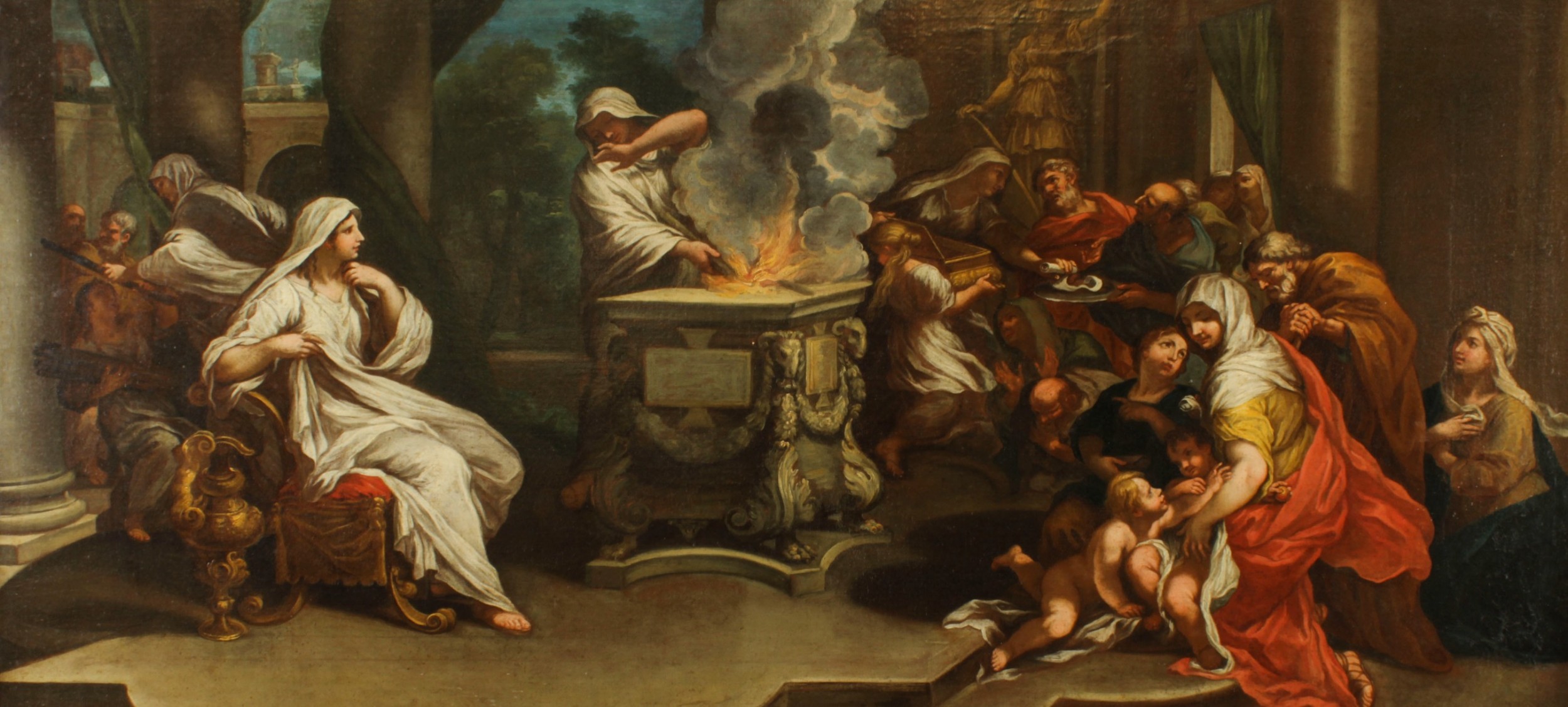
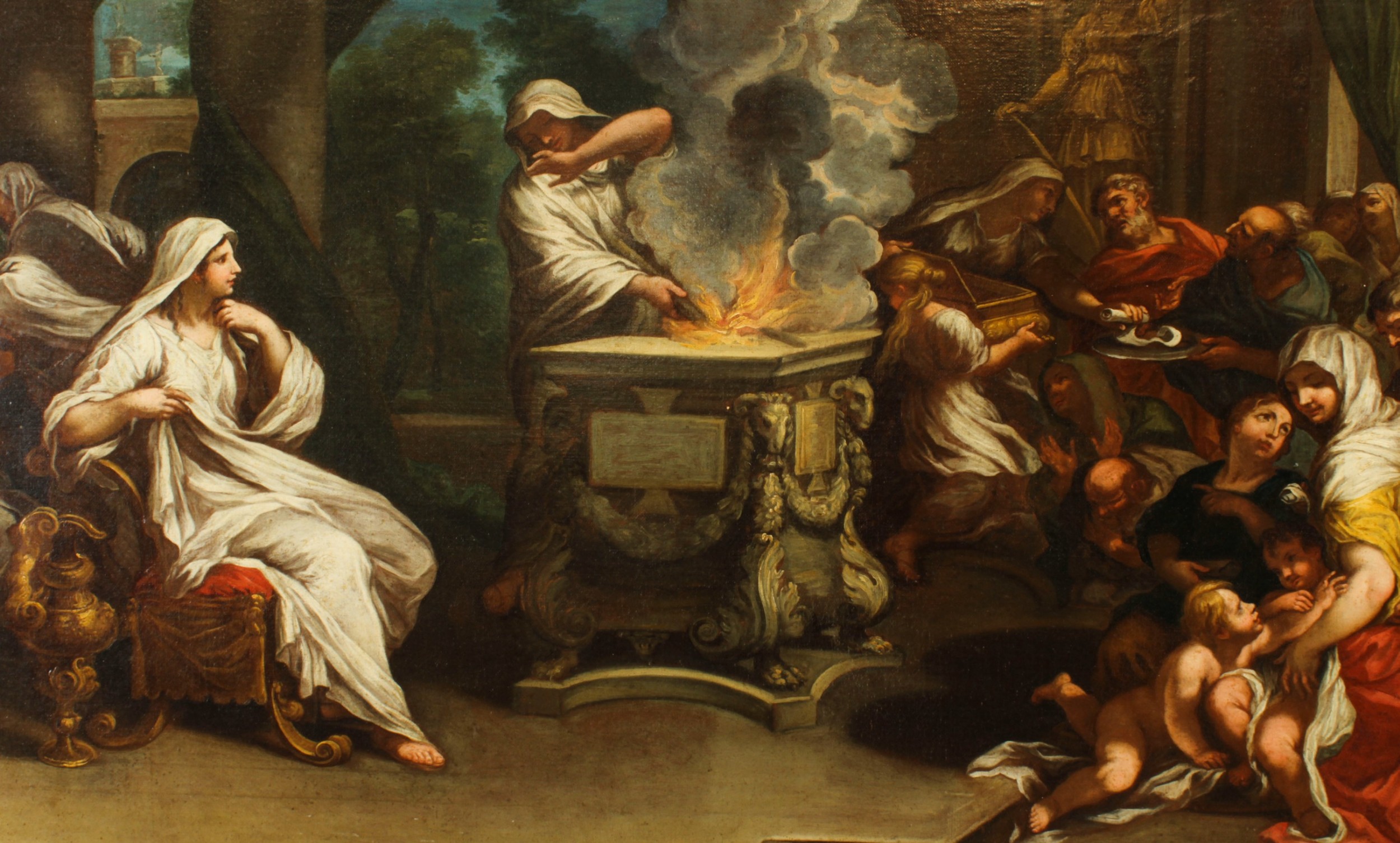
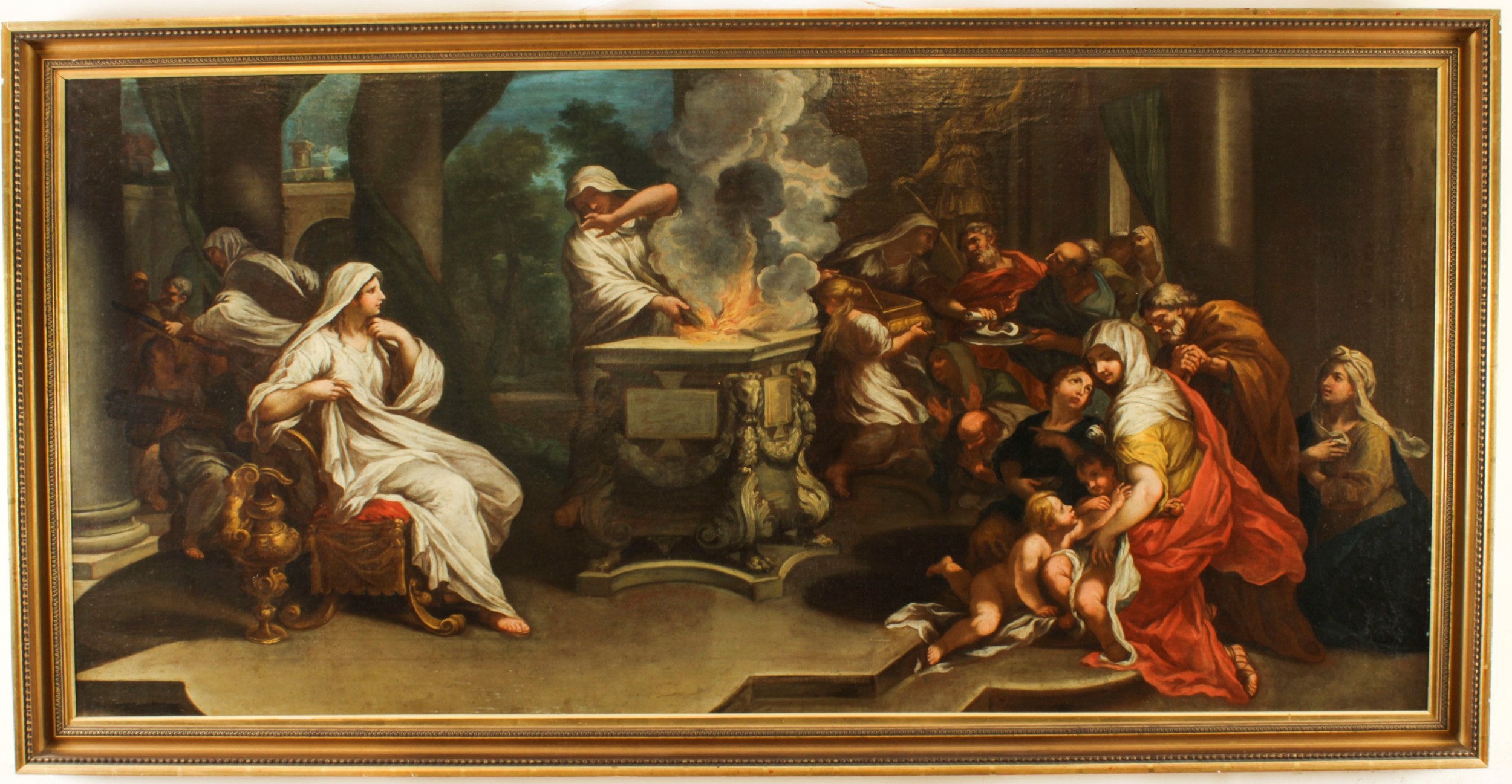
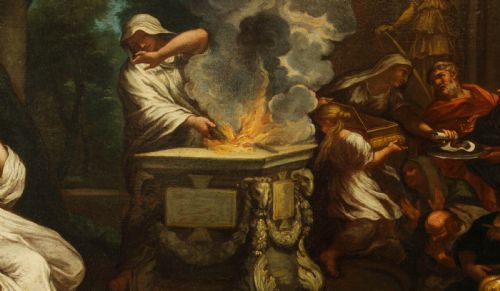
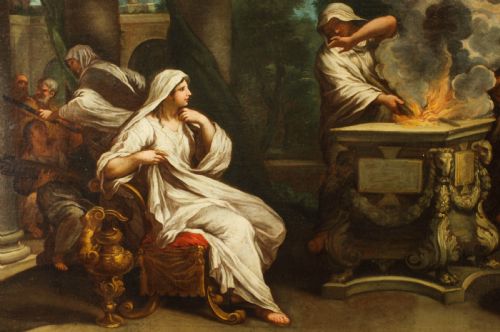
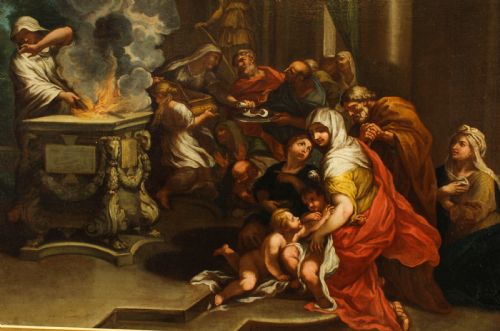
The painting depicts a man standing, behind an altar, shielding himself from a kindling fire.
Francesco Solimena (4 October 1657 – 3 April 1747) was a prolific Italian painter of the Baroque era, one of an established family of painters and draughtsmen.
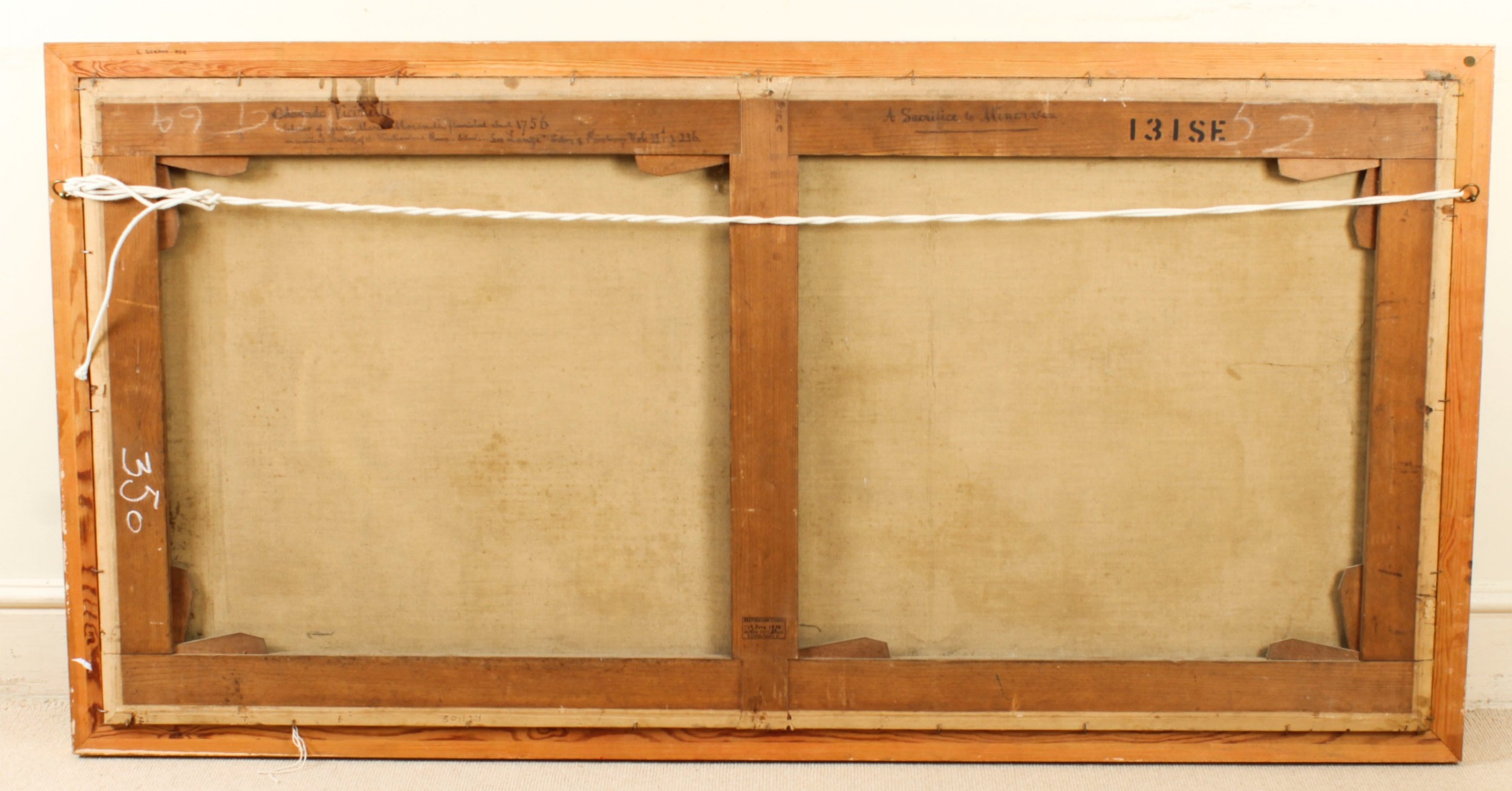
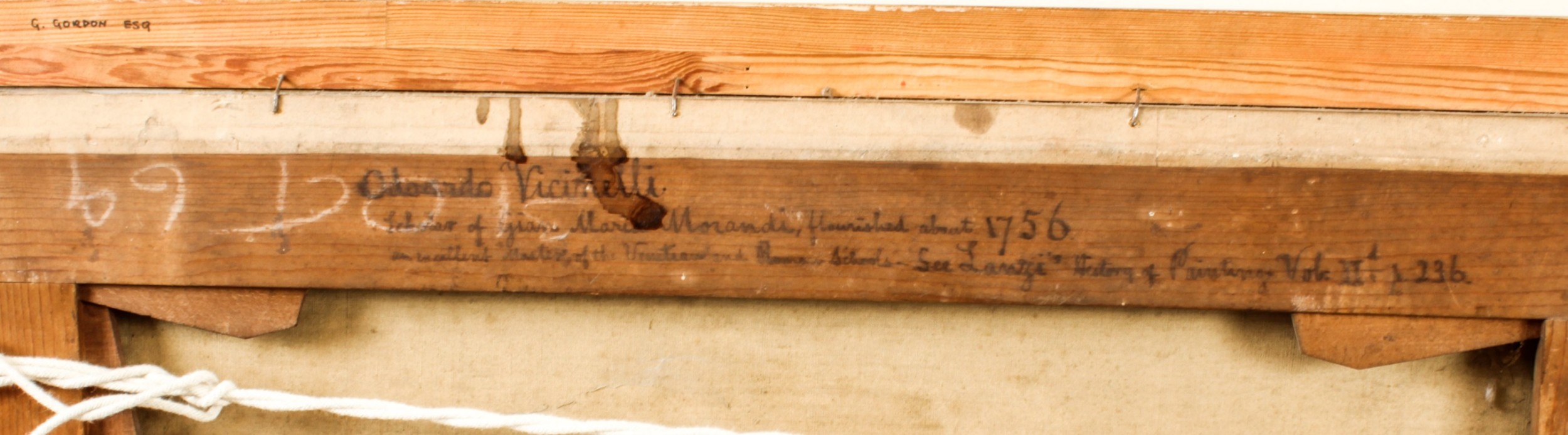
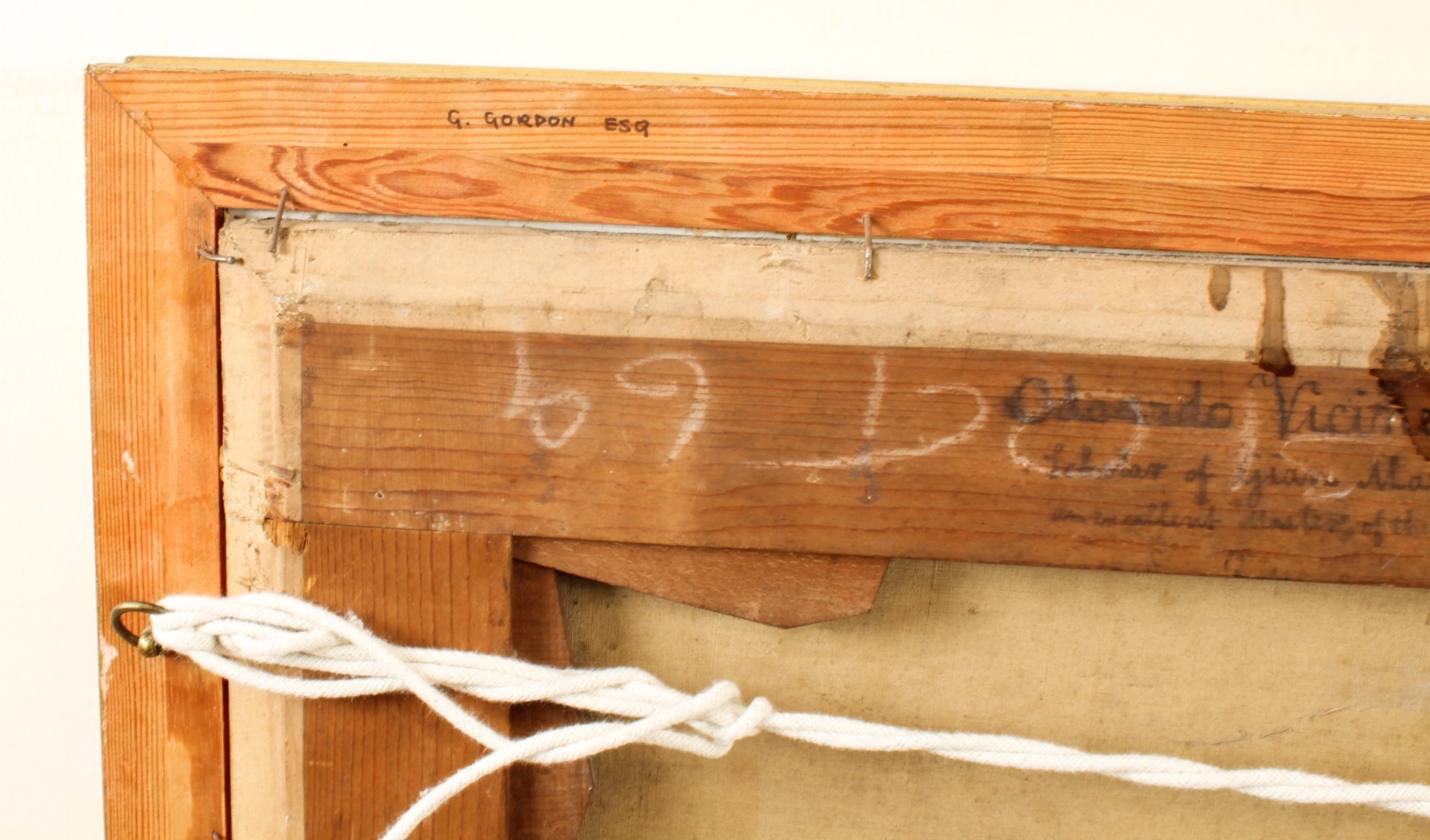
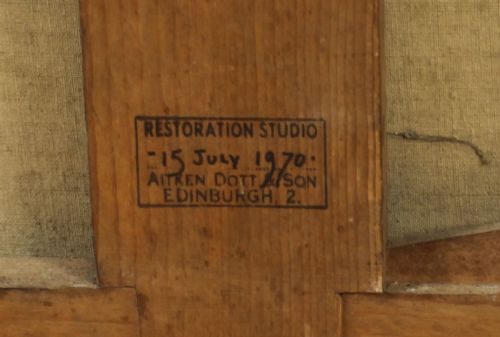
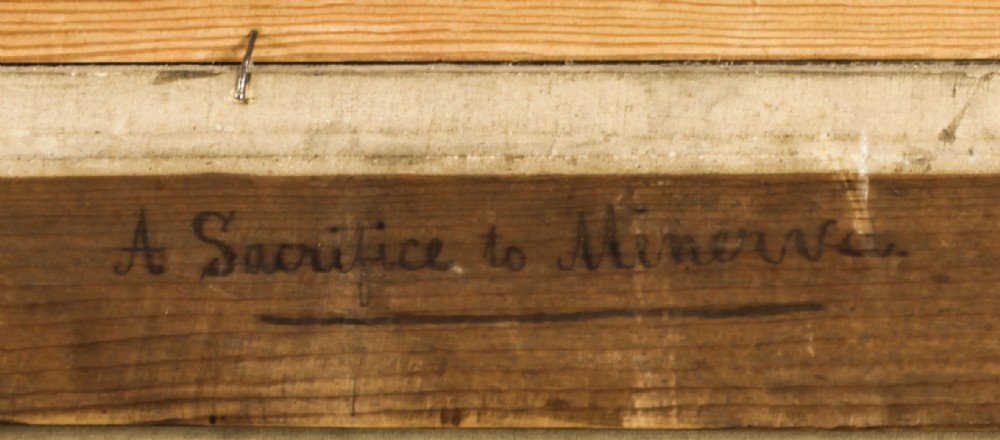
Verso: Title, describtion, inventory marks and later restoration stamp: Aitken Dott & Son, Edinburgh 15 July 1970.
Also bears an inscription attributing the painting to Odoardo Vicinelli:
Odoardo Vicinelli, scholar of Giovanni Maria Morandi, flourished about 1750
an excellent master of the Venetian and Roman Schools,
Provenance:
Formerly at Letterfourie, Morayshire, and by descent, through the Gordon family
Letterfourie House is a Georgian house in Moray Scotland, built by Robert Adam and completed in 1773 for Clan Gordon, also known as the House of Gordon, a Scottish clan.
Condition:
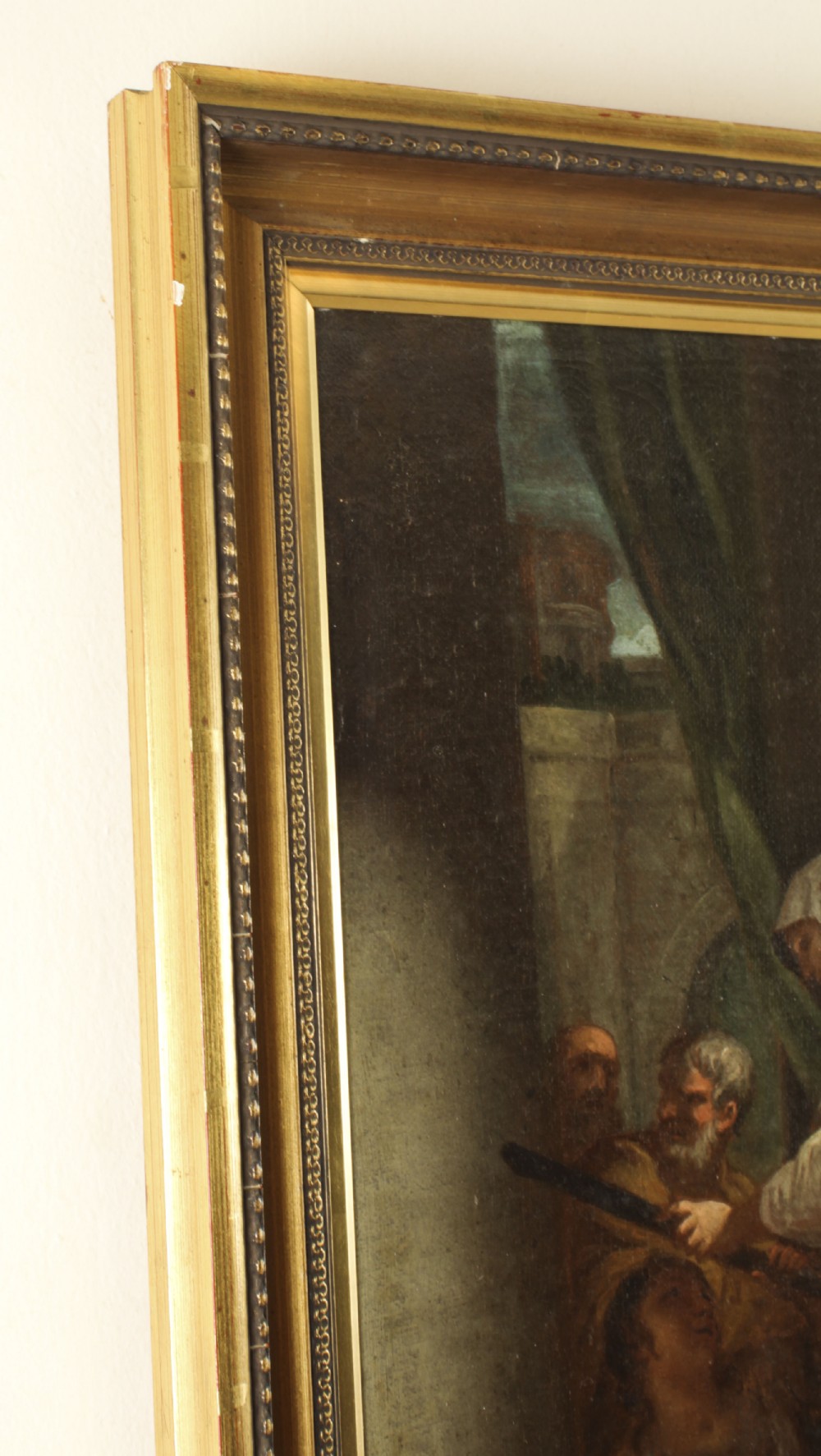
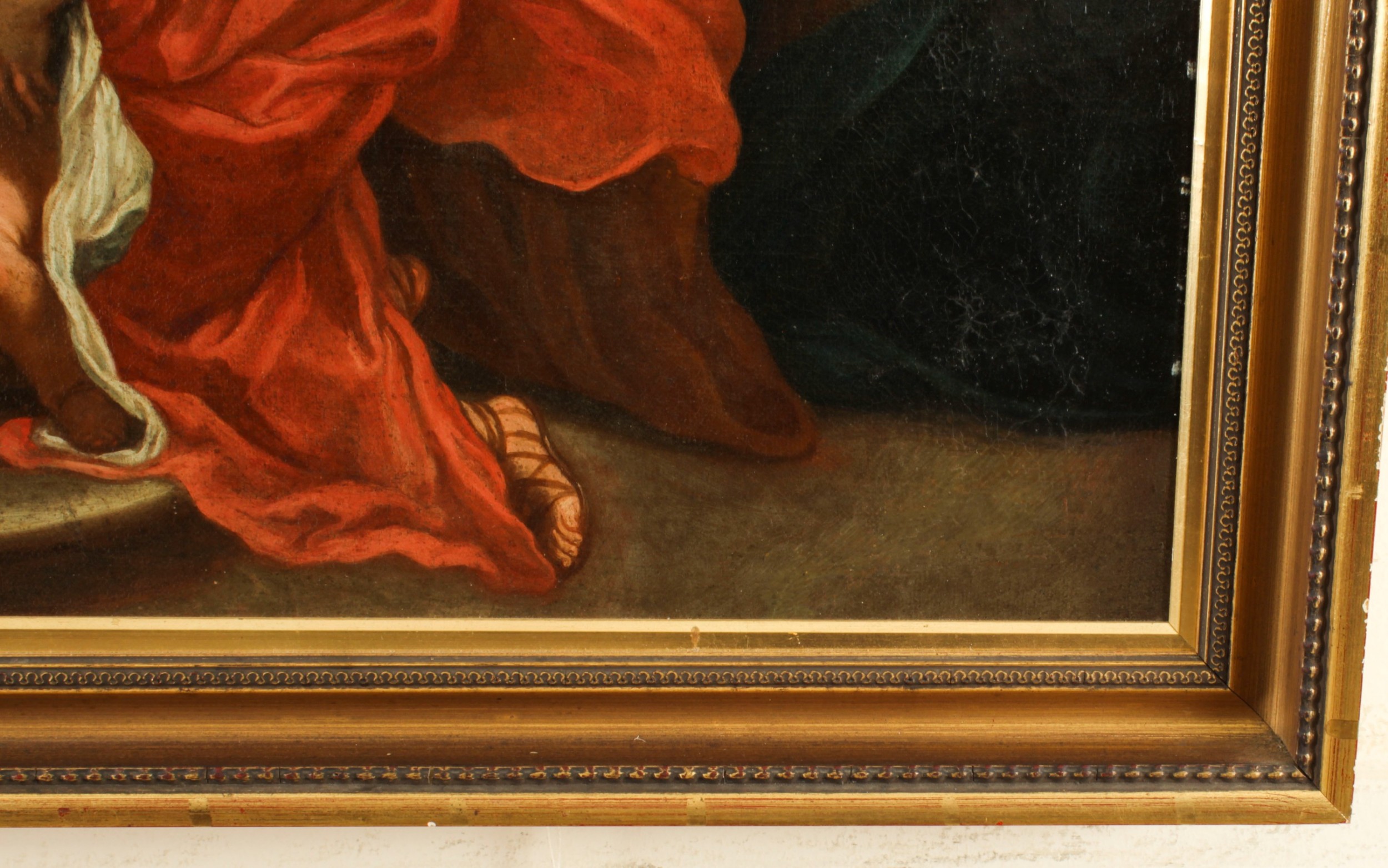
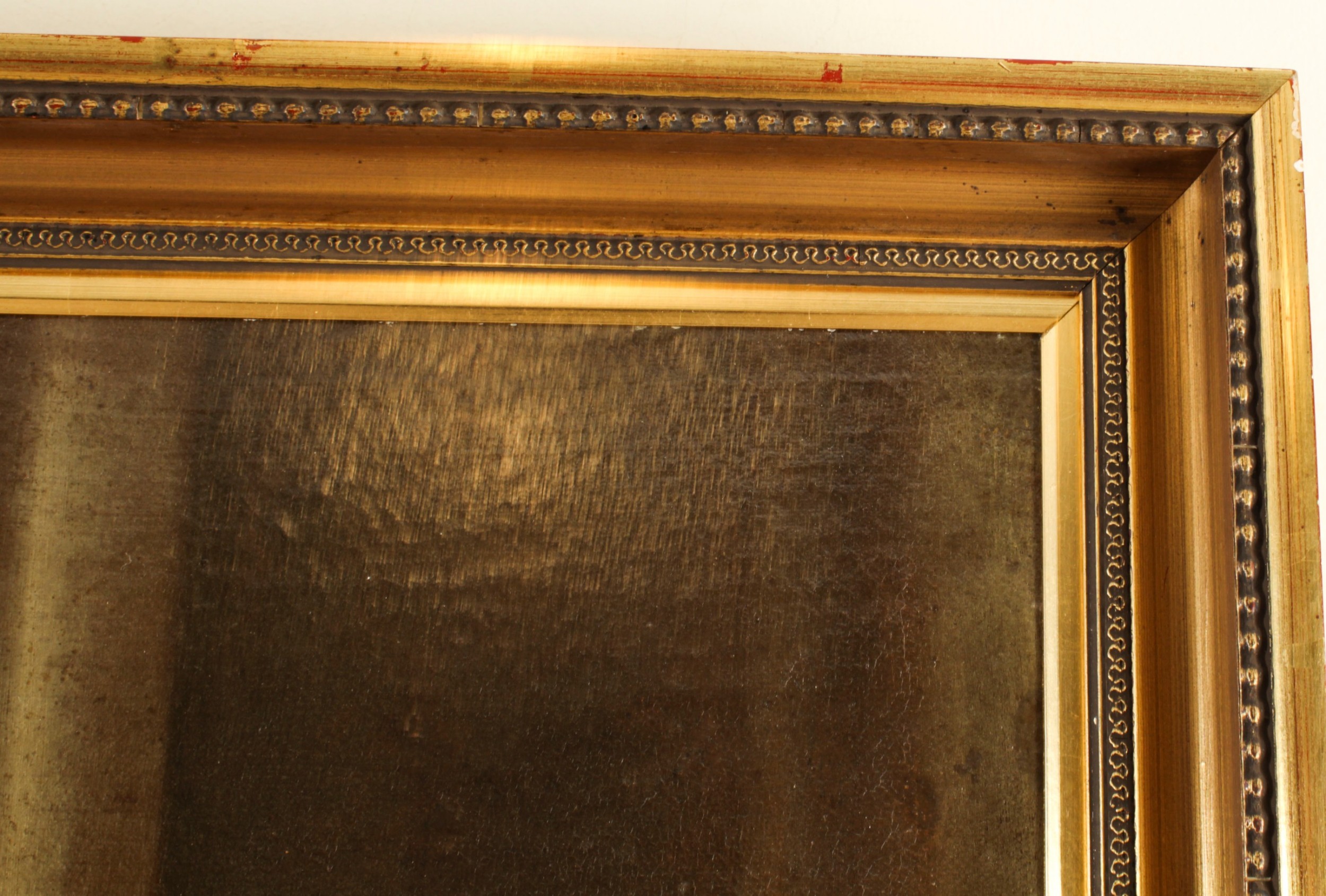
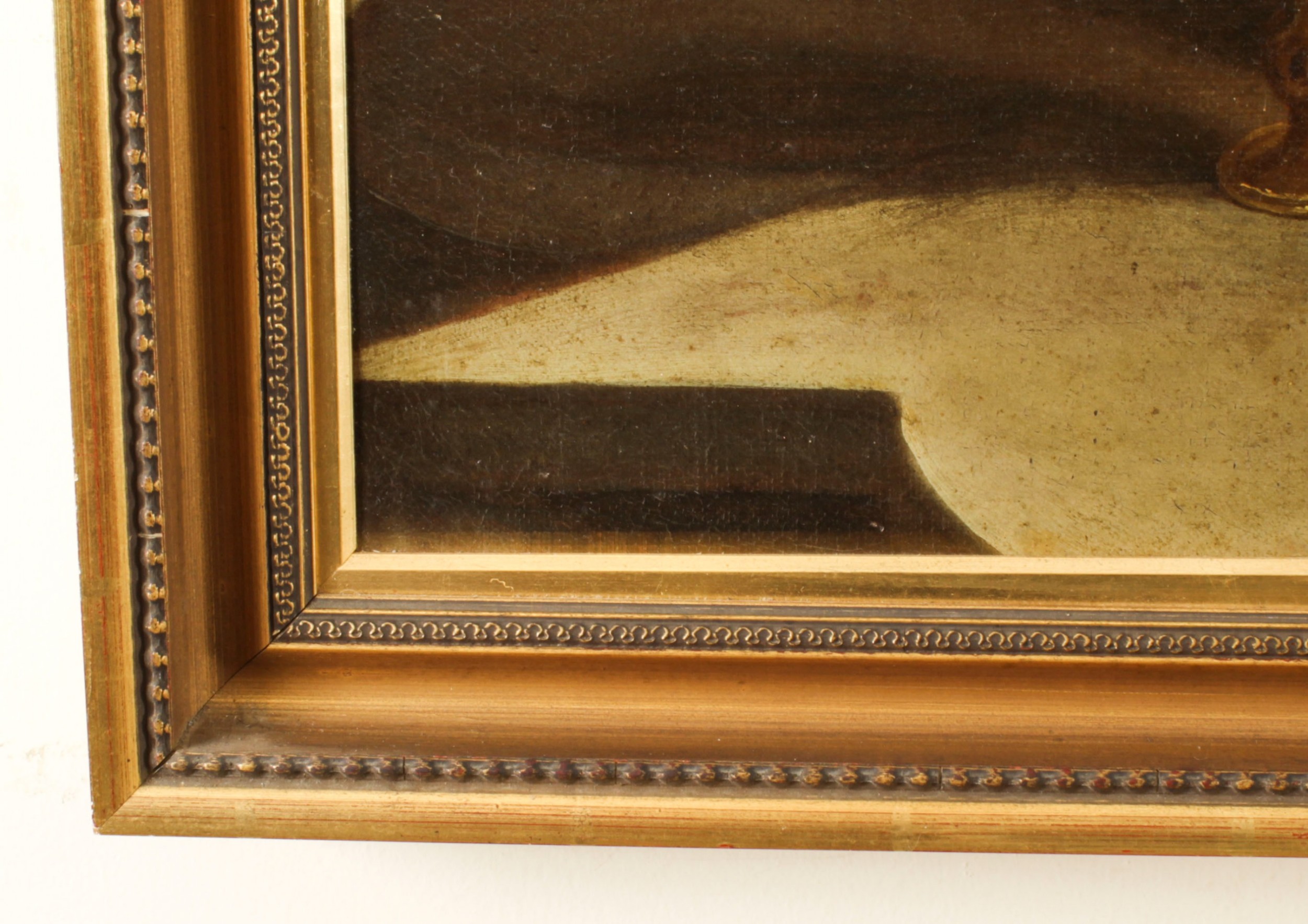
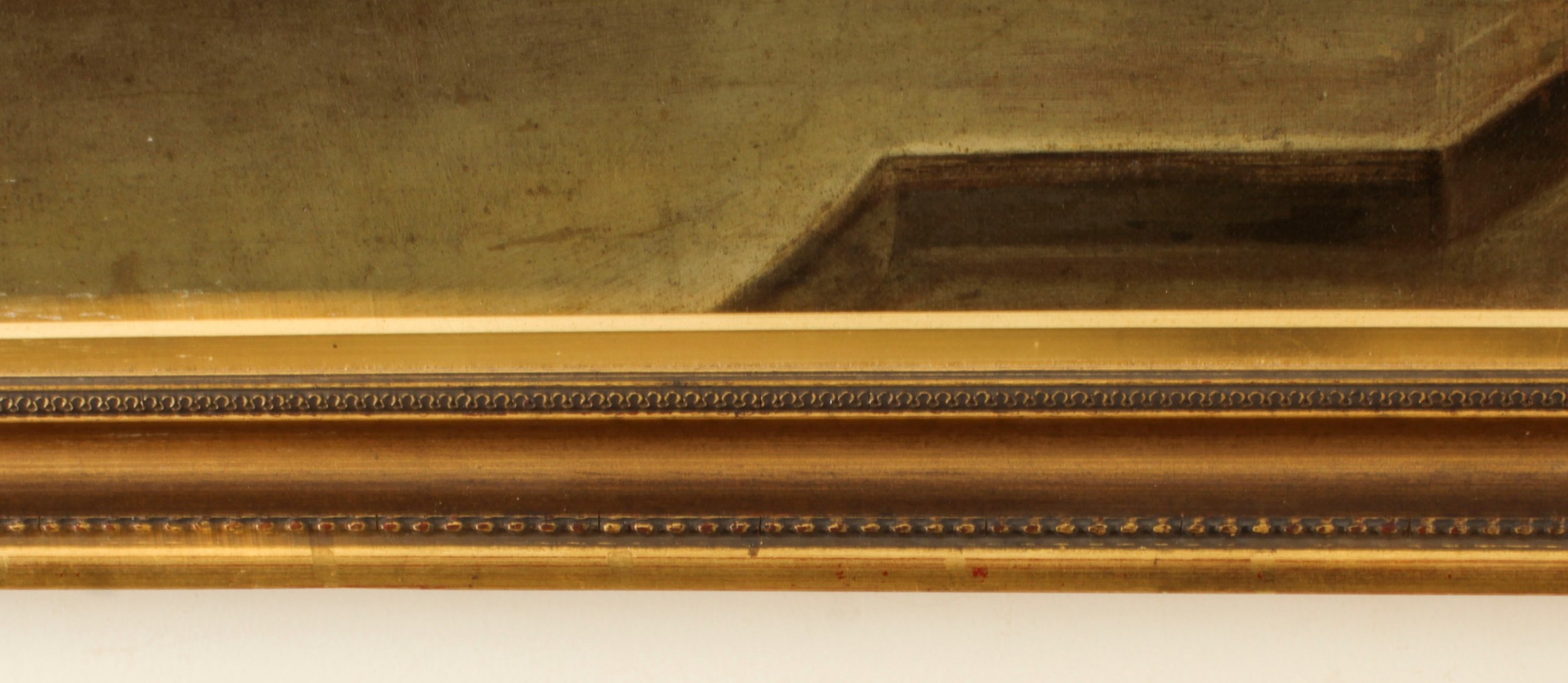
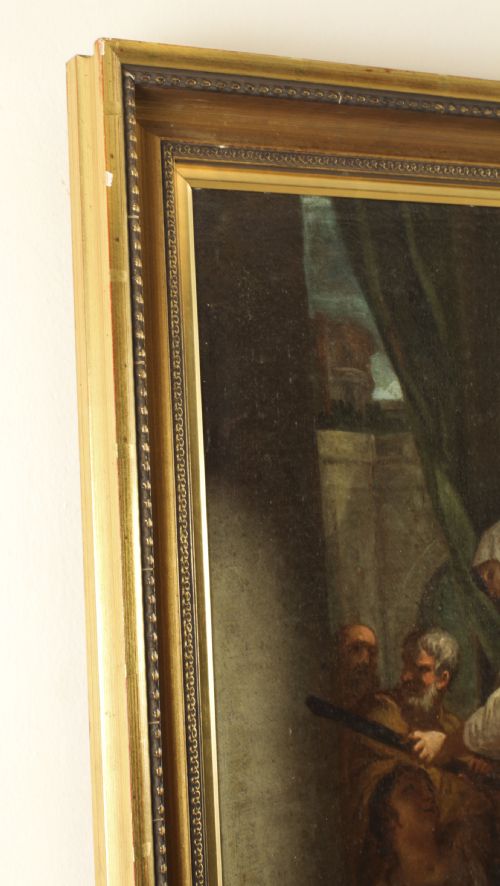
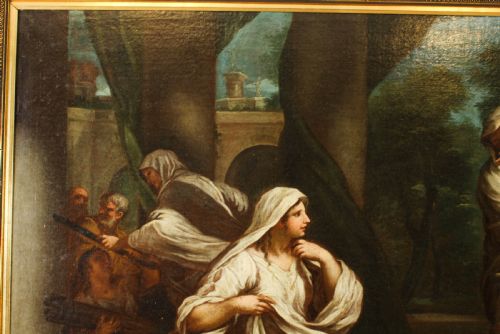
In really excellent condition, please see photos for confirmation.
Dimensions in cm:
Height 87 x Width 168 x Depth 5
Height 73 x Width 156
Dimensions in inches:
Height 2 foot, 10 inches x Width 5 foot, 6 inches x Depth 2 inches
Height 2 foot, 5 inches x Width 5 feet, 1 inch
Odoardo Vicinelli (1684–1755)
was an Italian painter of the late-Baroque period.He trained under Giovanni Maria Morandi of Florence. In Rome he also worked with Pietro Nelli. He painted a Madonna and Child with Saints Ignatius, Francesco Borgia, Stanislao Kostka, Aloysius Gonzaga, Francis Xavier, and the blessed Claudio Acquaviva now at the Diocesan Museum next the Sermoneta Cathedral.
Minerva
is the Roman goddess of wisdom, justice, law, victory, and the sponsor of arts, trade, and strategy. Minerva is not a patron of violence such as Mars, but of defensive war only. From the second century BC onward, the Romans equated her with the Greek goddess Athena. Minerva is one of the three Roman deities in the Capitoline Triad, along with Jupiter and Juno.
She was the virgin goddess of music, poetry, medicine, wisdom, commerce, weaving, and the crafts. She is often depicted with her sacred creature, an owl usually named as the "owl of Minerva", which symbolised her association with wisdom and knowledge as well as, less frequently, the snake and the olive tree. Minerva is commonly depicted as tall with an athletic and muscular build, as well as wearing armour and carrying a spear. As the most important Roman goddess, she is highly revered, honored, and respected. Marcus Terentius Varro considered her to be ideas and the plan for the universe personified.
Origin
Following the Greek myths around Athena, she was born of Metis, who had been swallowed by Jupiter, and burst from her father's head, fully armed and clad in armour. Jupiter had sex with the titaness Metis, which resulted in her attempting to change shape (or shapeshift) to escape him. Jupiter then recalled the prophecy that his own child would overthrow him as he had Saturn, and in turn, Saturn had Caelus. Fearing that their child would be male, and would grow stronger than he was and rule the Heavens in his place, Jupiter swallowed Metis whole after tricking her into turning herself into a fly. The Titaness gave birth to Minerva and forged weapons and armour for her child while within Jupiter's body. In some versions of the story, Metis continued to live inside of Jupiter's mind as the source of his wisdom. Others say she was simply a vessel for the birth of Minerva. The constant pounding and ringing left Jupiter with agonizing pain. To relieve the pain, Vulcan used a hammer to split Jupiter's head and, from the cleft, Minerva emerg
Regent Antiques has dated this piece to the 18th Century.
We specialise in english and continental furniture, silver, porcelain and decorative items.
You can view the stock and full dealer information on the Regent Antiques Profile Page
Regent Antiques is a registered member of LAPADA CINOA
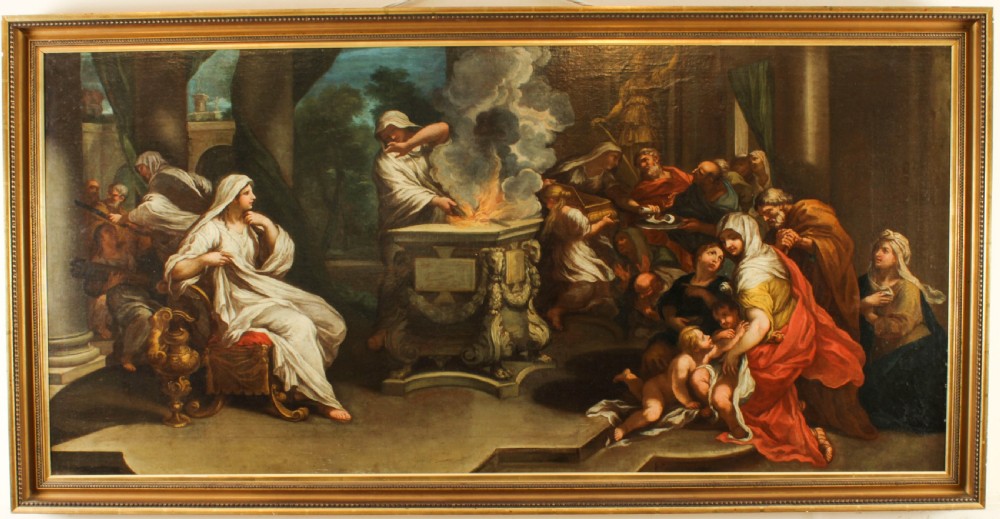
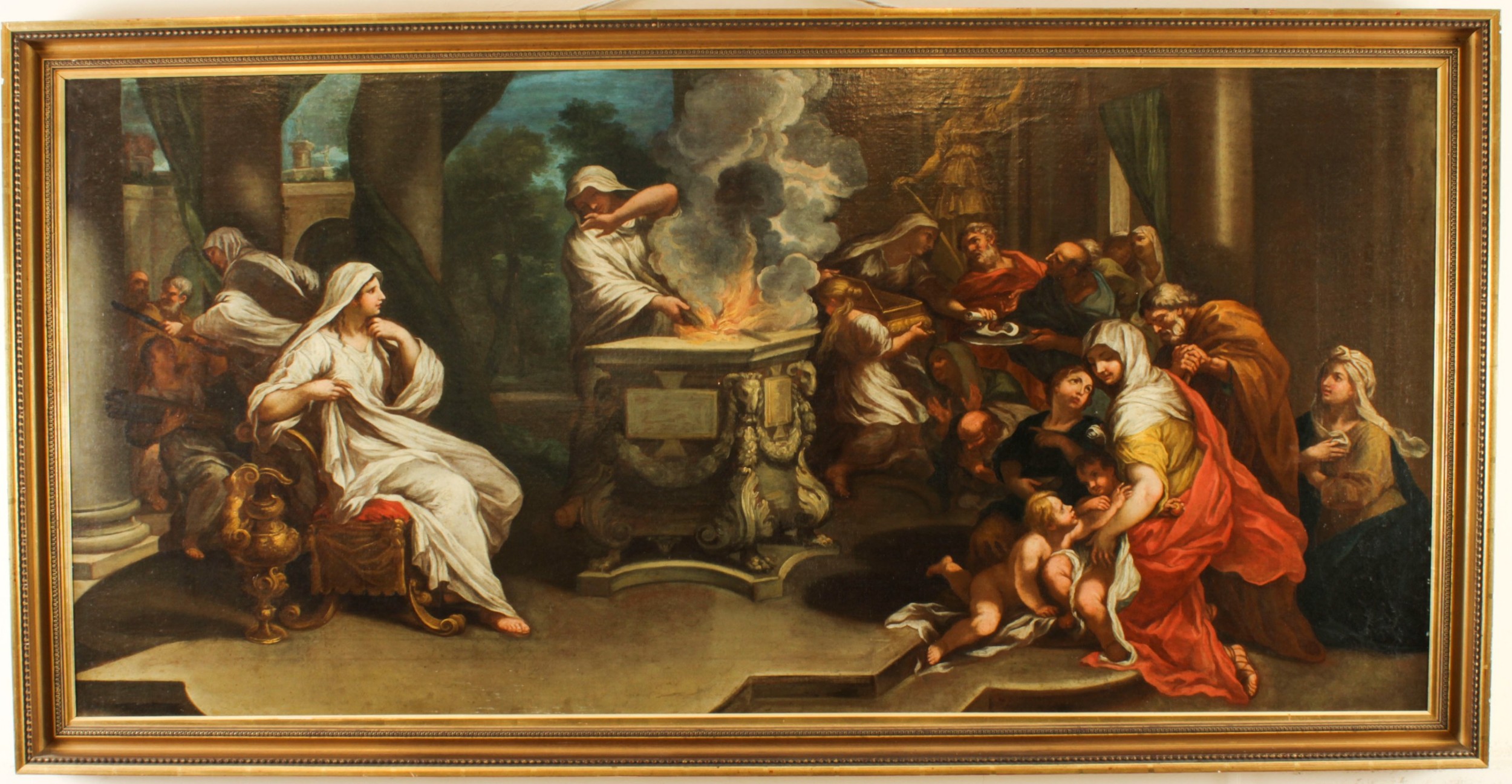
Antique Oil Painting "Sacrifice to Minerva" Odoardo Vicinelli Letterfourie 18thc