45,595  PAGES BROWSED TODAY PAGES TODAY • 174 ANTIQUES UPLOADED TODAYNEW ARRIVALS
GIFTS
174 ITEMS ADDED TODAY
Sort Order
Items Per Page
Browse Categories
Sort order
Relevant Links
Items per page
ID #SA846900
SOLD
Email Phone
Save
Antoine Redier Patent Wall Barograph Retailed by J Hicks of London
Sold by Jason Clarke Antiques
sold SA846900
Sorry, but this item has been sold.
Jason Clarke Antiques

Jason Clarke Antiques

Sellingantiques Verified Since Jul 2015
Browse dealers 78 items
Id #SA846900
PDF SHARE
SAVE

Antoine Redier Patent Wall Barograph Retailed by J Hicks of London

19th century
Sold 22 April 2025 · Jason Clarke Antiques
This “Antoine Redier Patent Wall Barograph Retailed by J Hicks of London” found a buyer.

It was listed by Jason Clarke Antiques. Sold pieces stay on Sellingantiques as a record of what has passed through, and the next one is rarely far away.

Description

For sale, a scarce Antoine Redier Patent Wall Mounted Barograph retailed by J Hicks of London.

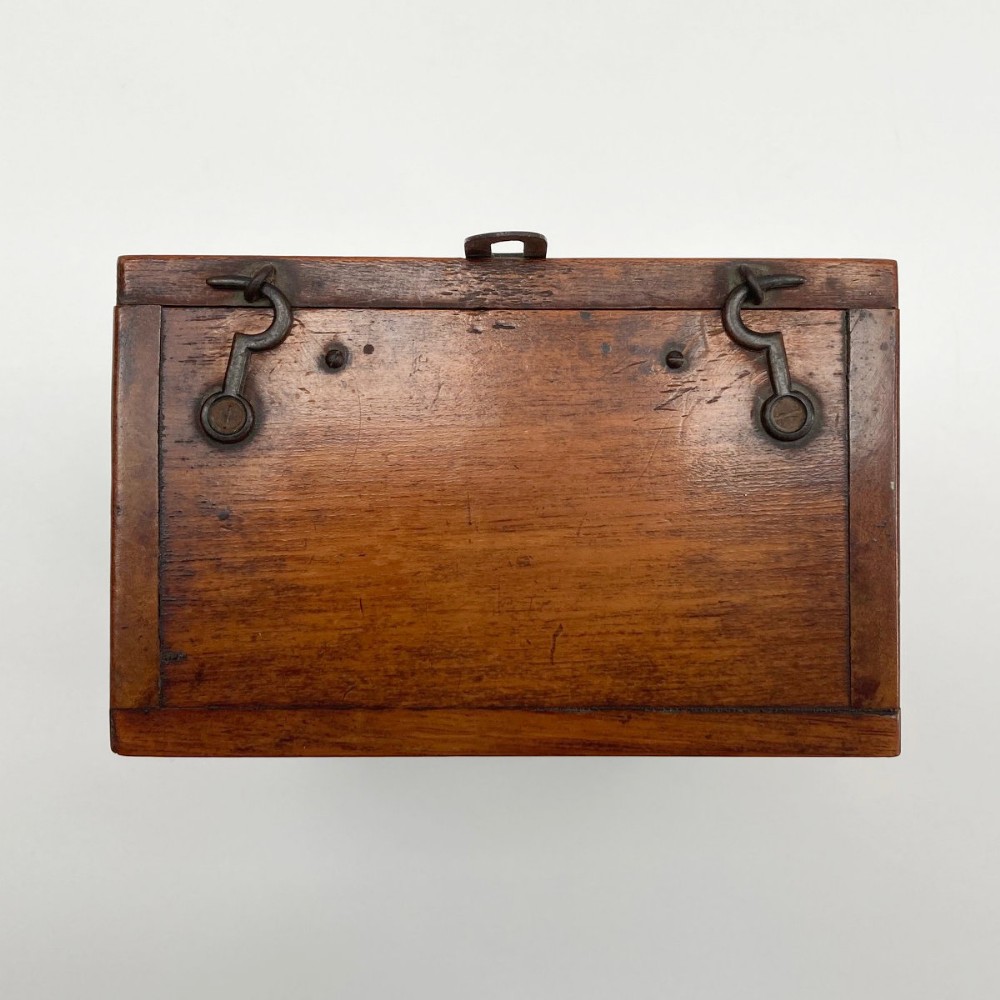
This unusual barograph is set within a hinged mahogany case with a hanging loop at the back for wall-mounting. The glazed front cover is secured by to hook and eye fasteners at the top and when opened reveals a large exposed aneroid capsule and movement with altitude adjuster at the top and small silvered and engraved rectangular scale plate at the base.

The scale is divided for 28 to 31 inches of barometric pressure and has the patent no: 7323 to the left and the serial number 68. The top left and right hand corners are further engraved to the British retailer and equally famous instrument maker, J. Hicks, London.

The pen arm is placed below the movement and works on a horizontal plane. It is cleverly supported by a crutch which is connected to a cam on the clock drum below. Every fifteen minutes, the cam’s movement releases the crutch which applies downwards pressure to the pen and places a dot on the paper. This ingenious solution was introduced by Redier to try to resolve the inaccuracy caused by friction on the pen arm produced by most standard types of barographs.

The seven day clock drum below is mounted horizontally below and the paper is looped around its outside and then tensioned by a smaller secondary bar suspended on sprung wire each side to create the correct tension on the graph.

The aneroid movement itself is also mounted on a hinge at the top and secured by a brass bolt to the left hand side. This additional function allows the movement to be raised away from the clock when the paper needs to be changed.

This scarce design was patented by Antoine Redier the famous French clockmaker and inventor in 1891. It is also lodged under the name of Georges Meyer who went on to lead the Redier Company after the founder’s death. Redier was born in 1817 in the French town of Perpignan. His Father was a Goldsmith and following his education, the young Redier began work at his Father’s business. The family were acquainted with the scientist Francois Arago and it was under his advice that Redier took the exams for entrance to a Paris watchmaking school run by Louis Frederic Perrelet. He excelled in his schooling and went on to work for Henri Robert for a few years before eventually setting up on his own account in 1842 via the purchase of the Duchemin workshop in Paris.

One of Redier’s earliest clients was the inventor Lucien Vidie, now famed for the invention of the aneroid barometer capsule movement. In 1845, Vidie requested Redier to make the first one hundred examples of his new instrument however the relationship turned immediately sour after Vidie questioned the quality of the finished product and a long drawn out legal battle ensued which was finally settled in Redier’s favour some years after.

Just two years later, Redier invented and patented what would become the first travel alarm clock with adjustable wake up timing. His career was prolific from this point on, Redier accumulated over sixty patents to his name including a mercury recording barograph and the example here which was produced just a year before his death in 1892. During his life he was also made a knight of the Legion of Honour (1863) and later became an Officer in 1878,

After his death, the company was bought by Hector Levy and managed by Georges Meyer although its popularity waned after the loss of the founder. It was finally bought out in the Early Twentieth Century by the equally famous French manufacturer Leon Maxant.

The instrument maker and retailer of this fine instrument, James Joseph Hicks was born in Cork, Ireland in 1837 to a poor farming family and was sent to London for schooling. He was apprenticed to the famous Louis P Casella where he remained until 1861. In that short time he had already risen to become Casella’

Physical Dimensions
Height
25.5cm (10.04")
Width
15cm (5.91")
Depth
12cm (4.72")
Declaration

Jason Clarke Antiques has dated this Antique Wood Barograph to the 1890s.

Reference Numbers
Sellingantiques Reference
SA846900
Description
For sale, a scarce Antoine Redier Patent Wall Mounted Barograph retailed by J Hicks of London.
“
This unusual barograph is set within a hinged mahogany case with a hanging loop at the back for wall-mounting.
Jason Clarke Antiques

The glazed front cover is secured by to hook and eye fasteners at the top and when opened reveals a large exposed aneroid capsule and movement with altitude adjuster at the top and small silvered and engraved rectangular scale plate at the base.

fig 1. An upright rectangular wooden barograph with a glass front displaying a metal aneroid stack and a rotating paper graph cylinder inside.
fig 1. Antoine Redier Patent Wall Barograph Retailed by J Hicks of London

The scale is divided for 28 to 31 inches of barometric pressure and has the patent no: 7323 to the left and the serial number 68. The top left and right hand corners are further engraved to the British retailer and equally famous instrument maker, J. Hicks, London.

fig 2. An upright rectangular wooden barograph with a glass front displaying a metal aneroid stack and a rotating paper graph cylinder inside.
fig 2. Antoine Redier Patent Wall Barograph Retailed by J Hicks of London

The pen arm is placed below the movement and works on a horizontal plane. It is cleverly supported by a crutch which is connected to a cam on the clock drum below. Every fifteen minutes, the cam’s movement releases the crutch which applies downwards pressure to the pen and places a dot on the paper. This ingenious solution was introduced by Redier to try to resolve the inaccuracy caused by friction on the pen arm produced by most standard types of barographs.

fig 3. An upright rectangular wooden barograph with a glass front displaying a metal aneroid stack and a rotating paper graph cylinder inside.
fig 3. Antoine Redier Patent Wall Barograph Retailed by J Hicks of London

The seven day clock drum below is mounted horizontally below and the paper is looped around its outside and then tensioned by a smaller secondary bar suspended on sprung wire each side to create the correct tension on the graph.

fig 4. An upright rectangular wooden barograph with a glass front displaying a metal aneroid stack and a rotating paper graph cylinder inside.
fig 4. Antoine Redier Patent Wall Barograph Retailed by J Hicks of London

The aneroid movement itself is also mounted on a hinge at the top and secured by a brass bolt to the left hand side. This additional function allows the movement to be raised away from the clock when the paper needs to be changed.

fig 5. An upright rectangular wooden barograph with a glass front displaying a metal aneroid stack and a rotating paper graph cylinder inside.
fig 5. Antoine Redier Patent Wall Barograph Retailed by J Hicks of London

This scarce design was patented by Antoine Redier the famous French clockmaker and inventor in 1891. It is also lodged under the name of Georges Meyer who went on to lead the Redier Company after the founder’s death. Redier was born in 1817 in the French town of Perpignan. His Father was a Goldsmith and following his education, the young Redier began work at his Father’s business. The family were acquainted with the scientist Francois Arago and it was under his advice that Redier took the exams for entrance to a Paris watchmaking school run by Louis Frederic Perrelet. He excelled in his schooling and went on to work for Henri Robert for a few years before eventually setting up on his own account in 1842 via the purchase of the Duchemin workshop in Paris.

fig 6. An upright rectangular wooden barograph with a glass front displaying a metal aneroid stack and a rotating paper graph cylinder inside.
fig 6. Antoine Redier Patent Wall Barograph Retailed by J Hicks of London

One of Redier’s earliest clients was the inventor Lucien Vidie, now famed for the invention of the aneroid barometer capsule movement. In 1845, Vidie requested Redier to make the first one hundred examples of his new instrument however the relationship turned immediately sour after Vidie questioned the quality of the finished product and a long drawn out legal battle ensued which was finally settled in Redier’s favour some years after.

fig 7. An upright rectangular wooden barograph with a glass front displaying a metal aneroid stack and a rotating paper graph cylinder inside.
fig 7. Antoine Redier Patent Wall Barograph Retailed by J Hicks of London

Just two years later, Redier invented and patented what would become the first travel alarm clock with adjustable wake up timing. His career was prolific from this point on, Redier accumulated over sixty patents to his name including a mercury recording barograph and the example here which was produced just a year before his death in 1892. During his life he was also made a knight of the Legion of Honour (1863) and later became an Officer in 1878,

fig 8. An upright rectangular wooden barograph with a glass front displaying a metal aneroid stack and a rotating paper graph cylinder inside.
fig 8. Antoine Redier Patent Wall Barograph Retailed by J Hicks of London

After his death, the company was bought by Hector Levy and managed by Georges Meyer although its popularity waned after the loss of the founder. It was finally bought out in the Early Twentieth Century by the equally famous French manufacturer Leon Maxant.

fig 9. An upright rectangular wooden barograph with a glass front displaying a metal aneroid stack and a rotating paper graph cylinder inside.
fig 9. Antoine Redier Patent Wall Barograph Retailed by J Hicks of London

The instrument maker and retailer of this fine instrument, James Joseph Hicks was born in Cork, Ireland in 1837 to a poor farming family and was sent to London for schooling. He was apprenticed to the famous Louis P Casella where he remained until 1861. In that short time he had already risen to become Casella’

Height
25.5cm (10.04")
Width
15cm (5.91")
Depth
12cm (4.72")
Date of Manufacture

Jason Clarke Antiques has dated this Antique Wood Barograph to the 1890s.

Reference Numbers
Sellingantiques Ref
SA846900
Jason Clarke Antiques
Sellingantiques verified Since Jul 2015
Dealer Profile

You can view the stock and full dealer information on the Jason Clarke Antiques Profile Page

PDF SHARE
SAVE
An upright rectangular wooden barograph with a glass front displaying a metal aneroid stack and a rotating paper graph cylinder inside. SOLD6+ MONTHS AGO
1 / 12
Archive I An upright rectangular wooden barograph with a glass front displaying a metal aneroid stack and a rotating paper graph cylinder inside. SOLD6+ MONTHS AGO

Antoine Redier Patent Wall Barograph Retailed by J Hicks of London

Archive II An upright rectangular wooden barograph with a glass front displaying a metal aneroid stack and a rotating paper graph cylinder inside. View II
Archive III An upright rectangular wooden barograph with a glass front displaying a metal aneroid stack and a rotating paper graph cylinder inside. View III
Archive IV An upright rectangular wooden barograph with a glass front displaying a metal aneroid stack and a rotating paper graph cylinder inside. View IV
Archive V An upright rectangular wooden barograph with a glass front displaying a metal aneroid stack and a rotating paper graph cylinder inside. View V
Archive VI An upright rectangular wooden barograph with a glass front displaying a metal aneroid stack and a rotating paper graph cylinder inside. View VI
Archive VII An upright rectangular wooden barograph with a glass front displaying a metal aneroid stack and a rotating paper graph cylinder inside. View VII
Archive VIII An upright rectangular wooden barograph with a glass front displaying a metal aneroid stack and a rotating paper graph cylinder inside. View VIII
Archive IX An upright rectangular wooden barograph with a glass front displaying a metal aneroid stack and a rotating paper graph cylinder inside. View IX
Archive X An upright rectangular wooden barograph with a glass front displaying a metal aneroid stack and a rotating paper graph cylinder inside. View X
Archive XI An upright rectangular wooden barograph with a glass front displaying a metal aneroid stack and a rotating paper graph cylinder inside. View XI
Archive XII An upright rectangular wooden barograph with a glass front displaying a metal aneroid stack and a rotating paper graph cylinder inside. View XII
Enlarged Archival View
Telephone 07815 046645
Location
Newbury
Berkshire
United Kingdom
Verified Since Jul 2015
Items For Sale 78
Items Sold 609
Jason Clarke Antiques
Verified Since Jul 2015
View Dealer Info
Location: Newbury, Berkshire, United Kingdom
Verified
Jul 2015
For Sale
78
Sold
609
An upright rectangular wooden barograph with a glass front displaying a metal aneroid stack and a rotating paper graph cylinder inside.
Antoine Redier Patent Wall Barograph Retailed by J Hicks of London
Ref: SA846900
An upright rectangular wooden barograph with a glass front displaying a metal aneroid stack and a rotating paper graph cylinder inside.
Detail View 1
Detail View 2
Detail View 3
Detail View 4
Detail View 5
Detail View 6
Detail View 7
Detail View 8
Detail View 9
Detail View 10
Detail View 11
Archival Detail
Every single antique dealer on our platform is individually approved by our internal team. We verify their professional trade history, ethical standards, and photographic quality to ensure a secure, high-standard buying environment. Upon joining, every dealer agrees to a strict 9-point code of conduct. While issues can occasionally arise, our dealers typically resolve them swiftly and directly with the buyer. In fact, since our founding in 2002, Sellingantiques has only had to step in to help resolve an issue on roughly five occasions—a true testament to the quality of our dealers and their dedication to your happiness.
Our dealers are highly experienced in packing and shipping fragile, high-value antiques. Because you are in direct contact with the dealer, you will be able to easily go through all available shipping and insurance options together to ensure your item arrives safely.
Antiques are the ultimate green purchase. By choosing historical pieces over newly manufactured goods, you completely eliminate the carbon footprint of modern mass production while preserving exceptional, timeless craftsmanship.
Written by Sellingantiques from the dealer’s photographs and listing
  • ObjectScientific Instruments
  • Period19th century
  • StyleVictorian & Gothic
  • MaterialMahogany, Brass, Glass
  • ColourWarm Brown
  • MotifsGlazed wooden case, Clockwork drum cylinder, Aneroid barometer stack, Engraved scale plate
  • SizeH 25.5 cm (10 in) x W 15 cm (6 in) x D 12 cm (5 in)

A barograph is a recording meteorological instrument that continuously measures atmospheric pressure using aneroid cells and plots the data onto a rotating paper chart driven by a clockwork mechanism.

These scientific instruments typically feature cases made from dense hardwoods like mahogany or oak, glazed glass panels, brass or gilt metal movements, and steel components.

Authentic period pieces exhibit hand-cut dovetail joints, heavy brass mechanisms, traditional clockwork cylinder drums, and often bear maker signatures or retailer stamps etched onto the metal bedplate or scale.

Place the instrument on a study desk, bookshelf, or mantelpiece where its intricate mechanical components can be viewed up close as a focal point of intellectual decor.

Keep the instrument away from direct sunlight, high humidity, and extreme temperature fluctuations to protect the wood case and ensure the delicate clockwork mechanism remains uncorrupted.
items
Add keywords to the filter
Price
£100
£250000
Era
Period
Style
Material
Origin
Stock Location
Recently Added
Online Payments
Categories