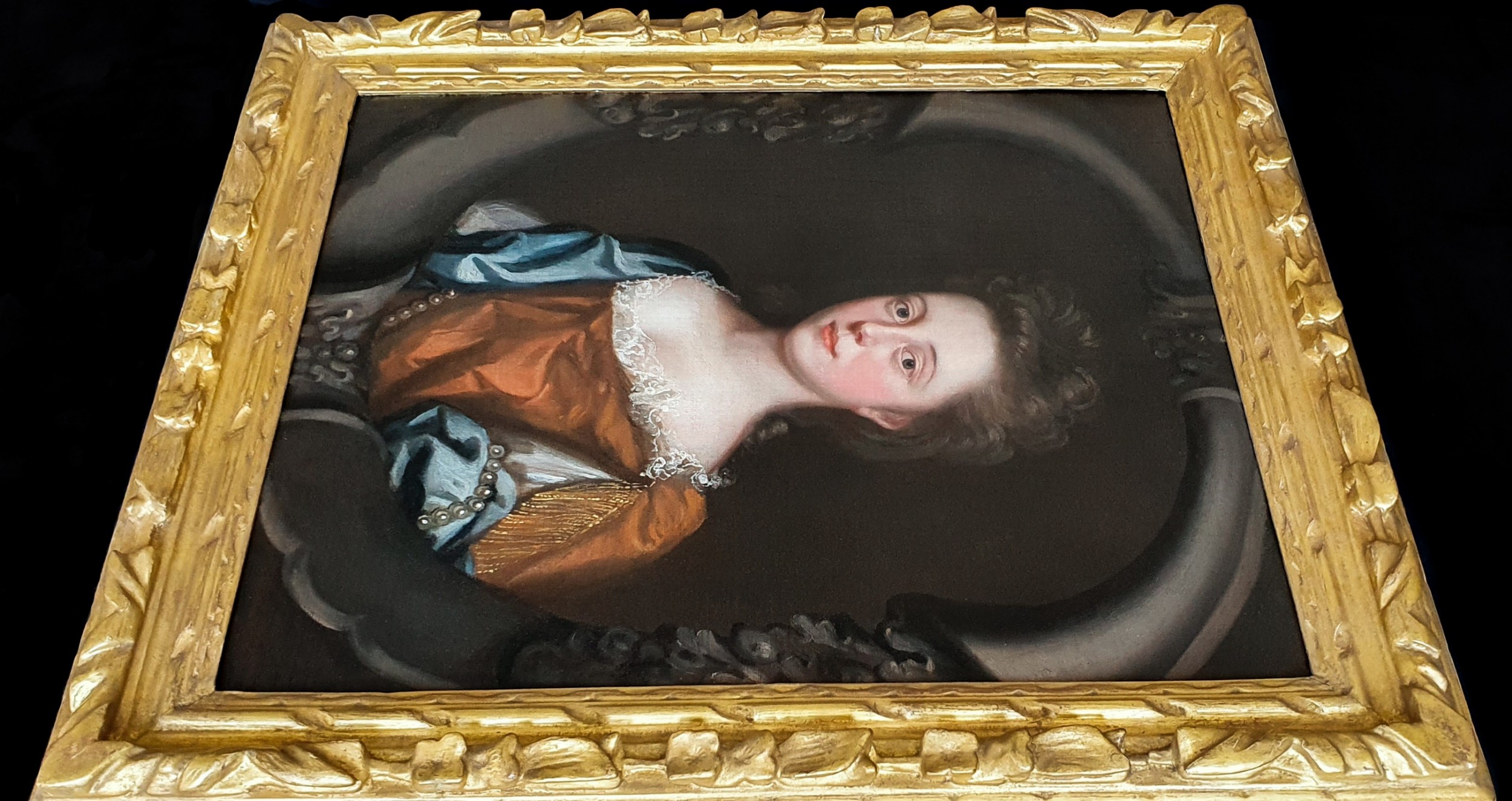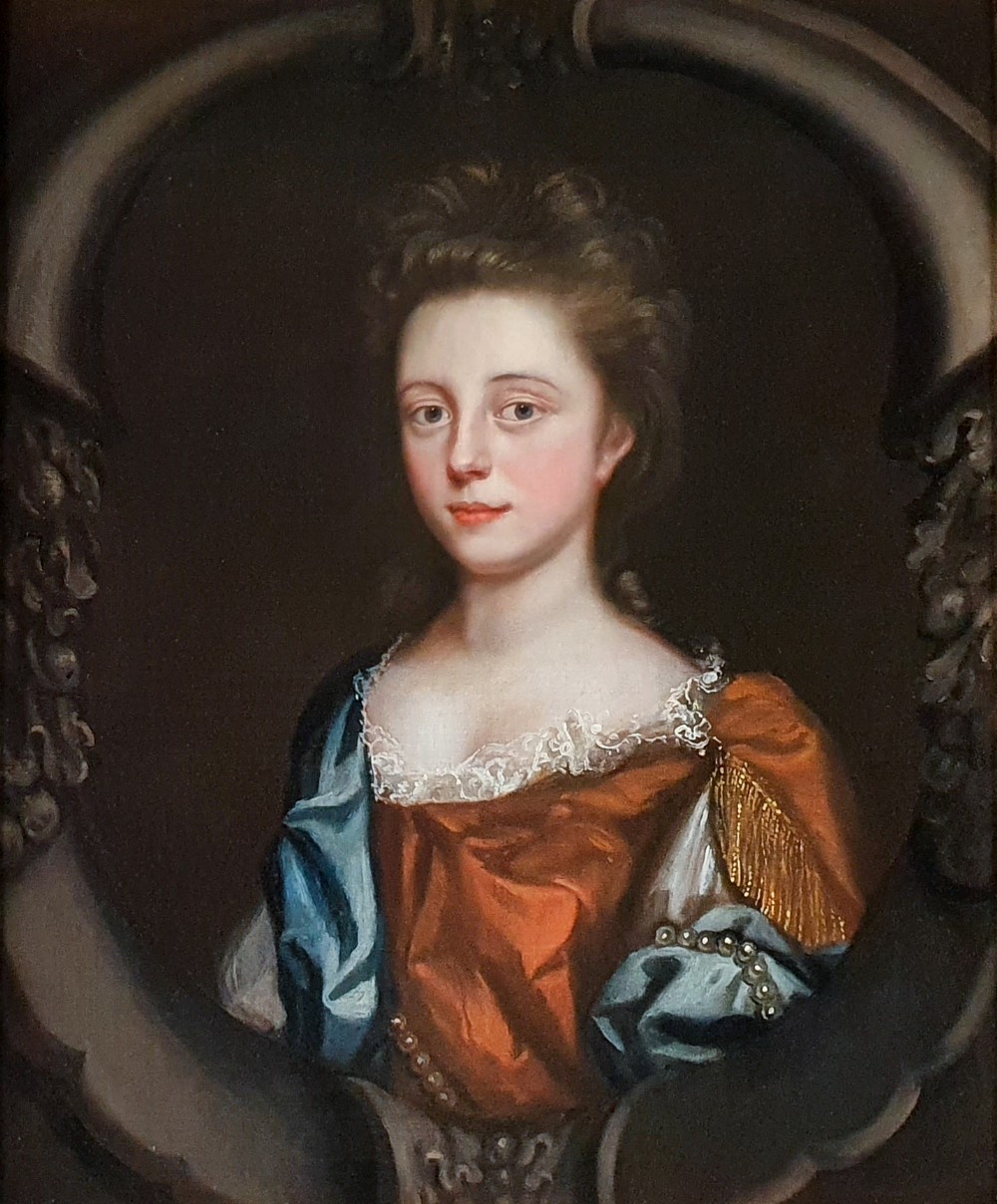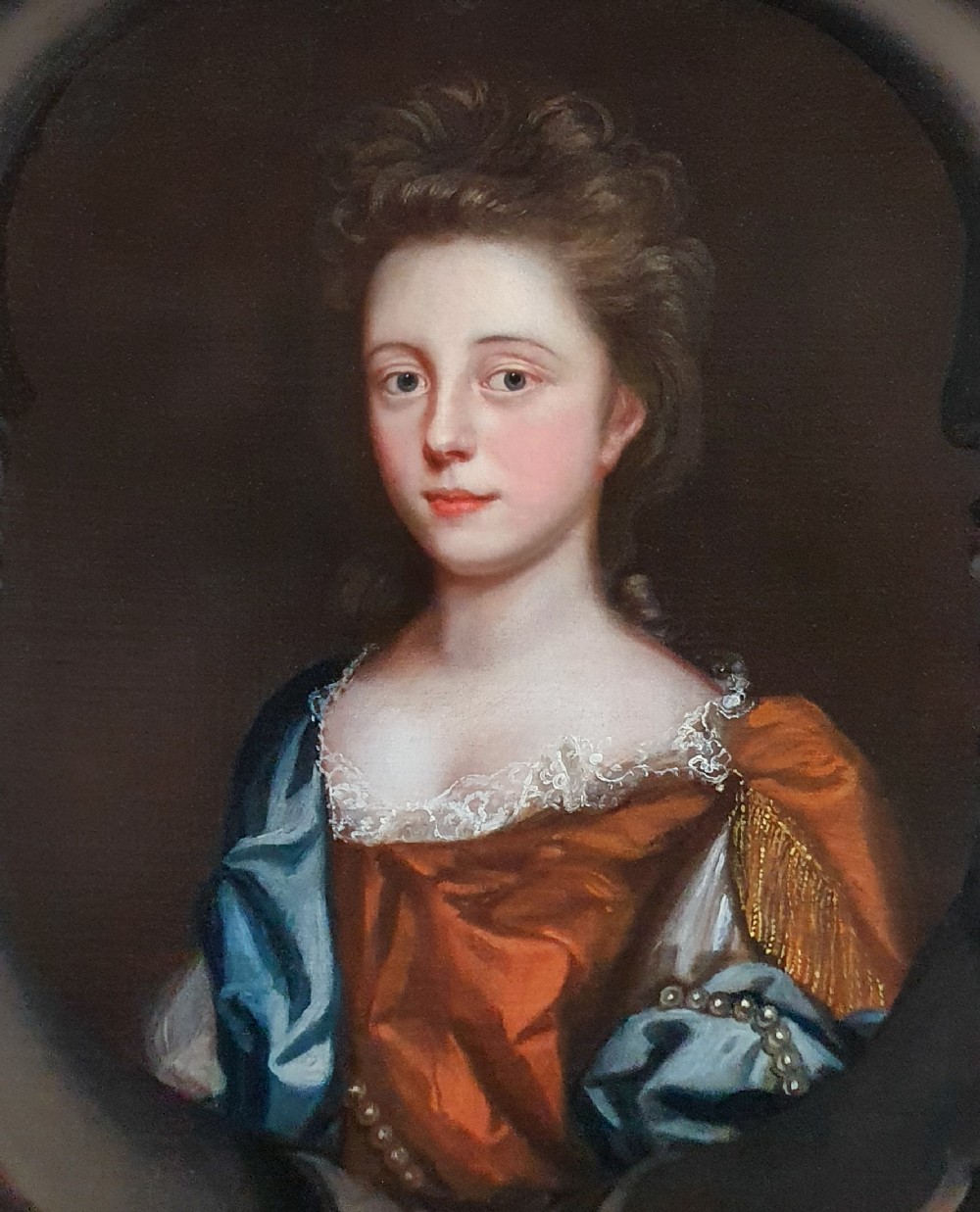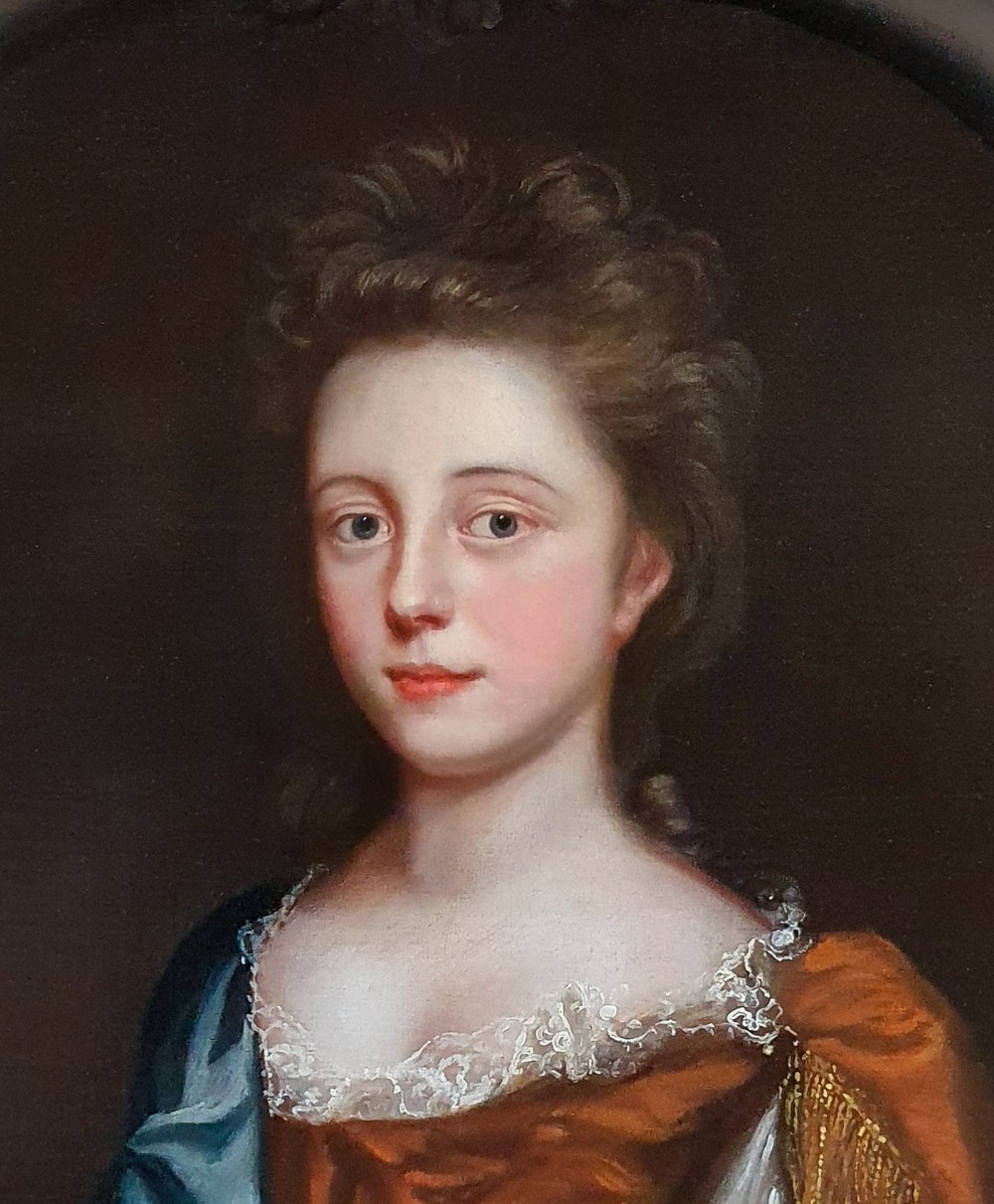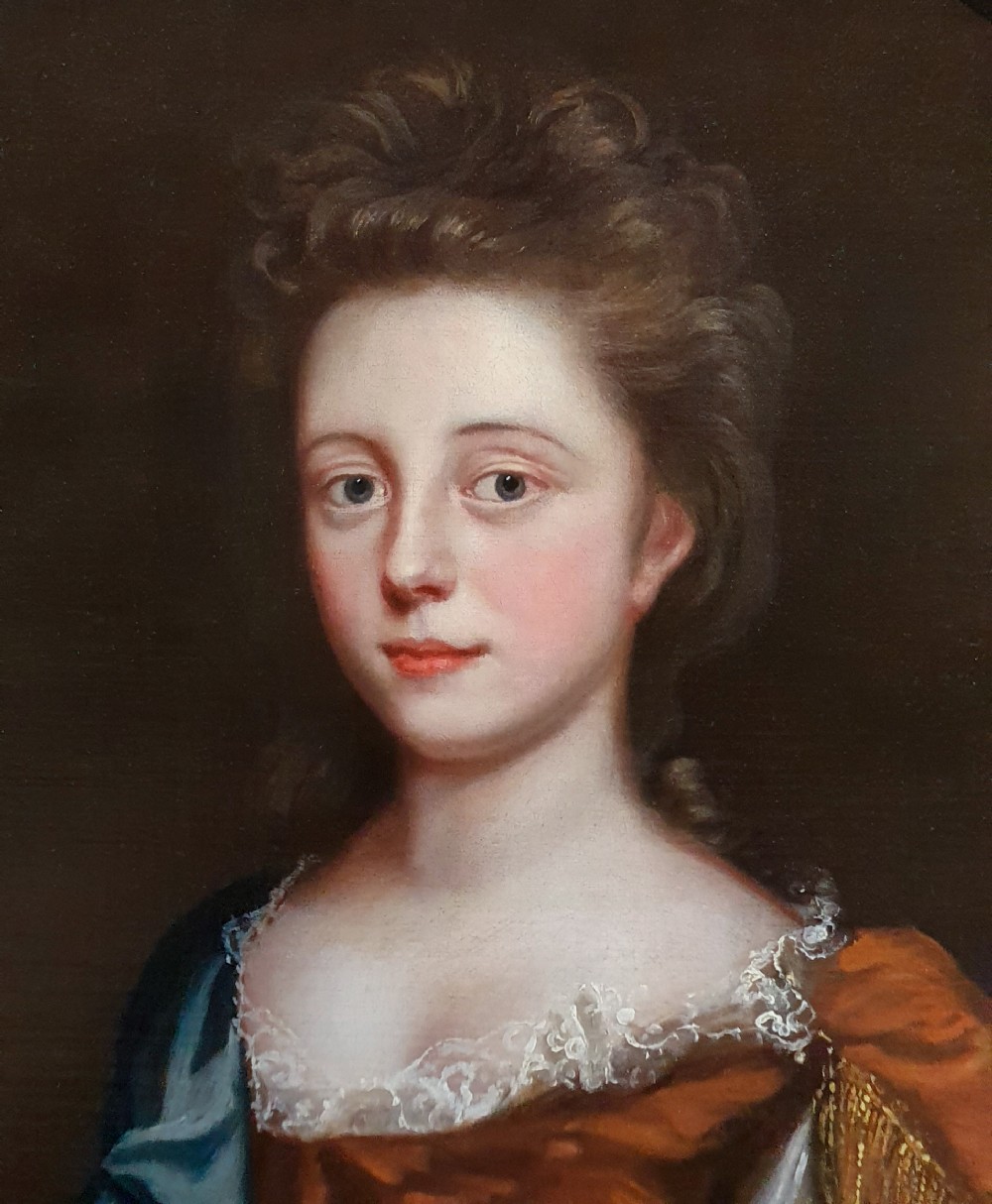
Titan Fine Art has dated this piece to the 17th Century.
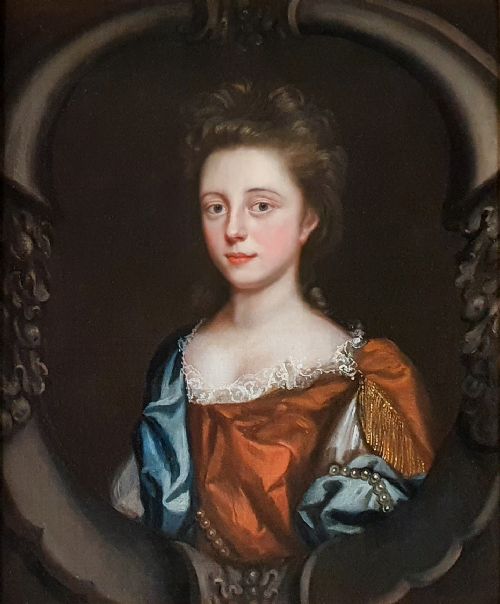
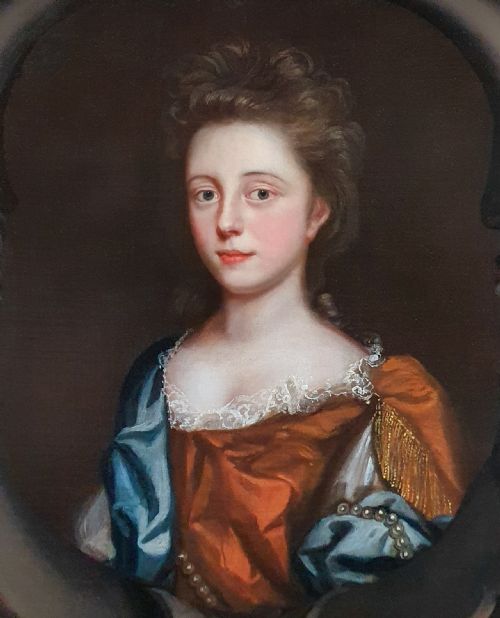
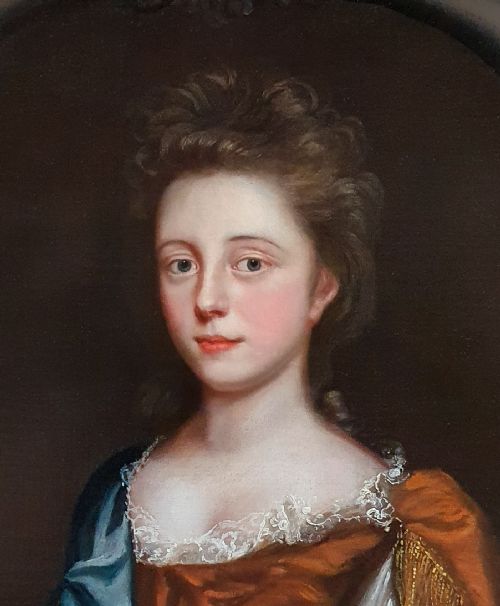
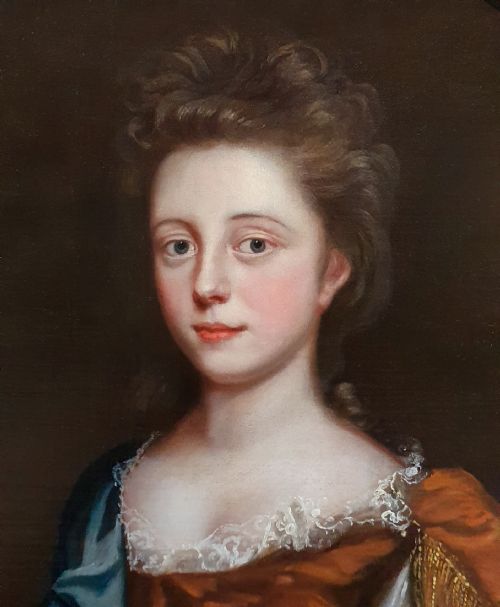
It is remarkable for its sensitivity, its beauty, and for its portrayal of the sitter’s amiable and friendly character. An elaborate sculpted cartouche used in portraits, as seen here, was employed by many artists in England at the time, but most frequently by Sir Peter Lely and Mary Beale, the most important woman artist to work in England in the second half of the seventeenth century.
The portrait genre was valued particularly highly in English society. Neither landscapes nor allegorical pictures were ever priced so highly at exhibitions and in the trade as depictions of people, from the highest aristocracy to scholars, writers, poets and statesmen. Traditionally the portrait has been attributed to Mary Beale; this attribution is certainly possible.
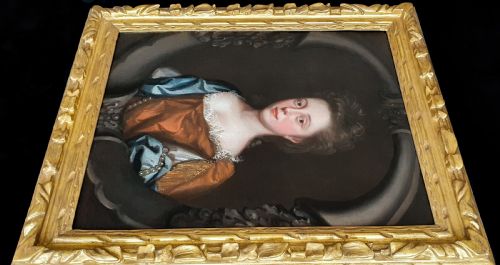
A charming example of English portraiture during the reign of Charles II. Contained in a fine quality gilded antique frame.
Born in Suffolk, Mary Beale, nee Cradock (1633-1699) was employed by many of the most distinguished persons of her time including nobility, landed gentry, and clergymen. Technically accomplished, her paintings are noteworthy for their honest and sympathetic portrayal. In 1651 she married Charles Beale, who shared her interest in art, and thus the Beale studio was a partnership between husband and wife. While Mary painted, Charles provided practical support. He primed canvases, procured art supplies from merchants, manufactured expensive, high-end pigments such as red lake and ultramarine (some for sale to other painters), and kept the books. He also left detailed notebooks about his wife’s daily activities; such as her commissioned portraits as well as the experimental studies. For the latter, he identifies the sitters and, in most cases, their poses and tracks the progress of each work from one sitting to the next, paying particular attention if a novel technique had been used. The Beale's purpose in carrying out the studies, as well as to develop skills, was to test out, various painting methods. Together they sought to improve the studio's efficiency, through perfecting procedures that would produce good results at a lower cost. These accounts of the daily activities are an incredibly valuable insight into the working practices of her studio. In fact, we know more of her technique and working practice than that of many of her contemporaries, including Sir Peter Lely.
By the late 1650s, Beale had developed a formidable reputation and befriended Sir Peter Lely, the leading artist of the Restoration and court painter to Charles II, King of England. She observed Lely in his studio—a rare privilege—and copied many of his portraits, modelling her technique after his. Lely would visit the Beale home occasionally to observe Mary paint and praise her work and Lely loaned Beale some of his old master paintings to copy from.
During her childhood in Suffolk Mary's father was friendly with contemporary British artists such as Sir Nathaniel Bacon, Robert Walker, and Sir Peter Lely, leading to both Robert Walker and Peter Lely being "the most likely drawing masters to the young Mary" but it is not known for certain with whom she studied.
She often employed the use of an elaborate stone cartouche that surrounded her sitters and by the 1670s, the couple’s two young sons Charles and Bartholomew, were assisting his mother in her painting studio in Pall Mall, executing feigned stone cartouches in head and shoulder portraits as well as painting drapery.
In 1677 she had 83 commissions, earning £429, a considerable sum. She also took students, many of them women. Mary was earning her living and supporting her family with her art which was a highly unusual position for a woman at the time.
Titan Fine Art has dated this piece to the 17th Century.
Specialist in 17th & 18thc portraits. Highly curated selection, museum-level research & pro conservation. Exceptional art, expertly vetted.
You can view the stock and full dealer information on the Titan Fine Art Profile Page

Portrait of a Young Lady in Russet Dress with Blue Wrap C.1680’s; Circle or Studio of Mary Beale (1632-1699) Oil on Canvas Painting