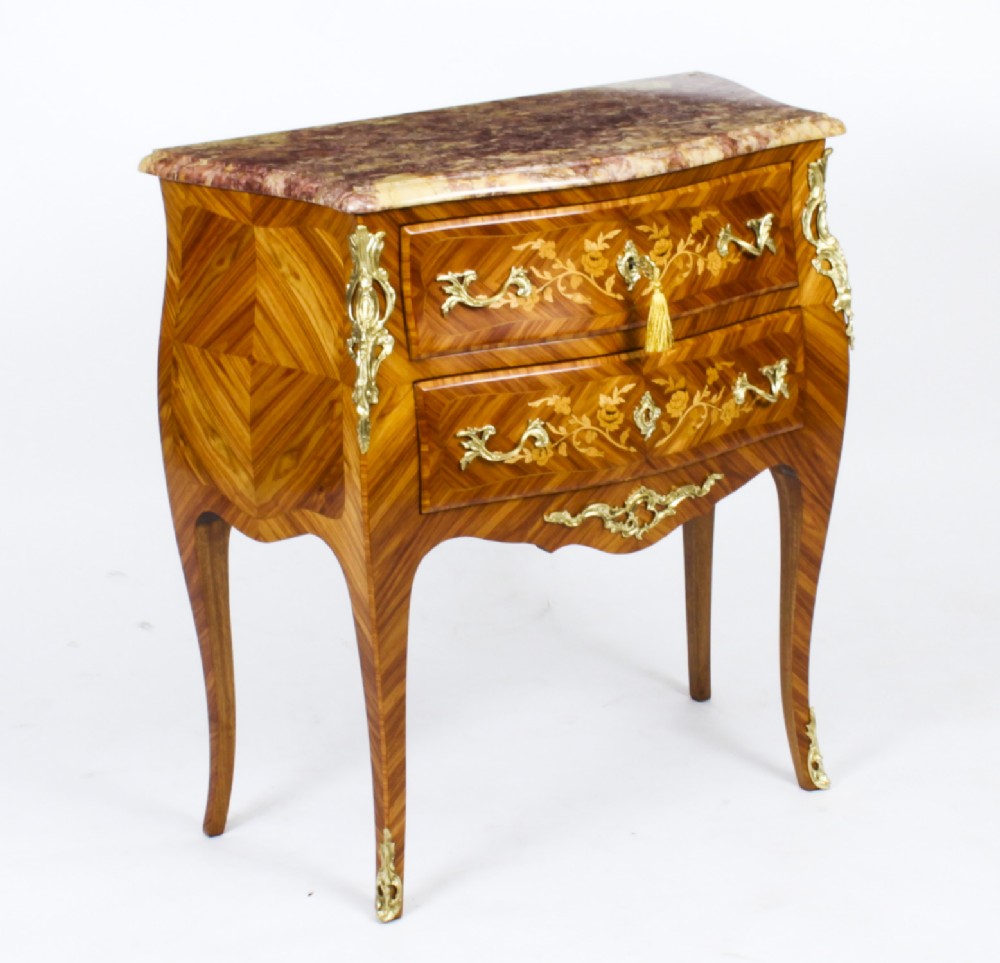
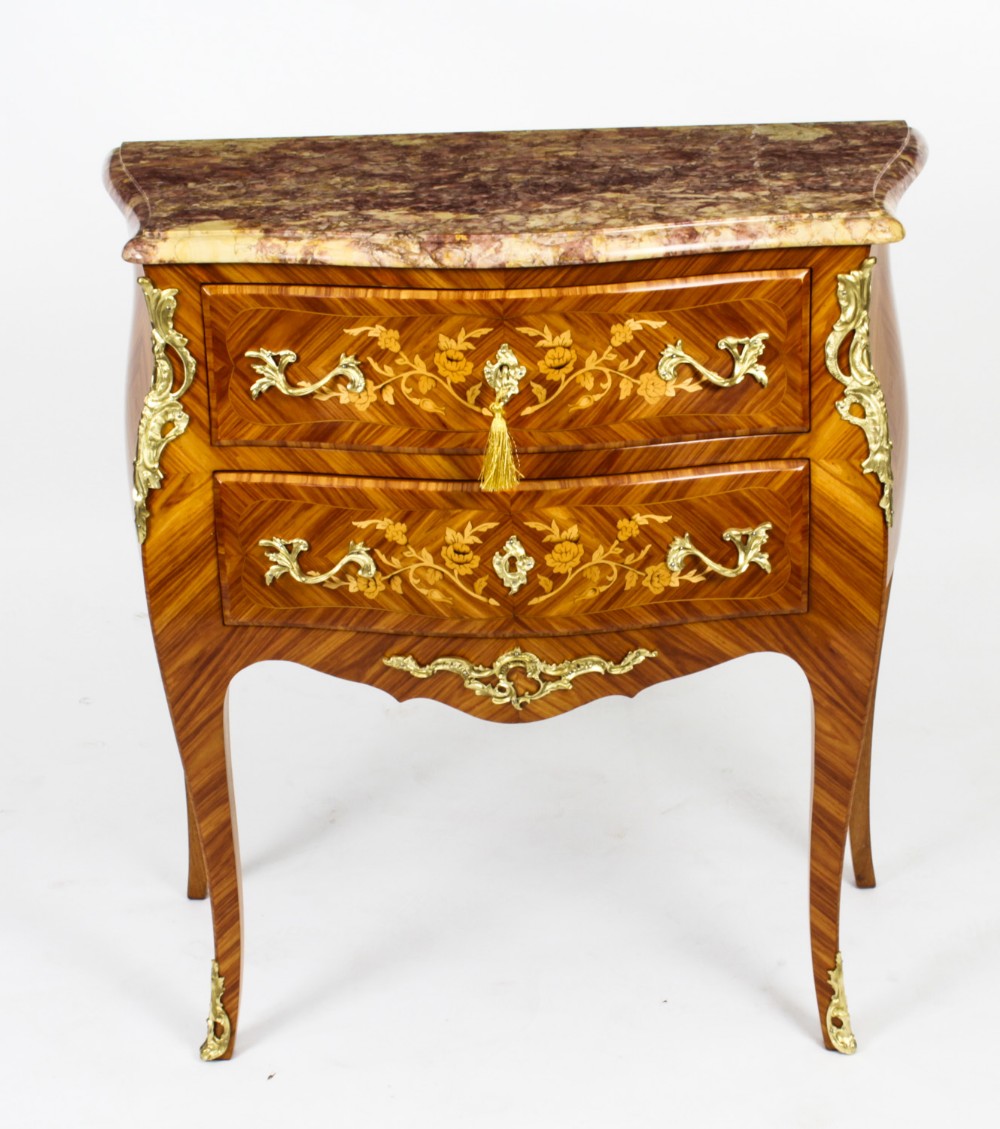
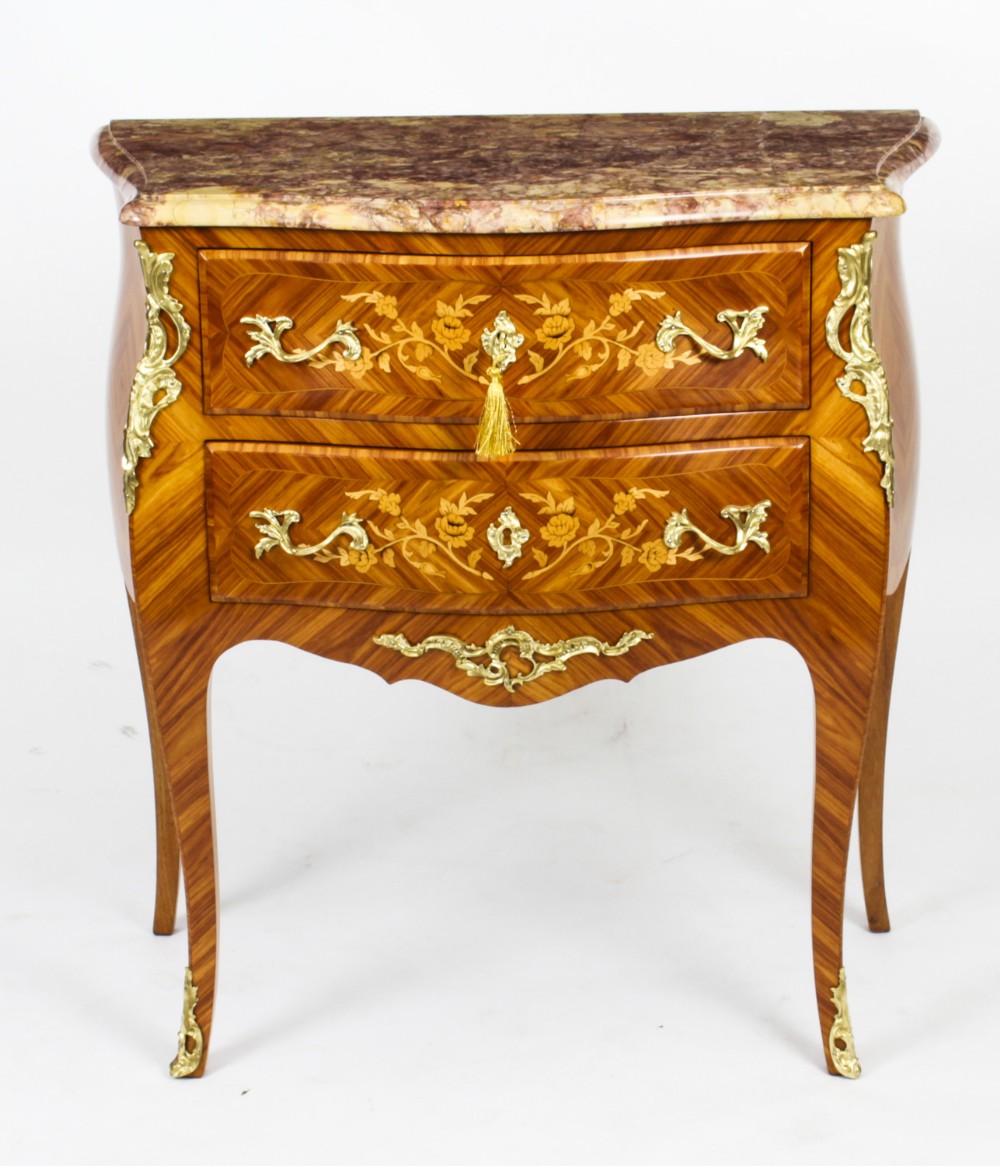
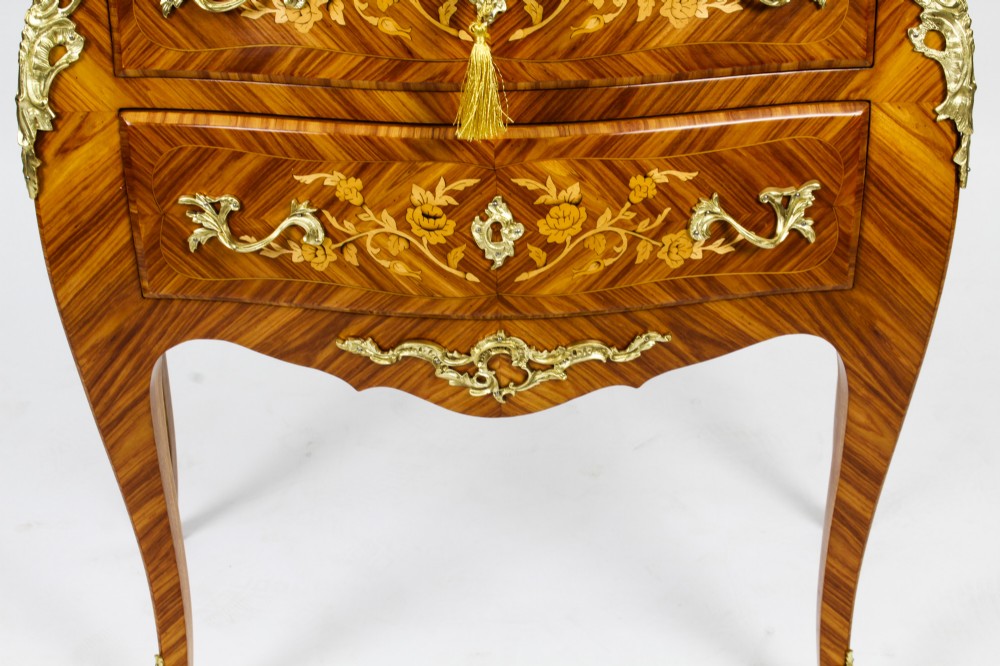
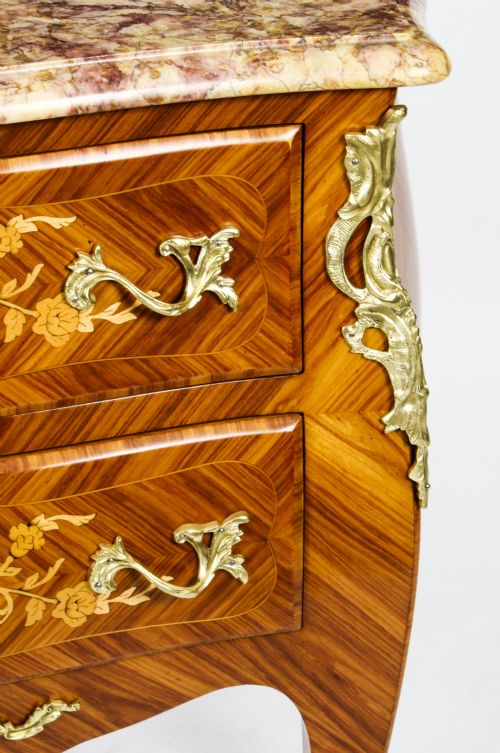
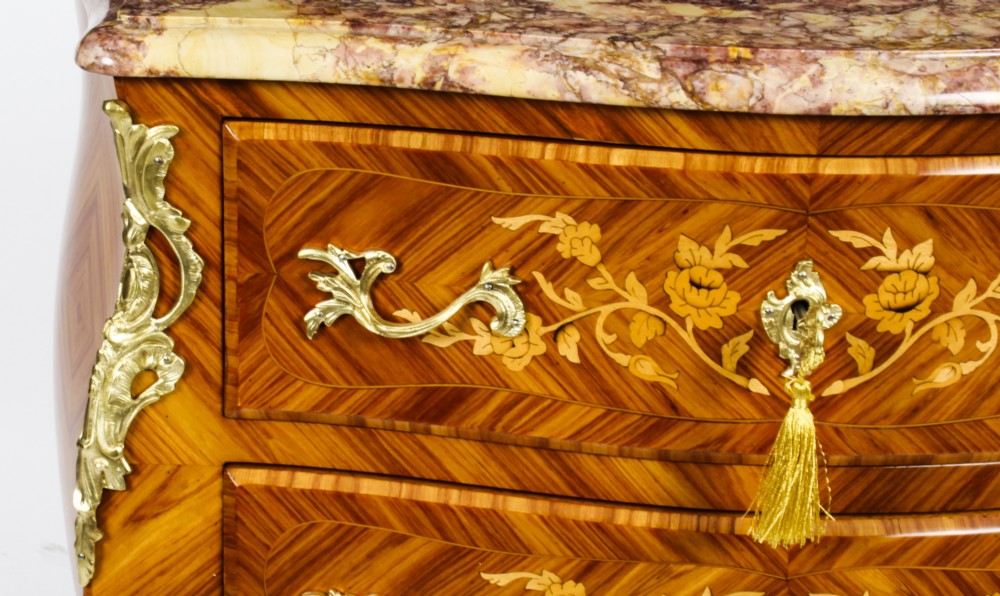
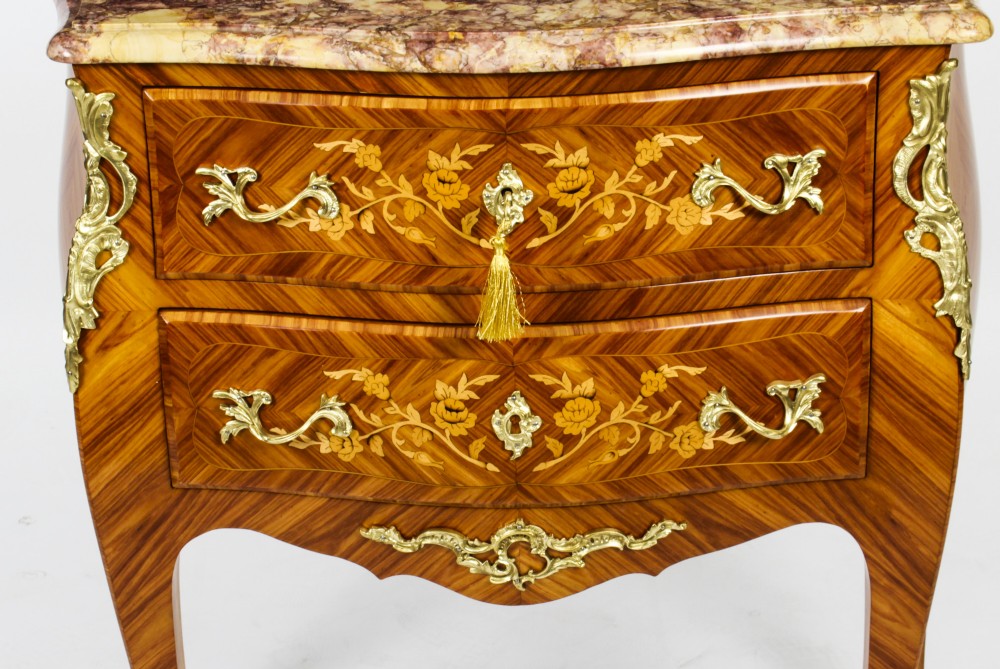
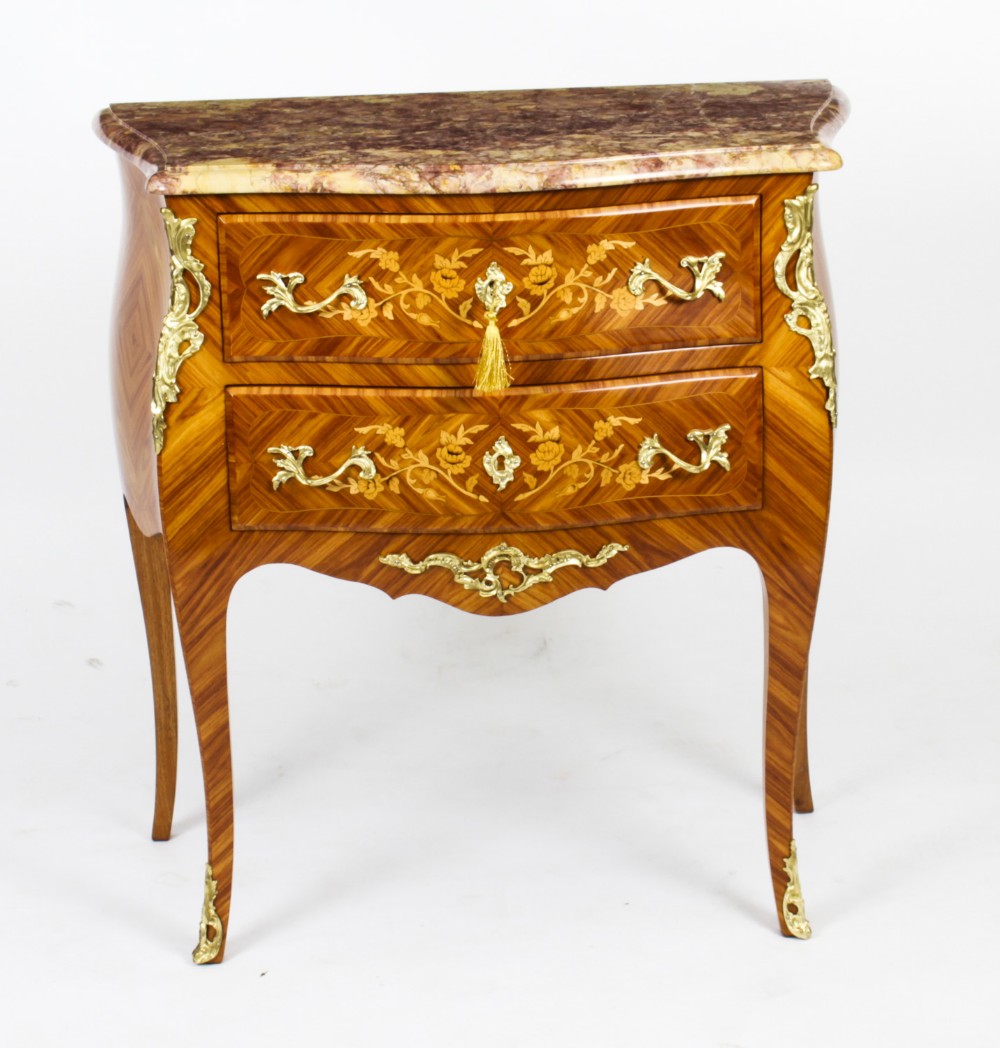
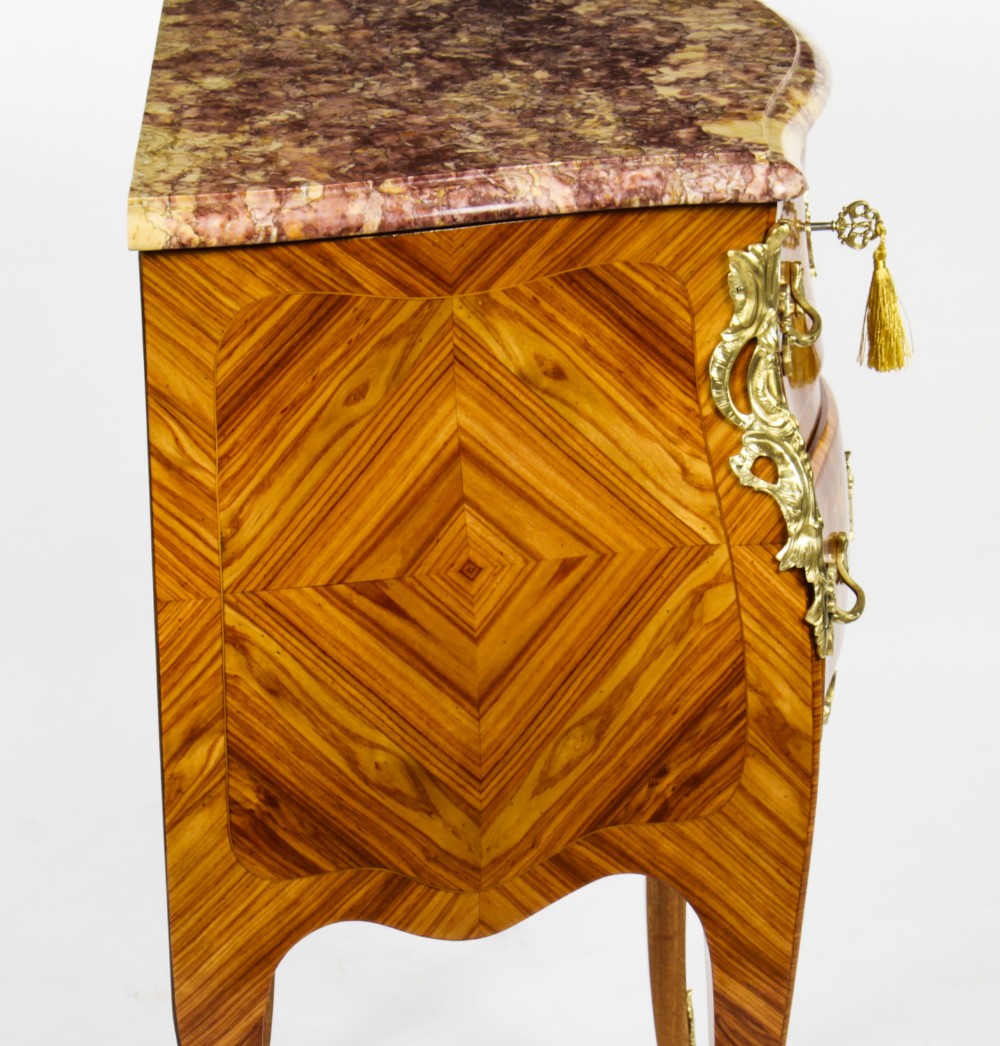
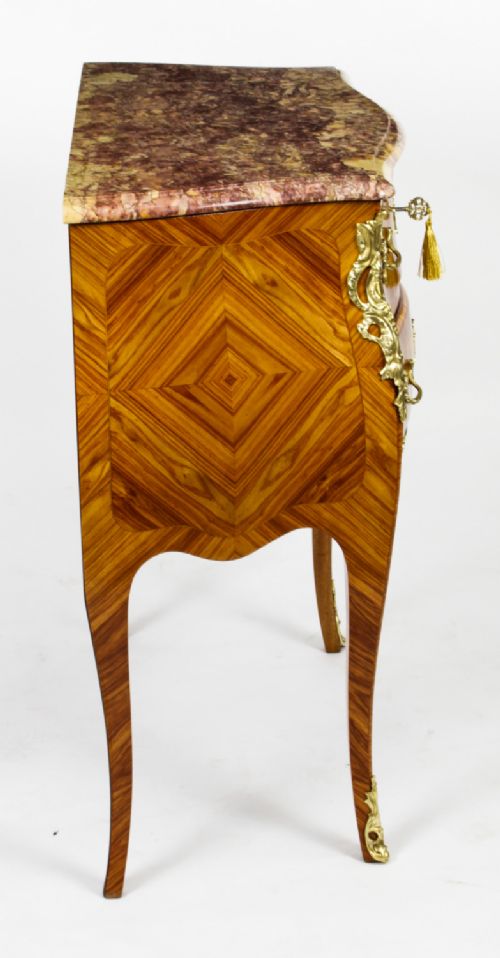
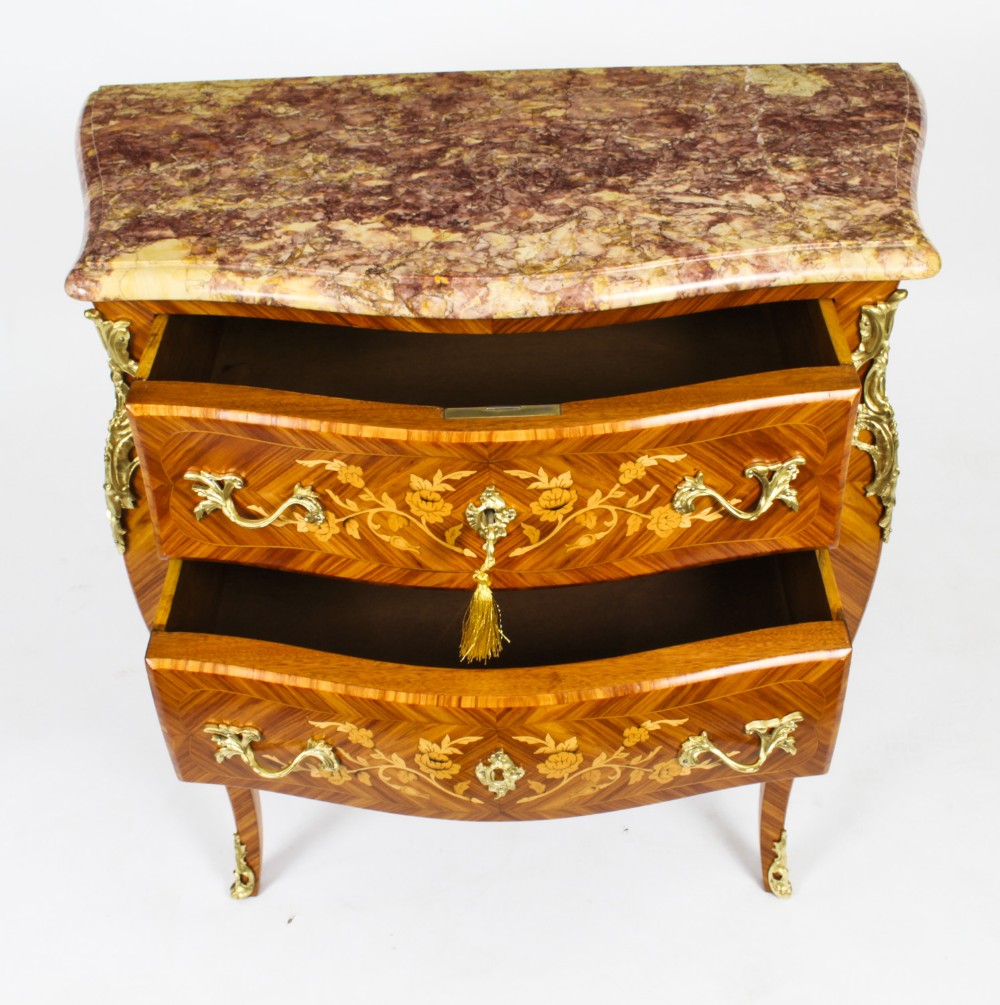
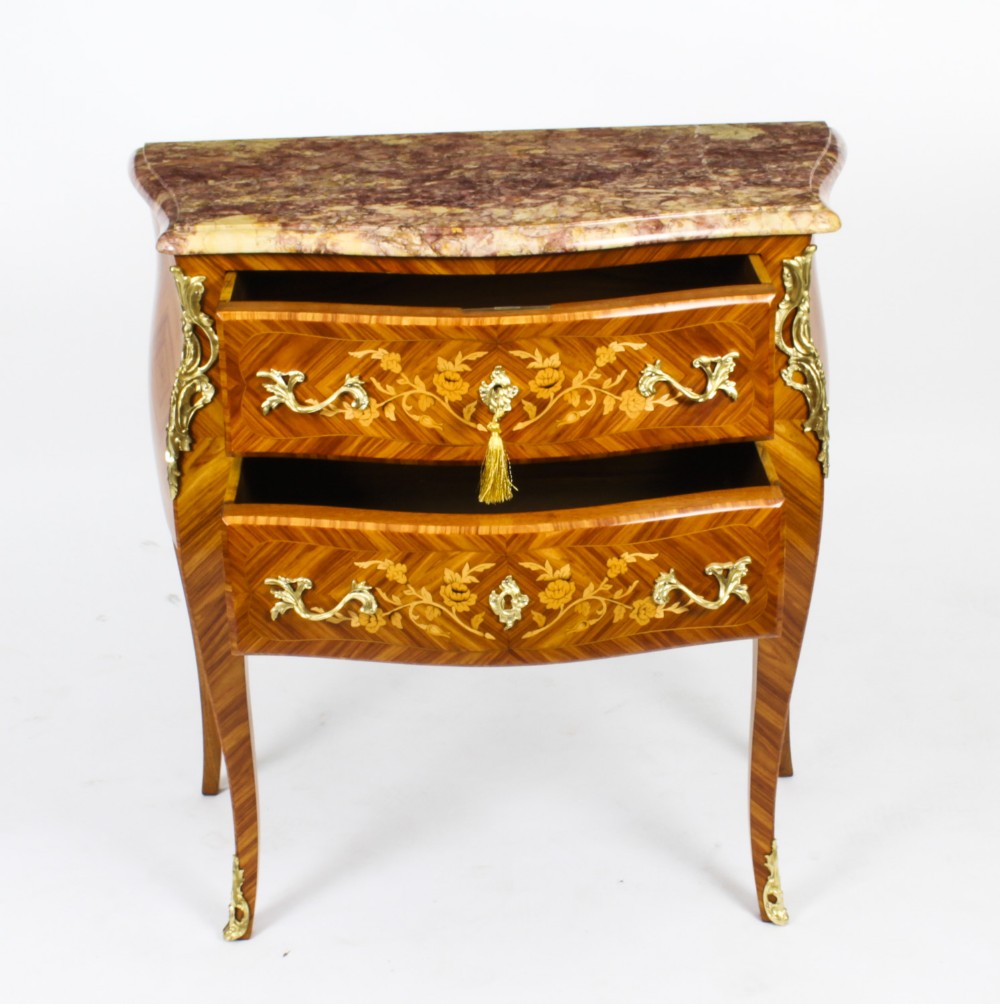
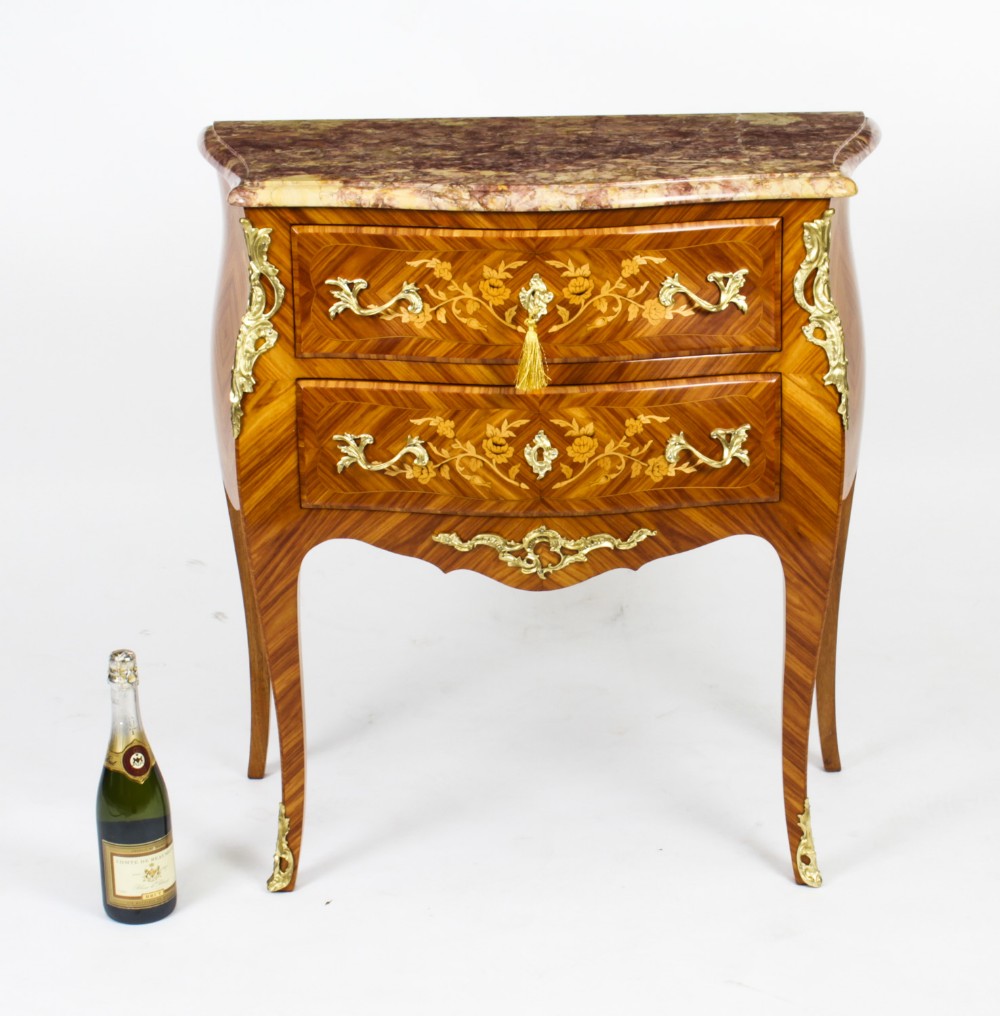
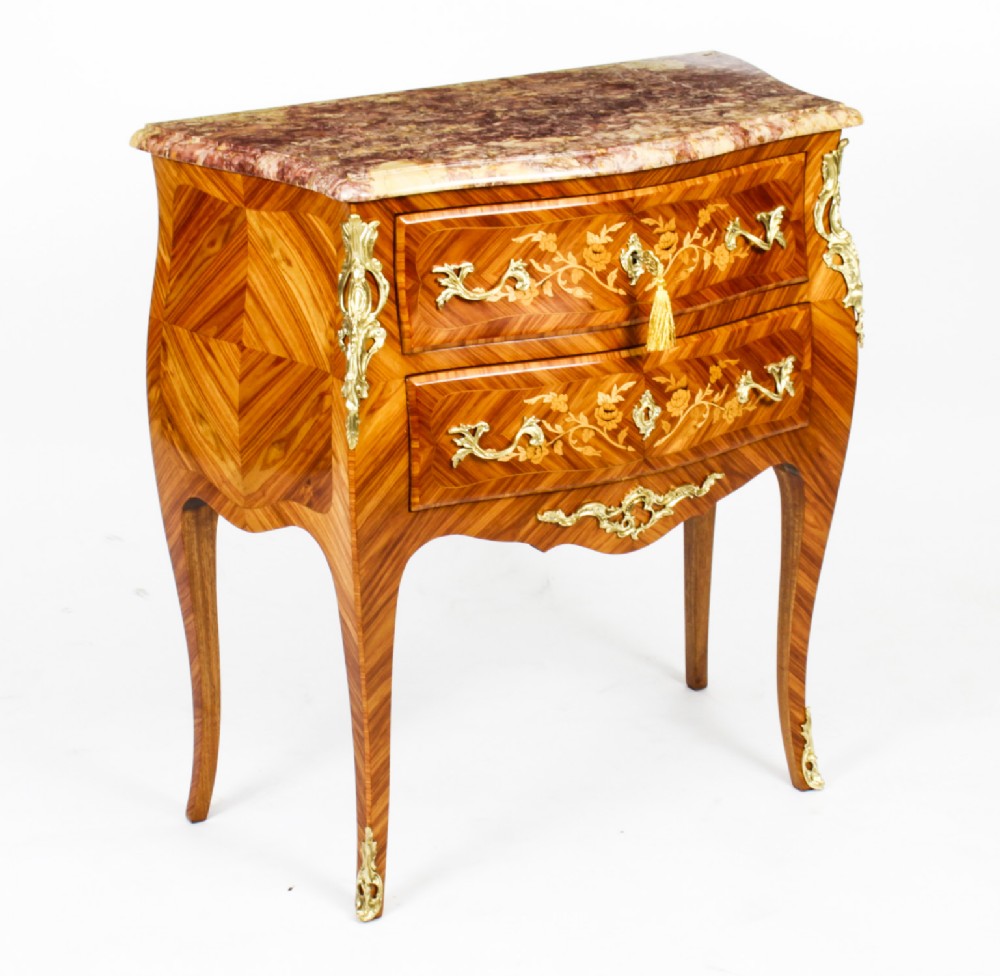
This is a beautiful antique French Louis Revival marquetry commode, circa 1890 in date.
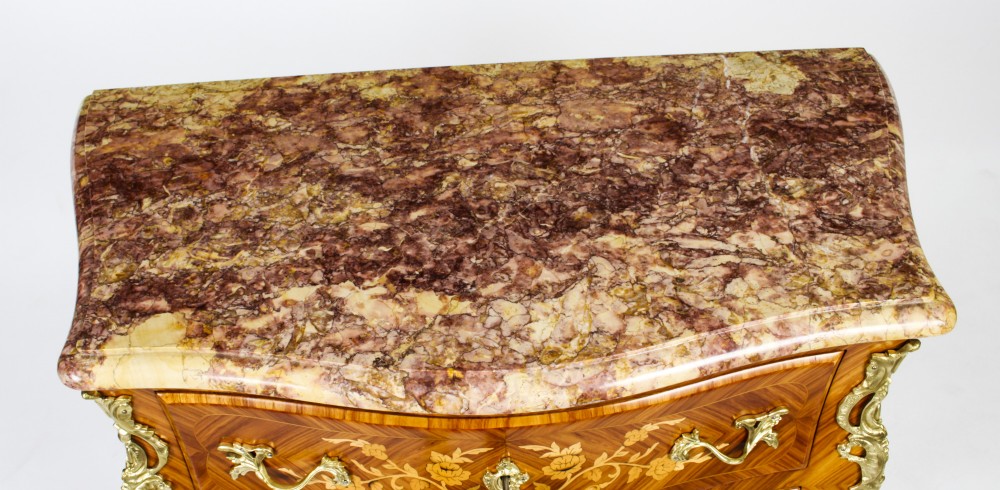
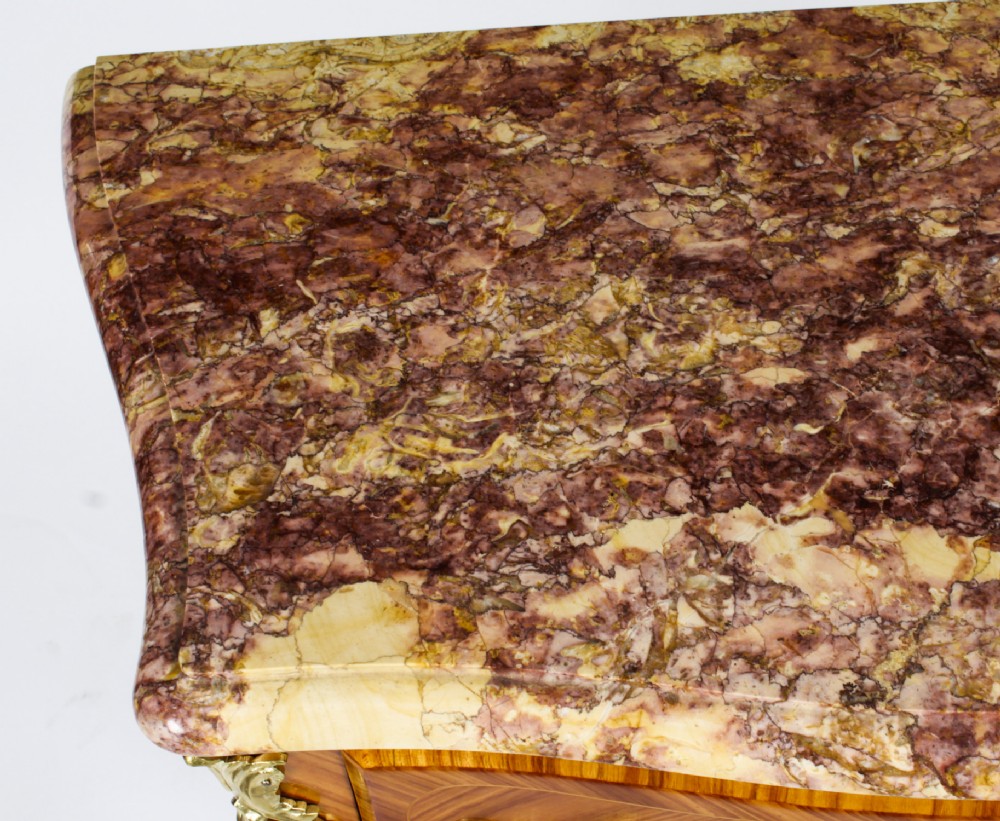
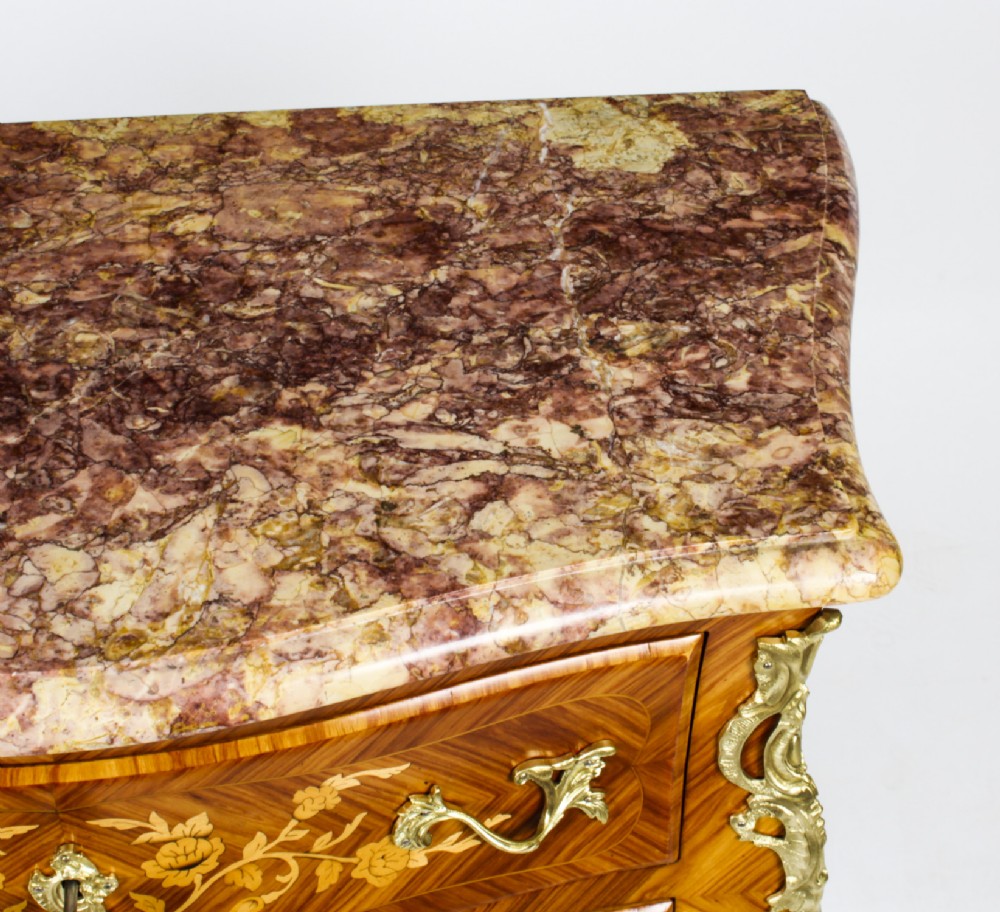
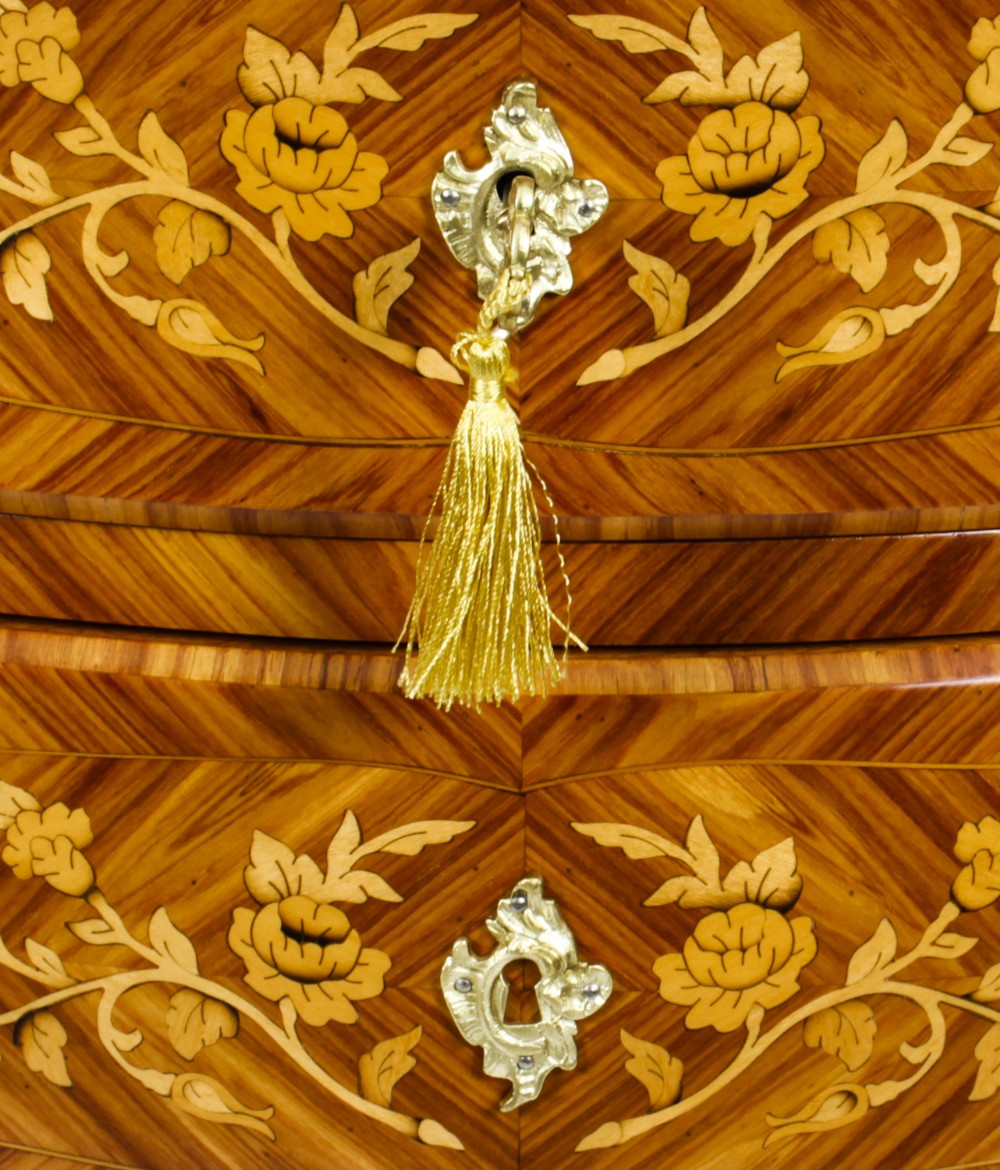
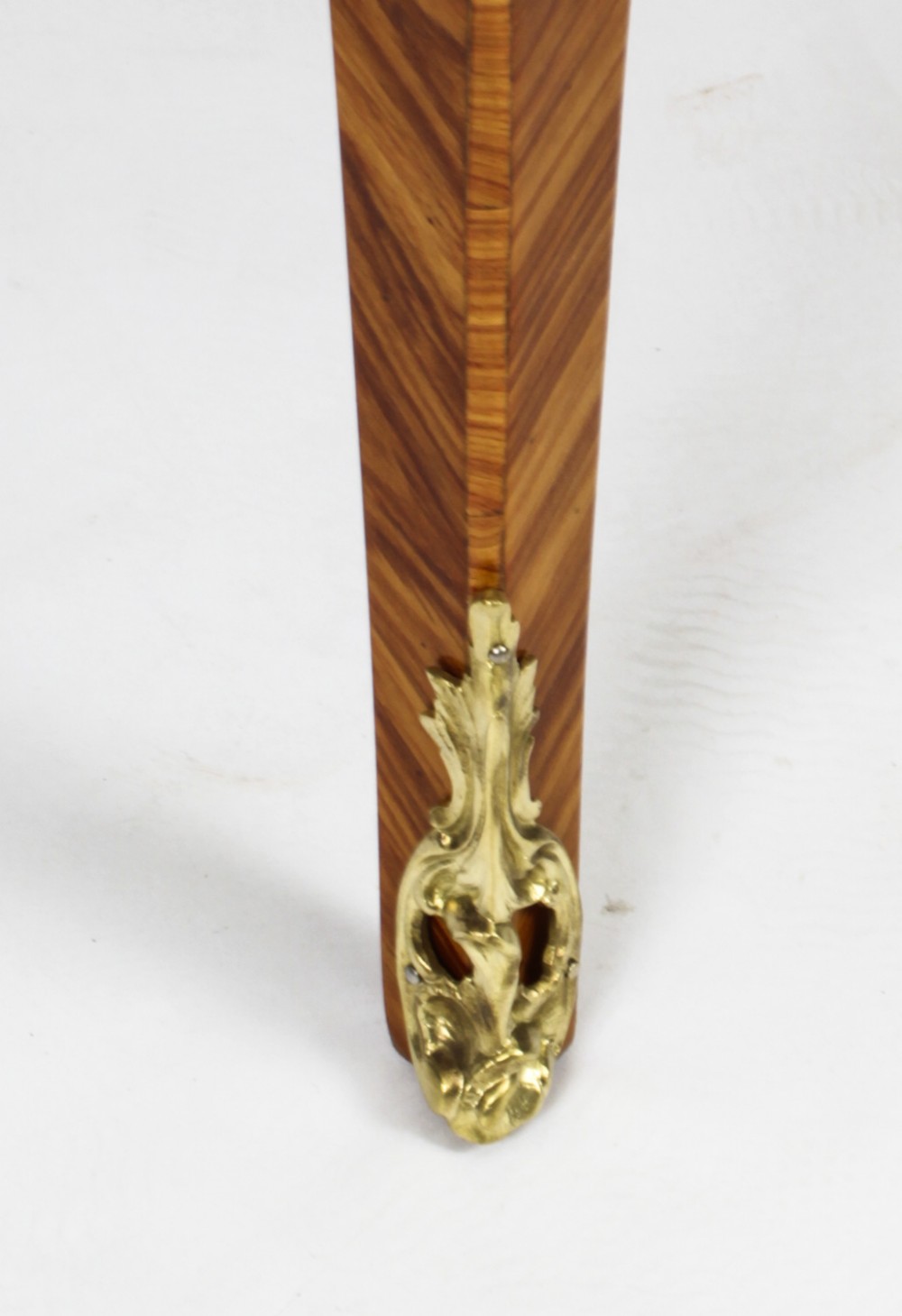
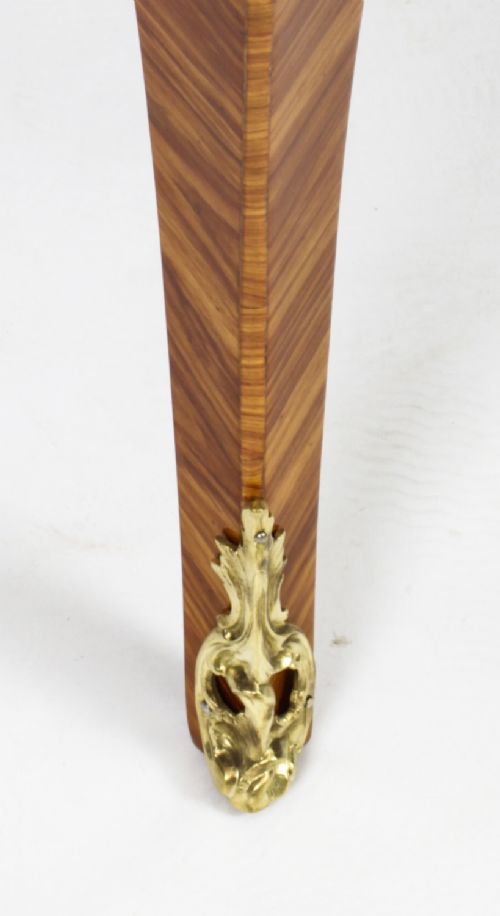
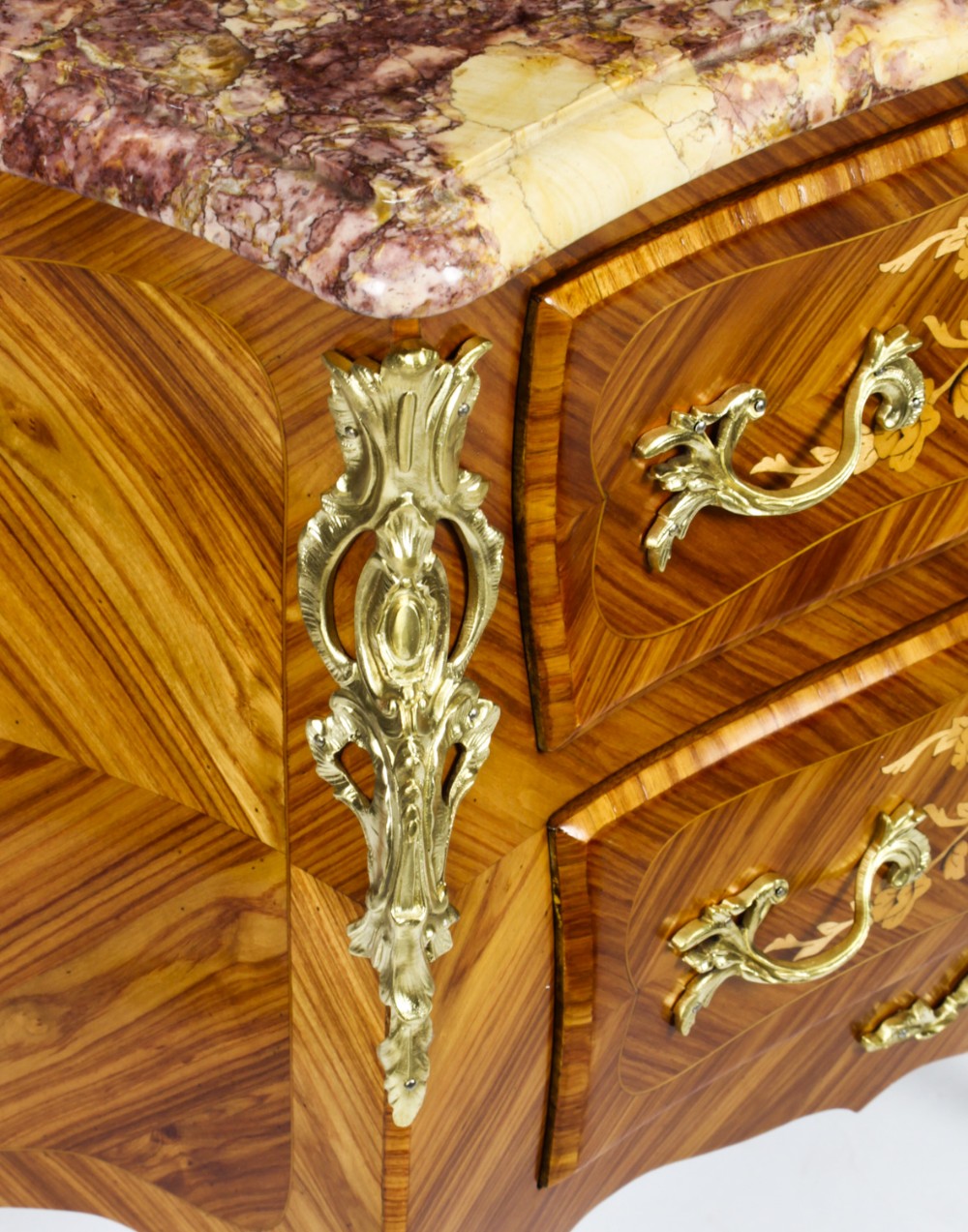
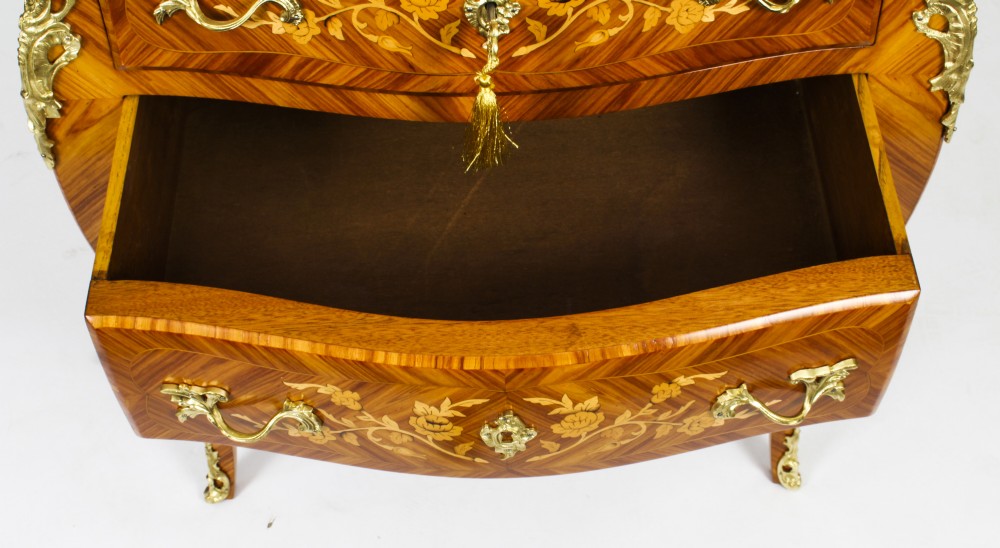
The two drawer commode with its fabulous purple veined Violet Breche marble top features elaborate foliate and floral marquetry decoration and is further complimented by exquisite gilded ormolu mounts that retain their original gilding.
A lot of intricate workmanship by a master craftsman has gone into the creation of this wonderful commode.
Condition:
In excellent condition, please see photos for confirmation.
Dimensions in cm:
Height 89 x Width 79 x Depth 41
Dimensions in inches:
Height 2 foot, 11 inches x Width 2 foot, 7 inches x Depth 1 foot, 4 inches
Violet Breche marble
is extracted from the town of Serravezza, near to the Carrara region in Italy. It is a very heterogeneous marble made up of hues going from white to dark violet, whilst passing through shades of pink, all combined together with a violet coloured cement.
In his Dictionary of Business and Industry, Blanqui describes Violet Breche. “This marble that is frequently used on the most beautiful churches in Italy, and is found on several tables and columns in the galleries of the Louvre Museum, offers an elegant detail to monumental architecture. The quarries that produce it are several miles from Serravezza, and are found in the commune of Stazzema. When the fragments which make up Violet Breche are large, in other words, when the lilacs, pinks, and whites, are prominent, it can only be used for monumental architecture, but when the colours are less prominent and equally spread across the whole surface of the marble, it can be used to make fireplaces and luxurious furniture.”
Marquetry
is decorative artistry where pieces of material (such as wood, mother of pearl, pewter, brass silver or shell) of different colours are inserted into surface wood veneer to form intricate patterns such as scrolls or flowers.
The technique of veneered marquetry had its inspiration in 16th century Florence. Marquetry elaborated upon Florentine techniques of inlaying solid marble slabs with designs formed of fitted marbles, jaspers and semi-precious stones. This work, called opere di commessi, has medieval parallels in Central Italian "Cosmati"-work of inlaid marble floors, altars and columns. The technique is known in English as pietra dura, for the "hardstones" used: onyx, jasper, cornelian, lapis lazuli and colored marbles. In Florence, the Chapel of the Medici at San Lorenzo is completely covered in a colored marble facing using this demanding jig-sawn technique.
Techniques of wood marquetry were developed in Antwerp and other Flemish centers of luxury cabinet-making during the early 16th century. The craft was imported full-blown to France after the mid-seventeenth century, to create furniture of unprecedented luxury being made at the royal manufactory of the Gobelins, charged with providing furnishings to decorate Versailles and the other royal residences of Louis XIV. Early masters of French marquetry were the Fleming Pierre Golle and his son-in-law, André-Charles Boulle, who founded a dynasty of royal and Parisian cabinet-makers (ébénistes) and gave his name to a technique of marquetry employing shell and brass with pewter in arabesque or intricately foliate designs.
Ormolu - (from French 'or moulu', signifying ground or pounded gold) is an 18th-century English term for applying finely ground, high-carat gold in a mercury amalgam to an object of bronze.The mercury is driven off in a kiln leaving behind a gold-coloured veneer known as 'gilt bronze'.
The manufacture of true ormolu employs a process known as mercury-gilding or fire-gilding, in which a solution of nitrate of mercury is applied to a piece of copper, brass, or bronze, followed by the application of an amalgam of gold and mercury. The item was then exposed to extreme heat u