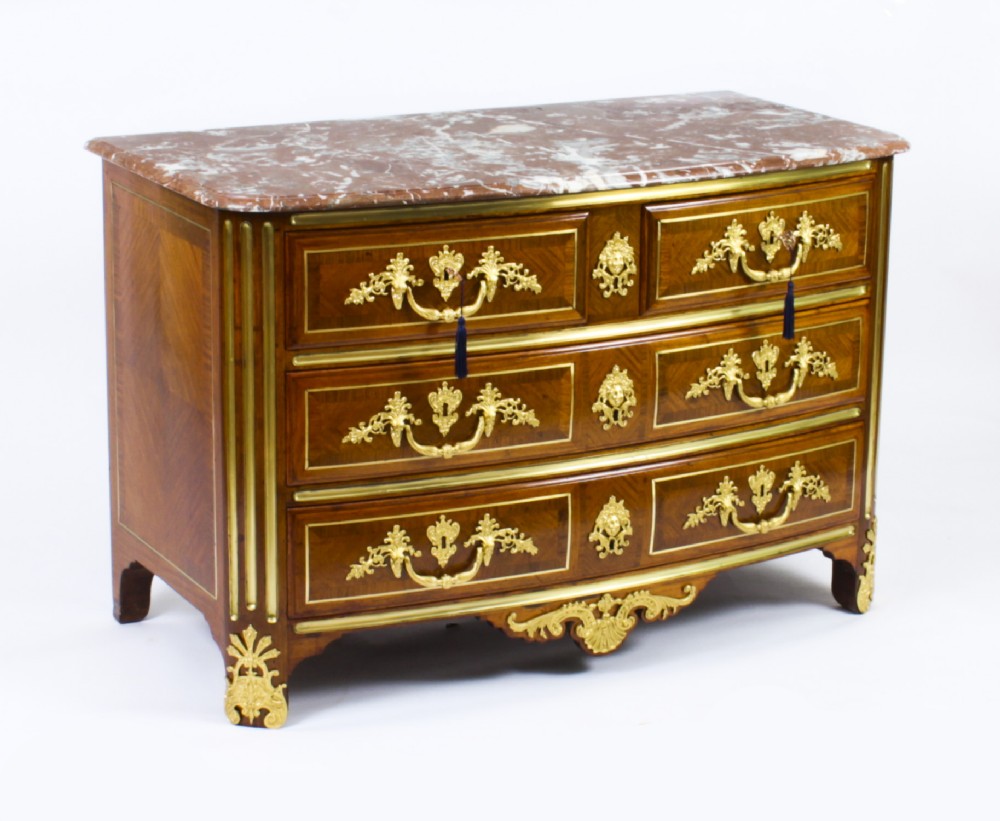
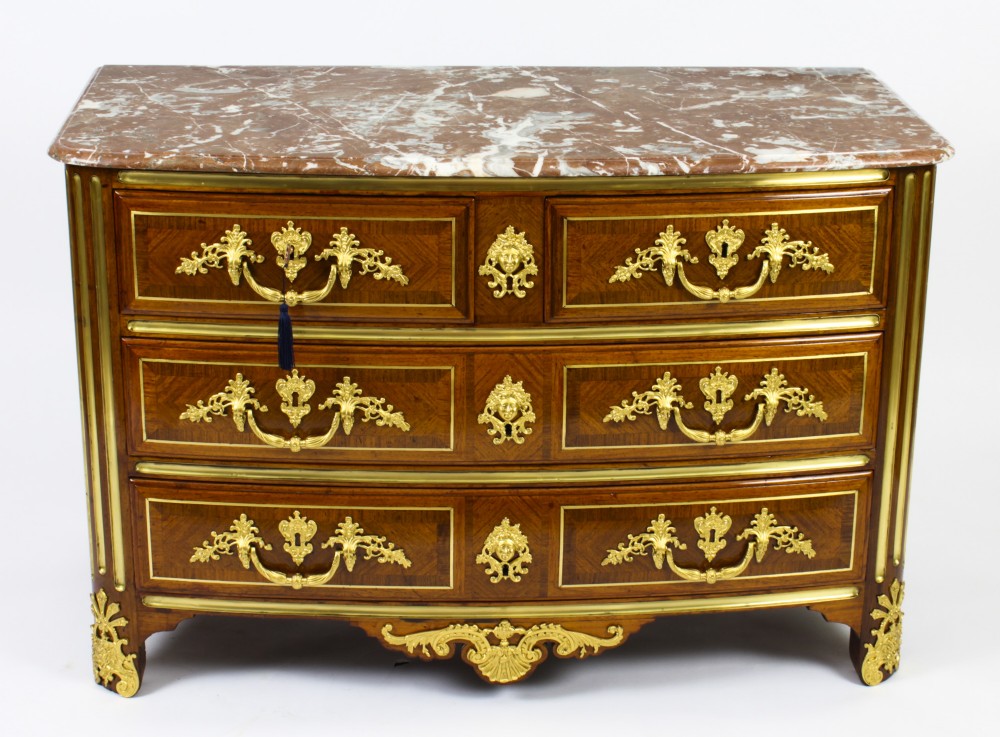
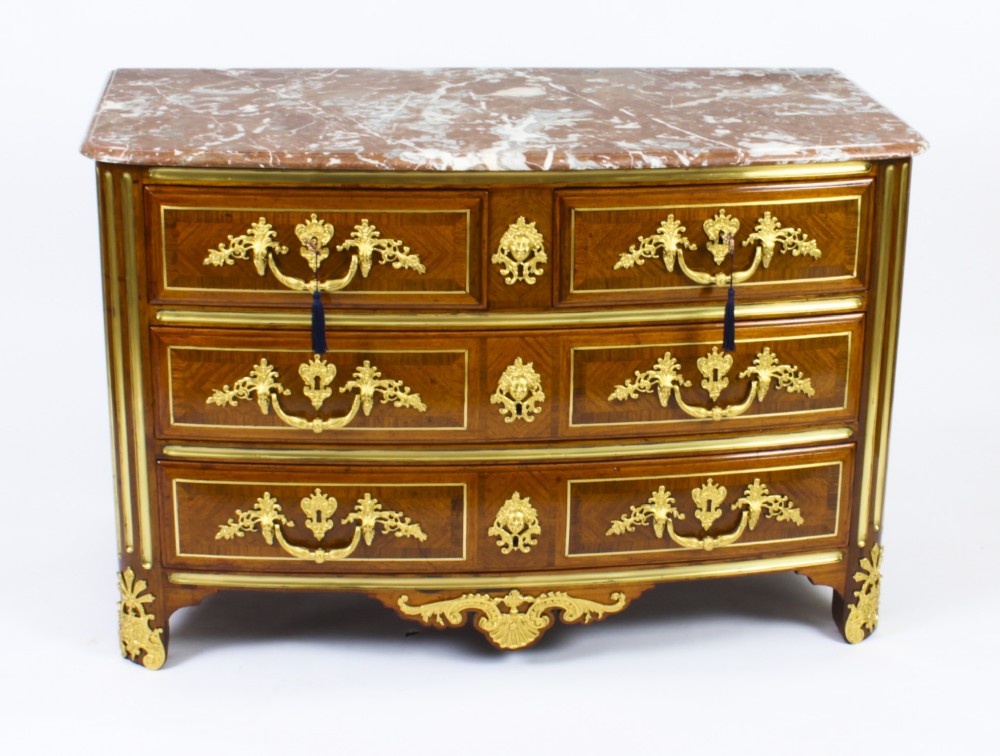
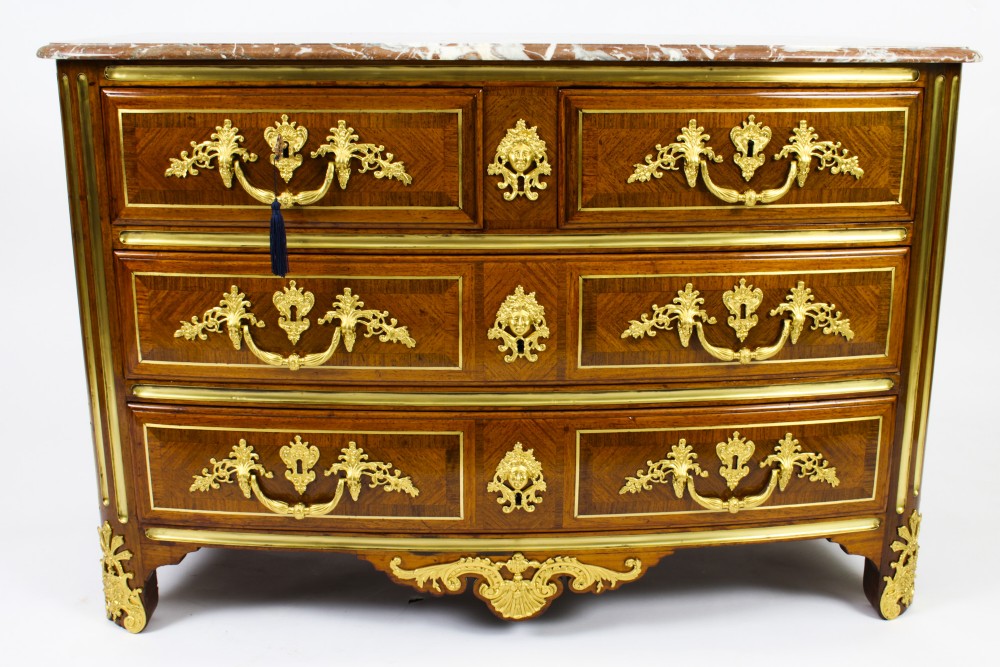
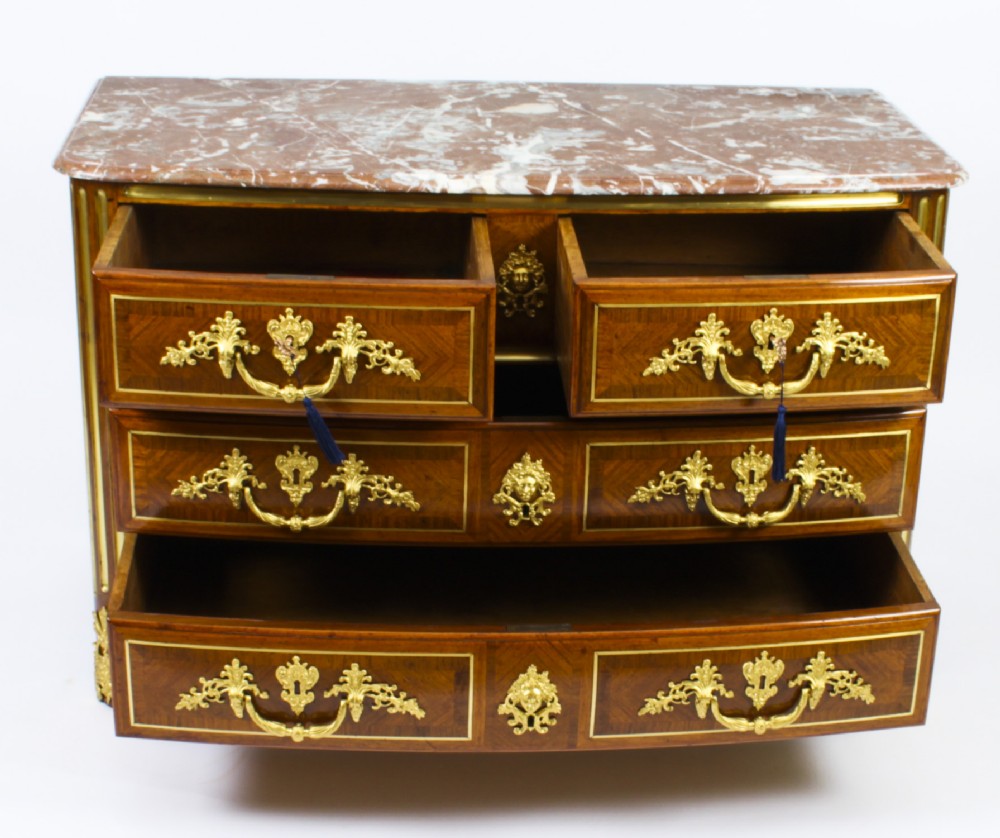
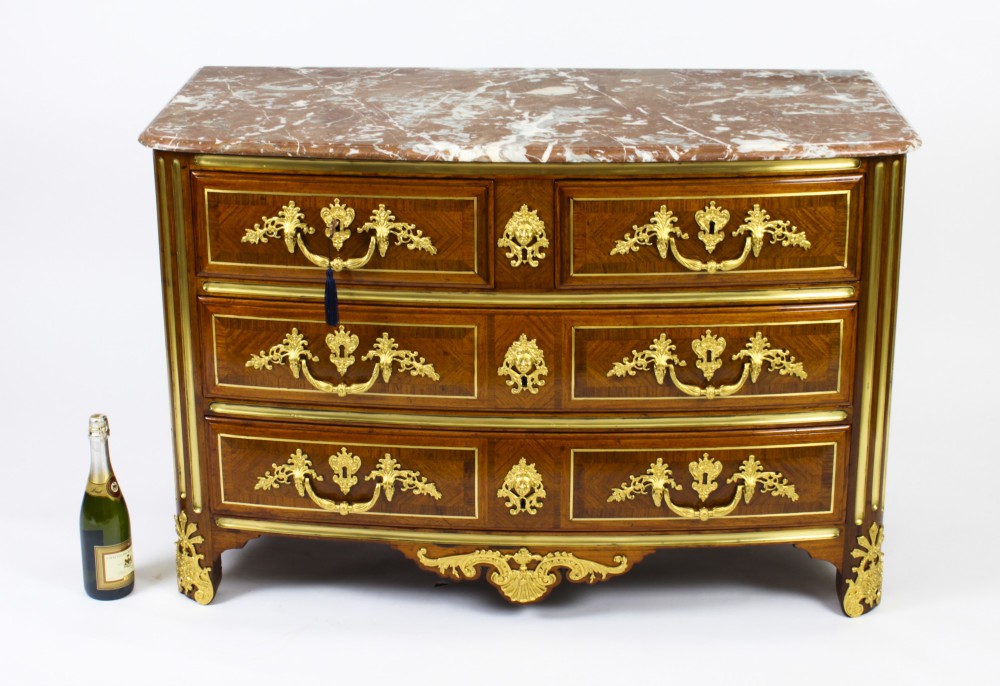
This is a beautiful antique French Louis XV Revival walnut and ormolu mounted commode, circa 1860 in date.
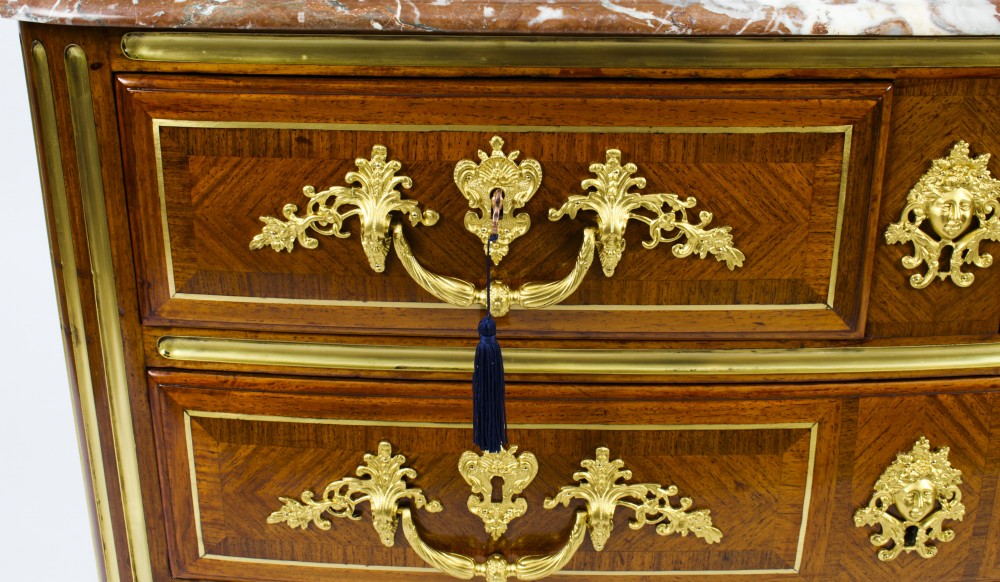
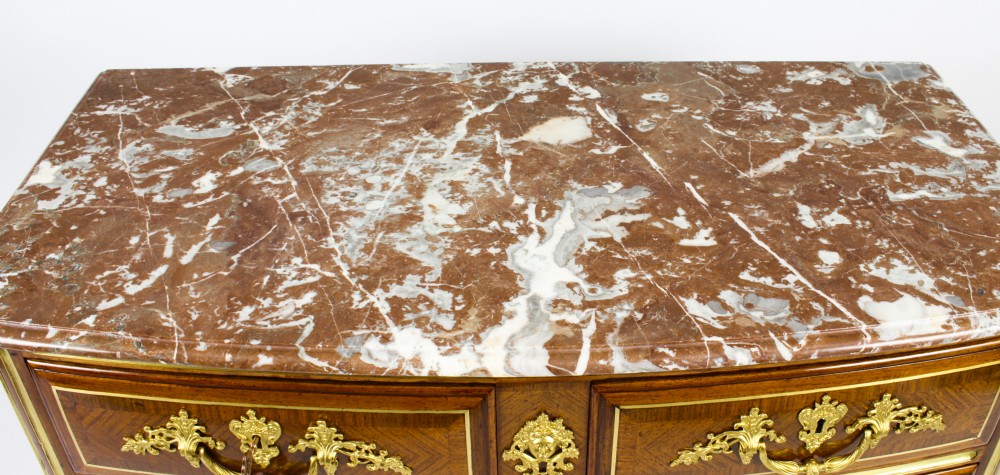
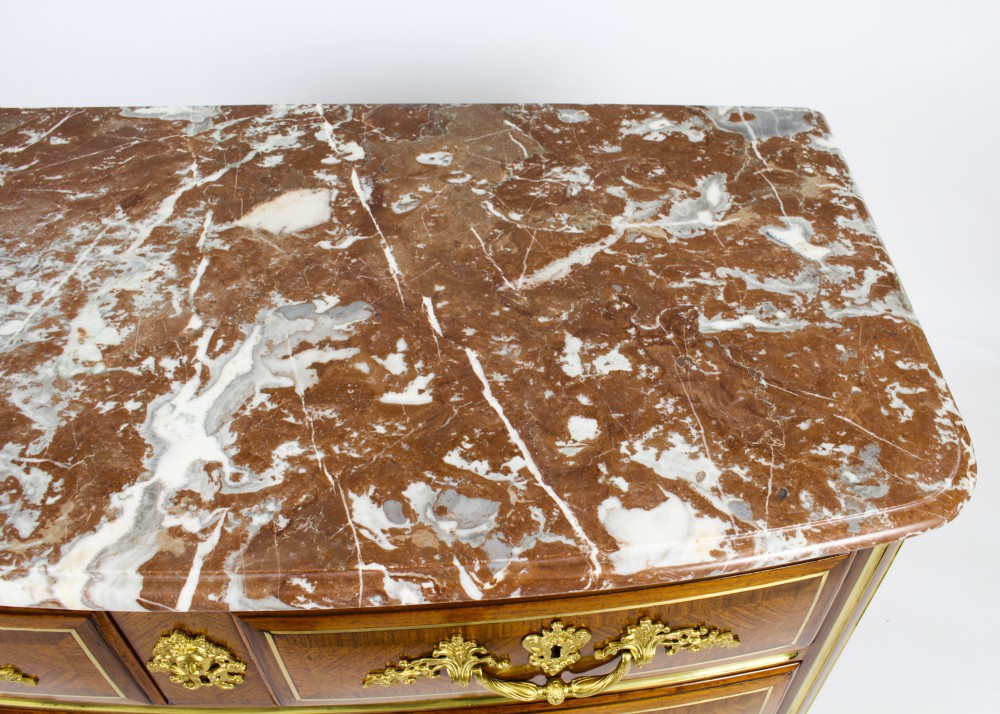
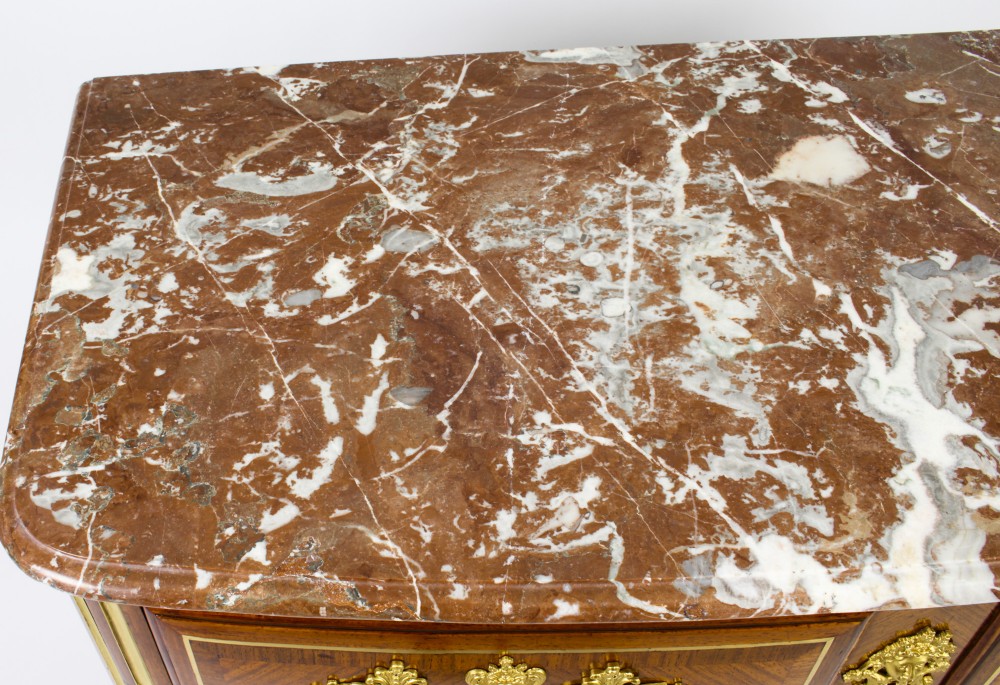
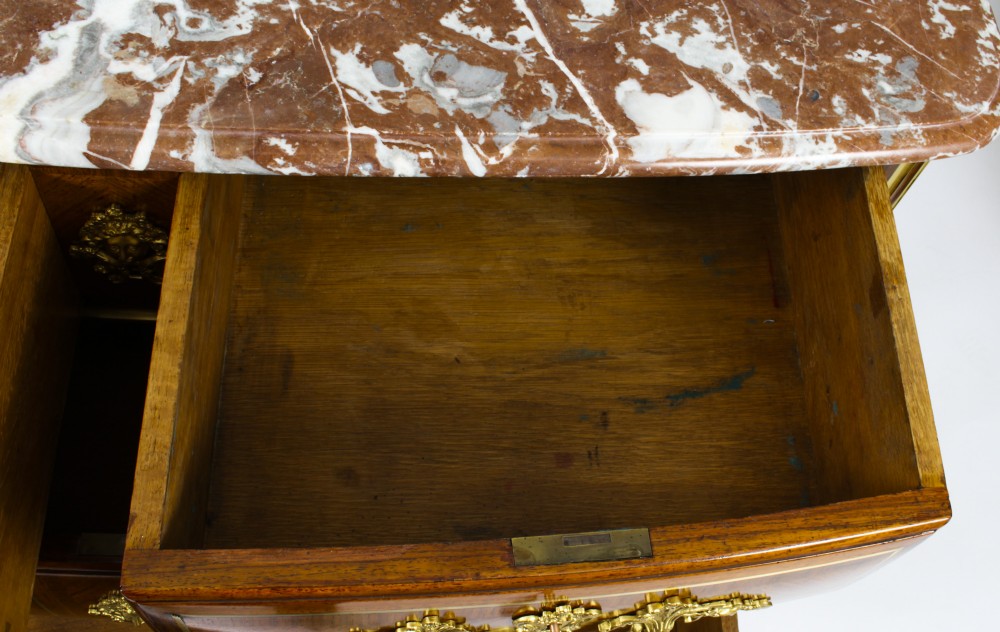
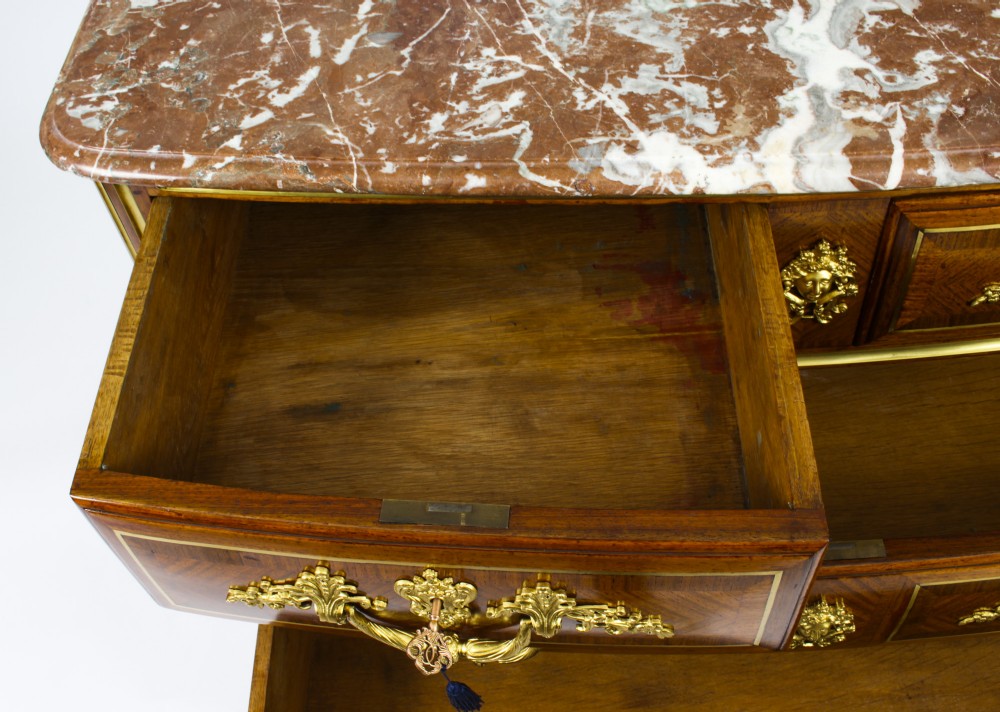
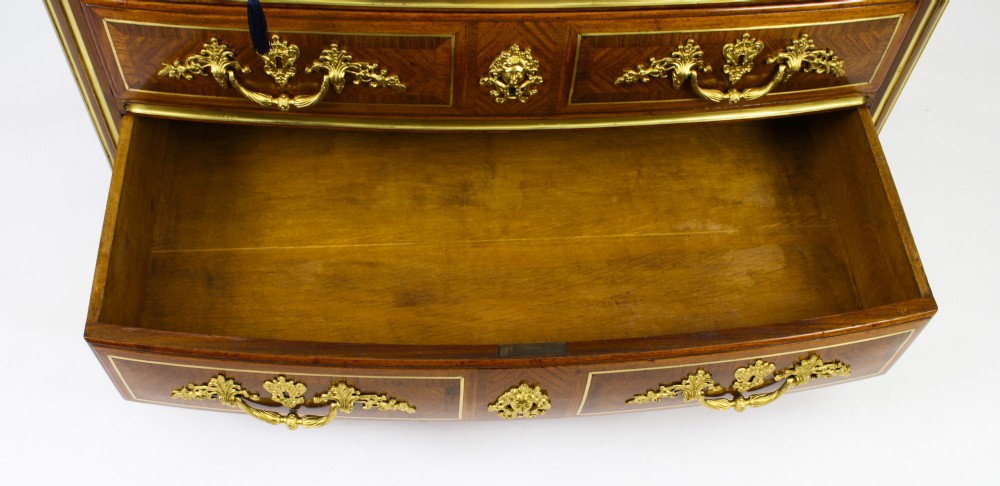
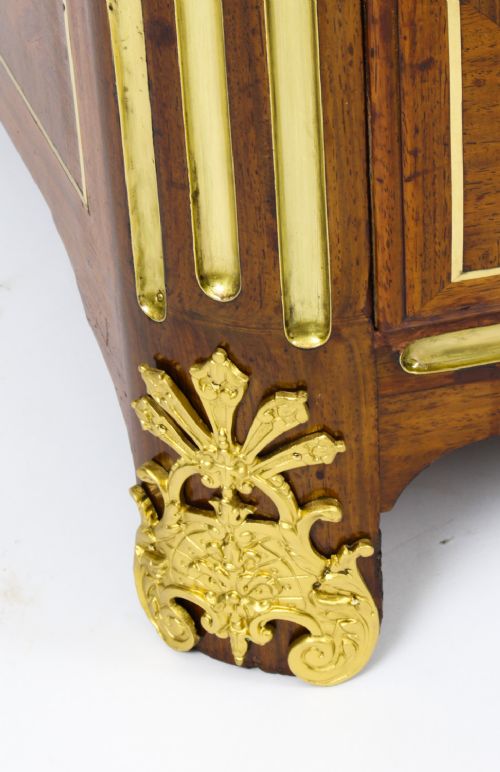
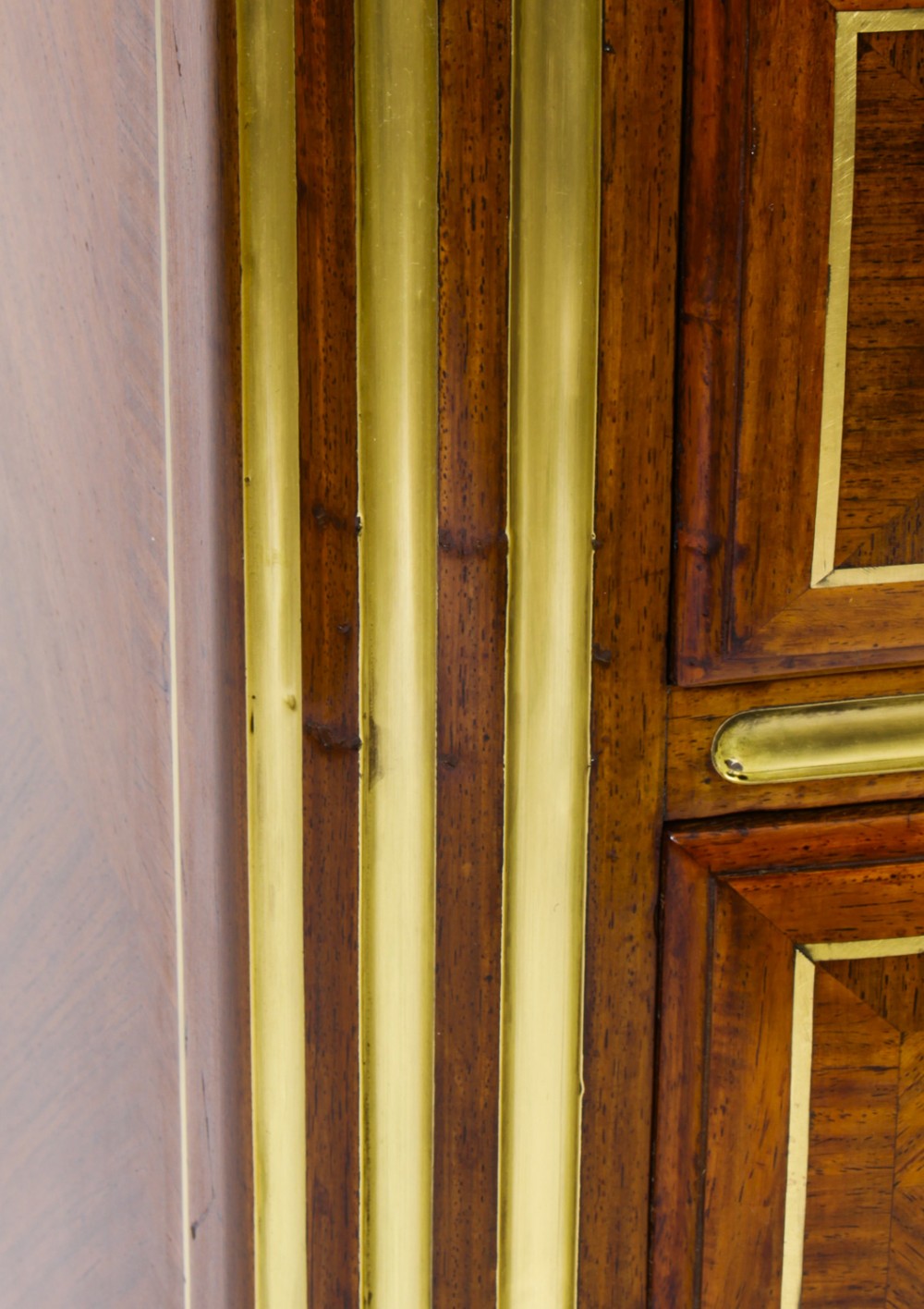
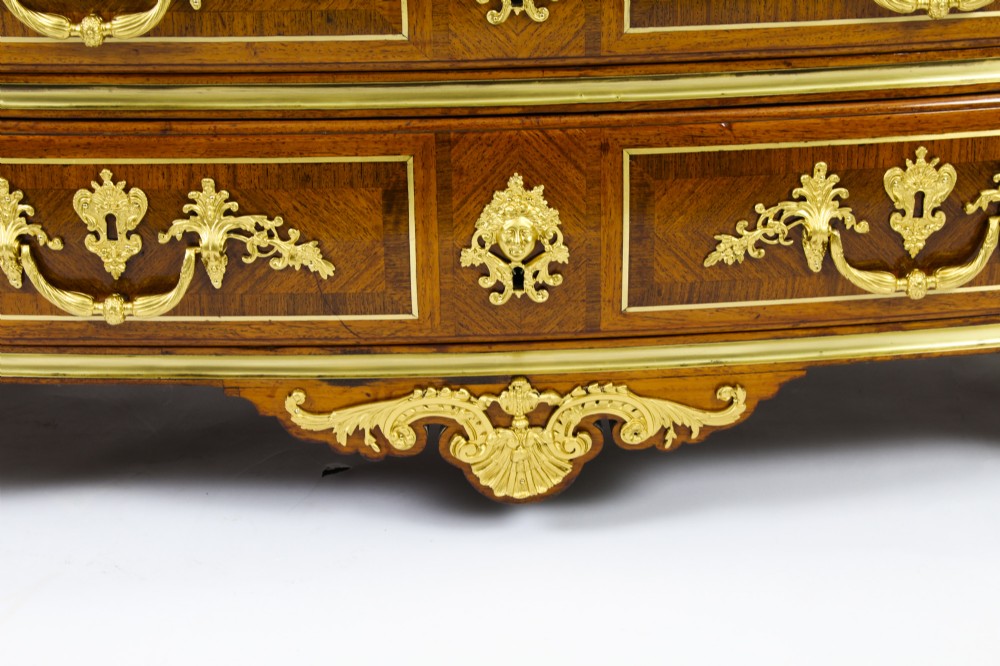
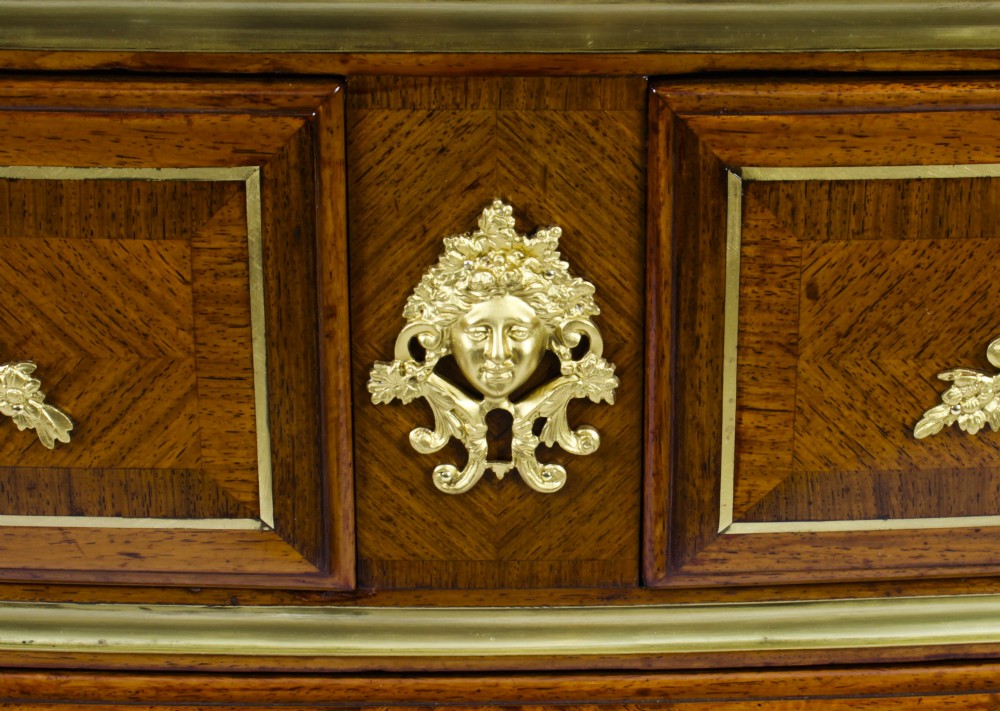
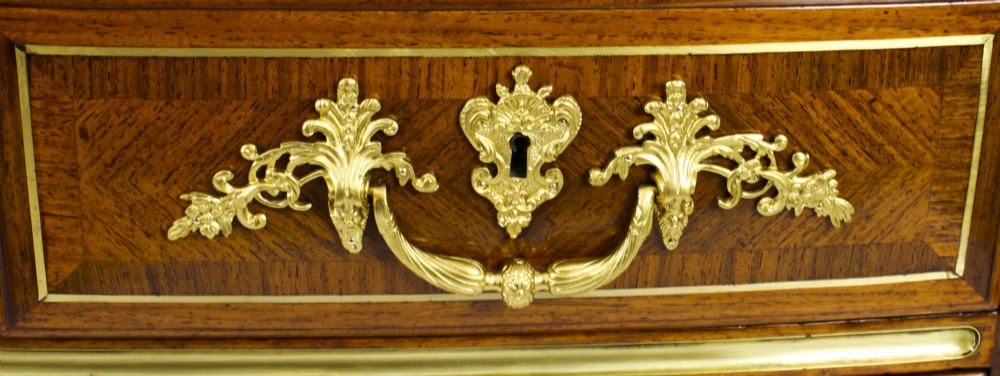
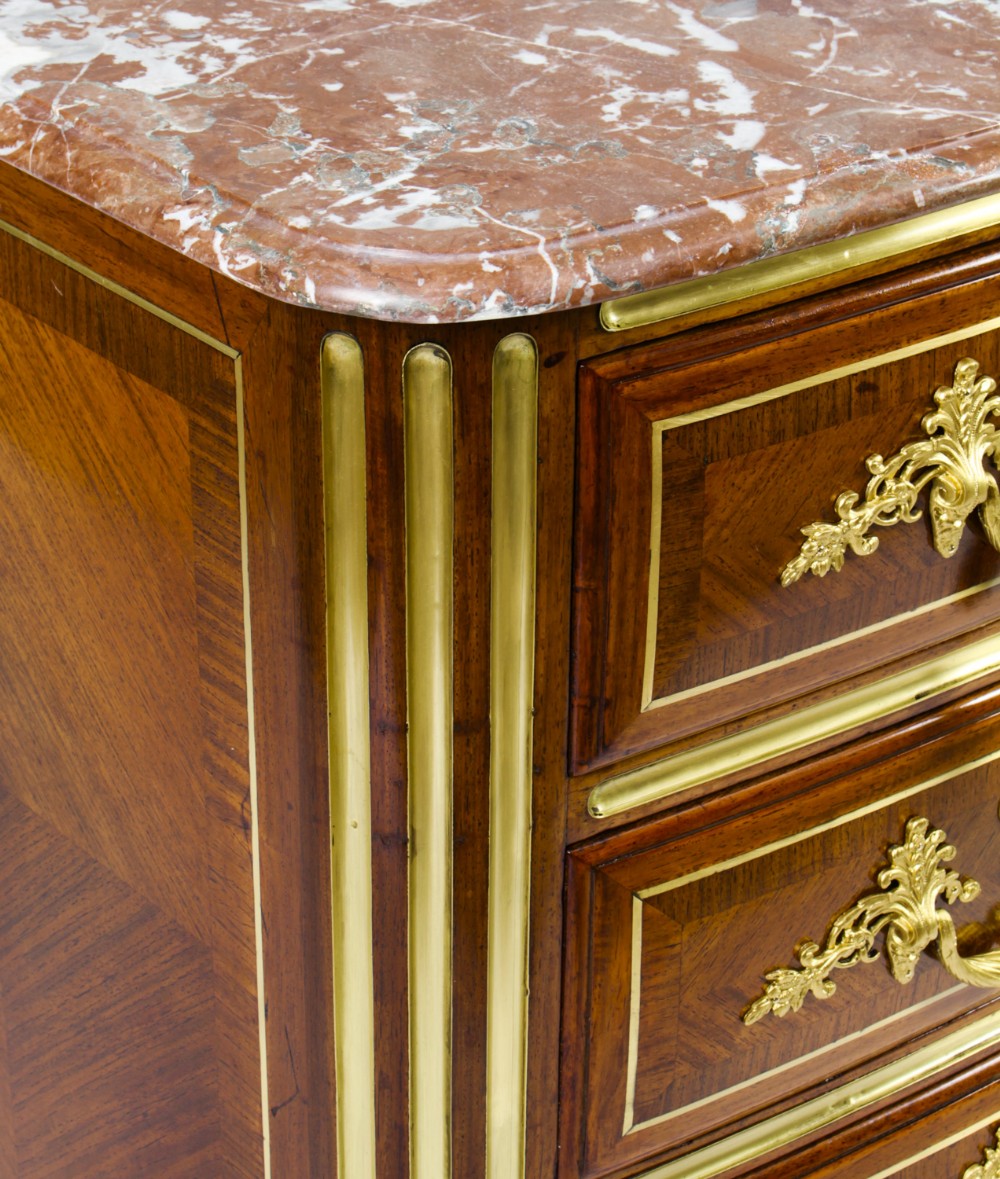
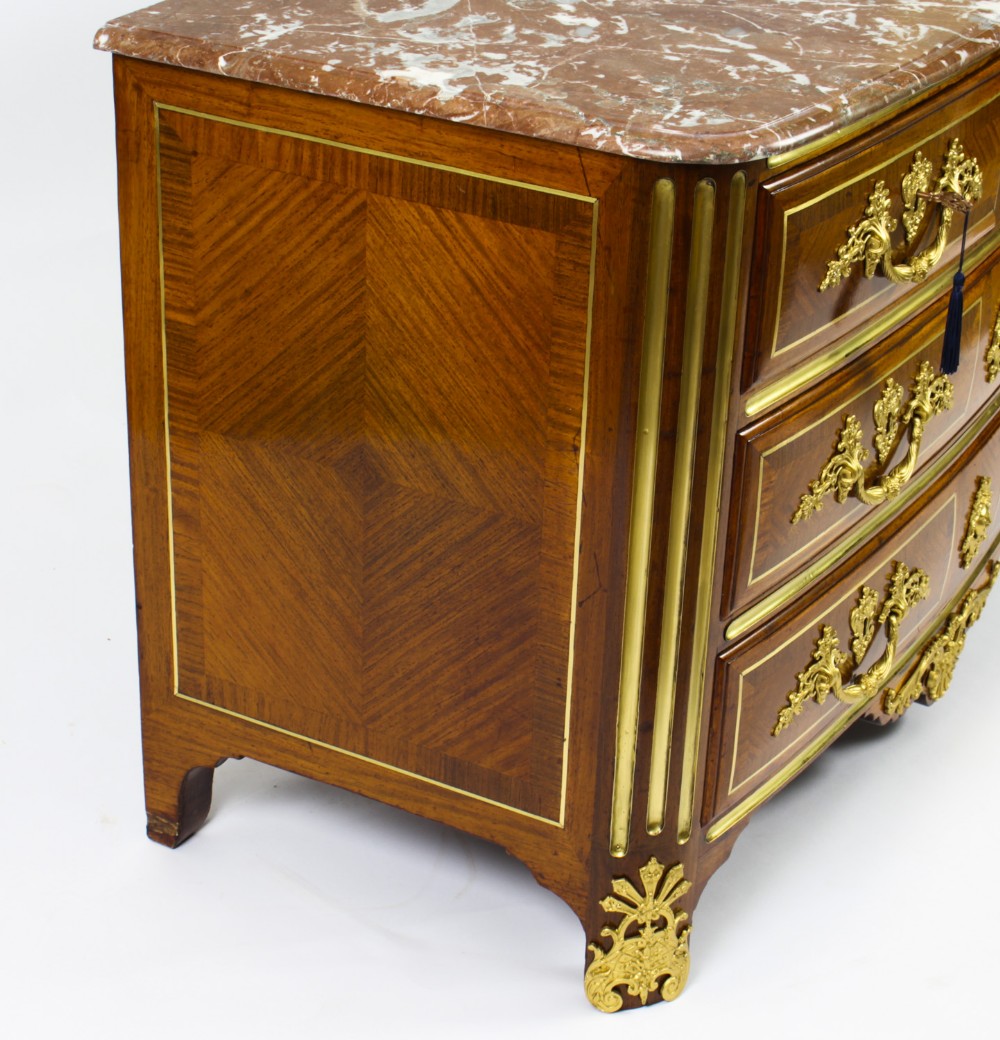
It has a stunning shaped Italian pink and grey marble top above two half width drawers and two full width drawers with crossbanded decoration. They featuring unusual gilded ormolu channeling between the drawers with bold ormolu drop-handles cast with leafage and flowers and centred by ormolu masks.
The shaped apron with a stylised shell flanked by leafy fronds and the channelled corners continuing to shaped feet with ormolu mounts
A lot of intricate workmanship by a master craftsman has gone into the creation of this wonderful commode.
Condition:
In really excellent condition having been beautifully cleaned, French polished and waxed in our workshops, please see photos for confirmation.
Dimensions in cm:
Height 79 x Width 122 x Depth 61
Dimensions in inches:
Height 2 foot, 7 inches x Width 4 foot x Depth 2 foot
Ormolu - Gilt Bronze (from French 'or moulu', signifying ground or pounded gold) is an 18th-century English term for applying finely ground, high-carat gold in a mercury amalgam to an object of bronze.The mercury is driven off in a kiln leaving behind a gold-coloured veneer known as 'gilt bronze'.
The manufacture of true ormolu employs a process known as mercury-gilding or fire-gilding, in which a solution of nitrate of mercury is applied to a piece of copper, brass, or bronze, followed by the application of an amalgam of gold and mercury. The item was then exposed to extreme heat until the mercury burned off and the gold remained, adhered to the metal object.
After around 1830 because legislation had outlawed the use of mercury other techniques were used instead. Electroplating is the most common modern technique. Ormolu techniques are essentially the same as those used on silver, to produce silver-gilt.
Our reference: A1871