Titan Fine Art has dated this piece to the 17th Century.
He made his other estate, Wimpole Hall, one of the main centres of art and learning of the early Georgian age and his manuscript collection, later acquired for the nation, formed the foundation of the British Library. A selection of his paintings, bronzes, urns, and other curiosities were dispersed in a six-day 472-lot sale, from 8-13 March 1742, by auctioneer Cock at their premises in Covent Garden, London. Our painting, said to be Lot 38 was described as “Sir Walter Raleigh by Cornelius Johnson” in the sale catalogue.
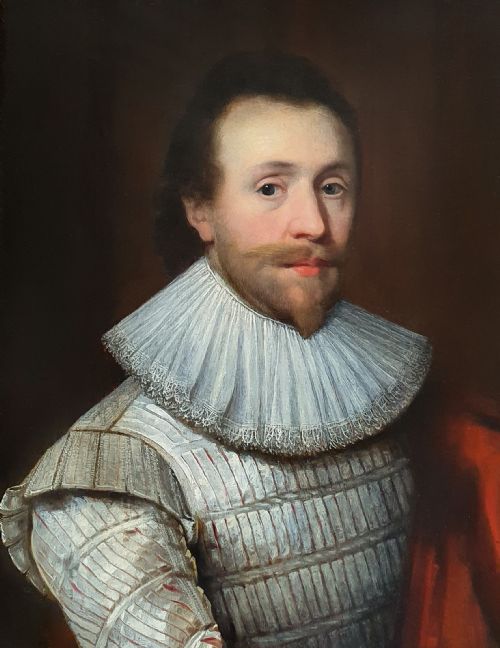
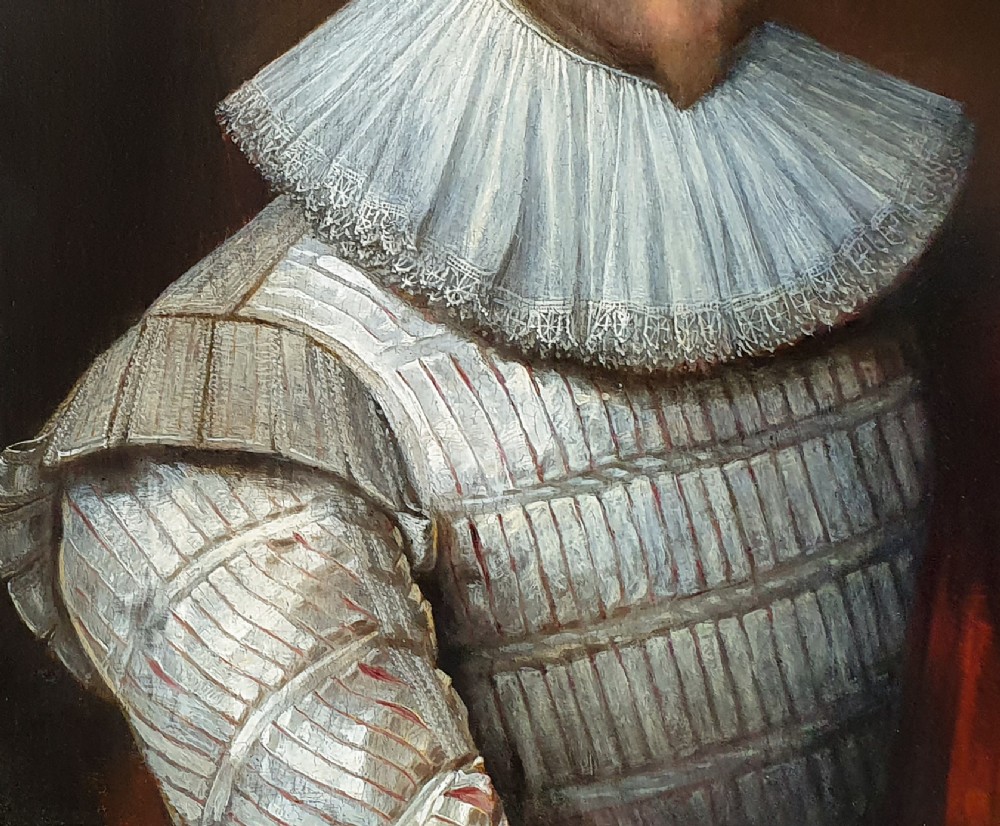
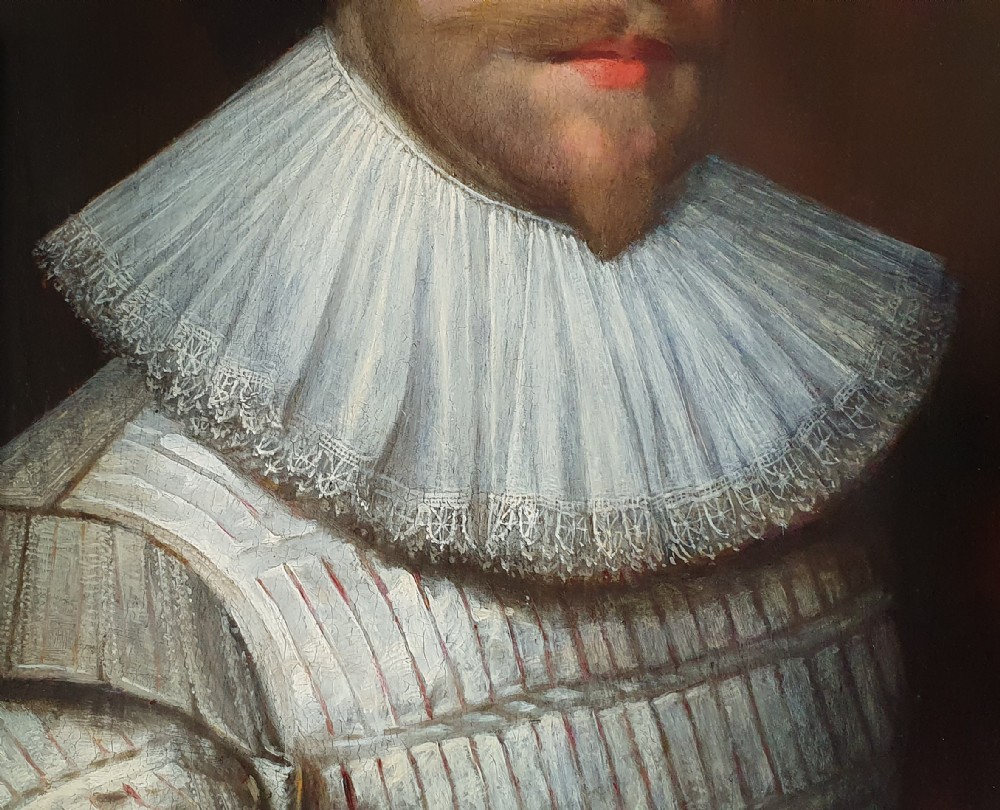
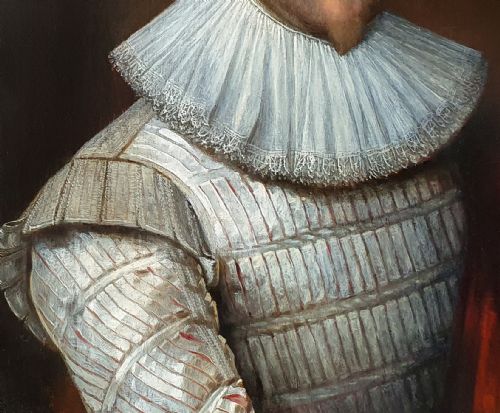
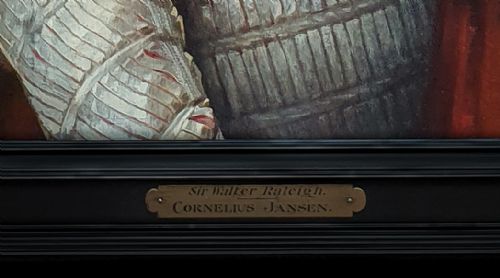
The sitter in this panel portrait has been depicted wearing one of the most resplendent costume pieces of this period - the silk doublet, tailored with deep slashing to reveal a layer of pink silk beneath. The style of ruff collar became fashionable from around 1620. The extraordinary costume with its shimmering quality and costly fabrics and lace was an important marker of the wealth and status of the wearer. The manner in which portraits were painted was set out by the terms of the commission and usually marked significant life events such as a betrothal, a death, elevation of rank… but almost always was a form of propaganda to emphasise the wealth and importance of the sitter. Our portrait proclaims to every onlooker that this is a superior being.
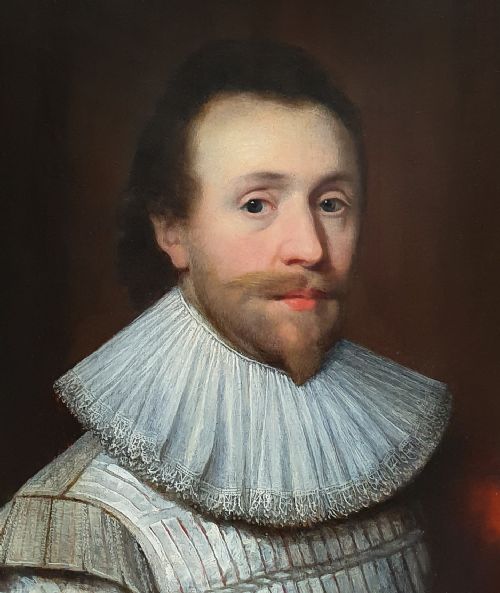
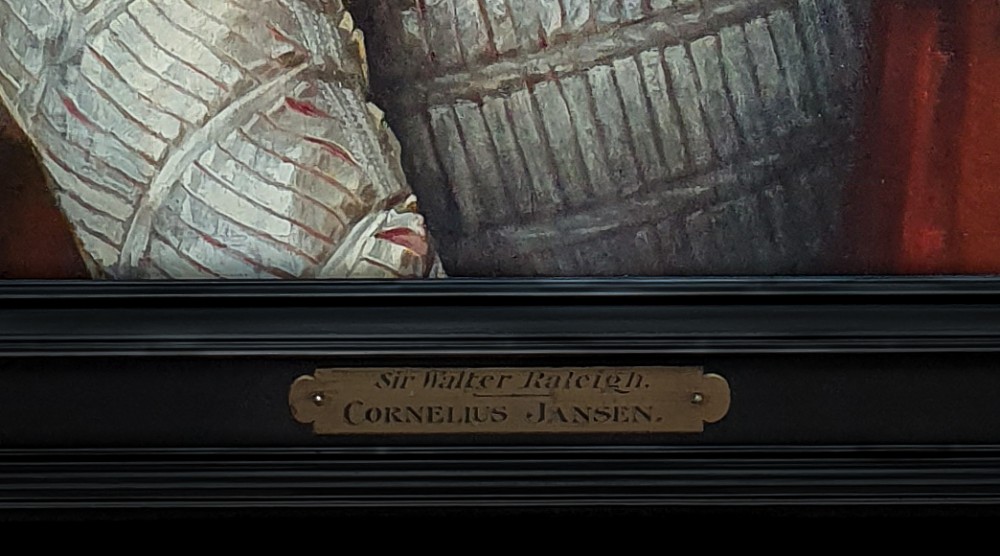
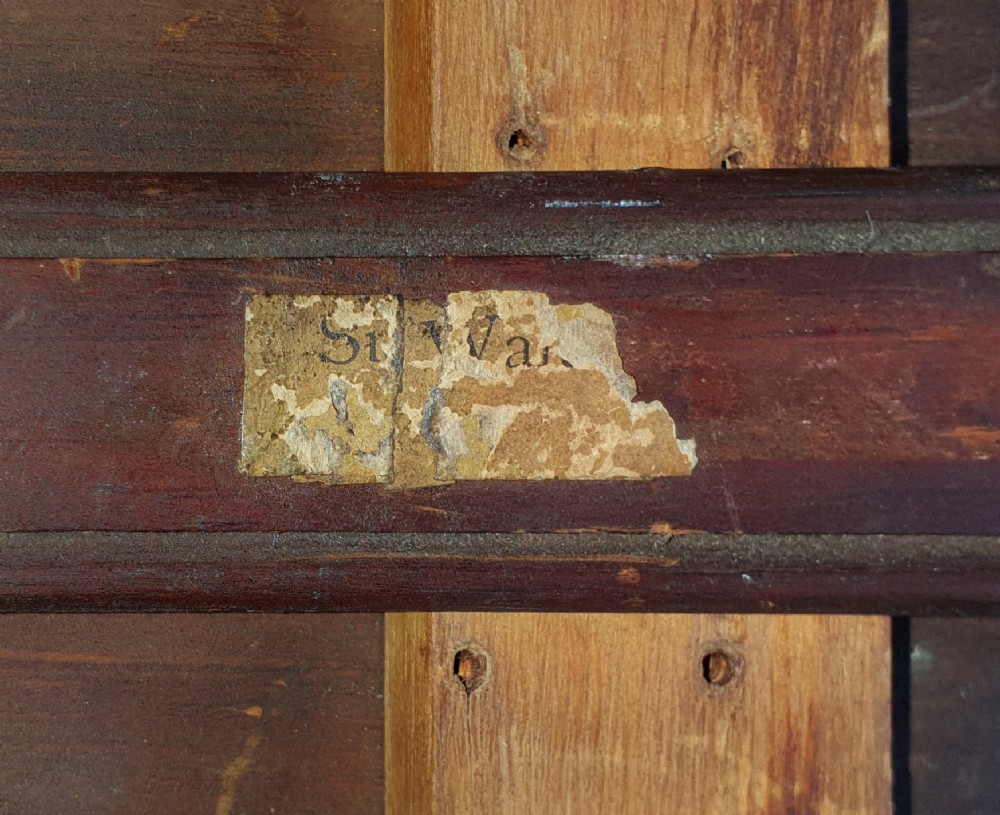
Historically, the sitter represented is Sir Walter Raleigh (c.1554-1618) who was a notorious English adventurer and writer, a favourite of Queen Elizabeth I. Accused of treason by Elizabeth’s successor, James I, he was imprisoned in the Tower of London and eventually put to death. There is an indistinct inscription on an old label on the reverse of the panel “Si? W…” and a presentation label on the frame “Sir Walter Raleigh Cornelius Jansen”. The work is very good in its description of the sitter’s character and good quality excellent example of early English portraiture.
The Harley family is of ancient lineage, one authority claiming it pre-dates the Norman Conquest (the name may be taken from the Shropshire village of Harley, possibly the ancient seat of the family). The first members of the family to impinge on national life were the brothers Malcolm de Harley, who became chaplain to Edward I, and Sir Richard, who was the first Harley to be elected to Parliament as Knight of the Shire for Shropshire in 1300. The latter's eldest son. Sir Robert (d.1349), married in 1309 Margaret, eldest daughter and heir of Brian de Brampton (d.1293), thus acquiring the seat of Brampton Bryan in the far north-west corner of Herefordshire. The estate descended from Sir Robert through more than twenty-one generations (and 700 years) to the current residents, Edward and Victoria Harley. As the Harley property in London was centred on Cavendish Square many famous London streets are named after the family such as Harley Street, Oxford Street, Wigmore Street, Wimpole Street, Holles Street, Henrietta Place, and Cavendish Square.
Edward Harley, 2nd Earl of Oxford, was the only son of Robert, 1st Earl of Oxford and his first wife Elizabeth (Foley) and was born 2nd June 1689 (it would be no exaggeration to say that his father, Robert Harley and Robert Walpole, were the most influential, and in stature the greatest politicians of the first half of the eighteenth century). Edward became a Member of Parliament, High Steward of Cambridge and Fellow of the Royal Society.
See full description at: https://www.titanfineart.com/portrait-of-sir-walter-raleigh-cornelius-johnson.html
Titan Fine Art has dated this piece to the 17th Century.
Specialist in 17th & 18thc portraits. Highly curated selection, museum-level research & pro conservation. Exceptional art, expertly vetted.
You can view the stock and full dealer information on the Titan Fine Art Profile Page

Portrait of a Gentleman in a White Slashed Doublet C.1620; Attributed to Cornelius Johnson (1593-1661)