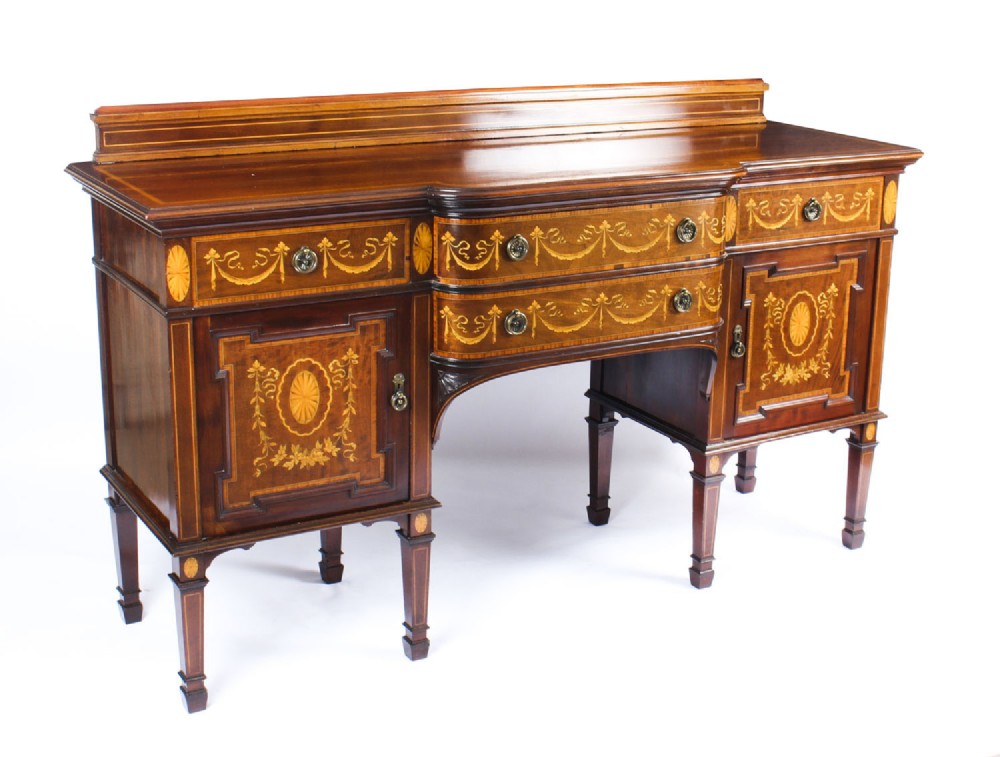
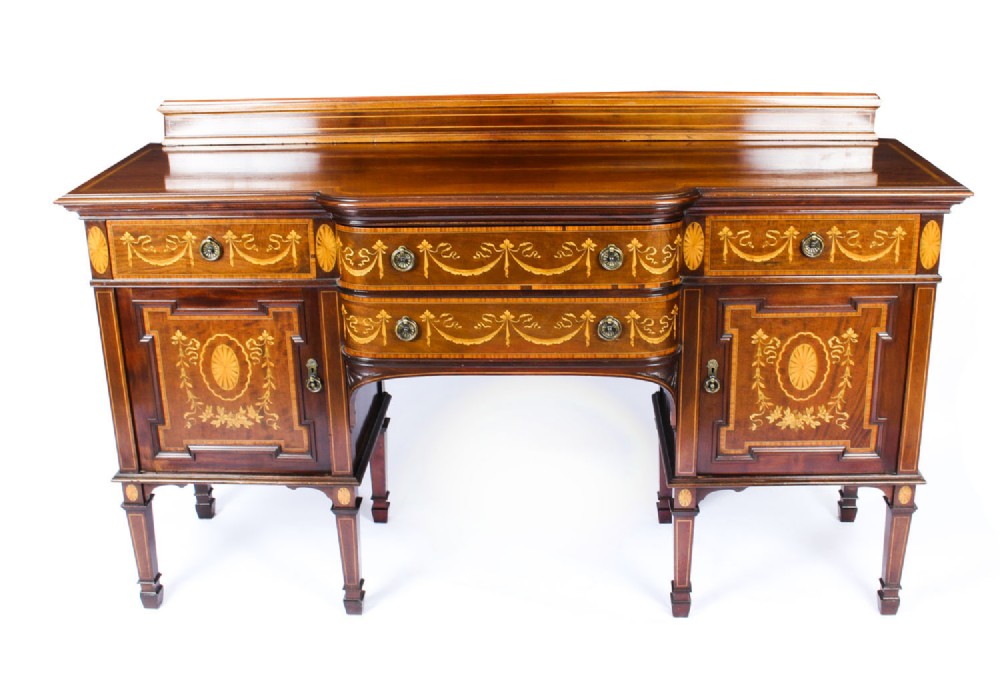
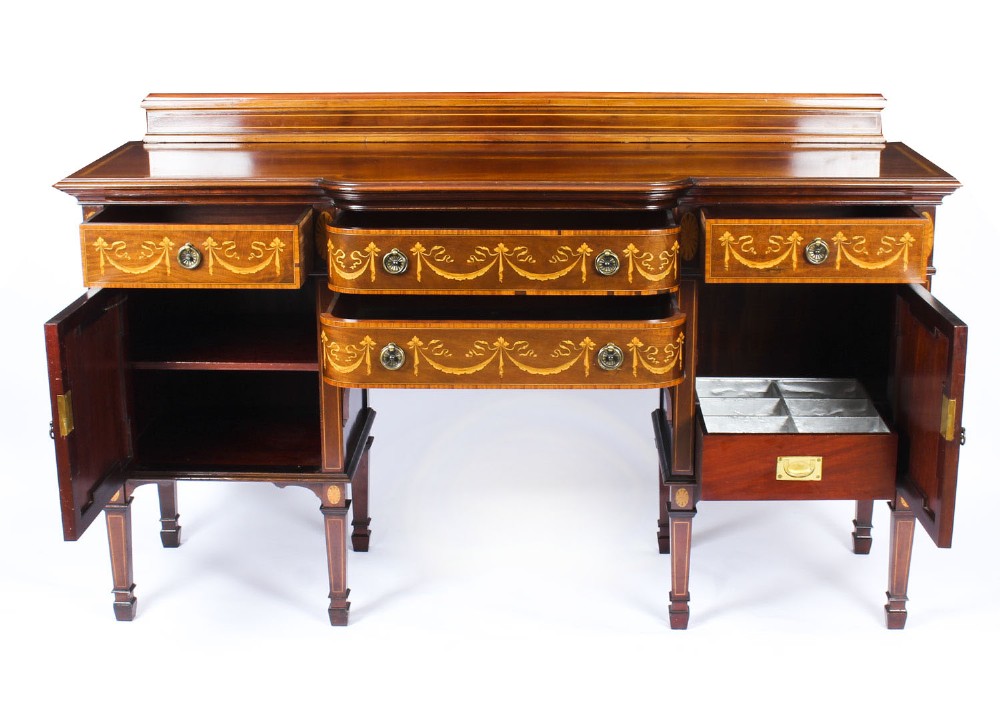
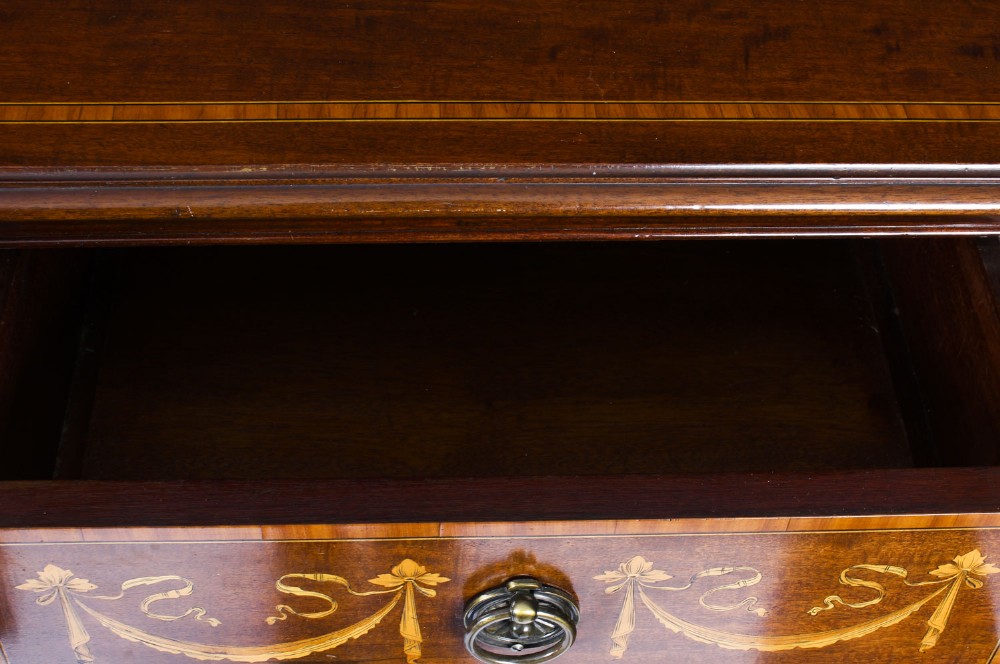
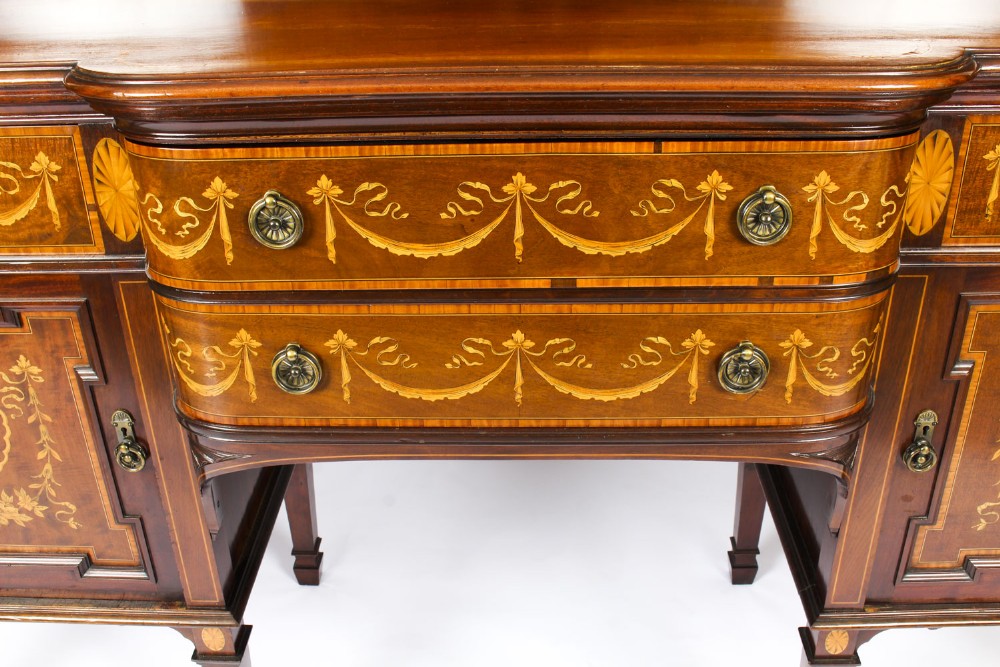
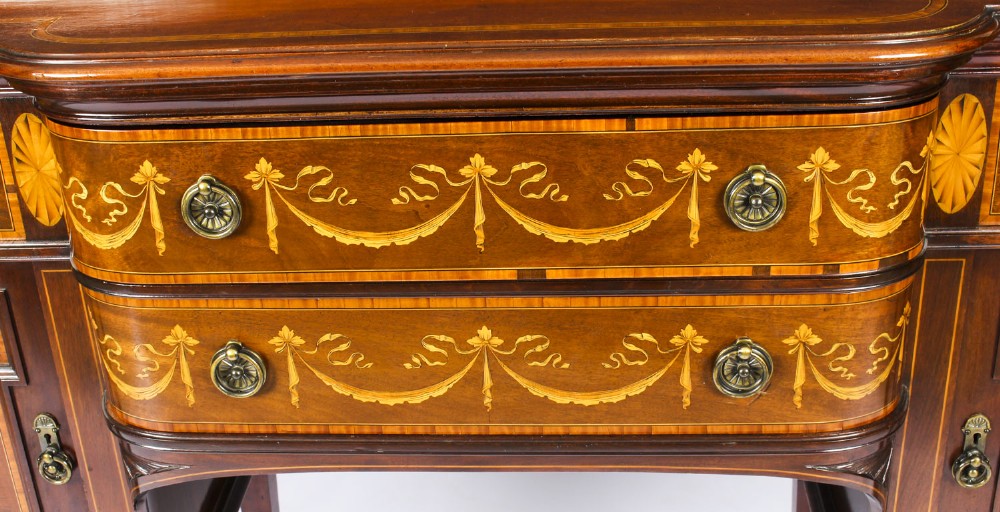
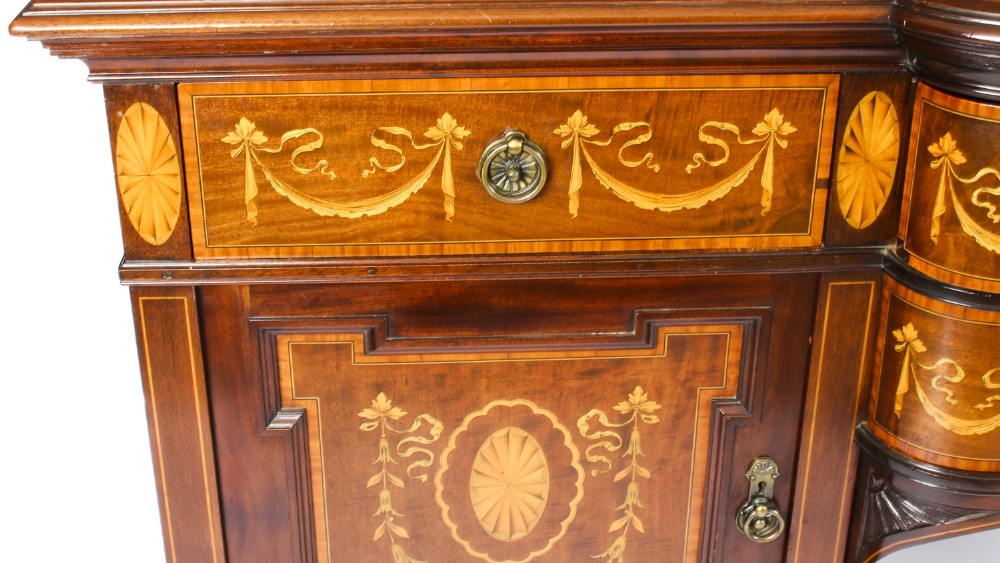
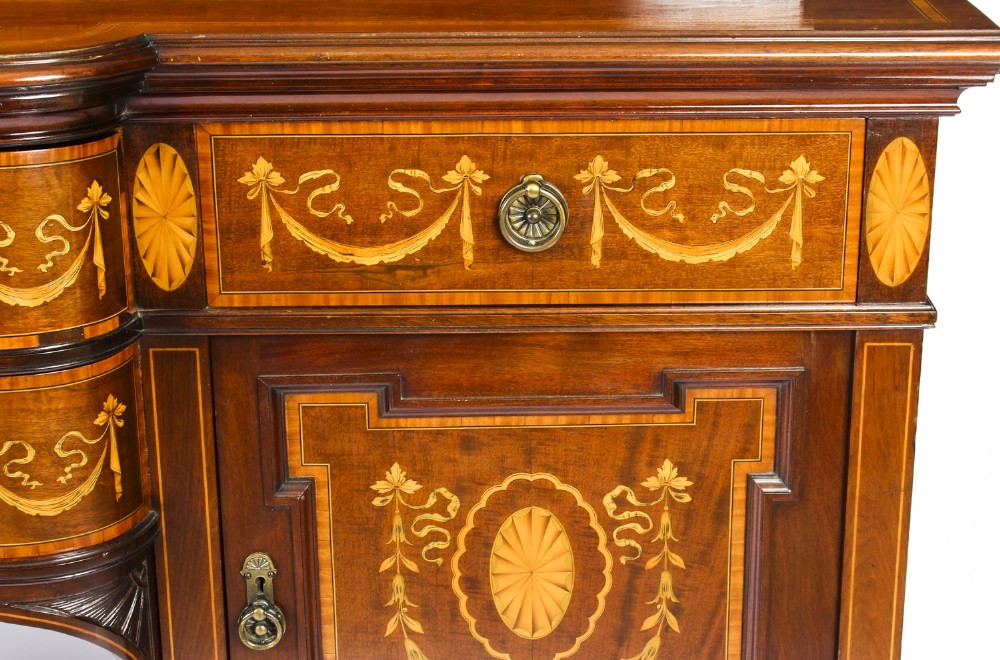
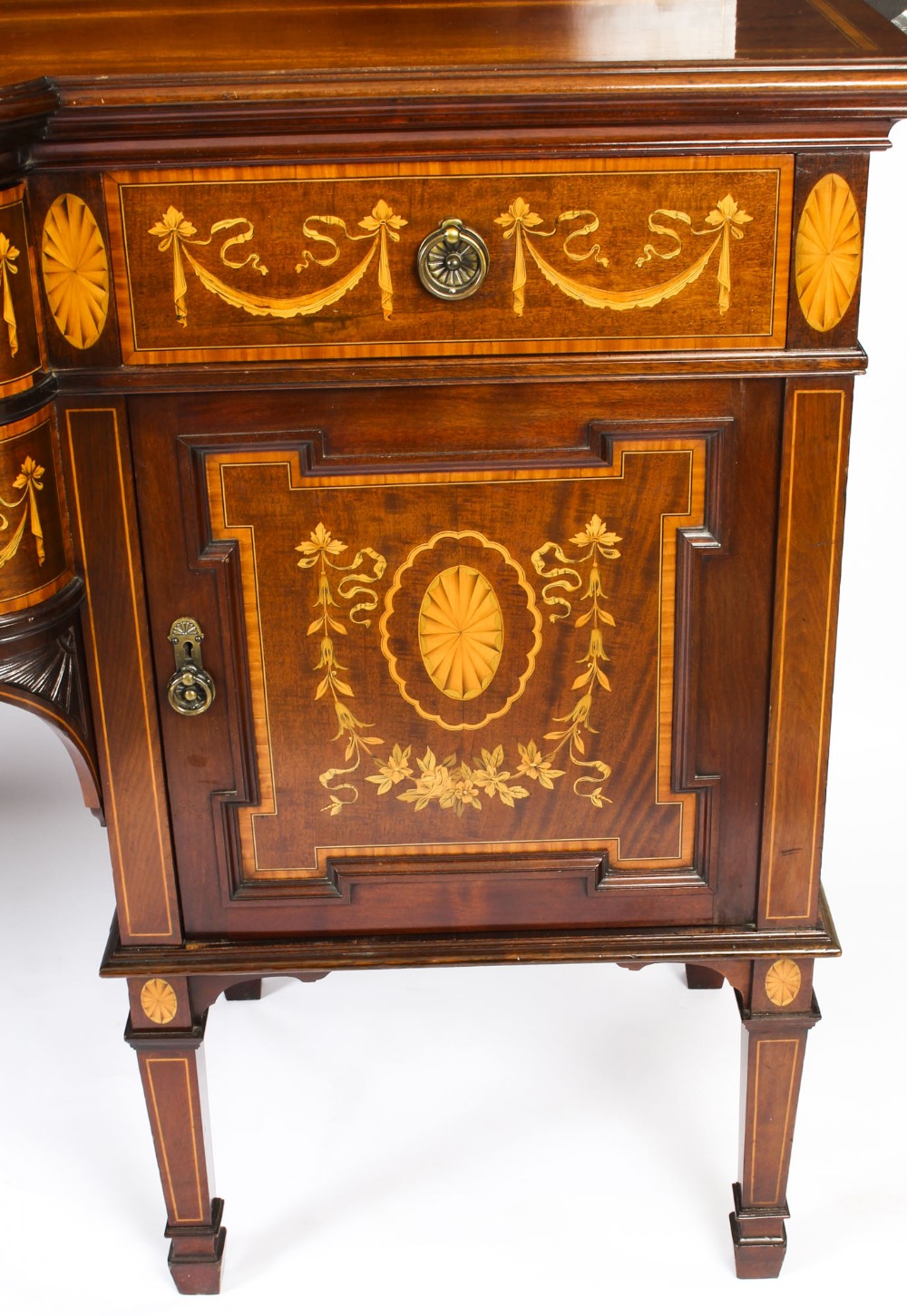
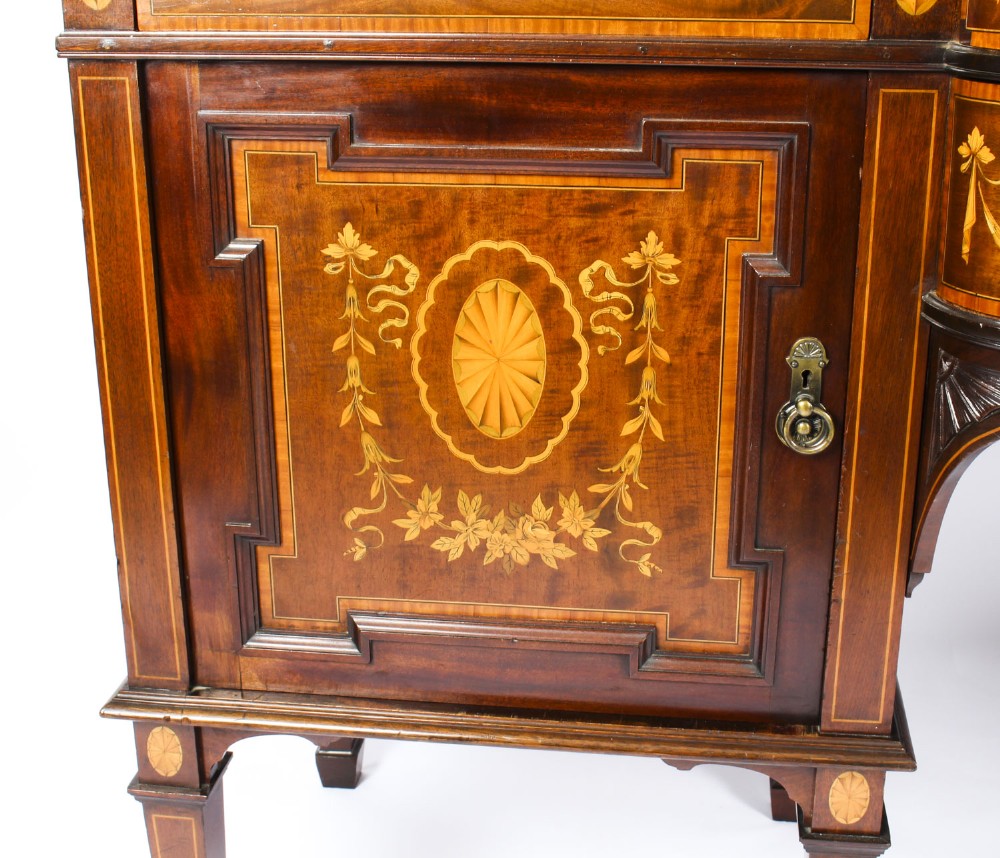
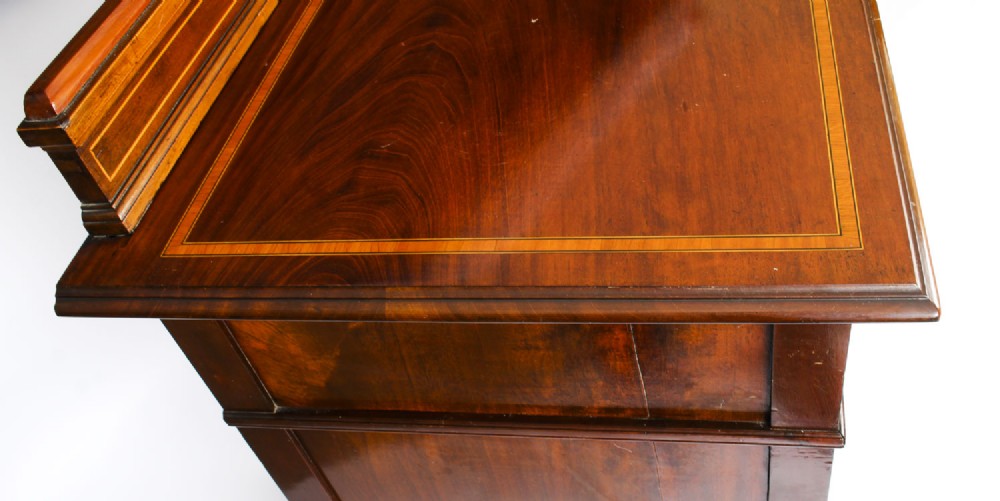
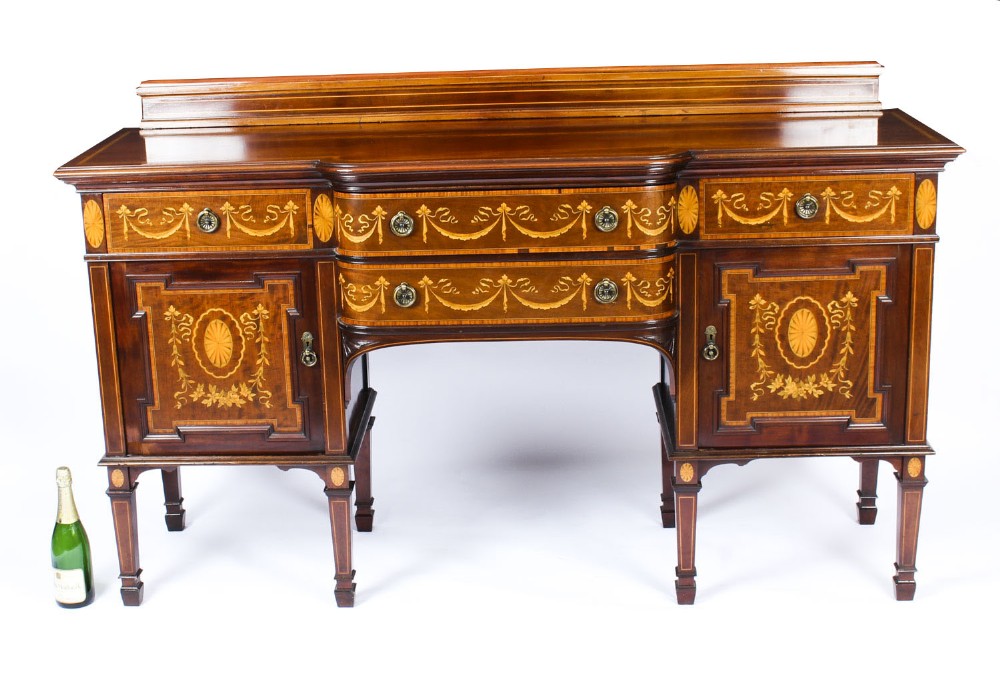
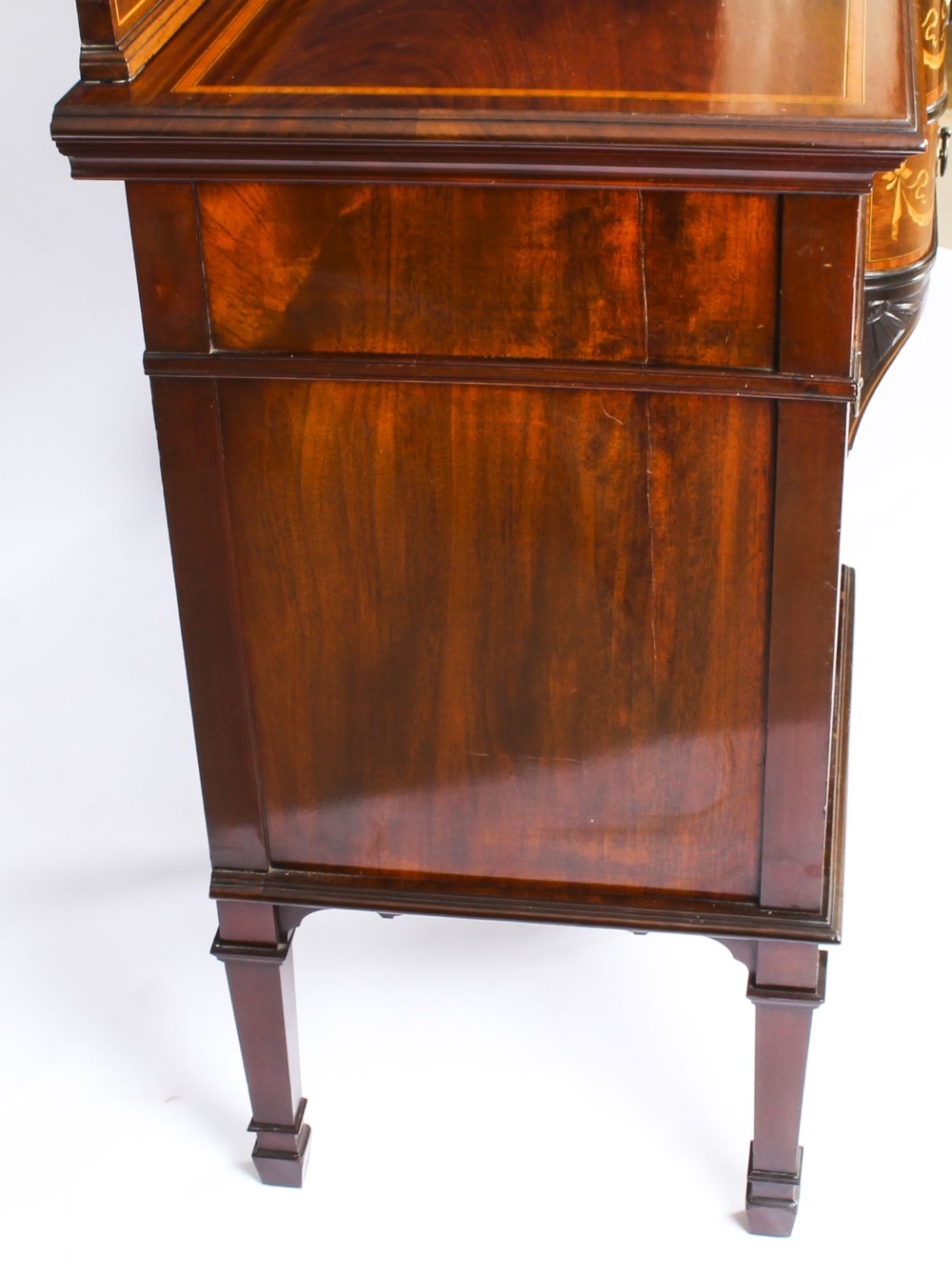
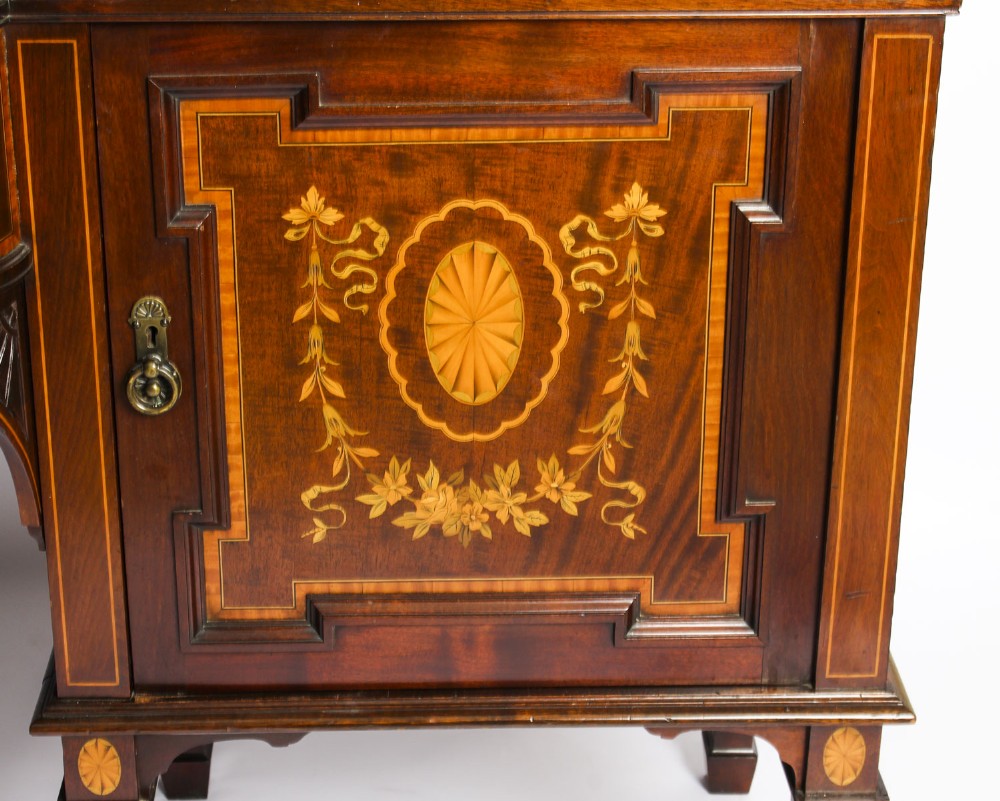
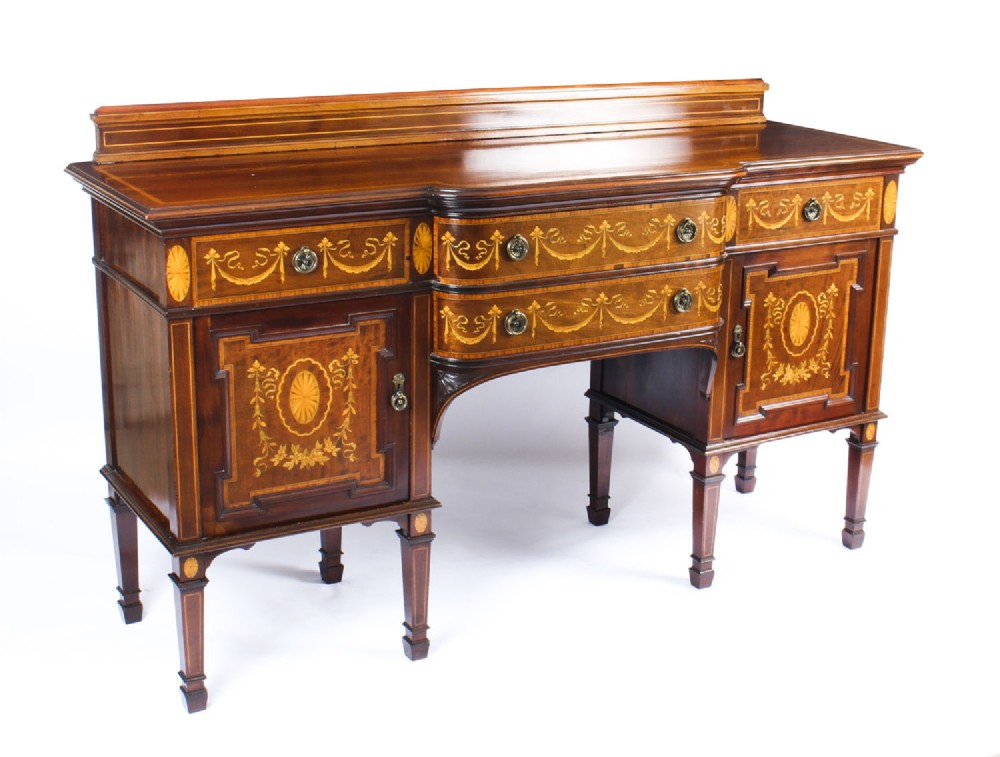
This is a superb antique flame mahogany, satinwood banded and marquetry inlaid bowfront sideboard, Circa 1870 in date.
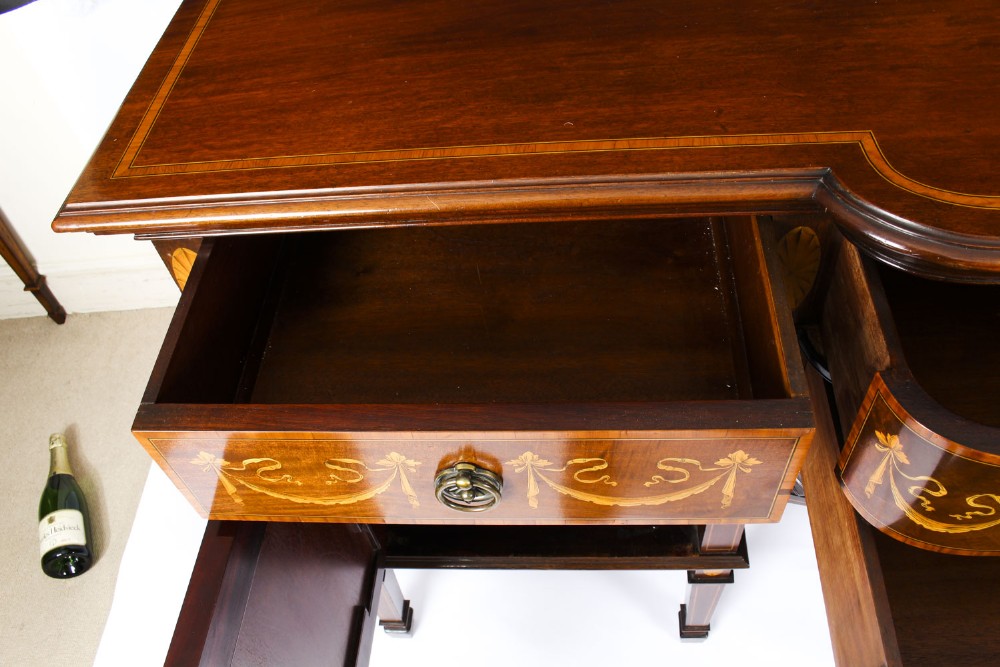
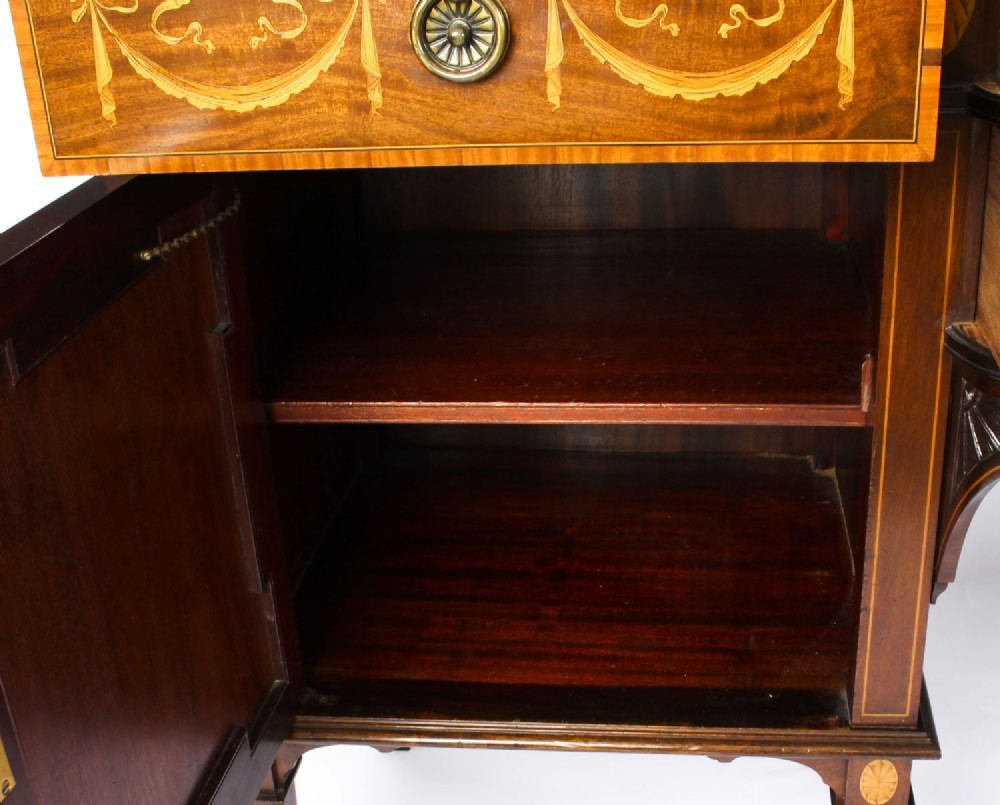
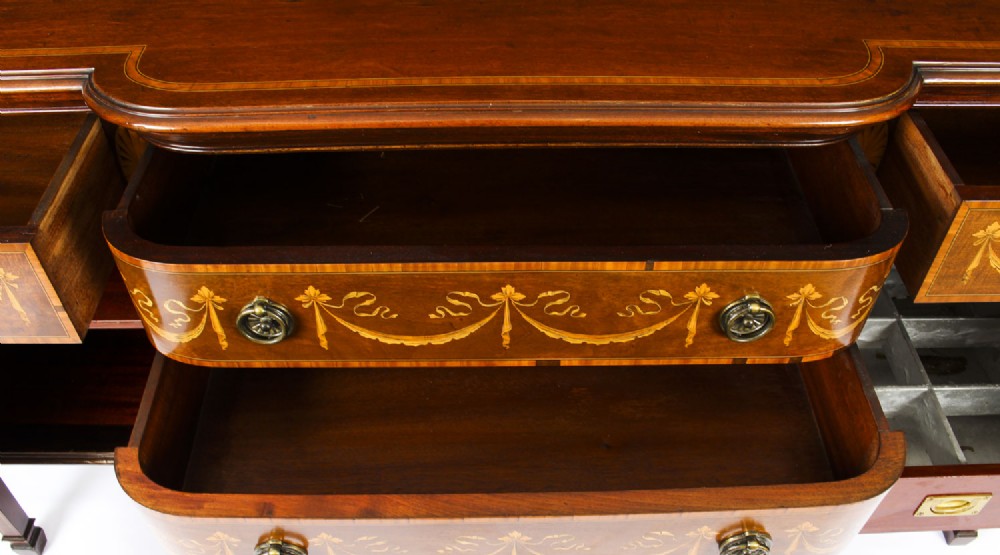
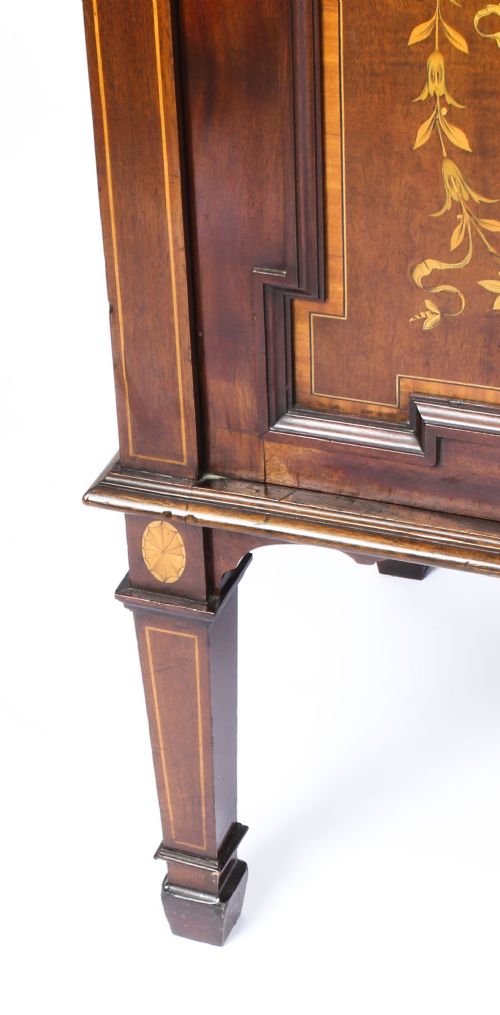
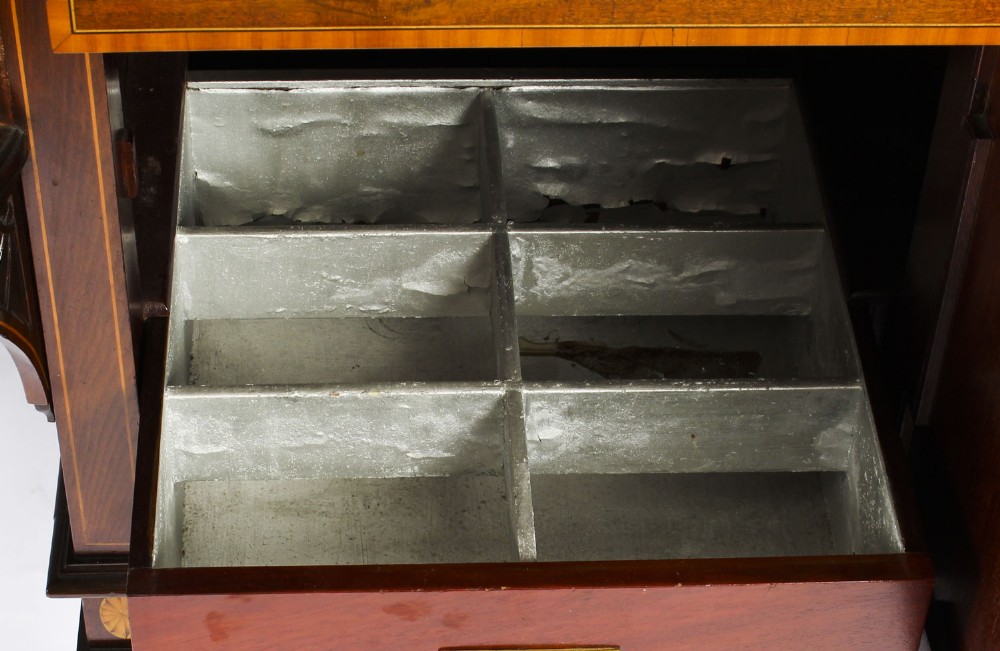
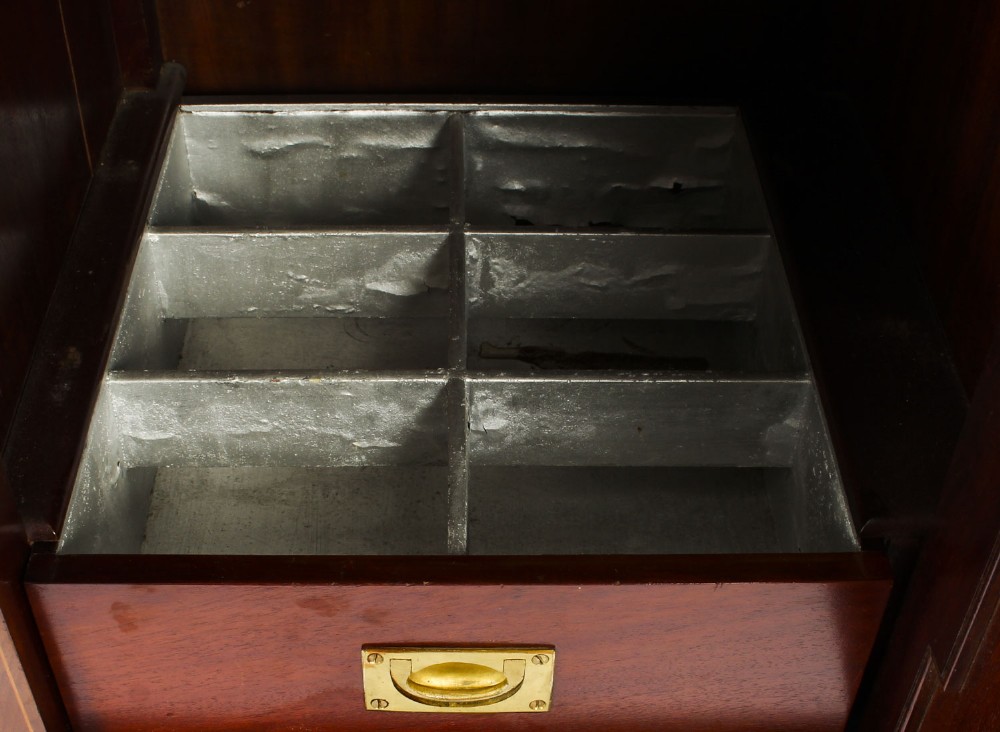
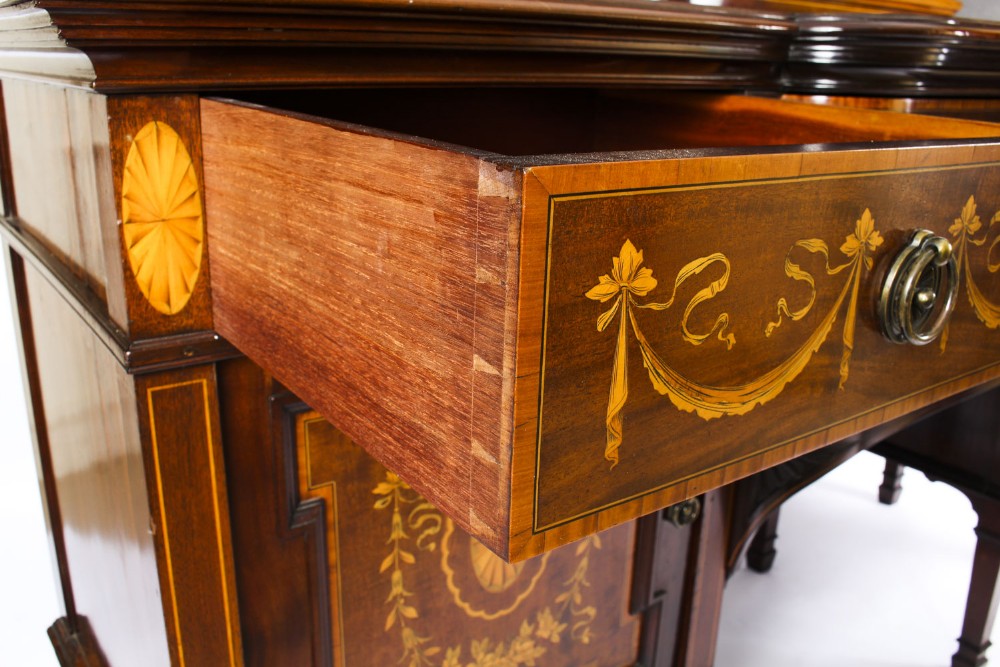
With two central drawers above an arched apron flanked by two smaller drawers and two cupboard doors below. All superbly inlaid with oval patera, husks and swags, the right hand cupboard fitted with the original lead lined bottle holder drawer.
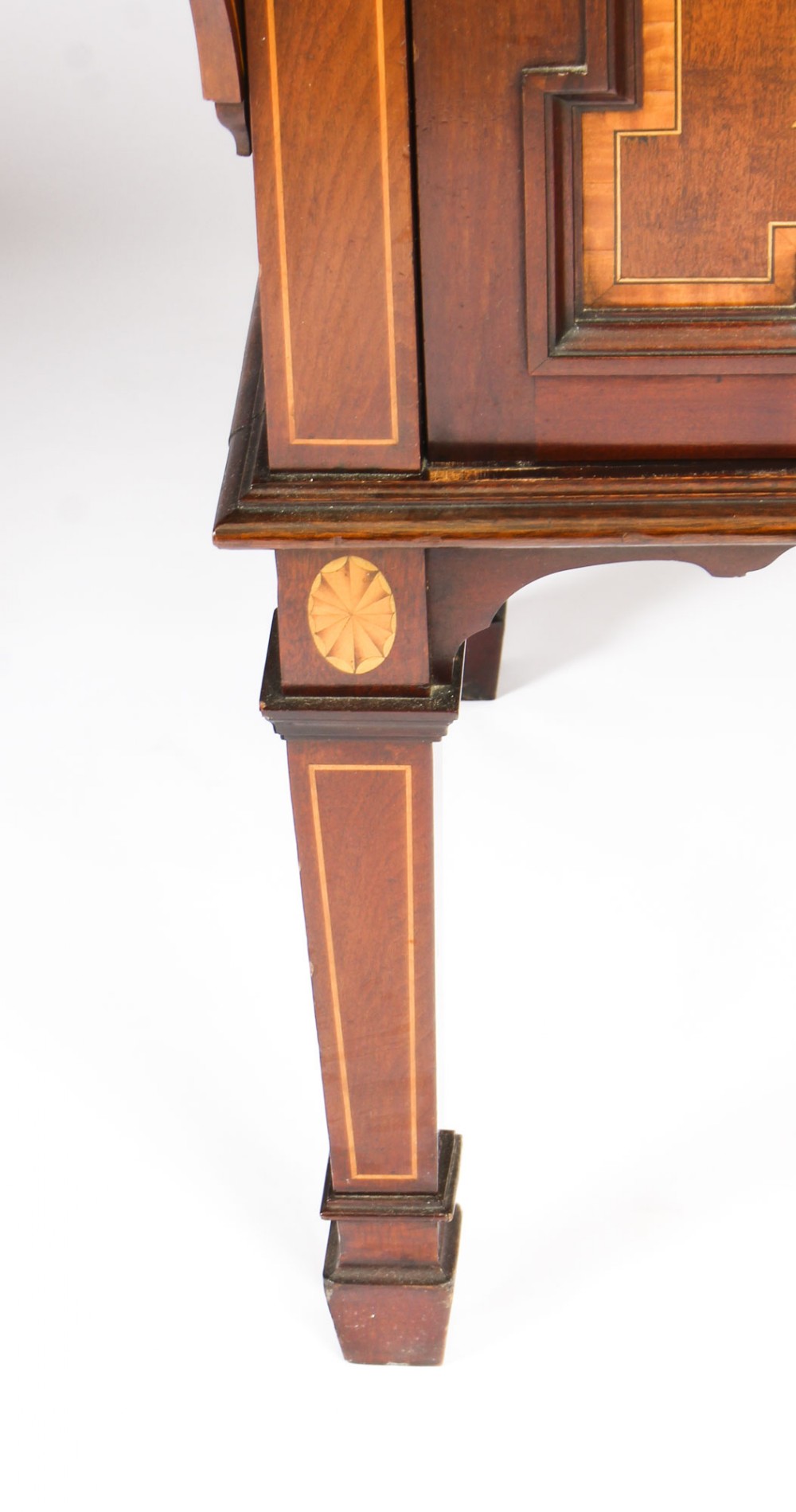
It is raised on square tapering legs with block feet, and is complete with working locks and keys.
Add a touch of class to a special place in your home with this superb antique sideboard.
The splendid shaped stage back is enclosed by secret sliding doors and is above two frieze drawers which are flanked by two cellarette drawers, all with their original brass handles.
It is raised on elegant square tapering legs and is complete with the original brass handles, working locks and keys.
Add an elegant touch to a special place in your home with this superb antique sideboard.
Condition:
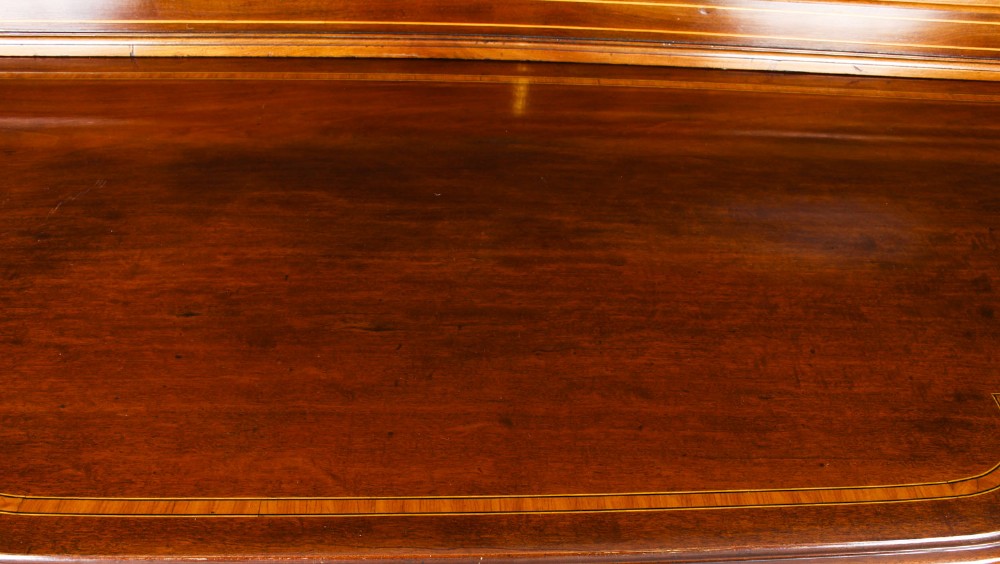
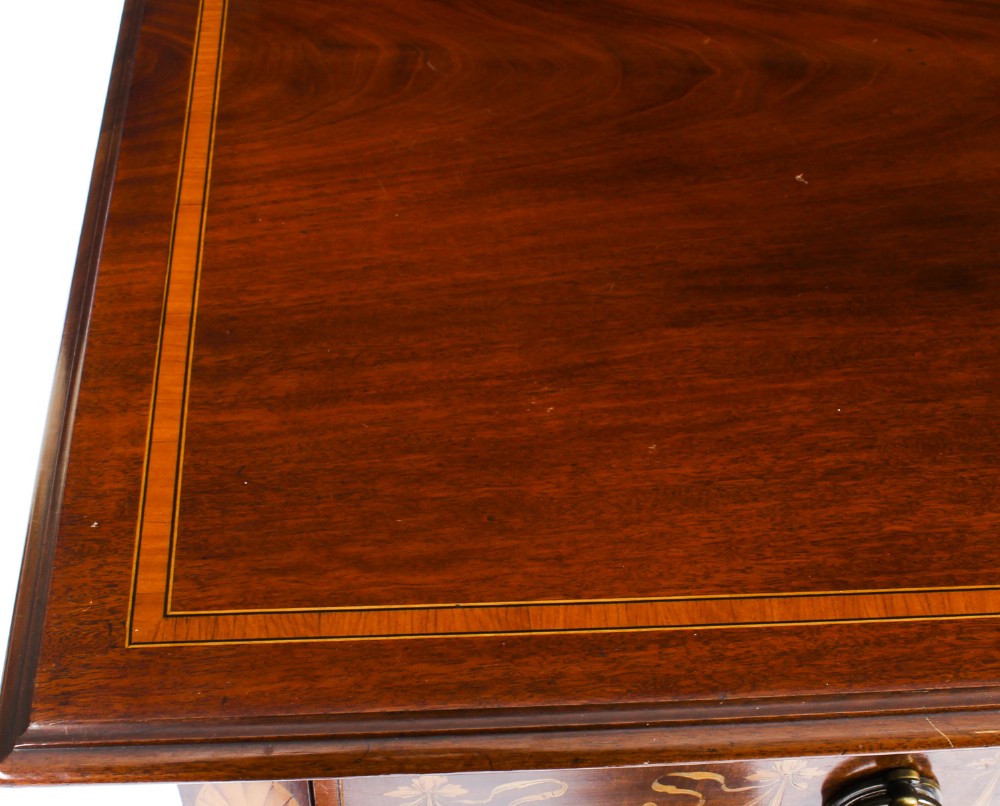
In excellent condition having been beautifully cleaned, polished and waxed in our workshops, please see photos for confirmation.
Dimensions in cm:
Height 109 x Width 181 x Depth 62
Dimensions in inches:
Height 42.9 x Width 71.3 x Depth 24.4
Flame Mahogany
Thomas Sheraton - 18th century furniture designer, once characterized mahogany as "best suited to furniture where strength is demanded as well as a wood that works up easily, has a beautiful figure and polishes so well that it is an ornament to any room in which it may be placed." Matching his words to his work, Sheraton designed much mahogany furniture. The qualities that impressed Sheraton are particularly evident in a distinctive pattern of wood called "flame mahogany."
The flame figure in the wood is revealed by slicing through the face of the branch at the point where it joins another element of the tree.
Marquetry
is decorative artistry where pieces of material (such as wood, mother of pearl, pewter, brass silver or shell) of different colours are inserted into surface wood veneer to form intricate patterns such as scrolls or flowers.
The technique of veneered marquetry had its inspiration in 16th century Florence. Marquetry elaborated upon Florentine techniques of inlaying solid marble slabs with designs formed of fitted marbles, jaspers and semi-precious stones. This work, called opere di commessi, has medieval parallels in Central Italian "Cosmati"-work of inlaid marble floors, altars and columns. The technique is known in English as pietra dura, for the "hardstones" used: onyx, jasper, cornelian, lapis lazuli and colored marbles. In Florence, the Chapel of the Medici at San Lorenzo is completely covered in a colored marble facing using this demanding jig-sawn technique.
Techniques of wood marquetry were developed in Antwerp and other Flemish centers of luxury cabinet-making during the early 16th century. The craft was imported full-blown to France after the mid-seventeenth century, to create furniture of unprecedented luxury being made at the royal manufactory of the Gobelins, charged with providing furnishings to decorate Versailles and the other royal residences of Louis XIV. Early masters of French marquetry were the Fleming Pierre Golle and his son-in-law, André-Charles Boulle, who founded a dynasty of royal and Parisian cabinet-makers (ébénistes) and gave his name to a technique of marquetry employing shell and brass with pewter in arabesque or intricately foliate designs.
Our reference: A1549