29,598  PAGES BROWSED TODAY PAGES TODAY • 122 ANTIQUES UPLOADED TODAYNEW ARRIVALS
GIFTS
122 ITEMS ADDED TODAY
Sort Order
Items Per Page
Antiques dealer?
Join as a Seller
Browse Categories
Sort order
Items per page
sold SA766012
Sorry, but this item has been sold.
Regent Antiques

Regent Antiques

Sellingantiques Verified Since Sep 2016
Browse dealers 639 items
  • About Us
    We specialise in english and continental furniture, silver, porcelain and decorative items.
  • Trade Associations
    Regent Antiques is a registered member of LAPADA  CINOA
Id #SA766012
SHARE
SAVE

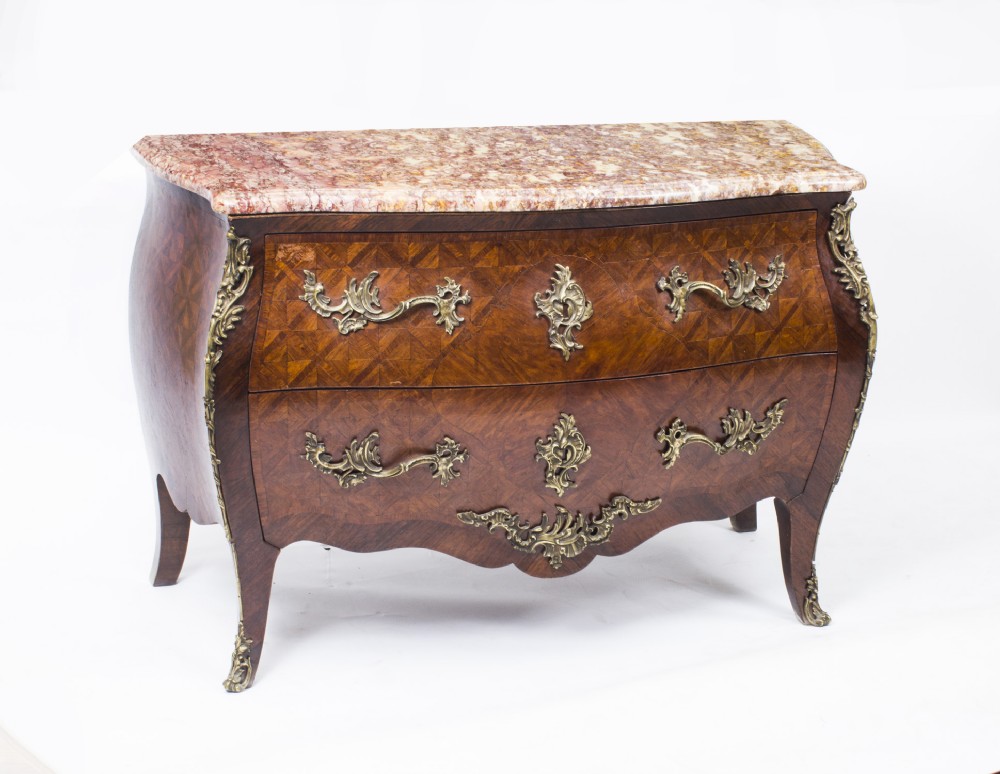
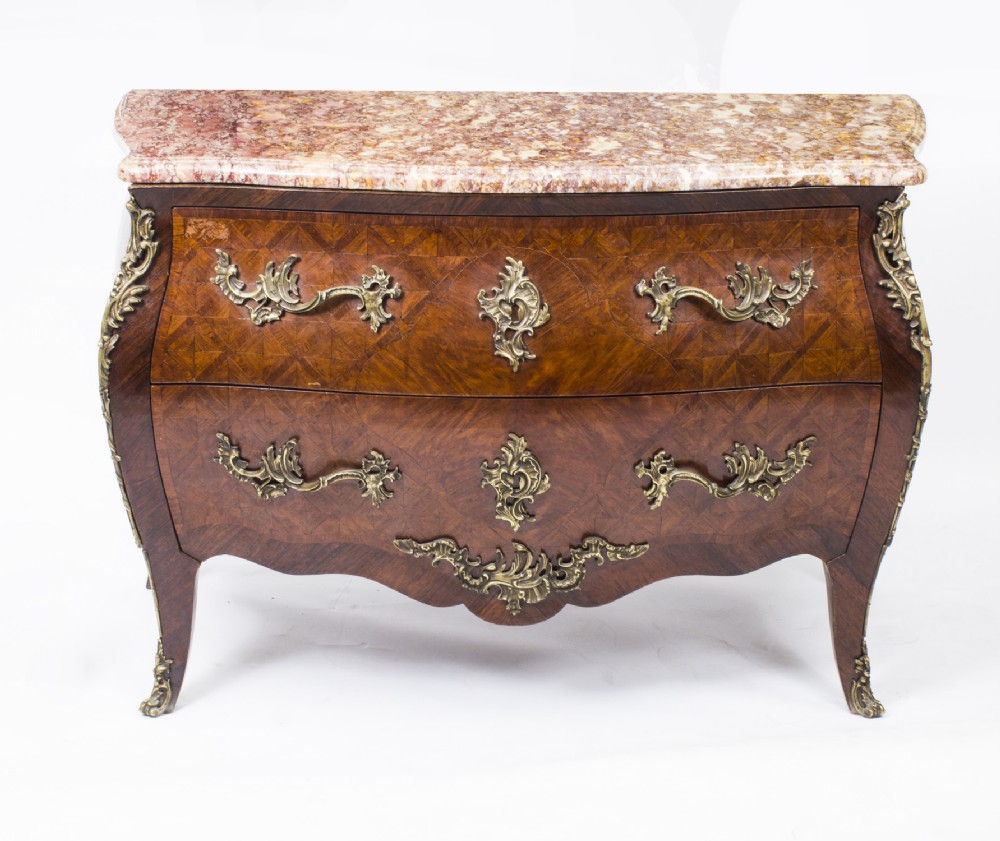
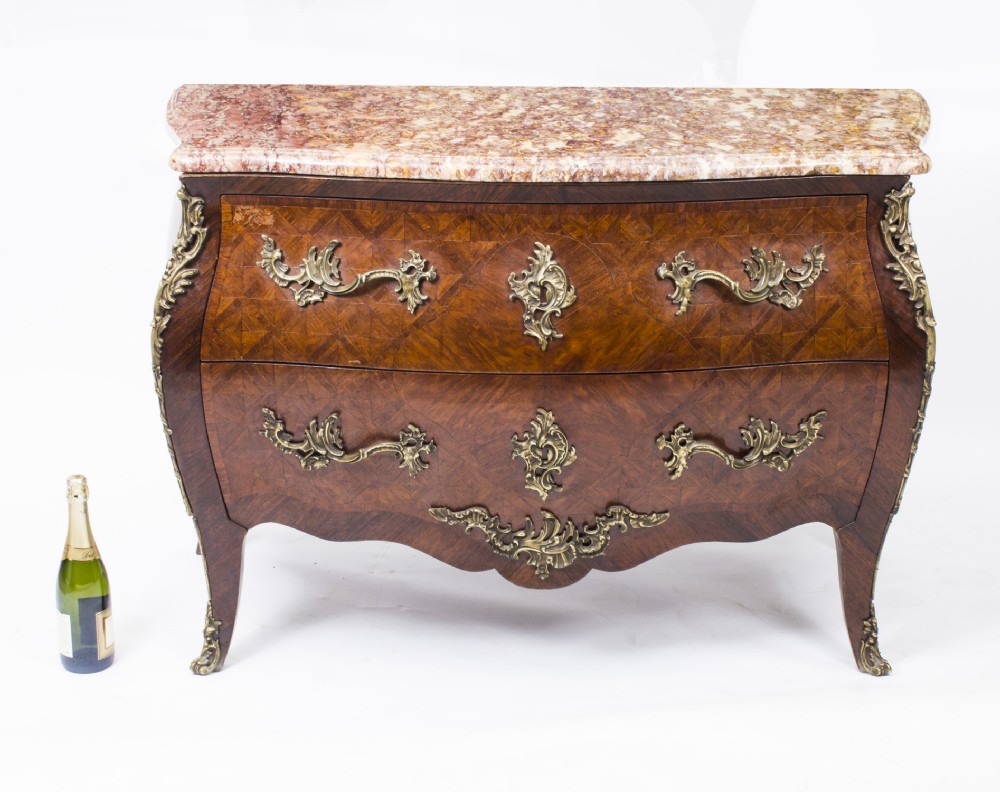
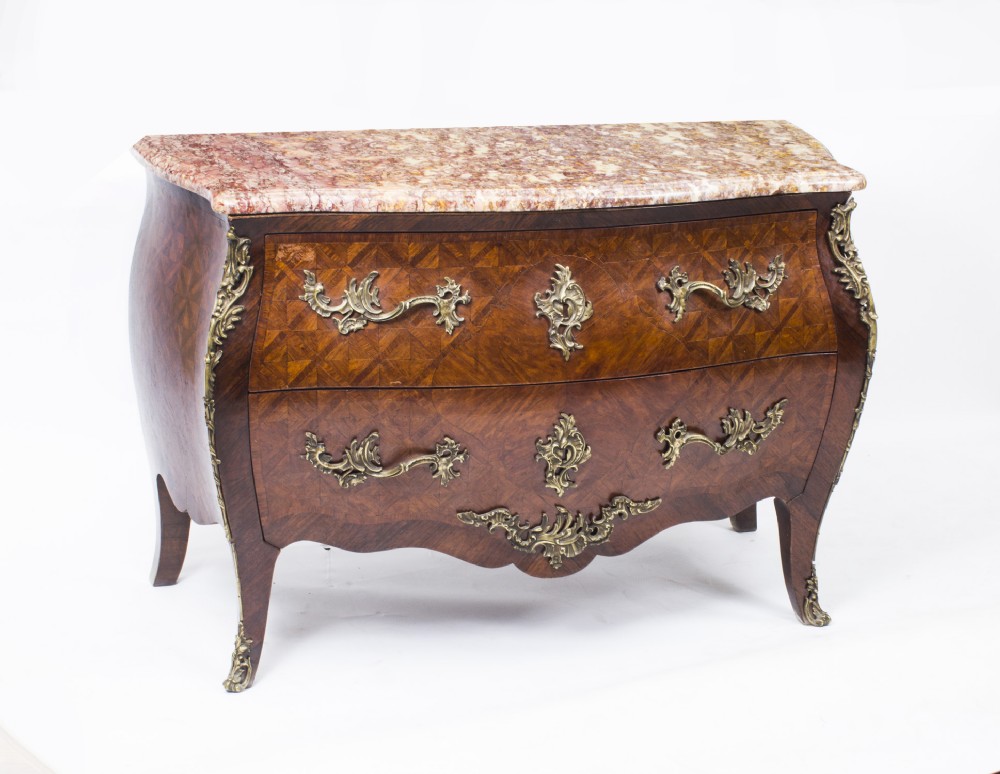
Antique French Louis Revival Parquetry Commode Chest Marble C.1900

1900 - 1920
Sold 1 May 2021 · Regent Antiques
This “Antique French Louis Revival Parquetry Commode Chest Marble C.1900 ” found a buyer.

It was listed by Regent Antiques. Sold pieces stay on Sellingantiques as a record of what has passed through, and the next one is rarely far away.

Description

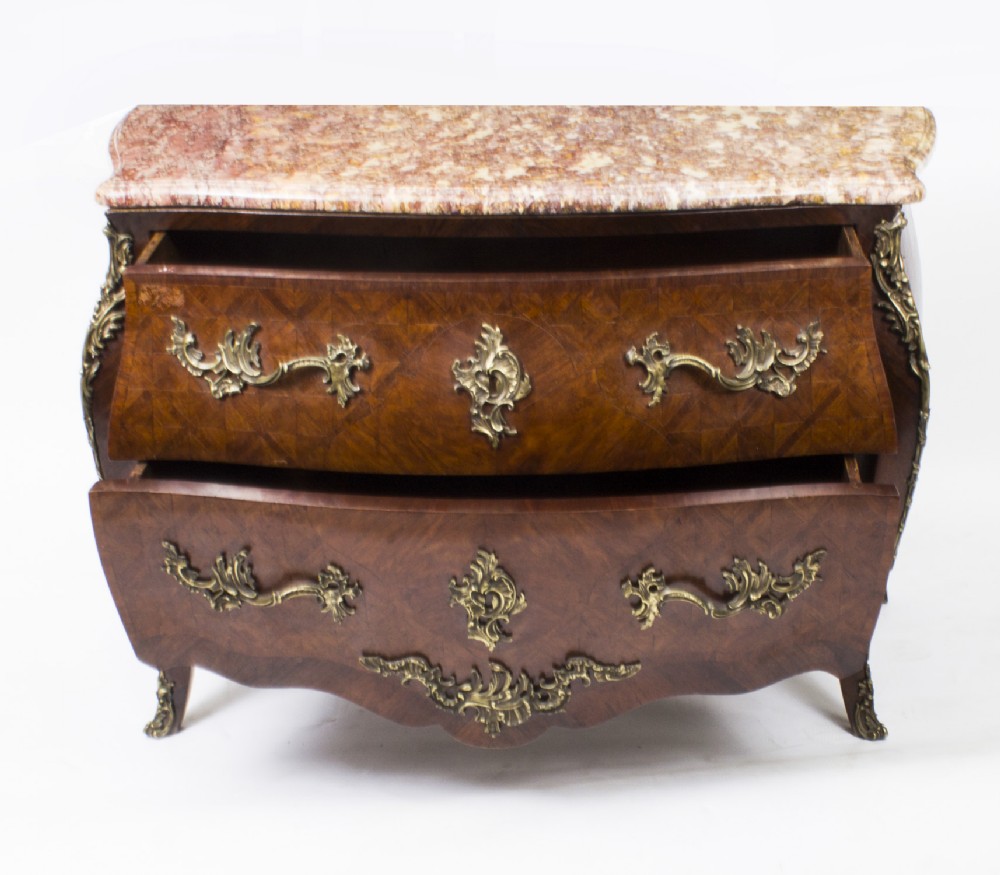
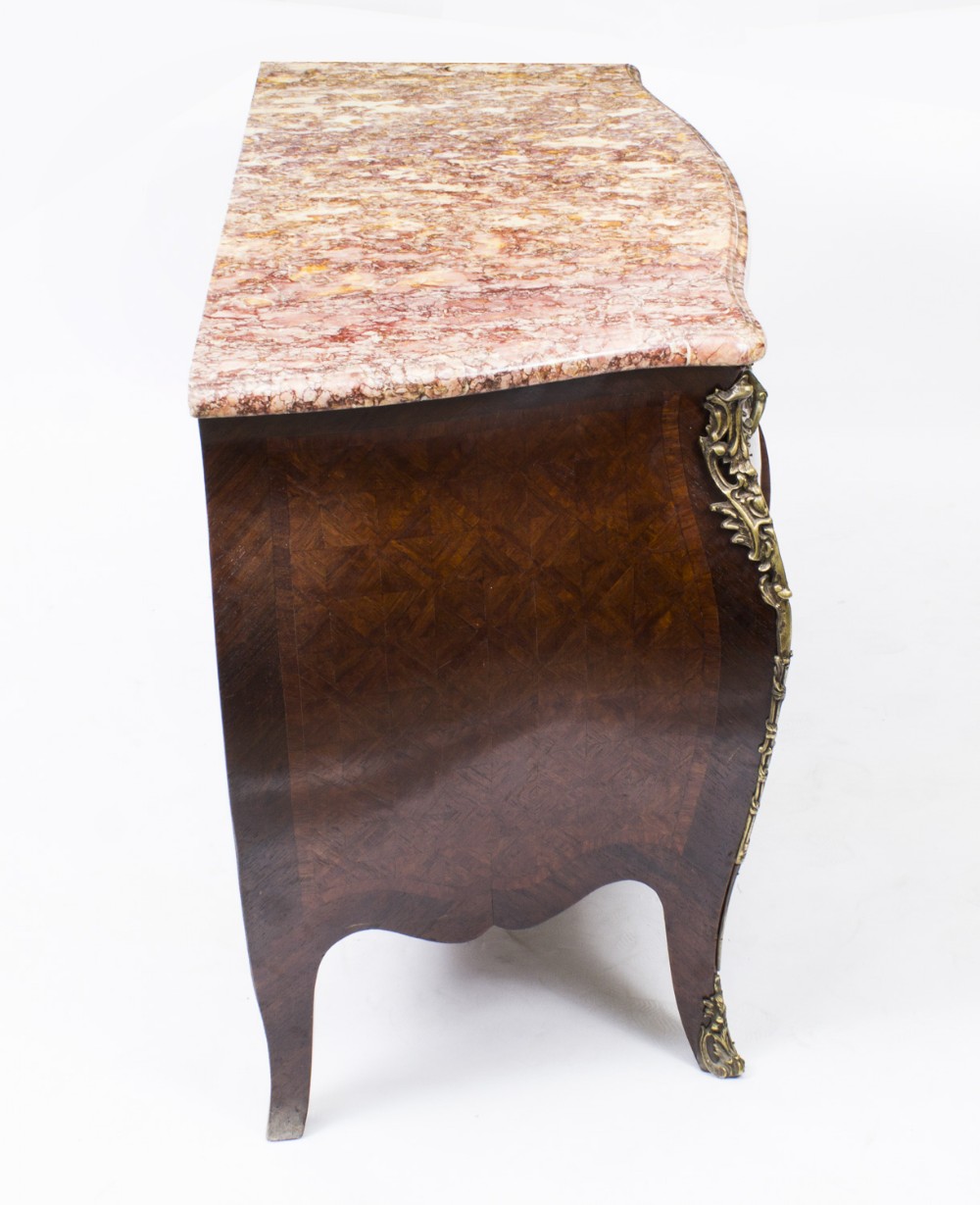
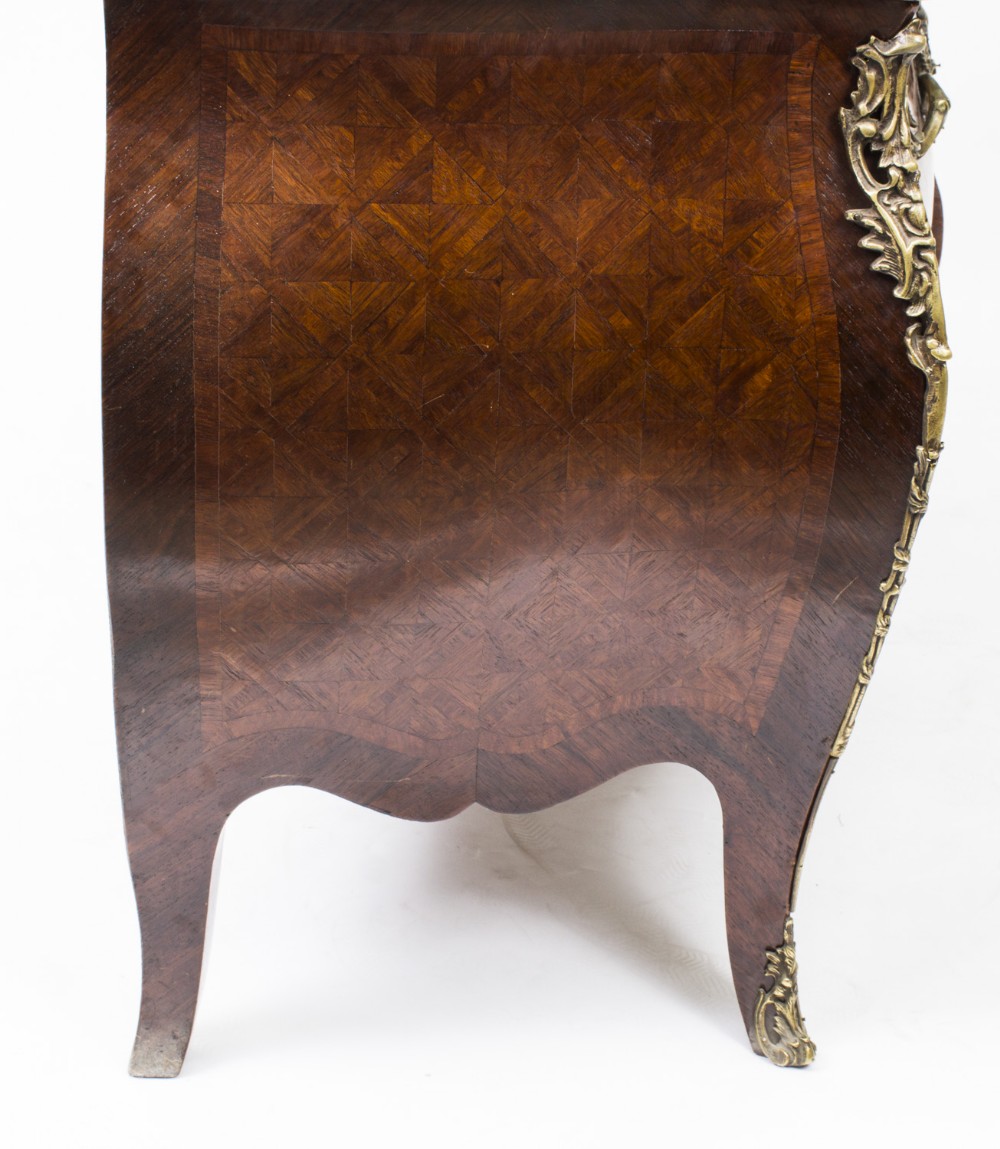
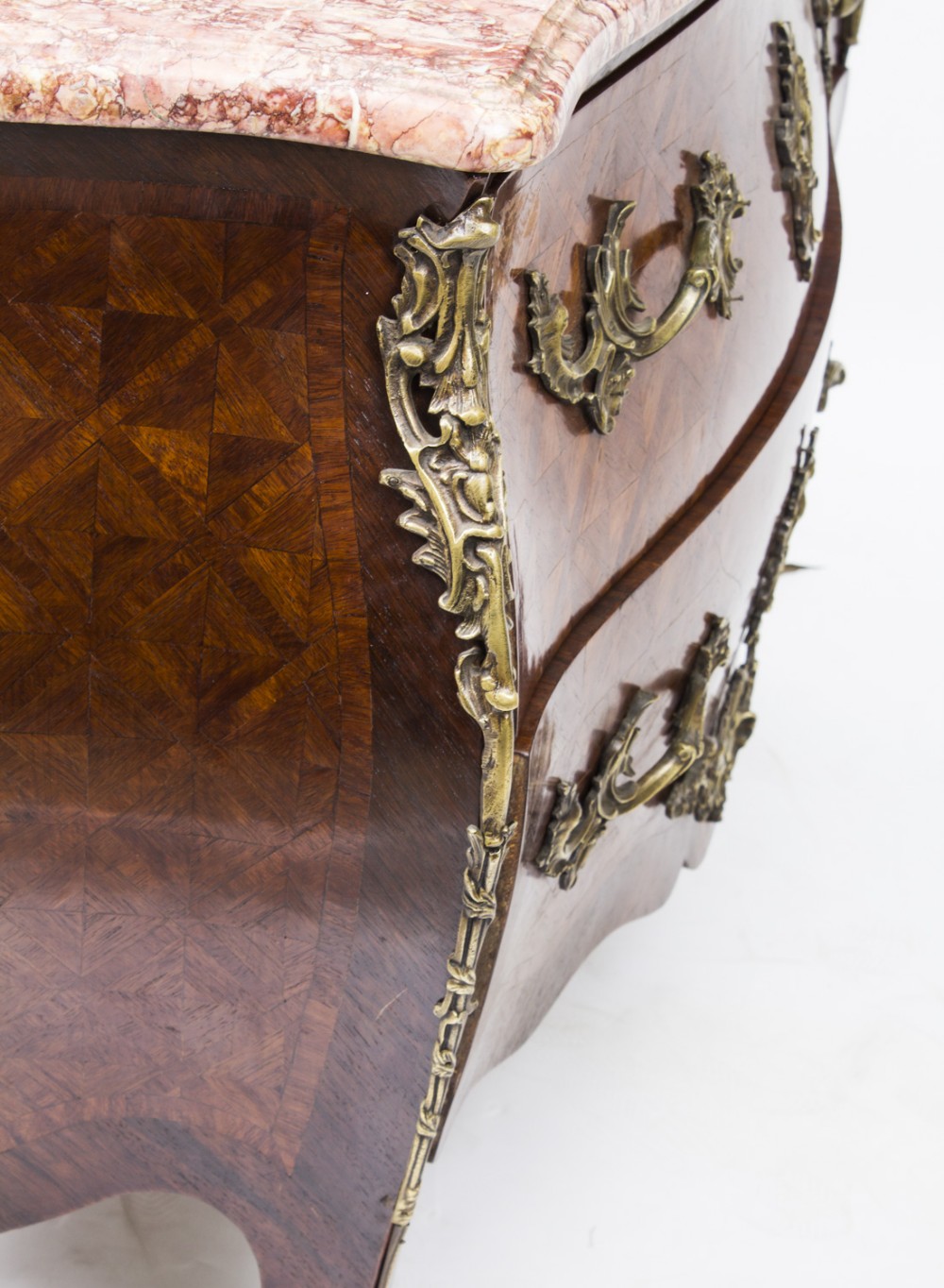
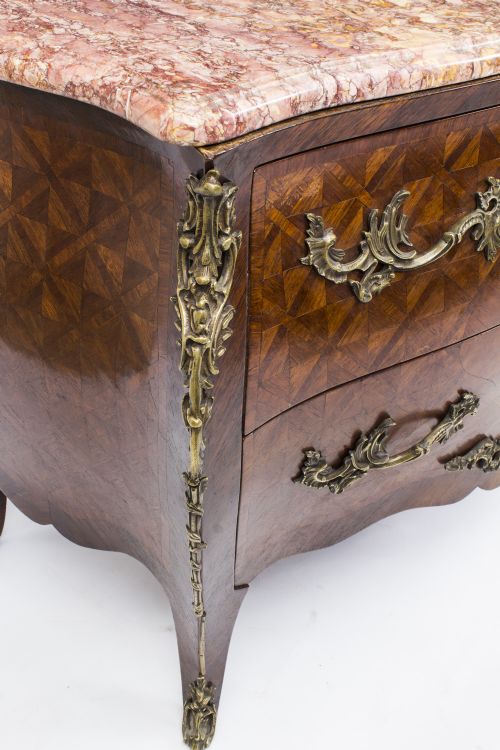
This is a stunning antique French Louis Revival bombe' parquetry commode, circa 1900 in date.

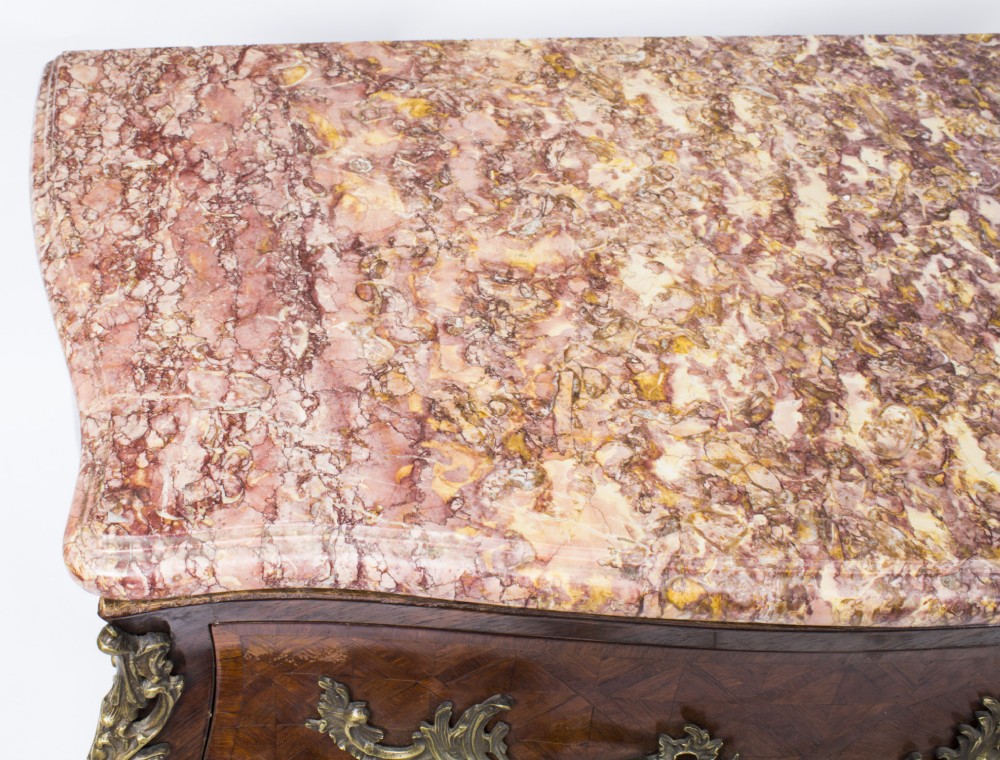
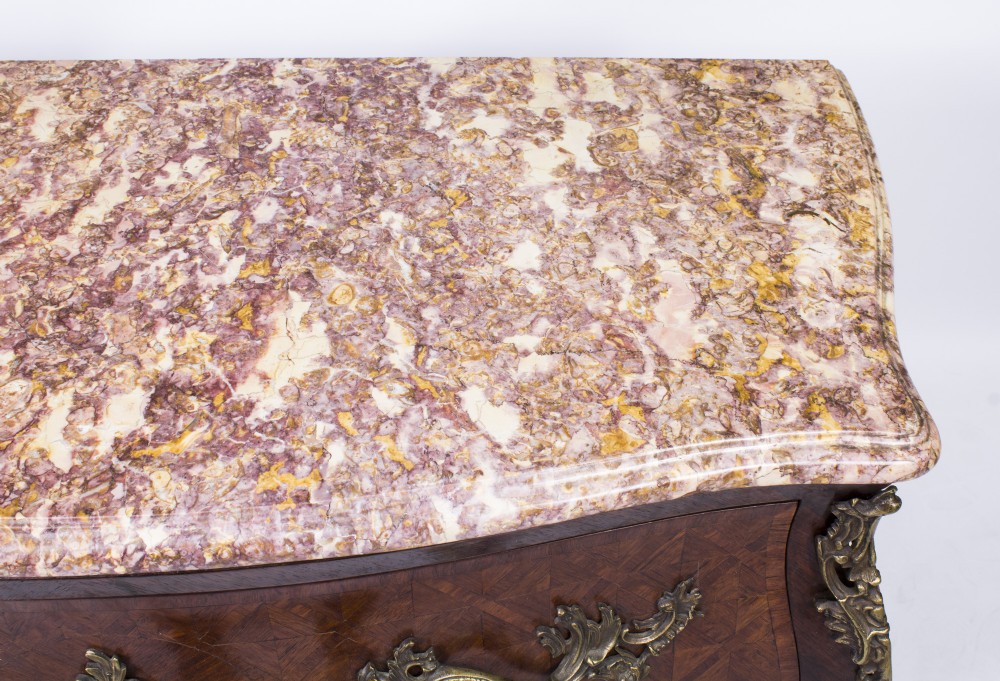
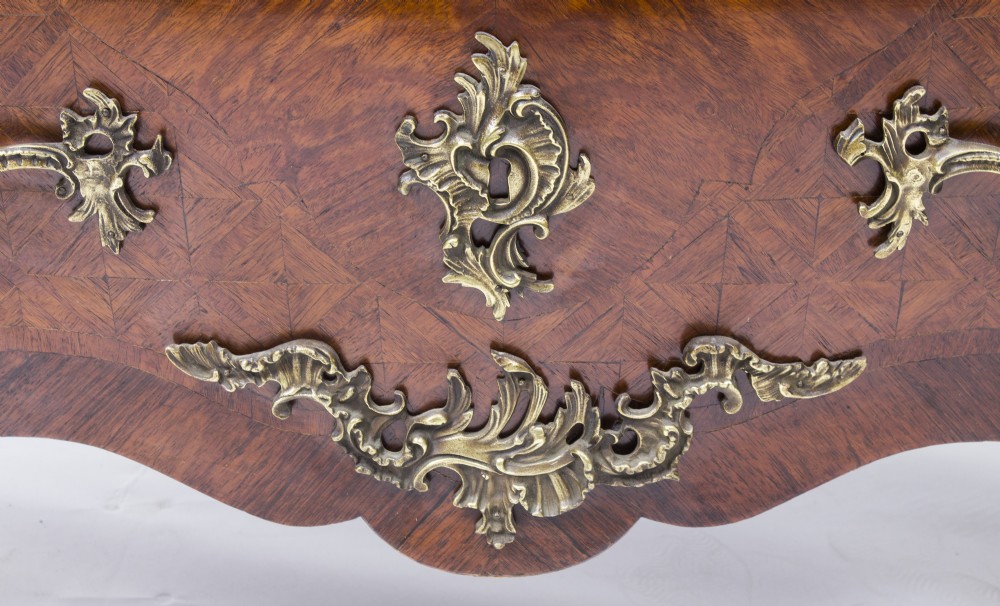
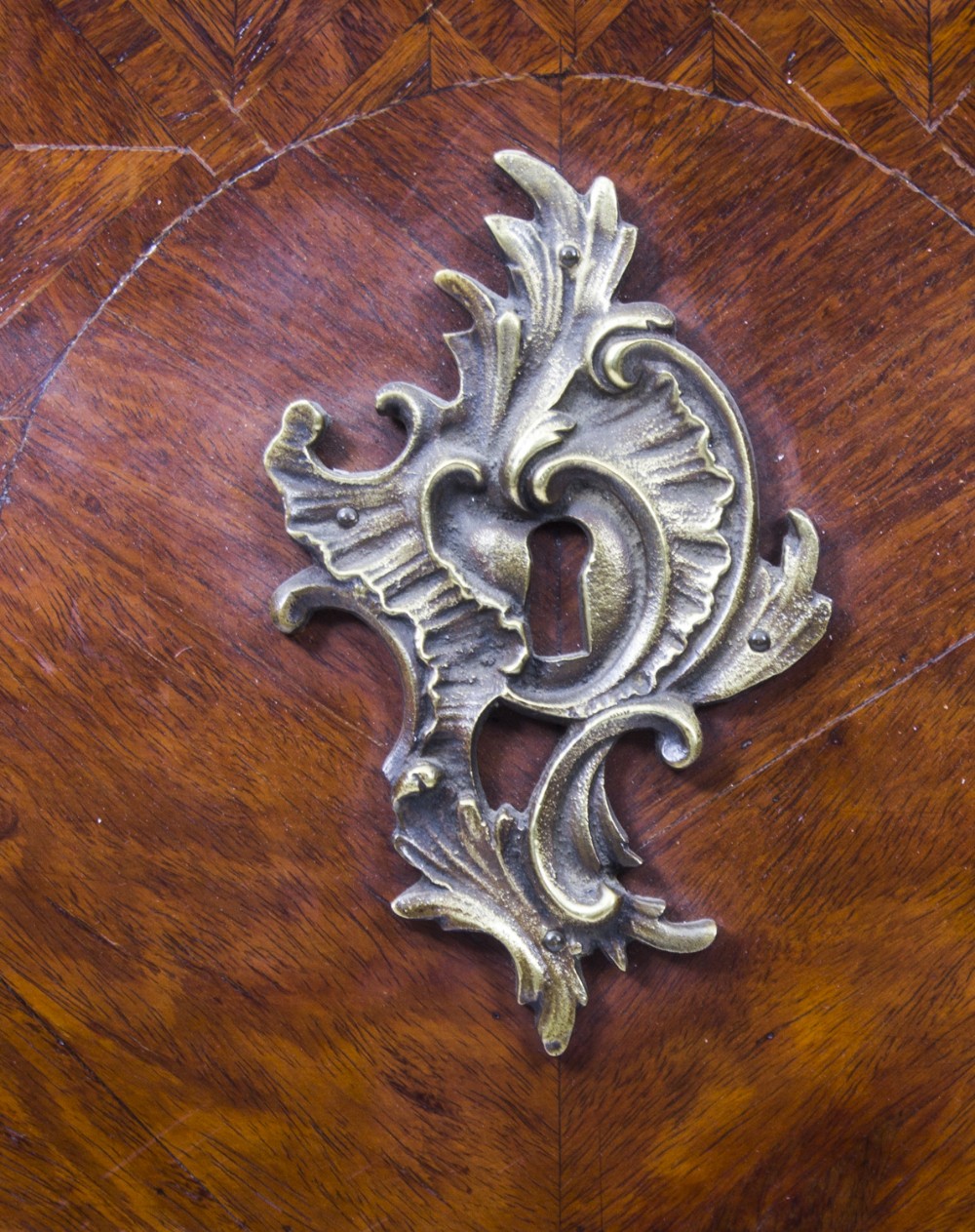
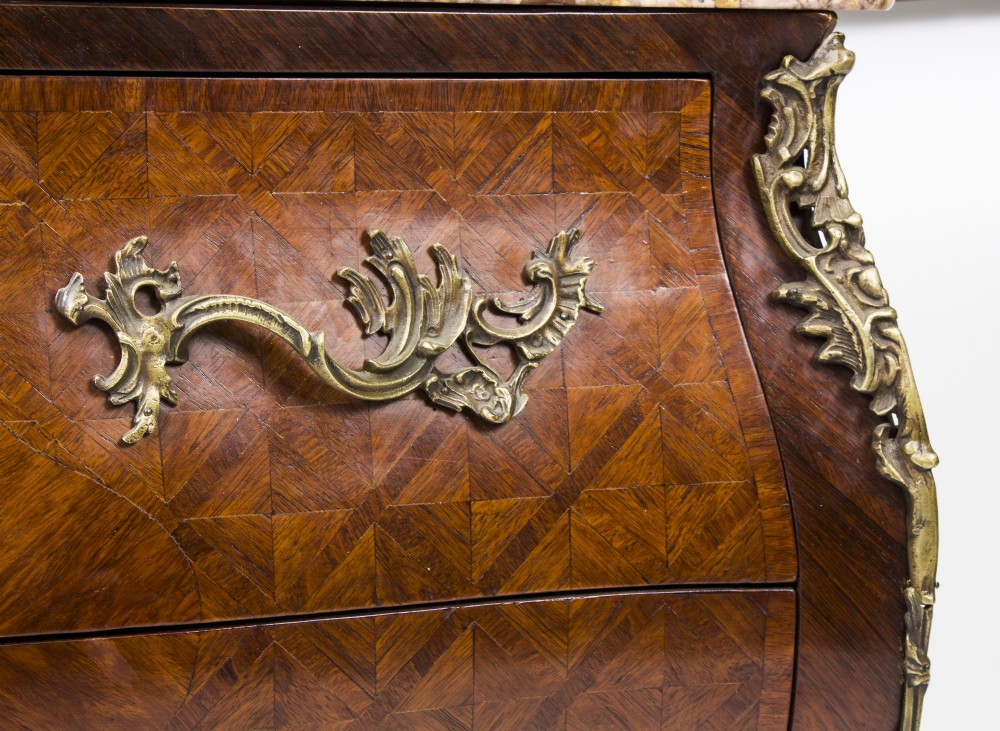
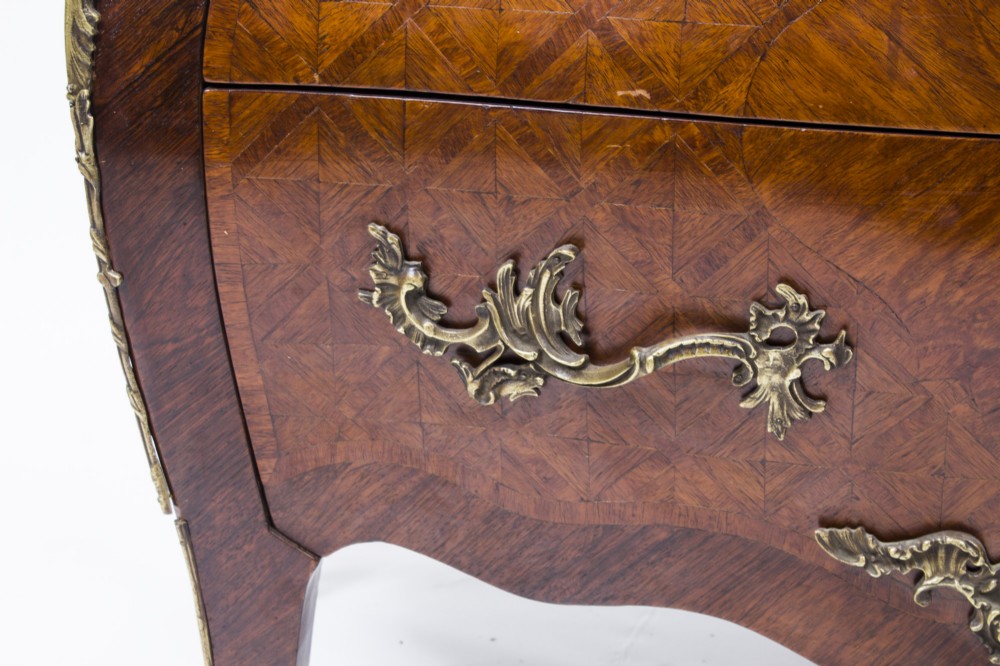
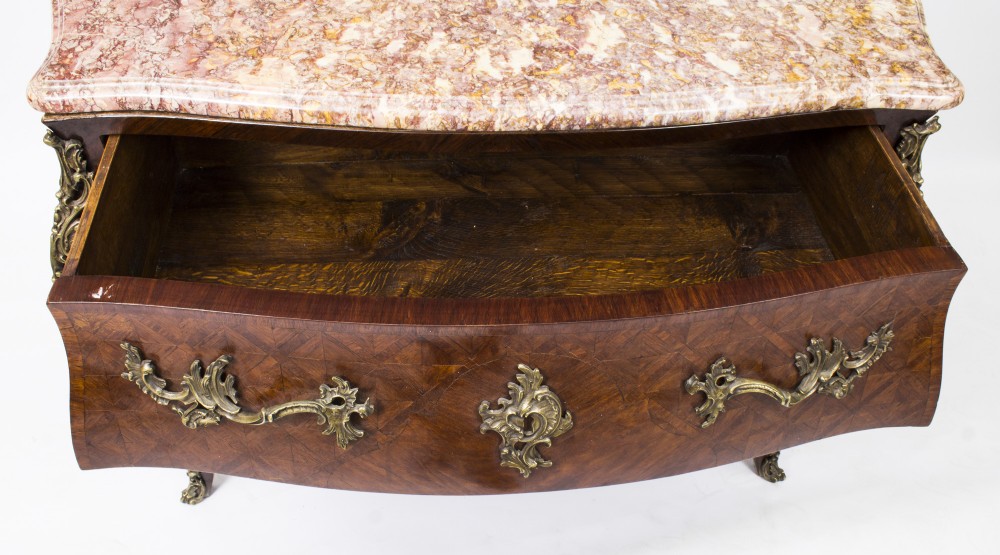
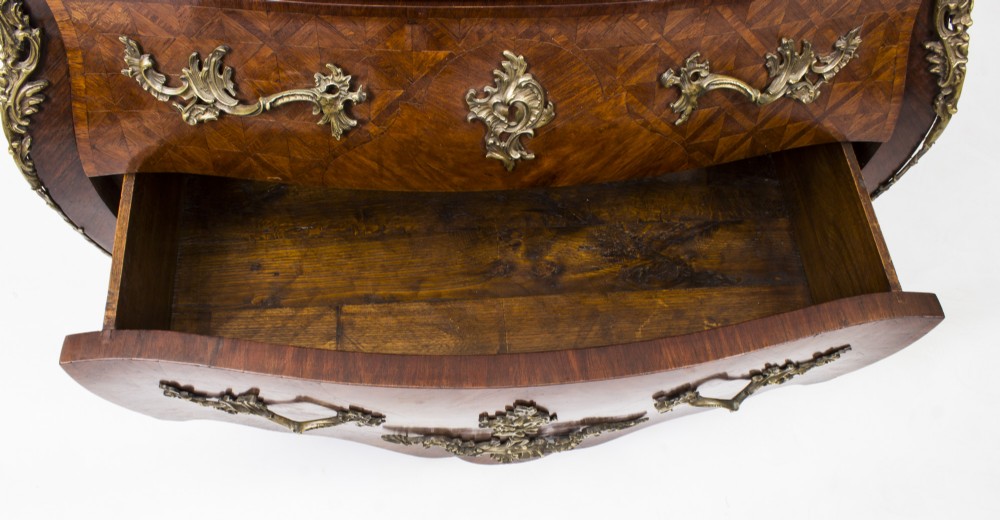
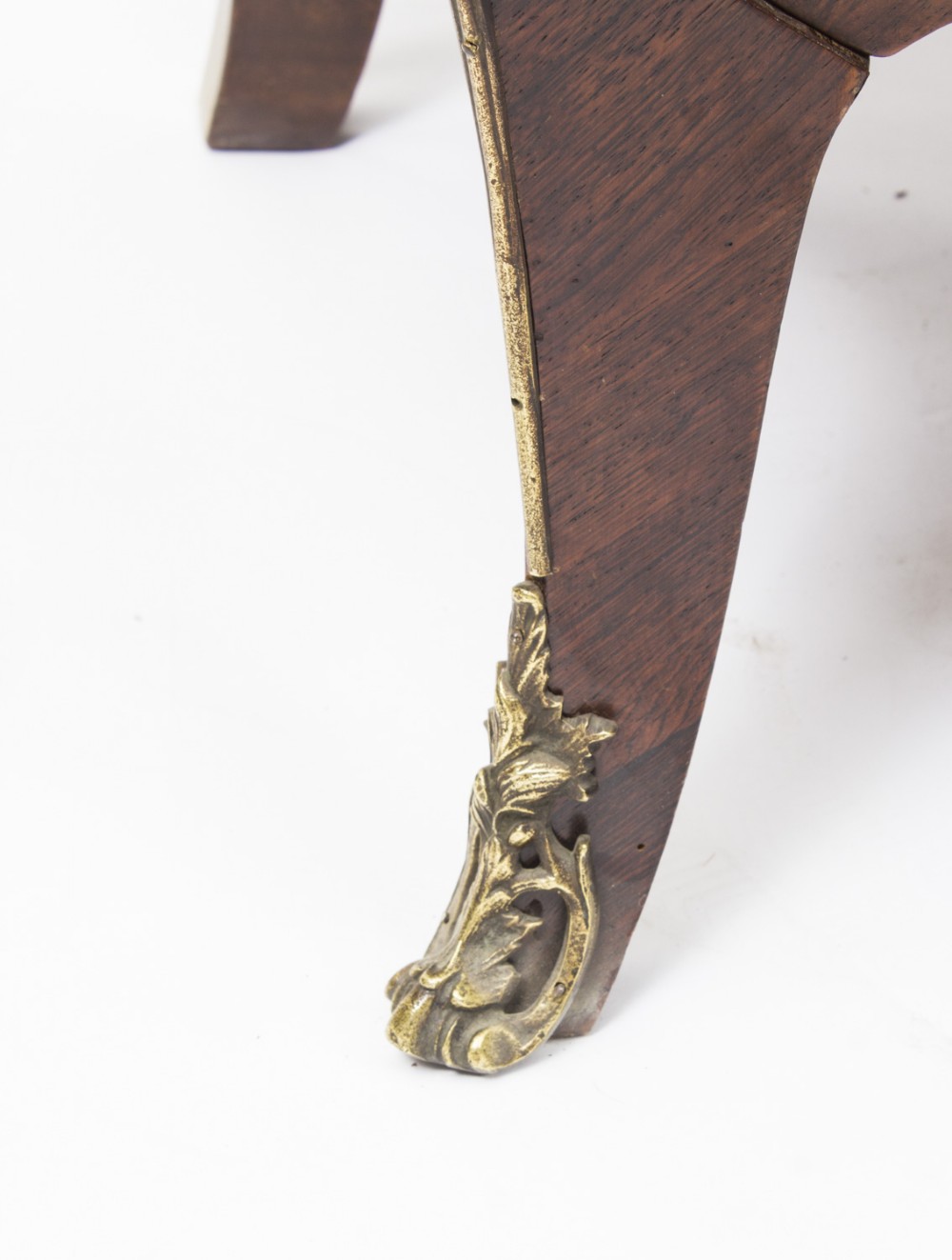
It is crafted from the most beautiful kingwood and walnut, has solid oak lined drawers, the most wonderful ormolu mounts and a breathtaking "Marmo di Brescia" marble top that has alluring hints of pink and yellow.

It has been beautifullyinlaid with elegant parquetry decoration, has two spacious drawers and the alluring contrast between the kingwood and the marble is offset by the most amazing gilded bronze ormolu handles and mounts.

A truly gorgeous piece, this commode deserves pride of place in any furniture collection.

Condition:

In excellent condition having been beautifully restored in our workshops, please see photos for confirmation.

Dimensions in cm:

Height 83 x Width 126 x Depth 58

Dimensions in inches:

Height 32.7 x Width 49.6 x Depth 22.8

Parquetry -

is a geometric mosaic of wood pieces used for decorative effect. The two main uses of parquetry are as veneer patterns on furniture and block patterns for flooring. Parquet patterns are entirely geometrical and angular—squares, triangles, lozenges.

The word derives from the Old French parchet (the diminutive of parc), literally meaning "a small enclosed space". Large diagonal squares known as parquet de Versailles were introduced in 1684 as parquet de menuiserie ("woodwork parquet") to replace the marble flooring that required constant washing, which tended to rot the joists beneath the floors. Such parquets en lozange were noted by the Swedish architect Daniel Cronström at Versailles and at the Grand Trianon in 1693.

Timber contrasting in colour and grain such as oak, walnut, kingwood, rosewood, maple, etc. are used.

Kingwood

is a classic furniture wood, almost exclusively used for inlays on very fine furniture. Occasionally it is used in the solid for small items and turned work, including parts of billiard cues, e.g., those made by John Parris. It is brownish-purple with many fine darker stripes and occasional irregular swirls. Occasionally it contains pale streaks of a similar colour to sapwood.

The wood is very dense and hard and can be brought to a spectacular finish. it turns well but due to its density and hardness can be difficult to work with hand tools. It also has a tendency to blunt the tools due to its abrasive properties.

Walnut

The Walnut woods are probably the most recognisable and popular of all the exotic woods, having been used in furniture making for many centuries. Walnut veneer was highly priced and the cost would reflect the ‘fanciness’ of the veneer – the more decorative, then the more expensive and desirable.

Ormolu

(from French 'or moulu', signifying ground or pounded gold) is an 18th-century English term for applying finely ground, high-carat gold in a mercury amalgam to an object of bronze.The mercury is driven off in a kiln leaving behind a gold-coloured veneer known as 'gilt bronze'.

The manufacture of true ormolu employs a process known as mercury-gilding or fire-gilding, in which a solution of nitrate of mercury is applied to a piece of copper, brass, or bronze, followed by the application of an amalgam of gold and mercury. The item was then exposed to extreme heat until the mercury burned off and the gold remained, adhered to the metal object.

No true ormolu was produced in France after around 1830 because legislation had outlawed the use of mercury. Therefore, other techniques were used instead but nothing surpasses the original mercury-firing ormolu method for sheer beauty and richness of colour. Electroplating is the most common modern technique. Ormolu techniques are essentially the same as those used on silver, to produce silver-gilt (also known as vermeil).

Our reference: 05884

Date of Manufacture

Regent Antiques has dated this piece to the 1900s.

Physical Dimensions
Height
83cm (32.68")
Width
126cm (49.61")
Depth
58cm (22.83")
Reference Numbers
Sellingantiques Reference
SA766012
Dealers Internal Reference
05884
Antique French Louis Revival Parquetry Commode Chest Marble c.1900
Detail view 1Detail view 2Detail view 3Detail view 4Detail view 5Detail view 6Detail view 7Detail view 8Detail view 9Detail view 10Detail view 11Detail view 12Detail view 13Detail view 14Detail view 15Detail view 16Detail view 17
SOLD6+ MONTHS AGO
1 / 18
1900s · SA766012
Antique French Louis Revival Parquetry Commode Chest Marble C.1900
Sorry, but this item has been sold.
Description
This is a stunning antique French Louis Revival bombe' parquetry commode, circa 1900 in date.

It is crafted from the most beautiful kingwood and walnut, has solid oak lined drawers, the most wonderful ormolu mounts and a breathtaking "Marmo di Brescia" marble top that has alluring hints of pink and yellow.

It has been beautifullyinlaid with elegant parquetry decoration, has two spacious drawers and the alluring contrast between the kingwood and the marble is offset by the most amazing gilded bronze ormolu handles and mounts.

A truly gorgeous piece, this commode deserves pride of place in any furniture collection.

Condition:

In excellent condition having been beautifully restored in our workshops, please see photos for confirmation.

Dimensions in cm:

Height 83 x Width 126 x Depth 58

Dimensions in inches:

Height 32.7 x Width 49.6 x Depth 22.8

Parquetry -

is a geometric mosaic of wood pieces used for decorative effect. The two main uses of parquetry are as veneer patterns on furniture and block patterns for flooring. Parquet patterns are entirely geometrical and angular—squares, triangles, lozenges.

The word derives from the Old French parchet (the diminutive of parc), literally meaning "a small enclosed space". Large diagonal squares known as parquet de Versailles were introduced in 1684 as parquet de menuiserie ("woodwork parquet") to replace the marble flooring that required constant washing, which tended to rot the joists beneath the floors. Such parquets en lozange were noted by the Swedish architect Daniel Cronström at Versailles and at the Grand Trianon in 1693.

Timber contrasting in colour and grain such as oak, walnut, kingwood, rosewood, maple, etc. are used.

Kingwood

is a classic furniture wood, almost exclusively used for inlays on very fine furniture. Occasionally it is used in the solid for small items and turned work, including parts of billiard cues, e.g., those made by John Parris. It is brownish-purple with many fine darker stripes and occasional irregular swirls. Occasionally it contains pale streaks of a similar colour to sapwood.

The wood is very dense and hard and can be brought to a spectacular finish. it turns well but due to its density and hardness can be difficult to work with hand tools. It also has a tendency to blunt the tools due to its abrasive properties.

Walnut

The Walnut woods are probably the most recognisable and popular of all the exotic woods, having been used in furniture making for many centuries. Walnut veneer was highly priced and the cost would reflect the ‘fanciness’ of the veneer – the more decorative, then the more expensive and desirable.

Ormolu

(from French 'or moulu', signifying ground or pounded gold) is an 18th-century English term for applying finely ground, high-carat gold in a mercury amalgam to an object of bronze.The mercury is driven off in a kiln leaving behind a gold-coloured veneer known as 'gilt bronze'.

The manufacture of true ormolu employs a process known as mercury-gilding or fire-gilding, in which a solution of nitrate of mercury is applied to a piece of copper, brass, or bronze, followed by the application of an amalgam of gold and mercury. The item was then exposed to extreme heat until the mercury burned off and the gold remained, adhered to the metal object.

No true ormolu was produced in France after around 1830 because legislation had outlawed the use of mercury. Therefore, other techniques were used instead but nothing surpasses the original mercury-firing ormolu method for sheer beauty and richness of colour. Electroplating is the most common modern technique. Ormolu techniques are essentially the same as those used on silver, to produce silver-gilt (also known as vermeil).

Our reference: 05884
Date1900s
Height83cm (32.68")
Width126cm (49.61")
Depth58cm (22.83")
ReferenceSA766012
Dealer's reference05884
Regent Antiques
Regent AntiquesSellingantiques verified since Sep 2016

We specialise in english and continental furniture, silver, porcelain and decorative items.

Member of LAPADA CINOA

SHARE
SAVE
Archive I Antique French Louis Revival Parquetry Commode Chest Marble c.1900
SOLD6+ MONTHS AGO

Antique French Louis Revival Parquetry Commode Chest Marble C.1900

Archive II Antique French Louis Revival Parquetry Commode Chest Marble c.1900
 View II
Archive III Antique French Louis Revival Parquetry Commode Chest Marble c.1900
 View III
Archive IV Antique French Louis Revival Parquetry Commode Chest Marble c.1900
 View IV
Archive V Antique French Louis Revival Parquetry Commode Chest Marble c.1900
 View V
Archive VI Antique French Louis Revival Parquetry Commode Chest Marble c.1900
 View VI
Archive VII Antique French Louis Revival Parquetry Commode Chest Marble c.1900
 View VII
Archive VIII Antique French Louis Revival Parquetry Commode Chest Marble c.1900
 View VIII
Archive IX Antique French Louis Revival Parquetry Commode Chest Marble c.1900
 View IX
Archive X Antique French Louis Revival Parquetry Commode Chest Marble c.1900
 View X
Archive XI Antique French Louis Revival Parquetry Commode Chest Marble c.1900
 View XI
Archive XII Antique French Louis Revival Parquetry Commode Chest Marble c.1900
 View XII
Archive XIII Antique French Louis Revival Parquetry Commode Chest Marble c.1900
 View XIII
Archive XIV Antique French Louis Revival Parquetry Commode Chest Marble c.1900
 View XIV
Archive XV Antique French Louis Revival Parquetry Commode Chest Marble c.1900
 View XV
Archive XVI Antique French Louis Revival Parquetry Commode Chest Marble c.1900
 View XVI
Archive XVII Antique French Louis Revival Parquetry Commode Chest Marble c.1900
 View XVII
Archive XVIII Antique French Louis Revival Parquetry Commode Chest Marble c.1900
 View XVIII
Enlarged Archival View
Location
Manor Warehouse
318 Green Lanes
London
N4 1BX
United Kingdom
Verified Since Sep 2016
Items For Sale 639
Items Sold 2,756
Regent Antiques
Regent Antiques
Verified Since Sep 2016
View Dealer Info
Location: Manor Warehouse, 318 Green Lanes, London, N4 1BX, United Kingdom
Verified
Sep 2016
For Sale
639
Sold
2,756
Antique French Louis Revival Parquetry Commode Chest Marble c.1900
Ref: SA766012
Antique French Louis Revival Parquetry Commode Chest Marble c.1900
Detail View 1
Detail View 2
Detail View 3
Detail View 4
Detail View 5
Detail View 6
Detail View 7
Detail View 8
Detail View 9
Detail View 10
Detail View 11
Detail View 12
Detail View 13
Detail View 14
Detail View 15
Detail View 16
Detail View 17
Archival Detail
Every single antique dealer on our platform is individually approved by our internal team. We verify their professional trade history, ethical standards, and photographic quality to ensure a secure, high-standard buying environment. Upon joining, every dealer agrees to a strict 9-point code of conduct. While issues can occasionally arise, our dealers typically resolve them swiftly and directly with the buyer. In fact, since our founding in 2002, Sellingantiques has only had to step in to help resolve an issue on roughly five occasions—a true testament to the quality of our dealers and their dedication to your happiness.
Our dealers are highly experienced in packing and shipping fragile, high-value antiques. Because you are in direct contact with the dealer, you will be able to easily go through all available shipping and insurance options together to ensure your item arrives safely.
Antiques are the ultimate green purchase. By choosing historical pieces over newly manufactured goods, you completely eliminate the carbon footprint of modern mass production while preserving exceptional, timeless craftsmanship.
Written by Sellingantiques from the dealer’s photographs and listing
  • Period1900 - 1920
  • SizeH 83 cm (33 in) x W 126 cm (50 in) x D 58 cm (23 in)
items
Add keywords to the filter
Price
£100
£250000
Era
Period
Style
Material
Origin
Stock Location
Recently Added
Online Payments
Categories