Titan Fine Art has dated this piece to the 17th Century.
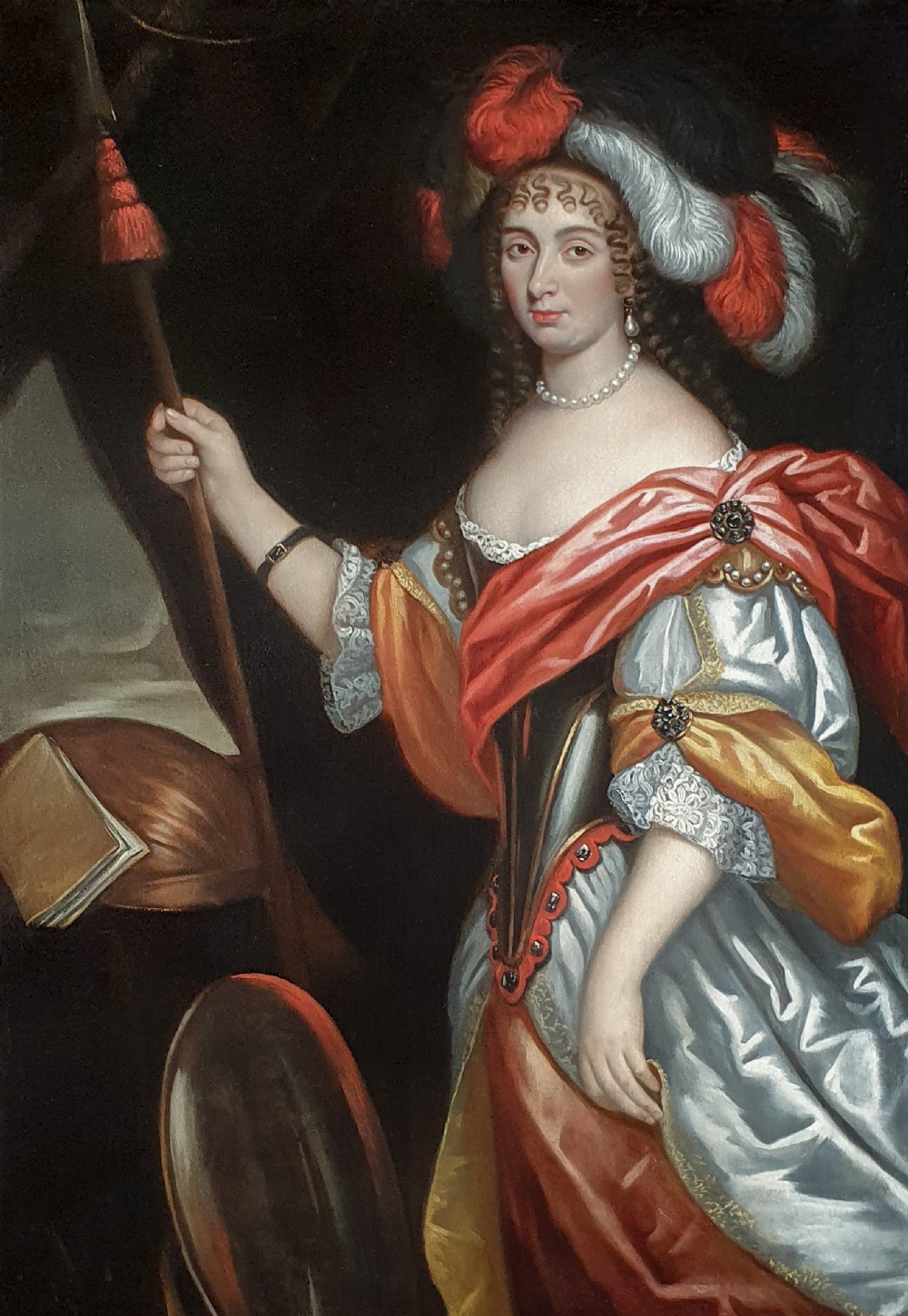
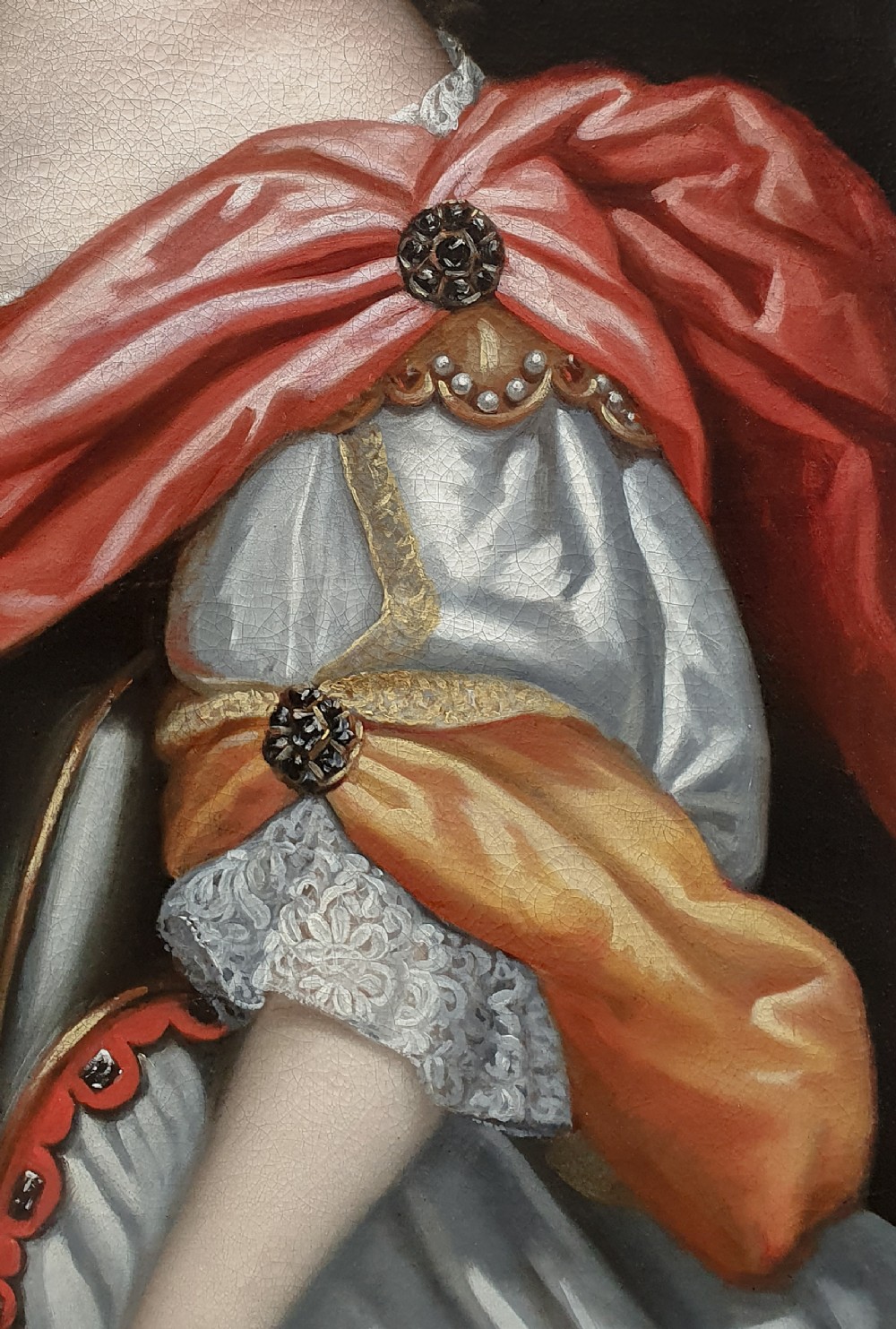
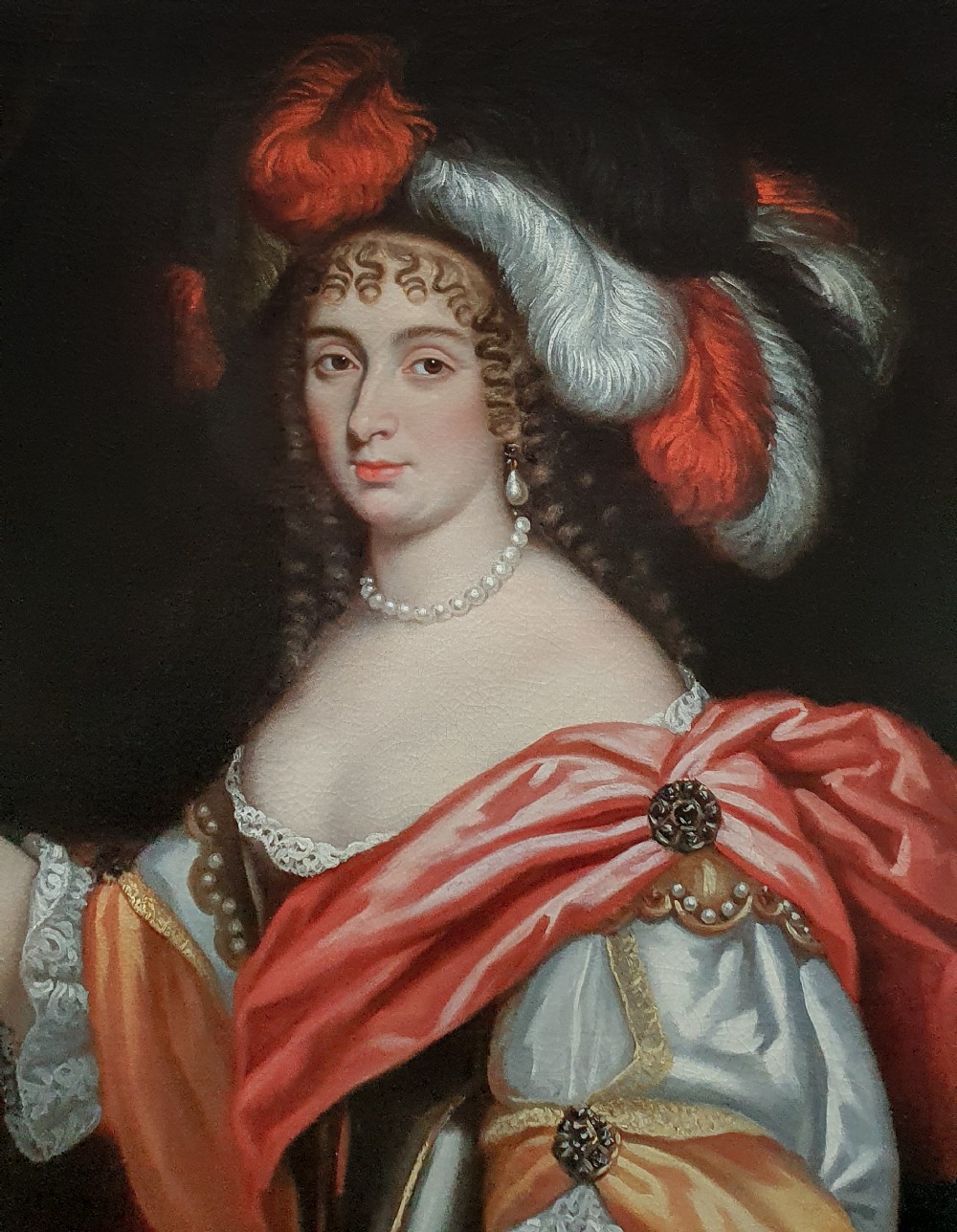
The subject is portrayed in classically inspired attire with draping fabrics, a crimson swath of fabric wrapped around her body and fastened at the shoulder with a large jeweled clasp, reminiscent of classical Roman attire. The metallic cuirass, spear, shield, book, and exotic feather headdress draw from traditional mythology which by the time this portrait was painted was well known as all educated individuals of the period were familiar with Latin and Greek poetry and the mythological world.
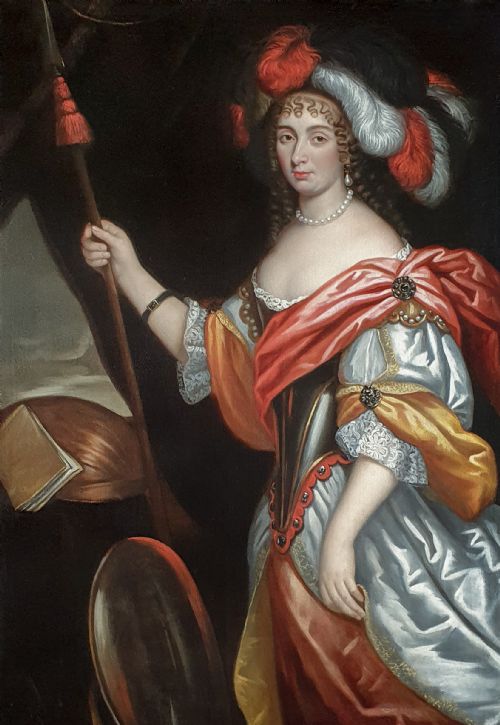
Here, we see Minerva, the Roman goddess of wisdom, protector of peace, and patroness of the arts and sciences. Minerva was a popular muse. The use of this guise thereby elevates the sitter to the status of a goddess. The exotic plumage perched on her head is part of a type of hunting cap that was a status symbol as the right to hunt had always been the exclusive privilege of the nobility. These exotic headdresses were often incorporated into portraits and they were neither meant as an exercise in realism nor to explore the sitter’s character, but to glorify the individual with godlike qualities and portray a tangible expression of power and wealth.

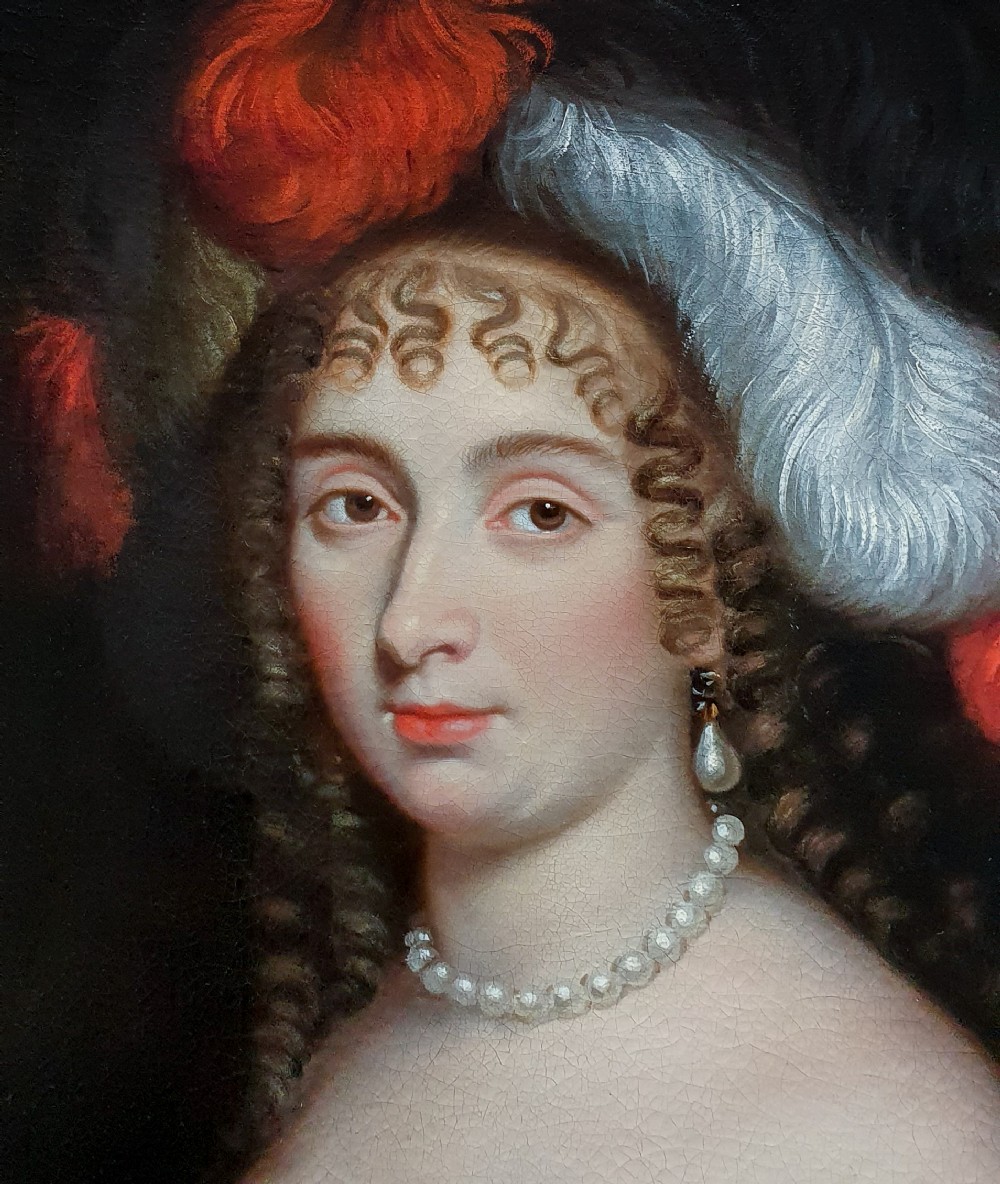
The accessory ‘par excellence’ is pearls and there many. The pear-shaped earrings are called 'unions d’excellence' and it was difficult to find perfectly matched pearls of such large size.
This portrait resembles closely other paintings attributed to Johannes Mytens which often present the sitter in the guise of a goddess in an outdoor setting. A smaller portrait, 114x90cm, “Portrait of a Woman in a Blue Dress, 1662” by Mytens sold for 24,800 euro on 21st May 2016 in Cologne. Similarly, a “Portrait of a lady as Diana, three-quarter-length, in an oyster satin dress, a bow in her left hand, her right resting on a hound's head, in a landscape” sold for £22,500 on 7th July 2017 at Christies London.
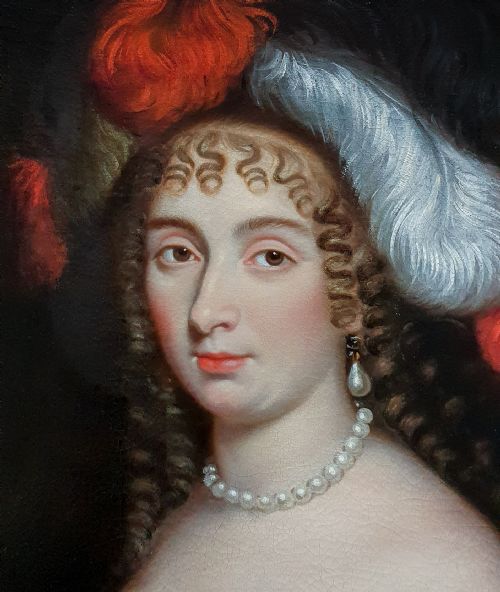
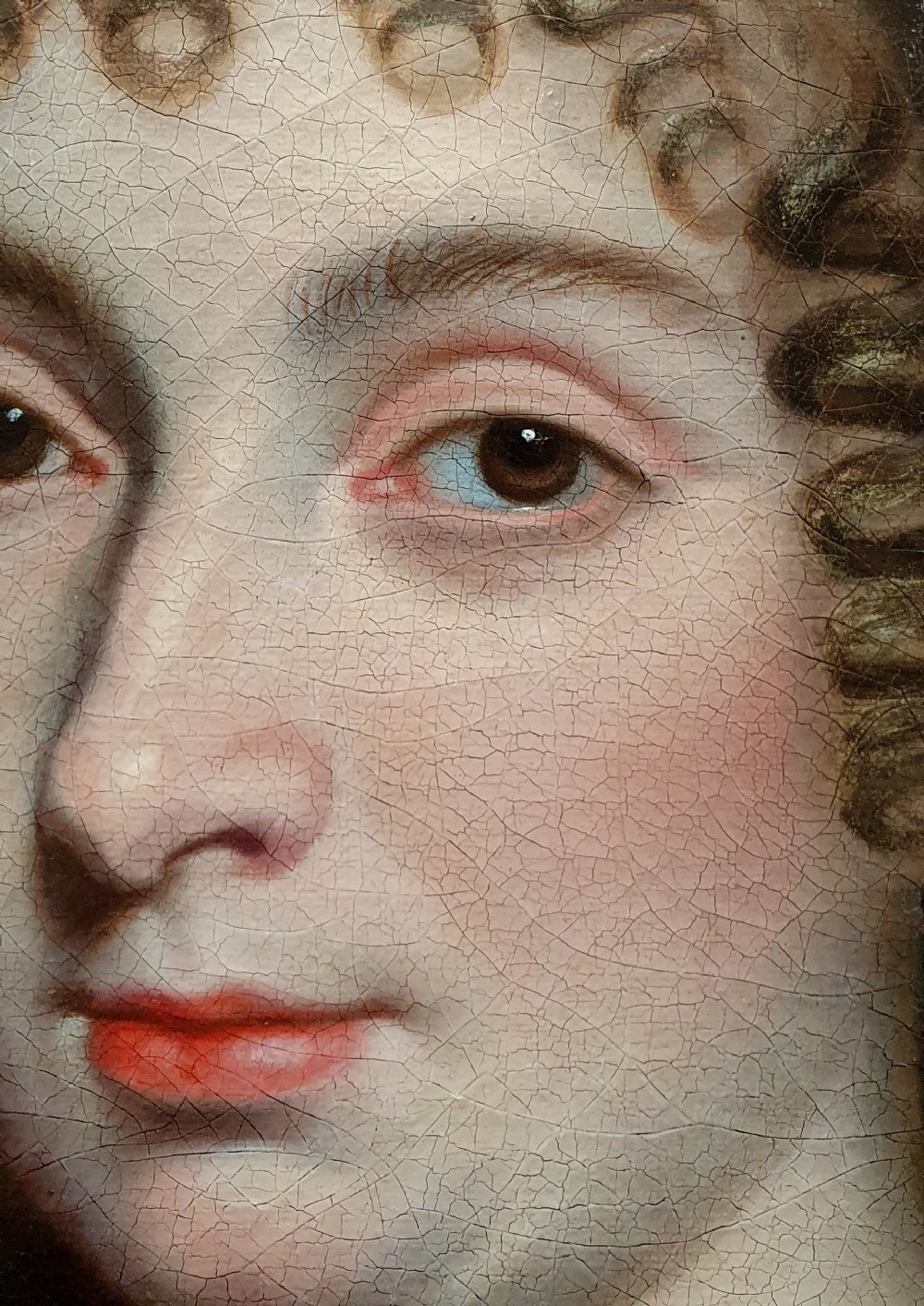
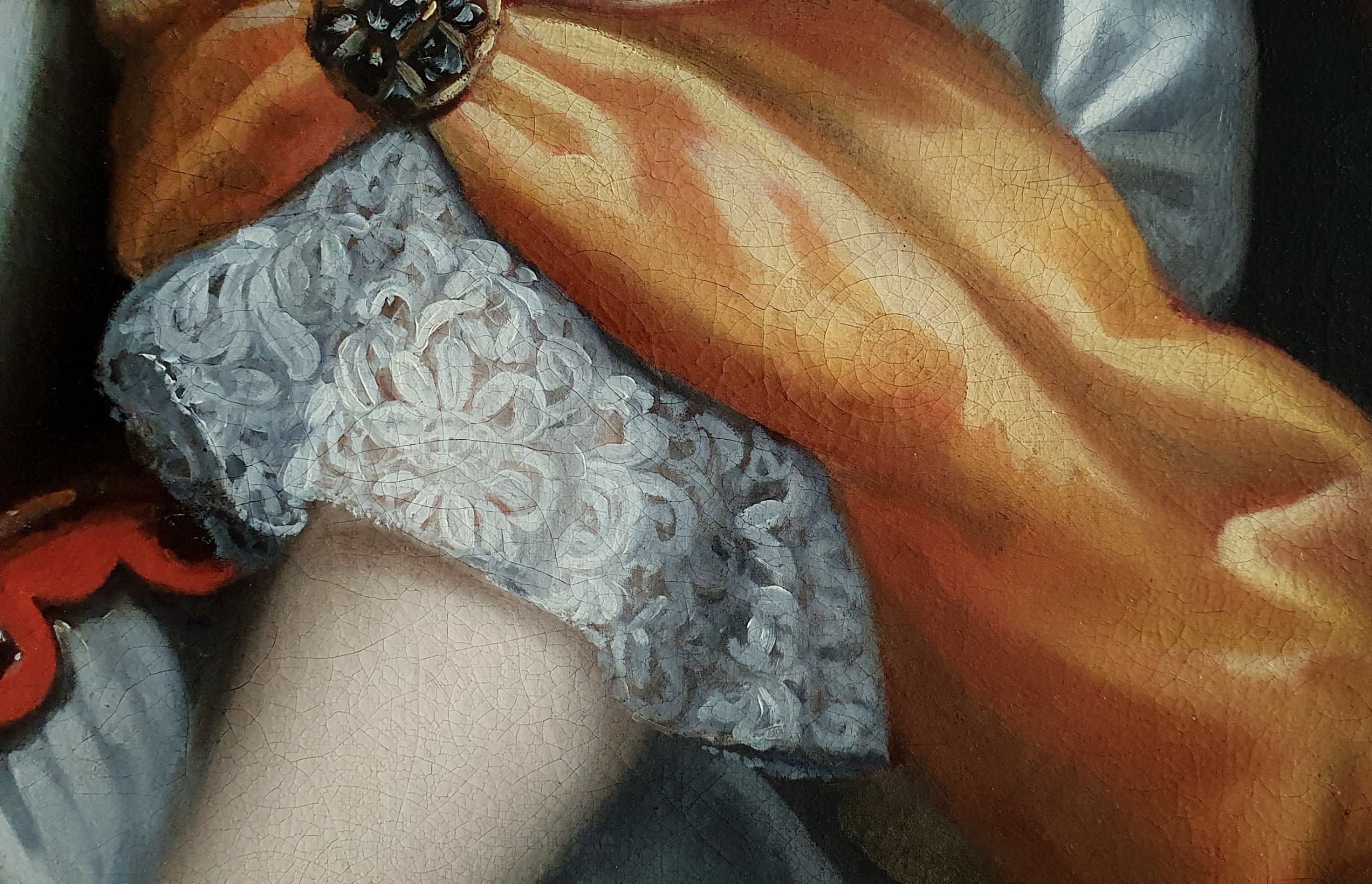
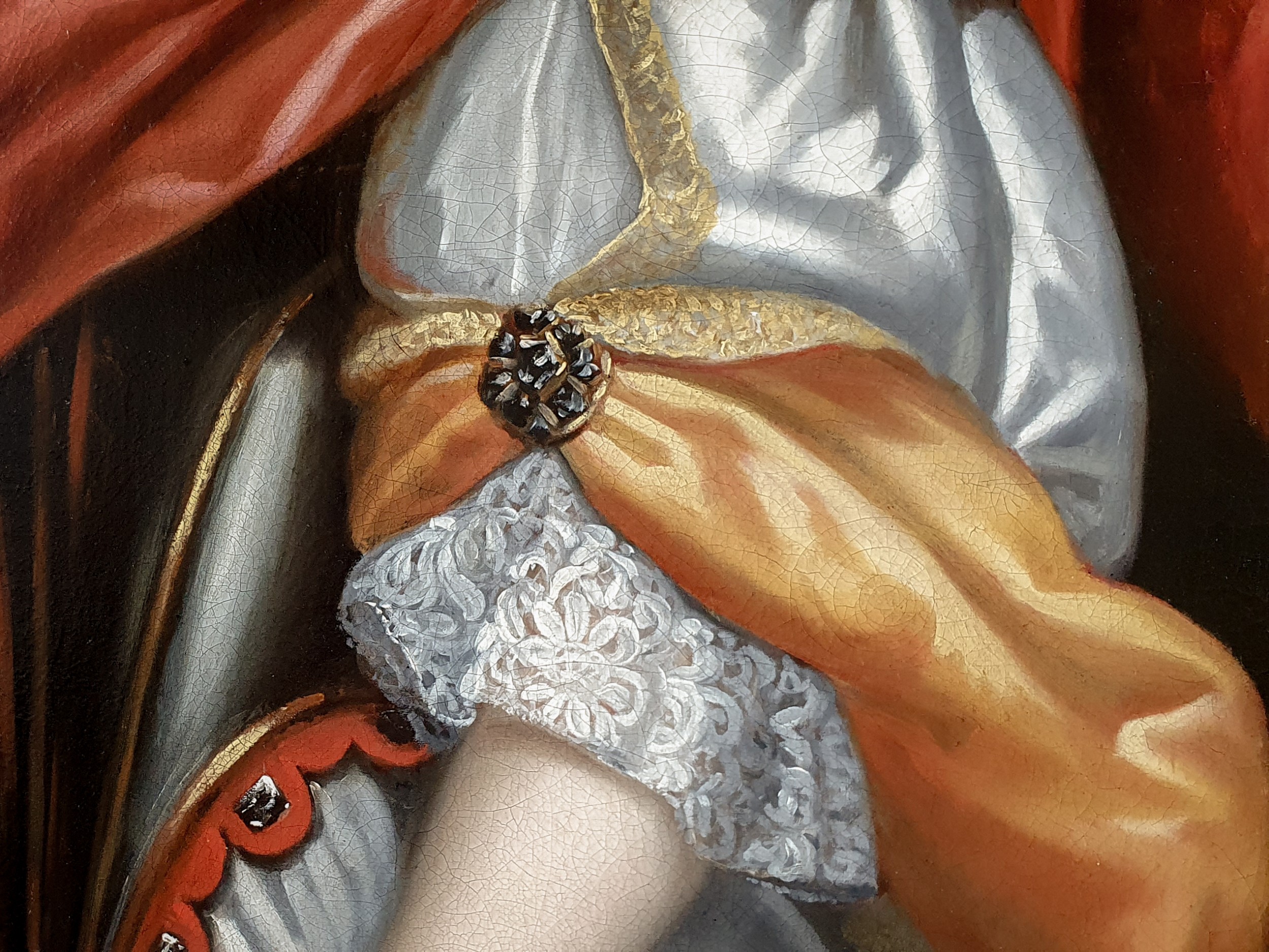
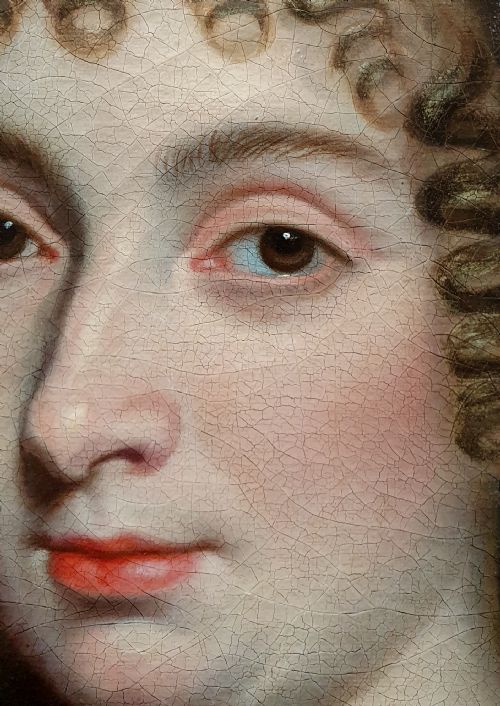
The artist was particularly adept at rendering the sitter's face and hands - they are remarkable. This grand scale portrait was intended to impress and does not fail at that.
Jan (or Johannes) Mytens (or Mijtens) came from a family of painters. He was born circa 1614 in The Hague and was buried on 24th December 1670. It is thought that his initial training may have been with his uncle Isaac Mijtens and after 1634 with his uncle Daniel. Jan was the son of Daniel’s elder brother David. Daniel Mijtens the Elder, who had been court painter to Charles I in England, was strongly influenced by Anthony van Dyck as well as Peter Paul Rubens and Jan was most likely influenced by their distinctive elegant work. In 1642 Jan married Daniel’s daughter Anna. One of Jan’s pupils was his son Daniel (who was a painter of portraits and mythological scenes).
Although he occasionally executed mythological and Biblical scenes, the majority of his output was devoted to portraiture. Jan Mytens’ clientele derived mainly from The Hague’s most prominent citizens, military commanders, high ranking government officials, nobility, and by the early 1660s Mytens began to work for members of t
Titan Fine Art has dated this piece to the 17th Century.
Specialist in 17th & 18thc portraits. Highly curated selection, museum-level research & pro conservation. Exceptional art, expertly vetted.
You can view the stock and full dealer information on the Titan Fine Art Profile Page

Portrait of a Lady as Minerva C.1660; Circle of Johannes Mytens (C.1614-1670)