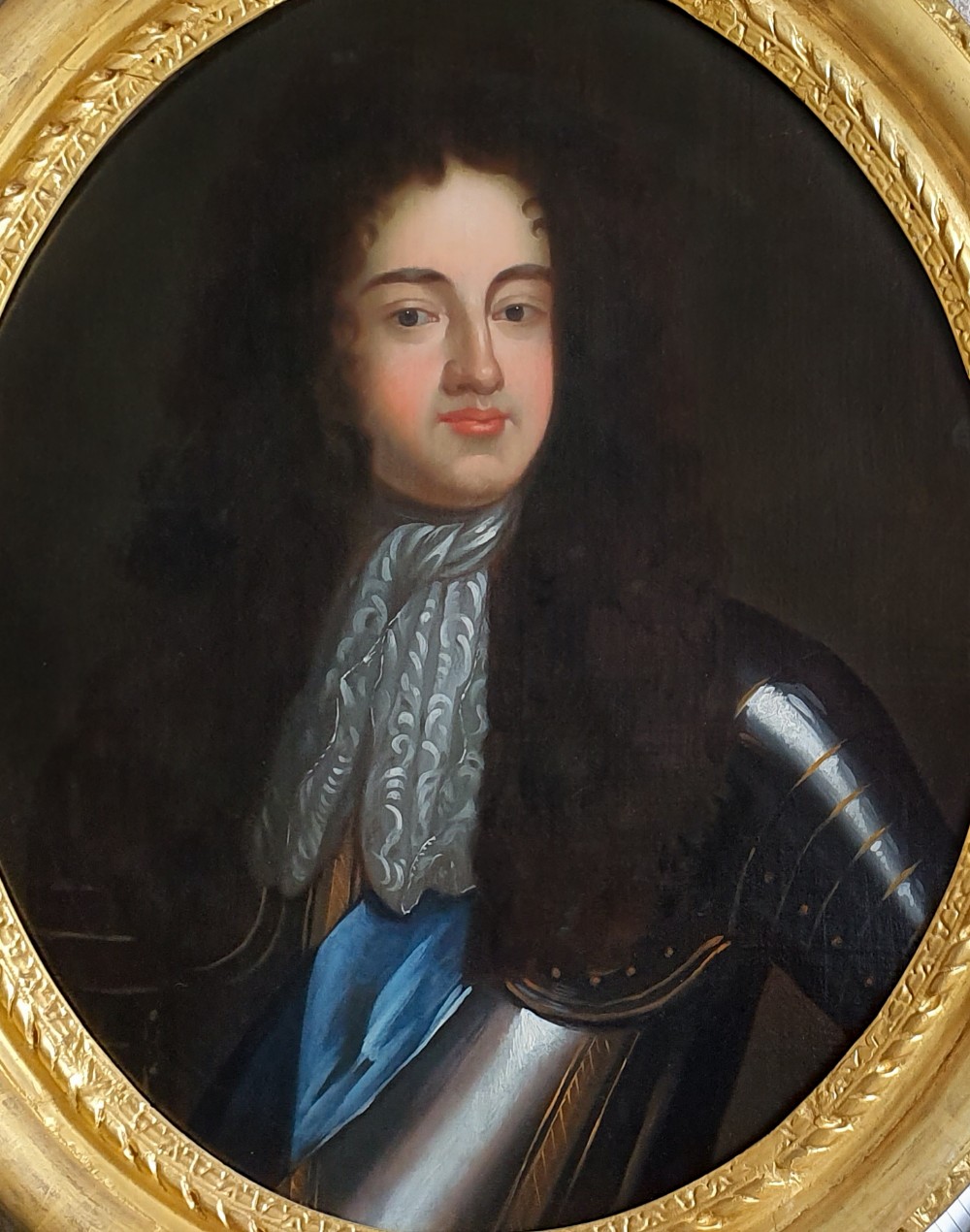
Titan Fine Art has dated this piece to the 18th Century.
He went on to have a successful military career, winning key battles such as the Battle of St. Denis and the Battle of Bothwell Bridge, as commander of the Anglo-Dutch Brigade.
His rising popularity, as well as his belief that his mother and the King had secretly married and thereby legitimizing his birth, gave Scott the impression that he should be declared the rightful heir to the throne. When Charles II died, his brother James II took the crown, and was met with disapproval by several members of parliament on account of James II being Roman Catholic. Instead, they proposed that Scott, a Protestant, be put on the throne.
This led to the Monmouth Rebellion, in which Scott attempted to overthrow James II. On the 11th June 1685 the exiled Duke of Monmouth, illegitimate son of Charles II, landed at Lyme Regis in Dorset with a small force in an attempt to topple the new Catholic king James II. Monmouth was popular with a large section of the English people and many would support his rebellion in an attempt to recover religious and political rights which had been progressively eroded since the Restoration of Charles II. This was to be a concerted effort between Scots and English, for the Duke of Argyll had set sail from Holland in May to initiate a rebellion in Scotland. But the planning was inadequate, their invasion preparations had been discovered by the crown and Monmouth's forces were few in number and poorly equipped. After just six weeks, the rebellion was quelled, and Scott was judged guilty of treason and sentenced to death by decapitation at the age of 36.
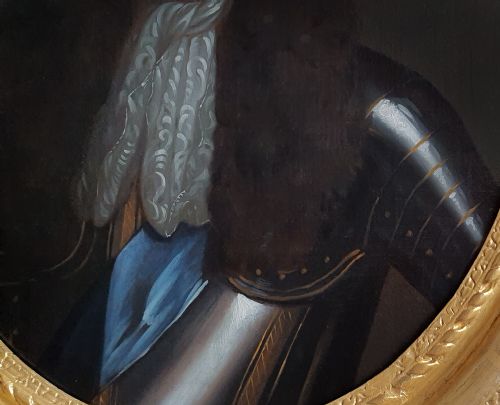
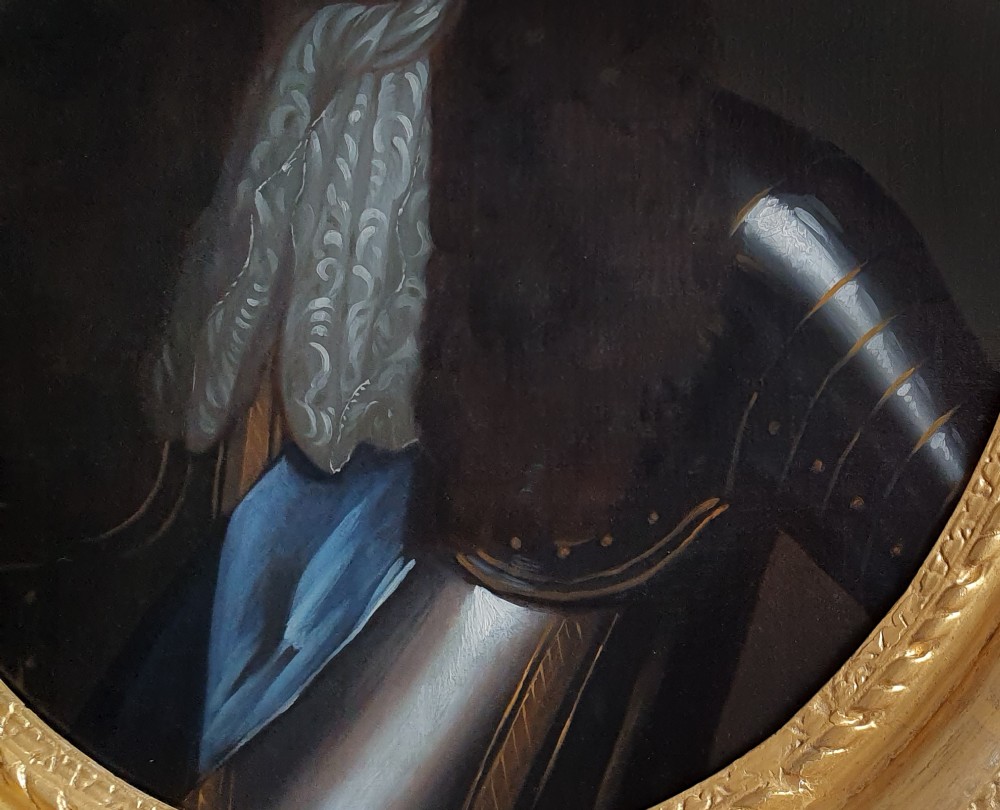
Charles II granted to some of his illegitimate sons an almost quasi royal status. One method to ‘legitimise’ illegitimate sons was to complement their peerages with the Most Noble Order of the Garter, the oldest Order of Chivalry in the world, having been established by Edward III in c1348, dedicated to the image and arms of St George. Appointments to the Garter are in the personal gift of the Sovereign and regarded as the most prestigious of the chivalric orders.
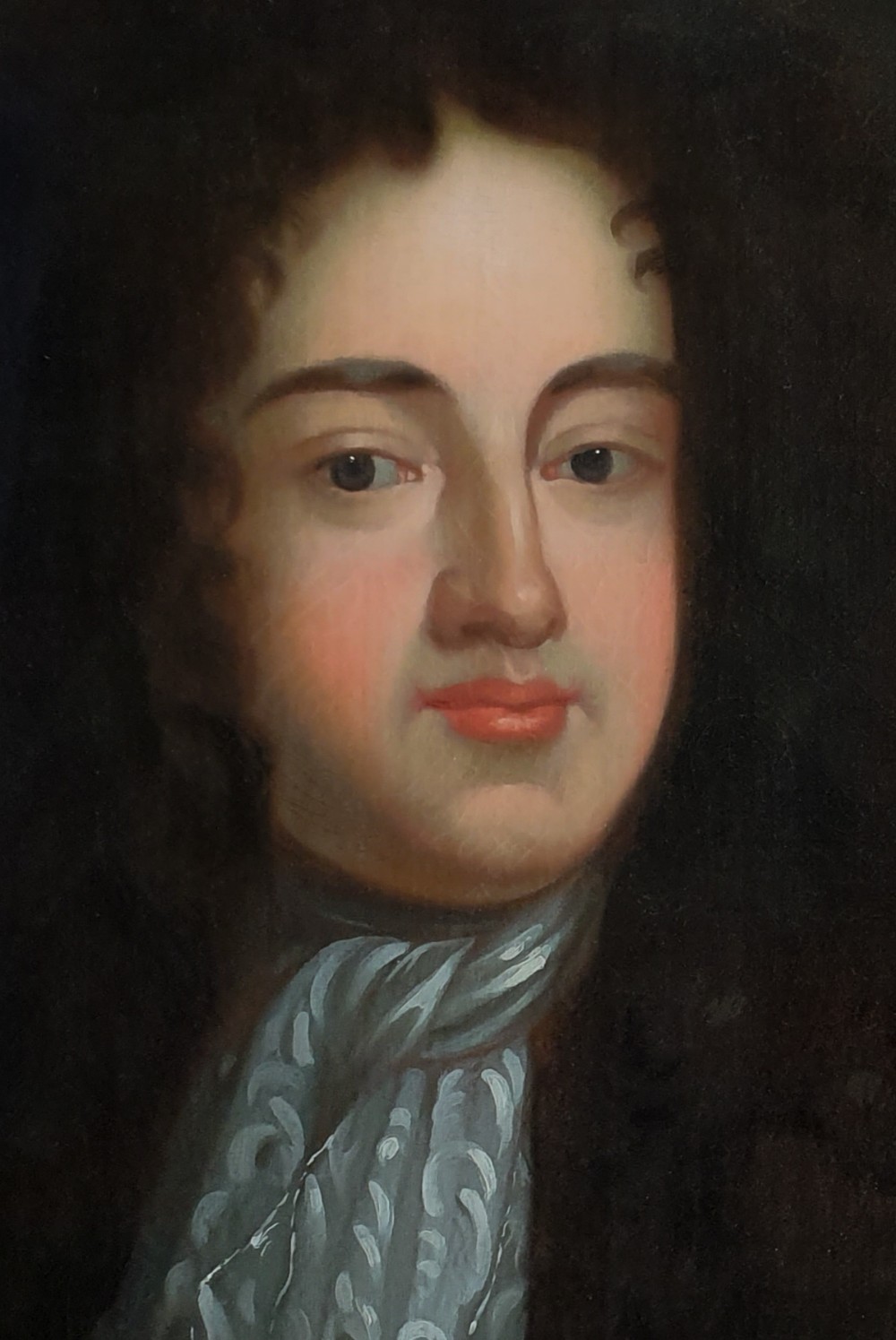
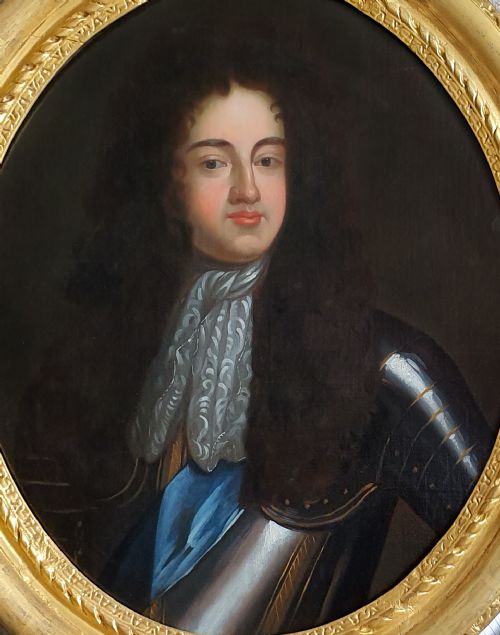
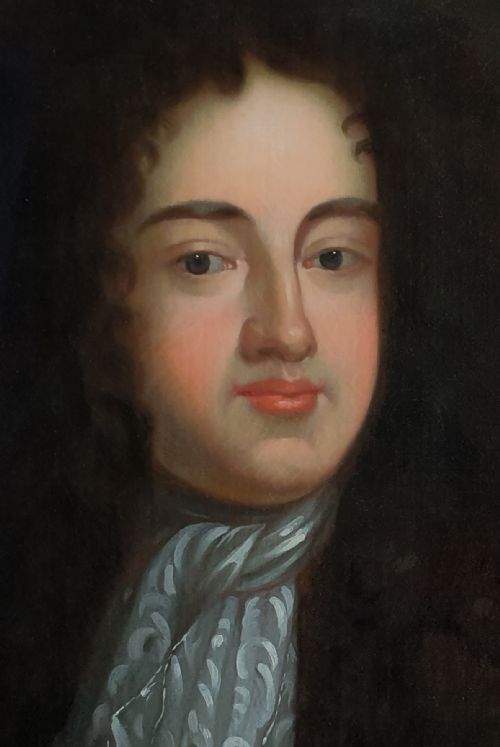
The artist's inspiration for our portrait could be from a very similar portrait of the Duke in London’s National Portrait Gallery, thought to have been painted by William Wissing around 1683.
Presented in a fine carved antique frame.
Willem Wissing was a Dutch artist who came to London in 1676. He studied with Sir Peter Lely and effectively took over his business for the seven years between Lely’s death in 1680 and his own in 1687 and this was a period when he had very important aristocratic patrons. He excelled at portraiture, having had only one real rival in England, Sir Godfrey Kneller, and was commissioned by the King to paint Mary II. Wissing’s graceful style and his modelling and pose were often replicated and varied, as was the studio practice at the time.
Provenance: Uk Private collection (Topsham, in the county of Devon)
Titan Fine Art has dated this piece to the 18th Century.
Specialist in 17th & 18thc portraits. Highly curated selection, museum-level research & pro conservation. Exceptional art, expertly vetted.
You can view the stock and full dealer information on the Titan Fine Art Profile Page

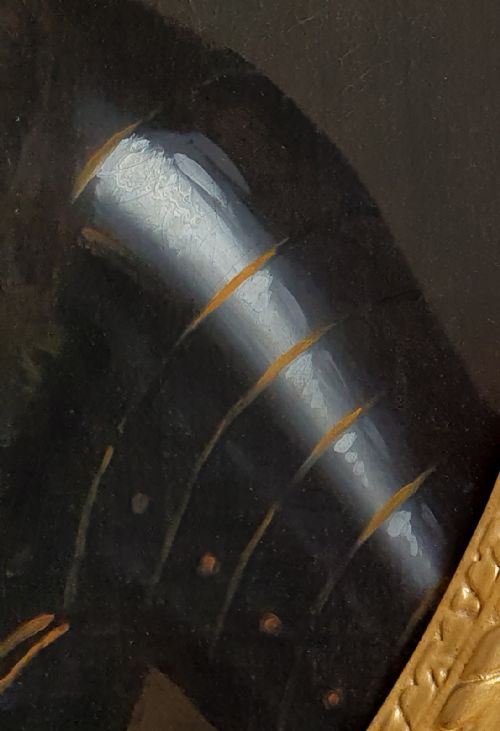
Portrait of Duke of Monmouth and Buccleuch (1649-1685); 18th Century Follower of William Wissing (1656-1687)