30,996  PAGES BROWSED TODAY PAGES TODAY 202 ANTIQUES UPLOADED TODAYNEW ARRIVALS
202 ITEMS ADDED TODAY
Sort Order
Items Per Page
Browse Categories
Sort order
Items per page
ID #SA662202
SOLD
Email
Save
Portrait of a Gentleman C.1740; Studio or Circle of Allan Ramsay (1713-1784), and Joseph Van Aken (C.1699–1749)
Titan Fine Art
sold SA662202
Sorry, but this item has been sold.
Titan Fine Art

Titan Fine Art

Sellingantiques Verified Since Jul 2016
View Dealers Stock Page
  • About Us
    Specialist in 17th & 18thc portraits. Highly curated selection, museum-level research & pro conservation. Exceptional art, expertly vetted.
Id #SA662202
PDF SHARE
SAVE

Portrait of a Gentleman C.1740; Studio or Circle of Allan Ramsay (1713-1784), and Joseph Van Aken (C.1699–1749)

18th century
Description

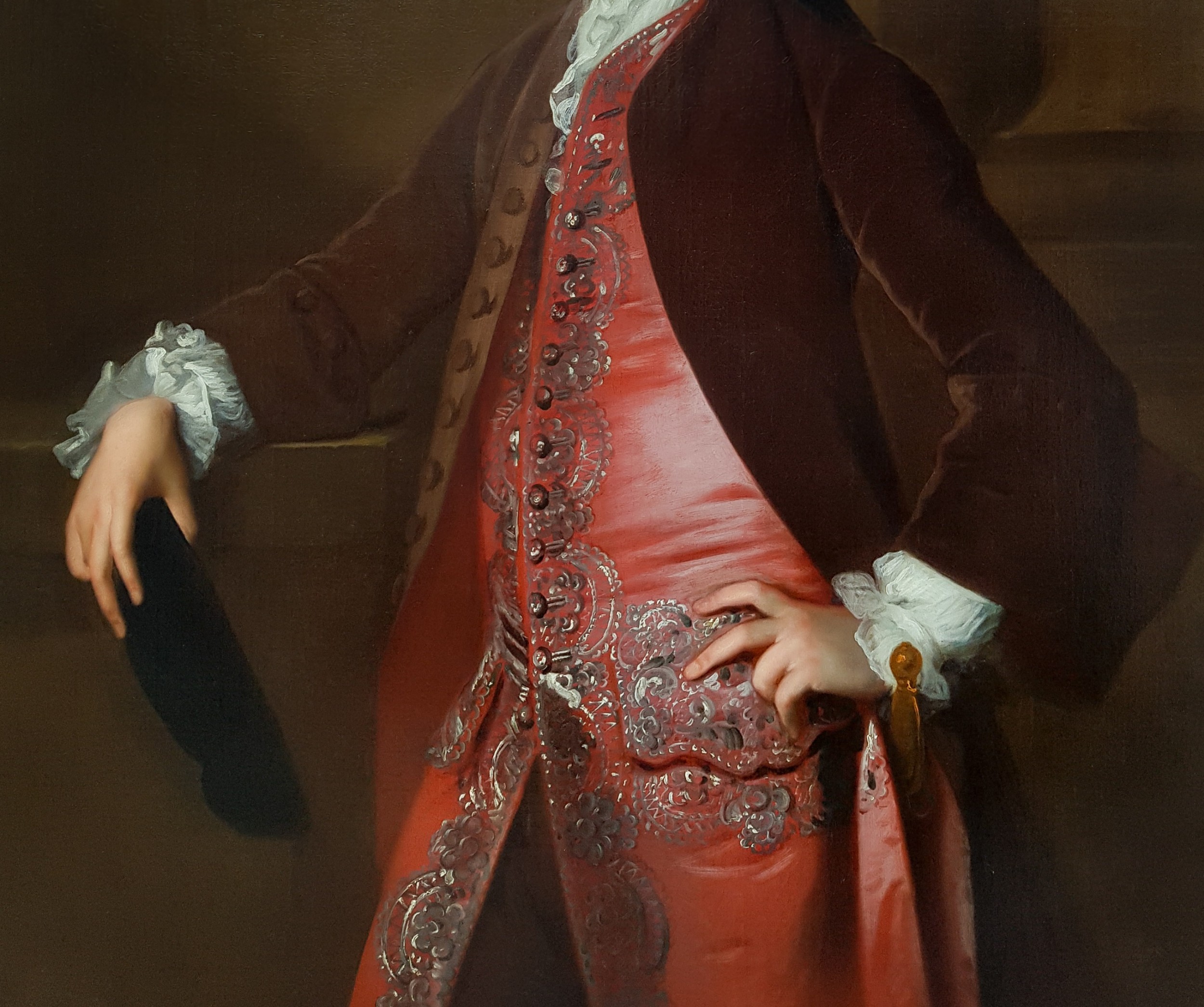
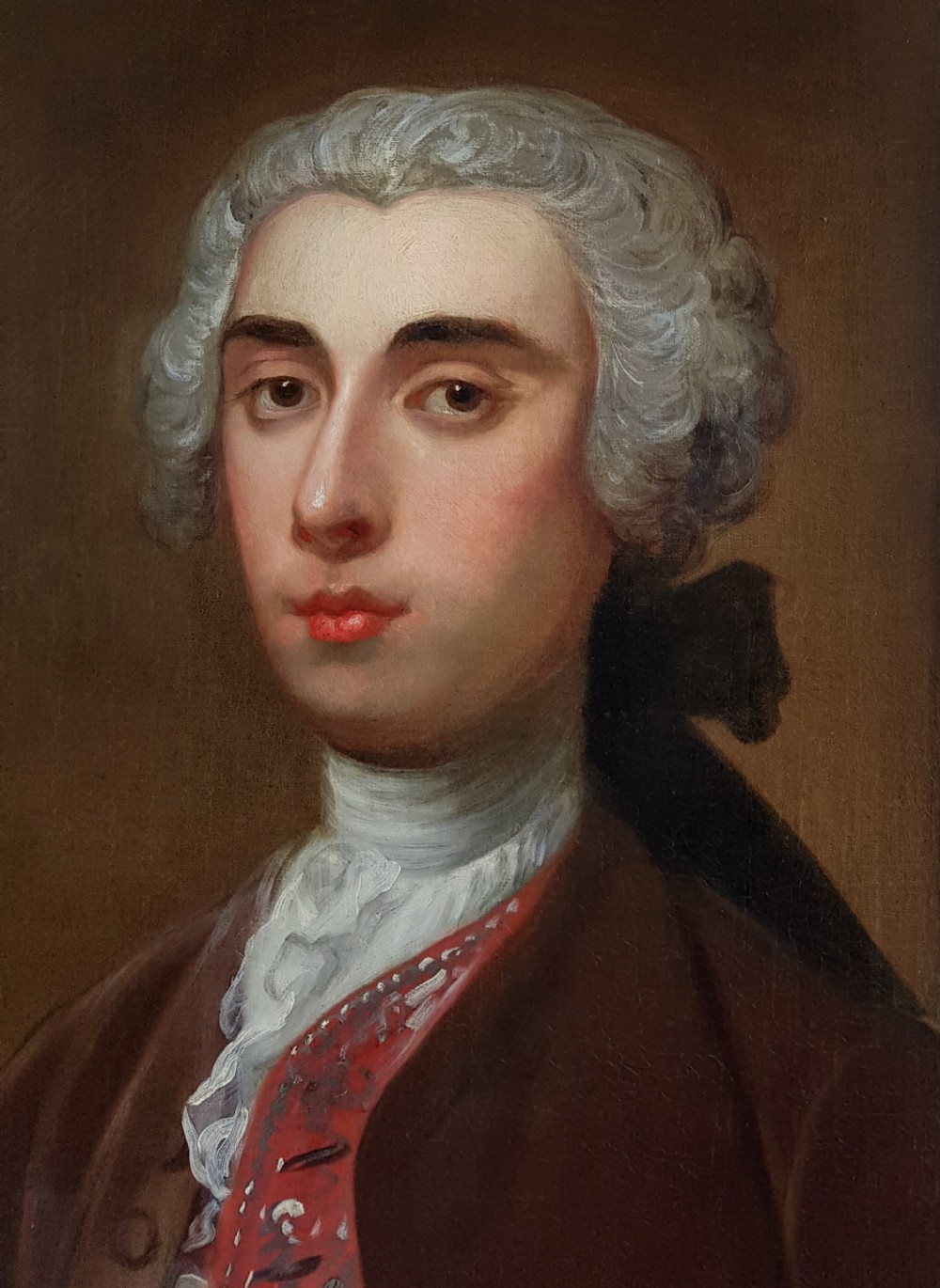
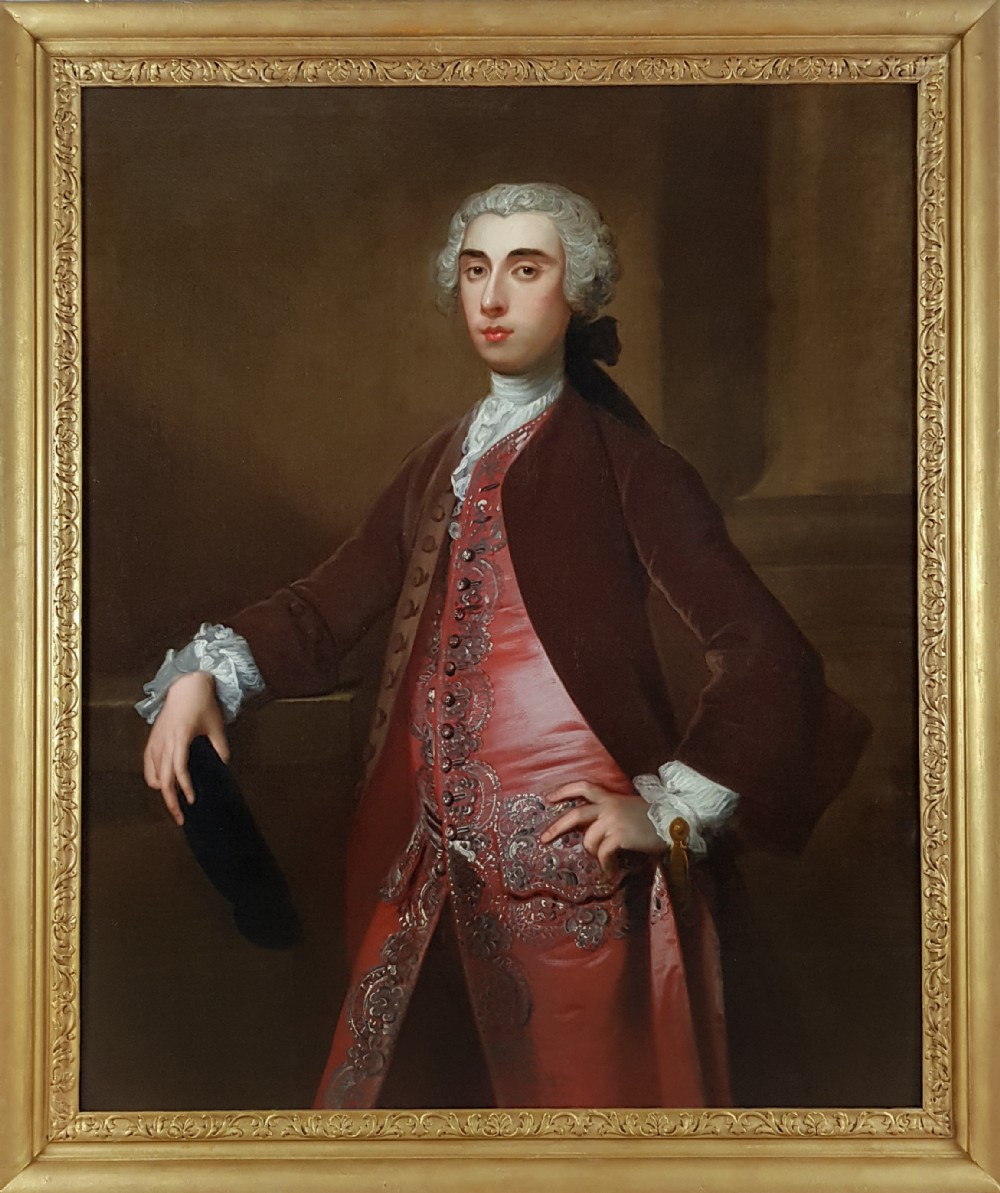
This striking portrait is an exquisite example of the English 18th century Grand Manner portrait. The sitter is portrayed in a standard gentlemanly pose for the period but it is striking in its study of the sitter’s attitude and in the graceful and natural manner of certain elements. The hands are exquisite as is the lively handling of the cuffs, which have been painted in a free and florid style. The drapery was painted by another artist, as was customary for the period. A specialist drapery painter was employed by almost all the leading British portraitists of the early and mid-18th century and sometimes portraitists employed more than one (the main exceptions were Hogarth and Gainsborough). The most popular and skilled of the draperyman's profession at this time was the Flemish-born Joseph van Aken (c.1699–1749).
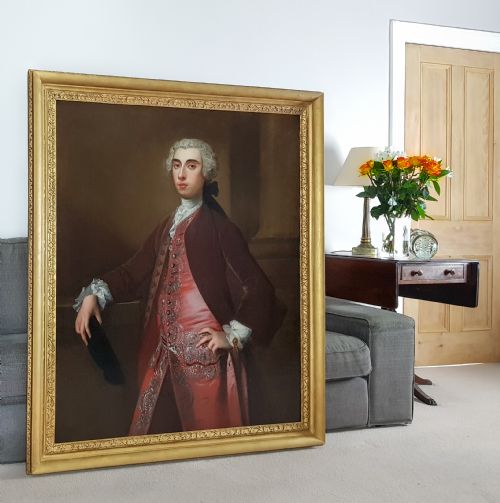
Van Aken settled in England in about 1720 and worked for Highmore, Hudson, Knapton, Ramsay, Isaac Whood, Hamlet Winstanley, Henry Pickering and others and he earned great wealth. Unfinished pictures were sent to his London studio and via surviving drawings, it is believed that Ramsay provided detailed instructions about how van Aken should pose and dress his figures. Other portraits merely supplied the face – sometimes cut out and tacked to a larger canvas that could be pasted onto the costumed figure. Van Aken had a repertoire of poses and costumes that his clients evidently used as a kind of pattern book. The same features sometimes occur virtually identically in the work of different painters, leading George Vertue to comment in 1743 “Mr Van acken – whose draperys silks satins Velvets, gold & embroideryes which he dos paint for several of them painters extreamly well- and is a great addition to their works and indeed puts them so much on a Level that it’s very difficult to know one hand from another”. By the end of the century such production line methods were falling out of favour and the separate profession of drapery painter was dying out.
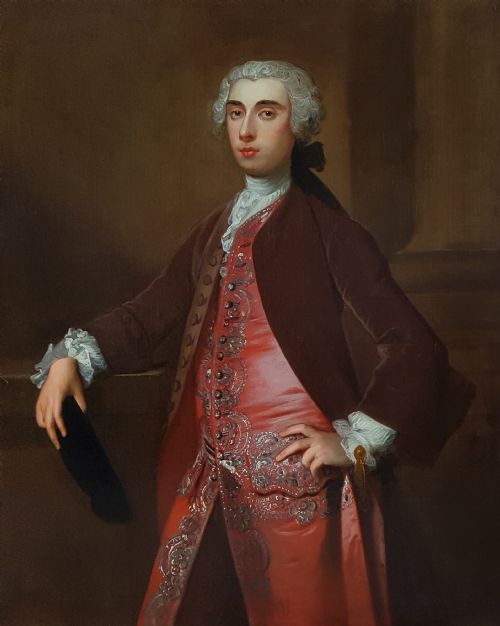
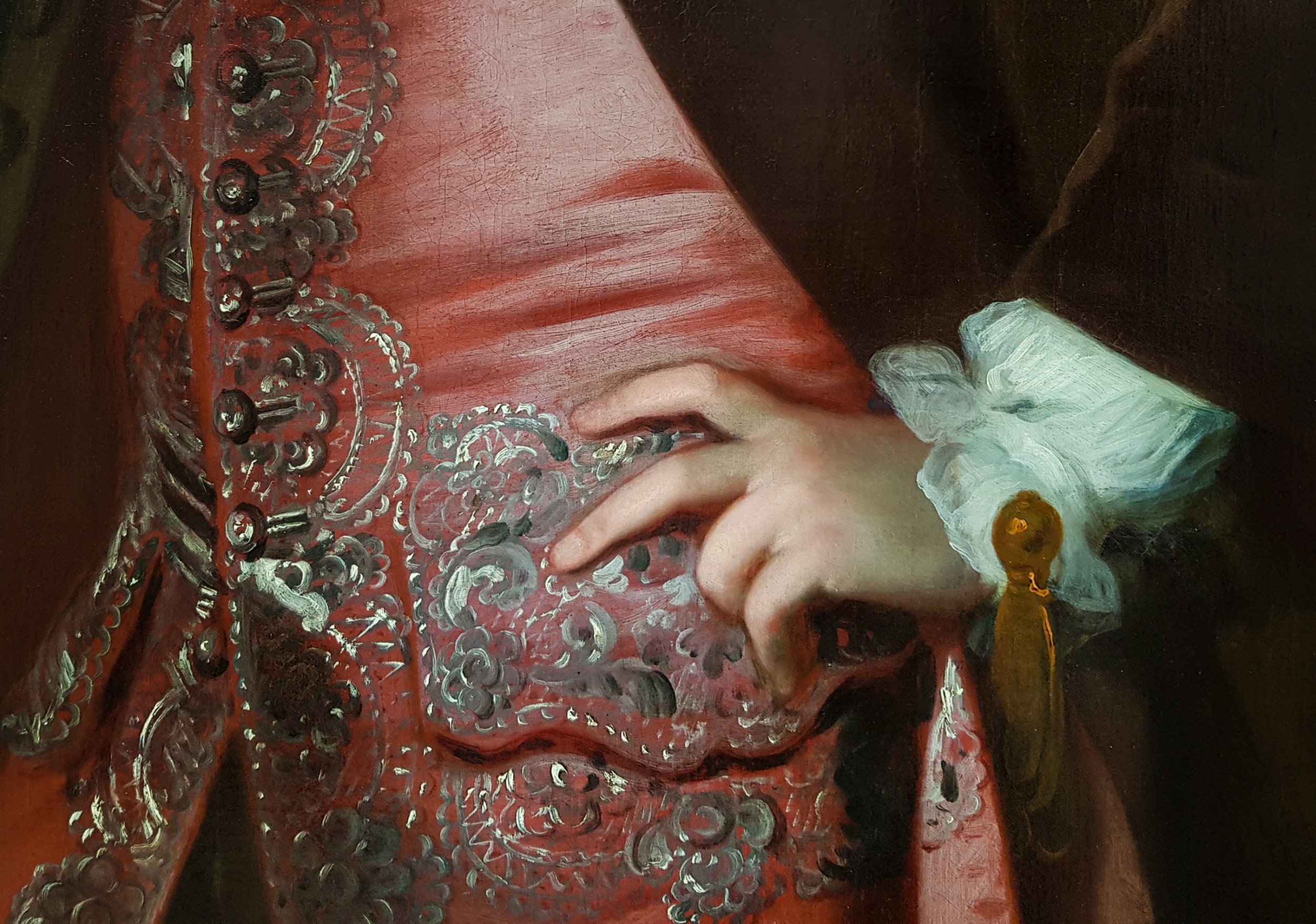
The sitter’s coat with pink silk waistcoat (pink was worn equally by men and woman) can be dated to c.1740. Pockets on men’s coats and waistcoats were a focus for decoration in the 18th century and the present portrait is no exception, with the silver thread and foils embellishing both the pocket flap and all around it, as well as the front edges. The luxurious silk waistcoat would have been worn for formal evenings or occasions such as going to the theatre or the opera. Lace was also an important accessory for men in the 18th century; here it is worn around the cuffs of the shirt and down its front opening, known as a ‘bosom ruffle’.
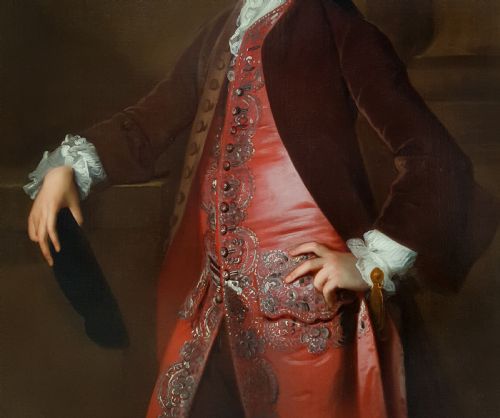
There was a strong desire to acquire French fashions and the English went to great efforts. For most of the 18th century there were heavy duties and sometimes outright bans were imposed on the import of French silks and laces in order to protect the British textile industries. Despite this the smuggling of these goods was endemic through all levels of English society.
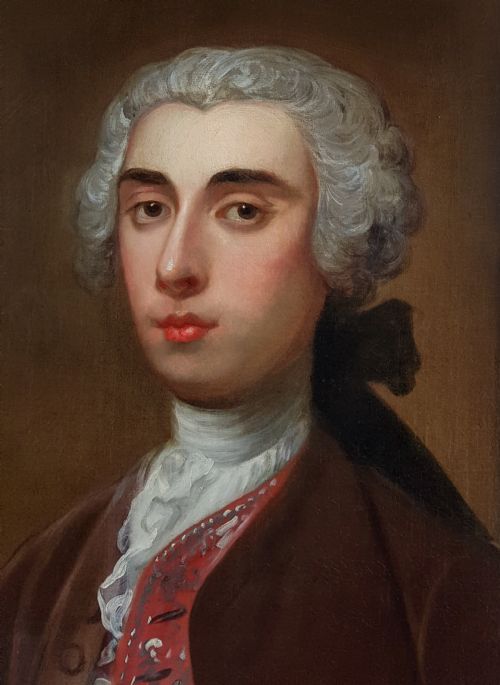
Allan Ramsay (1713-1784) was a Scottish painter, active mainly in London, where he was the outstanding portraitist from about 1740 to the rise of Reynolds in the mid-1750s (he also maintained a studio in Edinburgh for several years). He studied in Edinburgh and London, and then from 1736 to 1738 in Italy and when he returned to London he had a much more elegant and sophisticated style than any of the established portraitists such as Thomas Hudson.

Ramsay can be viewed as the principle creator of the new informal style in English portraiture which in the years of the 18th century replaced the older tradition founded by Kneller.

Physical Dimensions
Height
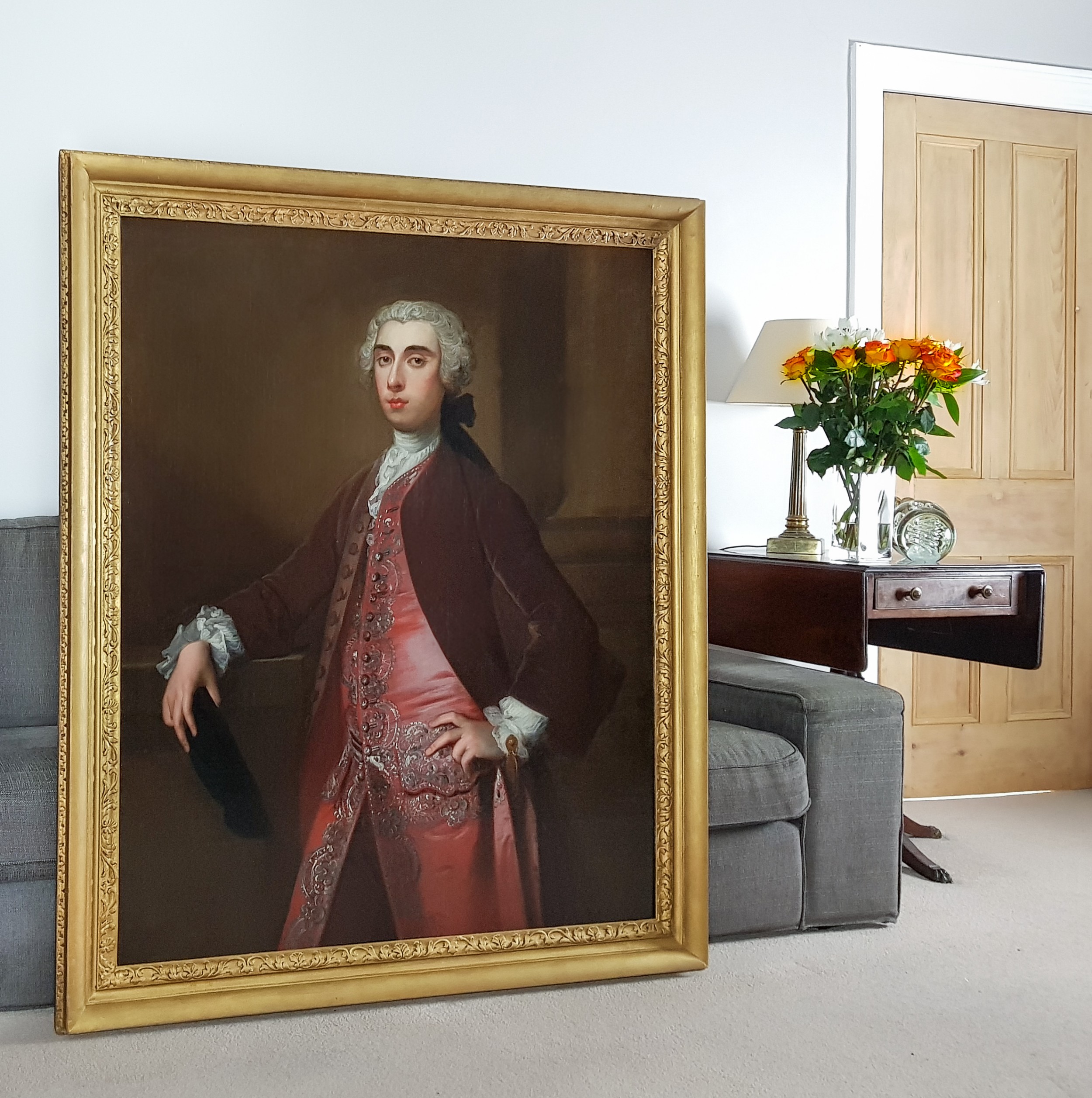
142cm (55.91")
Width
120cm (47.24")
Depth
6cm (2.36")
Declaration

Titan Fine Art has dated this piece to the 18th Century.

Reference Numbers
Sellingantiques Reference
SA662202
Dealers Notes

Much more info about this item at: www.titanfineart.com

In a market saturated with available paintings, Titan Fine Art offers a distinct advantage: we sift through thousands of works to provide a specially curated selection. Each piece is meticulously chosen based on technical merit, provenance, and decorative appeal, ensuring our clients view only the finest examples of British and European art.

With over 20 years of expertise and 1,000+ works placed with collectors and institutions, we are one of the most prolific specialists in 17th and 18th-century portraiture. We combine a scholarly approach with museum-level rigor to replace the uncertainty of the open market with absolute confidence.

Why Buy From Titan Fine Art?

• Expertly Curated Selection

We act as your expert eye, selecting only high-quality works that offer genuine historical and artistic value.

• Museum-Level Research

Each portrait is supported by extensive academic research, often exceeding 40 hours, to establish attribution, sitter identity, and historical context.

• Professional Conservation

All paintings are carefully cleaned and stabilised by professional conservators, and are presented ready to hang.

• Transparent Pricing

No buyer’s premium or hidden fees—unlike auction houses, where additional costs can add 25–35%.

• Export Pricing Advantage

Reduced pricing is available for works exported outside the UK.

• Specialist Global Shipping

We manage the entire process, including custom crating, export documentation, and fully tracked delivery worldwide.

• Buy with Confidence

A 7-day return policy and the option to pay in GBP, USD, or EUR for convenience and transparency.

• Original Period Frames

Many works retain their original carved and gilded frames, which are works of art in their own right and enhance both historical authenticity and decorative impact.

• Personal Advisory Service

We work directly with collectors and interior designers, offering guidance on selection, scale, and placement—including bespoke room mock-ups on request.

Subscribe to our monthly 'new item alert' to be the first to hear about new works

Description
This striking portrait is an exquisite example of the English 18th century Grand Manner portrait.
The sitter is portrayed in a standard gentlemanly pose for the period but it is striking in its study of the sitter’s attitude and in the graceful and natural manner of certain elements.
Titan Fine Art

The hands are exquisite as is the lively handling of the cuffs, which have been painted in a free and florid style. The drapery was painted by another artist, as was customary for the period. A specialist drapery painter was employed by almost all the leading British portraitists of the early and mid-18th century and sometimes portraitists employed more than one (the main exceptions were Hogarth and Gainsborough). The most popular and skilled of the draperyman's profession at this time was the Flemish-born Joseph van Aken (c.1699–1749).

fig 1. Portrait of a Gentleman c.1740; Studio or Circle of Allan Ramsay (1713-1784), and Joseph van Aken (c.1699–1749)
fig 1. Portrait of a Gentleman C.1740; Studio or Circle of Allan Ramsay (1713-1784), and Joseph Van Aken (C.1699–1749)

Van Aken settled in England in about 1720 and worked for Highmore, Hudson, Knapton, Ramsay, Isaac Whood, Hamlet Winstanley, Henry Pickering and others and he earned great wealth. Unfinished pictures were sent to his London studio and via surviving drawings, it is believed that Ramsay provided detailed instructions about how van Aken should pose and dress his figures. Other portraits merely supplied the face – sometimes cut out and tacked to a larger canvas that could be pasted onto the costumed figure. Van Aken had a repertoire of poses and costumes that his clients evidently used as a kind of pattern book. The same features sometimes occur virtually identically in the work of different painters, leading George Vertue to comment in 1743 “Mr Van acken – whose draperys silks satins Velvets, gold & embroideryes which he dos paint for several of them painters extreamly well- and is a great addition to their works and indeed puts them so much on a Level that it’s very difficult to know one hand from another”. By the end of the century such production line methods were falling out of favour and the separate profession of drapery painter was dying out.

fig 2. Portrait of a Gentleman c.1740; Studio or Circle of Allan Ramsay (1713-1784), and Joseph van Aken (c.1699–1749)
fig 2. Portrait of a Gentleman C.1740; Studio or Circle of Allan Ramsay (1713-1784), and Joseph Van Aken (C.1699–1749)

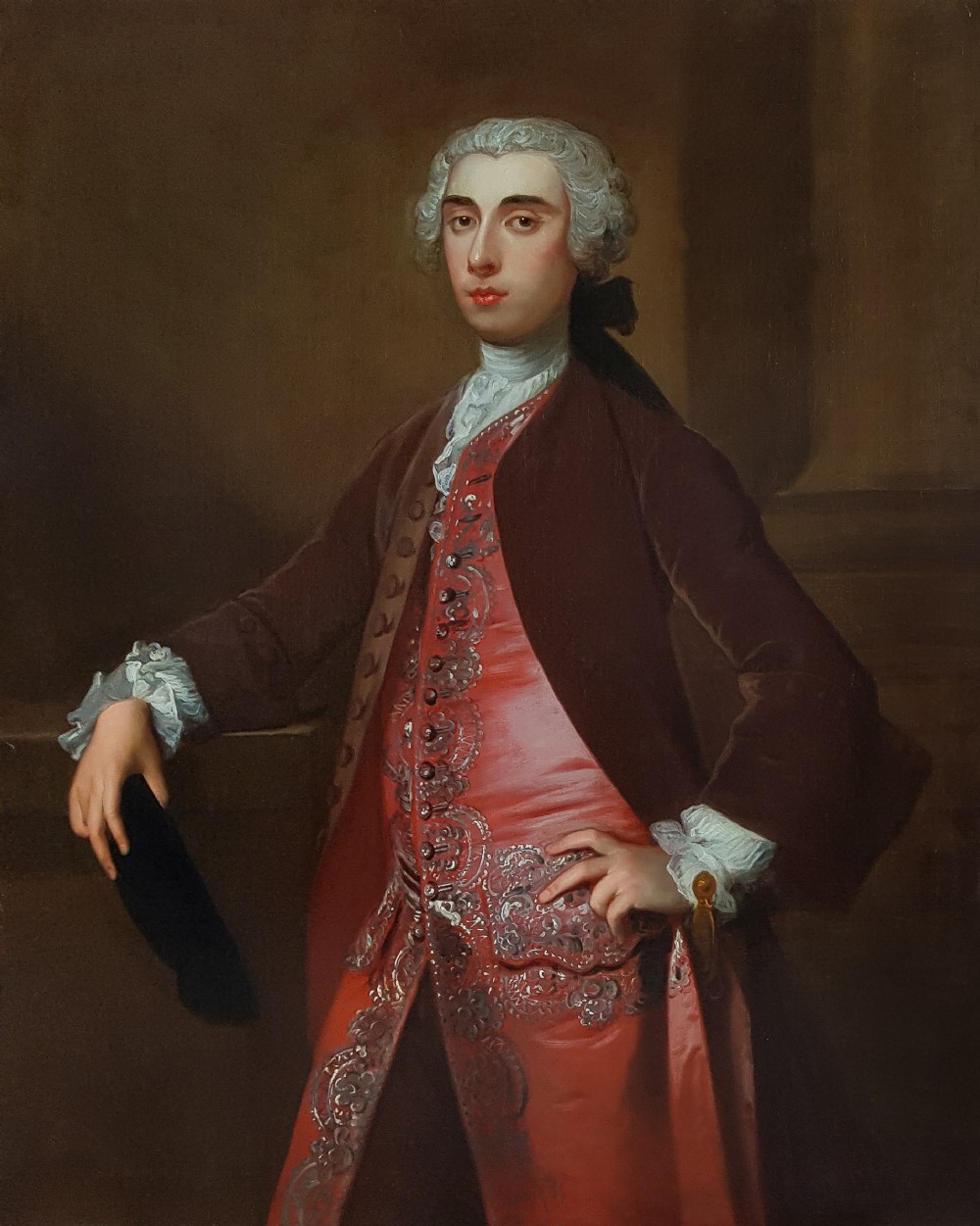
The sitter’s coat with pink silk waistcoat (pink was worn equally by men and woman) can be dated to c.1740. Pockets on men’s coats and waistcoats were a focus for decoration in the 18th century and the present portrait is no exception, with the silver thread and foils embellishing both the pocket flap and all around it, as well as the front edges. The luxurious silk waistcoat would have been worn for formal evenings or occasions such as going to the theatre or the opera. Lace was also an important accessory for men in the 18th century; here it is worn around the cuffs of the shirt and down its front opening, known as a ‘bosom ruffle’.

fig 3. Portrait of a Gentleman c.1740; Studio or Circle of Allan Ramsay (1713-1784), and Joseph van Aken (c.1699–1749)
fig 3. Portrait of a Gentleman C.1740; Studio or Circle of Allan Ramsay (1713-1784), and Joseph Van Aken (C.1699–1749)

There was a strong desire to acquire French fashions and the English went to great efforts. For most of the 18th century there were heavy duties and sometimes outright bans were imposed on the import of French silks and laces in order to protect the British textile industries. Despite this the smuggling of these goods was endemic through all levels of English society.

fig 4. Portrait of a Gentleman c.1740; Studio or Circle of Allan Ramsay (1713-1784), and Joseph van Aken (c.1699–1749)
fig 4. Portrait of a Gentleman C.1740; Studio or Circle of Allan Ramsay (1713-1784), and Joseph Van Aken (C.1699–1749)

Allan Ramsay (1713-1784) was a Scottish painter, active mainly in London, where he was the outstanding portraitist from about 1740 to the rise of Reynolds in the mid-1750s (he also maintained a studio in Edinburgh for several years). He studied in Edinburgh and London, and then from 1736 to 1738 in Italy and when he returned to London he had a much more elegant and sophisticated style than any of the established portraitists such as Thomas Hudson.

Ramsay can be viewed as the principle creator of the new informal style in English portraiture which in the years of the 18th century replaced the older tradition founded by Kneller.

Height
142cm (55.91")
Width
120cm (47.24")
Depth
6cm (2.36")
Date of Manufacture

Titan Fine Art has dated this piece to the 18th Century.

Reference Numbers
Sellingantiques Ref
SA662202
Titan Fine Art
Titan Fine Art
Sellingantiques verified Since Jul 2016

Specialist in 17th & 18thc portraits. Highly curated selection, museum-level research & pro conservation. Exceptional art, expertly vetted.

Dealer Profile

You can view the stock and full dealer information on the Titan Fine Art Profile Page
PDF SHARE
SAVE
Portrait of a Gentleman c.1740; Studio or Circle of Allan Ramsay (1713-1784), and Joseph van Aken (c.1699–1749)
1 / 7
Archive I Portrait of a Gentleman c.1740; Studio or Circle of Allan Ramsay (1713-1784), and Joseph van Aken (c.1699–1749)

Portrait of a Gentleman C.1740; Studio or Circle of Allan Ramsay (1713-1784), and Joseph Van Aken (C.1699–1749)
Archive II Portrait of a Gentleman c.1740; Studio or Circle of Allan Ramsay (1713-1784), and Joseph van Aken (c.1699–1749) View II
Archive III Portrait of a Gentleman c.1740; Studio or Circle of Allan Ramsay (1713-1784), and Joseph van Aken (c.1699–1749) View III
Archive IV Portrait of a Gentleman c.1740; Studio or Circle of Allan Ramsay (1713-1784), and Joseph van Aken (c.1699–1749) View IV
Archive V Portrait of a Gentleman c.1740; Studio or Circle of Allan Ramsay (1713-1784), and Joseph van Aken (c.1699–1749) View V
Archive VI Portrait of a Gentleman c.1740; Studio or Circle of Allan Ramsay (1713-1784), and Joseph van Aken (c.1699–1749) View VI
Archive VII Portrait of a Gentleman c.1740; Studio or Circle of Allan Ramsay (1713-1784), and Joseph van Aken (c.1699–1749) View VII
Enlarged Archival View
Telephone 07875 412 111
Location
London
United Kingdom
Dealer Profile Page sellingantiques.co.uk/titan
Verified Since Jul 2016
Items For Sale 16
Items Sold 401
Titan Fine Art
Titan Fine Art
Verified Since Jul 2016
View Dealer Info
Location: London, United Kingdom
Verified
Jul 2016
For Sale
16
Sold
401
Portrait of a Gentleman c.1740; Studio or Circle of Allan Ramsay (1713-1784), and Joseph van Aken (c.1699–1749)
Ref: SA662202
Portrait of a Gentleman c.1740; Studio or Circle of Allan Ramsay (1713-1784), and Joseph van Aken (c.1699–1749)
Detail View 1
Detail View 2
Detail View 3
Detail View 4
Detail View 5
Detail View 6
Archival Detail
Every single antique dealer on our platform is individually approved by our internal team. We verify their professional trade history, ethical standards, and photographic quality to ensure a secure, high-standard buying environment. Upon joining, every dealer agrees to a strict 9-point code of conduct. While issues can occasionally arise, our dealers typically resolve them swiftly and directly with the buyer. In fact, since our founding in 2002, Sellingantiques has only had to step in to help resolve an issue on roughly five occasions—a true testament to the quality of our dealers and their dedication to your happiness.
Our dealers are highly experienced in packing and shipping fragile, high-value antiques. Because you are in direct contact with the dealer, you will be able to easily go through all available shipping and insurance options together to ensure your item arrives safely.
Antiques are the ultimate green purchase. By choosing historical pieces over newly manufactured goods, you completely eliminate the carbon footprint of modern mass production while preserving exceptional, timeless craftsmanship.
items
Add keywords to the filter
Price
£100
£250000
Era
Movements
Material
Origin
Stock Location
Freshness
Online Payments
Categories