Titan Fine Art has dated this piece to the 18th Century.
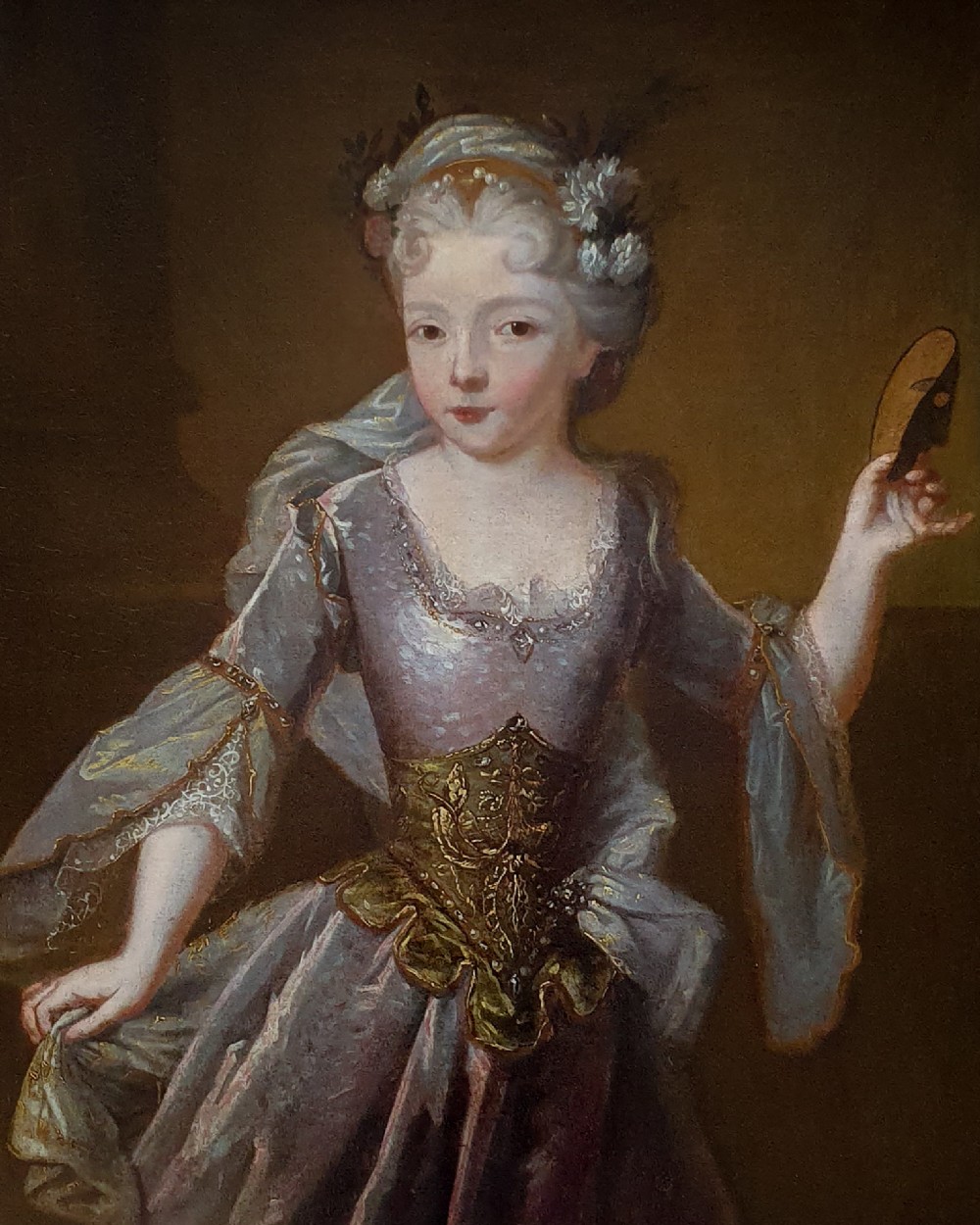
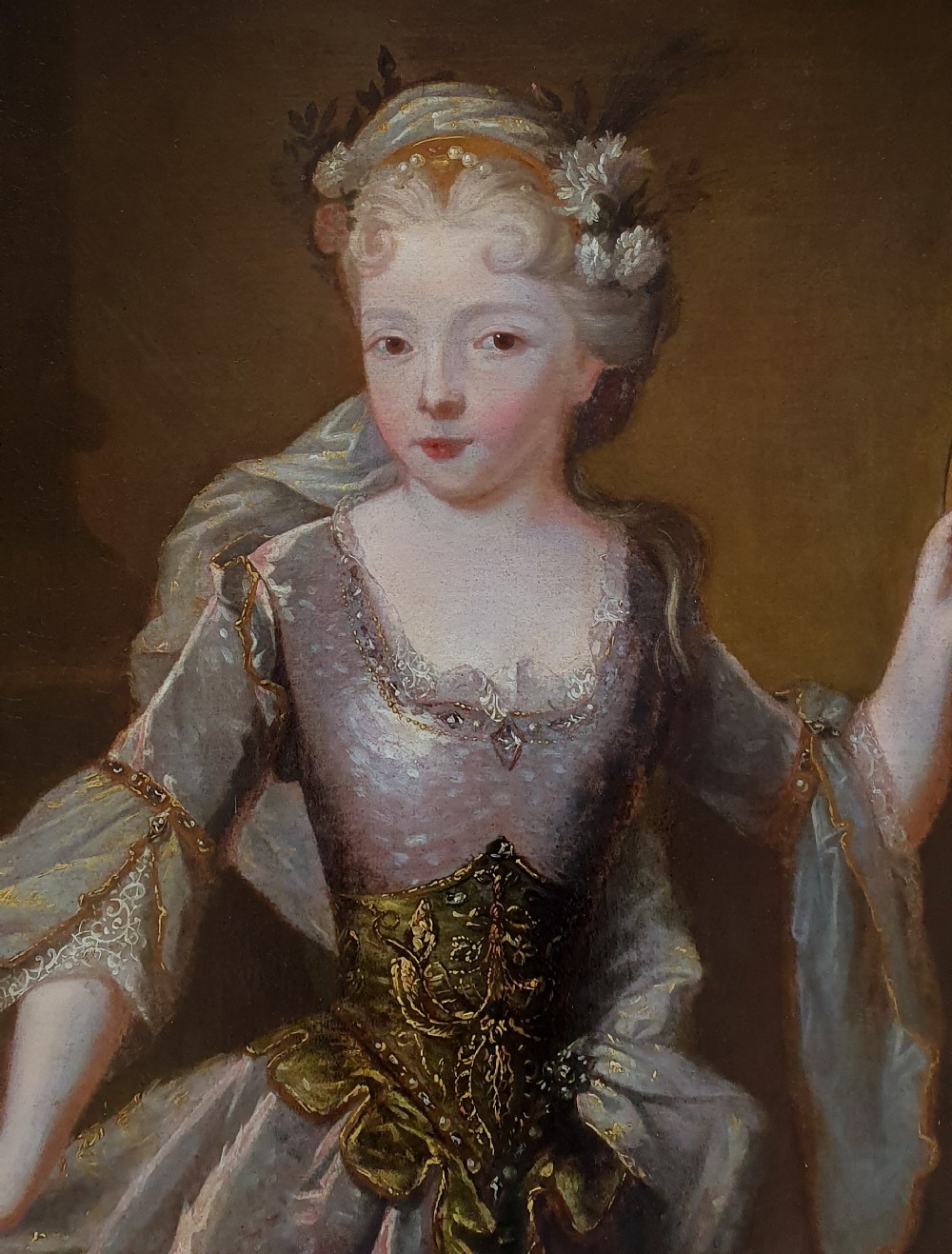
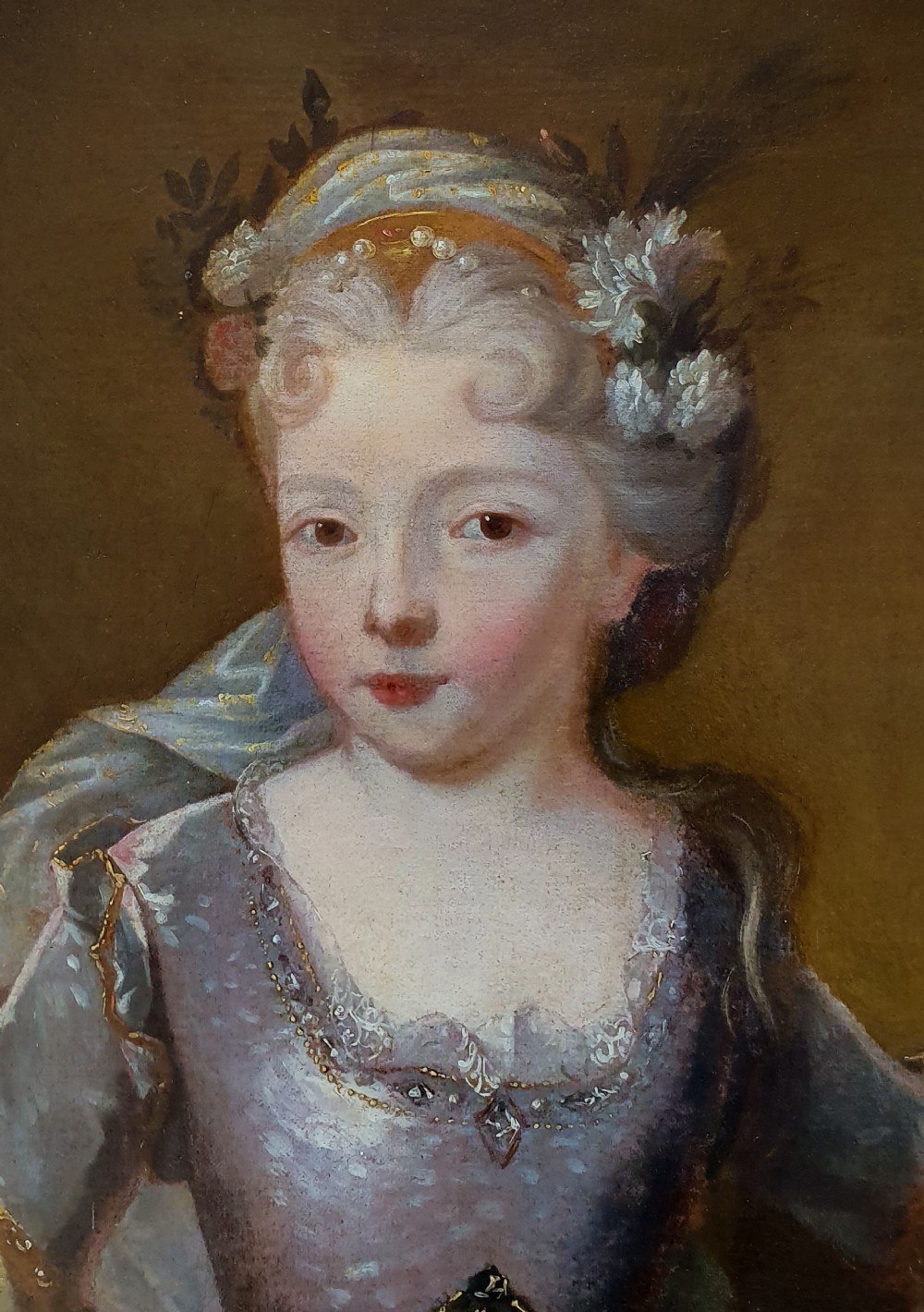
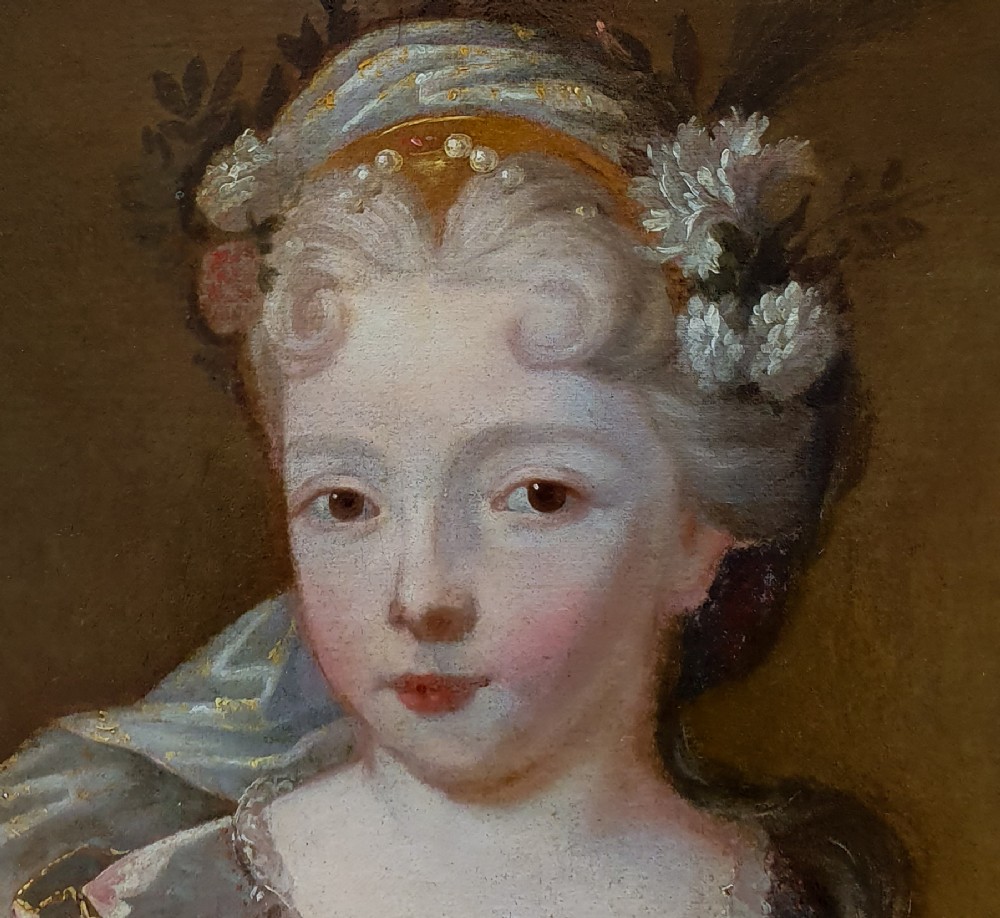
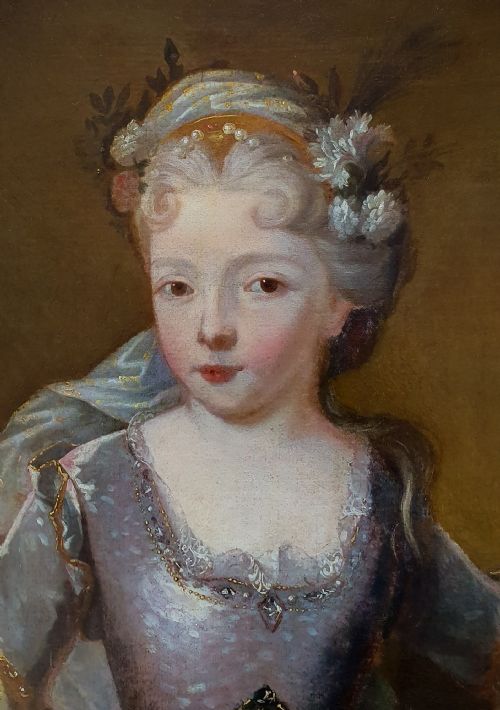
The soft modelling of forms, the gentle oval of the face, and the slightly rosy cheeks add to the sense of candour. It is clear by the type and style of this portrait that the artist was influenced by the enormously popular French painter Jean Raoux.
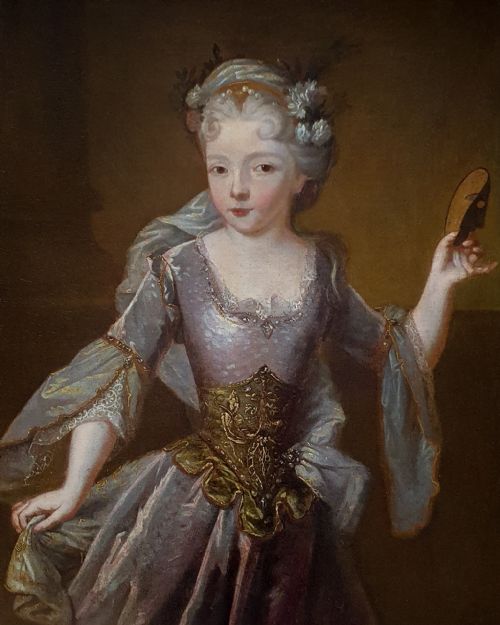
Here we see the sumptuous draperies and decorative elements such as the fashionable shot silk dress and the profusely embroidered stomacher. These expensive fabrics are typical of the upper echelons of society. The large lingerie sleeves with the wide flounce at the edges bordered with embroidery, held at the elbow by a band of embroidery and jewels, was fashionable circa 1720. The mask seen in this portrait is of a type commonly worn to protect the face when outdoors from the 16th century to the early 18th century, and were kept in place by a button held in the mouth.
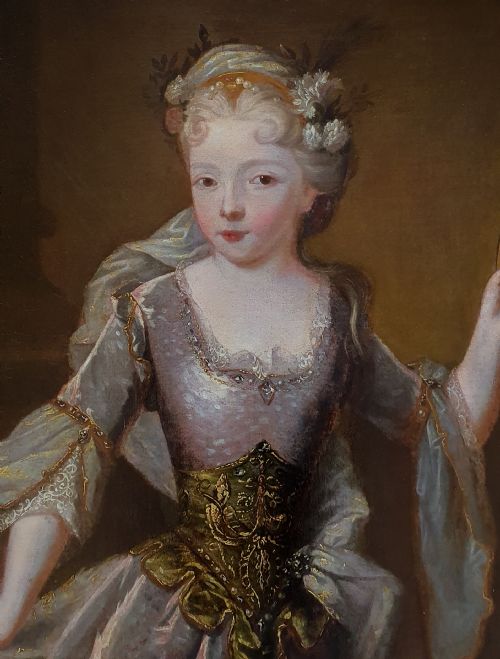
Presented in a fine gilded antique frame.
Jean Raoux (1677-1734) was a painter born at Montpellier, France. Born to a well-to-do city official, he commenced his painterly education in 1693 with a two-and-a-half-year apprenticeship under the local master Antoine Ranc. In 1703 Raoux settled in Paris where he worked under the aegis of highly respected Bon Boullogne and it is then that it is thought that he achieved his first major success garnering the prestigious prix de Rome in 1704 and of which he became famous for his depictions of Vestal Virgins. In 1705 he left for a nearly decade long sojourn to the Italianate peninsular that fundamentally shaped his aesthetic throughout the rest of his career. In about 1714, he returned to France and settled in Paris in the palace of the Grand Prieur de Vendôme. After a brief stay in 1720 in England and then Montpellier in 1723, he went to live with the Grand Prieur, le chevalier d'Orléans, near the Temple headquarters of the Order of Malta in the northern Marais.
He became a member of the Academy in 1717 as a historical painter. His reputation had been previously established by the acclaimed decorations executed during his three years in Italy on the palace of Giustiniani Solini in Venice, and by some easel paintings, the Four Ages of Man (National Gallery), commissioned by the Grand Prior of Vendôme. To this latter class of subject Raoux devoted himself, refusing to paint portraits except in character. The list of his works is a long series of sets of the Seasons, of the Hours, of the Elements, or of those scenes of amusement and gallantry in the representation of which he was immeasurably surpassed by his younger rival Watteau. In 1722 the Regent, Philippe d'Orléans, commissioned Raoux to paint a work, and Philippe subsequently displayed it prominently in his Palais-Royal apartments. Raoux died in Paris in 1734.
Provenance: Private collection Paris
Measurements: Height 98cm, Width 82cm framed (Height 38.5”, Width 32.5”)
Titan Fine Art has dated this piece to the 18th Century.
Specialist in 17th & 18thc portraits. Highly curated selection, museum-level research & pro conservation. Exceptional art, expertly vetted.
You can view the stock and full dealer information on the Titan Fine Art Profile Page
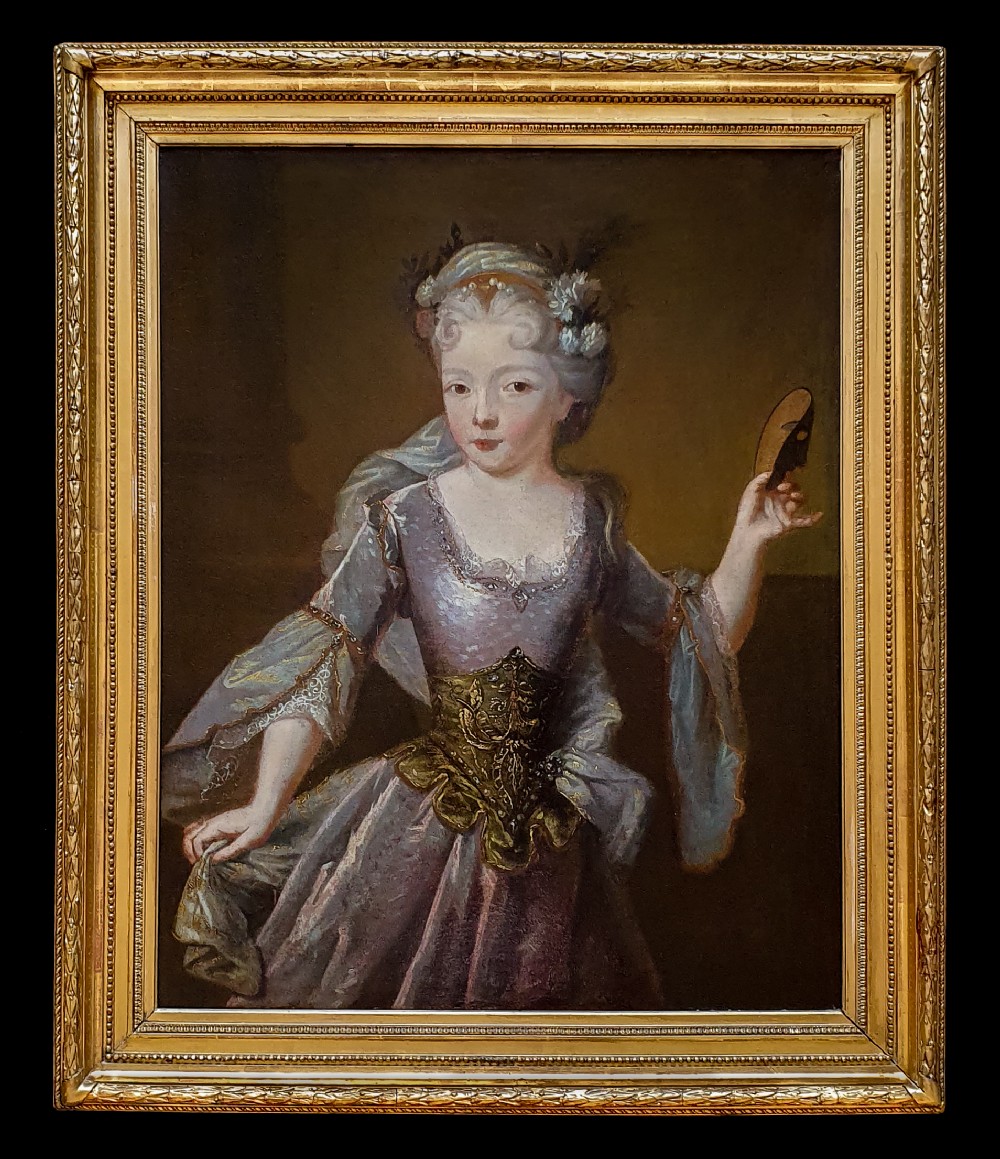
Portrait of a Young Lady with a Mask C.1720; Circle of Jean Raoux (1677-1734)