It was listed by Titan Fine Art. Sold pieces stay on Sellingantiques as a record of what has passed through, and the next one is rarely far away.
Titan Fine Art has dated this piece to the 17th Century.
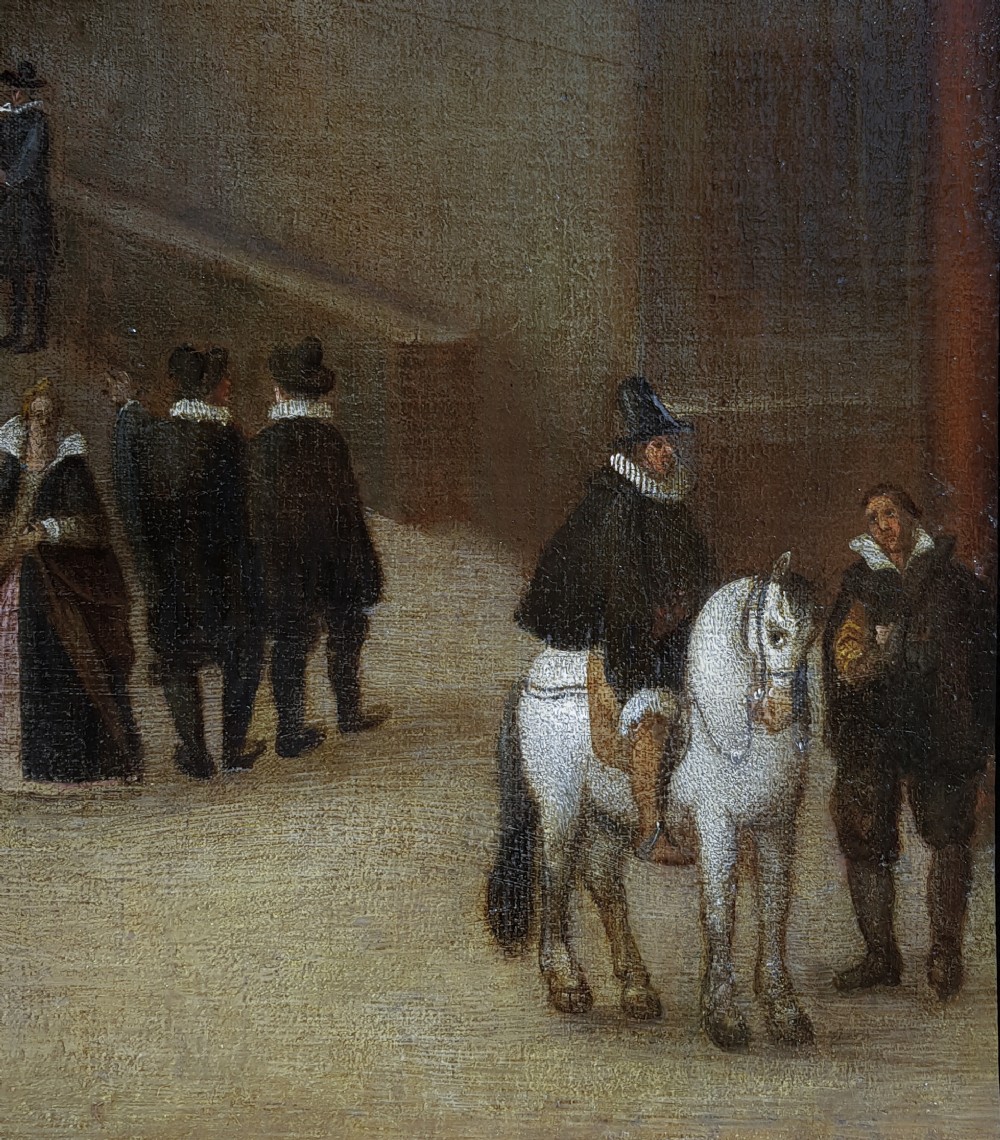
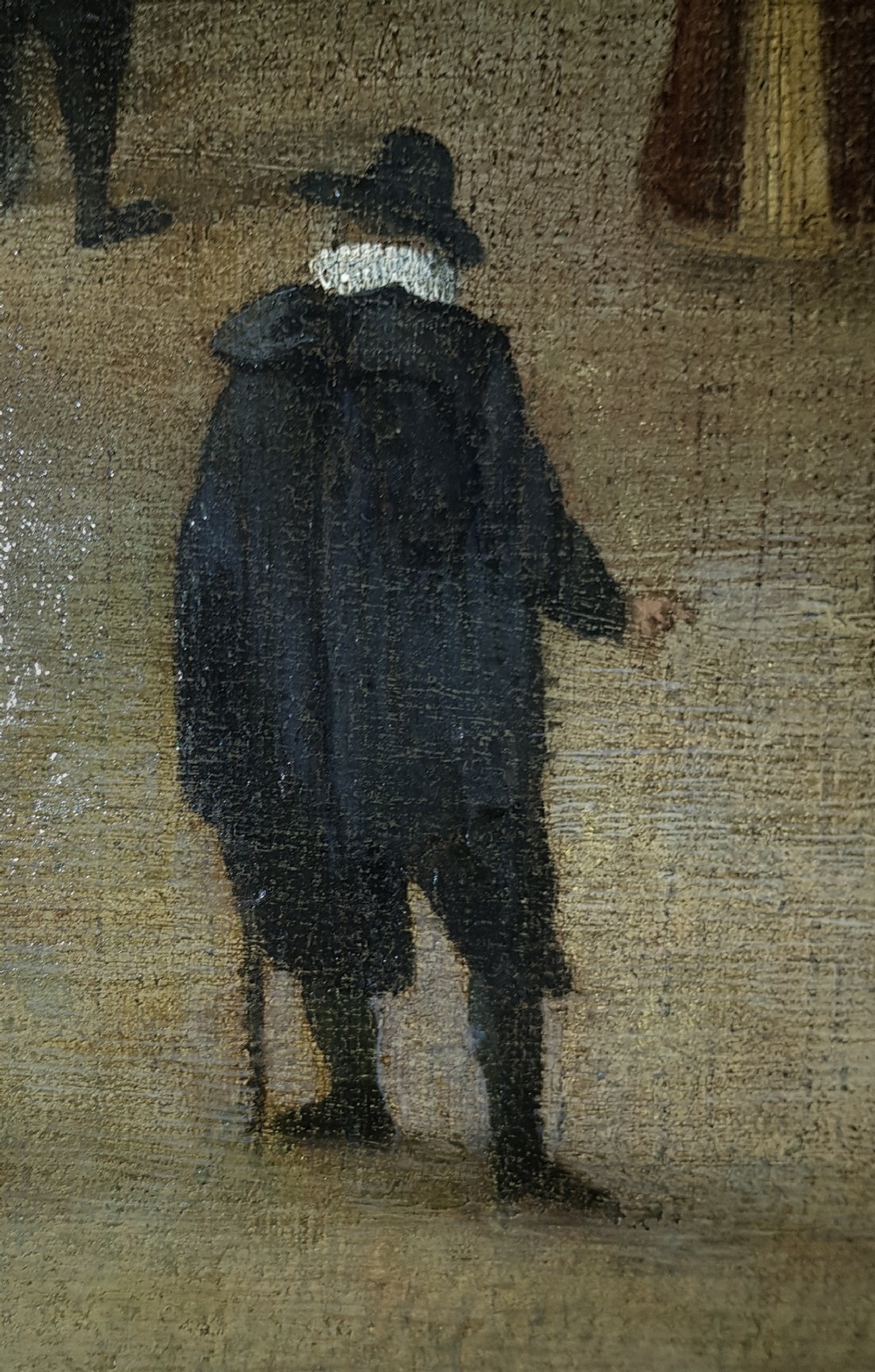
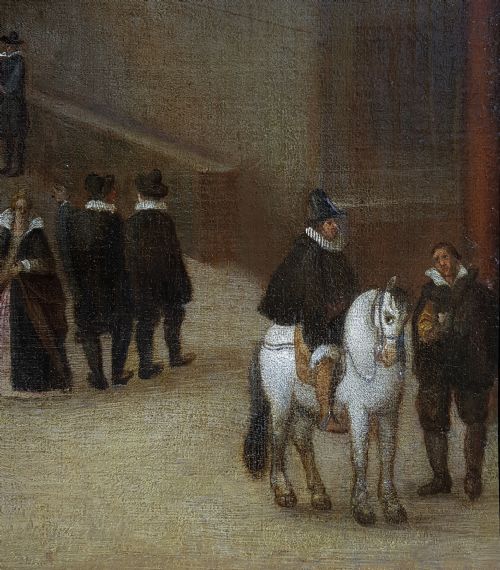
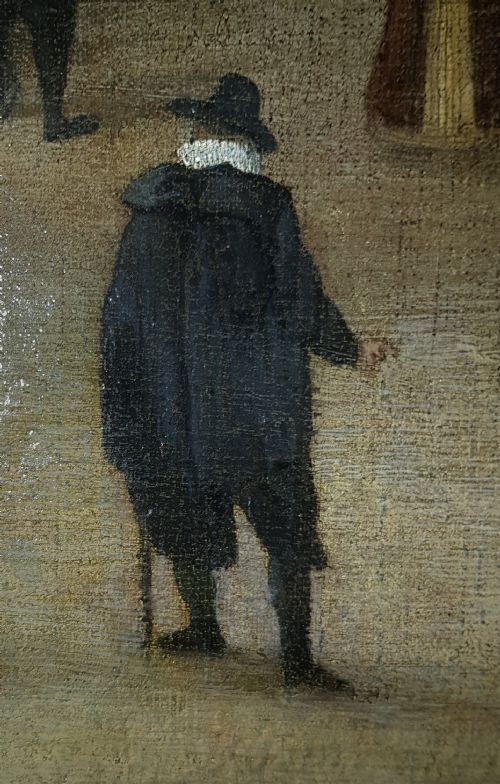
What you wore and how you wore it was a matter of deep significance.
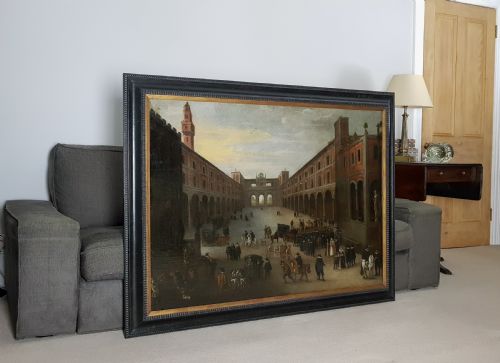
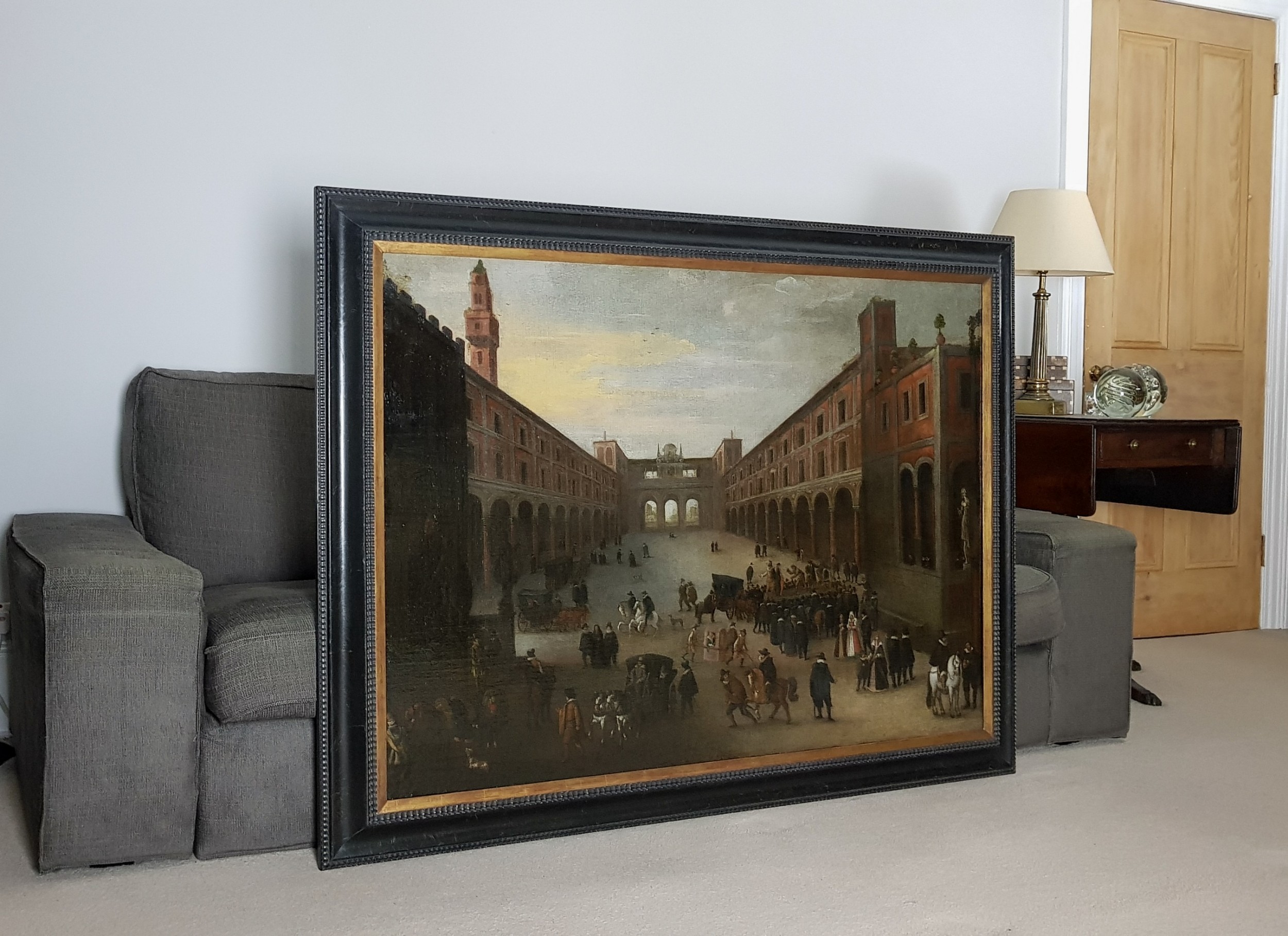
Palazzo della Signoria, better known as Palazzo Vecchio, has been the symbol of the civic power of Florence for over 700 years. Built between the end of the 13th century and the beginning of the 14th to house the city’s supreme governing body, the Priori delle Arti and the Gonfalonier of Justice, over time it has been subject to a series of extensions and transformations. It was the scene of great triumphs, such as the return of the Medici in 1530 as well as the Bonfire of the Vanities instigated by Savonarola, who was then himself burned at the stake here in 1498 after he was denounced by the Inquisition as a heretic. A marble circle inscription on the piazza shows the location where he was burned.
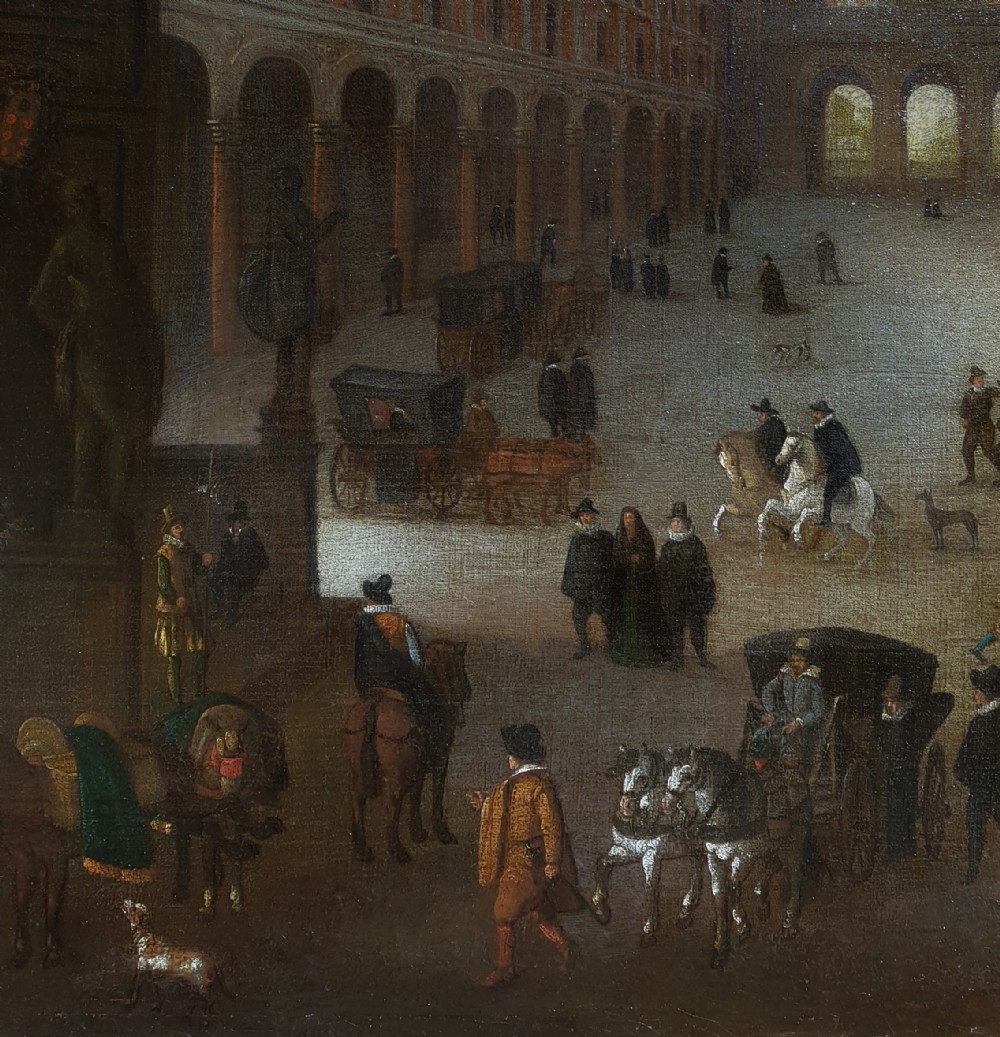
The building of Uffizi complex was begun in 1560 and completed in 1581 for Cosimo I de' Medici so as to accommodate the offices of the Florentine magistrates. The Uffizi served the purpose of both the administrative offices and the Archivio di Stato, the state archive and was intended to display the foremost art works of the Medici collections. It became a highly influential attraction of a Grand Tour and over time more sections of the palace were used to exhibit paintings and sculpture. Artists such as Leonardo da Vinci and Michelangelo gathered at the Uffizi "for beauty, for work and for recreation”.
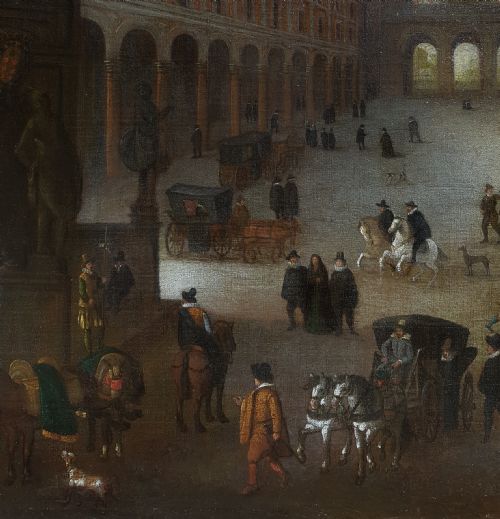
The figures are charmingly animated and calligraphic in style and each has a unique minutely painted face full of expression. Vrancx spent time in Italy and this influence can be seen in the architecture. Vrancx was a gifted figure painter and was regularly invited to paint the staffage in compositions of fellow painters. The treatment of the space and the inclusion of the various groups of figures is another feature of Vrancx’s late style. It is thought that the large gathering represents an auction - if so, this would be a very rare and early depiction.
Sebastian Vrancx (1573/78-1647) was a Flemish painter who trained in the workshop of Adam van Noort, who was also the master of other prominent Antwerp painters such as Peter Paul Rubens, Jacob Jordaens and Hendrick van Balen. After his training he spent time in Italy before becoming a master of the Antwerp Guilde of St. Luke c.1600. His first works were cabinet sized Biblical scenes often with mountainous landscapes and ruins but later he painted landscapes with mythological scenes, allegories of the seasons and months, city views, banquet scenes, village scenes, genre scenes, and architectural paintings. However, it was his battle scenes that achieved the greatest success – he was after all one of the first painters to tackle them. His work had a decisive impact on the evolution of artists such as Peter Snayers and Adan Frans van der Meulen in Flanders and he had many collaborations with artists such as Jan Brueghel the Younger, Frans Francken II, and Abel Grimmer.
Provenance: Private collection Germany
Measurements: Height 110cm, Width 146cm framed (Height 43.25”, Width 57.5” framed)
Titan Fine Art has dated this piece to the 17th Century.
Specialist in 17th & 18thc portraits. Highly curated selection, museum-level research & pro conservation. Exceptional art, expertly vetted.
You can view the stock and full dealer information on the Titan Fine Art Profile Page
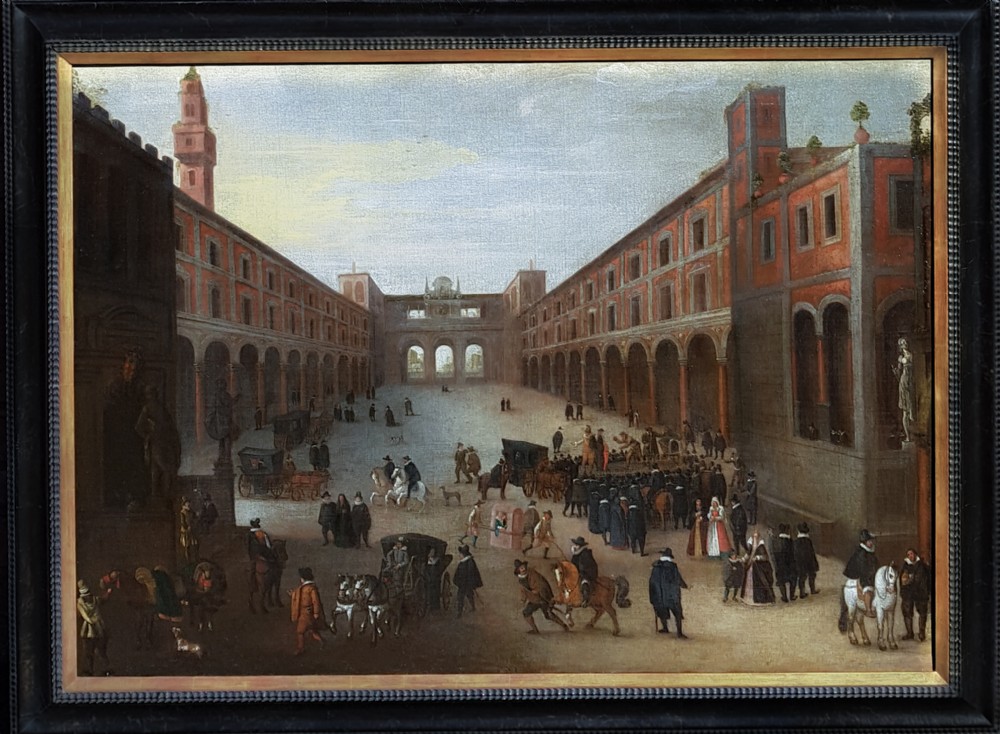
The Palazzo Vecchio and Piazzale Degli Uffizi C.1590; Circle of Sebastiaen Vrancx (1573/78-1647)