14,676  PAGES BROWSED TODAY PAGES TODAY 54 ANTIQUES UPLOADED TODAYNEW ARRIVALS
54 ITEMS ADDED TODAY
Sort Order
Items Per Page
Browse Categories
Sort order
Items per page
ID #SA491676
SOLD
Email
Save
Portrait of a Lady C.1750; Circle of Jean-marc Nattier (1685-1766)
Titan Fine Art
sold SA491676
Sorry, but this item has been sold.
Titan Fine Art

Titan Fine Art

Sellingantiques Verified Since Jul 2016
View Dealers Stock Page
  • About Us
    Specialist in 17th & 18thc portraits. Highly curated selection, museum-level research & pro conservation. Exceptional art, expertly vetted.
Id #SA491676
PDF SHARE
SAVE

Portrait of a Lady C.1750; Circle of Jean-marc Nattier (1685-1766)

18th century
Description

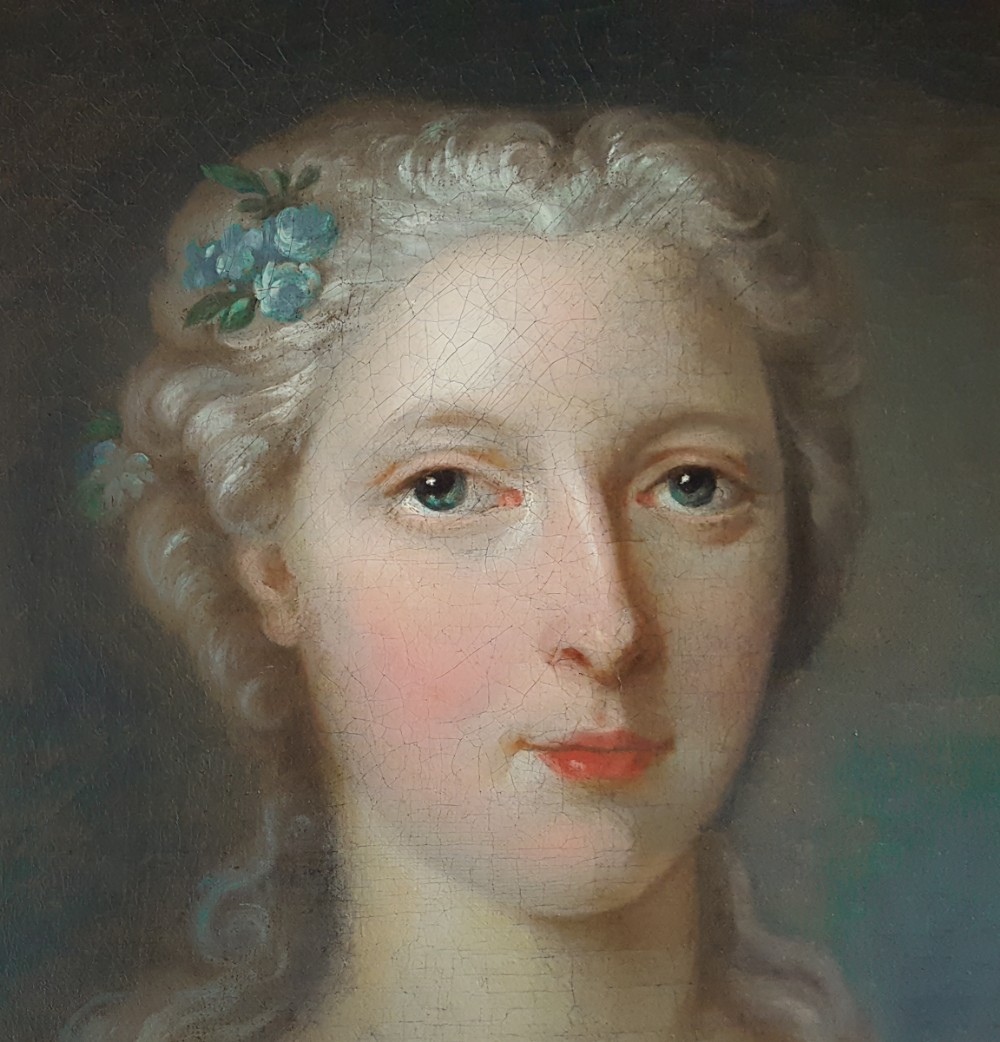
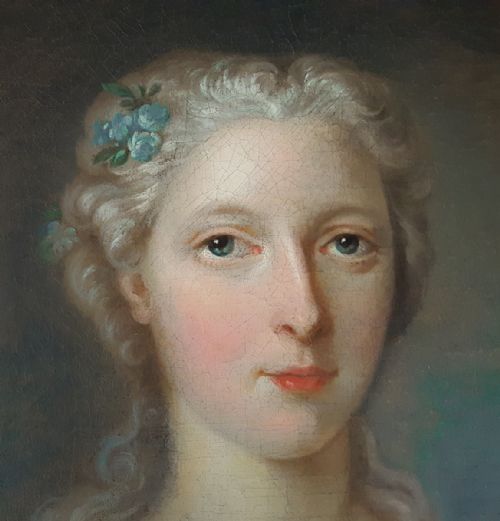
This beautiful circa 1740 portrait is the epidemy of the Rococo portrait and the perfect harmony of colour. In the soft modelling of forms and the gentle oval of the face and the slightly rosy cheeks the influence of the most important portraitists of the century, Jean Marc Nattier, is abundantly clear. Here we see the refinement and grace typical of the Rococo portrait coupled with the sumptuous draperies and decorative elements so typical of Nattier or ‘le Jeune’ as he was known.
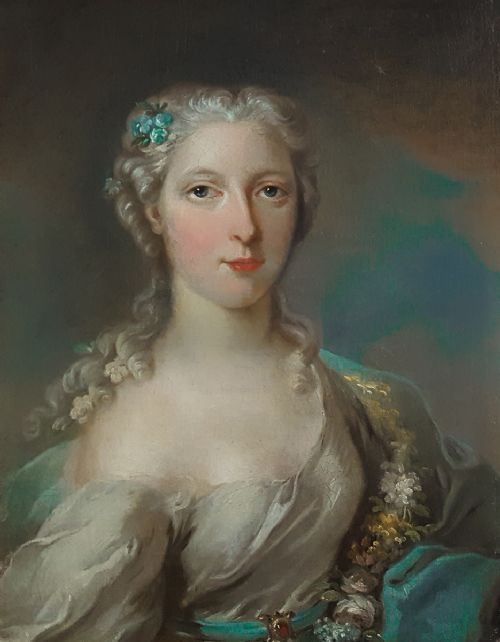
Nattier espoused two models for his portraits of women at Versailles and in wealthy Paris society. He showed these clients either in court or formal costume (that is, a lace or elaborately embroidered dress with an oval neckline, narrow sleeves to the elbow, and a tight, pointed bodice), or in accordance with his own preference, he painted them in loose, low cut draperies and in allegorical guise. In either case they usually wore their short hair lightly powdered and ornamented with flowers. Nattier's preferred colors in addition to white were blue, ivory, and red, and his shiny fabrics look like satin. He used three formats, bust, three-quarter length which was the size best suited to his allegories, and as here, half length.
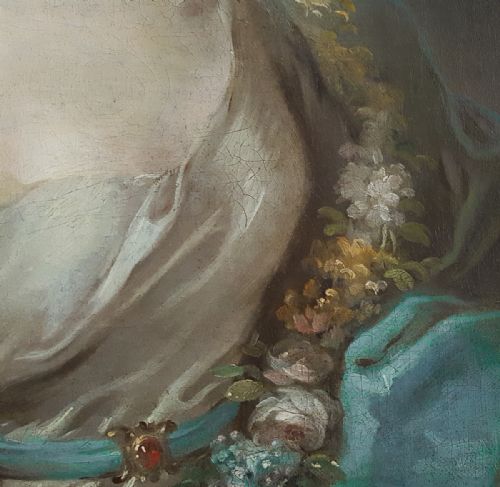
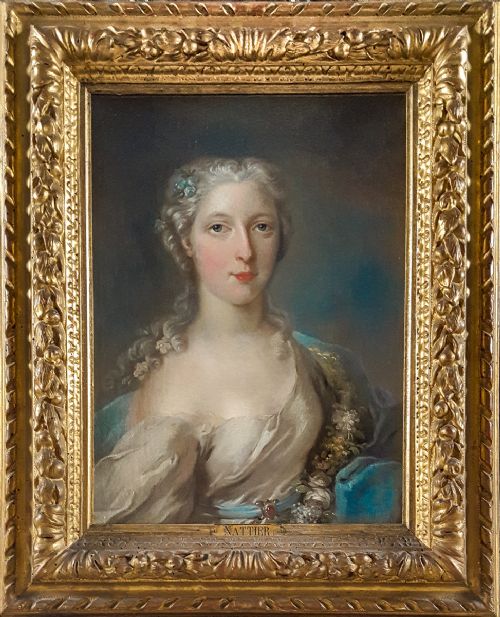
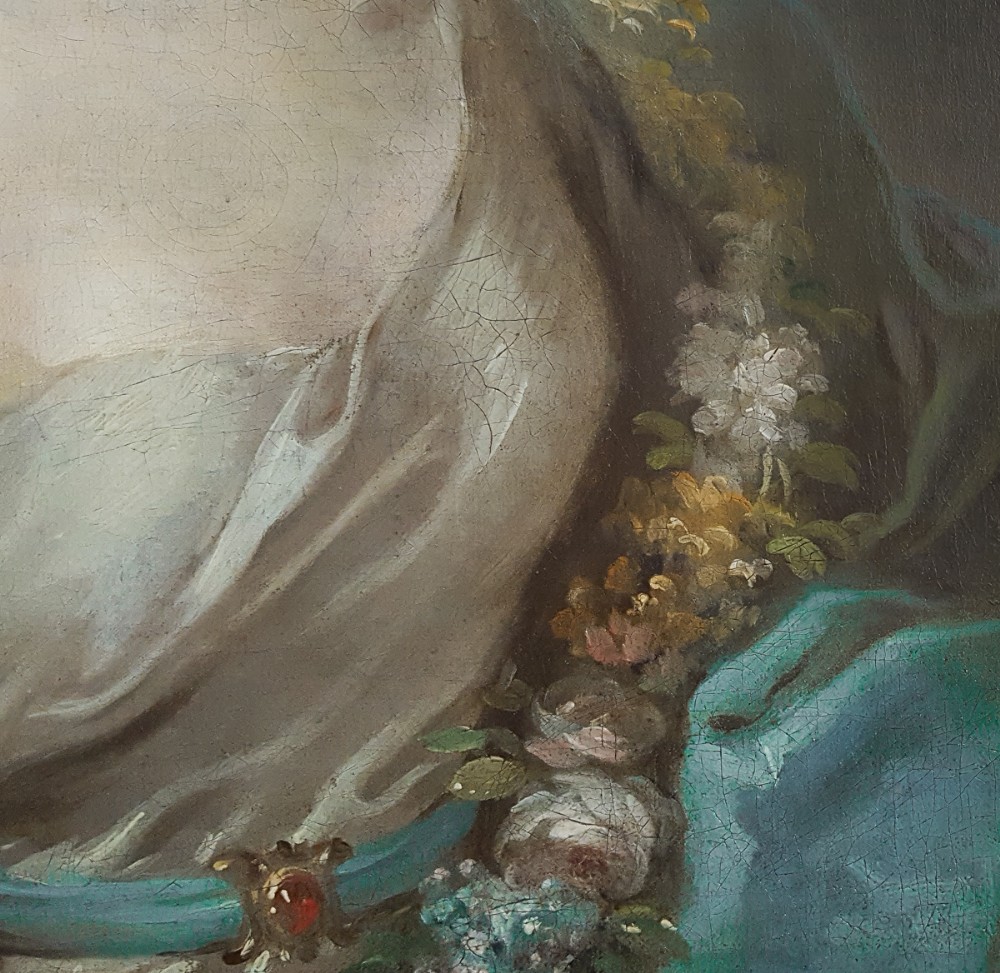
Wearing a fashionable satin dress and a pastel blue wrap the sitter is adorned with a garland of flowers. The lady has been depicted ‘en déshabille’, a type of ‘undress’ that was fashionable in portraiture, here a revealing chemise and blue and white draperies clasped with a jeweled belt. The work is utterly beautiful and is presented in its original carved and giltwood frame containing a presentation label “Nattier”.
Provenance: Private collection Switzerland

Measurements: Height 64cm, Width 52cm framed (Height 25.25”, Width 20.5”)

Jean-Marc Nattier (1685-1766) Jean-Marc Nattier was one of the most fashionable portrait painters of the eighteenth-century in France and received important commissions from the royal court. Born on 17 March 1685 in Paris into a family of painters, son of the portrait painter Marc Nattier (1642-1703) who gave him his original traning and his mother who painted miniatures. Together with his brother Jean-Baptiste, he produced a series of drawings after Rubens's Marie de Médicis cycle in the Luxembourg Palace in 1702-04 for a series of engravings published by their father. He also gained attention by copying Charles Le Brun's battle pictures and Peter Paul Rubens's Marie de' Medici cycle in the Louvre. Nattier's godfather, Baroque painter Jean Jouvenet, encouraged him to study at the Académie de France in Rome, but Nattier never went to Italy because he was so busy in Paris. In 1715, he became candidate (agréé) at the Academy and was accepted as a history painter in 1718.
In 1717, he painted portraits of Tsar Peter the Great and his court but declined to go to Russia as a court artist in which the autocrat took serious umbrage at Nattier's refusal. In the following years, he became one of the fashionable society portraitists in Paris. He developed the 'portrait historié' as his speciality often depicting his sitters in allegorical or mythological roles. Increasingly popular in court circles, he was particularly favoured by Louis XV's daughters, whom he painted both as the Seasons and the Elements. Of his many portraits at Versailles, those of the Queen of 1748 and the whole-length of Madame Henriette of 1754 earned the highest praise. In 1746, he was nominated professor at the Academy.

Physical Dimensions
Height
64cm (25.20")
Width
52cm (20.47")
Depth
5cm (1.97")
Declaration

Titan Fine Art has dated this piece to the 18th Century.

Reference Numbers
Sellingantiques Reference
SA491676
Dealers Notes

Much more info about this item at: www.titanfineart.com

In a market saturated with available paintings, Titan Fine Art offers a distinct advantage: we sift through thousands of works to provide a specially curated selection. Each piece is meticulously chosen based on technical merit, provenance, and decorative appeal, ensuring our clients view only the finest examples of British and European art.

With over 20 years of expertise and 1,000+ works placed with collectors and institutions, we are one of the most prolific specialists in 17th and 18th-century portraiture. We combine a scholarly approach with museum-level rigor to replace the uncertainty of the open market with absolute confidence.

Why Buy From Titan Fine Art?

• Expertly Curated Selection

We act as your expert eye, selecting only high-quality works that offer genuine historical and artistic value.

• Museum-Level Research

Each portrait is supported by extensive academic research, often exceeding 40 hours, to establish attribution, sitter identity, and historical context.

• Professional Conservation

All paintings are carefully cleaned and stabilised by professional conservators, and are presented ready to hang.

• Transparent Pricing

No buyer’s premium or hidden fees—unlike auction houses, where additional costs can add 25–35%.

• Export Pricing Advantage

Reduced pricing is available for works exported outside the UK.

• Specialist Global Shipping

We manage the entire process, including custom crating, export documentation, and fully tracked delivery worldwide.

• Buy with Confidence

A 7-day return policy and the option to pay in GBP, USD, or EUR for convenience and transparency.

• Original Period Frames

Many works retain their original carved and gilded frames, which are works of art in their own right and enhance both historical authenticity and decorative impact.

• Personal Advisory Service

We work directly with collectors and interior designers, offering guidance on selection, scale, and placement—including bespoke room mock-ups on request.

Subscribe to our monthly 'new item alert' to be the first to hear about new works

Description
This beautiful circa 1740 portrait is the epidemy of the Rococo portrait and the perfect harmony of colour.
In the soft modelling of forms and the gentle oval of the face and the slightly rosy cheeks the influence of the most important portraitists of the century, Jean Marc Nattier, is abundantly clear.
Titan Fine Art

Here we see the refinement and grace typical of the Rococo portrait coupled with the sumptuous draperies and decorative elements so typical of Nattier or ‘le Jeune’ as he was known.

fig 1. Portrait of a Lady c.1750; Circle of Jean-Marc Nattier (1685-1766)
fig 1. Portrait of a Lady C.1750; Circle of Jean-marc Nattier (1685-1766)

Nattier espoused two models for his portraits of women at Versailles and in wealthy Paris society. He showed these clients either in court or formal costume (that is, a lace or elaborately embroidered dress with an oval neckline, narrow sleeves to the elbow, and a tight, pointed bodice), or in accordance with his own preference, he painted them in loose, low cut draperies and in allegorical guise. In either case they usually wore their short hair lightly powdered and ornamented with flowers. Nattier's preferred colors in addition to white were blue, ivory, and red, and his shiny fabrics look like satin. He used three formats, bust, three-quarter length which was the size best suited to his allegories, and as here, half length.

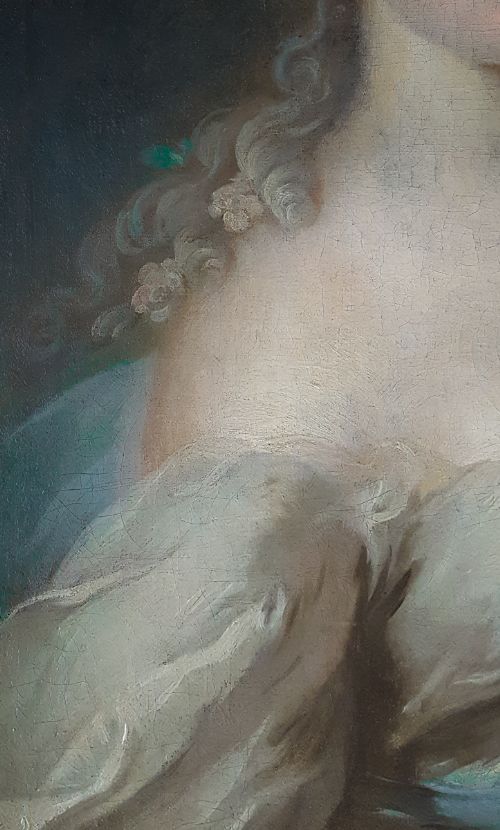
fig 2. Portrait of a Lady c.1750; Circle of Jean-Marc Nattier (1685-1766)
fig 2. Portrait of a Lady C.1750; Circle of Jean-marc Nattier (1685-1766)

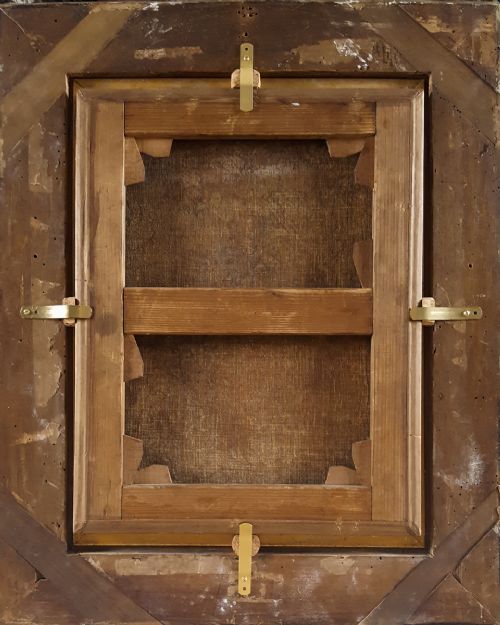
Wearing a fashionable satin dress and a pastel blue wrap the sitter is adorned with a garland of flowers. The lady has been depicted ‘en déshabille’, a type of ‘undress’ that was fashionable in portraiture, here a revealing chemise and blue and white draperies clasped with a jeweled belt. The work is utterly beautiful and is presented in its original carved and giltwood frame containing a presentation label “Nattier”.

fig 3. Portrait of a Lady c.1750; Circle of Jean-Marc Nattier (1685-1766)
fig 3. Portrait of a Lady C.1750; Circle of Jean-marc Nattier (1685-1766)

Provenance: Private collection Switzerland

Measurements: Height 64cm, Width 52cm framed (Height 25.25”, Width 20.5”)

Jean-Marc Nattier (1685-1766) Jean-Marc Nattier was one of the most fashionable portrait painters of the eighteenth-century in France and received important commissions from the royal court. Born on 17 March 1685 in Paris into a family of painters, son of the portrait painter Marc Nattier (1642-1703) who gave him his original traning and his mother who painted miniatures. Together with his brother Jean-Baptiste, he produced a series of drawings after Rubens's Marie de Médicis cycle in the Luxembourg Palace in 1702-04 for a series of engravings published by their father. He also gained attention by copying Charles Le Brun's battle pictures and Peter Paul Rubens's Marie de' Medici cycle in the Louvre. Nattier's godfather, Baroque painter Jean Jouvenet, encouraged him to study at the Académie de France in Rome, but Nattier never went to Italy because he was so busy in Paris. In 1715, he became candidate (agréé) at the Academy and was accepted as a history painter in 1718.

fig 4. Portrait of a Lady c.1750; Circle of Jean-Marc Nattier (1685-1766)
fig 4. Portrait of a Lady C.1750; Circle of Jean-marc Nattier (1685-1766)

In 1717, he painted portraits of Tsar Peter the Great and his court but declined to go to Russia as a court artist in which the autocrat took serious umbrage at Nattier's refusal. In the following years, he became one of the fashionable society portraitists in Paris. He developed the 'portrait historié' as his speciality often depicting his sitters in allegorical or mythological roles. Increasingly popular in court circles, he was particularly favoured by Louis XV's daughters, whom he painted both as the Seasons and the Elements. Of his many portraits at Versailles, those of the Queen of 1748 and the whole-length of Madame Henriette of 1754 earned the highest praise. In 1746, he was nominated professor at the Academy.

Height
64cm (25.20")
Width
52cm (20.47")
Depth
5cm (1.97")
Date of Manufacture

Titan Fine Art has dated this piece to the 18th Century.

Reference Numbers
Sellingantiques Ref
SA491676
Titan Fine Art
Titan Fine Art
Sellingantiques verified Since Jul 2016

Specialist in 17th & 18thc portraits. Highly curated selection, museum-level research & pro conservation. Exceptional art, expertly vetted.

Dealer Profile

You can view the stock and full dealer information on the Titan Fine Art Profile Page
PDF SHARE
SAVE
Portrait of a Lady c.1750; Circle of Jean-Marc Nattier (1685-1766)
1 / 6
Archive I Portrait of a Lady c.1750; Circle of Jean-Marc Nattier (1685-1766)

Portrait of a Lady C.1750; Circle of Jean-marc Nattier (1685-1766)
Archive II Portrait of a Lady c.1750; Circle of Jean-Marc Nattier (1685-1766) View II
Archive III Portrait of a Lady c.1750; Circle of Jean-Marc Nattier (1685-1766) View III
Archive IV Portrait of a Lady c.1750; Circle of Jean-Marc Nattier (1685-1766) View IV
Archive V Portrait of a Lady c.1750; Circle of Jean-Marc Nattier (1685-1766) View V
Archive VI Portrait of a Lady c.1750; Circle of Jean-Marc Nattier (1685-1766) View VI
Enlarged Archival View
Telephone 07875 412 111
Location
London
United Kingdom
Dealer Profile Page sellingantiques.co.uk/titan
Verified Since Jul 2016
Items For Sale 16
Items Sold 401
Titan Fine Art
Titan Fine Art
Verified Since Jul 2016
View Dealer Info
Location: London, United Kingdom
Verified
Jul 2016
For Sale
16
Sold
401
Portrait of a Lady c.1750; Circle of Jean-Marc Nattier (1685-1766)
Ref: SA491676
Portrait of a Lady c.1750; Circle of Jean-Marc Nattier (1685-1766)
Detail View 1
Detail View 2
Detail View 3
Detail View 4
Detail View 5
Archival Detail
Every single antique dealer on our platform is individually approved by our internal team. We verify their professional trade history, ethical standards, and photographic quality to ensure a secure, high-standard buying environment. Upon joining, every dealer agrees to a strict 9-point code of conduct. While issues can occasionally arise, our dealers typically resolve them swiftly and directly with the buyer. In fact, since our founding in 2002, Sellingantiques has only had to step in to help resolve an issue on roughly five occasions—a true testament to the quality of our dealers and their dedication to your happiness.
Our dealers are highly experienced in packing and shipping fragile, high-value antiques. Because you are in direct contact with the dealer, you will be able to easily go through all available shipping and insurance options together to ensure your item arrives safely.
Antiques are the ultimate green purchase. By choosing historical pieces over newly manufactured goods, you completely eliminate the carbon footprint of modern mass production while preserving exceptional, timeless craftsmanship.
items
Add keywords to the filter
Price
£100
£250000
Era
Movements
Material
Origin
Stock Location
Freshness
Online Payments
Categories