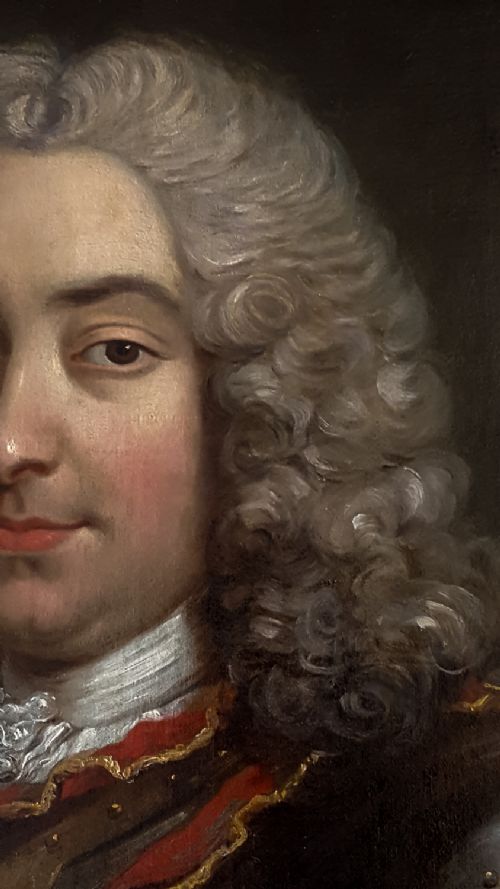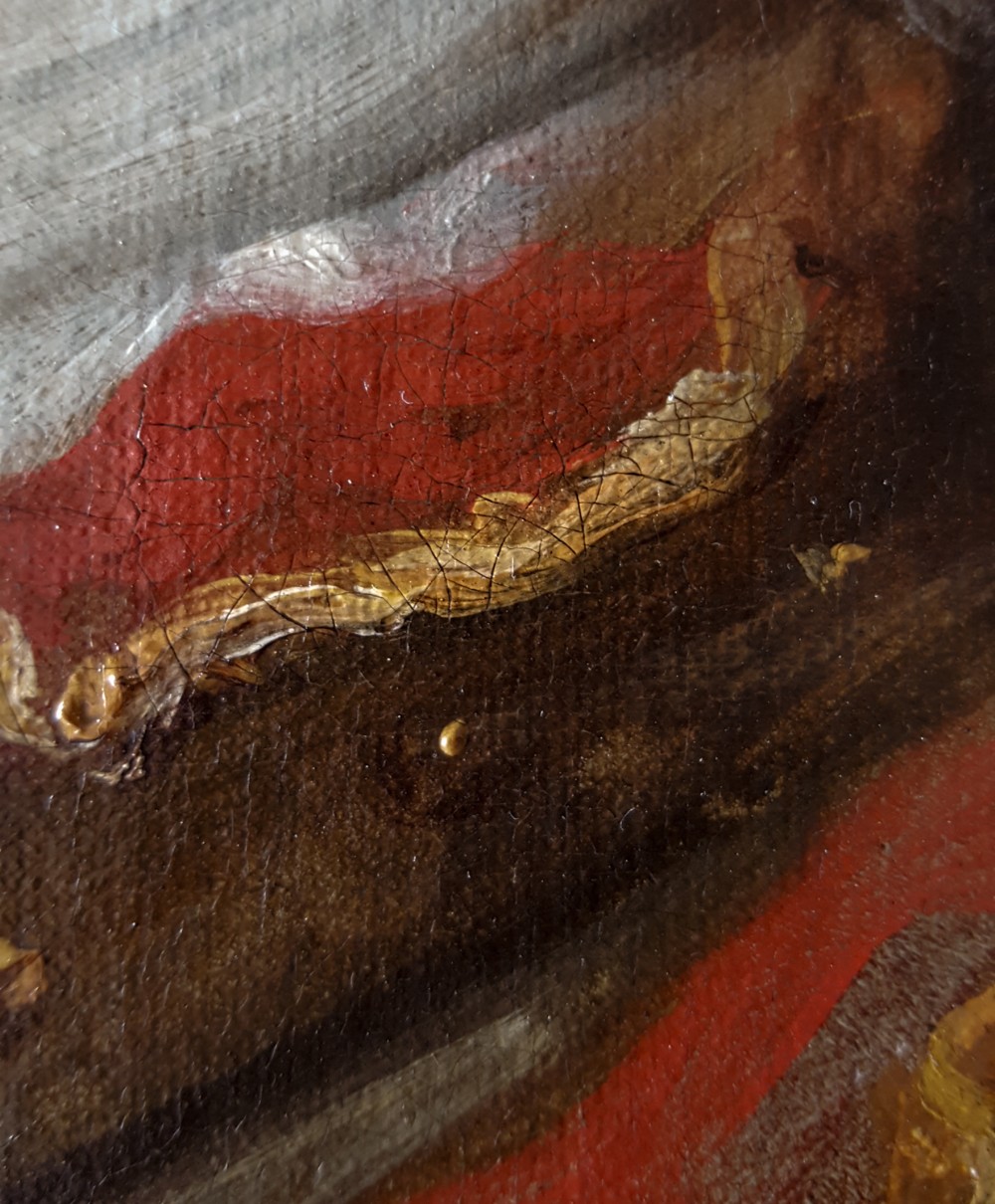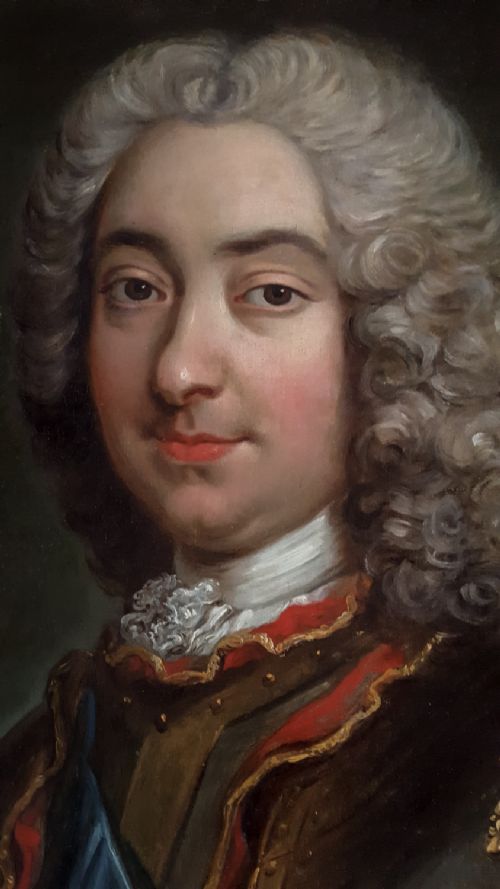
Titan Fine Art has dated this piece to the 18th Century.
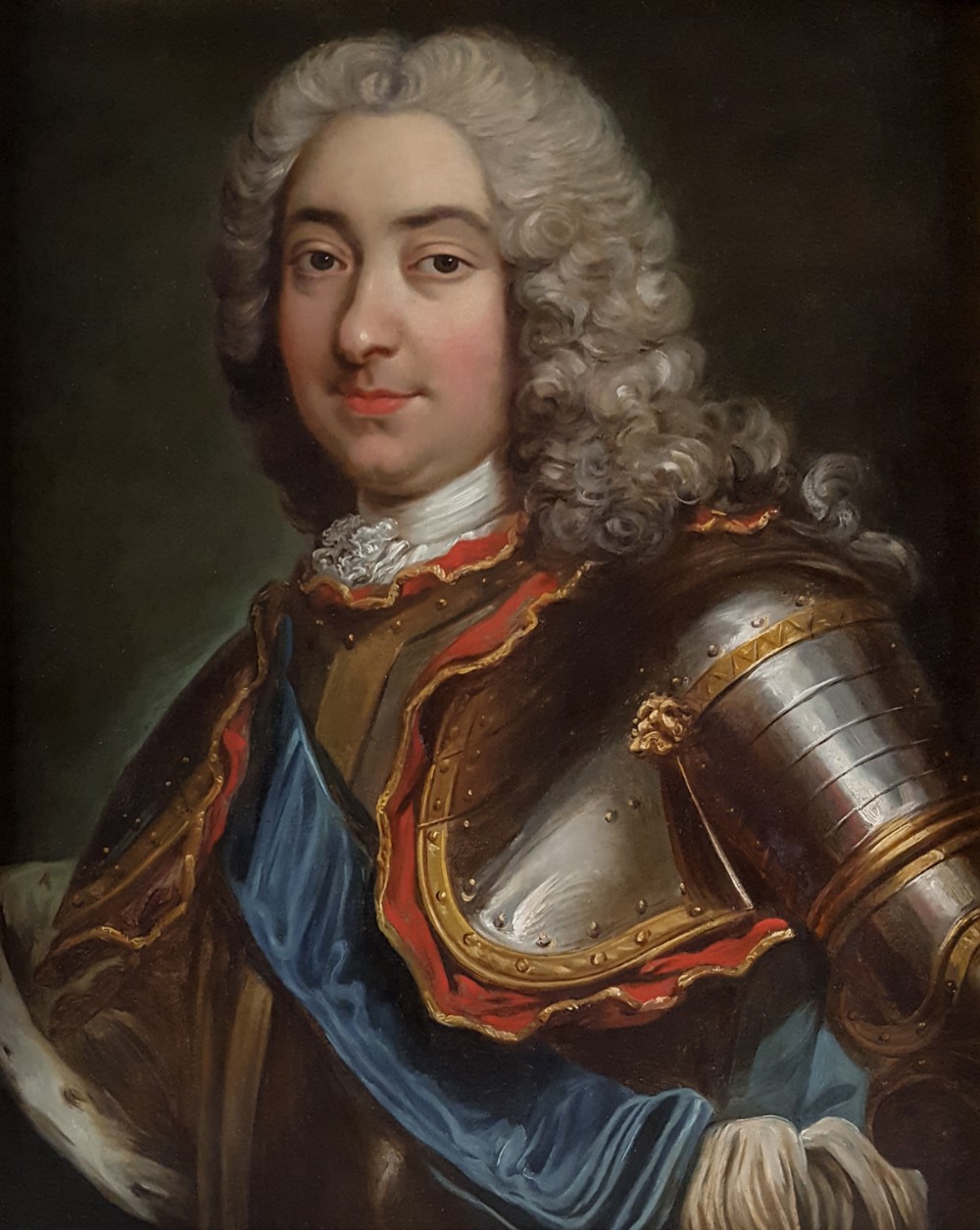
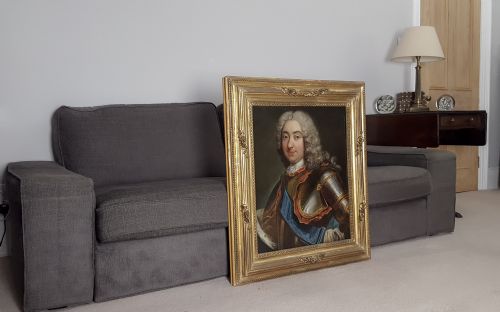
The portrait of this noble man who was 2nd Duke de Gesvres, Duke of Tresme, Marquis de Fontenay, and First Gentleman of the King’s Chamber, depicts him shortly after 1728 when he received the ancient honor of chivalry, the L’Ordre de Saint-Esprit (Order of The Holy Spirit). The Duke is wearing full armor and the blue sash.
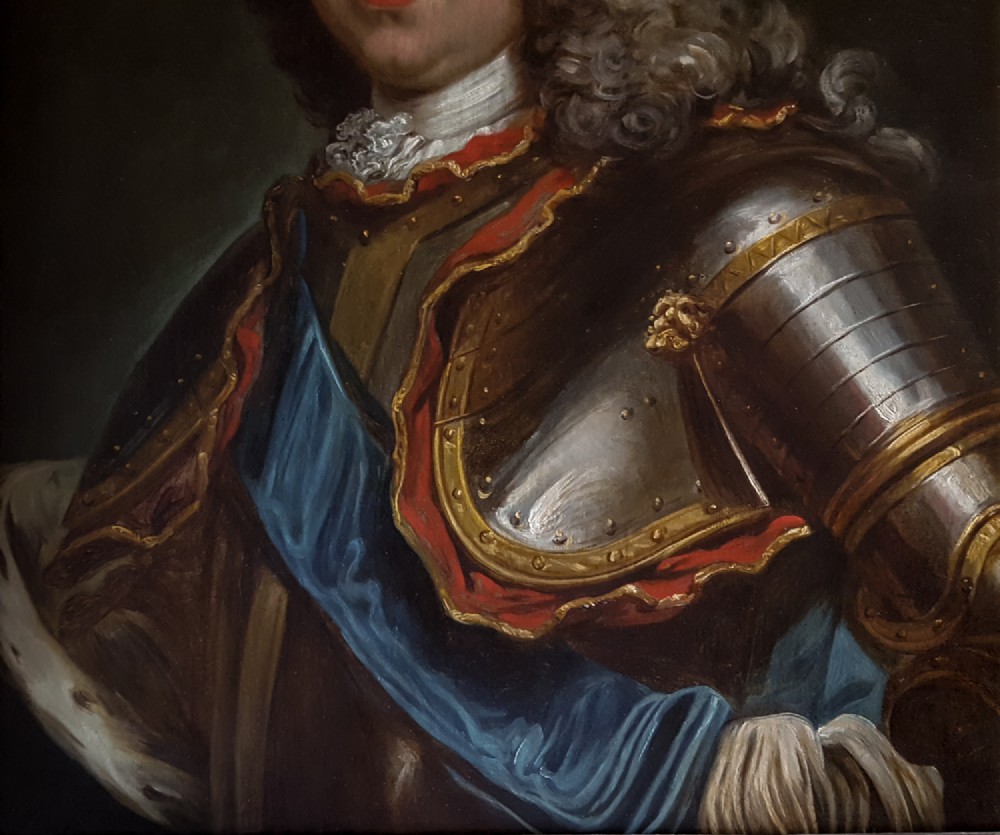
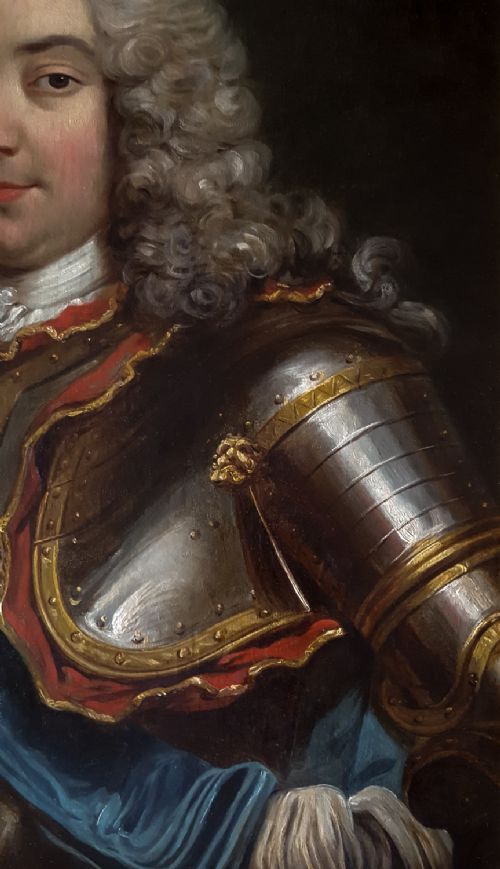
Van Loo's Royal portraits both in Spain and in France were copied extensively to serve as official images of the rulers. Van Loo is known to have depicted this sitter at least twice (one full length, standing beside a draped table with the order and the blue sash upon) and the type is most particular to the artist around 1733 when admitted to the Academy. During that time his work reflects the influence of Hyacinthe Rigaud and the pompous staging of their models. The nobleman bears the symbols of his power and prestige and the work is the result of a technical virtuosity in the metal surfaces. At the same time, the softness of the flesh tones produces a pleasing overall effect.
The Order of the Holy Spirit, founded in 1578, was preserved for the nobility and eventually came to replace - or at least compete with - the Order of Saint Michael. Whereas the Order of Saint Michael had become so widespread that it became devalued in the eyes of the King and court, the Order of the Holy Spirit was to remain only for the nobility and was also limited to 100 to further enhance the order's prestige. To become a knight of this order you had to be at least 35 years old, be Catholic and be able to produce a noble lineage back at least three generations.
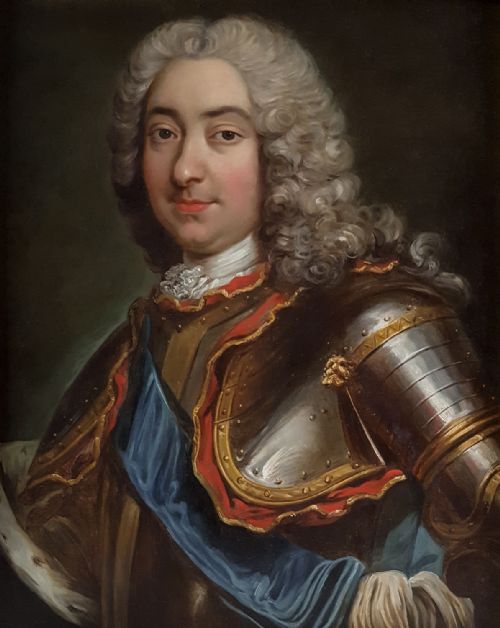
Louis-Michel van Loo was one of the most influential portrait painters of the 18th century and a member of the dynasty of painters of the van Loo family who were active across Europe. Born in Toulon, as the son of Jean-Baptiste van Loo (1684 1745) with whom he learned and then became a student at the Paris Academy and full member in 1733. His speciality work in portraiture built an impressive international career. He worked in Madrid as Painter to Philip V of Spain, then Ferdinand VI of Spain. He played an active role in founding the Academy in Madrid. Although mainly painting portraits he also produced tapestry designs and history paintings. He was the leading portrait painter for the French Royal court but his clientele extended far beyond the Royal court. He exhibited at the Salon 1753-69, visited London in 1764 and succeeded his uncle as head of the Ecole royale des élèves protégés in 1765. Though principally a portrait painter, he also painted historical and mythological subjects. He died in Paris on 20 March 1771.
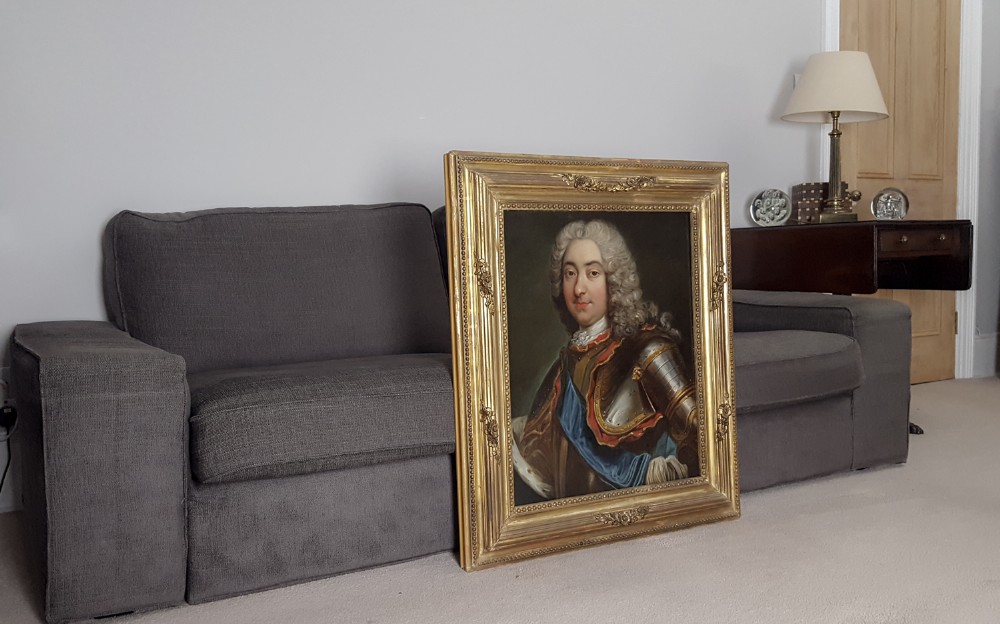
Held in a good quality and condition antique 19th century frame.
Provenance: Very old private collection in northern France
Measurements: Height 86cm, Width 74cm framed (Height 33.5”, Width 29” framed)
Titan Fine Art has dated this piece to the 18th Century.
Specialist in 17th & 18thc portraits. Highly curated selection, museum-level research & pro conservation. Exceptional art, expertly vetted.
You can view the stock and full dealer information on the Titan Fine Art Profile Page
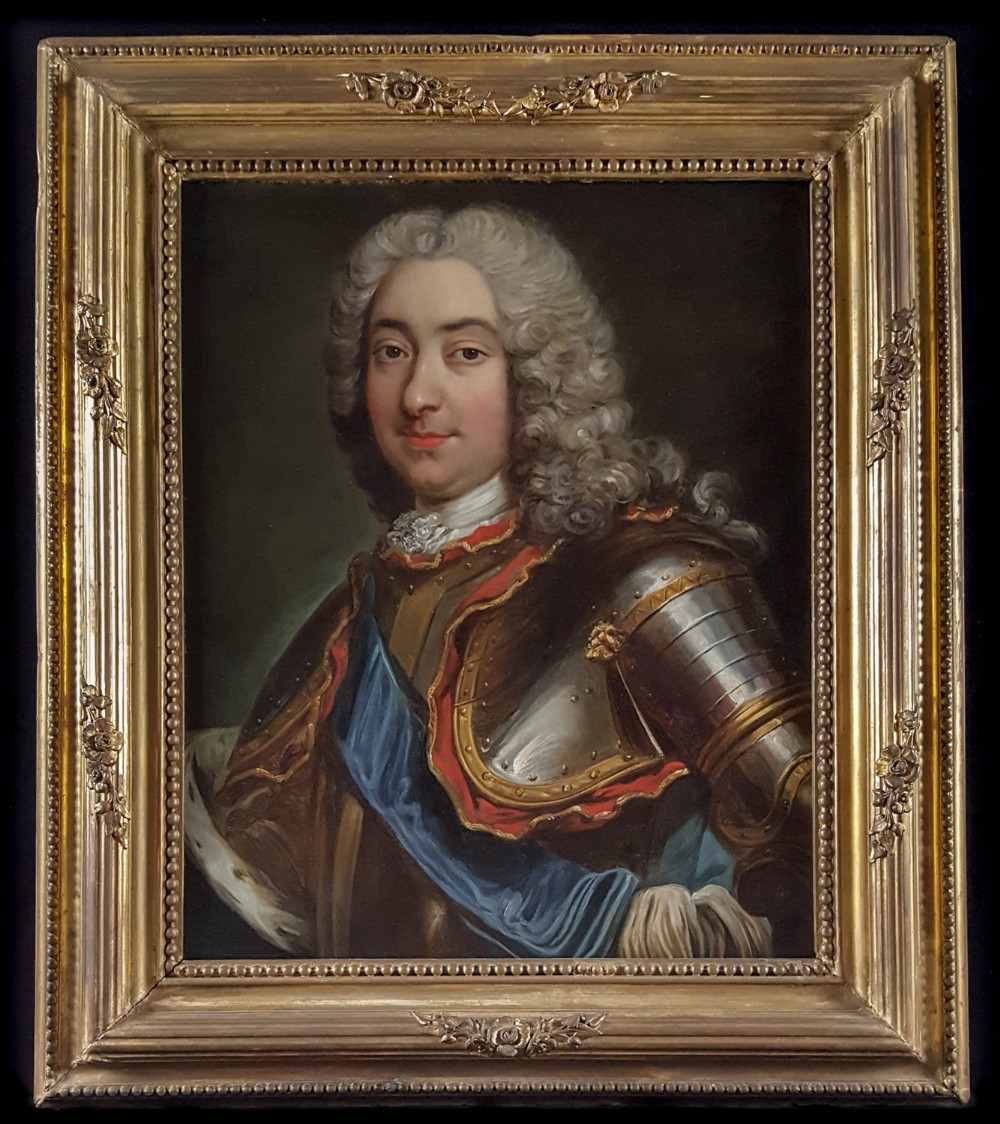
Portrait of François Joachim Bernard Potier (1692-1757), 18th Century; Follower of Louis Michel Van Loo (1707-1771)