
14,952  PAGES BROWSED TODAY PAGES TODAY 69 ANTIQUES UPLOADED TODAYNEW ARRIVALS
69 ITEMS ADDED TODAY
Sort Order
Items Per Page
Browse Categories
Sort order
Items per page
ID #SA447329
SOLD
Email
Save
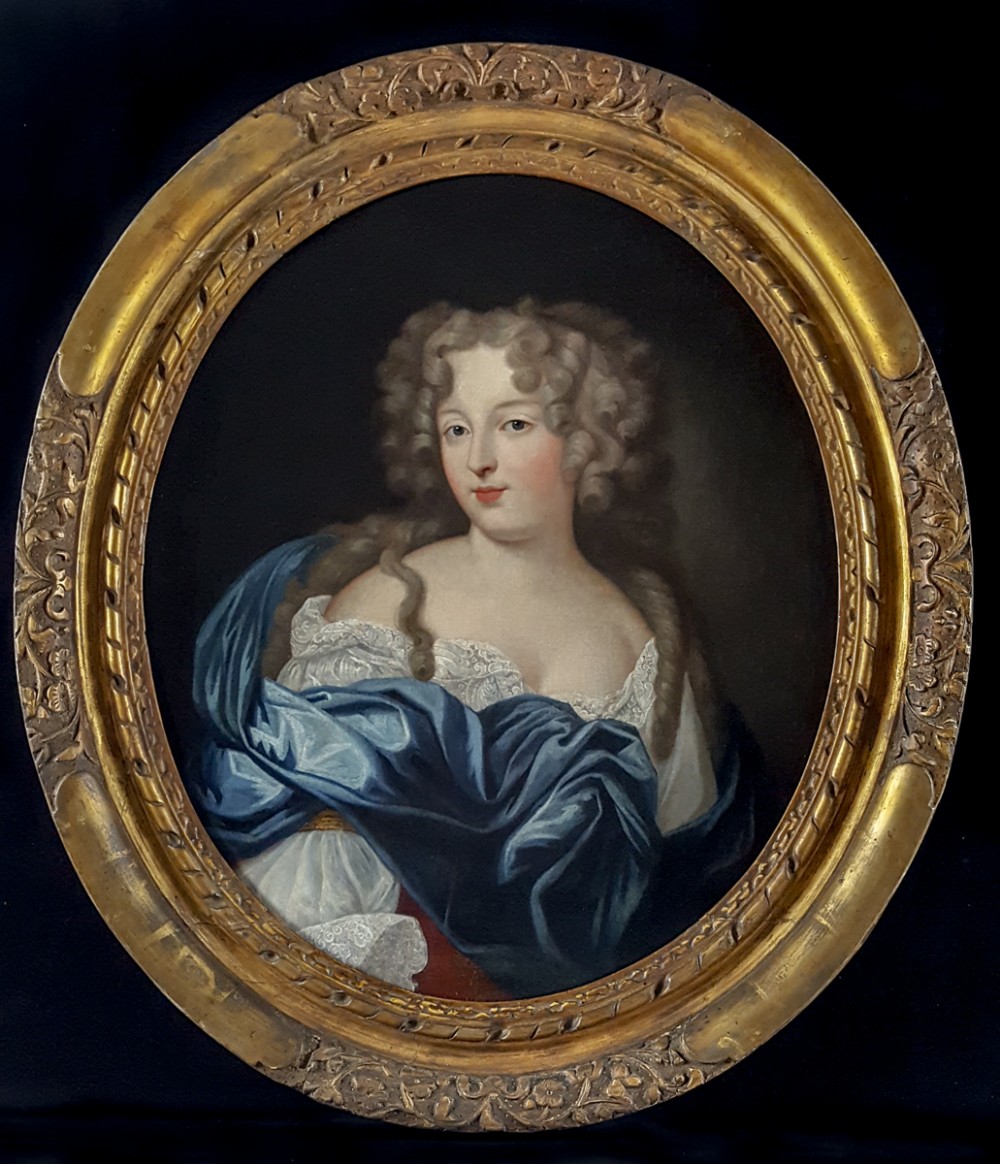
Portrait of Comtesse De Grignan C.1670; Circle of Pierre Mignard (1612-1695)
Titan Fine Art
sold SA447329
Sorry, but this item has been sold.
Titan Fine Art

Titan Fine Art

Sellingantiques Verified Since Jul 2016
View Dealers Stock Page
  • About Us
    Specialist in 17th & 18thc portraits. Highly curated selection, museum-level research & pro conservation. Exceptional art, expertly vetted.
Id #SA447329
PDF SHARE
SAVE

Portrait of Comtesse De Grignan C.1670; Circle of Pierre Mignard (1612-1695)

17th century
Description

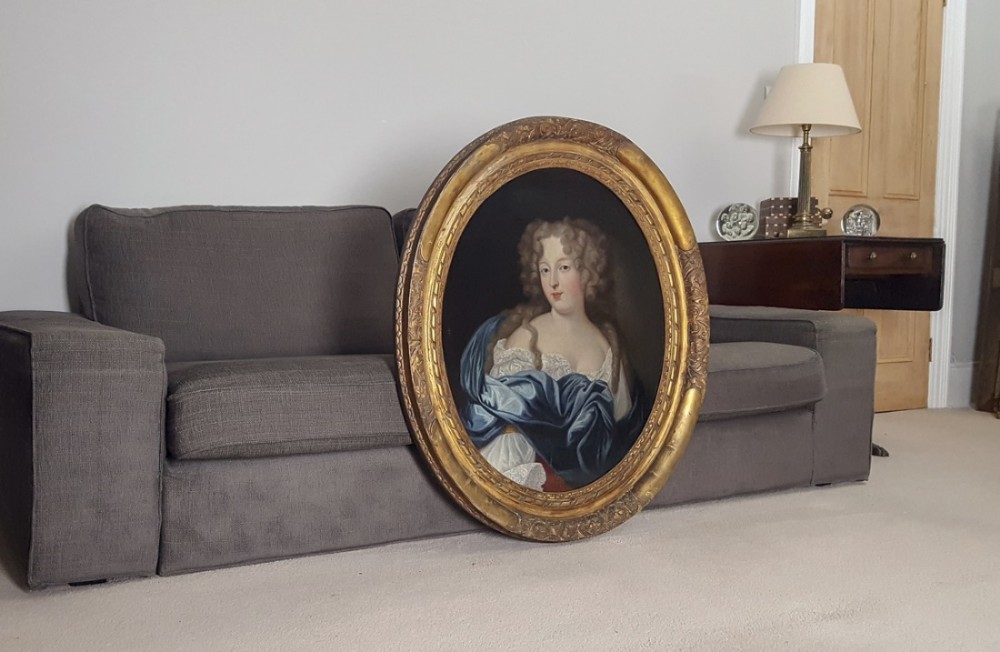
Portrait of Françoise-Marguerite de Sévigné, Comtesse de Grignan, French, c.1670

Oil on canvas

Circle of Pierre Mignard (1612-1695)

The sitter in this exquisite portrait is Françoise-Marguerite de Sévigné, Comtesse de Grignan (1646-1705) who was a French aristocrat and largely remembered for the letters that her mother, Madame de Sévigné wrote to her over the span of nearly 30 years. The correspondence comprised of well over 1,000 letters and was often written at the rate of 20 pages a day. Madame de Sévigné is revered in France as one of the great icons of French literature.
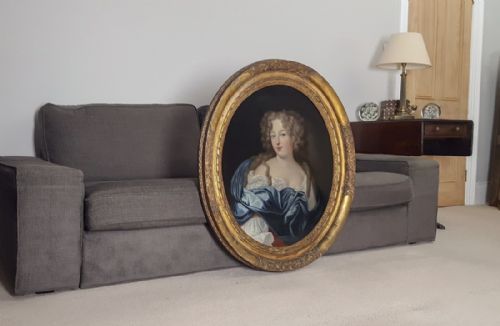
The overall treatment is sophisticated and demonstrative of a hand with considerable mastery of the oil technique. This striking example is a vibrant yet functional aristocrat image of the last quarter of the 17th century. Mignard enjoyed a pleasant monopoly of painting courtly and aristocratic ladies comprising a distinguishable style of ideal beauty at the time. The Mignard Madonna’s were so completely the rage that any lady worth her salt wanted her portrait in this style. Woman smiled “Mignardement” and wanted “Mignardse” of expression; the word essentially became part of the French language and was used with great frequency.
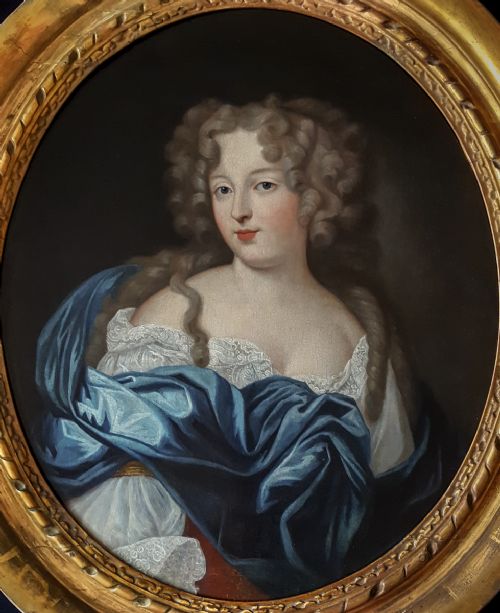
Françoise-Marguerite was born in Paris and was the first child of Henri de Sévigné and his young wife, Marie de Rabutin-Chantal. Her mother became well established in the royal court of Louis XIV and 17-year-old Françoise-Marguerite made her court debut in the Royal Ballets des Arts, dancing a lead role alongside Louis himself. She was a sensation and was referred to as “A dazzling young beauty” and “a beauty to set the world afire”. In 1665, she danced again with the King in a ballet entitled The Birth of Venus and at a supper in 1668 both Madame de Sévigné and her daughter were seated at the King’s table. As the King was at that time between love affairs, it was widely speculated that Françoise-Marguerite would be his next mistress. The “honor” of royal mistress, however was to fall upon the Madame de Montespan. Francois Marguerite eventually married François Adhémar de Monteil, comte de Grignan and that same year Louis XIV named Monsieur de Grignan the lieutenant general of the King in Provence and he was such obliged to leave Paris and return to his family castle in the south of France. The separation of Françoise-Marguerite and her mother left Madame de Sévigné bereft. "I look in vain for my daughter; I no longer see her, and every step she takes increases the distance between us. (I am) still weeping, still swooning with grief," she wrote to Françoise-Marguerite only hours after her departure - thus began perhaps the most famous series of correspondence in literary history.
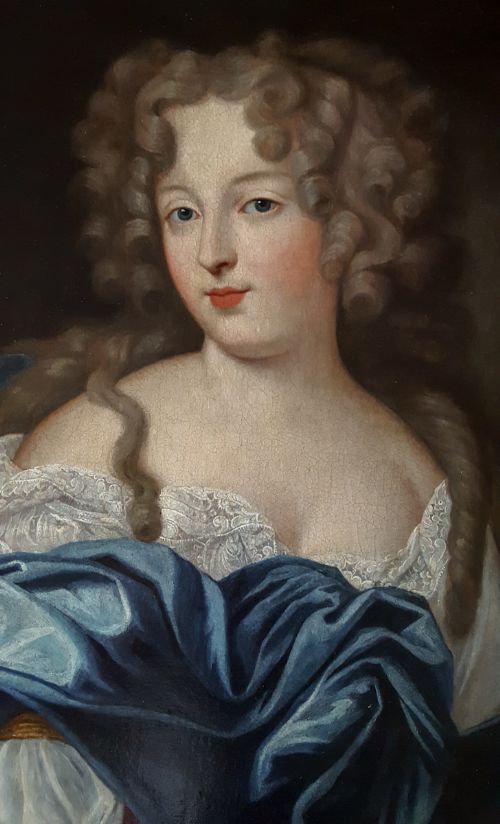
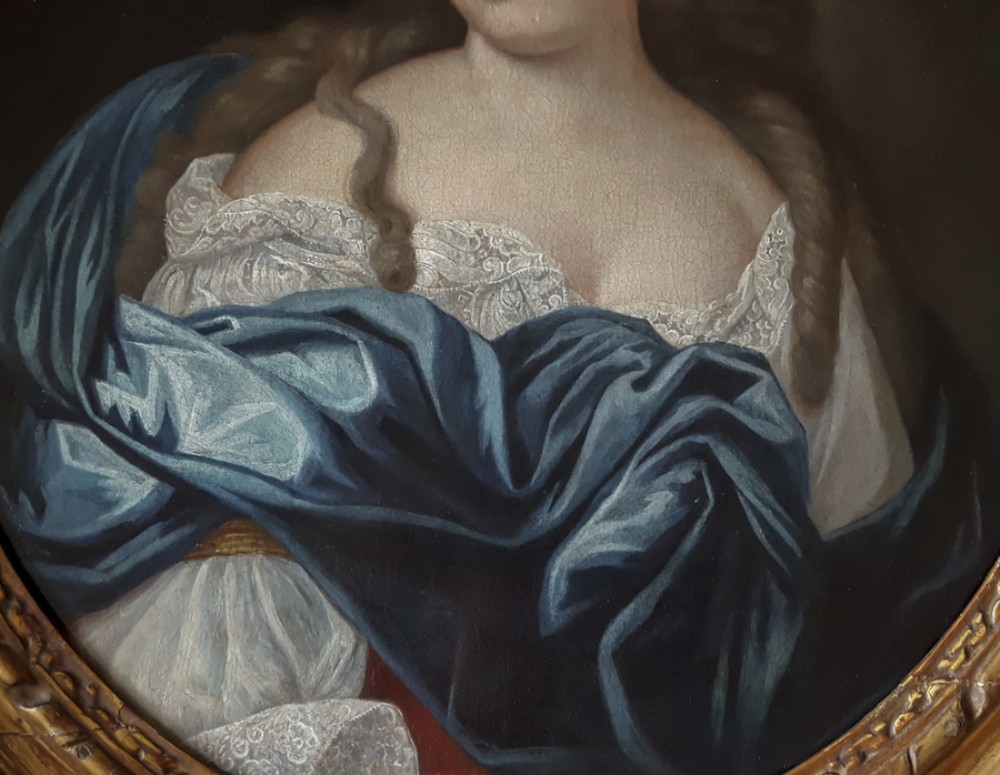
The artist has modelled their subject with a slight turn of the head creating a sense of intimacy and elegance and the Francoise Marguerite is sumptuously dressed in a white gown with collarette and an azure silk mantle. France during this period was the leading exponent of fashion and the arts to the rest of Europe. This portrait can be quite accurately dated from the attire and hairstyle, which was known as the hurlupe or hurluberlu (tousseled or "mixed up"). The style appeared around 1670 and was a radical new hairstyle at Versailles. The fashionistas of the day decided to abandon the traditional coiffe and to be styled only with their own hair, much shorter than before, and worn in dense curls clustered over the ears, and sometimes with longer curls hanging down from them. Madame de Sevigne, Marquise de Sevigne, wrote to her daughter in the countryside on the 18th of March that year and thought at first that the women looked "completely naked" and that the King at first seeing the hairstyle had "doubled over with laughter". She wrote “I was greatly amused at the head-dresses” and “…felt inclined to give a slap to the

Physical Dimensions
Height
97cm (38.19")
Width
85cm (33.46")
Depth
8cm (3.15")
Declaration

Titan Fine Art has dated this piece to the 17th Century.

Reference Numbers
Sellingantiques Reference
SA447329
Dealers Notes

Much more info about this item at: www.titanfineart.com

In a market saturated with available paintings, Titan Fine Art offers a distinct advantage: we sift through thousands of works to provide a specially curated selection. Each piece is meticulously chosen based on technical merit, provenance, and decorative appeal, ensuring our clients view only the finest examples of British and European art.

With over 20 years of expertise and 1,000+ works placed with collectors and institutions, we are one of the most prolific specialists in 17th and 18th-century portraiture. We combine a scholarly approach with museum-level rigor to replace the uncertainty of the open market with absolute confidence.

Why Buy From Titan Fine Art?

• Expertly Curated Selection

We act as your expert eye, selecting only high-quality works that offer genuine historical and artistic value.

• Museum-Level Research

Each portrait is supported by extensive academic research, often exceeding 40 hours, to establish attribution, sitter identity, and historical context.

• Professional Conservation

All paintings are carefully cleaned and stabilised by professional conservators, and are presented ready to hang.

• Transparent Pricing

No buyer’s premium or hidden fees—unlike auction houses, where additional costs can add 25–35%.

• Export Pricing Advantage

Reduced pricing is available for works exported outside the UK.

• Specialist Global Shipping

We manage the entire process, including custom crating, export documentation, and fully tracked delivery worldwide.

• Buy with Confidence

A 7-day return policy and the option to pay in GBP, USD, or EUR for convenience and transparency.

• Original Period Frames

Many works retain their original carved and gilded frames, which are works of art in their own right and enhance both historical authenticity and decorative impact.

• Personal Advisory Service

We work directly with collectors and interior designers, offering guidance on selection, scale, and placement—including bespoke room mock-ups on request.

Subscribe to our monthly 'new item alert' to be the first to hear about new works

Description
Portrait of Françoise-Marguerite de Sévigné, Comtesse de Grignan, French, c.1670

Oil on canvas

Circle of Pierre Mignard (1612-1695)

The sitter in this exquisite portrait is Françoise-Marguerite de Sévigné, Comtesse de Grignan (1646-1705) who was a French aristocrat and largely remembered for the letters that her mother, Madame de Sévigné wrote to her over the span of nearly 30 years.

The correspondence comprised of well over 1,000 letters and was often written at the rate of 20 pages a day.
Titan Fine Art

Madame de Sévigné is revered in France as one of the great icons of French literature.

fig 1. Portrait of Comtesse de Grignan c.1670; Circle of Pierre Mignard (1612-1695)
fig 1. Portrait of Comtesse De Grignan C.1670; Circle of Pierre Mignard (1612-1695)

The overall treatment is sophisticated and demonstrative of a hand with considerable mastery of the oil technique. This striking example is a vibrant yet functional aristocrat image of the last quarter of the 17th century. Mignard enjoyed a pleasant monopoly of painting courtly and aristocratic ladies comprising a distinguishable style of ideal beauty at the time. The Mignard Madonna’s were so completely the rage that any lady worth her salt wanted her portrait in this style. Woman smiled “Mignardement” and wanted “Mignardse” of expression; the word essentially became part of the French language and was used with great frequency.

fig 2. Portrait of Comtesse de Grignan c.1670; Circle of Pierre Mignard (1612-1695)
fig 2. Portrait of Comtesse De Grignan C.1670; Circle of Pierre Mignard (1612-1695)

Françoise-Marguerite was born in Paris and was the first child of Henri de Sévigné and his young wife, Marie de Rabutin-Chantal. Her mother became well established in the royal court of Louis XIV and 17-year-old Françoise-Marguerite made her court debut in the Royal Ballets des Arts, dancing a lead role alongside Louis himself. She was a sensation and was referred to as “A dazzling young beauty” and “a beauty to set the world afire”. In 1665, she danced again with the King in a ballet entitled The Birth of Venus and at a supper in 1668 both Madame de Sévigné and her daughter were seated at the King’s table. As the King was at that time between love affairs, it was widely speculated that Françoise-Marguerite would be his next mistress. The “honor” of royal mistress, however was to fall upon the Madame de Montespan. Francois Marguerite eventually married François Adhémar de Monteil, comte de Grignan and that same year Louis XIV named Monsieur de Grignan the lieutenant general of the King in Provence and he was such obliged to leave Paris and return to his family castle in the south of France. The separation of Françoise-Marguerite and her mother left Madame de Sévigné bereft. "I look in vain for my daughter; I no longer see her, and every step she takes increases the distance between us. (I am) still weeping, still swooning with grief," she wrote to Françoise-Marguerite only hours after her departure - thus began perhaps the most famous series of correspondence in literary history.

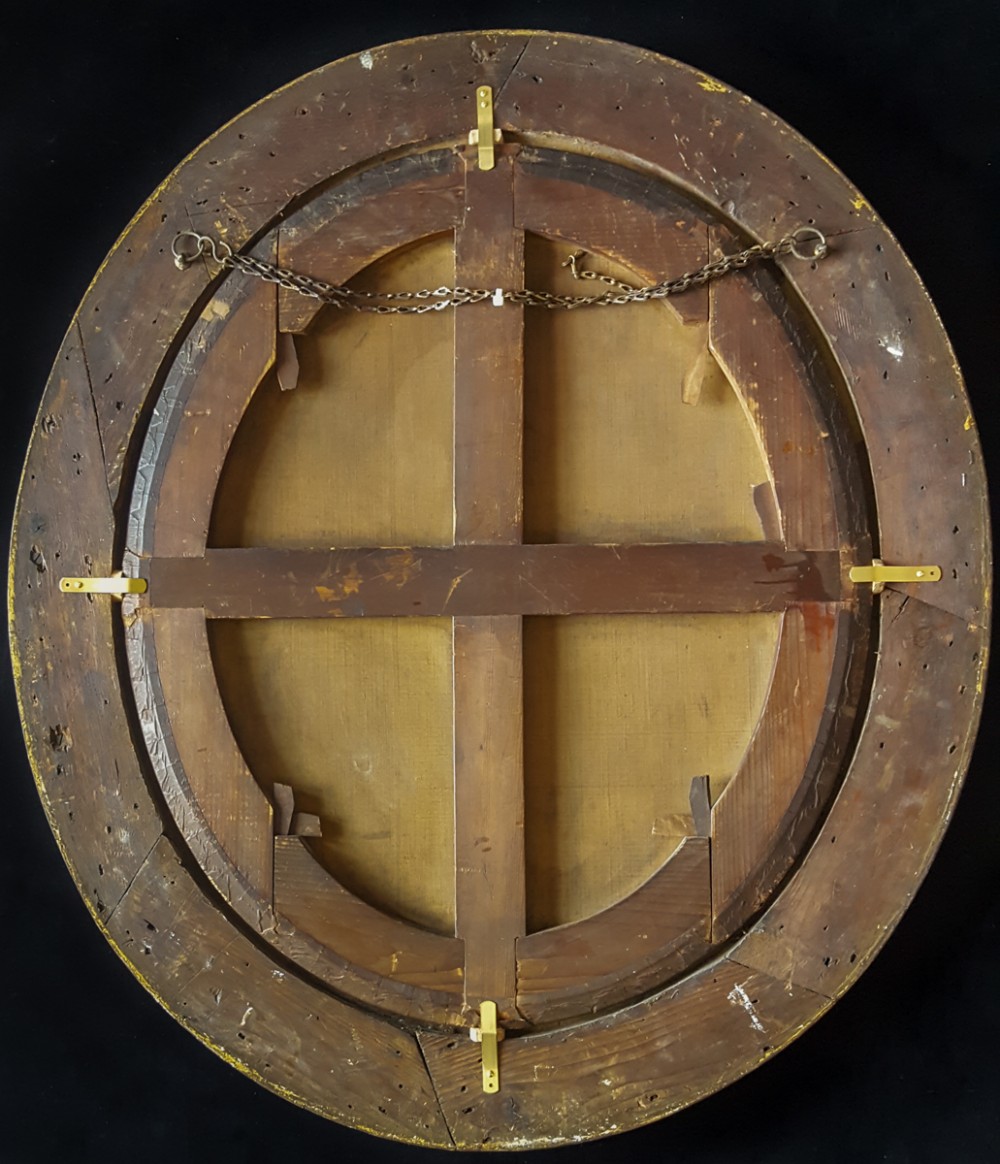
fig 3. Portrait of Comtesse de Grignan c.1670; Circle of Pierre Mignard (1612-1695)
fig 3. Portrait of Comtesse De Grignan C.1670; Circle of Pierre Mignard (1612-1695)

The artist has modelled their subject with a slight turn of the head creating a sense of intimacy and elegance and the Francoise Marguerite is sumptuously dressed in a white gown with collarette and an azure silk mantle. France during this period was the leading exponent of fashion and the arts to the rest of Europe. This portrait can be quite accurately dated from the attire and hairstyle, which was known as the hurlupe or hurluberlu (tousseled or "mixed up"). The style appeared around 1670 and was a radical new hairstyle at Versailles. The fashionistas of the day decided to abandon the traditional coiffe and to be styled only with their own hair, much shorter than before, and worn in dense curls clustered over the ears, and sometimes with longer curls hanging down from them. Madame de Sevigne, Marquise de Sevigne, wrote to her daughter in the countryside on the 18th of March that year and thought at first that the women looked "completely naked" and that the King at first seeing the hairstyle had "doubled over with laughter". She wrote “I was greatly amused at the head-dresses” and “…felt inclined to give a slap to the

Height
97cm (38.19")
Width
85cm (33.46")
Depth
8cm (3.15")
Date of Manufacture

Titan Fine Art has dated this piece to the 17th Century.

Reference Numbers
Sellingantiques Ref
SA447329
Titan Fine Art
Titan Fine Art
Sellingantiques verified Since Jul 2016

Specialist in 17th & 18thc portraits. Highly curated selection, museum-level research & pro conservation. Exceptional art, expertly vetted.

Dealer Profile

You can view the stock and full dealer information on the Titan Fine Art Profile Page
PDF SHARE
SAVE
Portrait of Comtesse de Grignan c.1670; Circle of Pierre Mignard (1612-1695)
1 / 6
Archive I Portrait of Comtesse de Grignan c.1670; Circle of Pierre Mignard (1612-1695)
Portrait of Comtesse De Grignan C.1670; Circle of Pierre Mignard (1612-1695)
Archive II Portrait of Comtesse de Grignan c.1670; Circle of Pierre Mignard (1612-1695) View II
Archive III Portrait of Comtesse de Grignan c.1670; Circle of Pierre Mignard (1612-1695) View III
Archive IV Portrait of Comtesse de Grignan c.1670; Circle of Pierre Mignard (1612-1695) View IV
Archive V Portrait of Comtesse de Grignan c.1670; Circle of Pierre Mignard (1612-1695) View V
Archive VI Portrait of Comtesse de Grignan c.1670; Circle of Pierre Mignard (1612-1695) View VI
Enlarged Archival View
Telephone 07875 412 111
Location
London
United Kingdom
Dealer Profile Page sellingantiques.co.uk/titan
Verified Since Jul 2016
Items For Sale 16
Items Sold 401
Titan Fine Art
Titan Fine Art
Verified Since Jul 2016
View Dealer Info
Location: London, United Kingdom
Verified
Jul 2016
For Sale
16
Sold
401
Portrait of Comtesse de Grignan c.1670; Circle of Pierre Mignard (1612-1695)
Ref: SA447329
Portrait of Comtesse de Grignan c.1670; Circle of Pierre Mignard (1612-1695)
Detail View 1
Detail View 2
Detail View 3
Detail View 4
Detail View 5
Archival Detail
Every single antique dealer on our platform is individually approved by our internal team. We verify their professional trade history, ethical standards, and photographic quality to ensure a secure, high-standard buying environment. Upon joining, every dealer agrees to a strict 9-point code of conduct. While issues can occasionally arise, our dealers typically resolve them swiftly and directly with the buyer. In fact, since our founding in 2002, Sellingantiques has only had to step in to help resolve an issue on roughly five occasions—a true testament to the quality of our dealers and their dedication to your happiness.
Our dealers are highly experienced in packing and shipping fragile, high-value antiques. Because you are in direct contact with the dealer, you will be able to easily go through all available shipping and insurance options together to ensure your item arrives safely.
Antiques are the ultimate green purchase. By choosing historical pieces over newly manufactured goods, you completely eliminate the carbon footprint of modern mass production while preserving exceptional, timeless craftsmanship.
items
Add keywords to the filter
Price
£100
£250000
Era
Movements
Material
Origin
Stock Location
Freshness
Online Payments
Categories