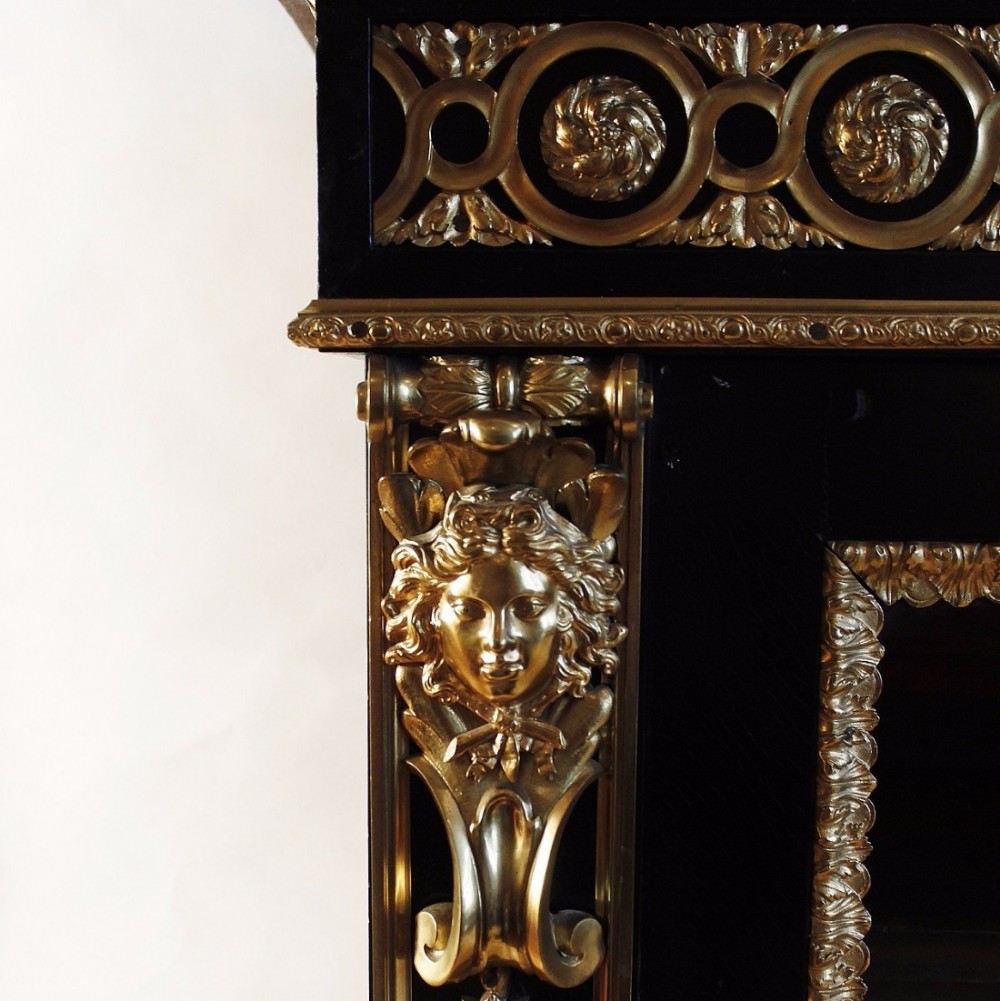
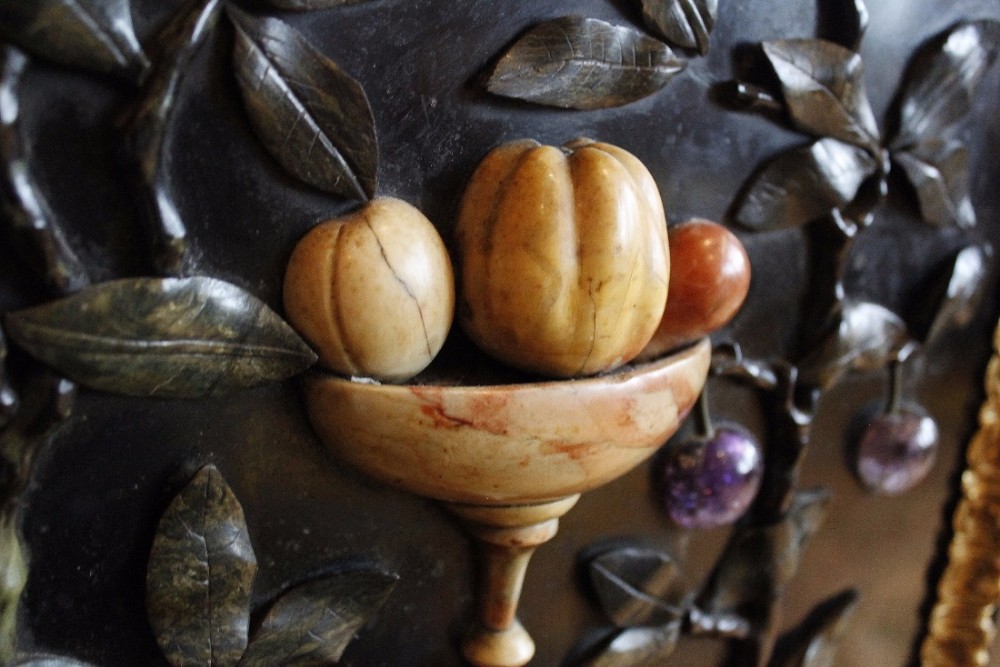
Carlton House Antiques has dated this piece to the 19th Century.
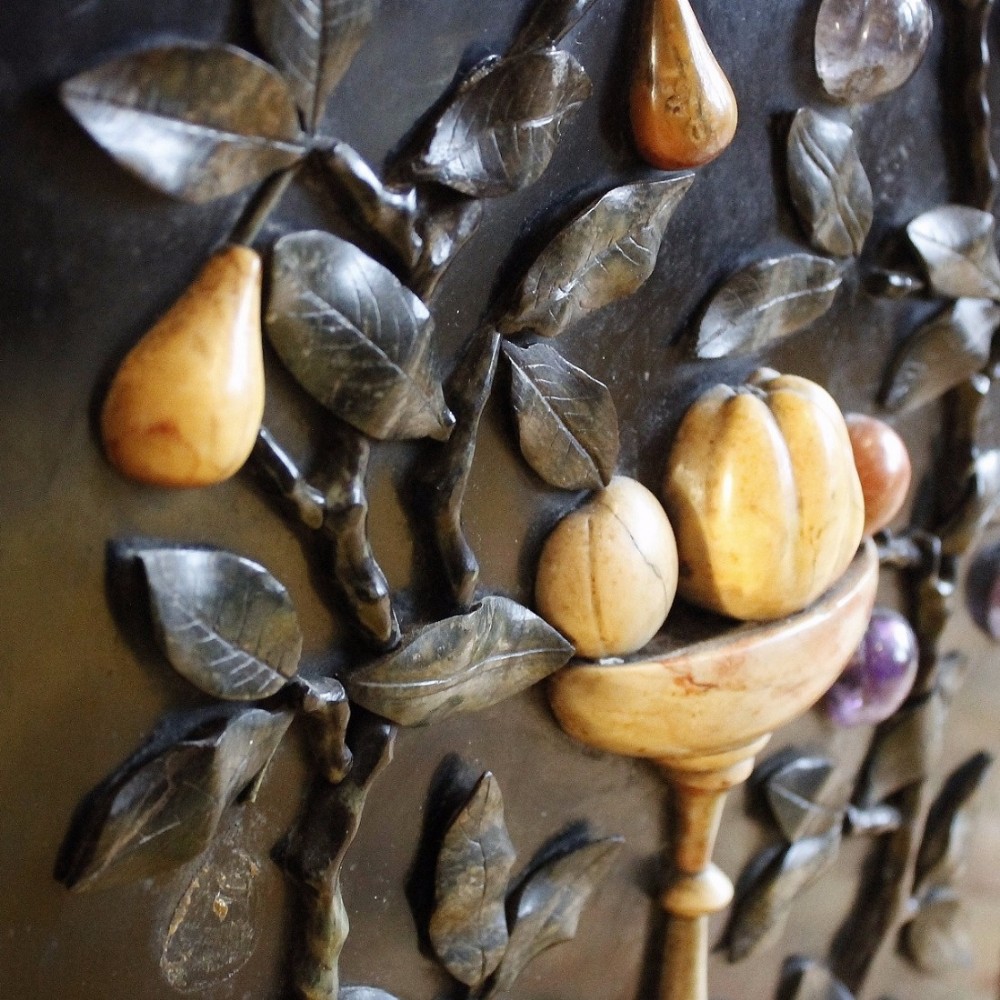
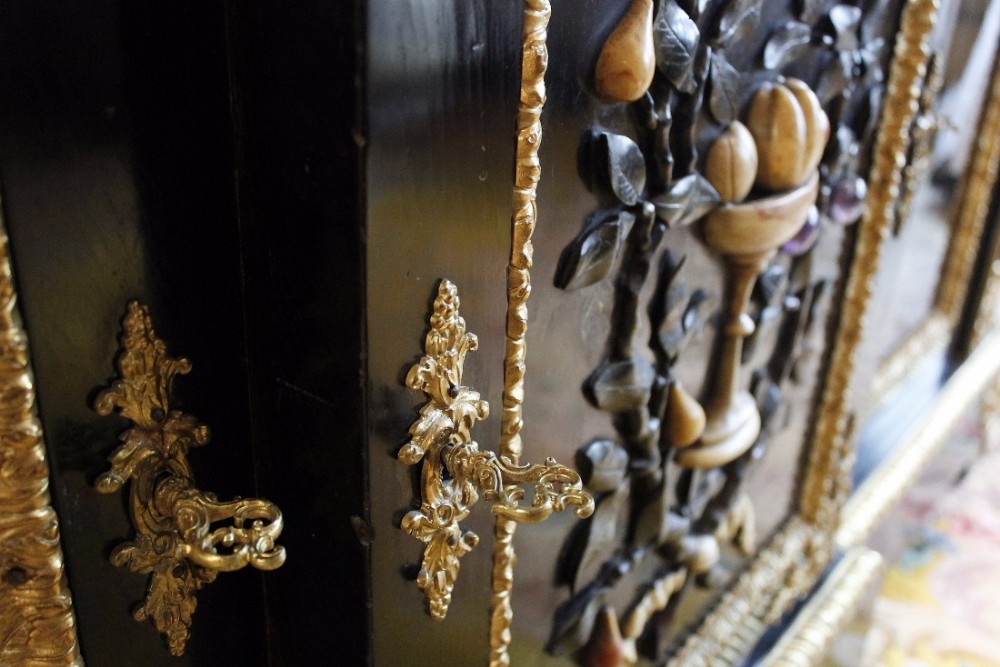
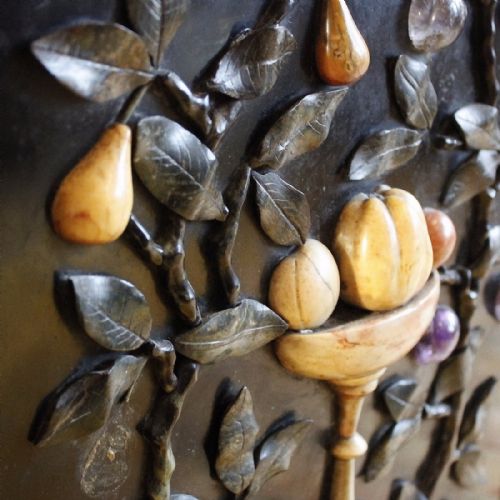
The central blind door is delightfully decorated with pietra dura flowers and fruits.
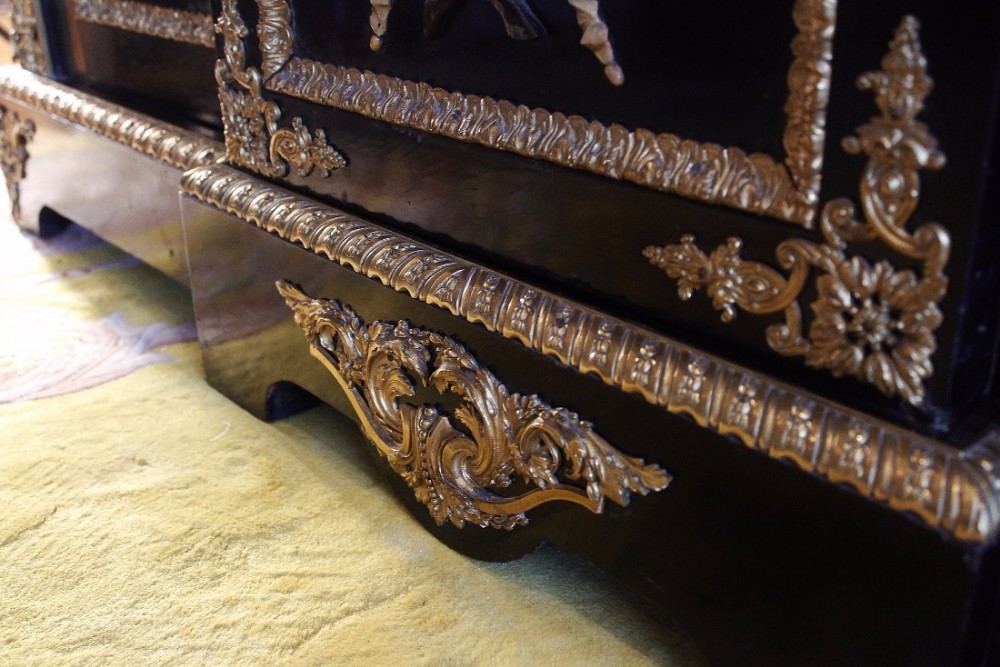
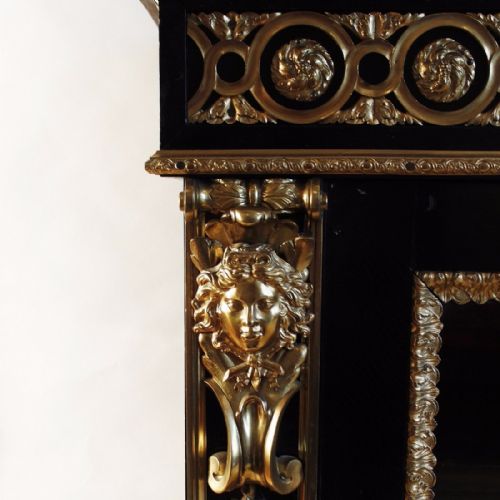
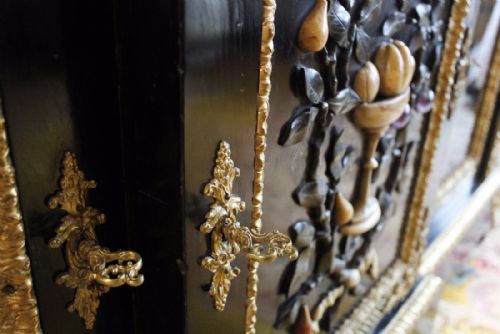
The Credenza is raised on a gilt bronze decorated plinth base.
History of The Credenza
In England during the Tudor period The Credence table bore the bread and wine prior to it being consecrated for the Eucharist, according to religious belief. Also, the “Act of Credenza” was the act of providing the truth or Credence of food prior to it being eaten by honoured guests. A servant would undertake this important task lest the honoured guest be poisoned!
We now know a Credenza as a decorative side cabinet. Its chequered history differentiates it from sideboards and buffets which were used to store plates and wine etc. Food was served therefrom to the dining table where it was eaten. Interestingly, up until the end of the 18th century a small cupboard was included within, containing a chamber pot for the use of both male and female diners to relieve themselves in... behind a screen of course! So from Religious use, to proving food to be fit for nobility to consume, and serve food from - we now have an extravagantly decorated side cabinet that says more about the owner’s wealth and status than what it can be used for! The Credenza...
As far as we know the largest Credenza in the world now resides in a museum in Vienna. This truly unique Credenza was ordered to be built in 1726 by Henry Somerset, the third Duke of Beaufort. It took 30 craftsmen 6 years to create the masterpiece known as “The Badminton Cabinet”. It is 12 feet high, 6 feet wide, 6 feet deep and, like ours, of ebonised wood decorated with gilt bronze and pietra dura. It was sold in 2004 for £19,000,000 To Prince Hans-Adam II of Liechtenstein. Ours is a little smaller and less expensive! But nonetheless a work of 19th century master craftsmanship.
Carlton House Antiques has dated this piece to the 19th Century.
You can view the stock and full dealer information on the Carlton House Antiques Profile Page
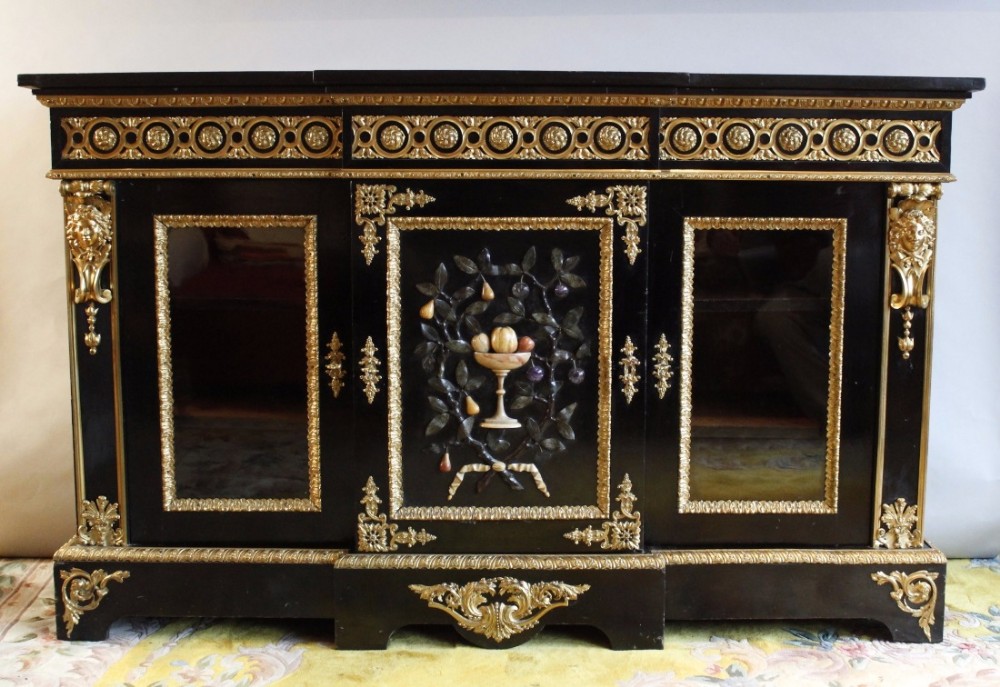
19th Century Ebonised and Ormolu Mounted Credenza