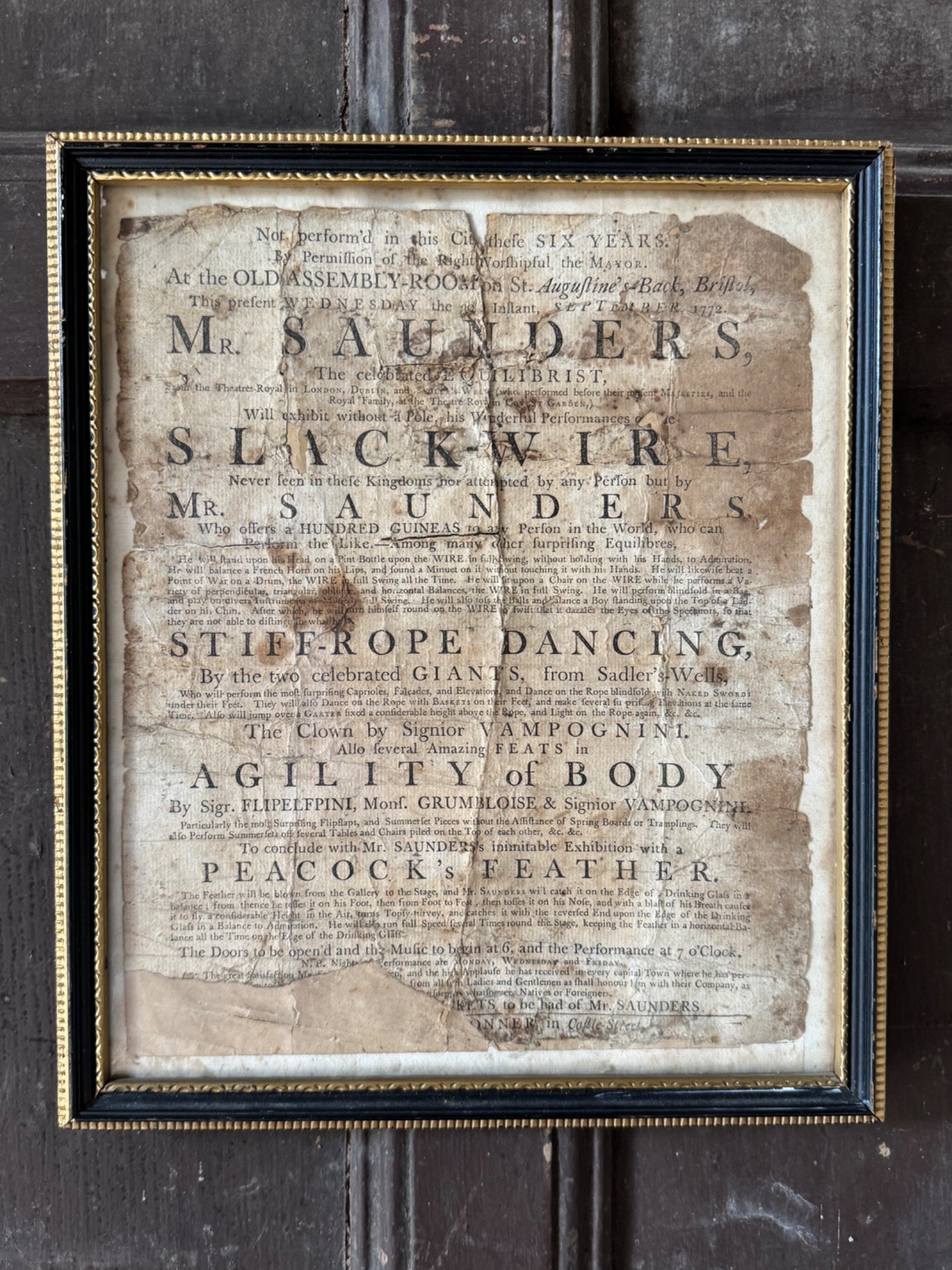
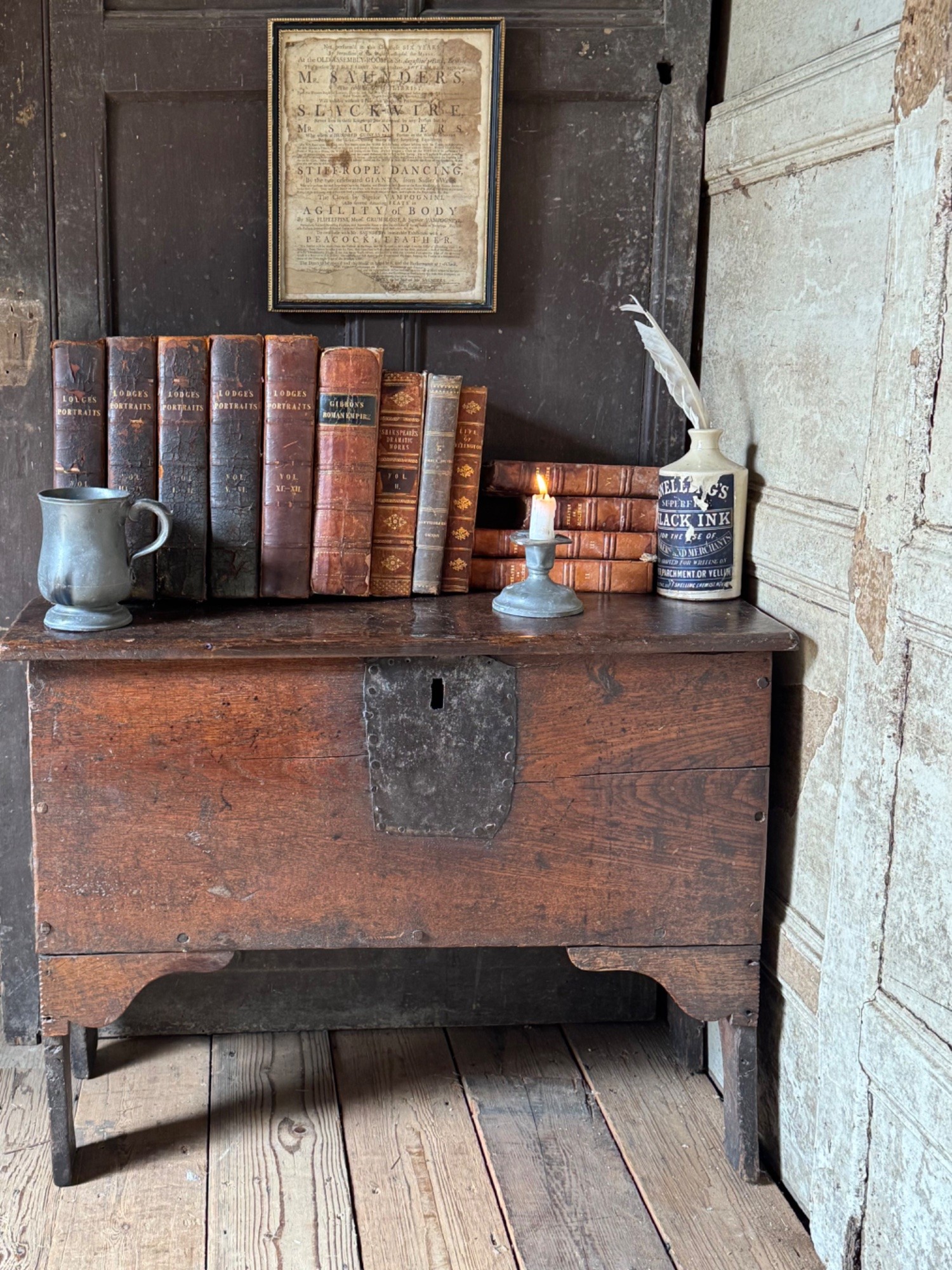
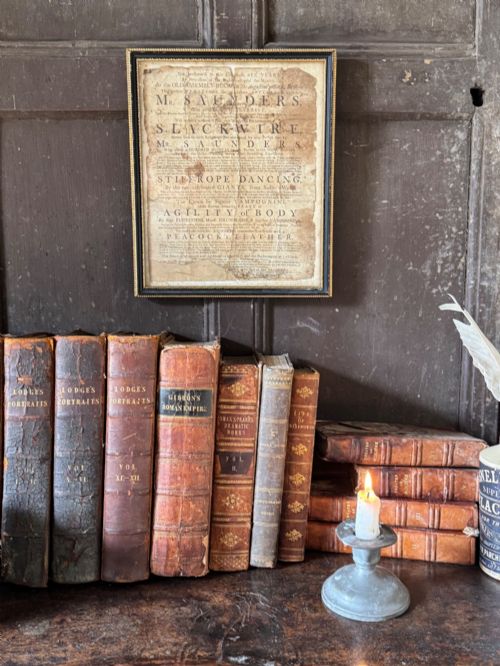
Rob Hall Antiques has dated this Georgian Circus Advertising Handbill to the 18th Century.
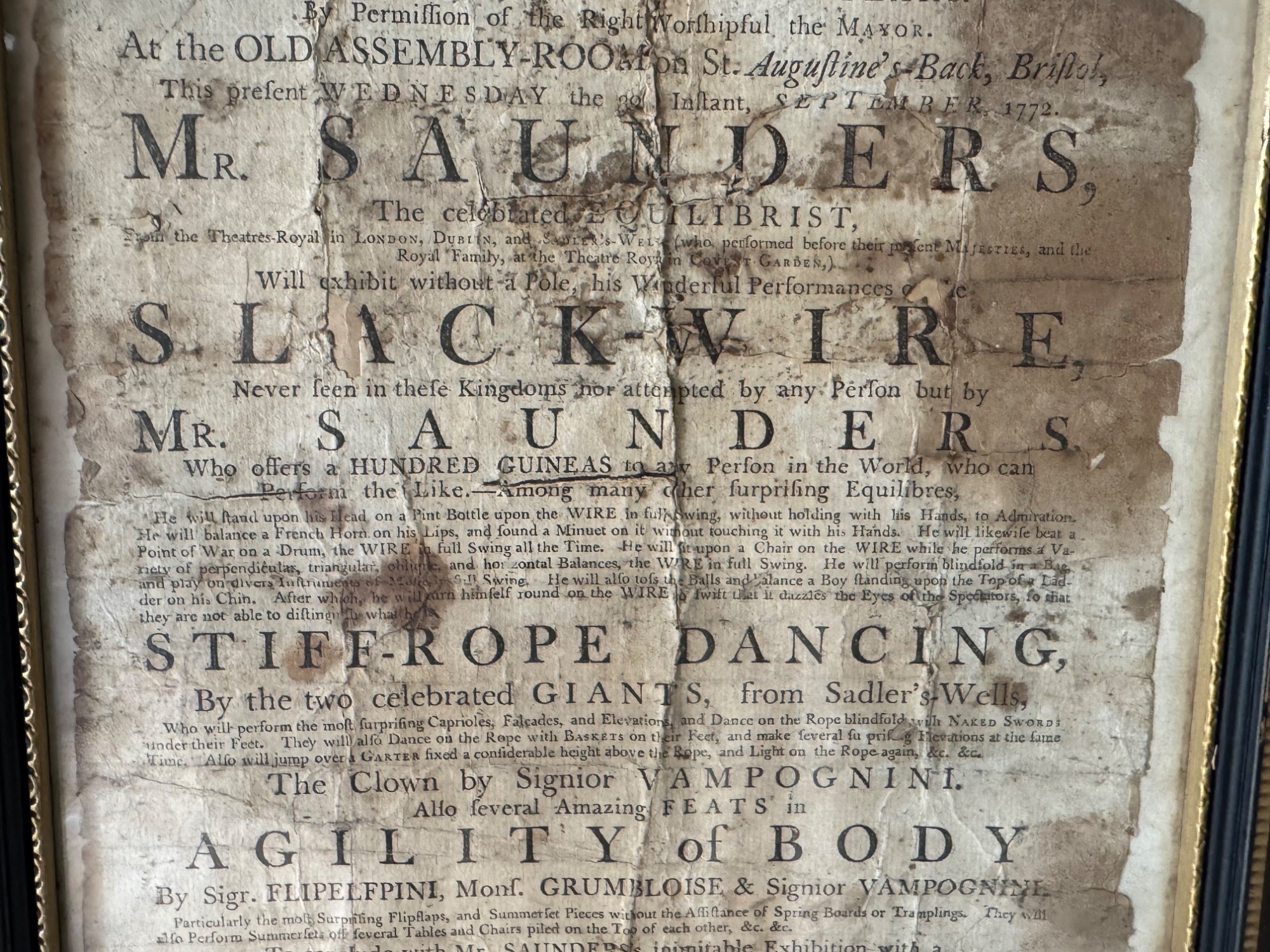
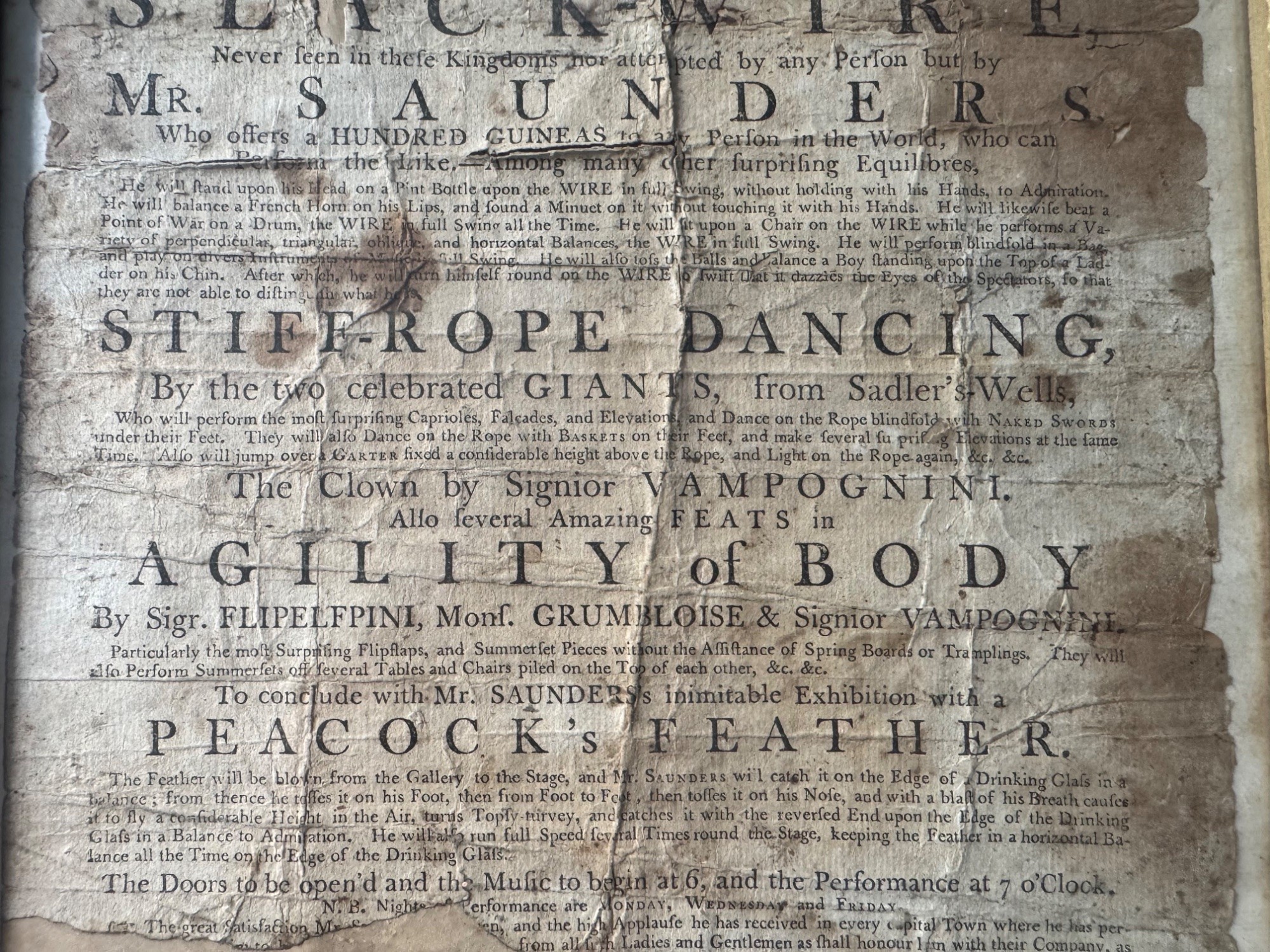
Because the wire continually moved beneath him, it demanded extraordinary balance and control. The supporting performers on this handbill demonstrated stiff-rope dancing, performed upon a tightly stretched rope and involving dancing, jumping and acrobatic movement. The distinction was well understood by eighteenth-century audiences and the handbill proudly advertises both disciplines, with Saunders himself as the principal attraction. Printed for a performance at the Old Assembly Room, St Augustine’s Back, Bristol, on Wednesday 30th September 1772, this remarkable survival records one stage of Samuel Saunders’ extensive national tour. Contemporary newspaper advertisements now allow much of his touring career to be reconstructed, documenting performances throughout England, Wales and Ireland in towns including Birmingham, Stafford, Shrewsbury, Coventry, Bristol, London, Dublin and many others. Rather than being attached to a single theatre, Saunders travelled continually, bringing his remarkable performances to audiences across Britain and Ireland.
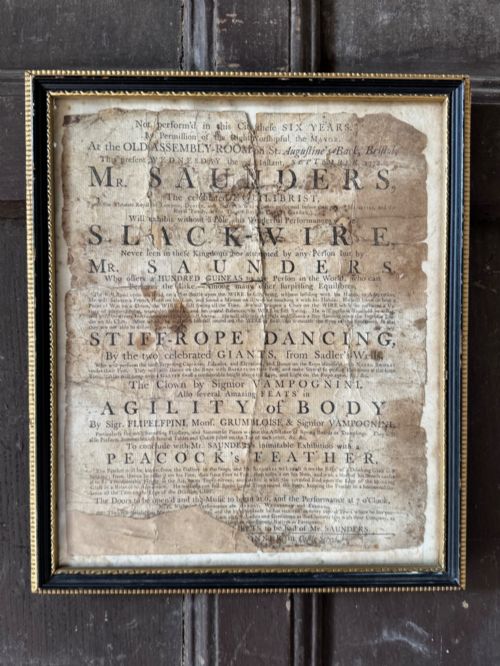
The evening’s entertainment extended far beyond Saunders himself. It included Stiff-Rope Dancing by the “two celebrated Giants from Sadler’s Wells”, who were advertised to dance blindfold with naked swords beneath their feet, together with the clown Signior Vampognini and a troupe of continental tumblers and acrobats. The programme vividly illustrates the blend of balancing, rope dancing, tumbling, clowning and spectacle that characterised Georgian entertainment immediately before the emergence of the modern circus.
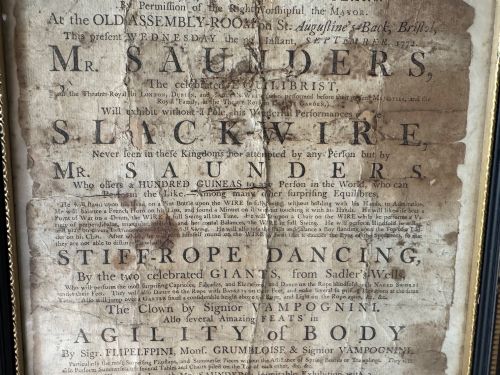
Samuel Saunders occupies an important place in British circus history. His younger brother was Abraham Saunders (1748–1839), who began his public career performing within Samuel’s company before becoming one of Britain’s best-known equestrian performers and later one of the country’s leading travelling circus proprietors. Together, the Saunders family established one of Britain’s earliest circus dynasties, with successive generations remaining connected with travelling entertainment well into the nineteenth century.
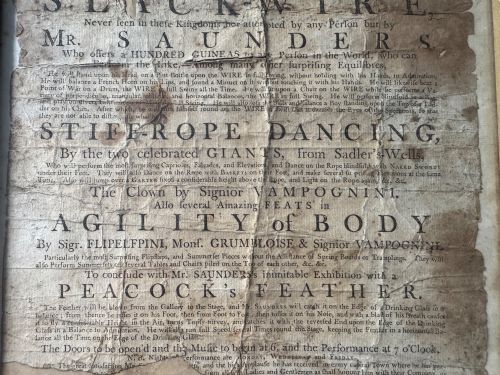
The Saunders family also formed part of the same pioneering world of performance as Philip Astley, whose innovations are widely recognised as marking the birth of the modern circus. Their careers overlap during the formative decades in which eighteenth-century rope dancing, equestrian display and travelling exhibitions gradually evolved into the circus as we know it today.
An earlier Saunders handbill advertising a performance at Salford in January 1766 survives in the collection of the Victoria and Albert Museum. The present Bristol example is a later and substantially different handbill, printed six years afterwards for Saunders’ return to the city as part of his continuing national tour.
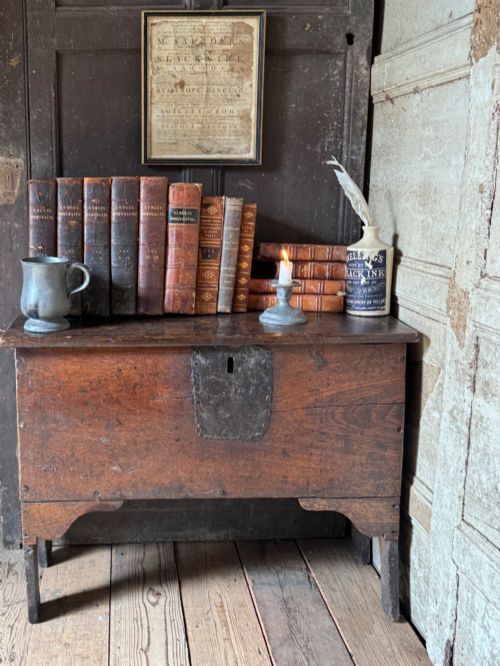
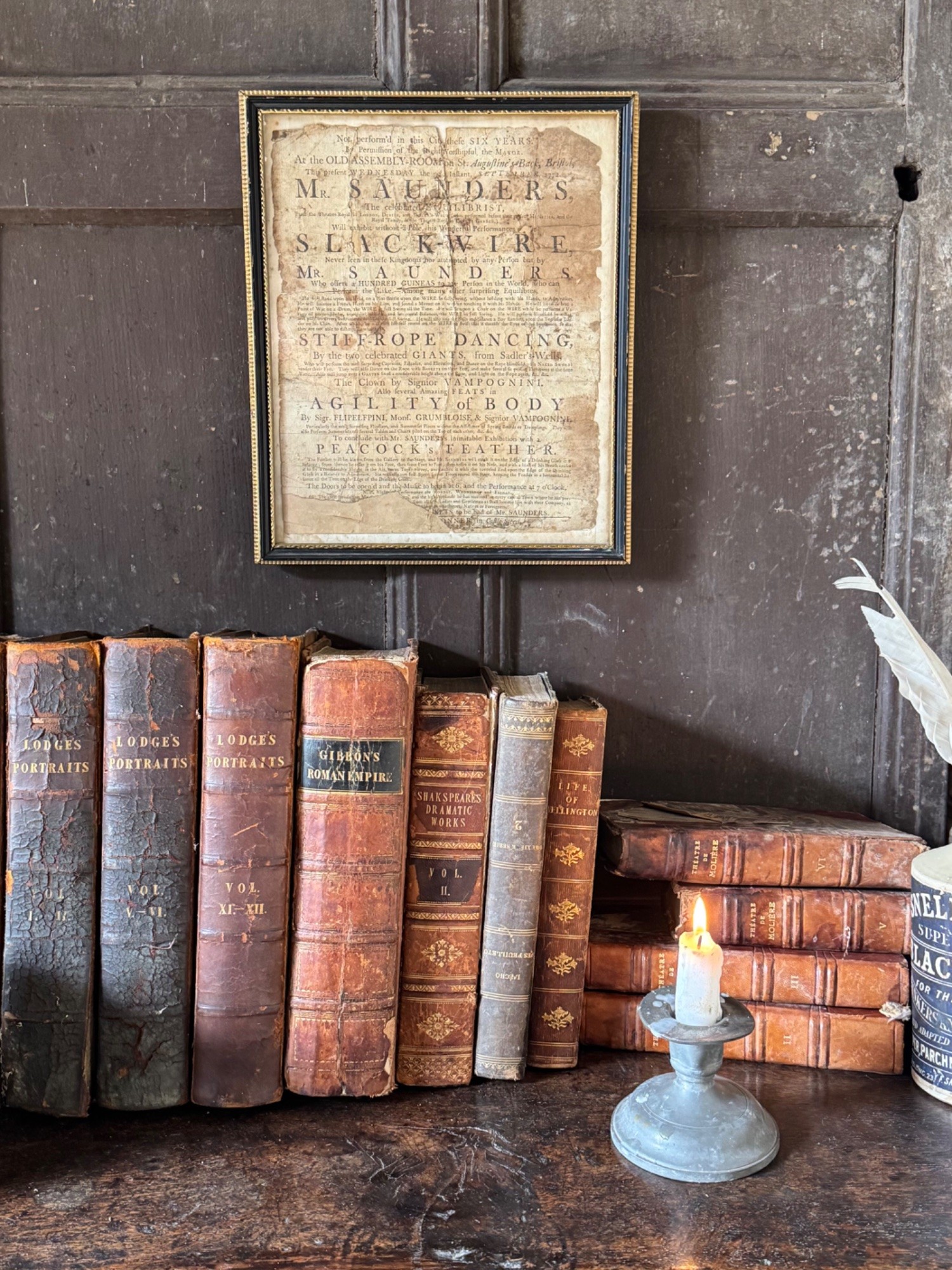
Presented in a later frame. The handbill survives with the expected folds, staining, tears and small losses associated with a genuine working piece of eighteenth-century theatrical ephemera, entirely consistent with an object intended for temporary public display rather than long-term preservation. There is evidence that the sheet has been laid onto a paper backing at some stage in its life, almost certainly as a means of stabilising and preserving this fragile survival. But it survives.....
Measuring: (handbill) - 21 .5 cm x 26 cm
Rob Hall Antiques has dated this Georgian Circus Advertising Handbill to the 18th Century.
You can view the stock and full dealer information on the Rob Hall Antiques Profile Page
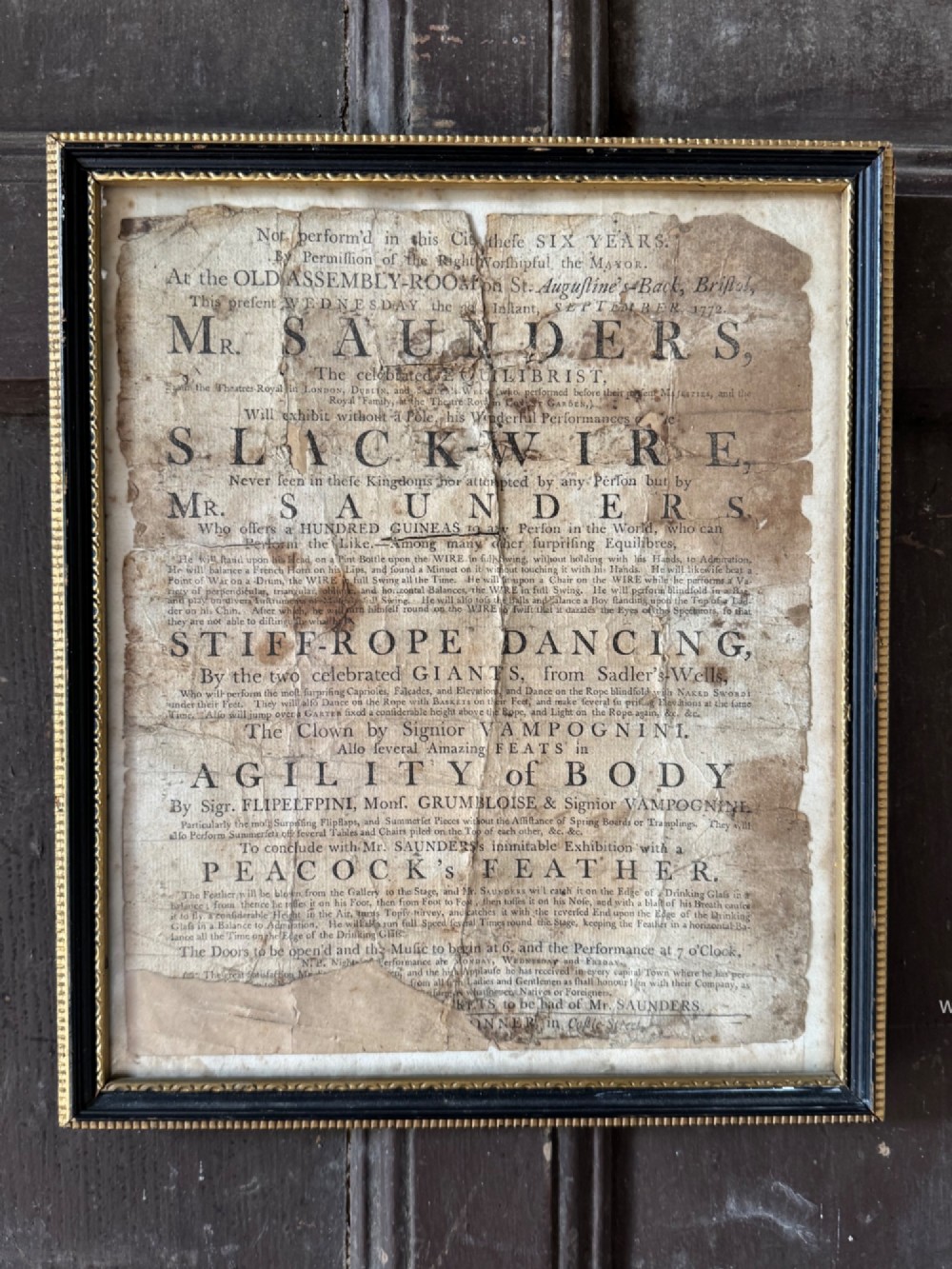
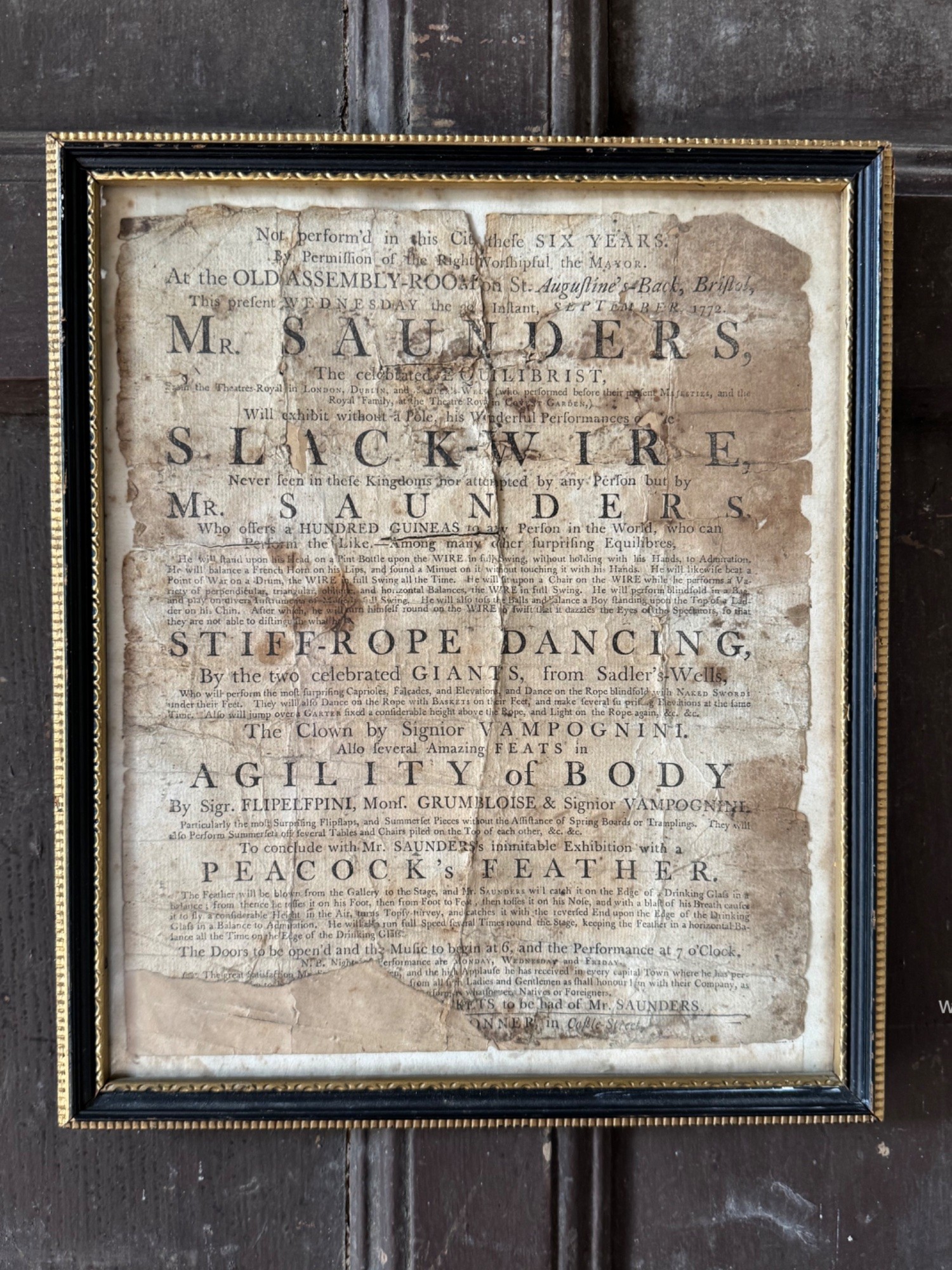
A Rare George III Handbill Advertising a Performance by Samuel Saunders, Celebrated Equilibrist and Slack-wire Performer