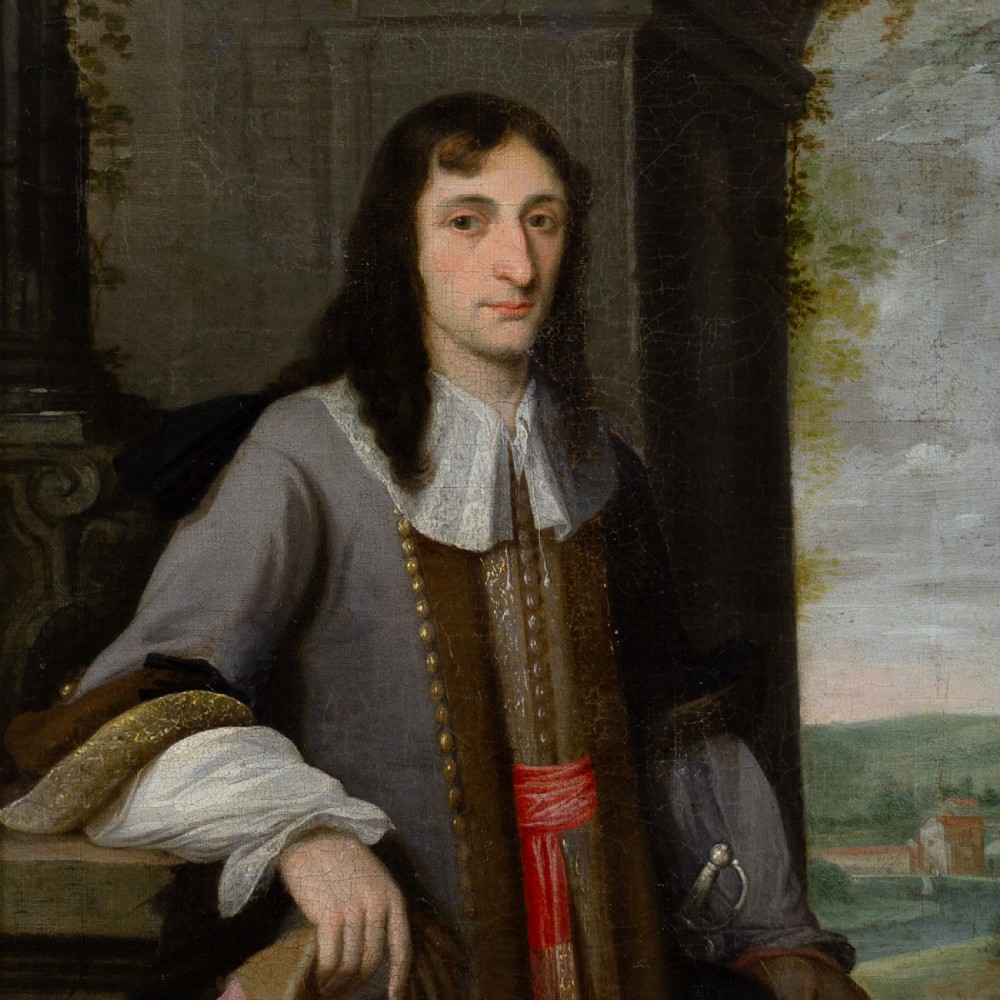
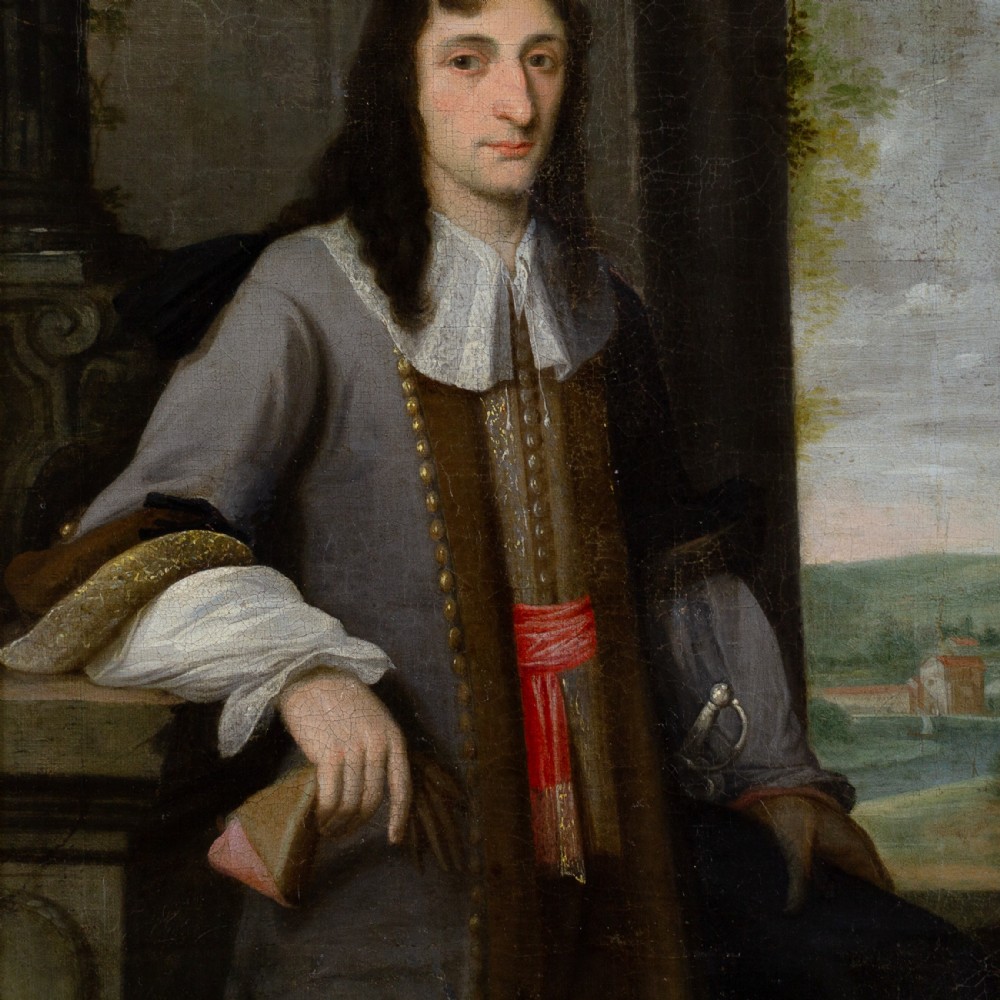
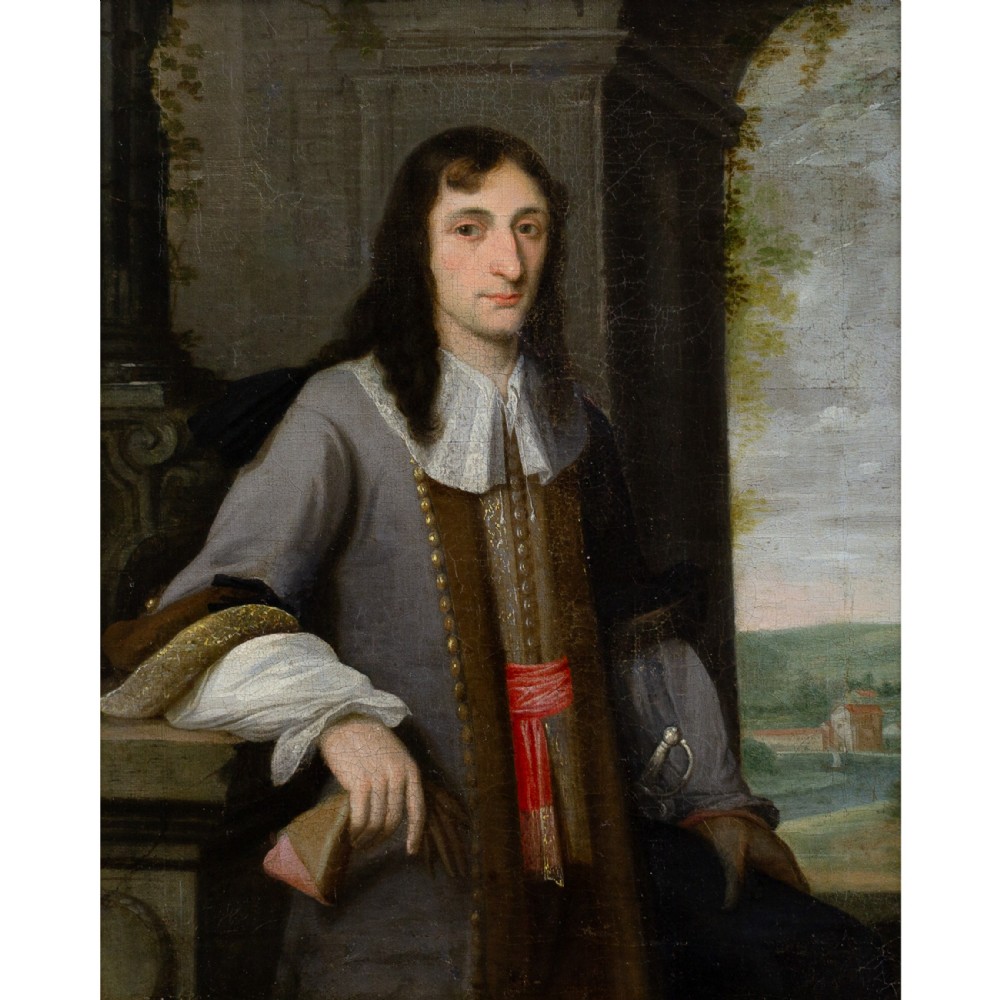
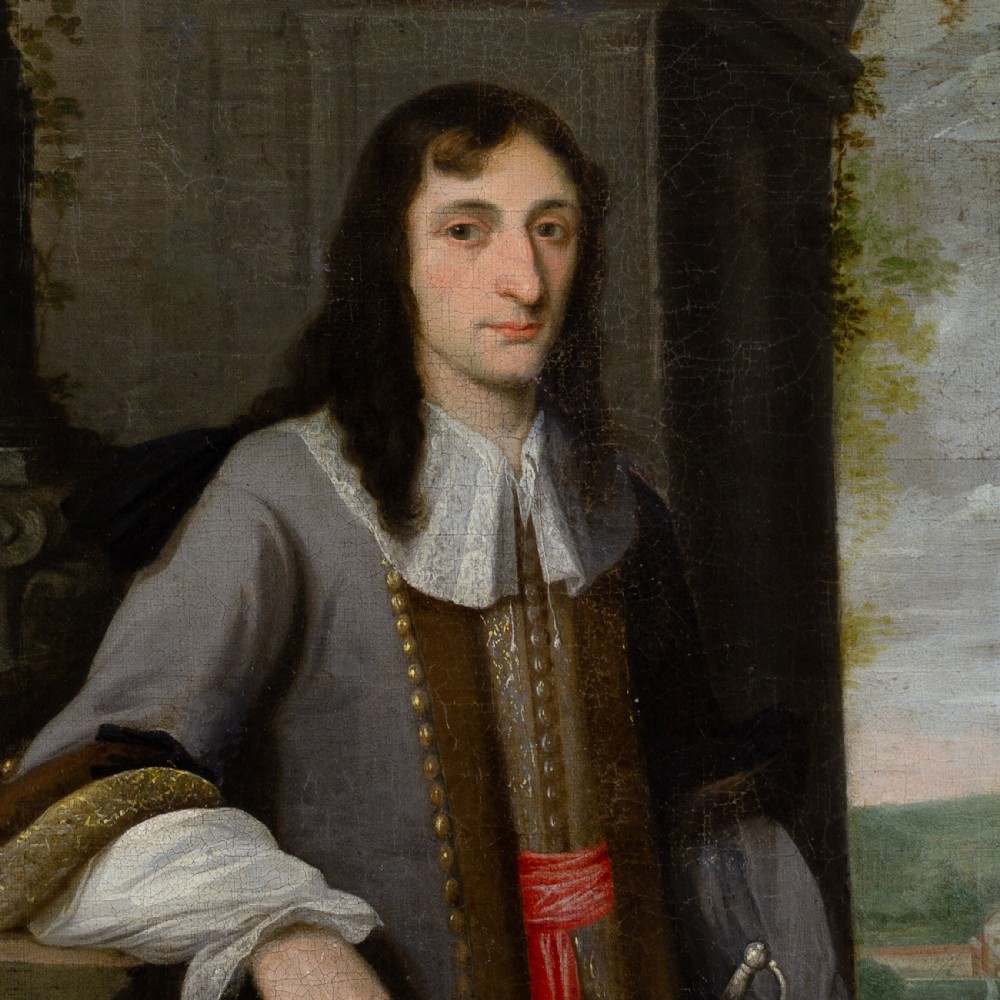
Brave Fine Art has dated this Flemish Portrait Oil Painting to the 17th Century.
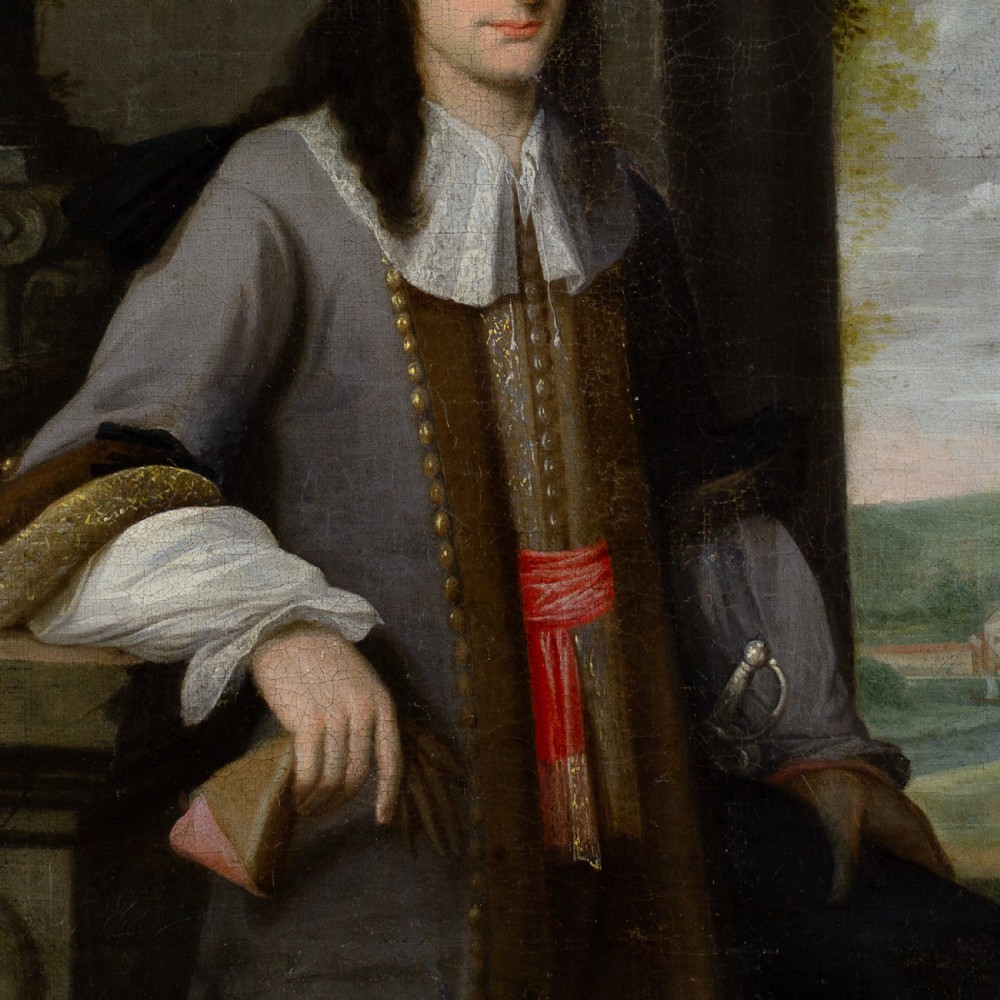
Beyond him unfolds an estate-like landscape, with a winding river and what may be a mill, suggesting landownership and inherited wealth rather than mercantile ambition.
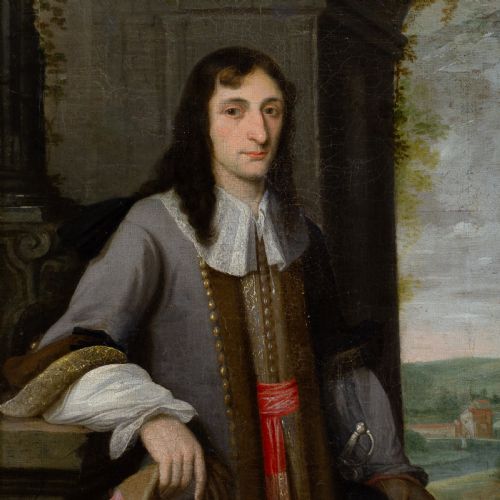
By the 1670s, the justaucorps had replaced the earlier doublet and was typically worn open over a vest and breeches. These coats were characterised by narrow sleeves with wide turned-back cuffs, designed to reveal the shirt beneath, as seen here. In this example, both coat and vest are lavishly embellished with gold embroidery, while the buttons are gilded - details that signal prosperity and refinement.
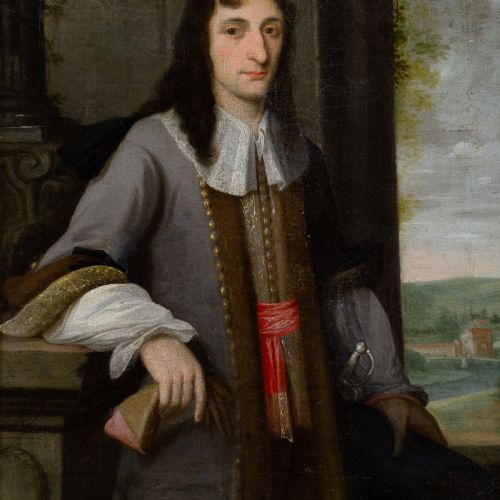
The sitter has removed a single glove, deliberately exposing one hand. Bare hands were markers of civility and breeding, and their careful depiction allowed both sitter and painter to demonstrate status and skill. Such an indulgence was generally reserved for patrons of means.
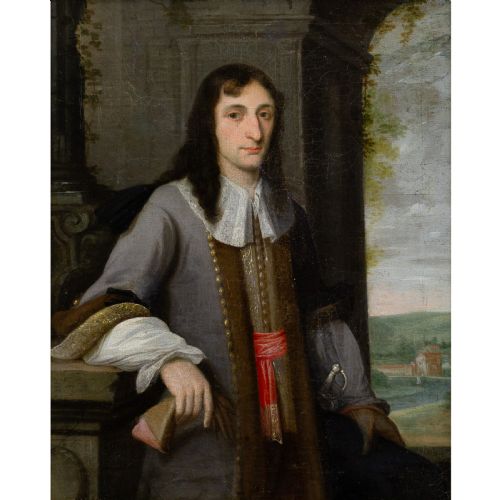
Comparable examples of late 17th-century Flemish dress may be seen in The Tichborne Dole (1671) by Gillis van Tilborgh (c.1625-c.1678).
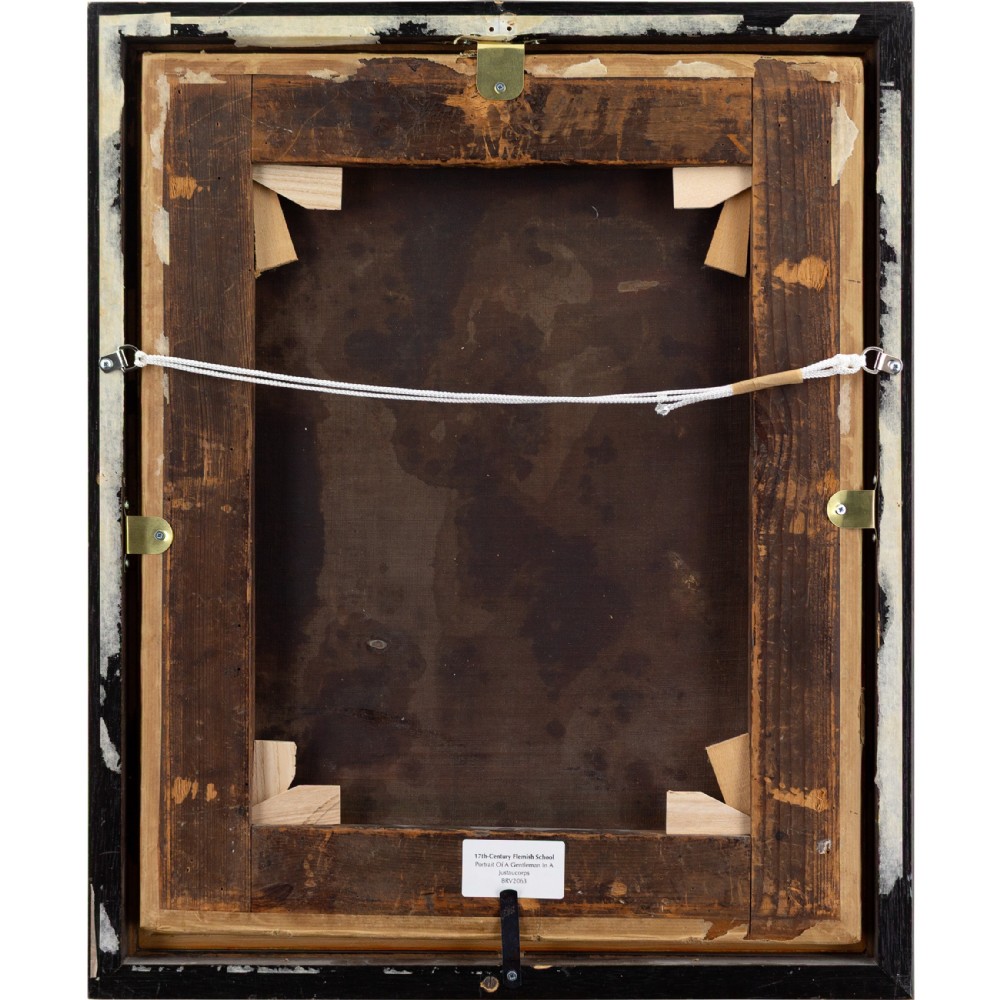
Held in a later ebonised frame with a gilt inner slip.
Medium: Oil on canvas
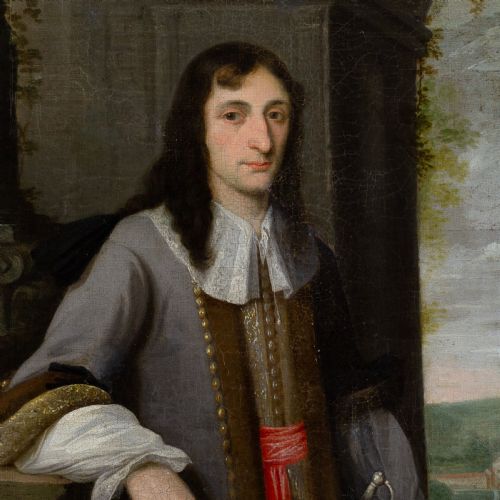
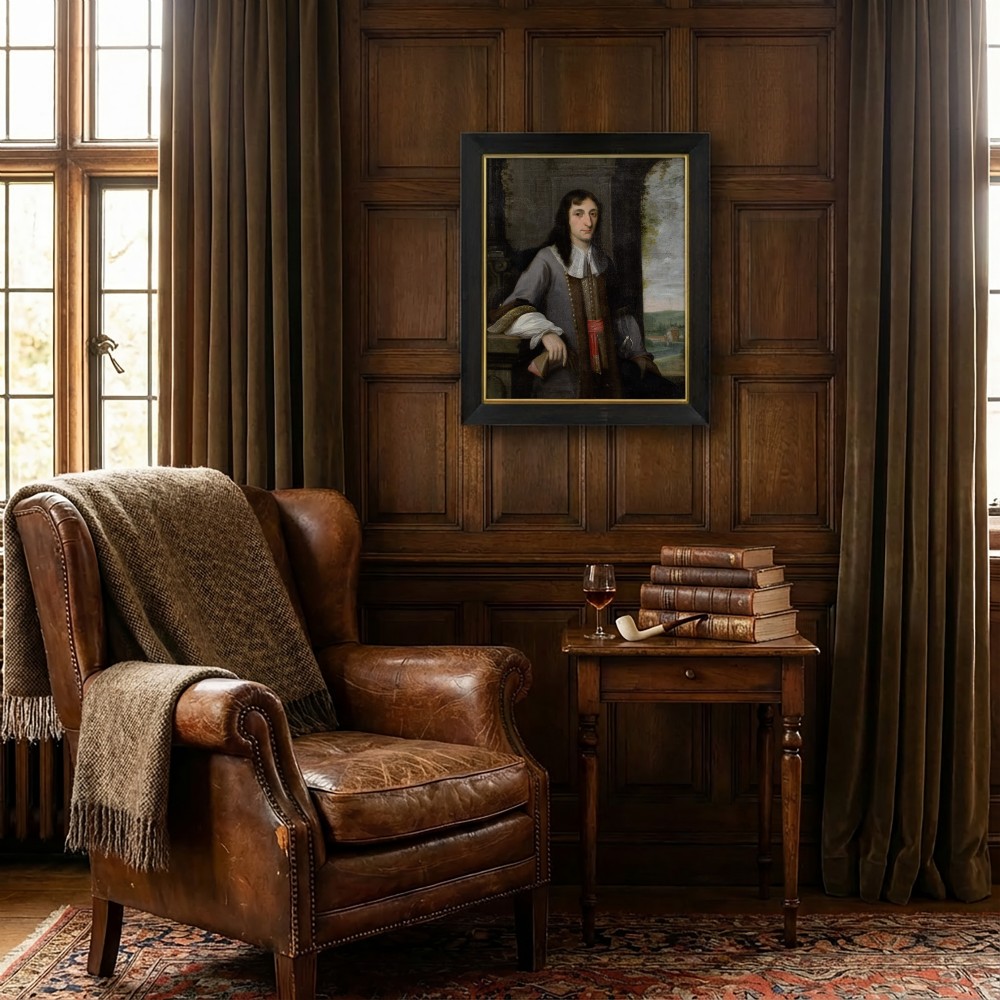
Overall size: 18½” x 22½” / 47cm x 57cm
Year of creation: c. 1675
Provenance: Private collections, Berlin, Brandenburg and Bavaria, Germany. Passed through a family for decades by descent.
Condition: Cleaned. Revarnished. Canvas relined. Historic repairs. Faint stretcher marks. Craquelure throughout. The paint layer is stable. Frame in good condition with minor age-related wear.
Our reference: BRV2063
Brave Fine Art has dated this Flemish Portrait Oil Painting to the 17th Century.
Exquisite antique paintings that capture the imagination.
You can view the stock and full dealer information on the Brave Fine Art Profile Page
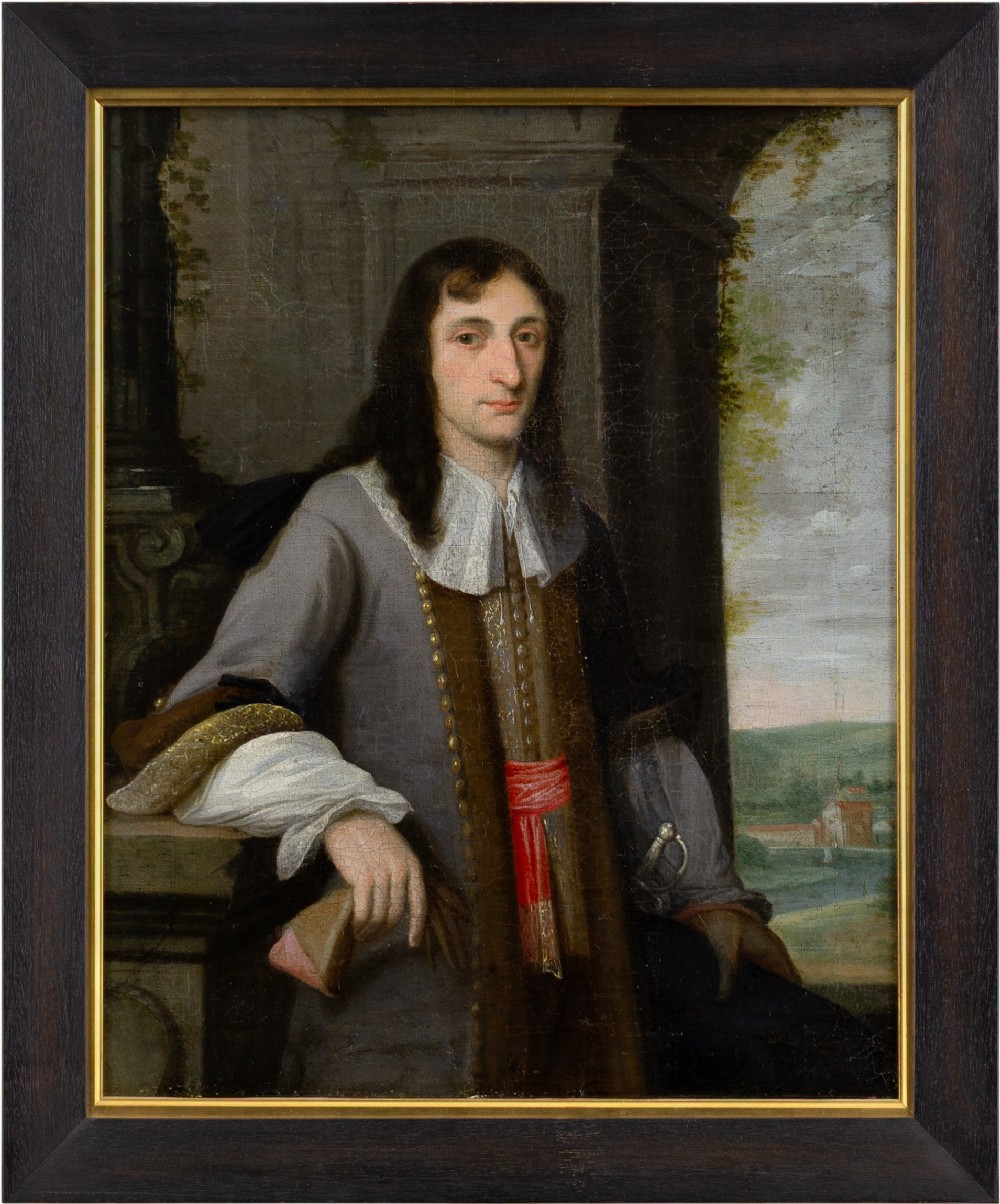
17th-century Flemish School, Portrait of a Gentleman in a Justaucorps, Oil Painting