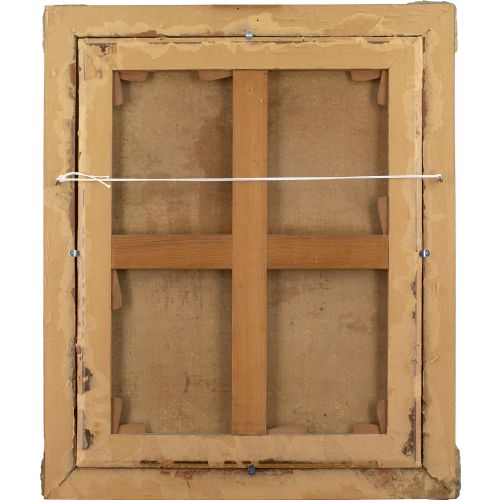
Brave Fine Art has dated this piece to the 17th Century.
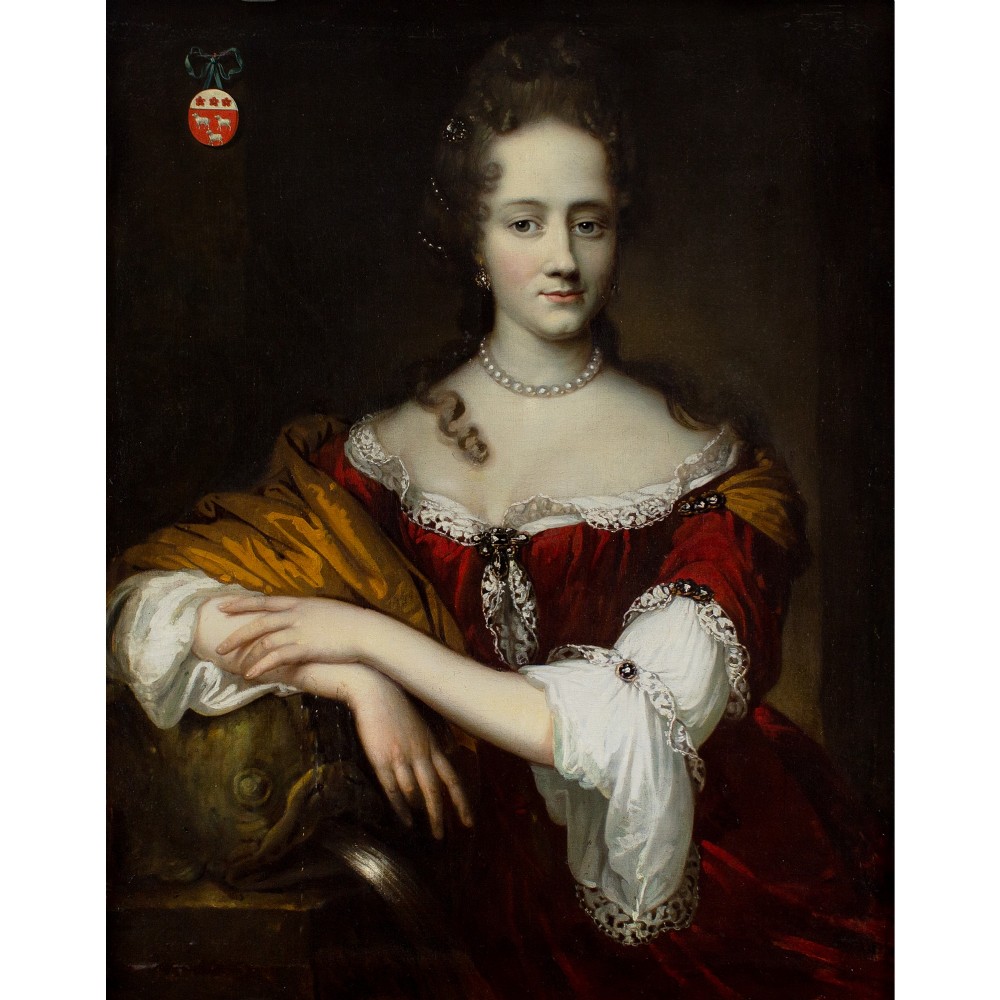
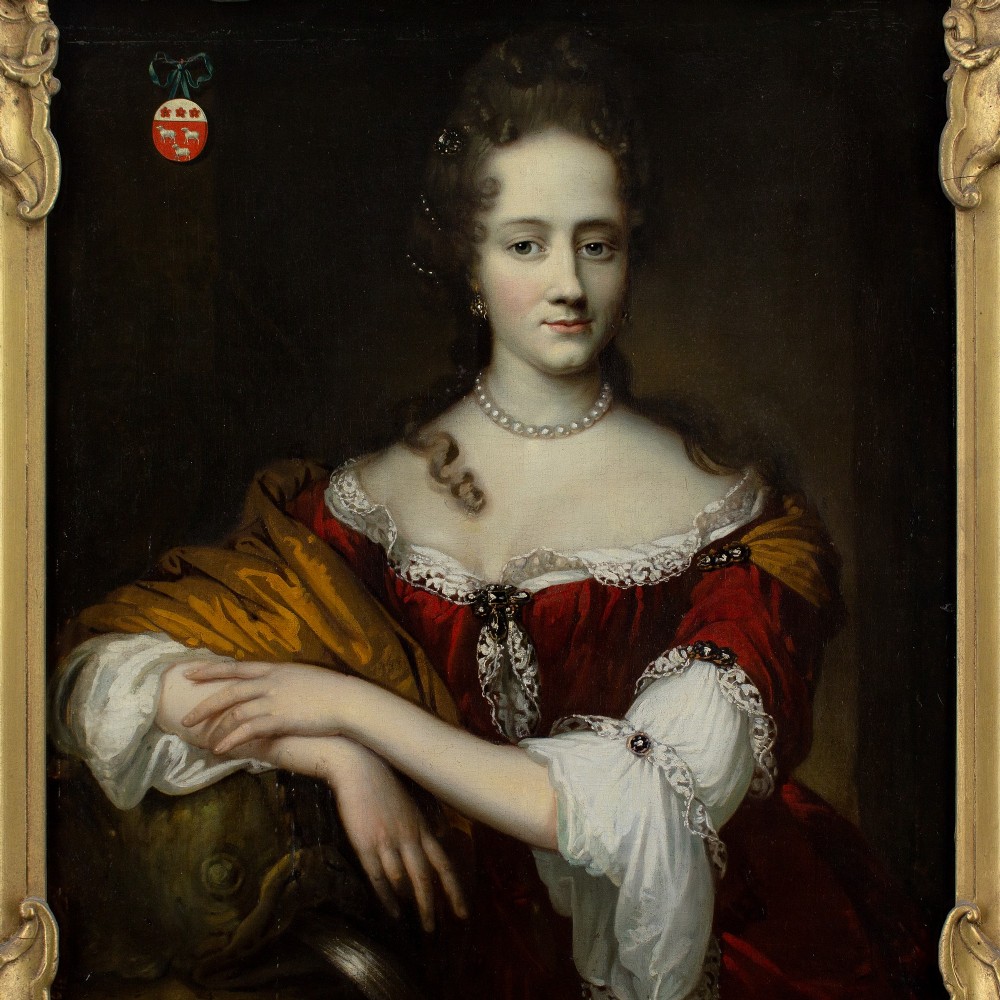
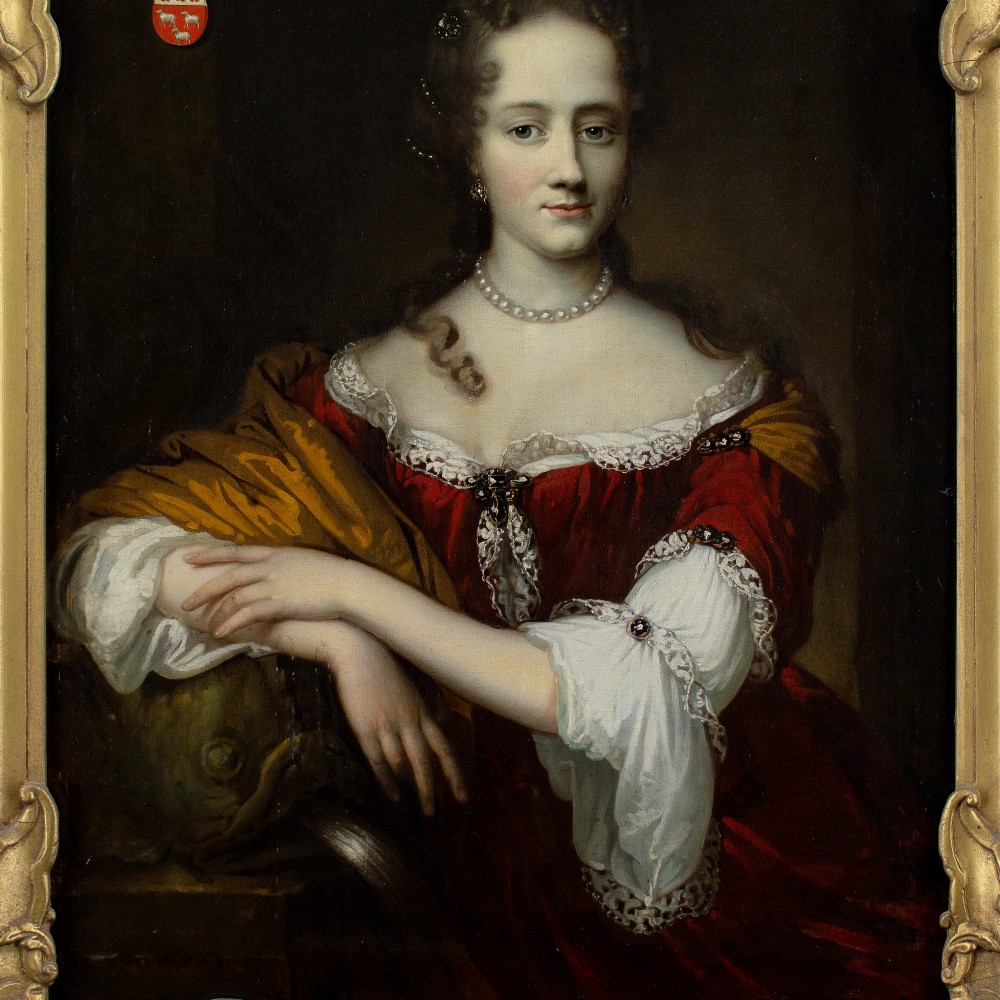
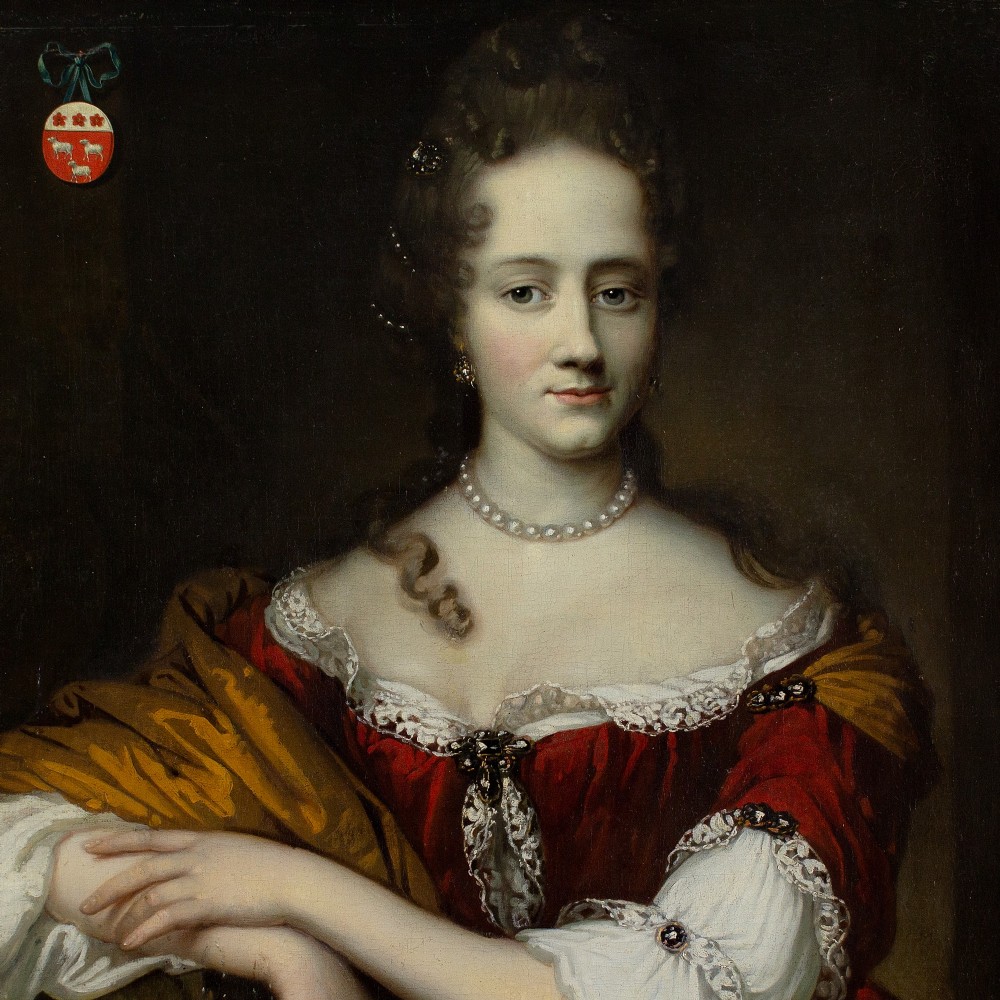
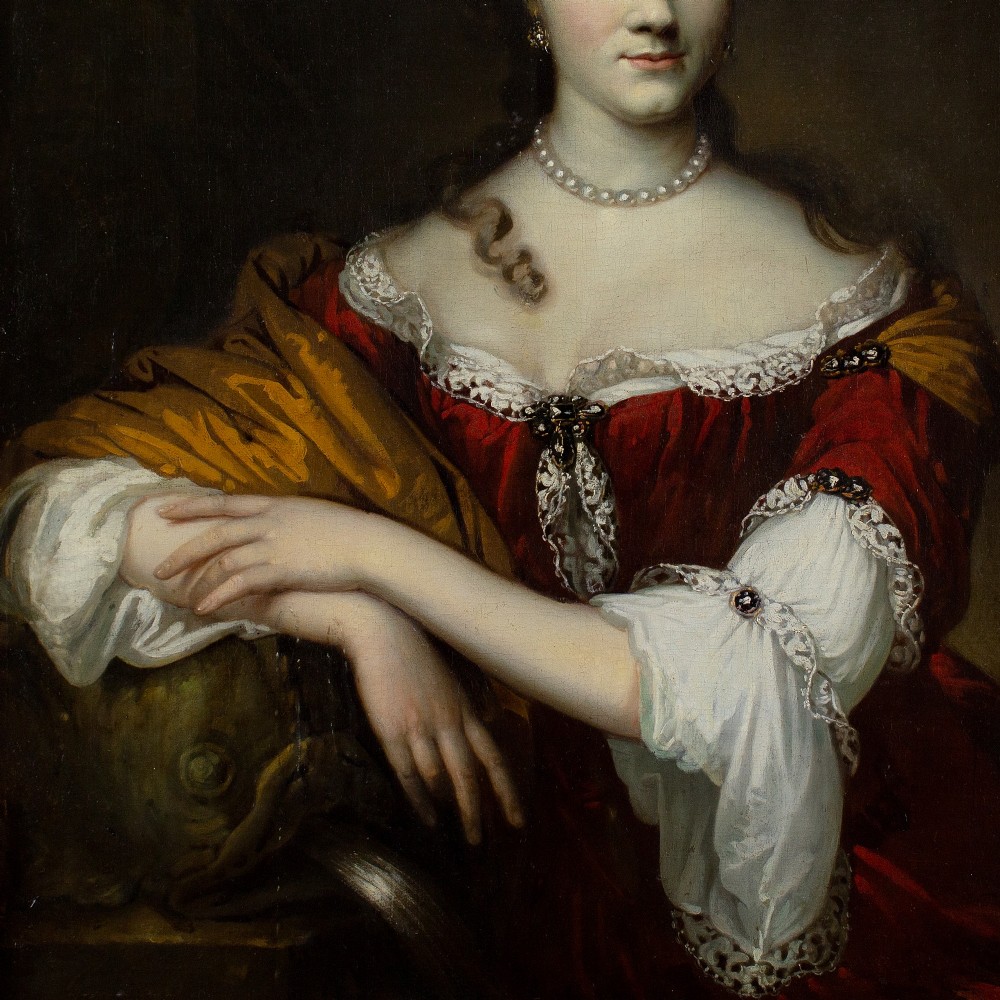
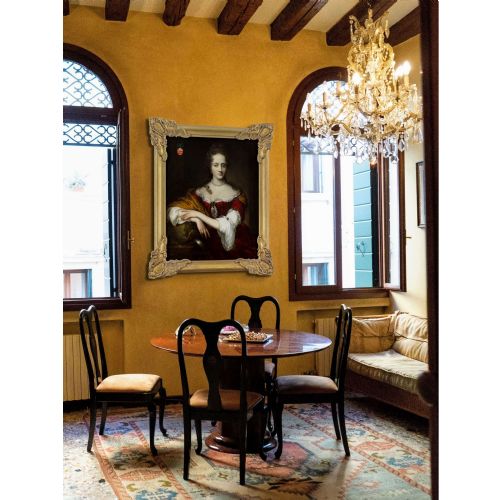
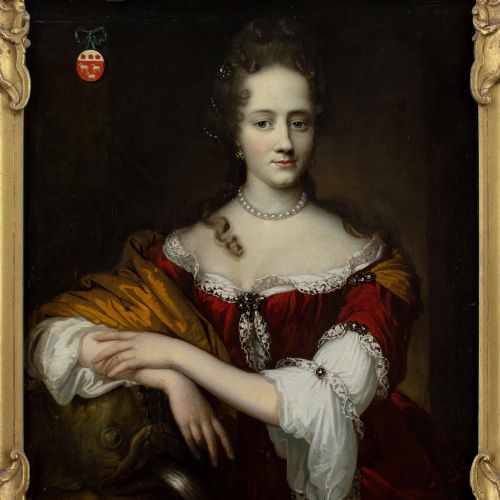
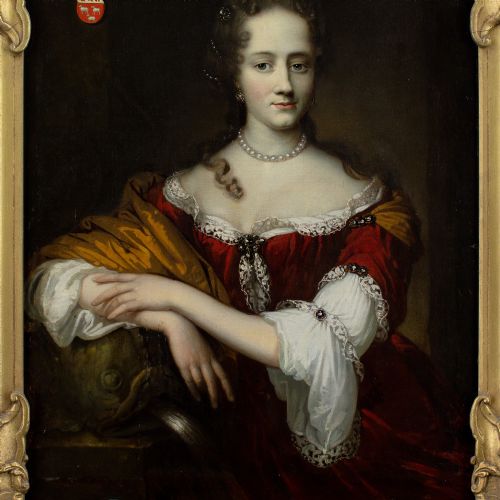
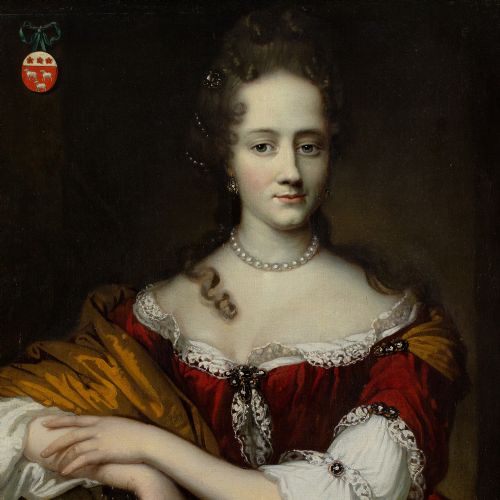
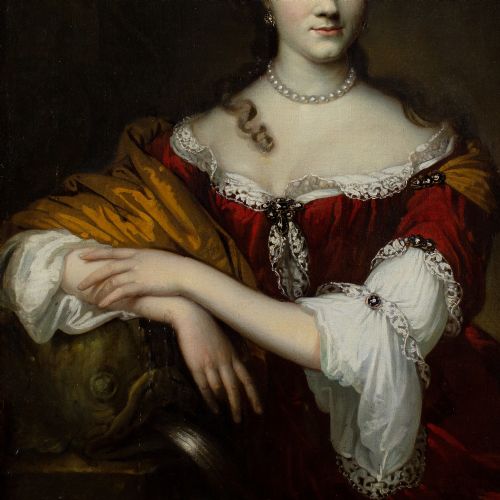
Her sleeves are embellished with elaborate lace cuffs, and a string of delicate pearls encircles her neck. A piece of sumptuous orange fabric is draped over her shoulder, which is confidently rendered.
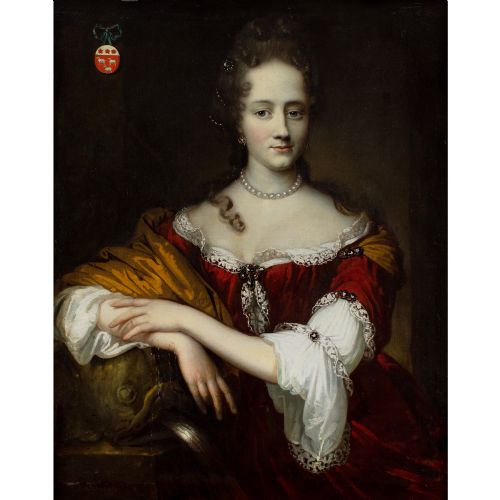
The lineage of the Van Vrijberghe family dates to the late 15th century and begins with David de Boet who married Cornelia Croesinck, lady of Vrijbergen, circa 1484. Their grandson, Willem Davidse de Boet, acquired the lordship of Vrijbergen in 1550 and adopted the title of De Boet van Vrijberghe.
Although our sitter’s identity is not known, the portrait was almost certainly produced at The Hague, where Vollevens spent much of his time - a comparable piece was produced there in 1693. With this in mind, she’s possibly related to Cornelia Van Vrijberghe (1651-1714) who moved from Tholen to The Hague and married Diederik Vleugels (1636-1717) of Brabant, a tax attorney.
In the lower left, a water fountain takes the form of a dolphin, albeit a rather unusual one. During the Baroque period, dolphins were often portrayed in this manner - more akin to a mythical sea beast than the endearing aquatic mammal we know today. For an example, see the Fontaine des Quatre-Dauphins at Aix-en-Provence.
Born in Geertruidenberg, The Netherlands, Johannes Vollevens possessed inordinate ability as a child, particularly in charcoal drawing. He approached art with such fervour that his parents sent him to study with the eminent portrait and genre painter Caspar Netscher (1639-1684), followed by a spell with Nicolaes Maes (1634-1693) in Dordrecht.
Now furnished with the rudiments, his next period of tuition was a longer apprenticeship with the leading Dutch portraitist, Jan de Baen (1633-1702), in The Hague. Here, over a span of eight years, he worked closely with de Baen, becoming an invaluable assistant. Due to the master’s popularity, Vollevens was often tasked with producing copies of de Baen’s works while also painting the drapery in many of his originals.
It’s said that the young man’s vigorous spirit was much needed as de Baen was often overloaded with work. It was a relationship that benefited both parties; on one hand, de Baen could meet the demands of his patrons, while on the other, Vollevens was gaining vital experience.
In 1672, upon completing his apprenticeship, he was inundated with commissions and soon gained the trust of esteemed dignitaries such as the Count and Countess of Nassau and the Prince of Courlant, who asked him to produce portraits of every officer in his regiment. With his career and security now established, orders continued to materialise - such as those for Colonel Perzival with his officers, the English ambassador Schelten, and for the Prince of Nassau. And following the death of Jan de Baen in 1702, he gained many of his master’s loyal patrons.
The word ‘Vollevens’ translates as ‘full of life’, which was the source of much punnery during his lifetime. But indeed, it was his zest and industriousness which set him apart from his peers and contributed to his distinguished reputation.
Compared to de Baen, Vollevens’ oeuvre is a touch less flattering, with each sitter portrayed closer to life. As such, his works possess greater diversity and less stylisation. For example, he describes Caspar Fagel (1634-1688) as distinguished and sensitive, whereas François Nicolaas Fagel (1655-1718) conveys pomp and ceremony. In both, there’s a sense of the individual - the spirit behind the facade.
His son, Johannes Vollev
Brave Fine Art has dated this piece to the 17th Century.
Exquisite antique paintings that capture the imagination.
You can view the stock and full dealer information on the Brave Fine Art Profile Page
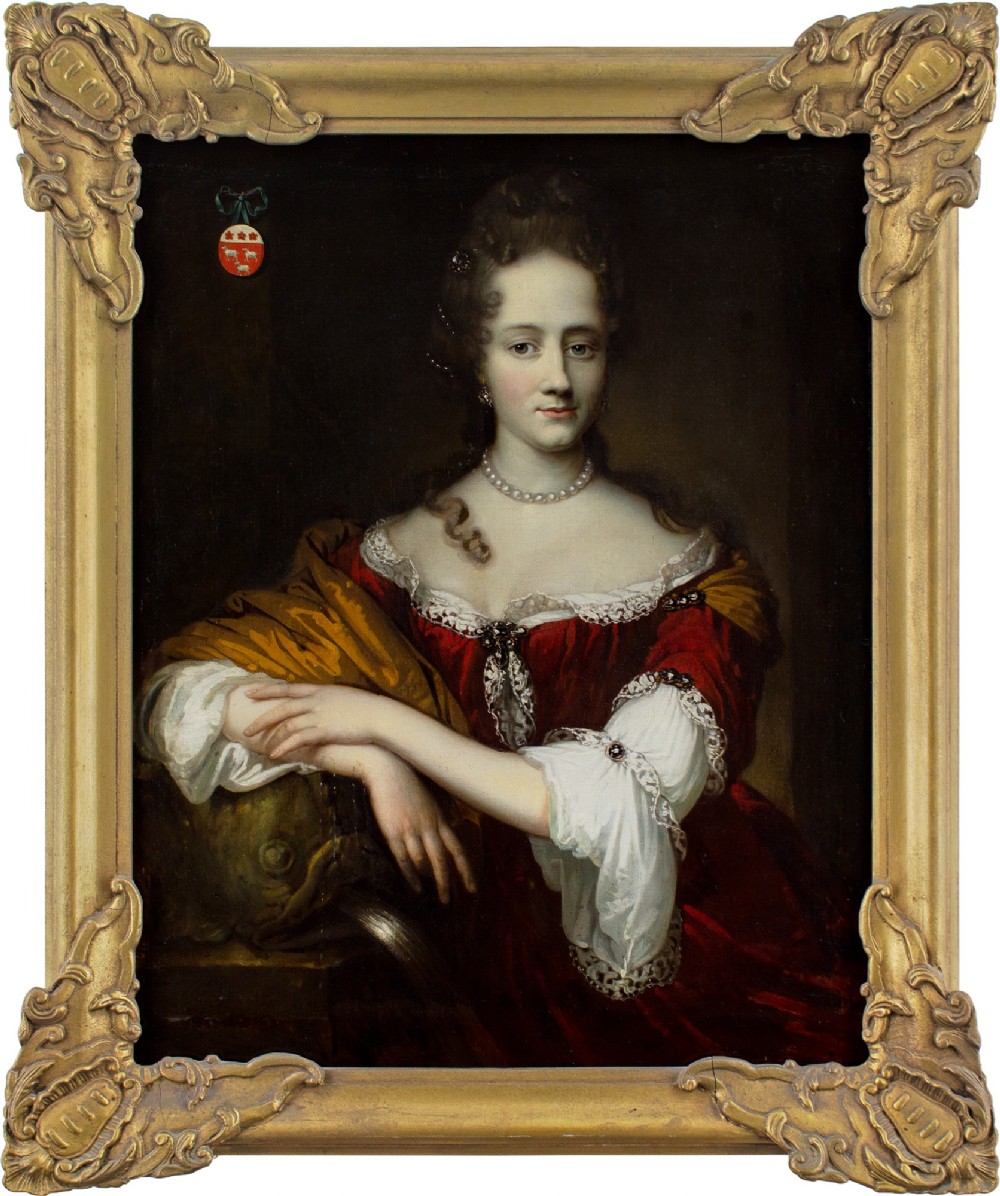
Johannes Vollevens I, Portrait of a Member of the Van Vrijberghe Family, 17th Century Oil Painting