It was listed by Titan Fine Art. Sold pieces stay on Sellingantiques as a record of what has passed through, and the next one is rarely far away.
Titan Fine Art has dated this Antique Oil Painting to the 17th Century.
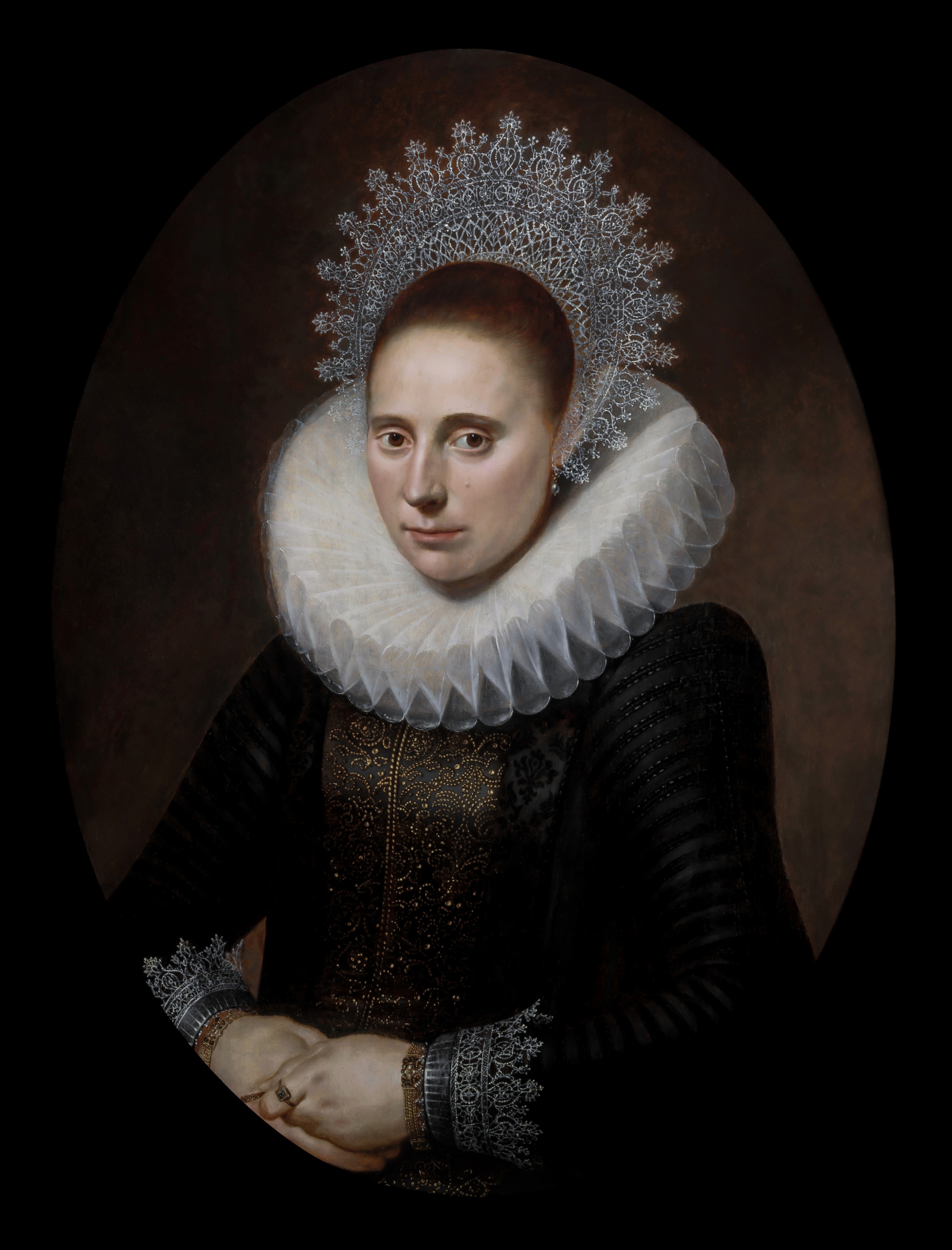
The elaborate lace coif and cuffs are painstakingly delineated, as is the bold black damask, and sumptuous gold decoration of her skirt and stomacher, which is wonderfully preserved and quite remarkable considering the age of the work and the fact that darker pigments are particularly vulnerable to fading and wear. This work with its spectacular depiction of costume is of absolute quality, it can be rated as one of the best works in the artist’s oeuvre and as such it is an important and splendid example of Dutch portraiture.
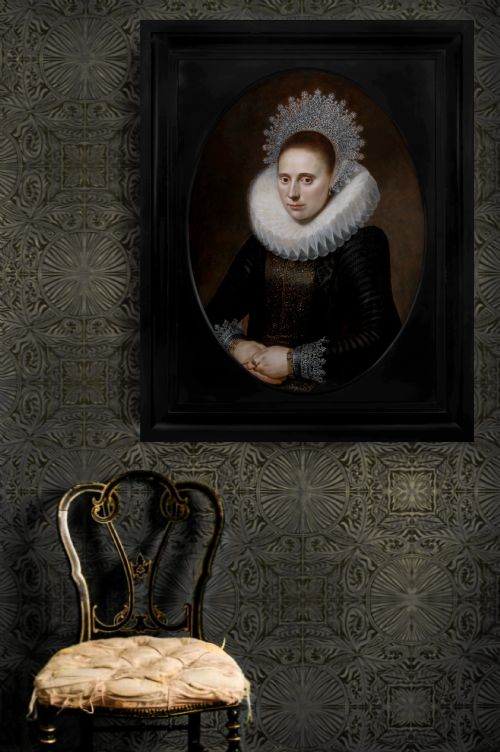
Dress was a key component in portraits, and the exuberant attire reiterates the incredible wealth of this woman. The sitter will have visited the artist’s workshop and inspected examples on display. They would have chosen the size and the sort of composition and on that basis negotiated the price – which would have also been determined by the complexity of the clothing and the jewels that were to be depicted, and by the materials to be used.
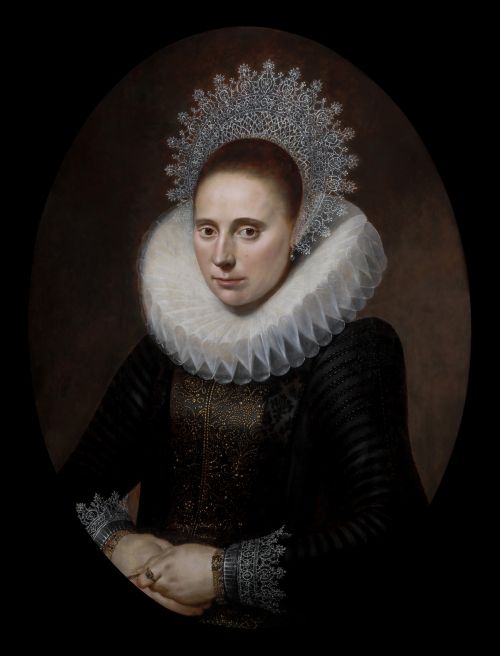
The colour black was regarded as humble and devout yet at the same time refined and sophisticated and the most expensive colour of fabric to dye and to maintain. Citizens spent fortunes on beautiful black robes. The colour was always an exciting one for artists and when this portrait was painted there were at least fifty shades of it.
The sitter is either a married women or a widower as is evident by the clothing that she wears and the position, toward her right, it is highly likely that this portrait was once a pendant that hung on the right-hand side of her husband’s portrait as was convention at the time. She wears a vlieger which was a type of sleeveless over-gown or cape worn by well-to-do married women in the late 16th and early 17th centuries. Girls and unmarried woman, including beguines, wore a bouwen (a dress with a fitted bodice and a skirt that was closed all round) instead. This clear distinction between apparel for married and unmarried women is clear not only from inventories and trousseau lists, but also from contemporary sources such as the Dutch Spanish dictionary published by Juan Rodrigues in 1634. In it, a bouwen is described as a ‘ropa de donzella’ (over-gown worn by a virgin) and a vlieger as a ‘ropa de casada’ (overgown worn by a married woman). It is striking how few women are depicted wearing a bouwen, unless they are part of a group, family or children’s portrait and it can therefore be assumed that independent portraits of unmarried women were seldom commissioned. It is also believed that the clothing worn in these portraits existed and were faithfully reproduced when cross-referenced with the few exact documents. These sources also demonstrate that clients wanted their clothing to be depicted accurately and with this in mind precious garments and jewels were often left in the painter’s studio.
The prominent white lawn molensteenkraag (millstone ruff) is held up by a wire supportasse and often required 15 meters of linen batiste. This item was very costly, as are the equisitely depicted elaborate lace coif and cuffs.
Cornelis van der Voort, who was probably born in Antwerp around 1576, came to Amsterdam with his parents as a child. His father, a cloth weaver by trade, received his citizenship in 1592. It is not known who taught the young Van der Voort to paint, but it has been suggested that it was either Aert Pietersz or Cornelis Ketel...
Full description at: www.titanfineart.com
Titan Fine Art has dated this Antique Oil Painting to the 17th Century.
Specialist in 17th & 18thc portraits. Highly curated selection, museum-level research & pro conservation. Exceptional art, expertly vetted.
You can view the stock and full dealer information on the Titan Fine Art Profile Page
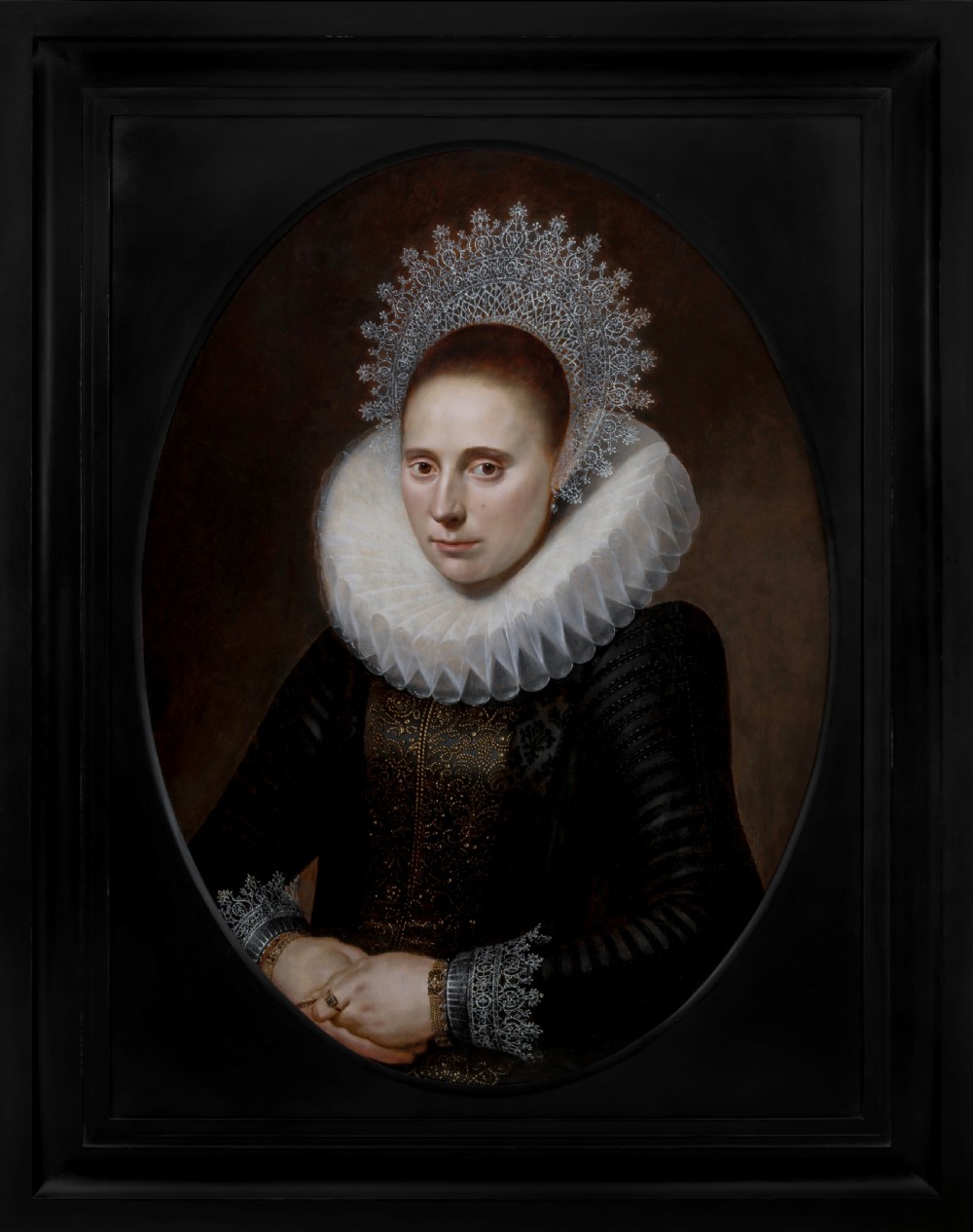
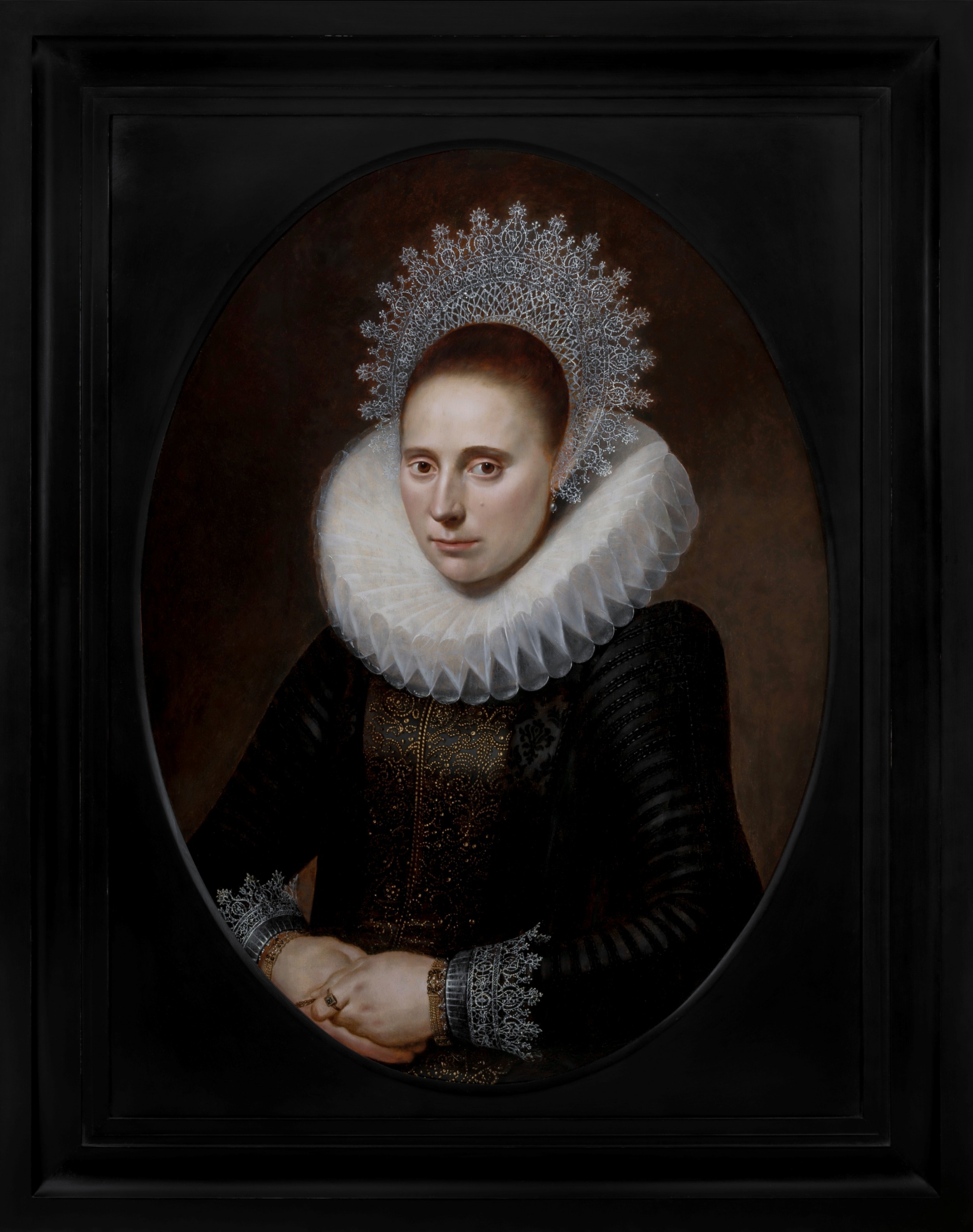
C.1610 Portrait of a Lady in White Ruff and Lace Coif; by Cornelis Van Der Voort (C.1576-1624), Oil on Panel Painting