Brave Fine Art has dated this piece to the 1890s.
He was a contributor to the late 19th-century ‘St Ives School’.
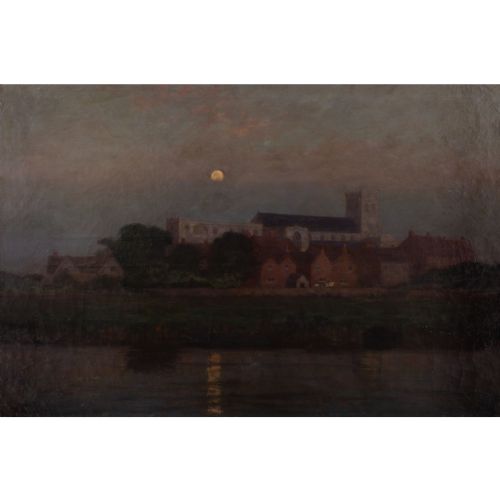
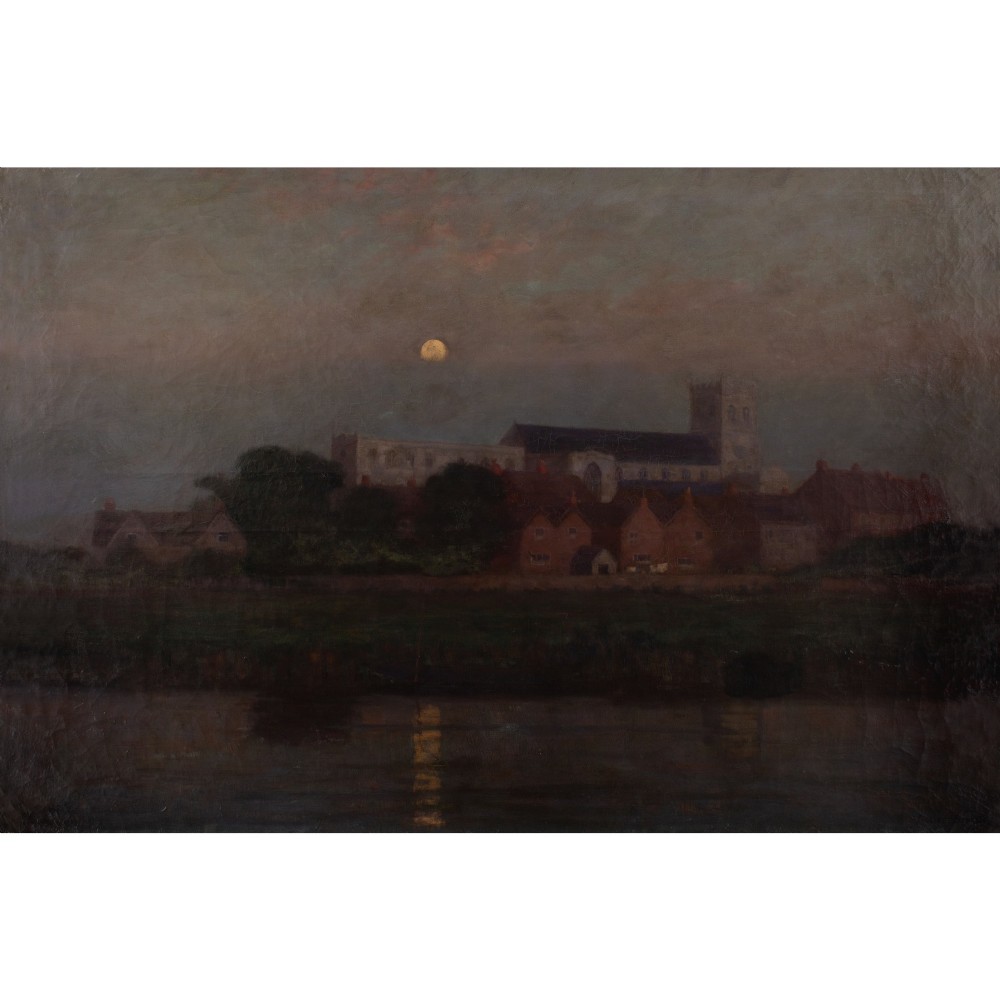
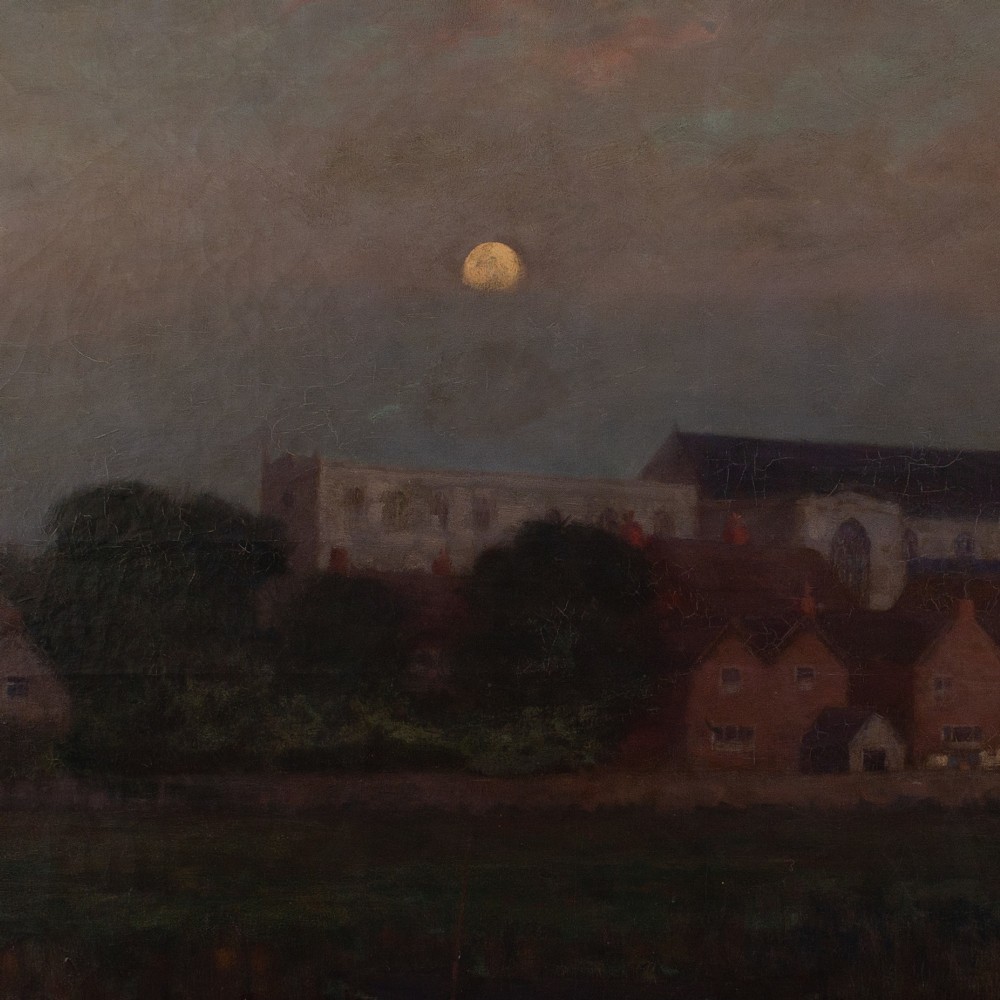
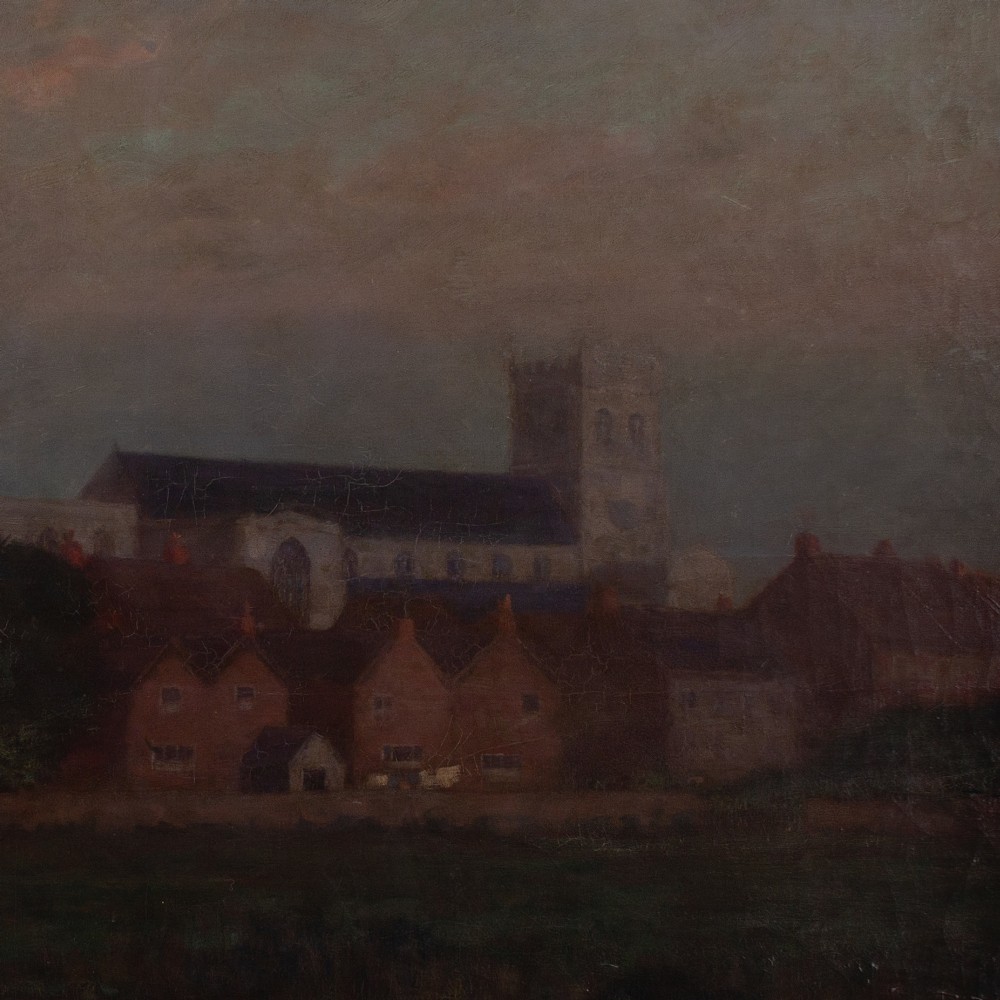
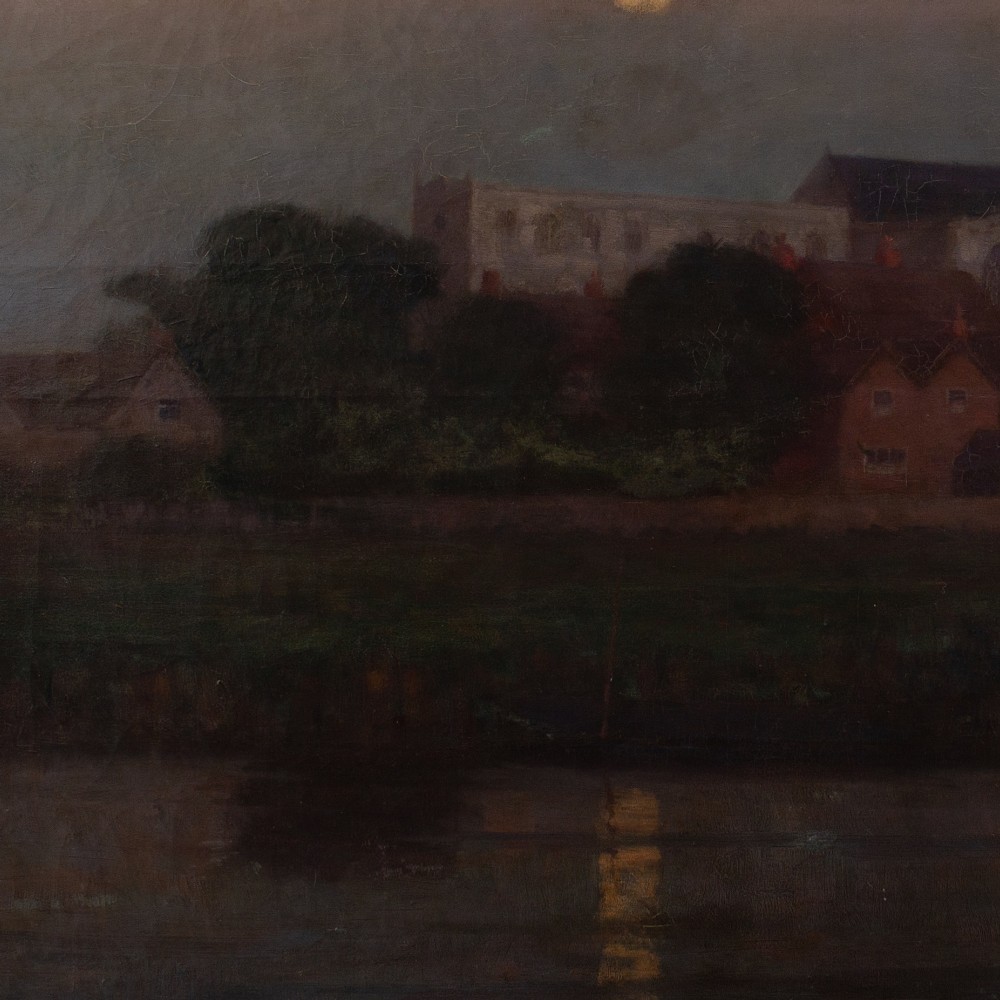
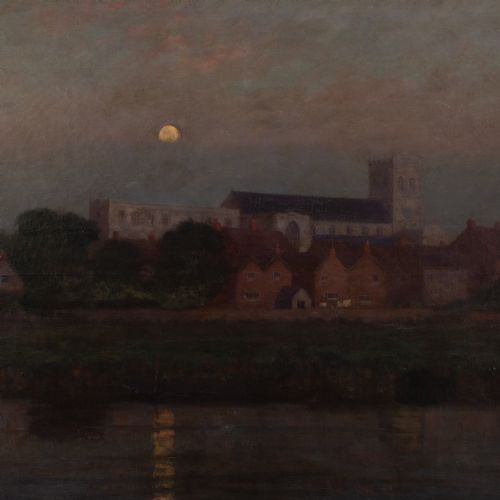
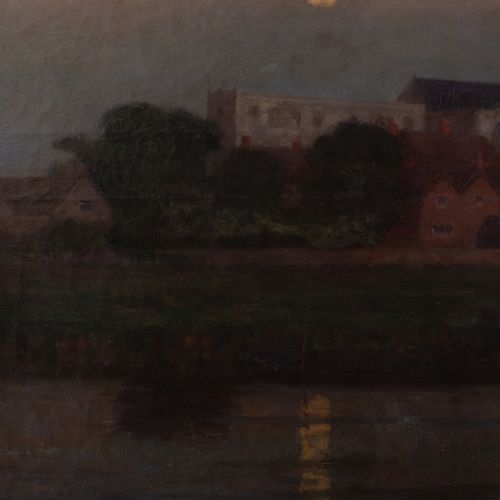
Red brick facades of Cornish dwellings are subdued by the weary haze of a falling sun. The sea shimmers, emphasising a strip of reflected golden light. A church stands prominently, casting its eye towards distant vessels.
Hailing from the leafy parish of Goring in Oxfordshire, Folliott-Stokes’ father was the local Vicar, so one assumes he was raised in a rather pious and evangelical setting. At around 15, he enrolled at a private school in Drayton run by the Reverend Arthur James Williams, but two years later, became an apprentice in the Royal Navy - following in his grandfather’s footsteps. Given the artist’s somewhat nomadic sensibilities, which we’ll discuss later, it’s interesting to consider whether his naval pursuits were motivated by a desire to rebel.
By 1881, he’d returned to civilian life and settled in Bridgnorth where he worked as a land agent. His role involved establishing relationships with affluent landowners and this is perhaps how he came to know Charlotte Vansittart Frere, who became his wife a year later. Her father was a barrister and her mother worked at the House of Commons. From this point on, it appears that Folliott-Stokes abandoned the desk in favour of artistic pursuits, presumably encouraged by Charlotte. One assumes that he must’ve received an annuity from his father to support his decision.
The pair soon moved to Wood Green, London, where he struggled to establish himself. Exhibitions were relatively few during this period and it seems that he became increasingly restless. In 1889-1890, he exhibited with the Ipswich Fine Art Club and recorded his address as The Cottage, Southwold, Suffolk.
It’s evident from his writings that Folliott-Stokes was a rather spiritual soul with a deep connection to the natural world. In a poem titled ‘Cornishman’ from 1909, he described the “rolling moor” as “soft kissed by the golden sun” and “wrapt in a robe of lace-like mist”. It was inevitable that he would ultimately swap the industrial edifice of the capital for the raw sublimity of Cornwall.
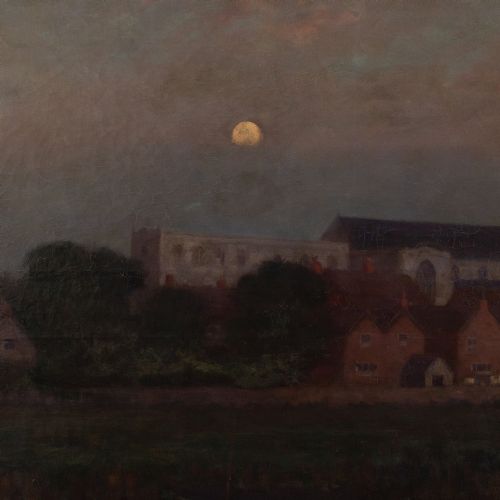
The 1891 census records him as residing, together with his wife and daughter, in St Ives with William Berriman, a local shipwright, and Mary Berriman. It seems that he retained a London address, probably a studio, while actively working in St Ives. Inspired by his picturesque surroundings, in 1897, he debuted at the Royal Academy with ‘A Light Night’ and ‘Moonrise’ - two atmospheric nocturnal views.
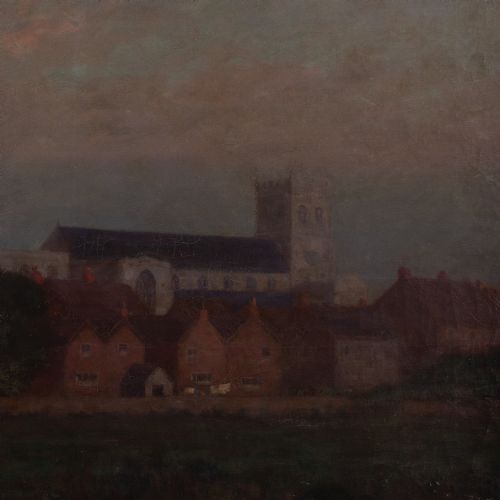
Capturing the Cornish coastline under moonlight became his raison d'être and his oils were brimming with spirit. Despite his apparent lack of formal teaching, he worked in a fluid style somewhat akin to the Impressionists. You could say he was a student of nature herself, immersing himself within it.
As time passed, he was slowed by illness and the frequency of his output suffered as a result. In around 1902, he switched to writing as a career, with painting consigned to occasional local shows. His success as a writer surpassed his achievements as a painter and he published several popular travel guides along with occasional artist biographies. In 1910, for ‘The Studio’ magazine, he described the artist Julius Olsson (1864-1942) as possessing the “ability to interpret the sea throughout the whole gamut of its phenomena - from the fury of the storm to the sensuous beauty of the calm”. Olsson was an inspiration and we’ve published this review in our directory.
Folliott-Stokes lived to the grand old age of 84, spending his final decades ramblin
Brave Fine Art has dated this piece to the 1890s.
Exquisite antique paintings that capture the imagination.
You can view the stock and full dealer information on the Brave Fine Art Profile Page

Allen G Folliott-stokes, Sunday Evening, Cornwall - Antique Oil Painting