



Cornwall Landscape Painting
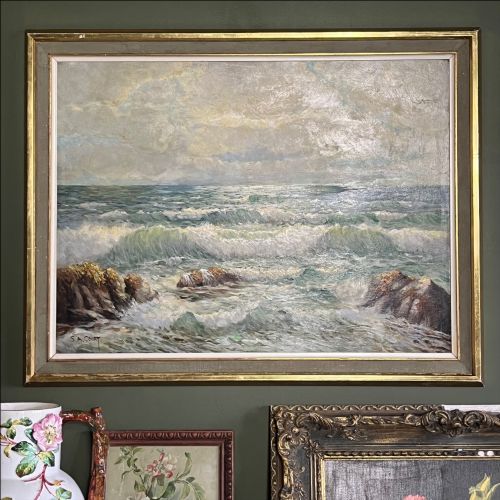
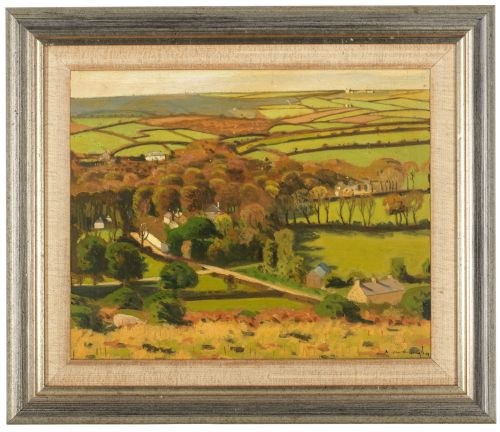
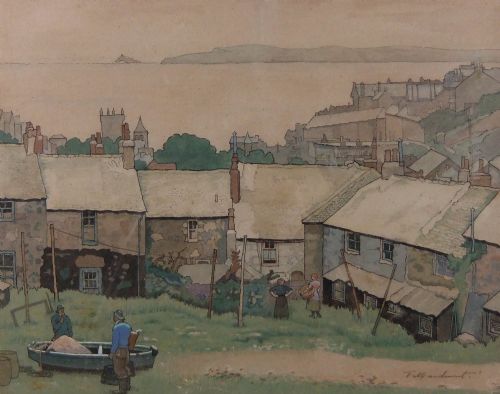
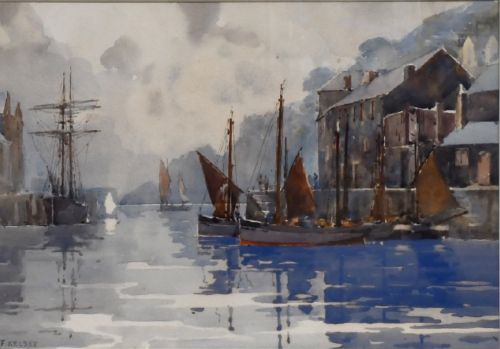
When you search for a cornwall landscape painting, you encounter coastal views and harbour scenes recorded by artists working across multiple decades.
Cornwall Landscape Painting
A cornwall landscape painting captures the distinctive light, harbours, and coastal topography of the region through various periods including the nineteenth century, the Edwardian era, and the mid-twentieth century.
The works on this page frequently depict recognisable locations such as St Ives, Polperro, Mousehole, and Mevagissey, rendered either on location or interpreted within local artistic traditions.
You will encounter works originating from distinct movements such as the Newlyn School and the St Ives School, alongside traditional British landscape art and Impressionist interpretations.
How they were made
Artists record these coastal subjects primarily using oil paint on canvas or board, alongside watercolours applied to paper and occasional pastel drawings.
Many works were painted en plein air, capturing direct observations of maritime light, harbour tides, and coastal weather conditions.
The physical support ranges from traditional stretched canvas to woodblock prints and watercolour paper, often preserved beneath glass within period frames.
St Ives and Polperro appear most frequently among the named harbour locations in the archive and current selection.
What varies in quality
Quality rests upon the artist's ability to render the specific atmospheric quality and changing light of the Cornish coast rather than mere topographical accuracy.
The handling of medium distinguishes the work, with skilled brushwork in oils or confident washes in watercolour creating depth and movement in marine scenes.
Provenance and association with documented art colonies such as Newlyn or St Ives add significant context to the standing of an individual piece.
Sidney A. Court·William Banks Fortescue·Robert Morson Hughes·Thomas Maidment·Frank Kelsey·George F Pennington·Edward Matthew Elliott·Gyrth Russell·George Turland Goosey·William Pitt·Joseph Farquharson·Ernest F. Hill·Frederick Stuart Richardson·William Lambert Bell·Jack R Mould·Walter Sweet·Hendrik Yan Wolter·S. J. Lamorna Birch·Cuthbert Crossley·William Edward Webb·Arthur Joseph Meadows·John Baragwanath King·Thomas Herbert Victor·Albert Starling·W Tetley
The Cornwall Landscape Painting Glossary
- En plein air
- Painting outdoors to capture direct natural light and atmospheric conditions. This method defines many coastal works produced directly on the shore.
- Newlyn School
- An art colony of painters based in Cornwall during the late nineteenth and early twentieth centuries. They favoured naturalism and realistic depictions of local life and landscape.
- St Ives School
- A group of artists associated with the Cornish town that became a centre for modern British art. The tradition encompasses both traditional coastal views and later abstract developments.
- Watercolour
- A painting method where fine pigments are suspended in a water-based solution on paper. It allows for translucent washes that suit changing marine skies.
- Seascape
- A work depicting the sea, coastal cliffs, or harbour views. These compositions often balance maritime activity with surrounding landforms.
Cornwall Landscape Painting: Frequently Asked Questions
Where were most of these coastal scenes painted?
The works focus heavily on specific Cornish harbours and fishing villages such as St Ives, Polperro, Mousehole, and Mevagissey.
Artists frequently returned to these locations to capture the distinct light and maritime activity of the south-west coast.
How do I identify a Newlyn School painting?
Newlyn School works typically display a commitment to naturalism, often depicting local fishermen, harbour life, and coastal landscapes observed directly in the open air.
Many of these artists settled permanently in the region to study the local community and landscape firsthand.
What is the difference between oil and watercolour versions?
Oil paintings on canvas offer heavier texture and deeper colour saturation, making them suited to dramatic seascapes and shifting weather.
Watercolours on paper rely on translucent washes of pigment, lending a lighter and more immediate quality to harbour views.
How should I frame and display these historic works?
Historic watercolours require conservation framing with mounts and glass to protect the paper from humidity and direct sunlight.
Oil paintings on canvas generally benefit from period wooden frames that complement the age and palette of the artwork.