


Brown Sail Harbour Painting
A brown sail harbour painting captures maritime life through traditional oils and watercolours, offering collectors a classic window into historic coastal activity.
Brown Sail Harbour Painting
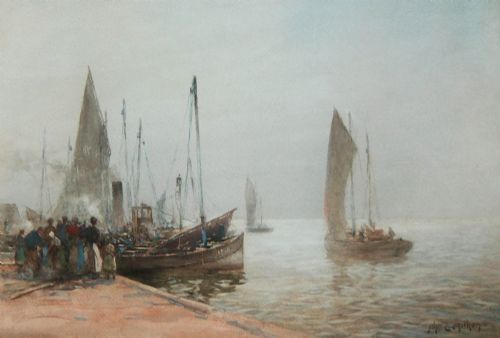
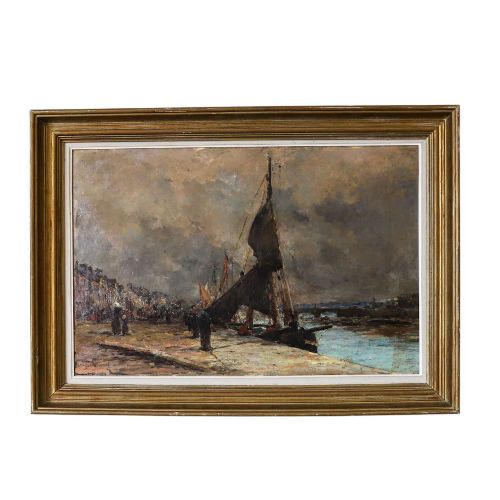
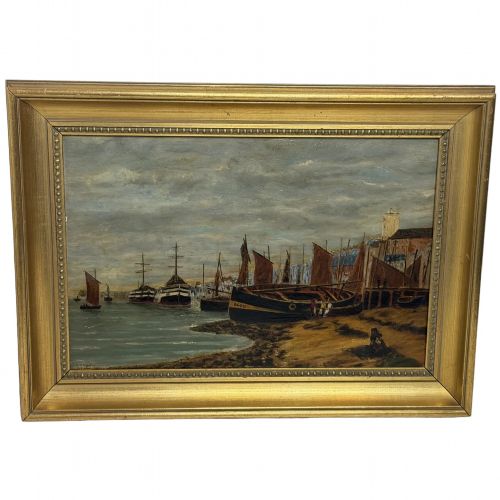
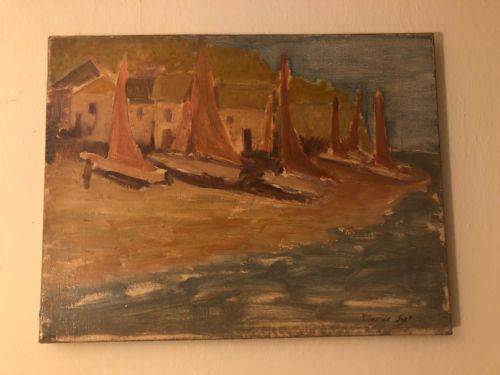
A brown sail harbour painting typically portrays maritime scenes featuring coastal waters, shipping vessels, and busy ports rendered in oils or watercolours. These works span multiple eras, offering depictions of British and European locations from the early nineteenth century through to the mid twentieth century.
Buyers browsing this selection will encounter various interpretations, ranging from detailed Victorian marine watercolours to bolder post-impressionist canvases. The common thread across these works is the central focus on harbour life, maritime vessels, and coastal architecture.
The assortment includes pieces attributed to notable artists alongside works originating from broader British and continental schools. Each painting records specific coastal locales, capturing the distinctive character of historic harbours and their working boats.
Materials and methods
Artists relied primarily on oil paint applied to canvas or wood panels, or watercolour pigments worked onto paper supports. These traditional media allowed painters to capture the variable light and atmospheric conditions typical of coastal environments.
Many works are housed within their original or period frames, frequently constructed from wood and finished with gilt decoration. The combination of durable paint layers and framed presentation ensured these maritime scenes survived down the centuries.
The available listings span from the early nineteenth century to the 1960s, utilising oil on canvas, oil on board, and watercolour on paper.
Assessing quality in maritime art
Quality in these coastal works rests on the artist's handling of light, water, and atmospheric depth within the composition. Stronger examples demonstrate a confident control of medium, whether through the fluid transparency of watercolour or the rich texture of oil paint.
The execution of maritime detail, such as rigging, hull structure, and architectural elements, distinguishes accomplished works from simpler topographical records. Provenance and attribution to documented artists further elevate the standing of individual pieces.
James E Aitken·Thomas Bush Hardy·William Wyld·Fred Mayor·Walter Sweet·Frank Wasley·Micheal Matthews·Bertram Priestman·Rowland H Hill·Maurice Sijs·Stephen Brownlow
The Brown Sail Harbour Painting Glossary
- Watercolour
- A painting method in which the paints are made of pigments suspended in a water-based solution. This technique was frequently utilised for detailed coastal scenes on paper supports.
- Gilt Wood
- Wood carved and coated with a thin layer of gold leaf or metallic powder. Frames made in this manner frequently accompany nineteenth-century oil paintings.
- Post-Impressionism
- An art movement extending beyond impressionism that prioritised symbolic content and expressive use of paint. Examples from this tradition appear in continental harbour views.
- Panel
- A flat piece of wood or other rigid material used as a support for painting instead of canvas. Several nineteenth-century works utilise this firm surface for oil applications.
Brown Sail Harbour Painting: Frequently Asked Questions
What subjects appear in these harbour paintings?
The works depict coastal waters, working shipping vessels, moored boats, and historic port architecture across various British and European locations.
Scenes range from busy river mouths to quiet fishing villages, capturing the daily routines of maritime communities.
How should I care for a watercolour painting?
Watercolour works on paper require protection from direct sunlight to prevent fading of the pigments over time. Framing behind conservation glass in a stable environment helps preserve the paper support.
Keep these pieces away from areas of high humidity to protect both the painting and its mount.
What periods do these paintings represent?
The selection spans from the early nineteenth century through to the mid twentieth century, encompassing Georgian, Victorian, Edwardian, and post-impressionist eras.
Each period brings distinct stylistic approaches to maritime subject matter.
Are these works signed by the artists?
Many of the listed paintings feature visible signatures or attributions to named historical artists and schools. Documentation often connects specific pieces to known maritime painters of the nineteenth and twentieth centuries.
Unsigned works are typically attributed based on style, technique, and subject matter.