It was listed by Titan Fine Art. Sold pieces stay on Sellingantiques as a record of what has passed through, and the next one is rarely far away.
Titan Fine Art has dated this Antique Oil Painting to the 17th Century.
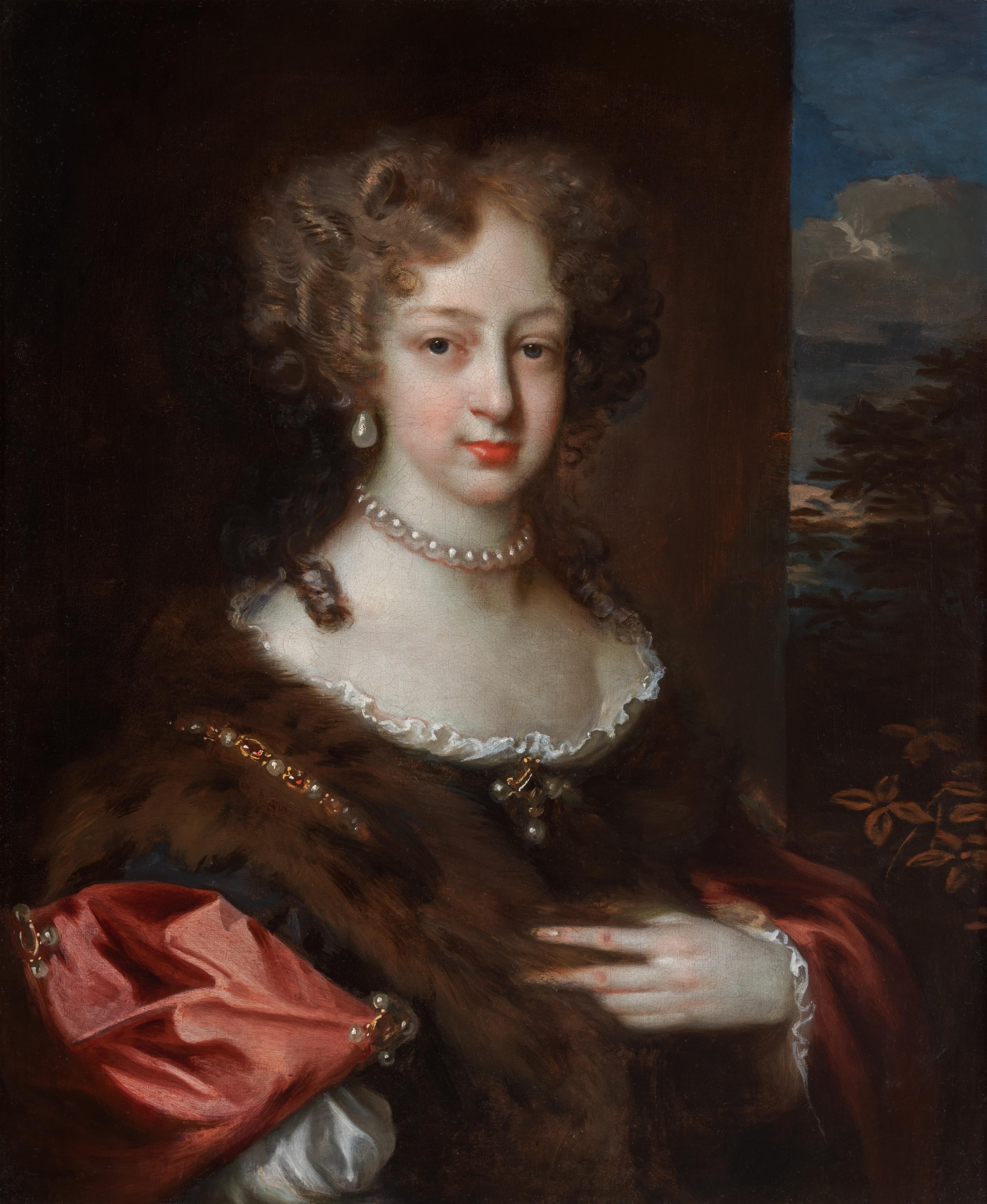
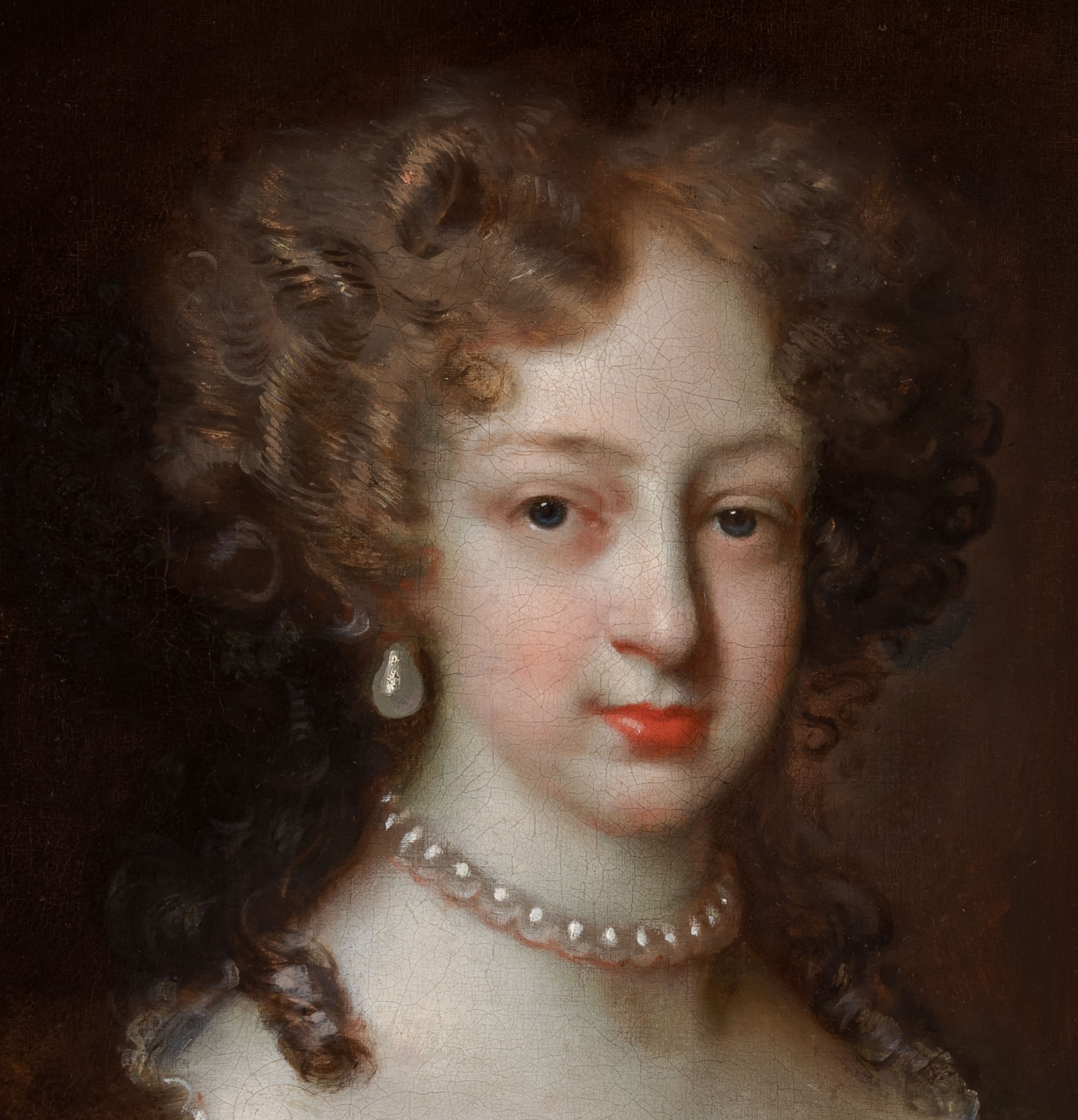
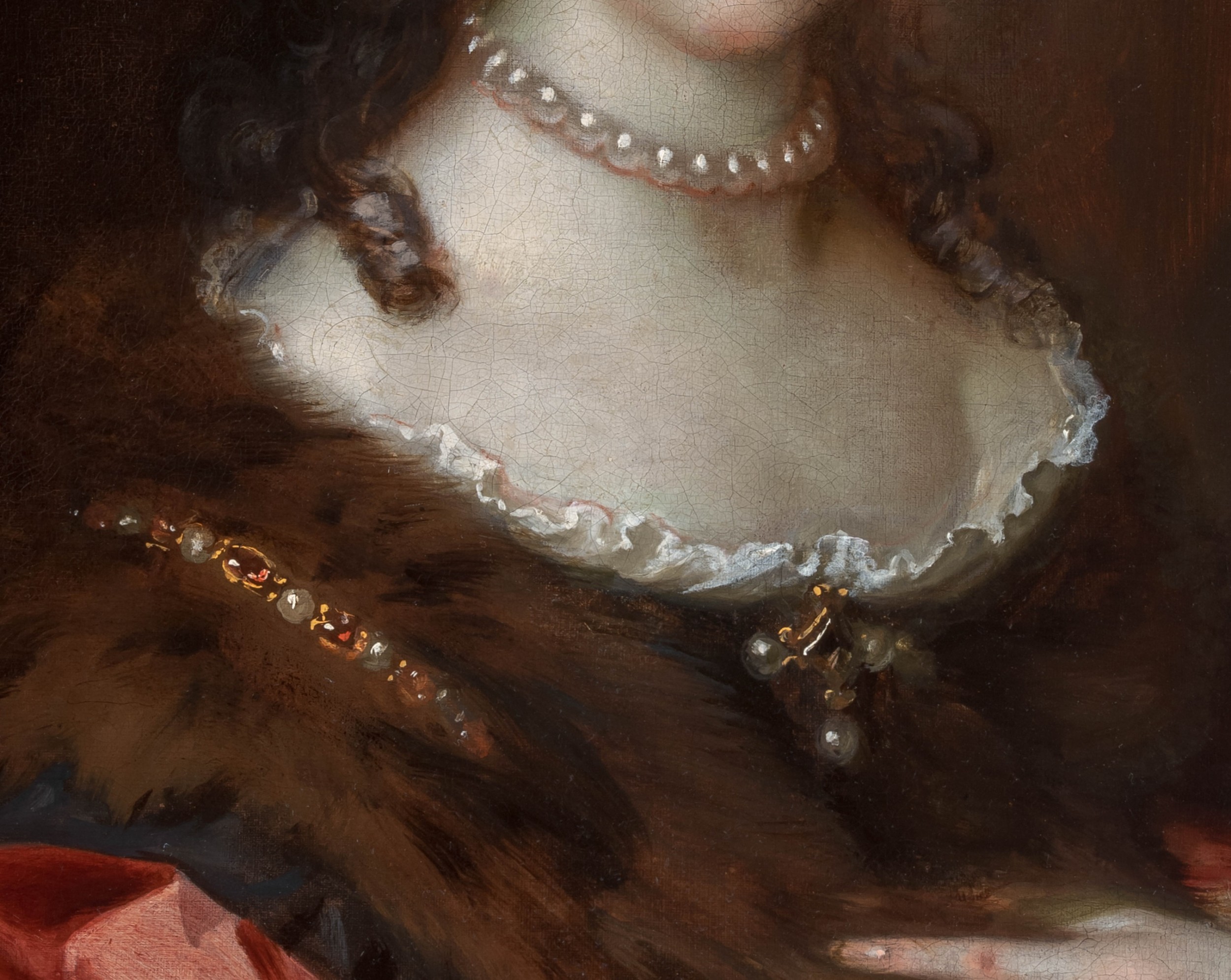
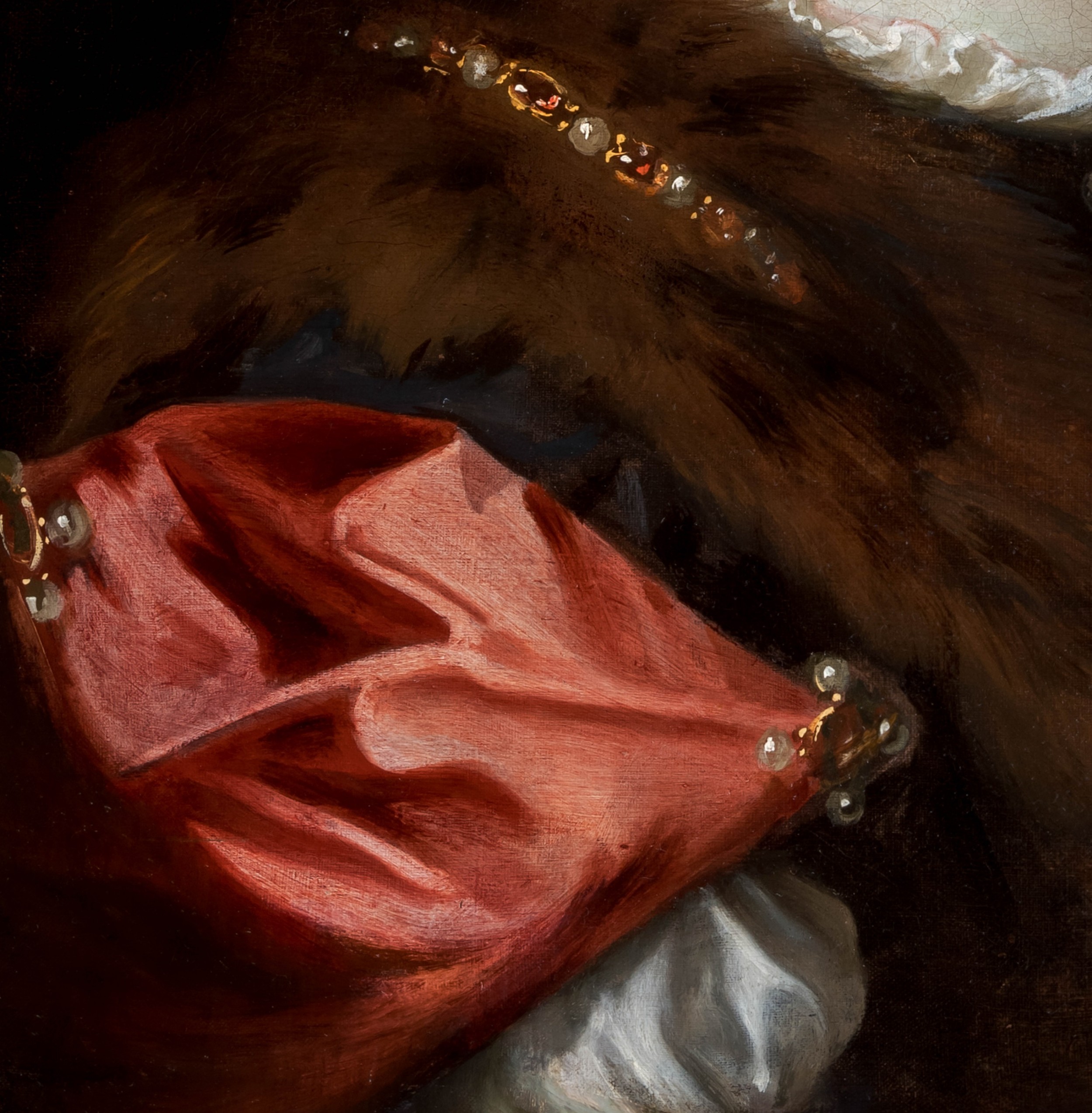
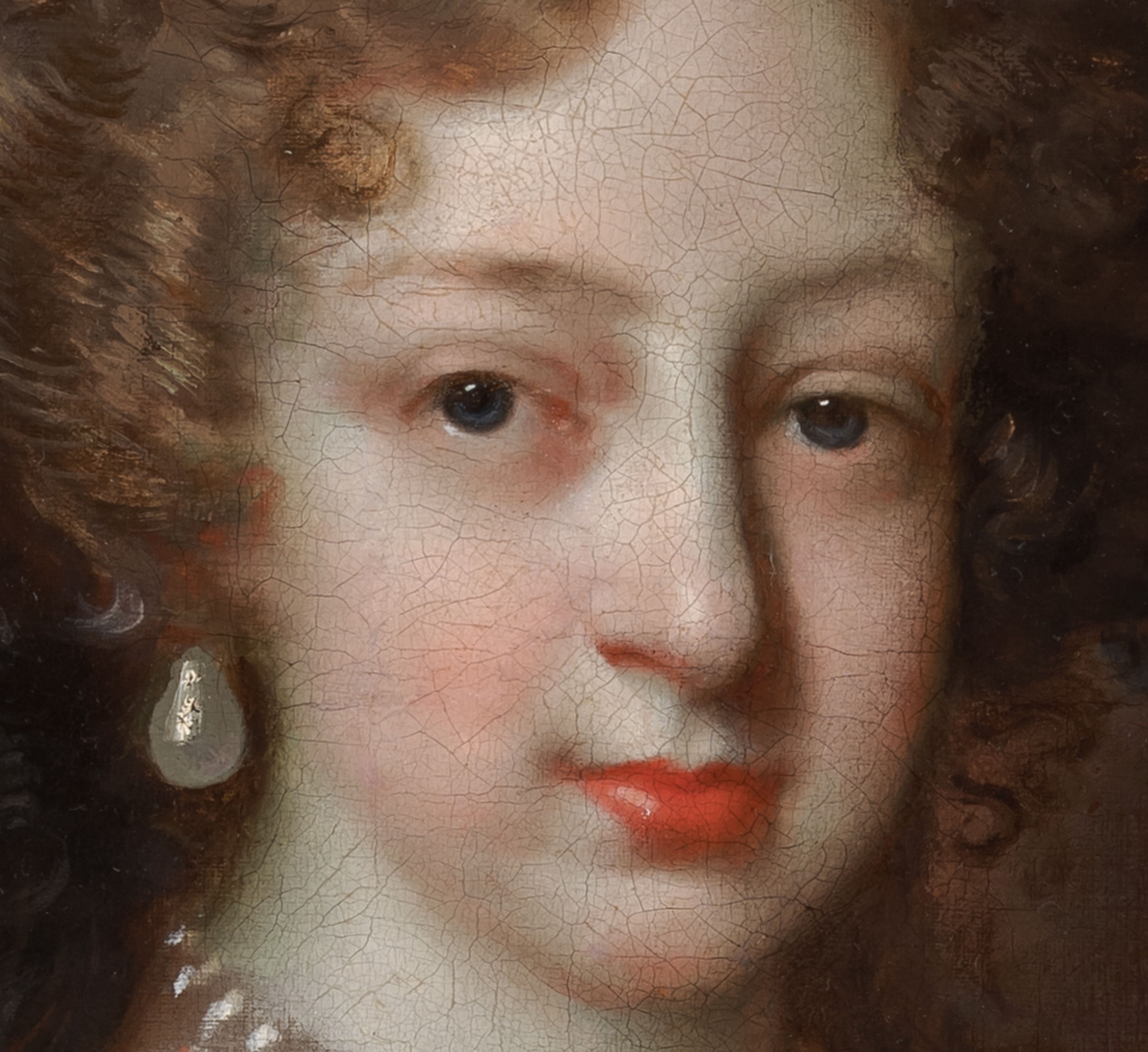
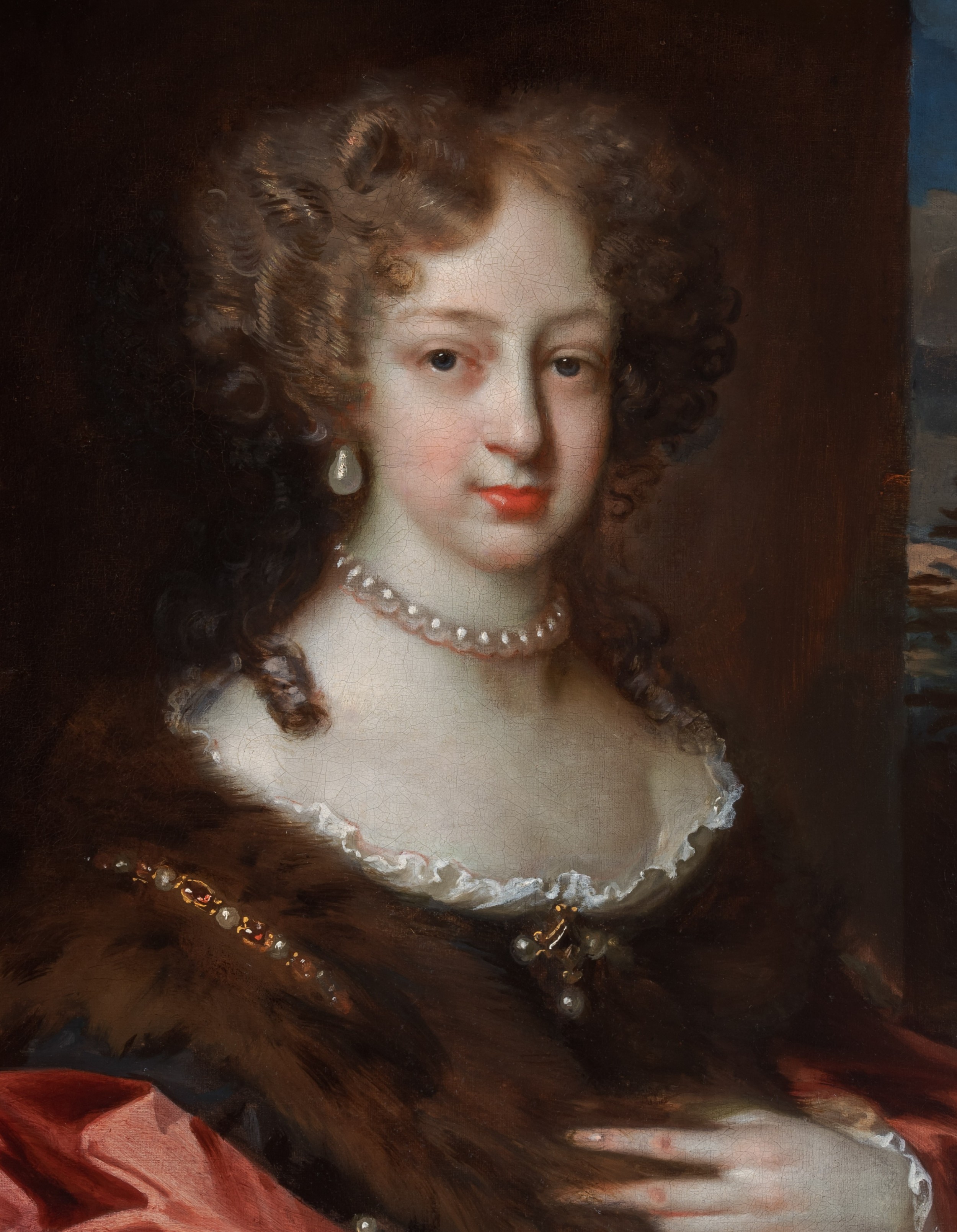
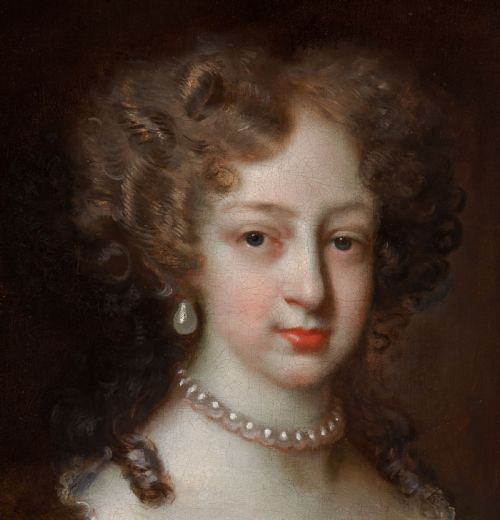
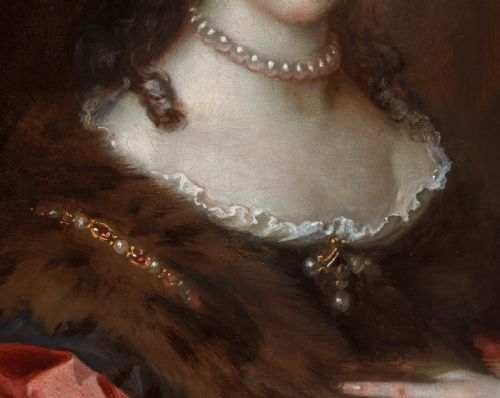
The huge pear-shaped earrings are called unions d’excellence, reflecting the difficulty of finding perfectly matched pearls of such large size (they could range up to 20 millimetres in diameter). The costume and jewellery are of course indicative of this woman’s wealth and this portrait certainly conveys that message. The window, through which the viewer can see a blue sky and a landscape, ads interest and depth to the portrait, and was often used in portraiture at the time.
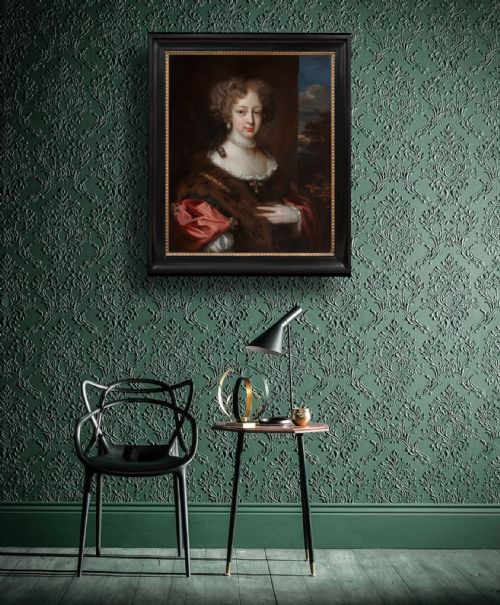
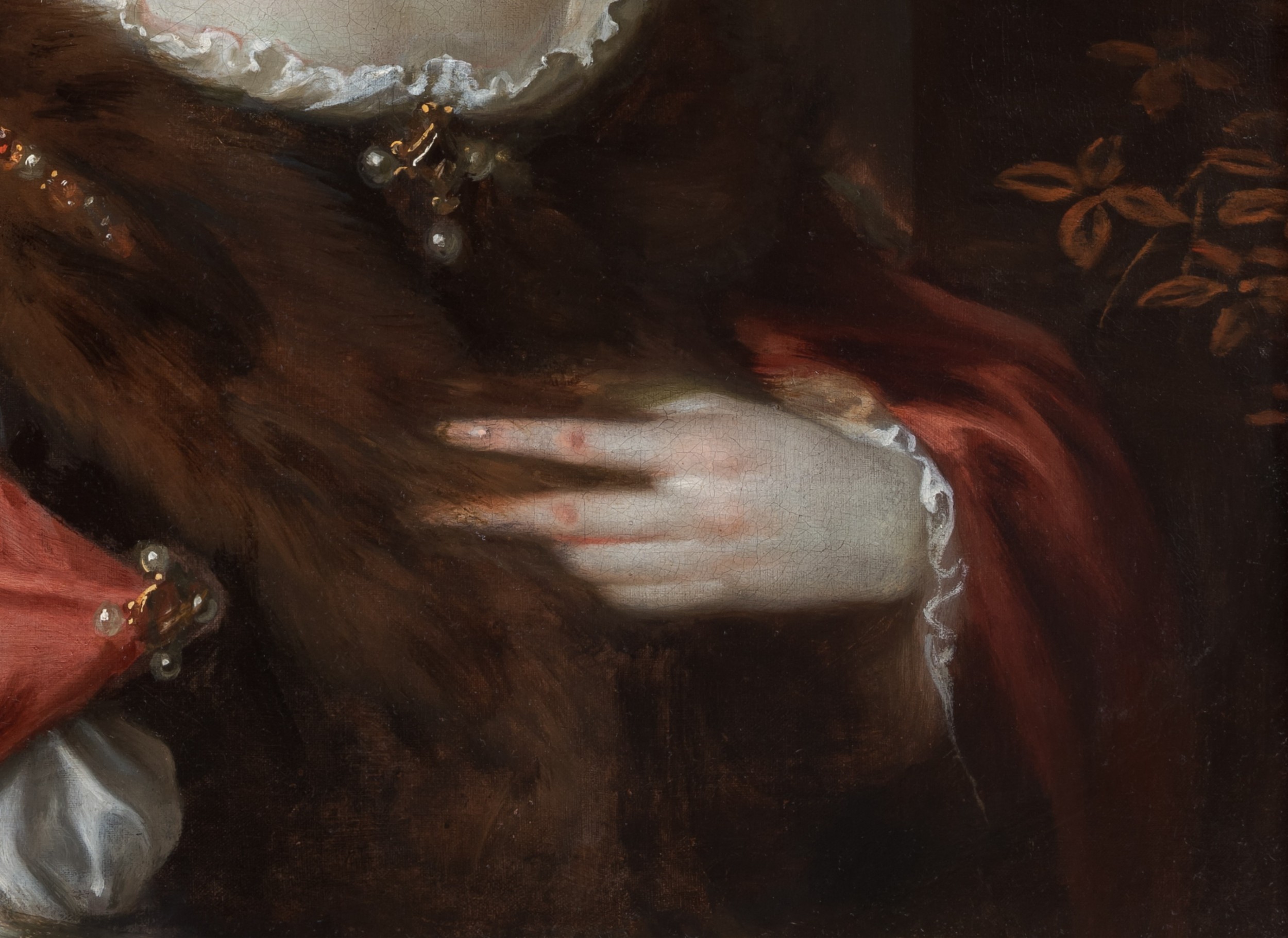
The close-curled hair, springing loosely away from the head, was a fashion of the 1670s and was known as the hurluberlu (first appeared c.1671). This, and the attire, help to date the portrait to circa 1675-1688. In the celebrated letters of Madame de Sévigné when describing the style accounted “Now just imagine the hair parted peasant fashion to within two inches of the back roll; the hair each side is cut in layers and made into round loose curls which hang about an inch below the ear; it looks very young and pretty - two bouquets of hair on each side... a large curl on top which sometimes falls down the neck.” The placement of the delicately rendered hand is reminiscent of the work of Van Dyke.
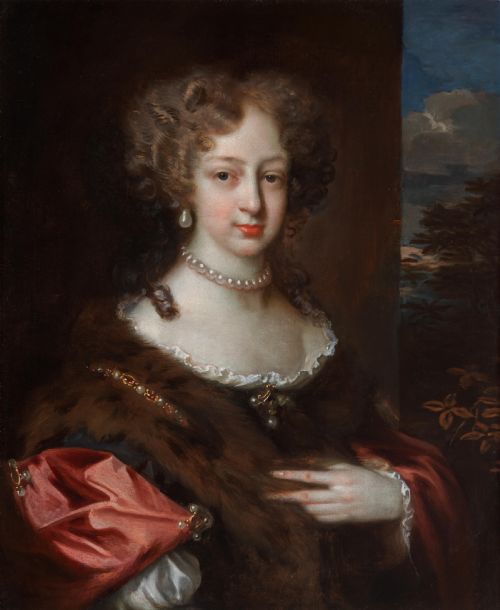
The artist was immensely adept at the oil technique of painting. The face, hands, and the drapery have been rendered with remarkable delicacy; note the carefully placed highlights to the eyes and the bottom lip. Huysmans’ proficiency in depicting the rich colours and the treatment of the materials, and the soft glossy finish to the skin, is a signature trait. His exuberant style particularly appealed to the Portuguese-born Queen Catherine – he was her main painter and his many portraits of her are particularly celebrated. Our portrait is a remarkably fine example from this distinguished artist.
Jacob Huysmans (circa 1633–1696) emigrated to England from Antwerp, prior to the Restoration in 1660, and gained recognition as a distinguished court painter and was regarded as a significant rival to the court painter Peter Lely. He was the uncle of Cornelis and Jan Baptist Huysmans, both of whom were landscape painters. His earliest record of his presence in England date to 1662. Initially, he specialised in creating pastiches in a reduced format of history paintings inspired by the works of Anthony van Dyck. Through his artistic endeavours, he subsequently secured a position as a portrait painter at the court of Charles II. The notable diarist Samuel Pepys visited Huysmans’ workshop and described Huysmans talents as surpassing those of Lely and remarked that both the portraits of the Queen and the maids of honour were among the finest he had ever seen.
Huysmans died in Jermyn Street, London, in 1696, and was interred at St. James’s Church in Piccadilly, a church for which he had previously created an altarpiece for the aforementioned Queen’s chapel.
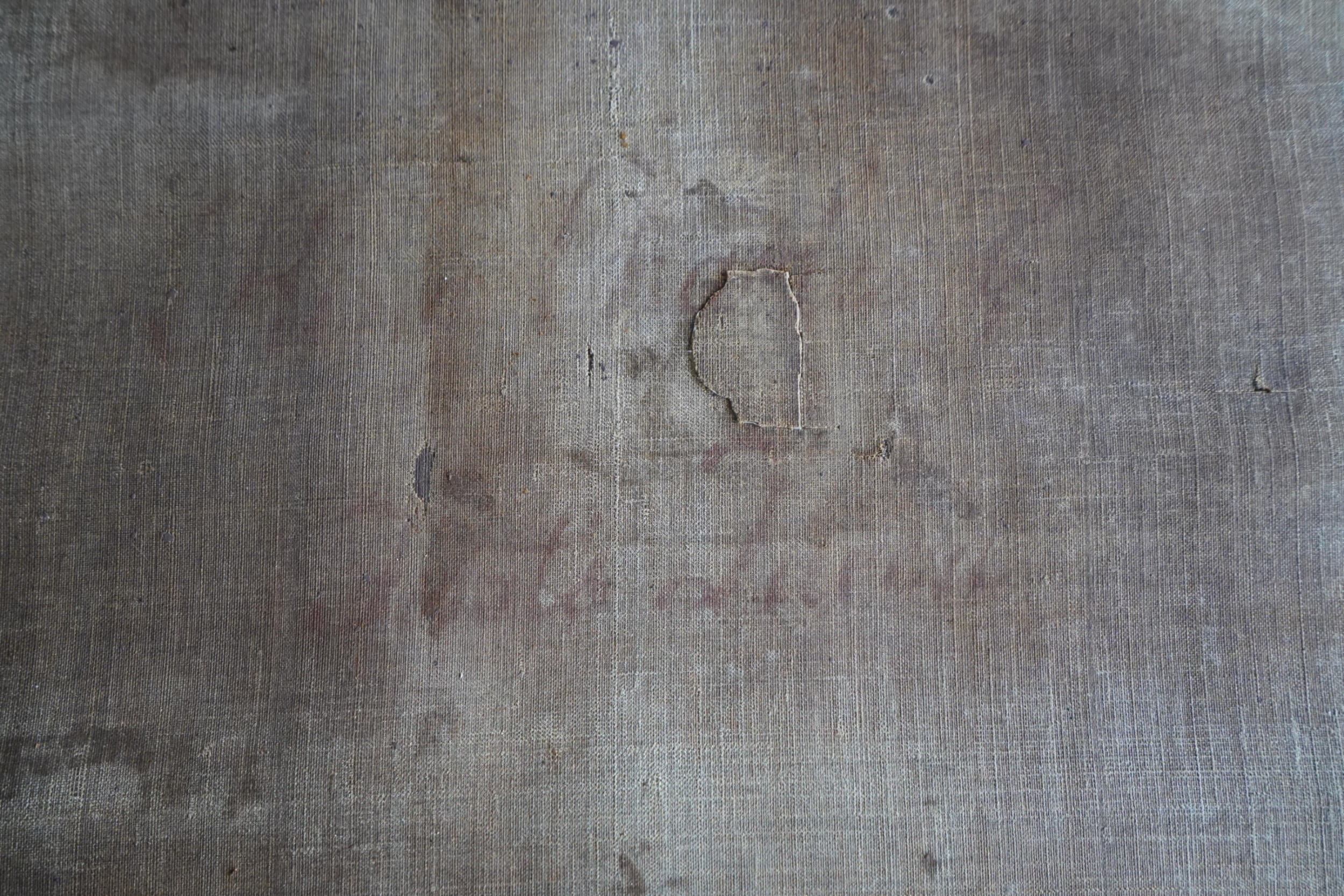
Upon re-lining this canvas indistinct text (including “King Charles ?”) was uncovered on the reverse (see photo).
Titan Fine Art has dated this Antique Oil Painting to the 17th Century.
Specialist in 17th & 18thc portraits. Highly curated selection, museum-level research & pro conservation. Exceptional art, expertly vetted.
You can view the stock and full dealer information on the Titan Fine Art Profile Page
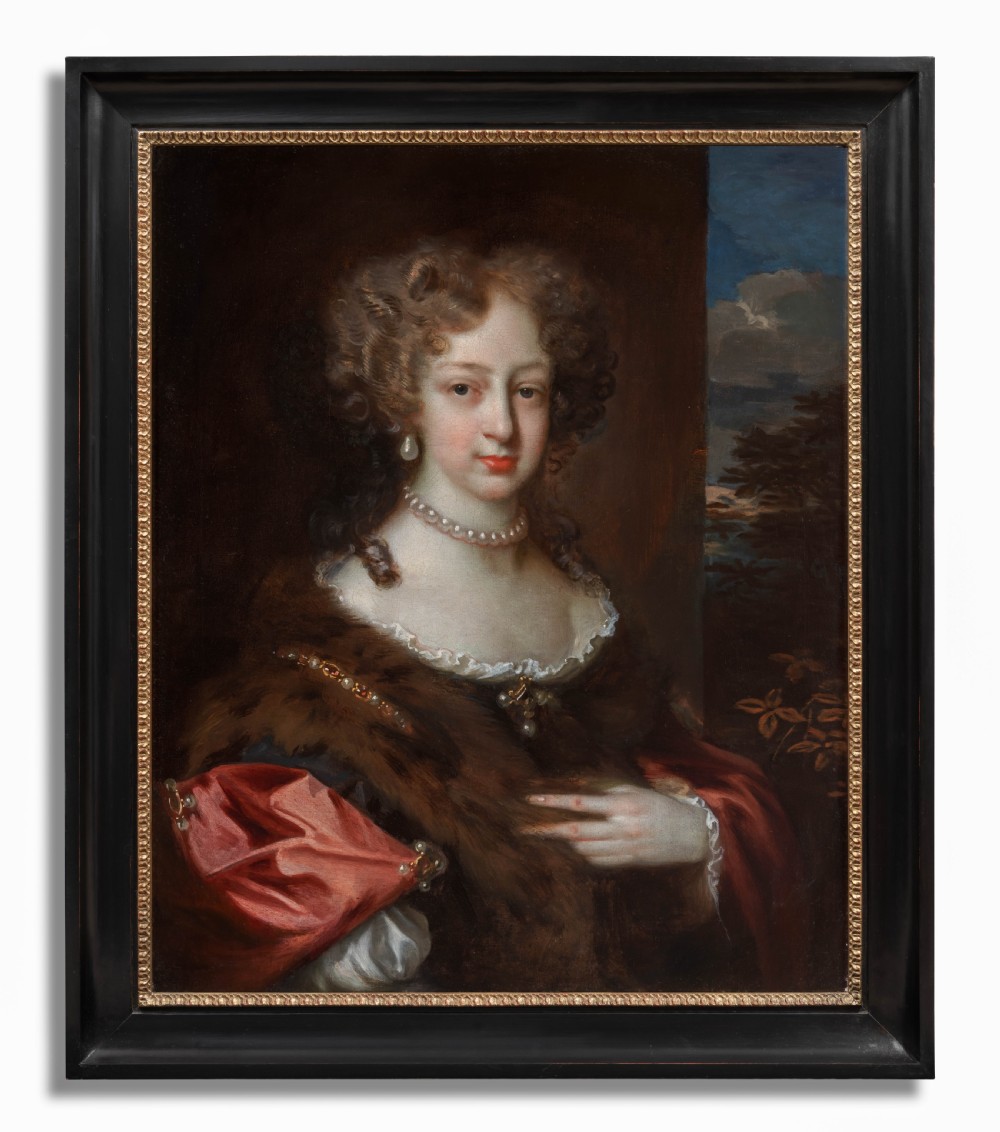
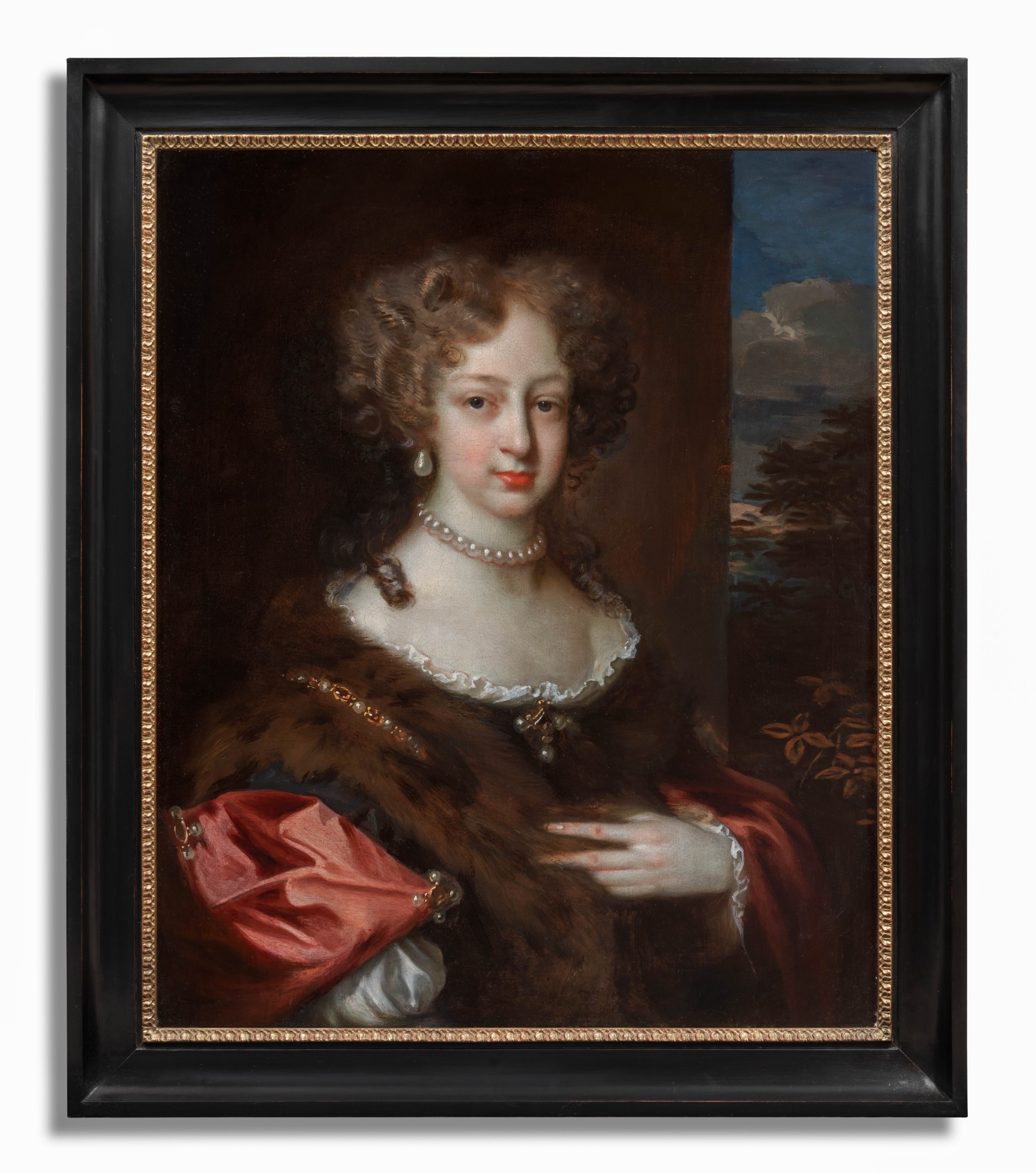
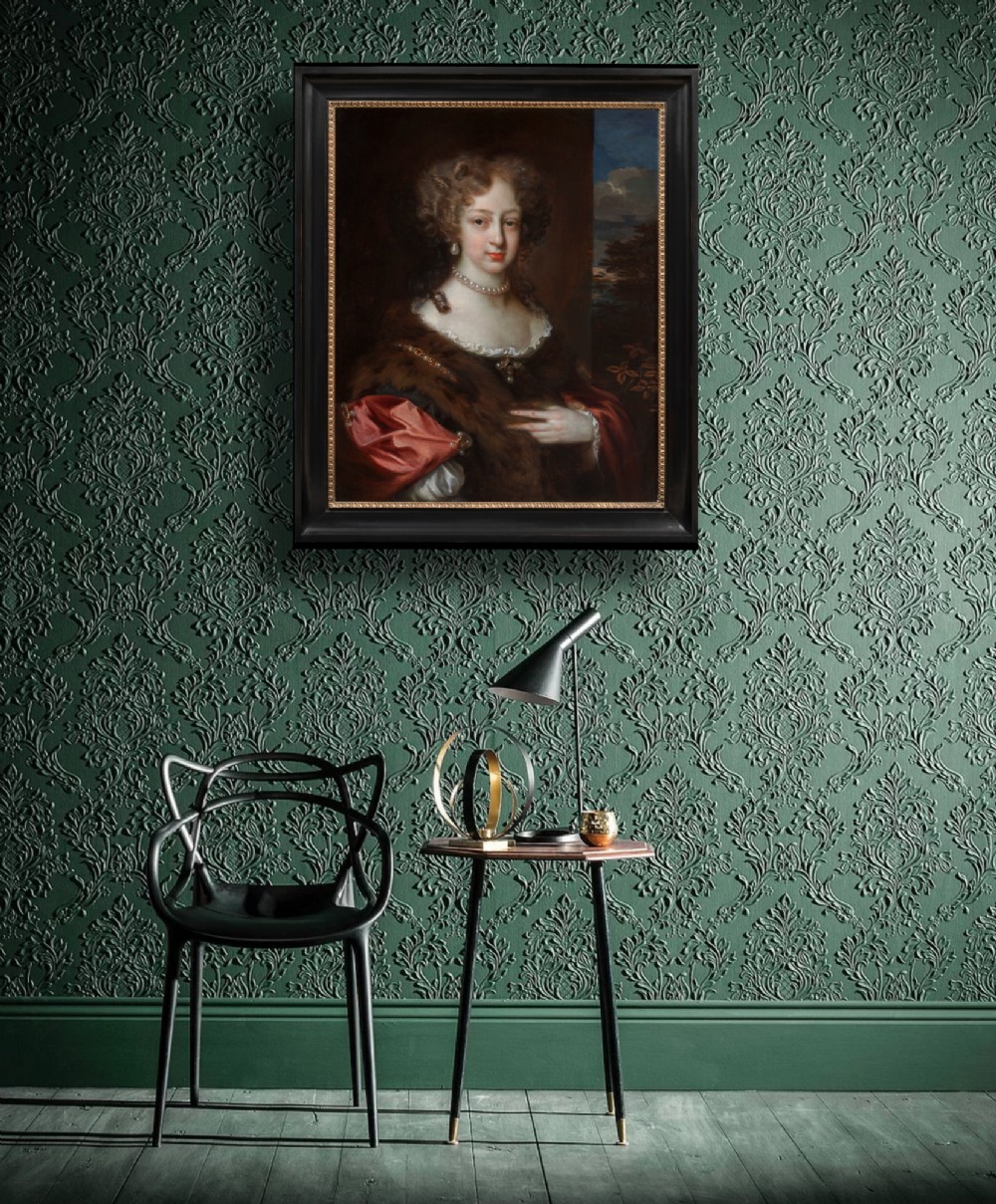
C.1675 Portrait of a Lady with a Crimson Wrap and Fur; Jacob Huysmans (C.1633-1696) Dutch Old Master, Antique Oil on Canvas Painting