Alexander George Antiques Ltd. has dated this piece to the 17th Century.
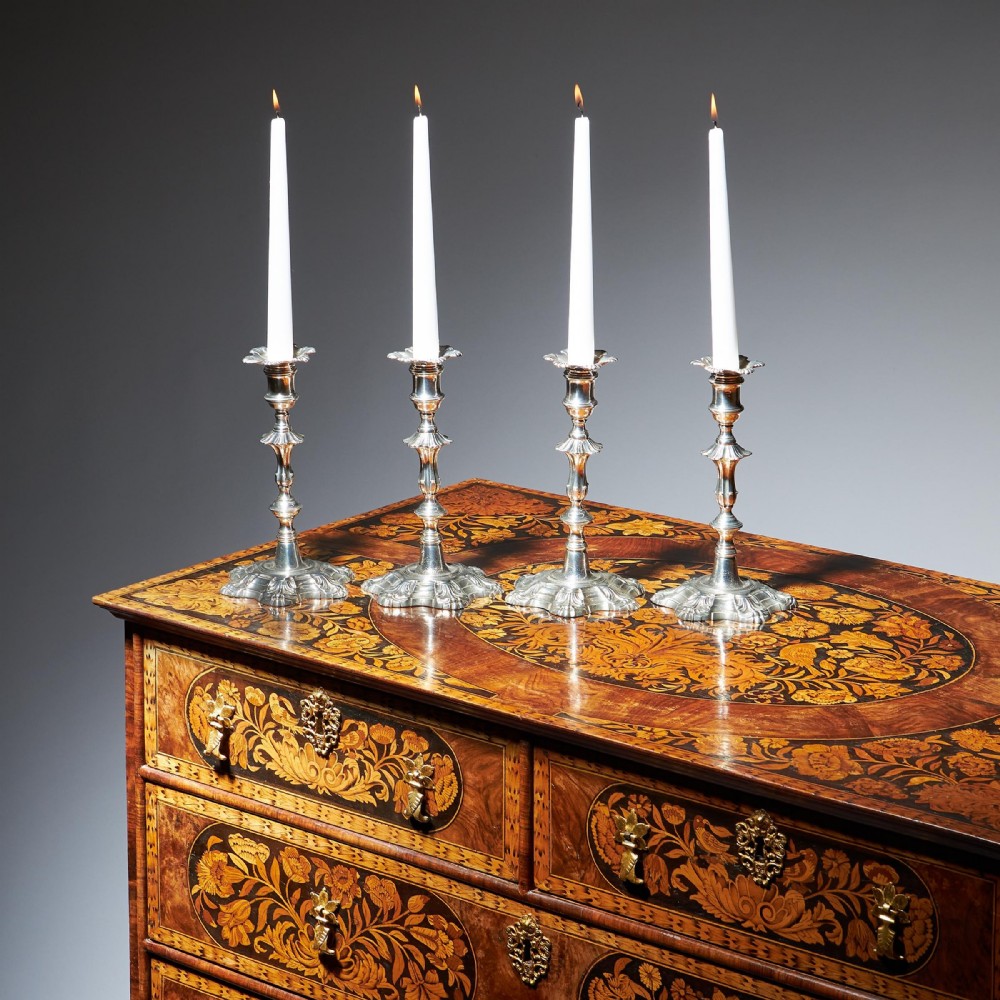
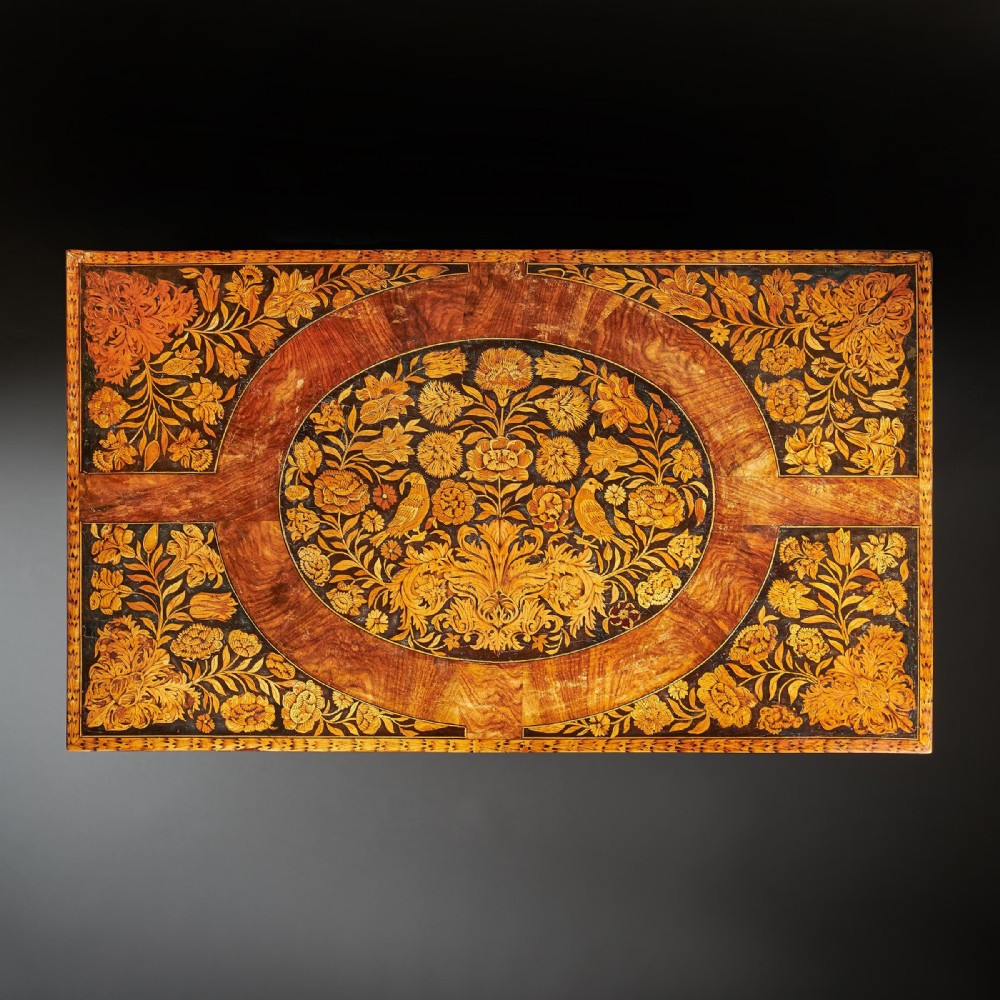
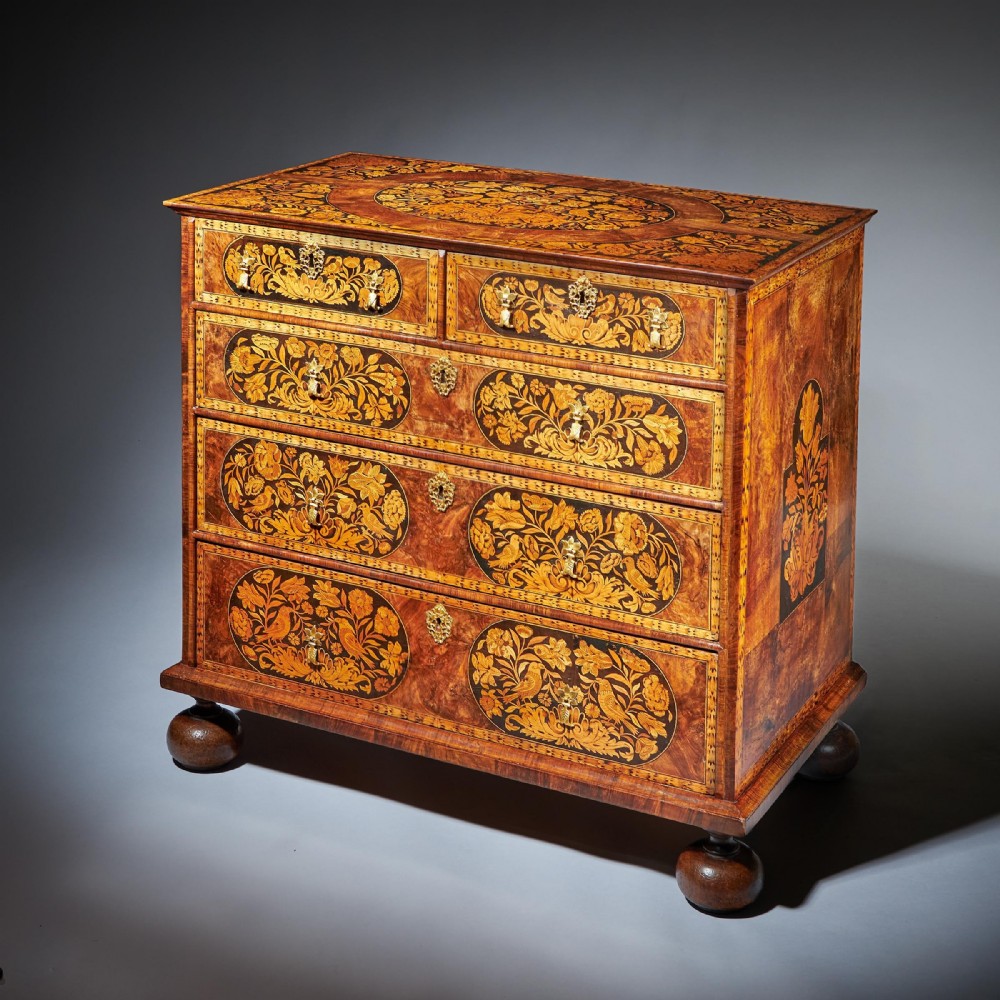
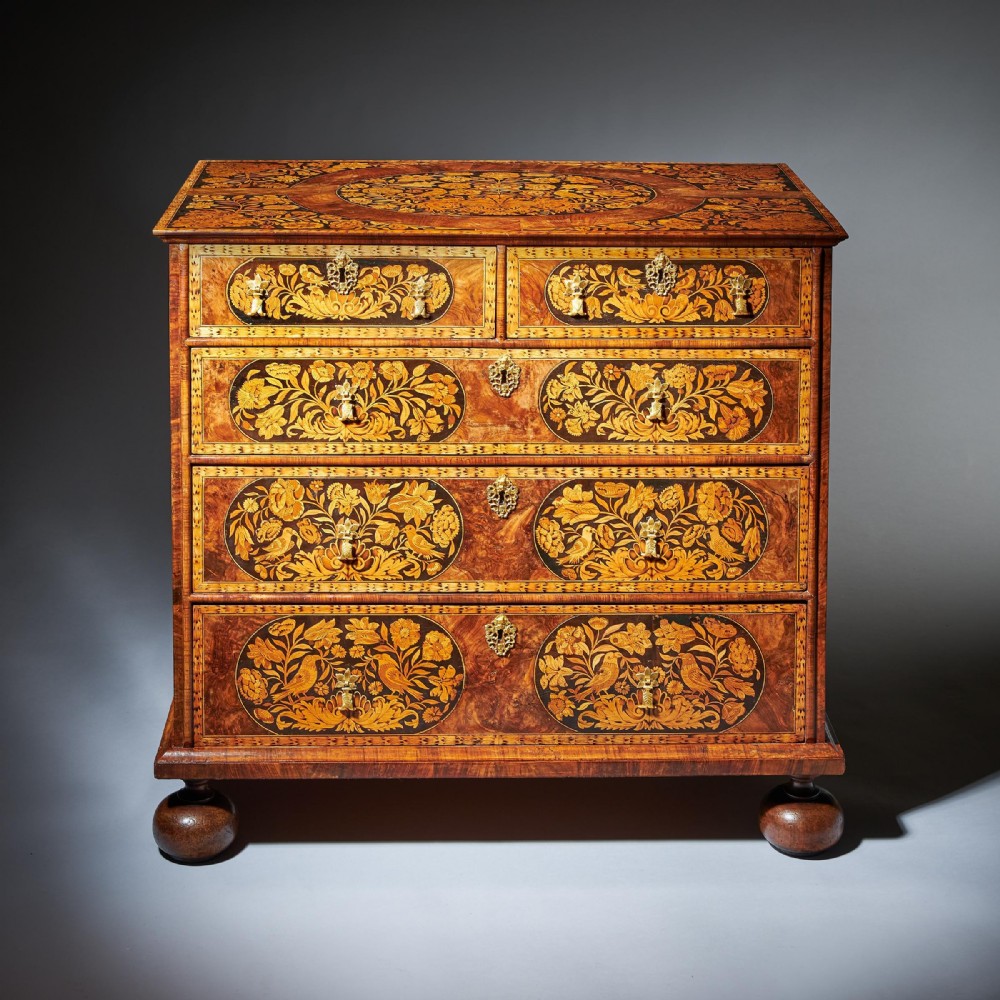
A William and Mary walnut floral marquetry chest, circa 1690.
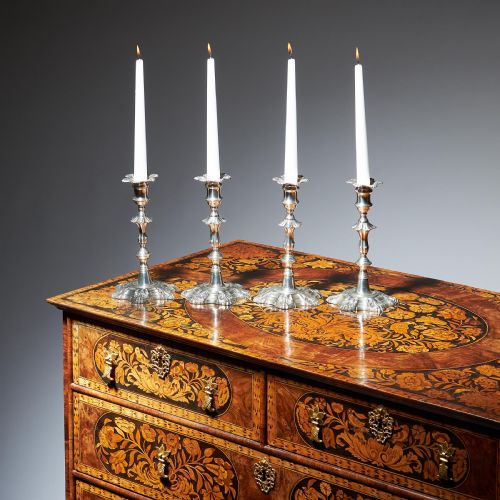
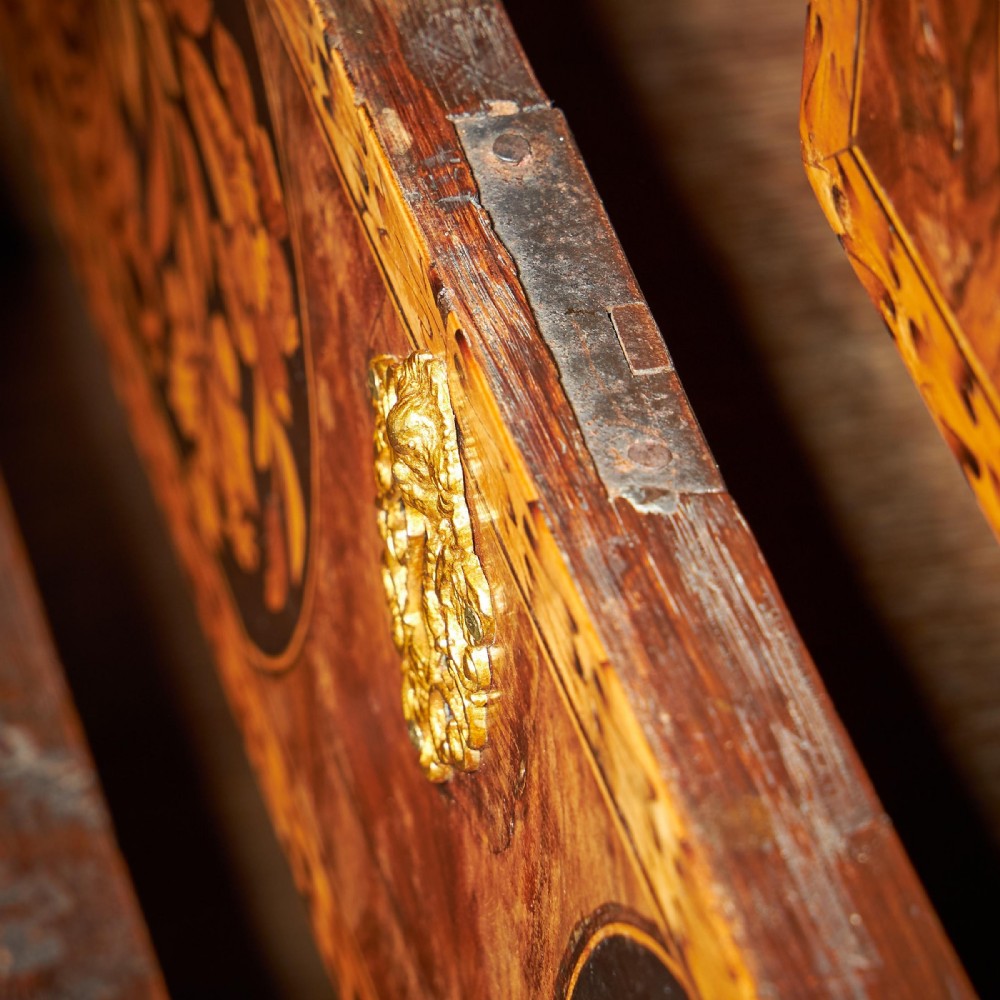
The two short over three long oak-lined graduating drawers are similarly inlaid with reserves of marquetry and each drawer is banded in a wide leafy cut marquetry border.
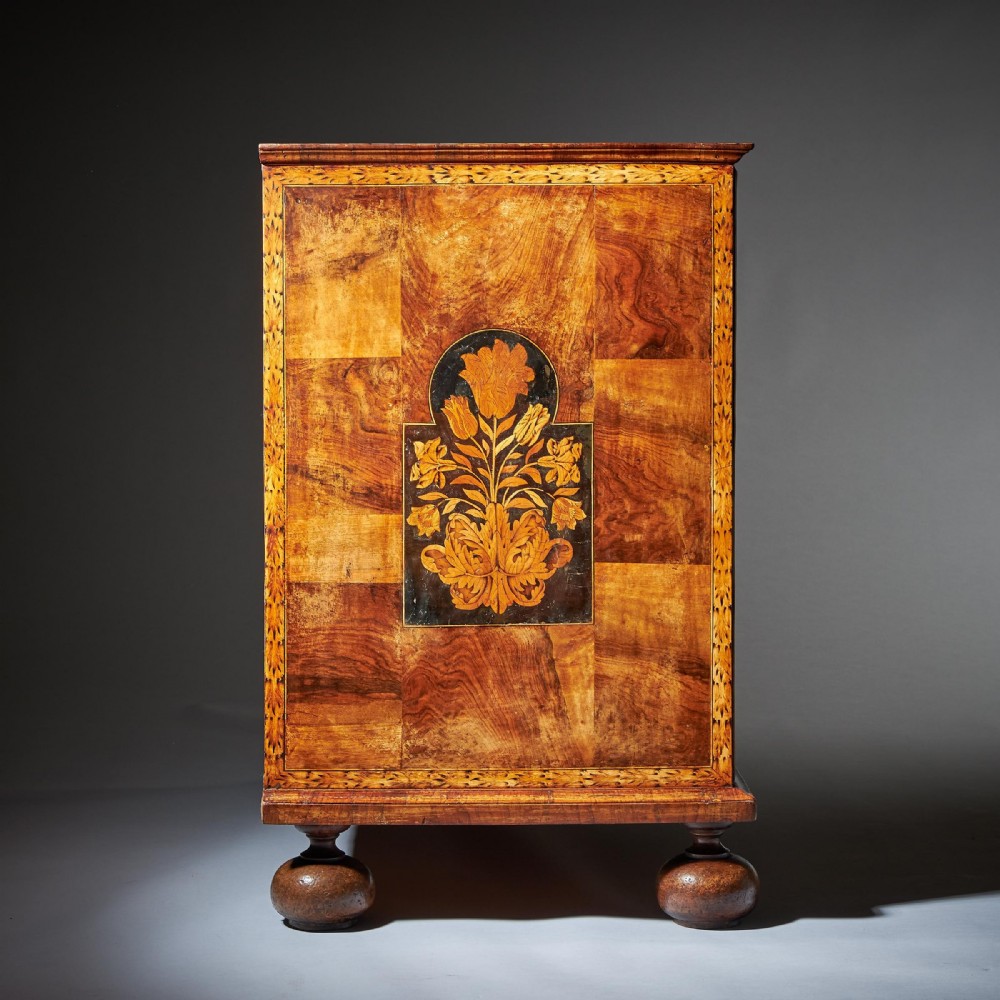
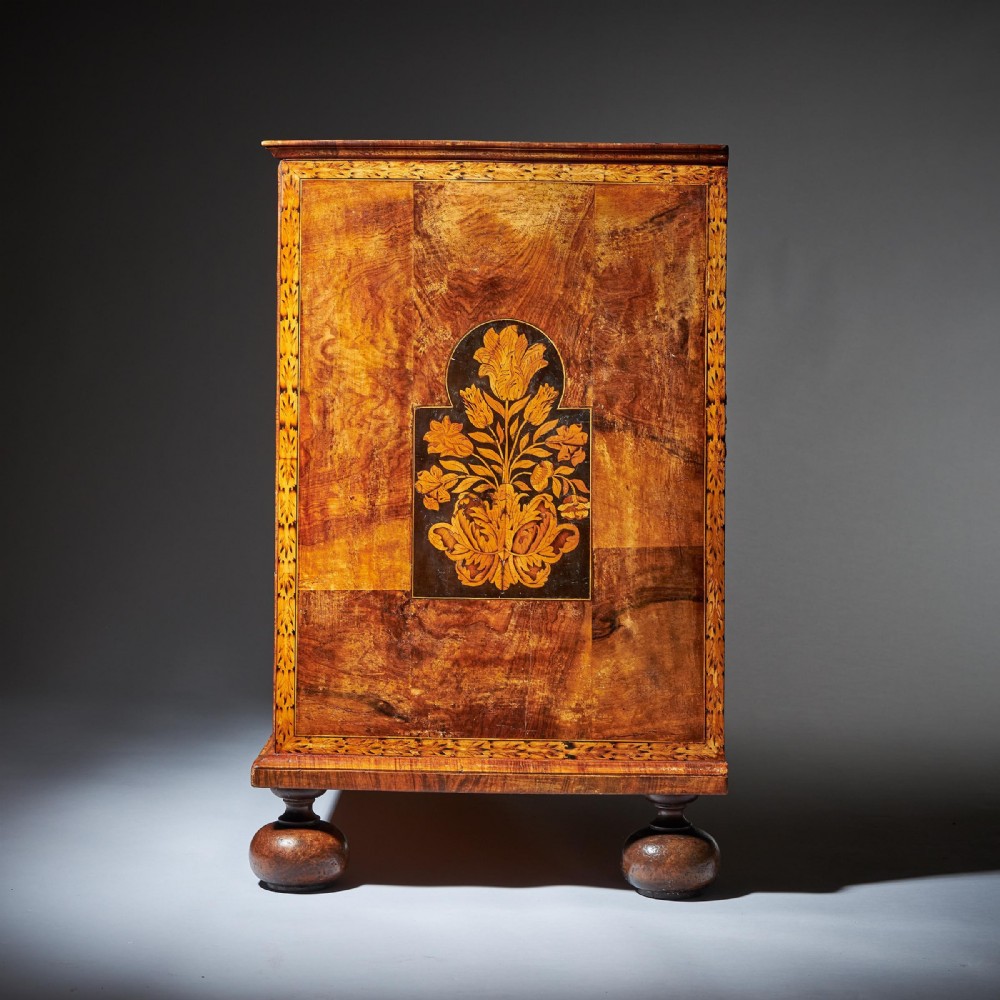
The burr walnut sides are banded in a marquetry border with large reserves of marquetry to the centre depicting tulips and spring flowers rising from a plume acanthus
According to Herbert Cescinsky in ‘English Furniture of the 18th Century’, the general spacing of marquetry during the period 1690-1705 into panels probably owed its inception to the copying of the Jacobean carved panels of the period, directly before the accession of William III. He argues that “the work of Holland is decidedly inferior in harmony of colouring, the English sycamore and plane-tree admitting of staining with colours of greater purity and giving a much better effect than beech and hornbeam used for the purpose in Holland”.
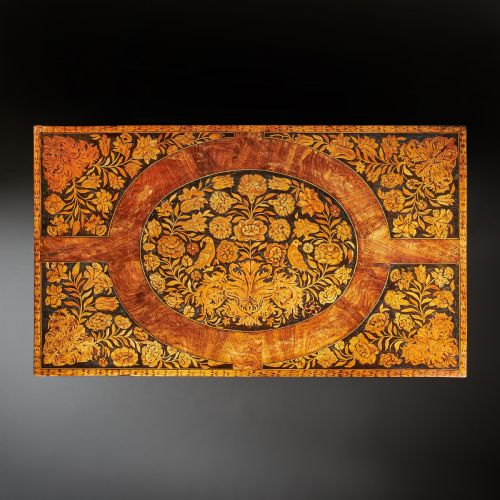
A similarly designed marquetry table top is illustrated in A.Bowetts, ‘English Furniture 1660-1714 From Charles II to Queen Anne’, p.61, plate 2:43, showing the variety created by transposing elements of the design so that no two quadrants of marquetry are identical.
A similar chest from Clevedon Court, Somerset is illustrated in R. Edwards, ‘ The Dictionary Of English Furniture’, Vol II’, p.34, dig 16.
Alexander George Antiques Ltd. has dated this piece to the 17th Century.
Offering carefully selected antique masterpieces from the 17th & 18th centuries
You can view the stock and full dealer information on the Alexander George Antiques Ltd. Profile Page
Alexander George Antiques Ltd. is a registered member of LAPADA
Fine 17th Century William and Mary Burr Marquetry Chest of Drawers