
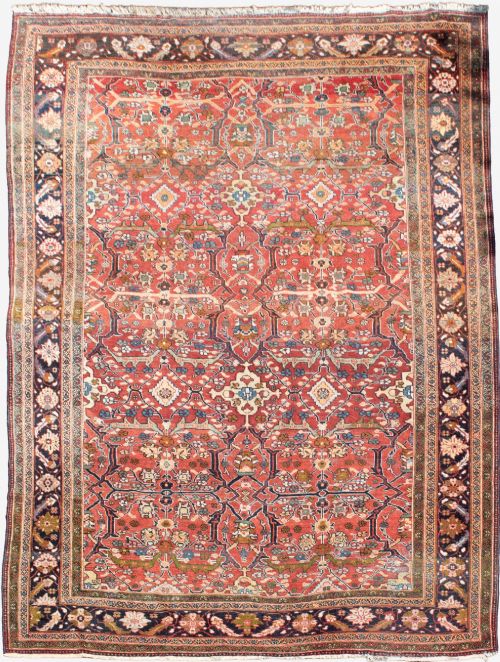


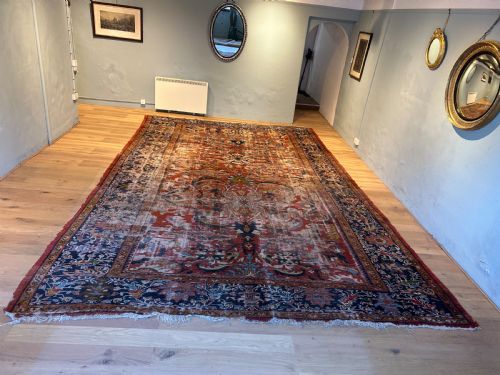


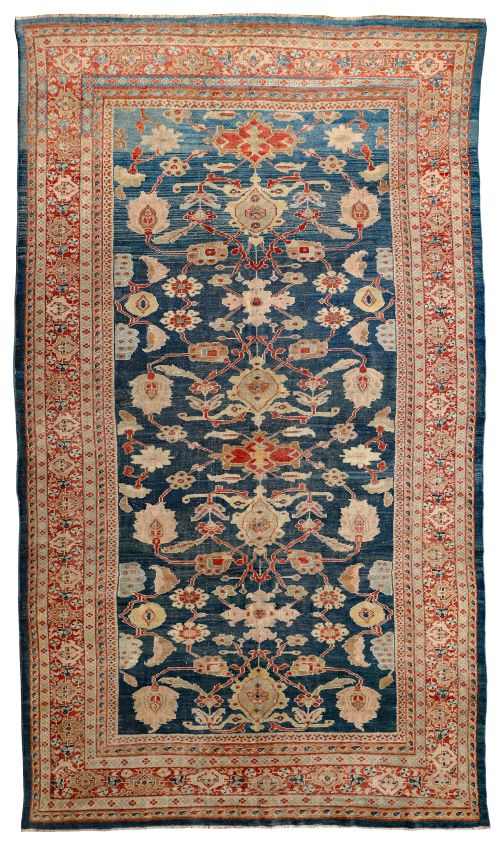


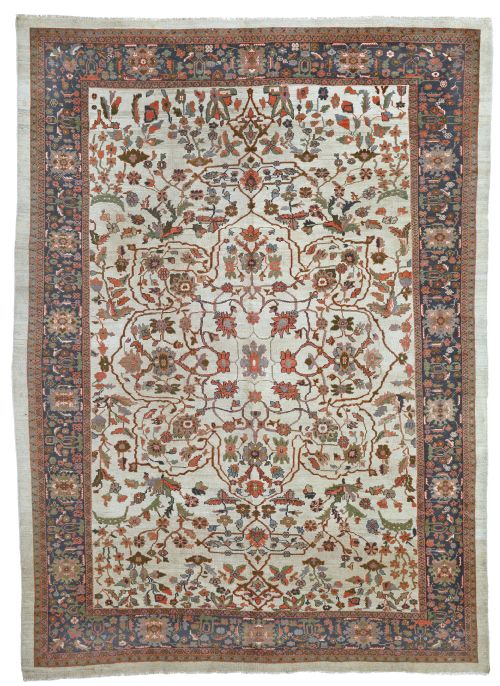
Ziegler Mahal Carpet
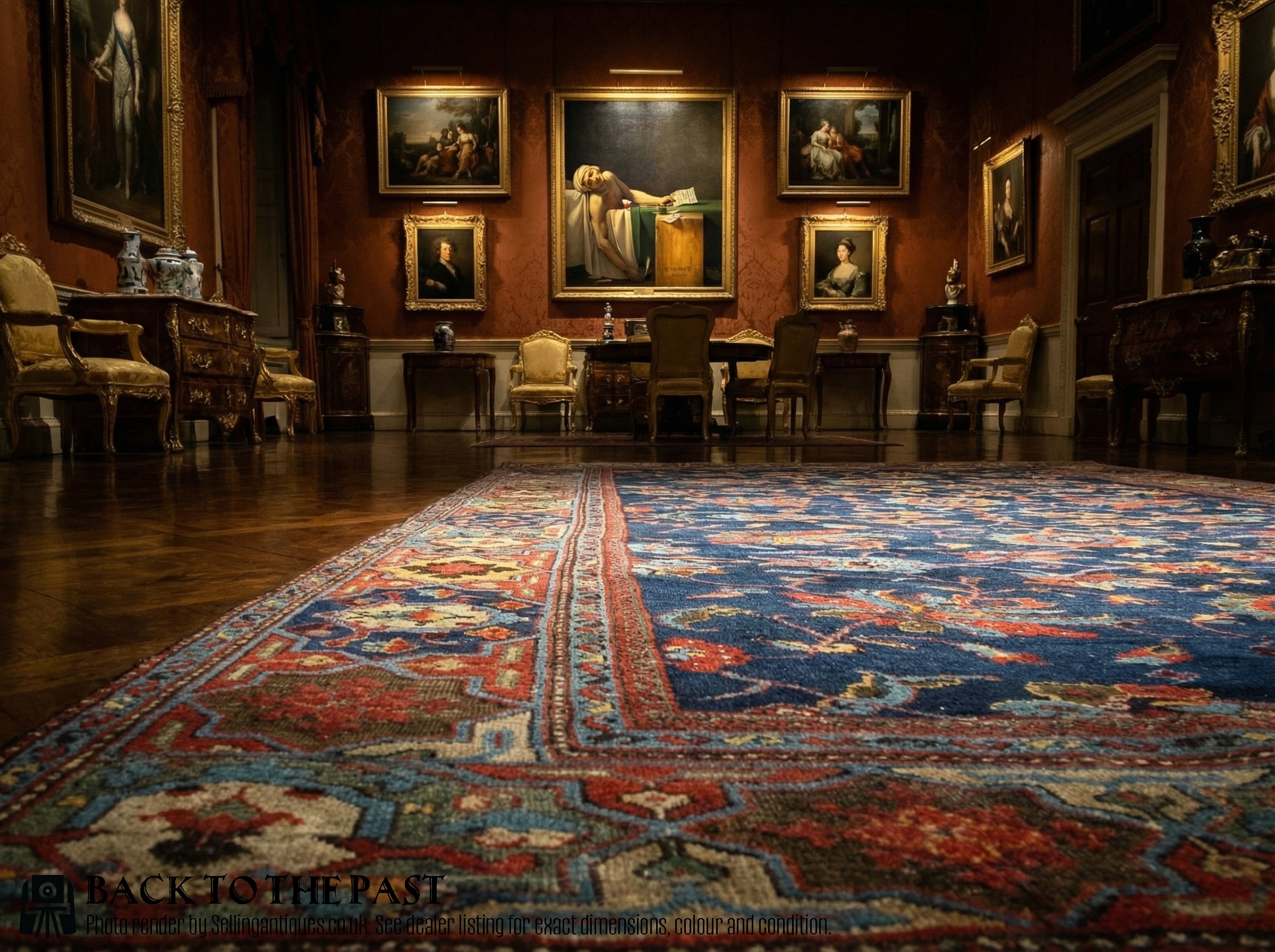
These ziegler mahal carpet examples bring large-scale Persian design into country houses and palaces through grand room-filling formats.
Ziegler Mahal Carpet
When you search for a ziegler mahal carpet, you encounter large floor coverings originating from Persia during the nineteenth century. These pieces encompass styles described as Persian Ziegler, Sultanabad, and Fereghan, spanning dates from eighteen-eighty to nineteen-hundred.
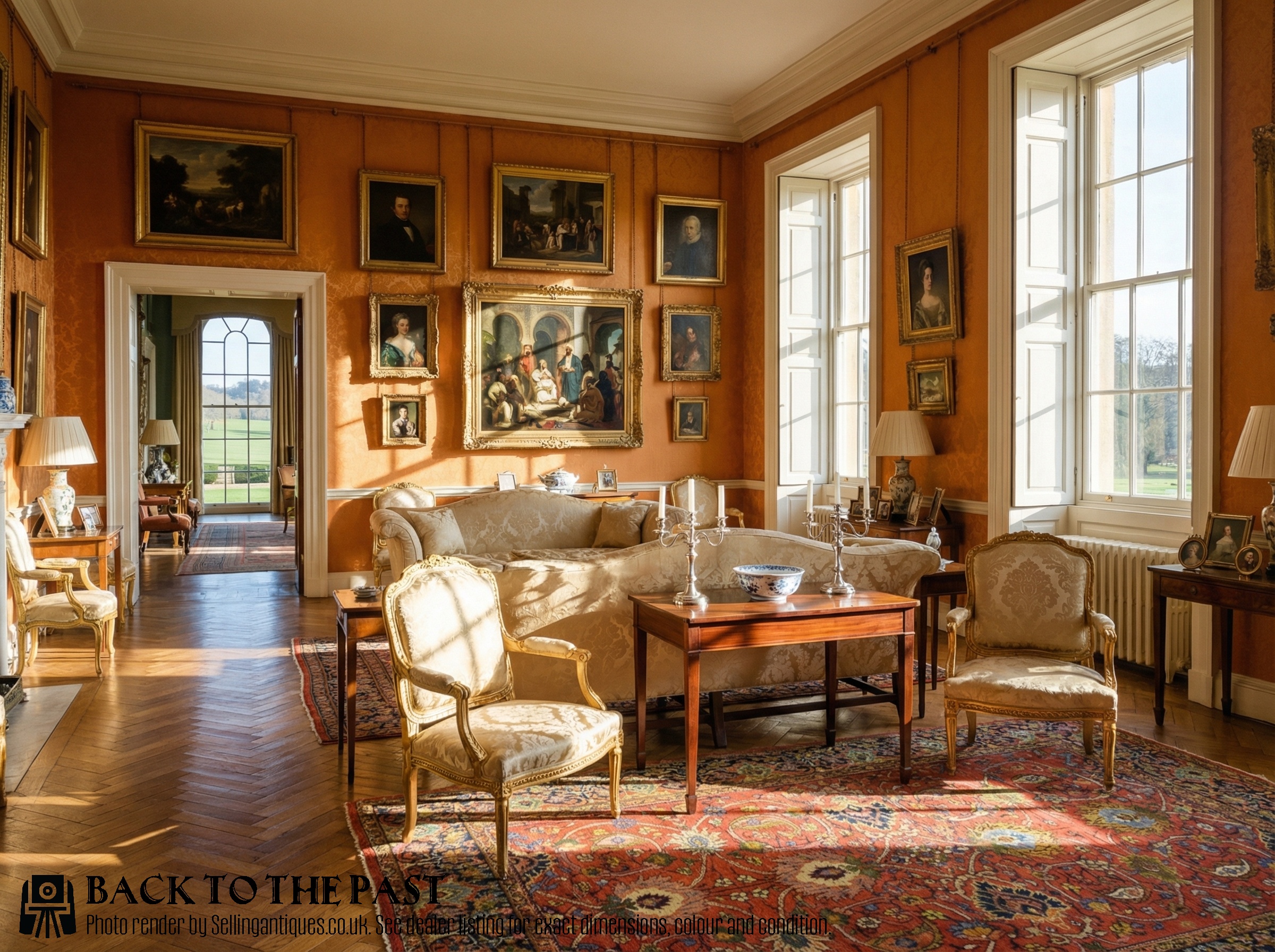
The format ranges from standard area rugs to massive palace and country house sizes exceeding five metres in length. Most examples meet you here as room-scale furnishings designed to anchor expansive reception rooms.
How they were made
The construction relies on traditional textile materials, pairing wool pile with cotton foundation threads. Artisans knotted these natural fibres by hand to produce durable floor coverings suited to heavy domestic use.
Weaving techniques across these Persian workshops produced dense surfaces capable of holding intricate patterns. The combination of wool and cotton supports both large-scale palace carpets and smaller area rugs.
Ziegler Mahal Carpet Retail Price Guide 2026
Typical asking prices for ziegler mahal carpet among the pieces listed under this phrase on Sellingantiques today, from the lower quarter to the upper quarter. They describe what is for sale here now, not the wider market.
Sizes span from standard area rugs up to massive palace formats exceeding five metres in length.
What varies in quality
Scale and proportion set individual pieces apart, distinguishing massive palace formats from standard area rugs. The handling of traditional Persian motifs across large surfaces dictates the visual success of each weaving.
Material handling and knot density determine the integrity of the wool pile over time. The clarity of design execution within Persian styles marks the distinction between ordinary room-sized rugs and grander country house carpets.
The Ziegler Mahal Carpet Glossary
- Mahal
- A designation for Persian carpets originating from the Sultanabad region known for commercial production. These pieces often feature larger-scale patterns than standard city carpets.
- Ziegler
- A reference to the Swiss firm that commissioned and exported nineteenth-century Persian carpets for Western markets. Their output typically adapted traditional designs for European tastes.
- Sultanabad
- A nineteenth-century Persian carpet production centre famous for robust village-style room-size carpets. The term often overlaps with Mahal classifications in trade descriptions.
- Fereghan
- A specific regional style of Persian weaving associated with fine knotting and distinctive field patterns. These rugs represent a distinct subcategory within nineteenth-century production.
Ziegler Mahal Carpet: Frequently Asked Questions
Where should I place a ziegler mahal carpet?
These large carpets suit principal reception rooms, dining spaces, and grand hallways where floor space allows the full pattern to show.
Their robust wool and cotton construction handles everyday foot traffic while anchoring large interior schemes.
How do I identify nineteenth-century Persian rugs?
Look for traditional hand-knotted wool pile on cotton foundations, combined with regional design characteristics from Sultanabad or Fereghan.
Dates typically centre around eighteen-eighty to nineteen-hundred based on stylistic conventions and material ageing.
What is the difference between Mahal and Ziegler?
Mahal refers to the broader weaving district in Persia, while Ziegler specifically denotes carpets produced under the supervision of the Swiss mercantile firm.
Both terms describe large-scale nineteenth-century decorative carpets created for Western homes.
Are these rugs suitable for modern interiors?
Their muted palettes and large-scale botanical designs complement contemporary furniture by adding texture and historic character.
The room-filling dimensions provide a grounding element for minimalist or maximalist decorative schemes alike.