
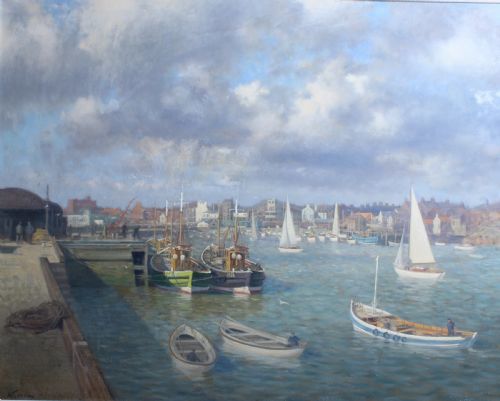


Yorkshire Landscape Wall Art
Yorkshire landscape wall art captures rural views and coastal harbours through British Impressionist and early twentieth-century paintings.
Yorkshire Landscape Wall Art
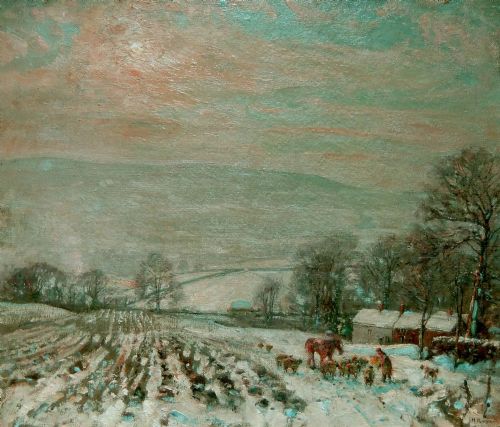
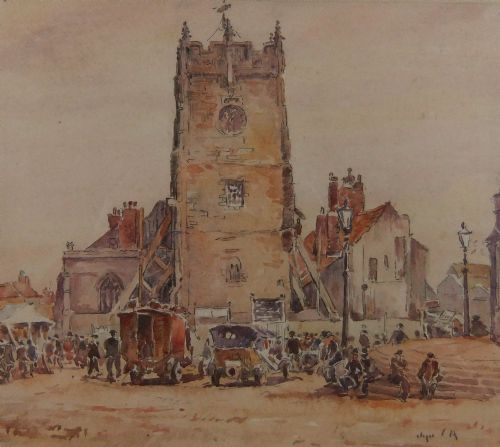
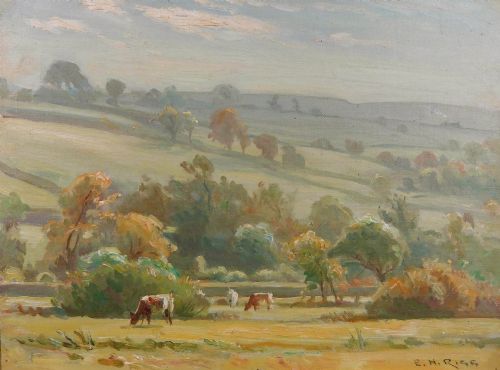
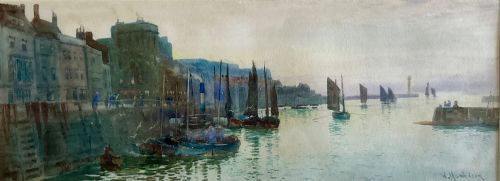
Yorkshire landscape wall art comprises original paintings depicting scenes from across the county, created during the Victorian, Edwardian, and mid-century periods. These works capture specific local geographies, including Wharfedale, Whitby, and Leeds, rendered by regional artists who recorded rural and coastal life.
The selections on this page appear primarily as framed watercolours on paper and oil paintings on canvas or board. They range from intimate village studies and moorland streams to larger harbour views.
The styles span British Impressionism and traditional regional realism, reflecting the ways painters interpreted northern light and topography over several decades.
Materials and technique
Artists painted these scenes using oil paint or watercolour pigment applied to paper, canvas, or wood board. Watercolours rely on fluid washes and transparent layers to capture atmospheric light, often finished with delicate pencil or ink line work.
Oil paintings employ heavier, opaque strokes that build texture and depth, whether laid onto stretched canvas or rigid wooden panels. Both mediums capture the distinctive character of northern skies and terrain through direct observation.
Several sheep make unexpected guest appearances across multiple Wharfedale pastoral scenes.
Distinctions in execution
Quality rests upon the artist's handling of light and atmospheric depth, distinguishing routine topographical records from accomplished painterly interpretations. The most successful examples demonstrate confident brushwork or deft watercolour washes that convey the specific weather and mood of the location.
Condition and originality also govern the standing of each piece, with intact framing, stable paint layers, and minimal surface disruption preserving the artist's intended composition.
Herbert Royle·Ernest Higgins Rigg·William Matthison·Owen Bowen·George Weatherill
The Yorkshire Landscape Wall Art Glossary
- Watercolour
- A paint consisting of pigment suspended in a water-soluble binder, applied to paper to create transparent washes of colour.
- Canvas
- A heavy woven fabric stretched across a wooden frame to serve as a sturdy foundation for oil paint.
- Board
- A rigid wooden or manufactured flat panel used as a direct support for oil or mixed media paintings.
- British Impressionism
- A painting style developed in the late nineteenth and early twentieth centuries focusing on loose brushwork and natural light.
- Provenance
- The documented history of a painting's ownership and origin, which helps verify its authenticity.
Yorkshire Landscape Wall Art: Frequently Asked Questions
How do I hang and frame these watercolours?
Watercolour paintings require protection from direct sunlight to prevent the pigments from fading over time. Framing them behind conservation-grade glass helps shield the paper from environmental moisture.
Ensure the picture is hung on an interior wall away from rapid temperature fluctuations. Proper mounting keeps the paper from touching the glass directly.
What subjects appear most often?
The works frequently depict rural valleys, farmsteads, and rivers such as the Wharfe, alongside coastal scenes around Whitby and Staithes. Artists also recorded industrial fringes and moorland streams.
These subjects reflect the landscapes that engaged regional painters throughout the Victorian and mid-century eras.
How do I date an oil painting?
Dating relies on the artist's recorded working dates, stylistic markers, and sometimes inscriptions written on the reverse of the canvas or board. Frame styles and materials can also provide supporting chronological clues.
Signatures and exhibition labels often help narrow down the decade of creation.