


Yorkshire Coastal Art
Yorkshire coastal art captures the rugged cliffs, bustling harbours and historic fishing villages of the North Sea shore through the eyes of regional painters.
Yorkshire Coastal Art
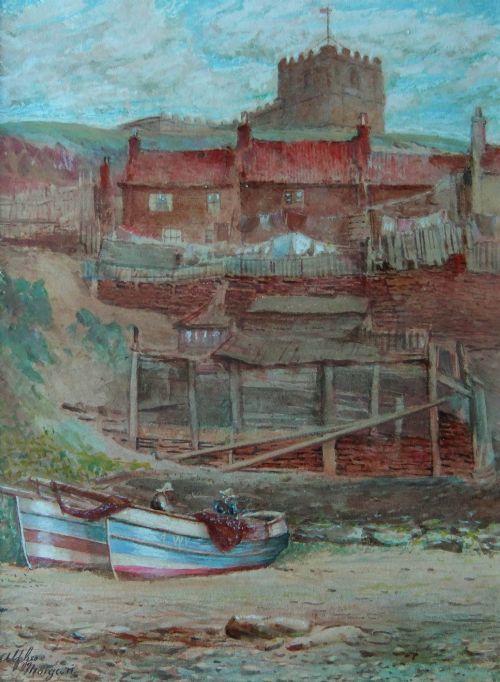
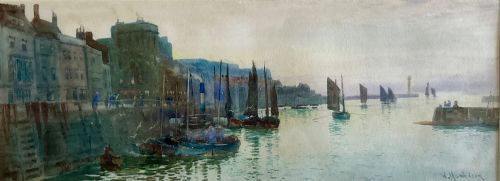
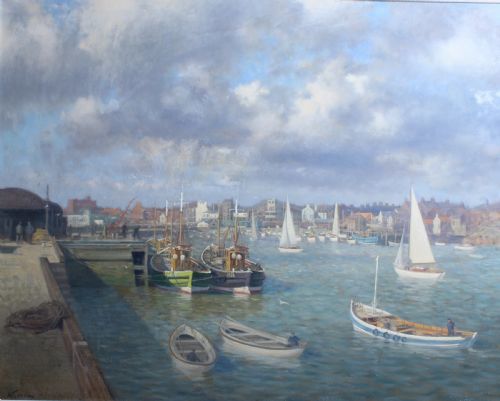
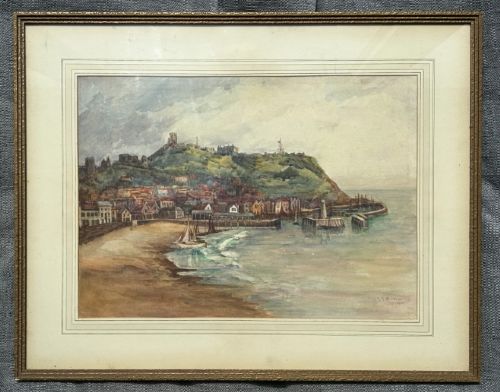
Yorkshire coastal art encompasses landscape and marine paintings depicting familiar local landmarks such as Whitby Harbour, Scarborough Bay, Staithes and Runswick Bay. These works document the maritime heritage, fishing communities and dramatic topography of the northeast English coastline across the nineteenth and twentieth centuries.
The pieces available here lean strongly towards traditional watercolours and oil paintings created during distinct periods including the Victorian era, Edwardian years and the mid-twentieth century. Painters often focused their attention on specific coastal settlements, capturing daily dockyard activity, local vessels like cobles, and the changing light over the North Sea.
Buyers will encounter townscapes, harbour views and open seascapes rendered in styles ranging from Victorian realism and British impressionism to modern British interpretations. These visual records provide a direct window into the historic character of Yorkshire fishing ports before modern development altered their shores.
Materials and Methods
Artists working along the coast primarily utilised watercolour pigment on paper or oil paint applied to canvas, panel or board. Watercolour allowed painters to capture rapidly changing weather, atmospheric sea spray and luminous coastal skies with transparent washes.
Oil paintings provided greater texture and depth, enabling creators to build up thick applications of pigment that mirrored the choppy motion of the sea or the solid masonry of Whitby Abbey. Supports ranged from traditional stretched canvas to wooden panels and sturdy boards suited for outdoor sketching.
Many of these works were produced 'en plein air' or finished in studios using preliminary pencil sketches and watercolours gathered directly from harbour walls and cliff tops. Painters relied on traditional brushes, fine pigments and protective framing to preserve their impressions of the North Yorkshire landscape.
Listings span from the nineteenth century through the nineteen-fifties, featuring paper, canvas, wood and watercolour pigment.
Distinctions in Quality
The strength of a coastal painting often rests on the artist's ability to render light, atmosphere and the specific geological character of the cliffs and shale scars rather than mere topographical accuracy. Superior compositions demonstrate a confident handling of pigment that conveys the weight of sea mists, the movement of harbour tides and the texture of weathered stone.
Mastery is also evident in how figures and working vessels are integrated into the wider landscape, such as fishers hauling in nets or cobles navigating rough waters. Weaker examples may rely on rigid outlines and formulaic colour palettes, whereas accomplished works reveal a sophisticated understanding of tonal relationships and naturalism.
Alfred G. Morgan·William Matthison·Walter Goodin·Arthur Tucker·Robert Leslie Howey·Tom Clough·James Watson·Florence Hess·George Hamilton Constantine·James Thomas Watts·Frederick William Booty·Kate E Booth·Frederick Williamson·Percy Brooke·Alfred Robert Quinton·William Kay Blacklock·Rowland Henry Hill·Harry Wanless·Thomas Clavering Alder·Joseph Newington Carter·William Moore Junior·Robert Farren·Walter Emsley·Frank Rousse·William Greaves
The Yorkshire Coastal Art Glossary
- Coble
- A traditional open fishing boat with a high bow and flat bottom, historically used along the northeast coast of England for net and line fishing.
- Flither pickers
- Local collectors who gathered limpets and other small marine molluscs from the rocks to use as fishing bait.
- En plein air
- The practice of painting outdoors to capture direct observations of natural light, weather and immediate surroundings.
- Marine painting
- Artwork that focuses primarily on the sea, ships, harbours and coastal views as its central subject matter.
- Watercolour pigment
- Finely ground colour particles suspended in a water-soluble binder, applied in transparent washes to paper.
Yorkshire Coastal Art: Frequently Asked Questions
What subjects appear most often in Yorkshire coastal art?
Painters concentrated heavily on active fishing ports, particularly Whitby with its abbey and harbour, alongside Scarborough, Staithes and Runswick Bay. Scenes frequently include local boats, cliffside cottages, and people engaged in coastal labour.
These depictions reflect the everyday economic life of northern maritime communities during periods of rapid industrial and social change.
How do watercolours differ from oil paintings in these listings?
Watercolours utilise pigment suspended in water applied to paper supports, offering translucent washes ideal for capturing shifting coastal light and skies. Oil paintings employ thick pigments on canvas or panel, yielding richer textures and deeper tones suitable for dramatic seascapes.
Both mediums were widely used by artists working along the northeast shore to record the same dramatic topography.
When were the majority of these coastal paintings produced?
The available pieces date from the nineteenth century through the mid-twentieth century, capturing Victorian realism, Edwardian views and later modernist interpretations. Many works originate from the early nineteen-hundreds when artists flocked to coastal colonies like Staithes.
This era represented a peak in regional landscape painting across the British Isles.
How should I display and care for antique watercolours?
Watercolour paintings on paper require protection from direct sunlight to prevent fading of sensitive pigments over time. Framing behind conservation glass with suitable acid-free mounts safeguards the paper from moisture and environmental damage.
Keeping works in stable indoor humidity conditions ensures the long-term preservation of nineteenth and twentieth-century pieces.
What is the significance of Staithes and Whitby in these works?
Whitby and Staithes served as major creative hubs where visiting and resident artists gathered to paint the dramatic cliffs, bustling fish markets and historic architecture. The distinctive geography and local maritime culture provided endless inspiration for landscape painters.
These locations remain central to the identity of northeast maritime art history.