





Yorkshire Architectural Art
Yorkshire architectural art captures the historic abbeys, castles and townscapes of the county through watercolours, oils and engravings.
Yorkshire Architectural Art
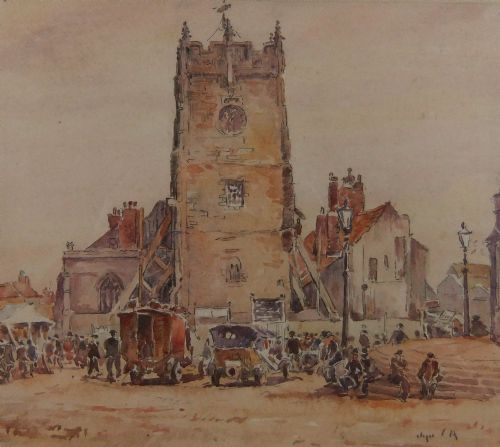
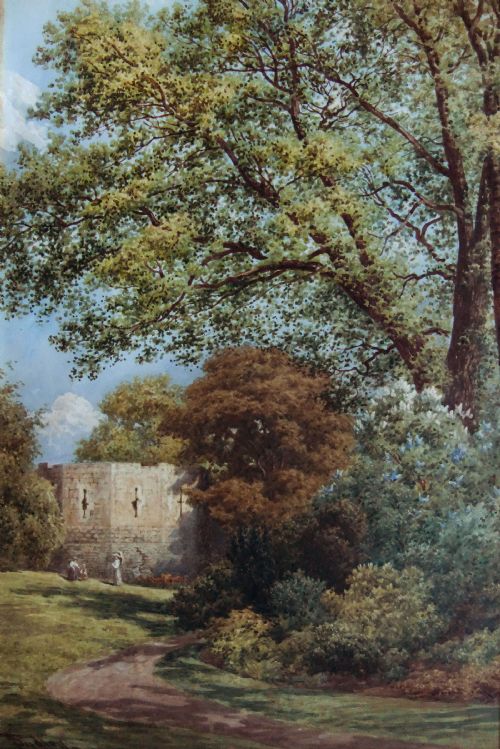
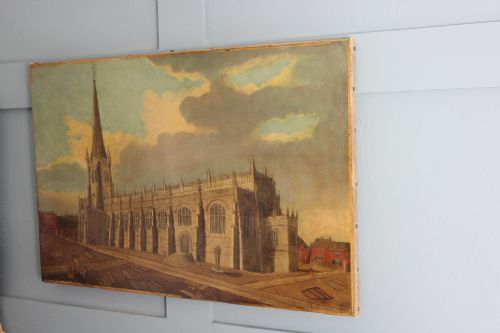
Yorkshire architectural art brings together topographical watercolours, oil paintings and early engravings that record the county's notable buildings, ruins and historic streets. You are looking at depictions of familiar landmarks ranging from York Minster and Bolton Castle to Rievaux Abbey and Wakefield Cathedral.
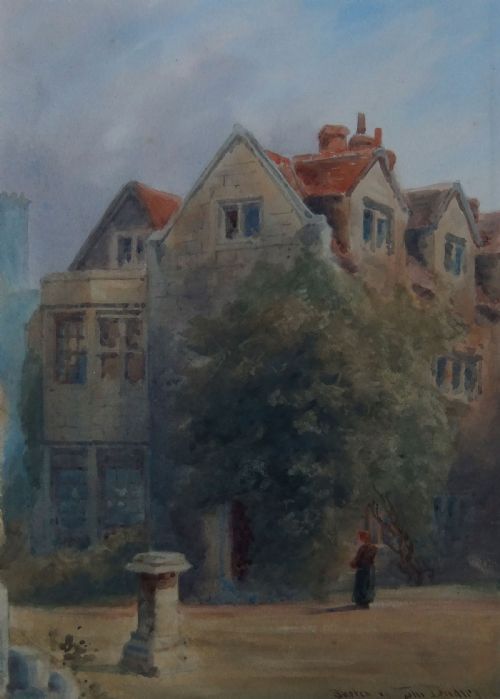
The version you are most likely to meet on this page is the 20th century watercolour drawing, with artists like Fred Lawson and Tom Dudley providing detailed views of local townscapes and ancient masonry. These pieces span from the eighteenth-century engraved plate to mid-century British watercolours.
Subjects frequently focus on specific Yorkshire locations, capturing vernacular cottages, mediaeval fortifications and ecclesiastical ruins with topographical precision. The selection demonstrates how successive generations of artists recorded the built heritage of the region across different centuries.
Materials and techniques
Watercolour pigment and ink on paper form the primary medium for these topographical works, allowing artists to delineate architectural stone and timber with fine lines and washes. Draughtsmen often combined pen and ink work with transparent watercolour to record the intricate details of abbeys and castles.
Oil on board provides a heavier, more textured surface for works depicting local townscapes and buildings, while early engravings utilise printed paper to reproduce detailed architectural plates. Gilt wood frames frequently house these watercolours and drawings, completing the presentation of the period artwork.
Several watercolours show Fred Lawson repeatedly returning to sketch Bolton Castle through changing northern weather.
Factors of quality
Quality rests upon the precision of the draughtsmanship and the artist's ability to render architectural perspective correctly while maintaining a balanced composition. Works that capture the specific atmosphere and structural details of historic sites demonstrate a higher level of artistic accomplishment.
The condition of the paper surface, the vibrancy of the watercolour pigment, and the originality of the associated framing all influence the overall standing of an individual piece. Signed works by established regional artists generally command greater attention from collectors of topographical art.
John Smith Atherton·Alfred George Morgan·Fred Lawson·Florence Hess·John Sowdean·Tom Dudley·John Cawthorn·Sonia Lawson·Donald Curley
The Yorkshire Architectural Art Glossary
- Diptych
- A painting or drawing divided into two distinct panels or sections hinged or displayed together. This format allowed artists to present paired views of related subjects.
- Engraving
- A printmaking technique where an image is incised into a metal plate, which is then inked and pressed onto paper. These plates produced crisp architectural illustrations in earlier centuries.
- Watercolour pigment
- A colourant suspended in a water-soluble vehicle, applied to paper to create transparent washes of colour. It remains the dominant medium for field sketches and finished topographical views.
Yorkshire Architectural Art: Frequently Asked Questions
What is yorkshire architectural art?
Yorkshire architectural art comprises historical paintings, drawings and prints depicting buildings, ruins and street scenes across the county. These works record the changing appearance of local landmarks over several centuries.
The pieces range from eighteenth-century engraved plates of cathedrals to twentieth-century watercolour studies of castles and abbeys by regional artists.
How were these watercolours created?
Artists typically used ink outlines combined with watercolour pigment on paper to capture fine architectural details in the field. This allowed for both precise draughtsmanship and rapid atmospheric washes.
Some works utilise oil paint on board for a more robust surface texture when rendering townscapes and buildings.
How do I date these artworks?
Dating relies on signature styles, artist biographical details, costume clues in figures, and the techniques used in the paper or framing. Eighteenth-century engravings differ significantly in print quality and paper stock from twentieth-century watercolours.
Signatures and inscriptions on the reverse often provide direct clues to the exact year or active period of the artist.
How should I display watercolour art?
Watercolour paintings and drawings on paper require protection from direct sunlight to prevent fading of the pigments. Framing with acid-free mounts and conservation glass preserves the paper over time.
Keeping them in rooms with stable humidity prevents warping of the paper and damage to the original frame.