


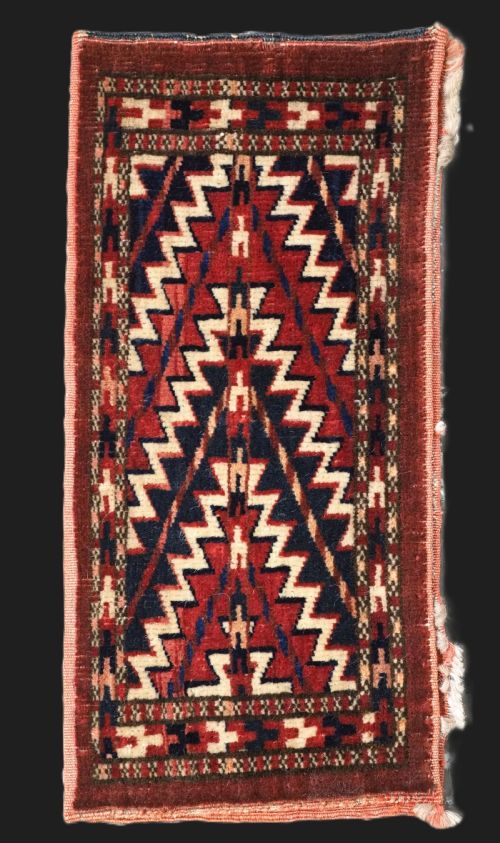


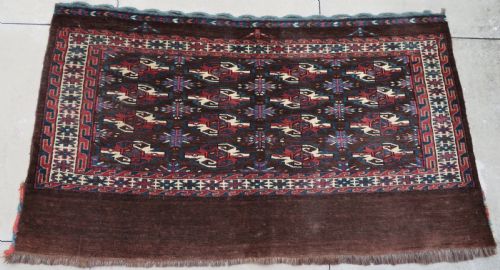


Yomut Turkmen Bag Face
These yomut turkmen bag face examples are authentic tribal weavings created by nomadic weavers across the Trans-Caspian steppes.
Yomut Turkmen Bag Face
A yomut turkmen bag face represents the utilitarian textile art produced by Turkmen tribes in Central Asia during the nineteenth and early twentieth centuries. When you search for a yomut turkmen bag face, you encounter functional tribal items such as torbas, kap bags, and spindle bags designed for nomadic storage. These pieces showcase distinct tribal patterns passed down through generations of weavers across the Trans-Caspian steppes.
The items listed on this page encompass various formats including bag faces, complete torbas with backs, and related tribal textiles like chuval rugs. Examples range from pieces created in the mid-nineteenth century up to productions from the early twentieth century. Buyers most frequently meet torbas featuring traditional gul motifs or banded flatweave designs among these listings.
How they were made
Weavers constructed these textiles using hand-spun wool and cotton foundations, employing traditional knotting and flatweave techniques. The makers relied on natural dyes to colour the wool, producing deep reds, browns, and contrasting tones that define the appearance of each piece.
Production methods combined pile-woven sections with plain weave backs or flatweave bands depending on the specific utilitarian function of the bag. Artisans worked within strict tribal design traditions, incorporating structural elements like the kepse gul or aishk gul into the textile grid.
Object types include torbas, chuvals, spindle bags, and kap examples originating from the Trans-Caspian steppes.
What varies in quality
Quality in these tribal weavings rests on the precision of the weave and the clarity of the design structure. Finer knotting density and better preserved natural dye saturation separate superior examples from standard utility pieces.
The integrity of the remaining wool pile and the survival of original flatweave backs or borders dictate the standing of an individual bag face. Pieces retaining their structural completeness display greater fidelity to their original nomadic purpose.
The Yomut Turkmen Bag Face Glossary
- Gul
- A medallion motif repeated across Turkmen carpets and bag faces to identify specific tribes or clans. Each pattern carries traditional significance within the weaving community.
- Torba
- A small storage bag used by nomadic families for domestic possessions within the yurt. These rectangular pieces frequently survive as separated bag faces.
- Chuval
- A large tent bag utilised for storage, distinct from the smaller torba format. Examples often feature multiple gul rows across the face.
- Kepse
- A specific geometric gul design frequently utilised by Yomut weavers. It appears repeatedly across nineteenth-century torba and bag face examples.
Yomut Turkmen Bag Face: Frequently Asked Questions
How were torbas used by nomads?
Torbas served as functional storage containers inside Turkmen dwellings, hanging against the lattice walls of the yurt. Families stored bedding, clothing, and domestic goods inside them.
Over time, heavy wear caused the backs of these bags to detach, leaving behind the decorative bag faces that survive today.
How do I date a yomut bag face?
Dating relies on assessing the wool quality, the range of natural dyes, and the structural characteristics of the weave. Pieces from the nineteenth century typically display softer hand-spun wool and deeper, more varied dye palettes.
Later examples from the early twentieth century often show shifts in tone and slightly more standardised knotting structures.
Can I hang a bag face on the wall?
Yes, many collectors display these textiles as wall art to highlight their geometric patterns and tribal history. Their compact size makes them suitable for domestic hanging.
Mounting them correctly protects the wool structure and prevents unnecessary strain on the old foundation threads.