
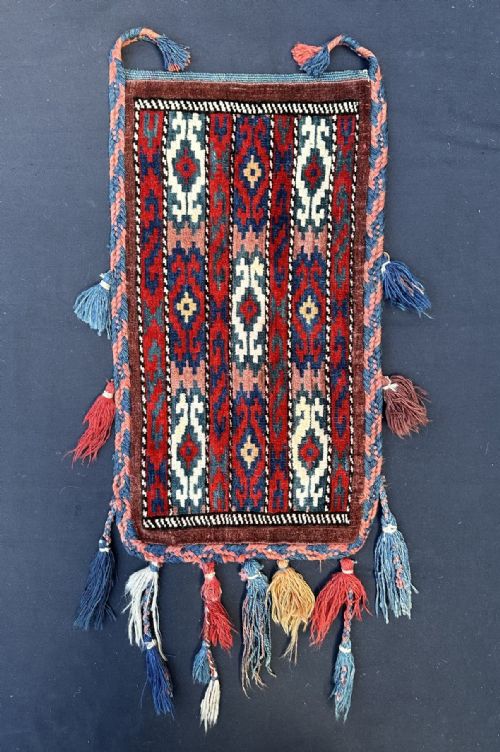

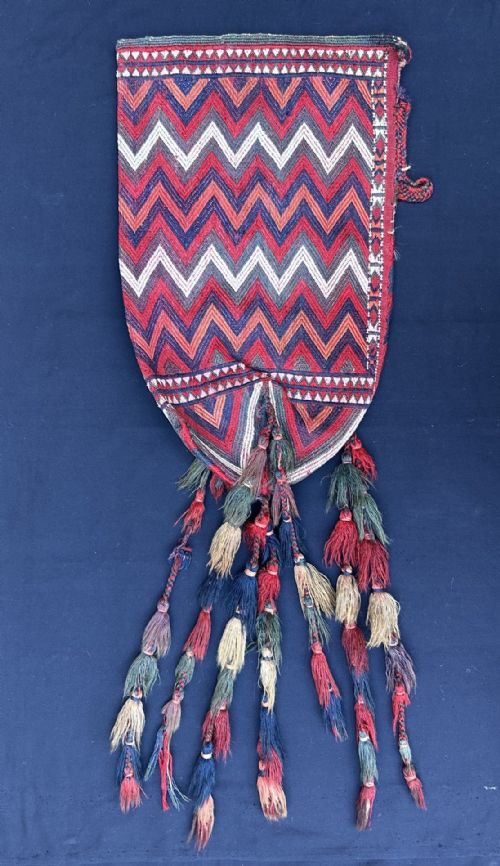


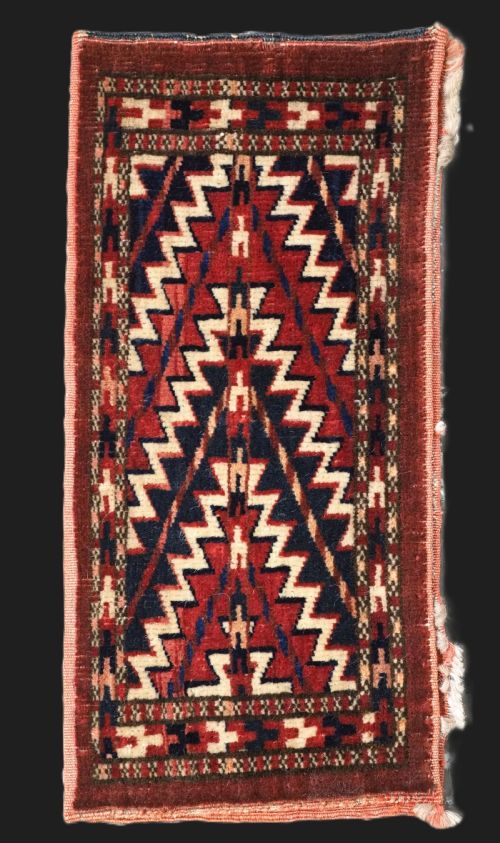


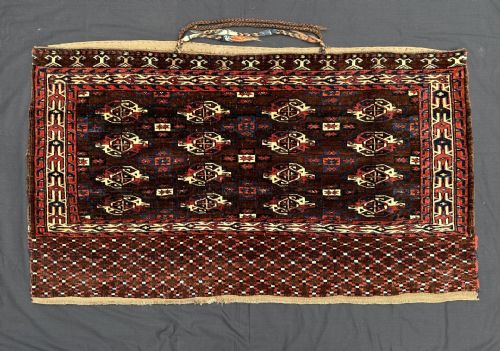
Yomut Tribal Bag
A yomut tribal bag brings the geometric precision of the Trans-Caspian steppes straight to your wall or floor.
Yomut Tribal Bag
When you search for a yomut tribal bag, you encounter utilitarian textiles woven by nomadic groups across Turkmenistan and Central Asia during the nineteenth and early twentieth centuries. These pieces encompass specific functional forms such as spindle-bags, tent-pole bags, and storage torbas.
The selections on this page span several decades from the mid-nineteenth century onward, showing distinct tribal motifs tied to Turkmen traditions. Most examples survive as either complete pouches with plain weave backs or as decorative bag faces intended for domestic use or transport.
What Varies in Quality
Quality rests upon the precision of the tribal motifs, such as the distribution of the design elements across the field and the crispness of the geometric repeat. Tighter knot counts and finer handling of the wool elevate the visual depth of the textile.
Preservation of the original plain weave back or complete form influences the integrity of the piece, alongside the richness and stability of the natural dyes employed by the weaver.
The Yomut Tribal Bag Glossary
- Torba
- A small storage bag used traditionally inside a Turkmen tent for household possessions. These facepieces display characteristic tribal guls.
- Chuval
- A large tent storage bag designed for blankets and heavy possessions. They frequently feature multiple rows of major motifs.
- Kap
- A general term for a bag or container within Turkmen weaving traditions. These items served practical storage functions in nomadic dwellings.
- Gul
- A primary medallion or repeating motif used in Turkmen carpets and bags. Each tribal group utilised distinct geometric variations of these emblems.
- Flatweave
- A textile constructed without pile by interlocking warp and weft threads. This technique forms the sturdy backs and borders of many nomadic bags.
Yomut Tribal Bag: Frequently Asked Questions
What is a yomut tribal bag used for?
Nomadic weavers created these bags to store household items, spindle tools, or tent poles during migration across the Central Asian steppes. They functioned as durable containers within the yurt before entering the collector market.
Today, collectors appreciate these textiles primarily as wall art or decorative floor pieces. Their compact formats suit modern interiors seeking textural warmth and historical depth.
How do I date a yomut tribal bag?
Dating relies on assessing the natural dye palette, the quality of the hand-spun wool, and structural characteristics typical of nineteenth-century weaving. Earlier pieces often display softer wool textures and richer, plant-based colour variations.
Comparing the specific tribal patterns and structural formats against established timelines helps narrow the period of origin. Variations in the handling of the flatweave backs also offer clues regarding the decade of manufacture.
How should I clean a tribal textile?
Maintenance requires gentle surface care, such as careful low-suction vacuuming across the weave without beating the fibres. Professional textile conservators should handle any deep washing to prevent dye migration.
Keep these pieces away from direct sunlight to preserve the natural plant dyes. Rotating the textile periodically ensures even exposure to ambient light within a room.
Are these bags complete or fragments?
Surviving examples appear in various states, ranging from complete bags with their original plain weave backs to individual bag faces. Both formats hold distinct appeal depending on how you intend to display the textile.
Complete pieces retain their full utilitarian construction, whereas bag faces often function ideally as framed wall hangings. Listings specify whether a backing is present on each item.