




Yew Wood Captains Chair
These yew wood captains chair examples combine sturdy vernacular design with rich timber warmth.
Yew Wood Captains Chair
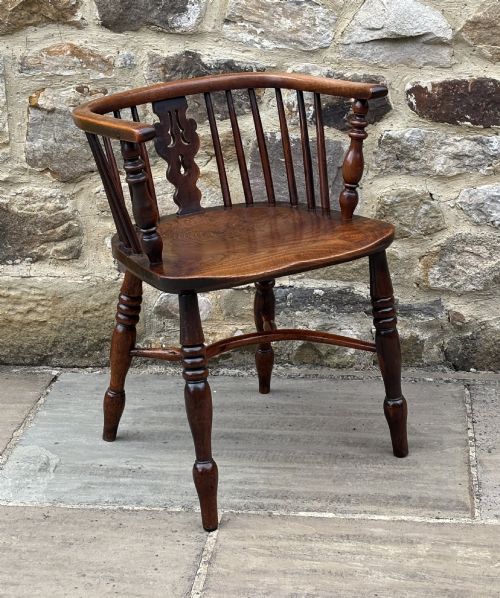
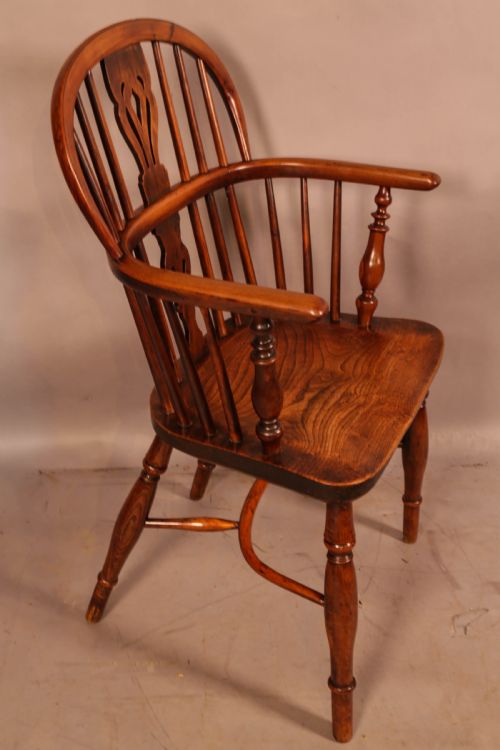
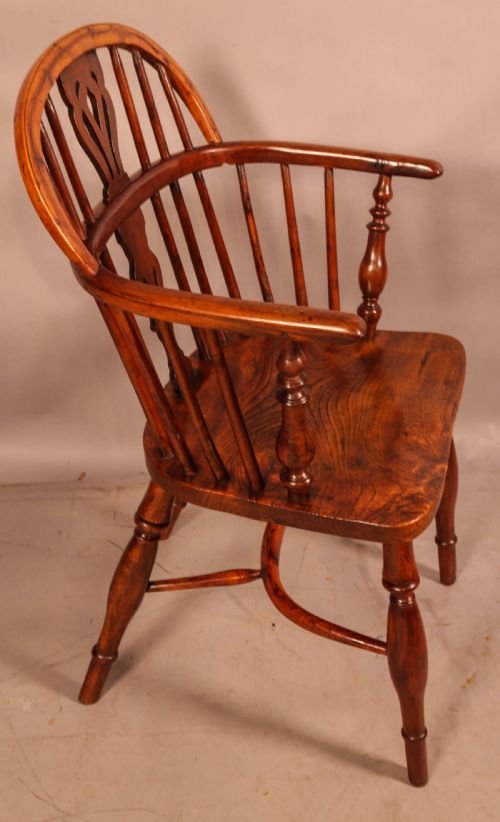
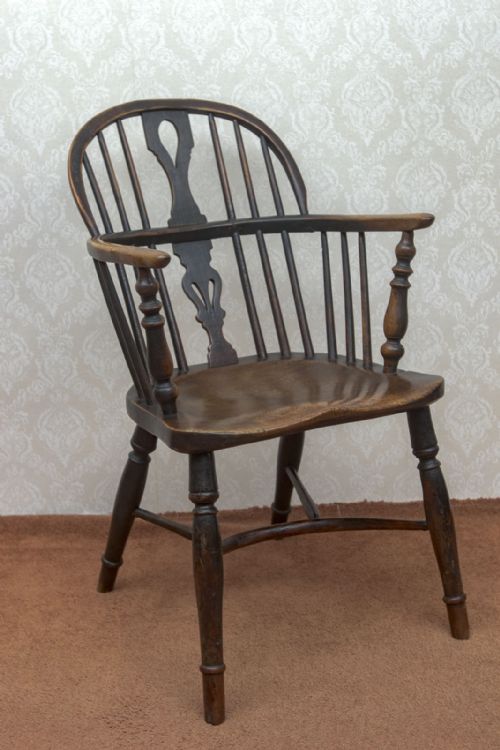
A yew wood captains chair represents a robust form of English vernacular seating originating in provincial workshops. These armchairs typically combine a turned spindle back with a generous solid seat, designed for practical daily use.
What varies in quality
The visual appeal of the timber grain marks the distinction between standard provincial work and superior pieces. Selected yew exhibits deep figuring and warmth that develops a rich surface sheen over decades of use.
Structural robustness also defines the upper tier of these armchairs. Well-proportioned arm bow joints and tightly retained spindles indicate careful initial joinery by named regional makers.
Listings feature nineteenth century vernacular seating constructed from combinations of yew, elm, ash, beech and oak.
Rockley Maker·John Shadford Windsor Lincolnshire
The Yew Wood Captains Chair Glossary
- Windsor chair
- A wooden armchair built with a heavy solid seat into which the legs and back spindles are separately attached. This structural method distinguishes them from standard framed upholstery chairs.
- Broad arm
- A chair featuring a widened wooden armrest designed for writing or comfort. This feature appears frequently on nineteenth century provincial examples.
- Low back
- A chair design where the back rail sits lower than a standard high-backed Windsor. This configuration allows freedom of movement for the arms and shoulders.
- Vernacular
- Objects built by regional craftsmen following local traditions rather than strict London academic designs. These pieces prioritise functional utility and available local materials.
Yew Wood Captains Chair: Frequently Asked Questions
What is a yew wood captains chair?
A yew wood captains chair is a sturdy wooden armchair featuring a turned spindle back and a thick carved seat. These seats were traditionally built in provincial English workshops for use in studies, offices and country homes.
They combine native timber construction with ergonomic vernacular forms. The designation typically covers low back Windsor variants and broad arm styles from the nineteenth century.
How do I care for a yew wood captains chair?
Maintain the timber by applying a microcrystalline wax polish to nourish the surface grain. Avoid placing the chair near direct heat sources or strong sunlight to prevent timber splitting.
Regular dusting with a soft dry cloth keeps the patina intact. Check the leg joints periodically to ensure the wedged tenons remain secure.
How were these chairs used historically?
These armchairs served as practical seating in studies, libraries and administrative spaces. The solid wooden seat and supportive arms provided comfort during long periods of writing.
Their robust construction also suited domestic country house environments. They functioned as versatile seating moved between reception rooms and offices.
How do I identify a nineteenth century example?
Nineteenth century pieces display traditional hand-turned spindle work and tool marks left by drawknives and adzes on the elm seat bottoms. The timber exhibits natural wear patterns and a deep patination accumulated over generations.
Construction details such as wedged leg tenons extending through the seat top indicate traditional nineteenth century provincial building methods.