


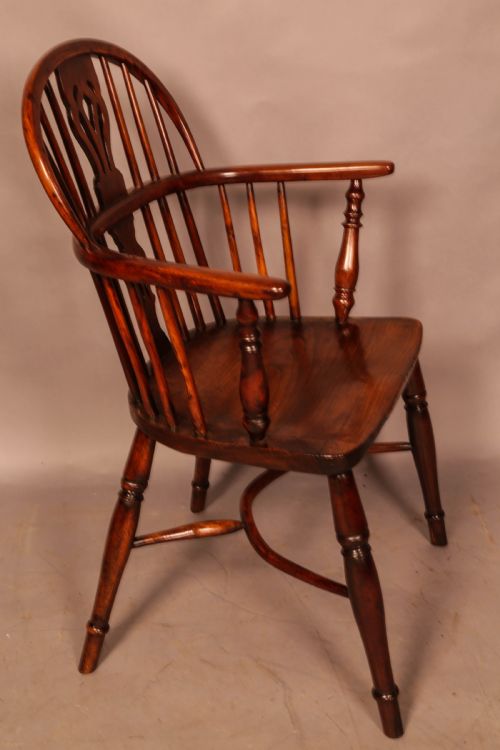


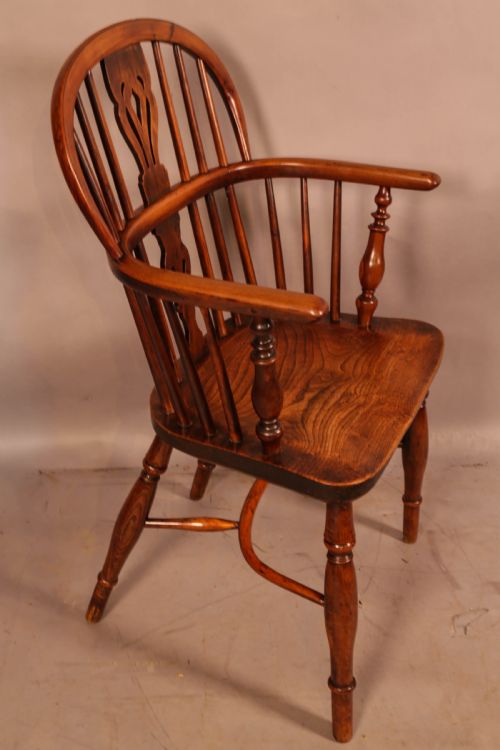
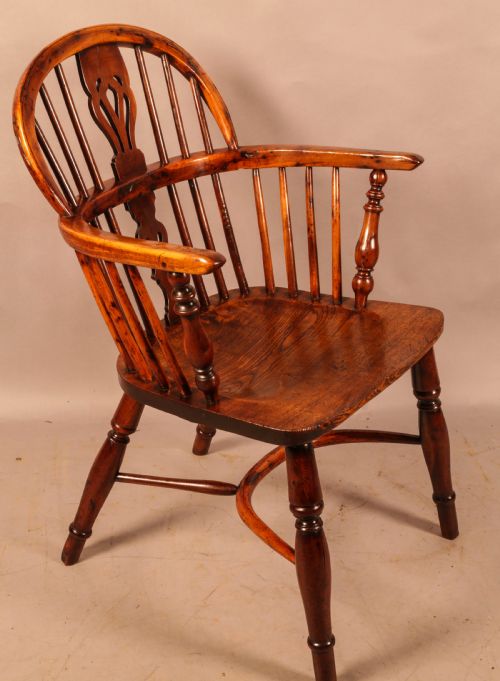


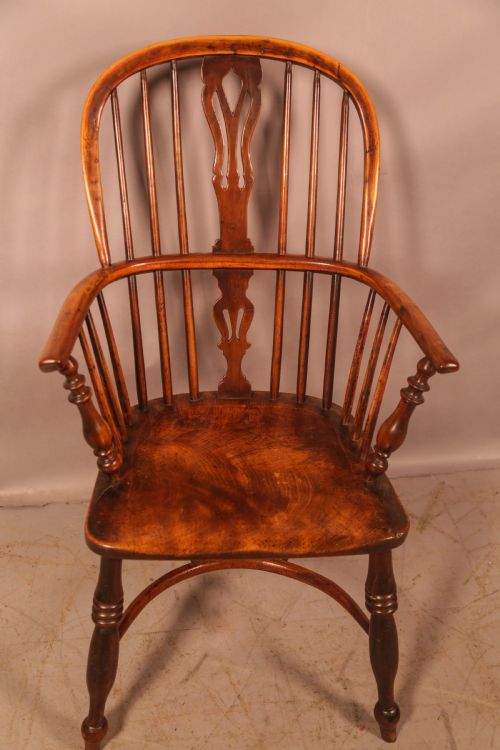
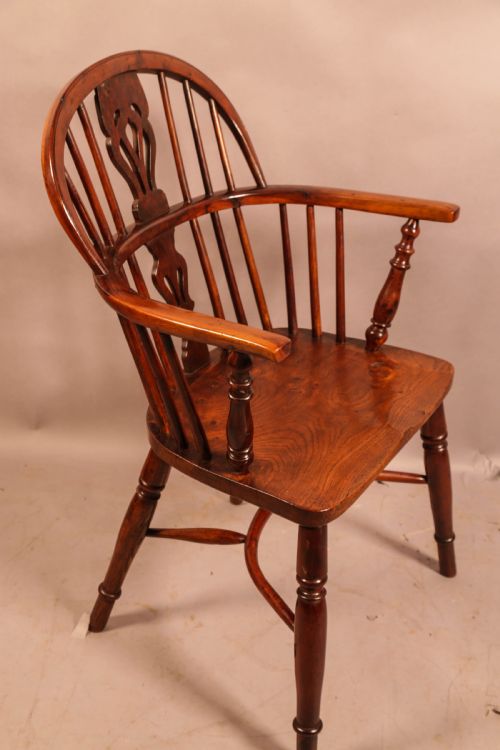
Rockley Windsor Armchair
A rockley windsor armchair is a robust English country seat prized for its turned spindles and sculpted seat.
Rockley Windsor Armchair
A rockley windsor armchair brings traditional English country seating into a room with its characteristic stick-back construction and central splat. These nineteenth-century pieces emerge from regional vernacular traditions, spanning both low back and high back formats. The examples seen here reflect Georgian and Victorian country aesthetics passed down through generations of rural makers.
Low back variations appear most frequently across these listings, often shaped for comfort with a continuous arm bow. High back examples also surface, offering greater vertical presence and support. Each piece stands as a durable artefact of English country vernacular design.
How they were made
Makers built these chairs using timber combinations suited to structural demands, pairing yew wood and ash with elm. The seats are typically carved from a single solid piece of elm to provide a deep, contoured depression for the sitter. Spindles and legs utilise turned ash or yew wood, driven directly into the seat base.
The characteristic bow arms and back rails depend on steam bending to achieve their curved profiles without snapping. Traditional wedged tenon joints secure the undercarriage, locking the legs firmly into the underside of the seat.
Rockley Windsor Armchair Retail Price Guide 2026
Typical asking prices for rockley windsor armchair among the pieces listed under this phrase on Sellingantiques today, from the lower quarter to the upper quarter. They describe what is for sale here now, not the wider market.
The archive and current listings record geographical association with Nottinghamshire alongside specific country workshop makers.
What varies in quality
The grade of timber selection marks the primary difference between standard examples and finer works. Richly figured yew wood grain patterns elevate the visual impact of the upper back and arm bows. Master makers achieved more harmonious proportions in the turning of the spindles and legs.
The depth of the saddle seat carving and the integrity of the original joints dictate the overall execution. Chairs that retain their original surface patination without excessive intervention command greater appreciation among collectors.
Fred Walker·George Nicholson·Fred Walker of Rockley·Nicholson Rockley
The Rockley Windsor Armchair Glossary
- Windsor chair
- A wooden armchair featuring a solid saddle-shaped seat into which all other components are tenoned directly. This method creates a sturdy framework without relying on a conventional box frame.
- Low back
- A chair design where the arms and back rail form a continuous, low horizontal sweep. This format allows the sitter greater freedom of movement.
- High back
- A tall seating configuration that extends support well above the shoulders of the occupant. These versions often incorporate a central pierced splat.
- Elm
- A durable native hardwood chosen historically for seats because its interlocking grain resists splitting when drilled and shaped. It provides a heavy and stable foundation for the chair.
- Yew wood
- A dense timber prized for its warm colour and striking decorative grain. Makers utilised it for prominent visible elements such as back bows and spindles.
Rockley Windsor Armchair: Frequently Asked Questions
What is a rockley windsor armchair?
A rockley windsor armchair is a nineteenth-century country seat originating from Nottinghamshire. These pieces combine a solid wooden saddle seat with turned spindles and curved arm bows.
Craftsmen in this tradition built sturdy chairs utilising local hardwoods like yew, ash, and elm. They represent enduring examples of English country vernacular furniture.
How were these armchairs used historically?
These armchairs served primarily as heavy-duty seating in farmhouses, cottages, and country houses. Their robust construction made them suitable for daily domestic use near hearths or at dining tables.
The contoured wooden seats provided practical comfort during long hours of work or rest before the widespread adoption of upholstered furniture.
How do I live with a windsor armchair?
Living with one of these chairs involves placing it in a stable environment away from direct heat sources and dramatic humidity changes. Solid timber responds to moisture shifts, so maintaining consistent room conditions protects the antique wood.
Routine dusting and occasional application of appropriate wax help preserve the surface patination. These chairs blend well into both traditional and contemporary interiors as accent seating.
How can I tell low back and high back types apart?
Low back models feature a continuous curved rail that sits around waist height, allowing the arms and backrest to merge into one uniform sweep. High back versions extend significantly taller behind the sitter, often incorporating a distinct central splat flanked by spindles.
High back chairs offer increased vertical support, whereas low back variants present a more compact profile.