

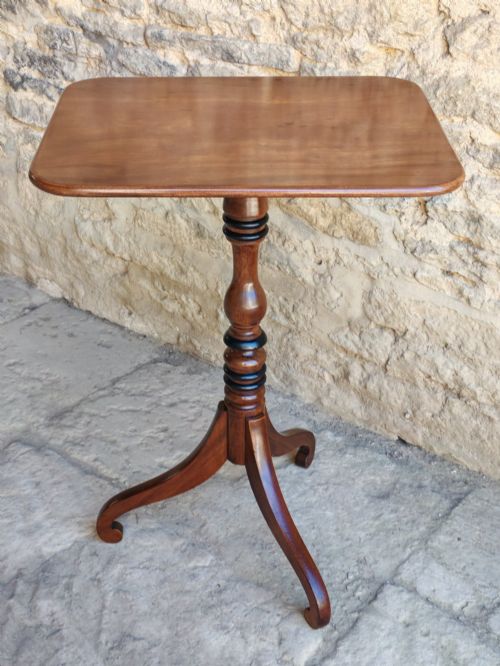
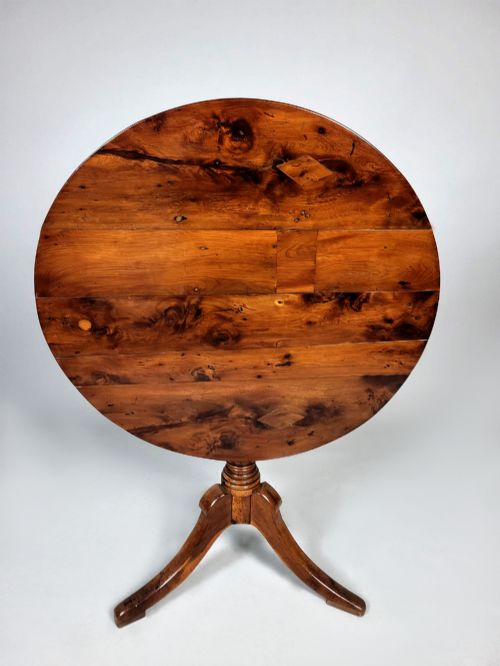


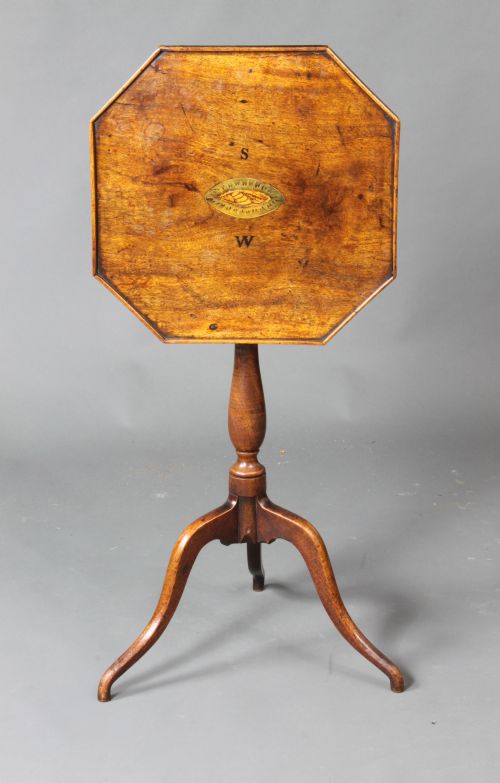


Yew Tripod Side Table
These yew tripod side table pieces are compact occasional items built on three legs, offering rich timber grain for period interiors.
Yew Tripod Side Table
When you search for a yew tripod side table, you encounter compact occasional furniture designed for specific domestic uses such as holding a lamp, kettle, or wine. The pieces appearing here span the eighteenth century, Georgian era, Regency period, and nineteenth century, alongside later revivals from nineteen thirty. These tables function as wine tables, occasional tables, lamp tables, kettle stands, and ladies work tables.
The most common formats on this page feature circular or rectangular wooden tops supported by a central pillar on three legs. Examples range from mid-eighteenth century Georgian specimens to Regency interpretations and later nineteenth century Irish variations. Each piece serves as a movable surface intended for flexible placement within historic or traditional rooms.
How they were made
Cabinet makers utilised solid yew wood and burr yew veneer alongside supportive secondary timbers such as oak and satinwood. The distinctive figuring of burr yew and yew wood provides natural decorative contrast across the table tops, sometimes accented with ebonised wood details or brass fittings.
Construction methods rely on traditional joinery uniting the top, the turned central pillar, and the three-legged tripod base. Selected pieces incorporate complex inlay work or contrasting timber banding around the circular and rectangular tops to frame the grain.
Yew Tripod Side Table Retail Price Guide 2026
Typical asking prices for yew tripod side table among the pieces listed under this phrase on Sellingantiques today, from the lower quarter to the upper quarter. They describe what is for sale here now, not the wider market.
The evidence on this site includes yew tripod side tables spanning the eighteenth century, Georgian period, Regency era, and nineteenth century, alongside later examples from nineteen thirty.
What varies in quality
Quality in these tables rests upon the selection and figuration of the timber, particularly the depth and movement within the burr yew veneer or solid yew top. Superior examples display carefully matched grain patterns and harmonious proportions between the top, column, and legs.
The sophistication of the turning on the central pillar and the elegance of the tripod base legs distinguish finer workshop output from simpler utilitarian furniture. Subtle details such as inlaid banding and timber selection elevate certain pieces above standard domestic work.
Gillows
The Yew Tripod Side Table Glossary
- Tripod table
- A small freestanding table supported by a central pillar resting on three legs. This construction allows the table to stand firmly on uneven floors and often permits the top to tilt.
- Burr yew veneer
- Thin slices of yew wood cut from a growth blemish or burl, displaying highly twisted and knotty grain patterns. This material is applied to table tops for decorative effect.
- Wine table
- A small occasional table historically used for holding bottles and glasses during evening social gatherings. These pieces typically feature circular tops and portable tripod bases.
- Kettle stand
- A diminutive table designed to support a tea kettle above floor level or near a hearth. They represent some of the most compact tripod furniture forms.
- Satinwood
- A pale, hard timber utilised for contrasting stringing and inlay details on eighteenth and nineteenth century furniture. It provides a bright visual border against darker yew surfaces.
Yew Tripod Side Table: Frequently Asked Questions
What is a yew tripod side table used for?
These tables function as movable surfaces for lamps, drinks, or small decorative objects in sitting rooms and hallways. Their compact footprint allows them to sit beside chairs or in corners where larger furniture cannot fit.
Historically, specific variants served as wine tables or kettle stands during social gatherings. Today, they remain practical accent pieces that introduce historic timber into modern living spaces.
How do I identify a Georgian yew table?
Georgian examples date from the mid to late eighteenth century and display characteristic proportions, hand-turned pillars, and pegged joinery. The timber often shows rich natural patination developed over centuries of use.
Examination of the underside and pillar construction reveals the hand tools and assembly methods typical of eighteenth century workshops. These pieces predate the standardised manufacturing methods of the later Victorian era.
What is burr yew?
Burr yew comes from an abnormal growth on a yew tree, producing a swirling, highly figured grain pattern. Cabinet makers sliced this wood into thin veneers to ornament the prominent surfaces of table tops.
This material catches the light differently than straight-grained timber, creating depth and visual movement. It appears on finer occasional and wine tables from the Georgian and Regency periods.
How do I care for an antique yew table?
Maintain the timber by keeping the table away from direct heat sources and strong sunlight, which can dry out the wood and fade the polish. Occasional application of appropriate wax helps preserve the finish.
Avoid placing damp items directly onto the unsealed wood surface to prevent water marking. Gentle dusting with a soft, dry cloth is sufficient for routine maintenance.