
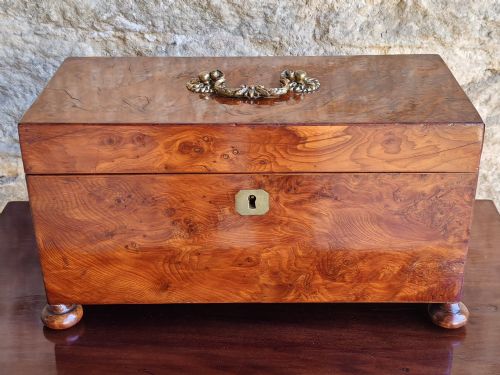
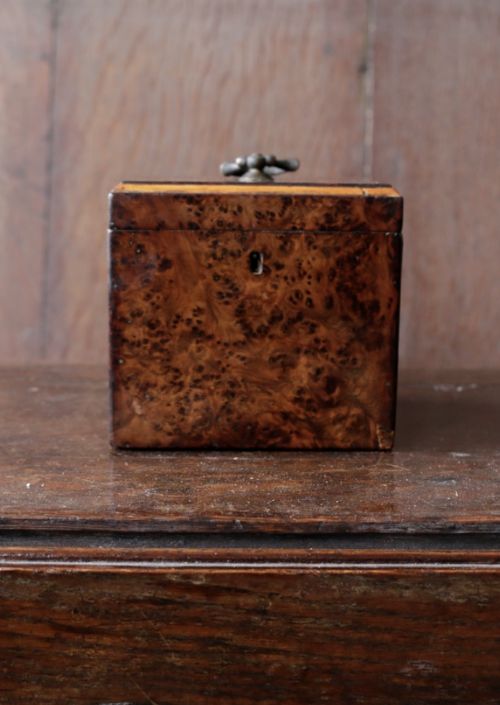


Yew Tea Box
A yew tea box is a timber container made for storing leaf tea, prized for its figured grain and period character.
Yew Tea Box
When you search for a yew tea box, you encounter containers shaped to store and preserve dry leaves during the eighteenth and nineteenth centuries. These pieces reflect periods such as the Georgian, Regency, and late nineteenth century, spanning dates from around 1770 to 1860.
The forms on this page include standard tea caddies, cube tea caddies, tea chests, semi-circular boxes, hexagonal caddies, and larger teapoys. Most examples rely on the distinctive figuring of yew wood and burr yew to create a decorative surface on the domestic table.
Makers of these boxes utilised native timbers, shaping them into compact storage vessels that often feature inlaid details like boxwood and ebony stringing, or marquetry. Surviving items demonstrate the domestic habits of earlier households and the skill of period woodworkers.
How they were made
Constructed from yew wood, burr yew, and general timber, these boxes showcase the natural grain patterns inherent in the material. Artisans selected timber sections with lively figuring to cover the exterior surfaces of the caddies and chests.
Decoration was achieved through the application of contrasting inlays such as bone, ebony, and boxwood stringing, alongside geometric marquetry patterns. Brass hardware, including escutcheons and hinges, was fitted to secure the lids and compartments of the boxes.
Listings on this site span the eighteenth and nineteenth centuries, featuring periods from Georgian to Regency alongside materials like brass, bone, and burr yew.
What varies in quality
Quality in a yew tea box rests upon the selection and matching of the timber grain across the visible panels. Superior pieces display rich burr yew figures that have been carefully arranged to present a balanced visual pattern.
The precision of the inlay work and the retention of original brass fittings separate finer examples from simpler domestic containers. Construction details, such as tight joints and intact interior compartments, indicate the standard of the original workshop.
The Yew Tea Box Glossary
- Burr yew
- A growth on a yew tree that produces knotty, highly figured wood grain. This timber is sliced into veneers to cover box surfaces.
- Tea caddy
- A small container built to hold loose tea leaves safely. These vessels often included internal lids or compartments.
- Teapoy
- A larger tea container supported on a central pillar or legs. They frequently match the materials found in smaller tea boxes.
- Stringing
- Thin lines of contrasting wood inlaid into the surface of furniture and boxes. It creates decorative borders around panels.
- Marquetry
- Patterns formed by fitting together pieces of veneer on a wooden base. This technique adds pictorial or geometric ornamentation.
Yew Tea Box: Frequently Asked Questions
What is a yew tea box?
A yew tea box is a small wooden chest constructed to hold expensive loose tea leaves in period homes. These vessels protected the dry leaves from moisture and light.
They appear in various geometric shapes, including cubes, hexagons, and semi-circular designs, finished with figured timber veneers.
How do I date a yew tea box?
Dating relies on observing the overall form, construction methods, and decorative traits like stringing or marquetry. Pieces span the Georgian, Regency, and Victorian eras.
Changes in silhouette and inlay styles help separate late eighteenth-century examples from those made during the nineteenth century.
Were these boxes lined inside?
Many period tea containers featured internal compartments designed to keep different varieties of tea separate. Some retained foil or paper linings to preserve aroma.
Surviving interiors often show wooden lids or divisions that match the exterior wood species.
Where should I place a tea box?
These boxes sit well on side tables, chest tops, or desks where their figured grain remains visible. They function as decorative objects while offering small storage spaces.
Keep them away from direct heat sources and strong sunlight to protect the timber and internal linings.