



Yellow Vase Floral Art
These yellow vase floral art pieces bring together vibrant blooms and rich glass or canvas mediums from across the nineteenth and twentieth centuries.
Yellow Vase Floral Art
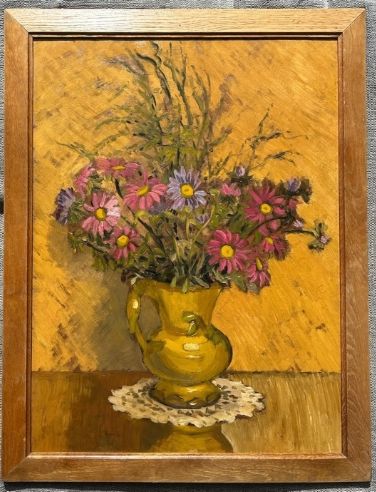
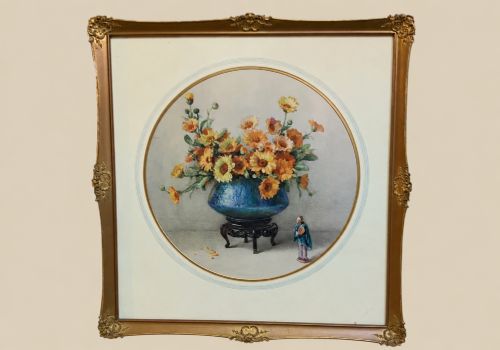
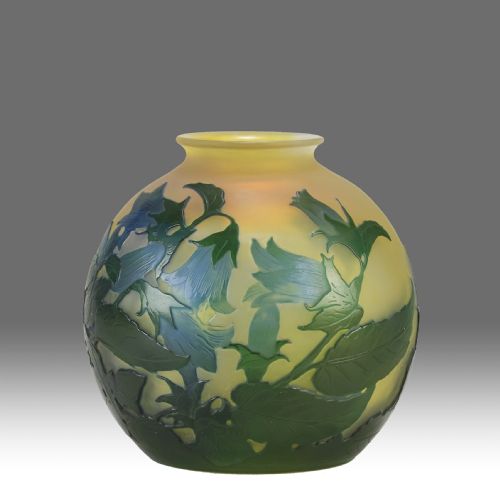
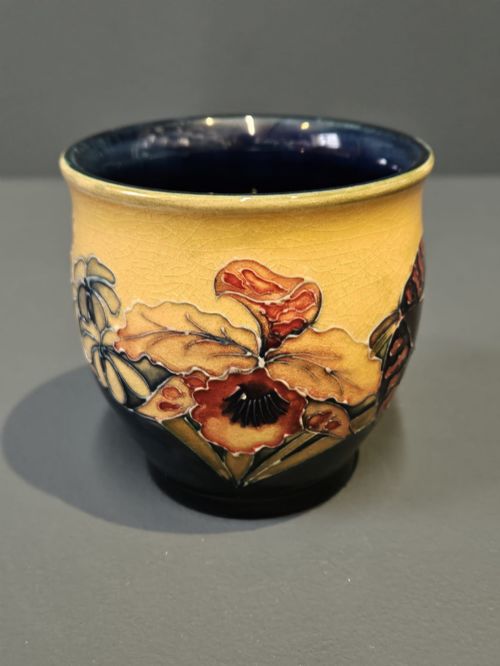
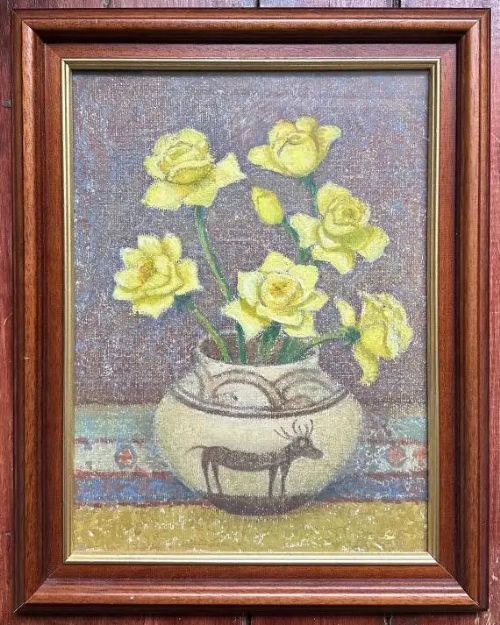
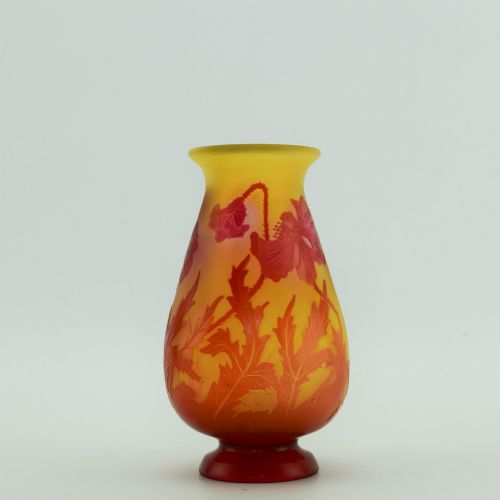
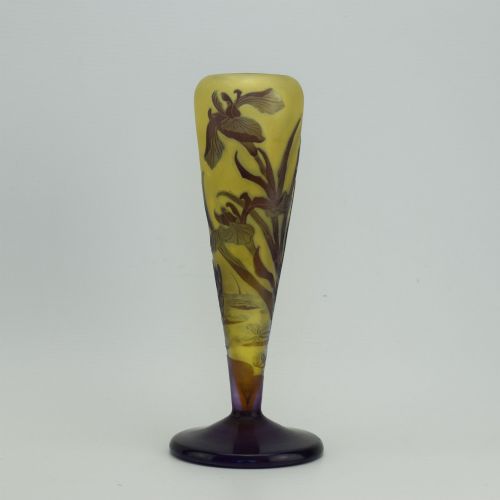
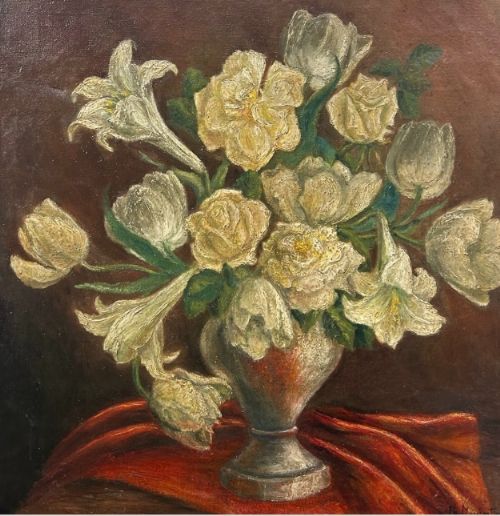
When you search for yellow vase floral art, you encounter a distinct grouping of objects that bridge decorative glassware and botanical painting. The selection on this page ranges from early twentieth-century cameo glass vessels to mid-century oil paintings on canvas.
Vessels take forms such as footed vases and handled shapes, whilst the flat works comprise watercolours and oil paintings depicting blooms like chrysanthemums and roses. Origins span Victorian Britain to mid-century France, uniting botanical subjects through diverse artistic traditions.
The most prevalent formats you will meet here are French cameo glass vessels and framed oil or watercolour still lifes. Both categories capture floral arrangements through distinct material expressions.
How they were made
Glass pieces utilise cameo techniques, acid-etching, and enamelling across multiple fused layers of glass to create raised botanical motifs. Makers manipulated heat and chemical agents to achieve depth in subjects like irises and poppies.
Painted works employ oil and watercolour mediums applied to canvas, board, and paper supports. Artists built up their floral still lifes through layered brushwork, capturing light on petals and vessels alike.
Several artists clearly kept fresh chrysanthemums and poppies close by while they worked.
What varies in quality
Quality rests upon the crispness of execution and the sophistication of the design. In cameo glass, the sharpness of the acid-etching and the subtlety of colour graduation separate standard vessels from exceptional works.
Within paintings, the dexterity of brushwork and the harmony of the palette dictate the standing of the piece. Stronger works demonstrate a confident command of light and botanical structure.
Emile Gallé·Daum Frères·Royal Doulton·Karl Palda·Paul Nicolas
The Yellow Vase Floral Art Glossary
- Cameo Glass
- A form of glassware created by fusing layers of different coloured glass and carving or acid-etching away parts to expose the design. This technique yields a raised, high-contrast relief often utilised for botanical motifs.
- Faience
- Earthenware decorated with opaque coloured glazes. This ceramic technique permits rich surface decoration on pottery vessels.
- Acid-Etched Glass
- Glass decorated by applying acid to eat away exposed surfaces. The process allows precise control over depth and texture in decorative glass production.
- Still Life
- A work of art depicting mostly inanimate subject matter, typically commonplace objects which may be either natural or man-made. In these listings, subjects focus predominantly on cut flowers in vessels.
- Art Nouveau
- An international style of art, architecture, and applied art most popular at the turn of the twentieth century. It is characterised by organic motifs and sinuous, flowing lines.
Yellow Vase Floral Art: Frequently Asked Questions
What is cameo glass?
Cameo glass is a vessel formed from multiple layers of differing coloured glass. Artisans carve or acid-etch the exterior layers to leave raised motifs against a contrasting background.
This labour-intensive method was notably utilised by turn-of-the-century French glassmakers to render naturalistic floral designs.
How do I care for antique glass?
Antique glass requires gentle handling and cleaning with lukewarm water and mild soap. Avoid sudden temperature changes to protect the material from thermal shock.
Keep pieces out of direct sunlight to preserve any applied enamelling or delicate surface colours.
What periods do these pieces cover?
The listings span from the nineteenth century through the mid-twentieth century. You will encounter Victorian works alongside Art Nouveau, Art Deco, and mid-century modern examples.
Each period brings distinct aesthetic priorities to the depiction of floral subjects.
How were still life paintings executed?
Still life paintings in this selection utilise oil or watercolour on canvas, board, or paper supports. Artists arranged botanical specimens in vases to study light, shadow, and colour relationships.
Brush techniques vary from precise botanical observation to impressionistic applications of paint.