


Yellow Quartz Jewellery
Yellow quartz jewellery brings warmth through gold and citrine settings spanning the Victorian era to the mid-twentieth century.
Yellow Quartz Jewellery
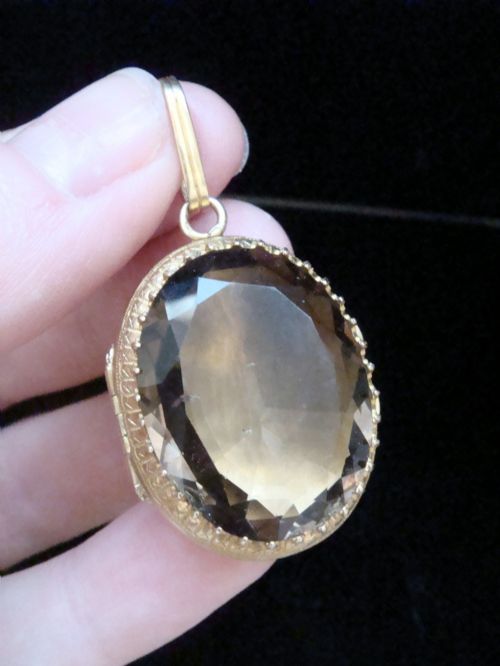
Yellow quartz jewellery encompasses rings, pendants, earrings, necklaces, brooches and bracelets set in gold or silver. Buyers seeking yellow quartz jewellery find pieces ranging from Victorian lockets and bangles to Art Deco solitaire rings and mid-century drop pendants.
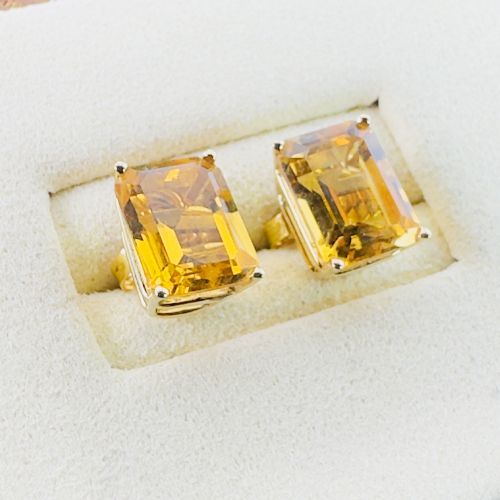
The most common formats on offer are rings and pendants featuring emerald-cut, cushion-cut or teardrop citrines mounted in nine-carat or eighteen-carat gold.
Materials and construction
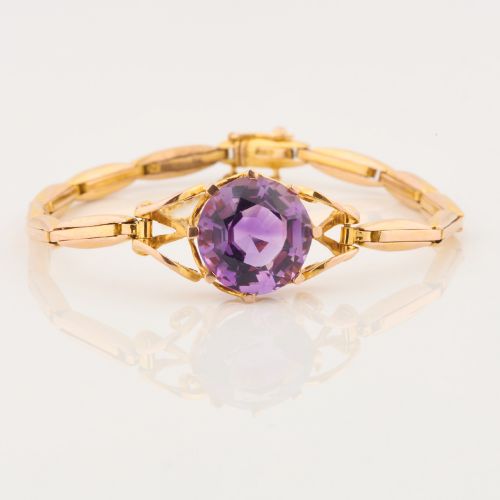
Goldsmiths set citrine and quartz stones into nine-carat, fourteen-carat and eighteen-carat yellow gold, as well as silver and platinum-topped mounts. Faceted stones utilise emerald, cushion and heart cuts secured by claws or bezels.
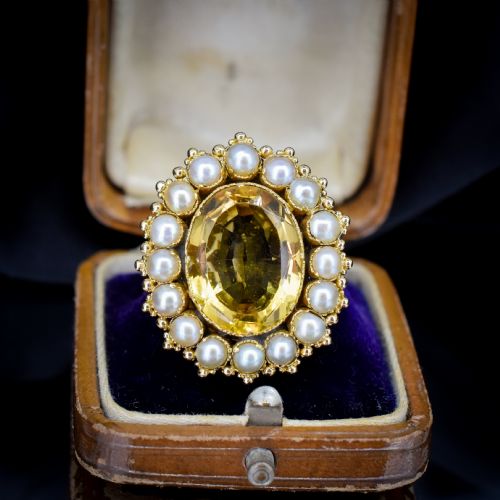
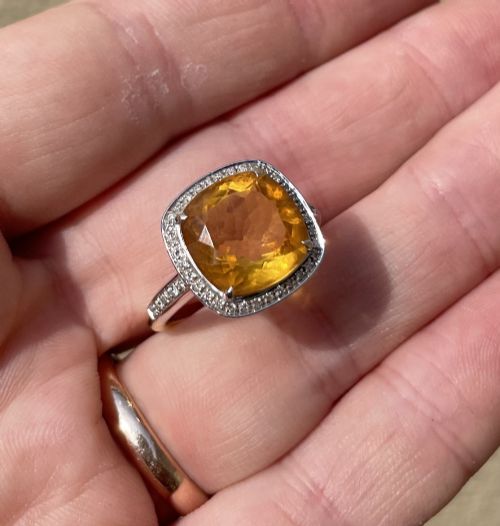
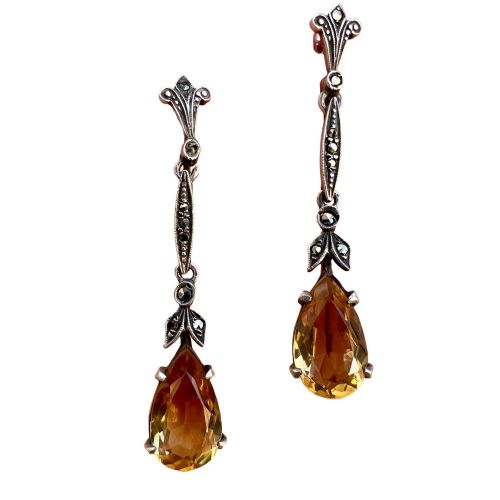
Constructors integrated diamonds, seed pearls, marcasite and amethyst as secondary stones in cluster rings, drop earrings and halo brooches. Metalwork techniques span cast gold settings, hollow locket construction and delicate wirework links.
Gold purities range across nine-carat, fourteen-carat, fifteen-carat and eighteen-carat compositions, frequently paired with diamond and pearl accents.
Quality factors
Quality rests on the saturation and clarity of the quartz crystal and the weight of the surrounding gold mount. Exceptional pieces display crisp stone facets and substantial metal gauges without thinning in the band or setting.
The integration of supporting diamonds and pearls alongside maker craftsmanship dictates the distinction between standard dress items and finer salon pieces.
Andrew Grima
The Yellow Quartz Jewellery Glossary
- Citrine
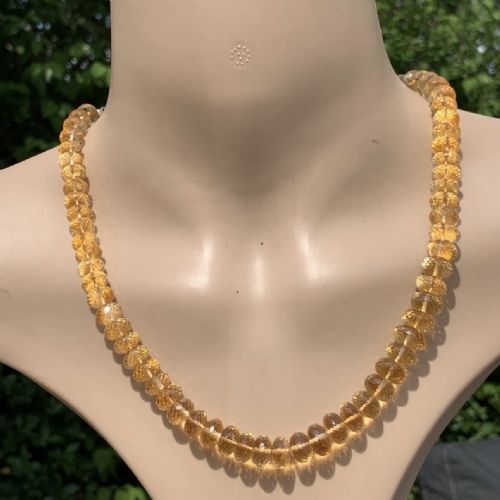
- A yellow variety of quartz valued for transparency and warm amber tones. It appears frequently in nineteenth-century and twentieth-century dress rings.
- Halo cluster
- A central gemstone encircled by a border of smaller stones such as diamonds or pearls. This arrangement amplifies visual presence on the hand.
- Witch's heart
- A pendant shape featuring an asymmetrical curved loop at the top resembling a scrolled flame. French jewellers utilised this romantic motif during the twentieth century.
- Marcasite
- Small faceted iron pyrite stones embedded in silver to provide a metallic sparkle. It frames vintage drops and earrings.
- Rock crystal
- Colourless transparent quartz used for spherical drops and carved elements. It offers high clarity in mid-century designs.
Yellow Quartz Jewellery: Frequently Asked Questions
What periods do these pieces span?
The selection covers items from the nineteenth century through the Edwardian and Art Deco periods, extending into mid-century modern design.
Victorian and Edwardian examples lean towards seed pearls and rich gold work, while nineteen-fifties and sixties pieces showcase bolder stone sizes.
How do I identify citrine from other stones?
Citrine is a transparent quartz ranging from pale yellow to deep amber. It often appears alongside smoky quartz and amethyst in the listings.
Examination under magnification reveals natural crystal inclusions that separate it from synthetic glass substitutes.
What gold purities are used?
Mounts utilise nine-carat, fourteen-carat and eighteen-carat yellow gold alongside silver elements. Higher carat gold provides a richer yellow hue to complement the stones.
French pieces frequently employ eighteen-carat gold standard markings.
How should I care for quartz jewellery?
Quartz requires gentle cleaning with warm soapy water and a soft brush to remove surface dust. Avoid harsh ultrasonic cleaners, particularly on pieces containing pearls or softer secondary stones.
Store items individually in padded boxes to prevent scratching the gold and stone facets.