

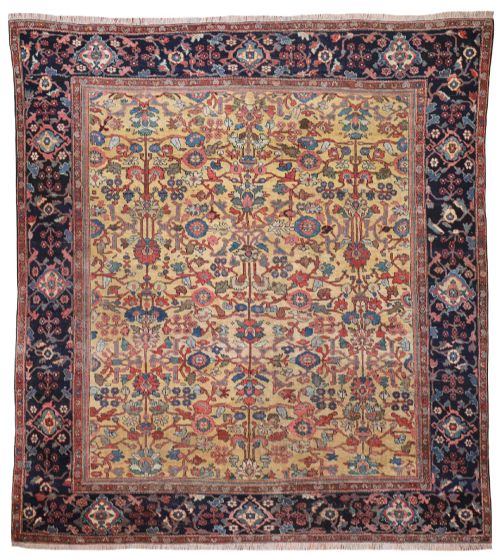
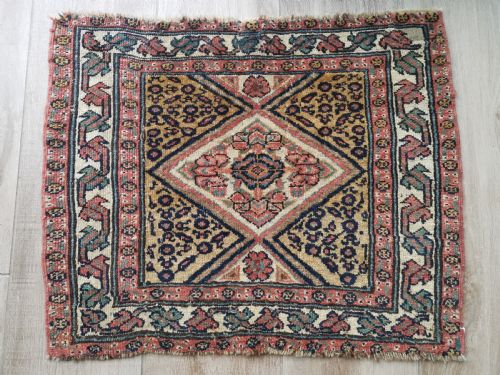


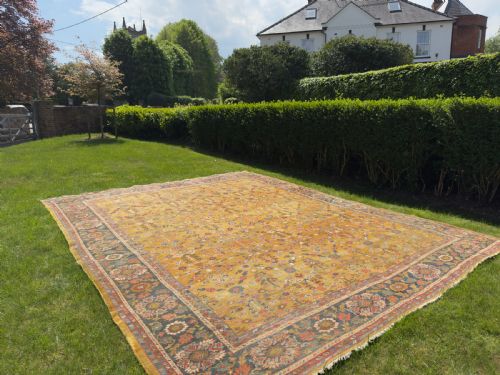


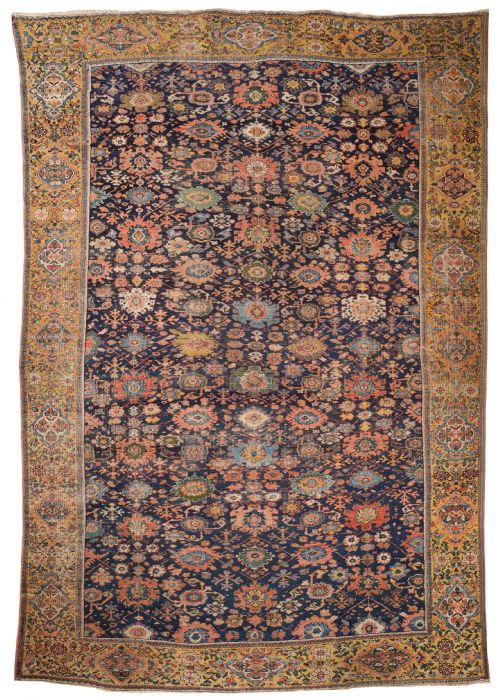


Yellow Persian Rug
A yellow persian rug brings warmth and deep heritage to a room through genuine wool and cotton hand-knotting.
Yellow Persian Rug
A yellow persian rug encompasses hand-knotted village and tribal carpets from centres such as Bidjar, Fereghan, and Heriz. These pieces display saffron, lemon, and golden grounds that brighten traditional interiors with rich historical character.
Buyers will encounter various formats ranging from square carpets to long hallway runners and smaller bagfaces. The selection includes Kurdish tribal examples alongside grand Oushak and Ziegler weaves.
Production spans from the mid-nineteenth century up to the early twentieth century, showing remarkable variety in scale and tribal ornamentation.
How they were made
Weavers constructed these carpets using hand-spun wool piled onto sturdy cotton foundations. Natural dyestuffs produced the characteristic yellow fields, varying from soft lemon to deep saffron tones.
Nomadic and village workshops utilised traditional upright looms and asymmetric or symmetric knotting techniques. Each rug developed distinct structural densities depending on its tribal origin and regional custom.
Yellow Persian Rug Retail Price Guide 2026
Typical asking prices for yellow persian rug among the pieces listed under this phrase on Sellingantiques today, from the lower quarter to the upper quarter. They describe what is for sale here now, not the wider market.
Listings feature wool and cotton carpets spanning from the mid-nineteenth century to the 1930s.
What varies in quality
The finesse of the knotting and the complexity of the design dictate the standing of an individual carpet. Finely woven Bidjar and Fereghan pieces demonstrate superior structural tightness compared to looser village rugs.
The depth and preservation of the yellow ground dye heavily influence the visual impact. Examples retaining vibrant saffron or mellow golden hues without excessive fading command greater appreciation.
The Yellow Persian Rug Glossary
- Bidjar
- A durable carpet originating from western Iran, known for dense knotting and robust wool foundations. These pieces often feature geometric motifs and heavy structures.
- Fereghan
- A Persian weaving style celebrated for finely executed classical designs on golden or dark fields. They represent high technical skill from central-west Iran.
- Kelleh
- A long, narrow carpet format traditionally used in Persian rooms as a middle-room rug. It sits between the proportions of a standard rug and a full runner.
- Heriz
- A north-west Persian carpet type distinguished by bold geometric medallions and durable wool. They are traditionally woven in the villages around Heris.
- Ground
- The main background colour of a rug field behind the primary medallions and motifs. In these pieces, the ground displays shades of yellow, lemon, or saffron.
Yellow Persian Rug: Frequently Asked Questions
How do I style a yellow persian rug?
Place the rug in living spaces or hallways where the warm ground colour can brighten neutral floors. Combine the piece with natural wood furniture to complement the wool textures.
Ensure high-traffic zones receive even placement so the pile wears uniformly across the carpet surface.
Are these rugs made from wool?
The pieces utilise hand-spun wool for the surface pile, providing both softness and resilience underfoot. Cotton typically serves as the foundation warp and weft.
This combination of materials ensures structural stability while maintaining flexibility in the woven body.
How do I identify a tribal rug?
Tribal rugs display geometric patterns, stylised shrub motifs, and asymmetrical designs rooted in regional weaving traditions. Village and nomadic makers relied on memory rather than formal cartoons.
Look for slight irregularities in the borders and minor shifts in colour that evidence hand-crafting.
How do I date an antique rug?
Examine the natural dye palette, wool quality, and structural wear to estimate the period of manufacture. Mid-nineteenth to early twentieth-century pieces show specific regional characteristics.
Archival records and comparative structures help narrow the decade of production for individual carpets.