

Yellow Oil Painting
When you search for a yellow oil painting, you find works spanning from the eighteenth century to the mid-twentieth century that use pigment to capture subjects from portraits to floral still lifes.
Yellow Oil Painting
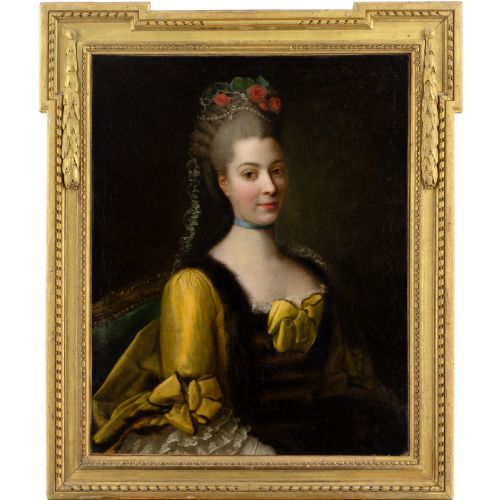
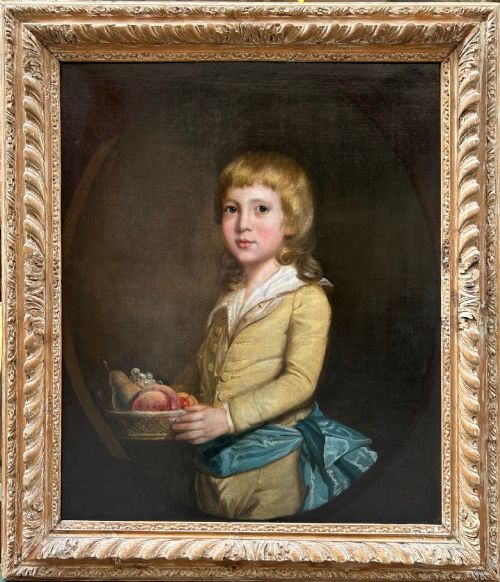
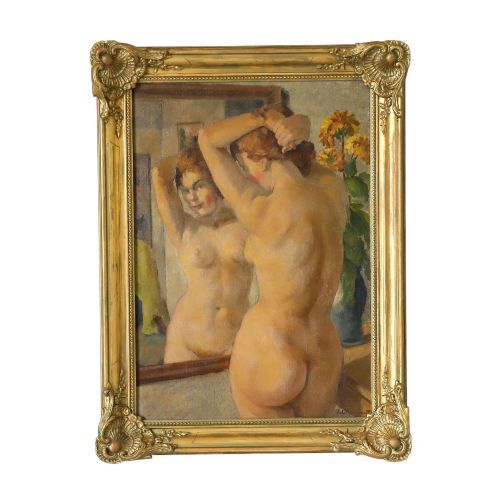
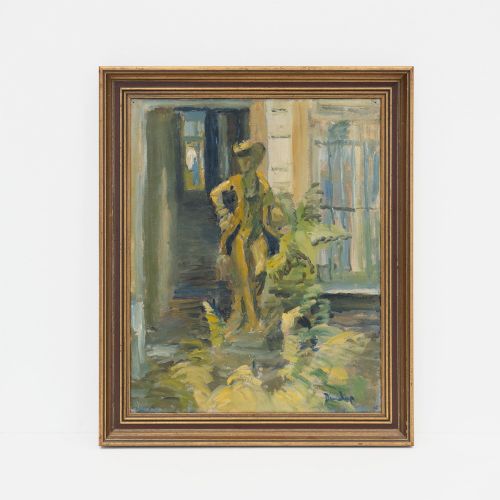
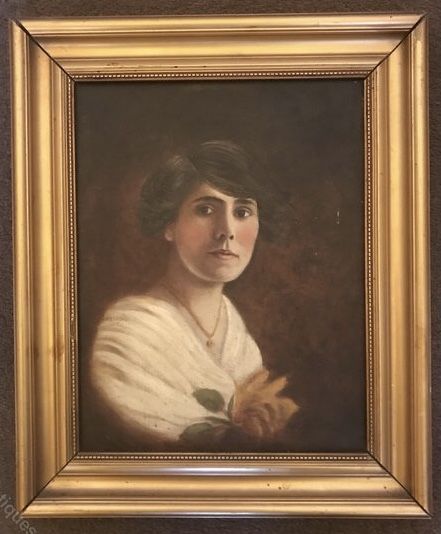
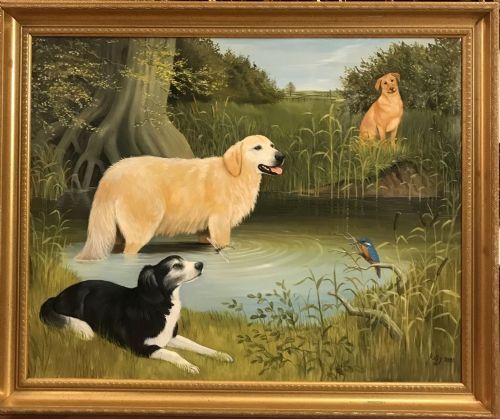
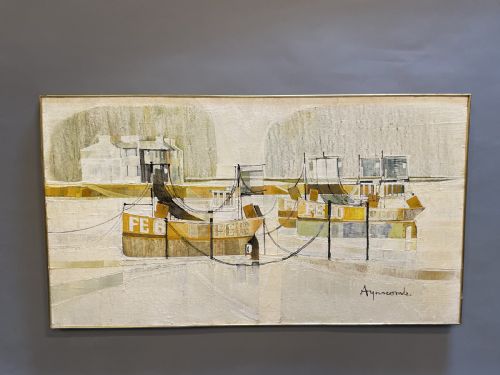
A yellow oil painting on this page typically takes the form of a framed canvas or board depicting portraits, landscapes, cityscapes, or still lifes. These artworks range from eighteenth-century French and British portraits to mid-century abstract and impressionist scenes.
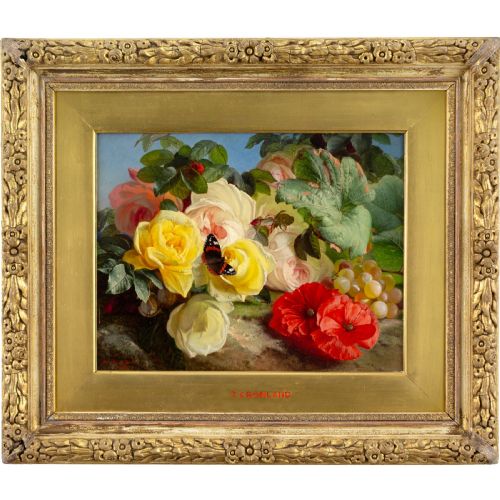
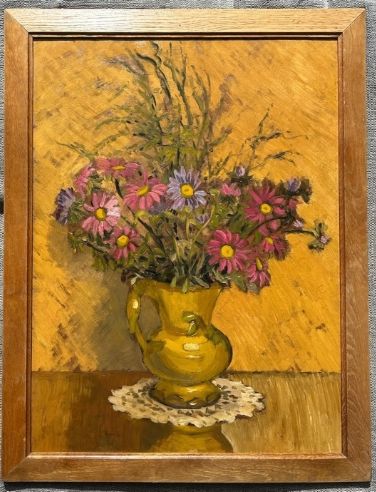
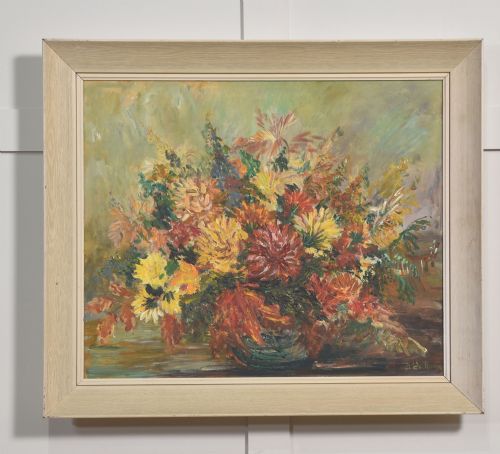
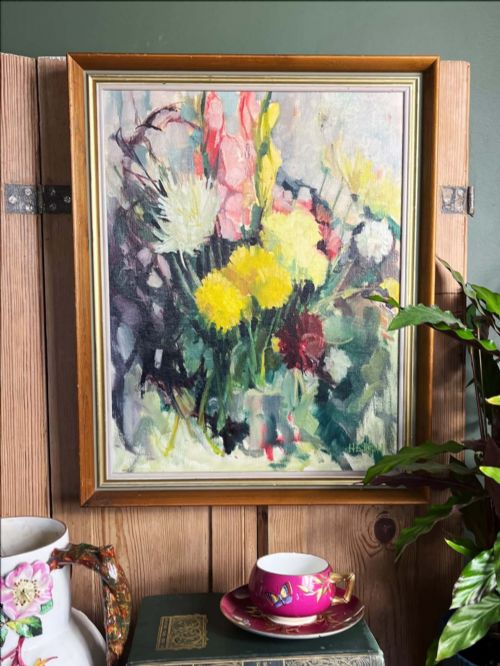
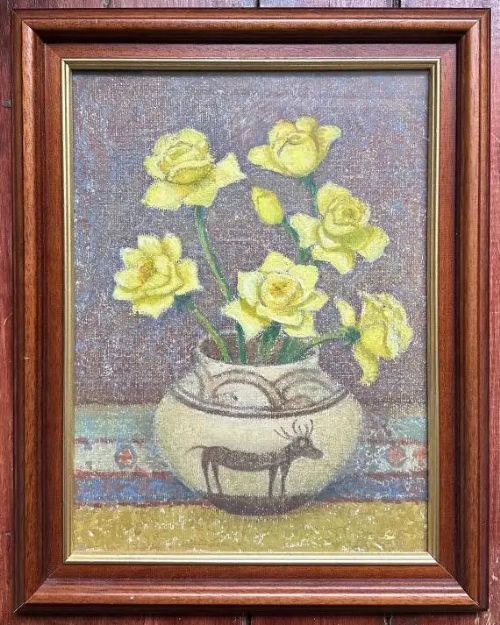
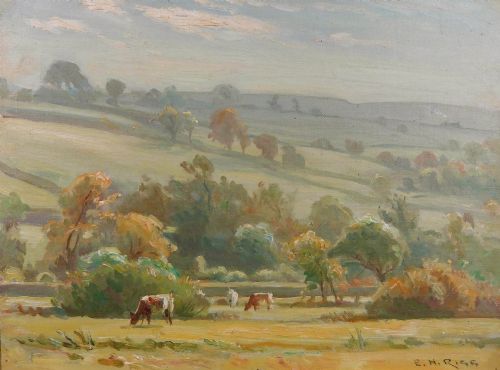
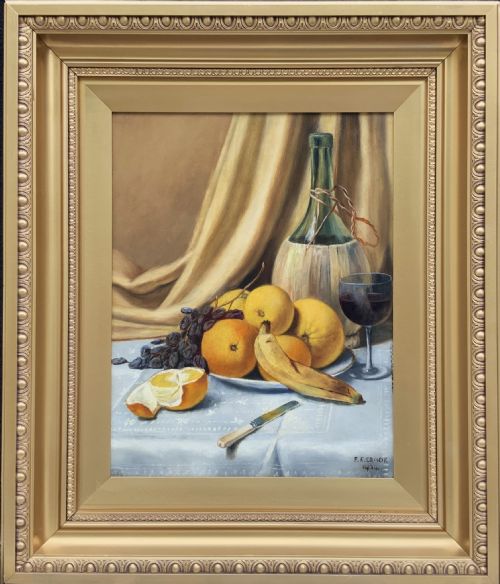
Floral studies dominate the still life selections, often displaying yellow roses, tulips, and gorse flowers arranged in vases or bowls. Landscape and cityscape works incorporate the colour within natural light, architectural facades, and skies across British, French, and Scandinavian schools.
How they were made
Artists utilise oil paint applied to stretched canvas, wooden boards, or paper surfaces, sometimes supported by gilt frames. The medium allows for thick impasto textures as well as delicate glazing layers to build depth of tone.
Supports vary from traditional woven canvas to rigid board, with many older pieces retaining their original wooden stretchers and decorative frames finished in gilt or painted details.
Listings feature oil paintings executed on canvas and board, spanning from the eighteenth century through to the mid-twentieth century.
What varies in quality
The standard of an oil painting rests on the confidence of the brushwork, the handling of light and shadow, and the depth of the composition. Masterful portraiture captures precise facial expressions and textile folds, while lesser works can appear rigid in proportion.
Condition plays a part in evaluation, as intact original surfaces without extensive overpaint retain more integrity. The quality of the framing and the reputation of the artist or school also differentiate standard decorative pieces from museum-calibre fine art.
Theude Grönland·Kenneth Cozens·Clifford Hanney·Thomas Beach·Emma Fordyce MacRae·Ernest Higgins Rigg·Philippe de Rougemont·Ronald Ossory Dunlop·Robert Alexander Hillingford·Gabriel Dauchot·Gino Severini·Amile Coppieters·Jean Sobieski·Sir Matthew Smith·Cecil R. Doyly-John·Robin MacKertich·Freda Marston·Jonathan Richardson the Elder·John Fitz Marshall·Jean Baptiste Discart·Sir Godfrey Kneller·William Greaves·Norman J. Battershill·Michael Dahl·Harry Barr
The Yellow Oil Painting Glossary
- Canvas
- A heavy woven fabric stretched across a wooden frame to serve as a painting support. It provides a flexible and durable surface for oil applications.
- Board
- A rigid flat panel made of wood or pressed material used as a base for paintings. Artists often select this surface for smaller studies and plein-air works.
- Impasto
- A technique where oil paint is laid thickly on a surface, standing out from the canvas. This method leaves visible brush or palette knife marks that catch the light.
- Still life
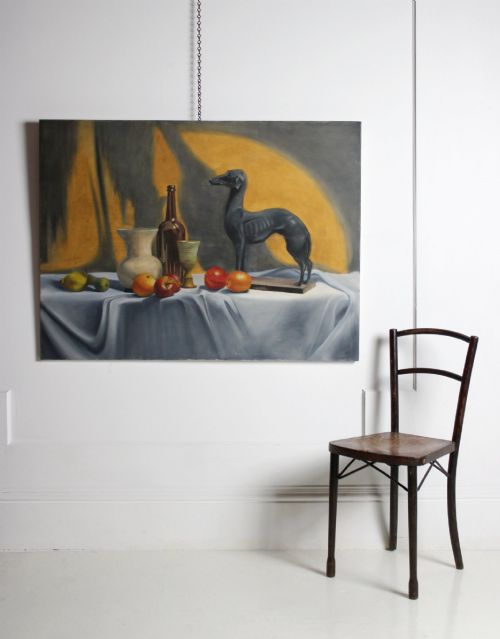
- A work depicting inanimate subject matter, typically everyday objects such as flowers, fruit, or vessels. These compositions focus on arrangement, lighting, and colour harmony.
- Gilt
- A thin layer of gold leaf or gold-coloured paint applied to frames and objects. It provides a decorative metallic finish that enhances the visual weight of the artwork.
Yellow Oil Painting: Frequently Asked Questions
What subjects appear in these paintings?
The subjects range widely across portraiture, floral studies, and architectural cityscapes. Many pieces focus on portraits of individuals wearing specific garments or holding flowers.
Other works concentrate on still lifes featuring vases of roses or tulips, alongside landscapes capturing French, British, and Scandinavian scenes.
How do I identify the period of an oil painting?
Dating relies on stylistic markers, the composition of the support materials, and framing techniques. Eighteenth-century works typically display formal portraiture conventions, while nineteenth-century pieces often reflect Victorian or Impressionist developments.
Mid-century examples show looser brushwork, abstract tendencies, or distinct impressionistic light effects associated with the 1950s and 1960s.
What is the difference between canvas and board?
Canvas is a woven textile stretched over a wooden frame, offering a slightly springy surface that absorbs oil paint in a characteristic manner. Board is a rigid, solid panel made of wood or compressed material.
Boards were frequently utilised for smaller studies, plein-air painting, and works where a smooth or firm foundation was preferred by the artist.
How should I care for an antique oil painting?
Oil paintings require stable environmental conditions away from direct sunlight, extreme humidity, and rapid temperature fluctuations. Dusting should be performed gently with a soft, dry brush without applying cleaning liquids.
Professional conservation should be sought for any structural repairs, canvas tightening, or varnish cleaning to avoid damaging the original pigment layer.