
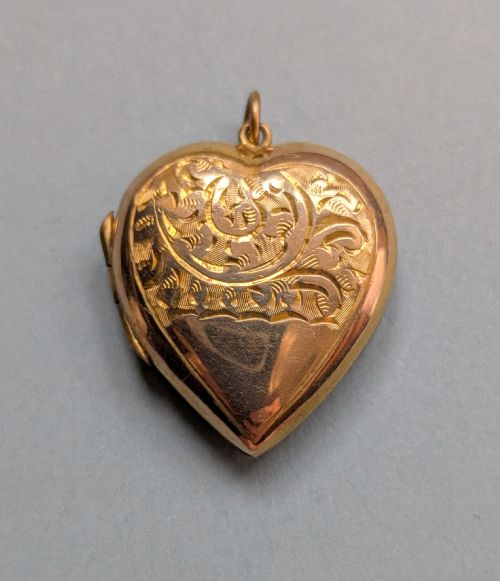


Yellow Gold Photo Pendant
A yellow gold photo pendant holds a miniature portrait or a lock of hair close to the heart inside a hinged precious metal case.
Yellow Gold Photo Pendant
A yellow gold photo pendant combines the utility of a miniature picture frame with the wearable art of a locket, functioning as a portable keepsake for portraits or locks of hair. When searching for a yellow gold photo pendant, buyers encounter pieces spanning the Georgian, Victorian, Edwardian, and Belle Epoque periods alongside mid-twentieth-century examples.
The forms range from simple round and heart-shaped lockets to complex book-style frames, pocket watch mimicries, and sunburst motifs. Many pieces incorporate glass panels to display photographs directly, while others conceal hinged compartments behind richly engraved or gemstone-set covers.
Origins stretch across British and French workshops, utilising high-carat yellow gold alongside nine-carat and rolled gold constructions. The pieces bridge jewellery and personal memory, serving as mourning tokens, love tokens, and family heirlooms.
How they were made
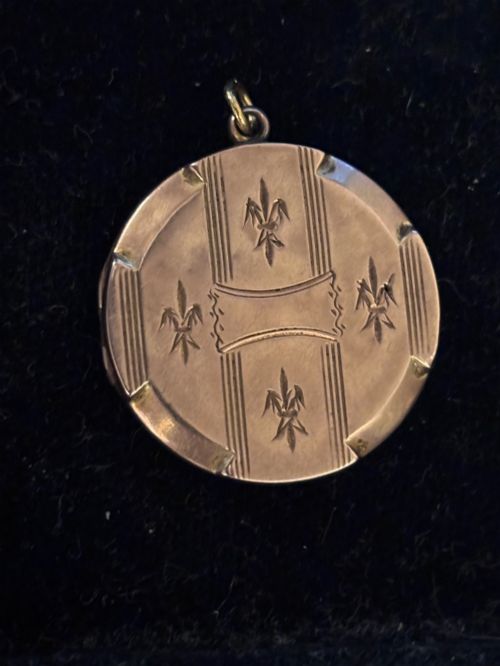
Craftsmen built these lockets primarily using nine, fifteen, and eighteen-carat yellow gold, occasionally employing rolled gold for larger multi-photo formats. Sheet metal was pressed, stamped, or hand-beaten into circular, oval, heart, and book shapes, then fitted with tiny integrated hinges and snap closures.
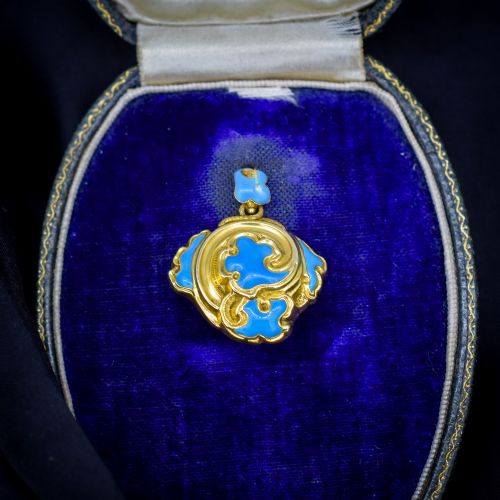
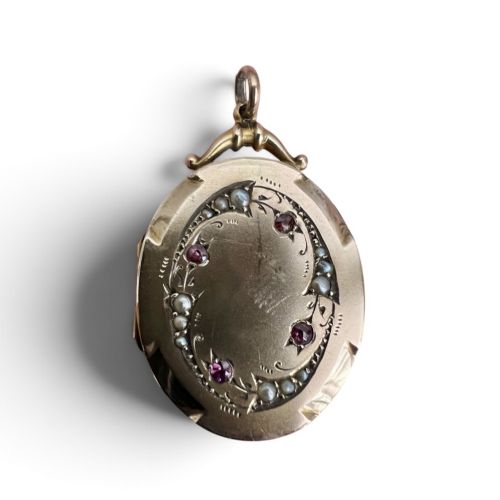
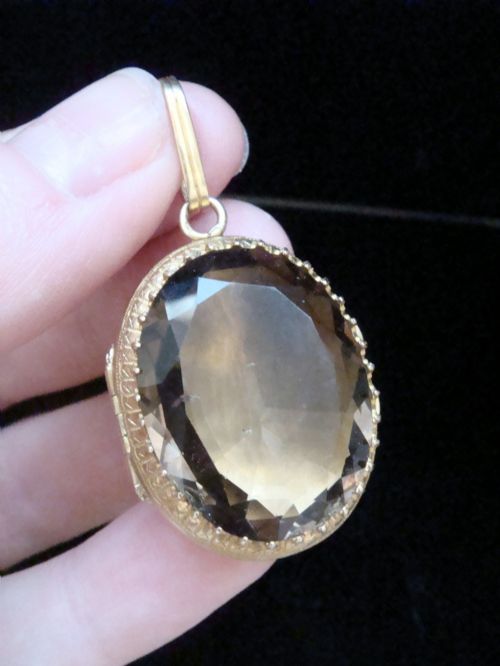
Surface ornamentation relied on hand engraving, engine-turned geometric patterns, and applied wirework or granulation. Gemstones such as diamonds, rubies, sapphires, turquoises, pearls, garnets, and citrines were star-set or bezel-set into the gold surface alongside black or blue enamel accents.
Interior compartments frequently featured glass panes held by tiny bezels to protect paper photographs or woven hair work. French pieces often incorporated faceted glass backs and hand-painted miniatures executed on ivory or card.
Materials across the selection range from nine-carat and eighteen-carat yellow gold to glass, enamel, pearls, and diamonds.
What varies in quality
The weight and purity of the gold dictate the foundational standard, moving from hollow nine-carat back-and-front constructions to solid eighteen-carat and high-carat French castings. Heavier gauge metal resists denting and maintains the structural integrity of the delicate hinge mechanism over decades of use.
The precision of the hand-engraving and the complexity of the decorative program set finer examples apart from mass-produced tourist pieces. Crisp engine-turning, deeply carved foliate motifs, and securely flush-set gemstones indicate superior benchwork by skilled goldsmiths.
The interior appointments reflect the maker's care, seen in well-fitted gold rim inserts, intact glass lenses, and secure snap closures that shut with a crisp click. Original components like matching gold chains and fitted presentation boxes elevate the historical completeness of the piece.
GALLIA
The Yellow Gold Photo Pendant Glossary
- Back and front
- A locket construction method where the front and back plates are made of precious gold while the internal rims and hinge components utilise a base metal or lower carat core for strength.
- Engine-turned
- A mechanical decoration technique utilising a rose engine lathe to cut intricate, precise geometric patterns into the gold surface.
- Mourning locket
- A piece designed to memorialise a deceased loved one, frequently incorporating braided human hair, black enamel, or pearls under glass.
- Bezel
- A collar of metal that holds a gemstone or glass cover in place by being pushed or rubbed over the edge of the stone.
- Star setting
- A method of embedding a small diamond or gemstone flush into the gold surface with hand-engraved star rays radiating outward from the stone.
Yellow Gold Photo Pendant: Frequently Asked Questions
How do I open an antique yellow gold photo pendant?
Most antique pendants feature a small thumbnail catch or a tiny hinge opposite the spine. Press gently on the release point with a fingernail rather than prying with metal tools to avoid damaging the gold rim.
Older lockets can become stiff from accumulated dirt or dried oils inside the hinge mechanism. A professional jeweler can clean the joint safely without distorting the gold plates or cracking internal glass frames.
Can I put modern photographs inside these lockets?
Standard modern photographic paper is usually too thick and stiff to fit behind the original glass inserts. You will need to trim thin paper prints carefully to match the exact interior dimensions of the frame.
Many collectors use a scanner and printer to reproduce modern portraits onto thin archival paper stock. This preserves the original aesthetic while allowing you to personalize the locket with contemporary family images.
How do I date a yellow gold photo pendant?
Stylistic clues offer the most reliable dating method for these pieces. Georgian and early Victorian examples often feature engine-turned details and hair work, while Belle Epoque pieces favour platinum-topped gold, diamonds, and delicate openwork.
Hallmarks stamped on the bail or interior rim provide definitive maker marks and assay office dates. However, many antique lockets carry only partial marks or generic gold purity stamps due to their small size.
Are these pendants suitable for daily wear?
Solid gold examples from the Victorian and Edwardian eras are durable enough for regular wear if treated with reasonable care. Lockets marked back and front require more caution to protect the internal core from moisture.
Remove the pendant before swimming, showering, or engaging in heavy physical work to protect the delicate hinges and glass panels. Regular checks by a jeweler ensure the suspension loop and jump rings remain secure.