




9ct Yellow Gold Locket
These 9ct yellow gold locket pieces are sentimental personal keepsakes designed to hold miniature portraits or locks of hair near the heart.
9ct Yellow Gold Locket
A 9ct yellow gold locket search brings forward hinged pendants, charms, and brooches created to carry personal photographs or mementos. The pieces encountered on this page span several eras, with Victorian and Edwardian examples appearing alongside mid-century and later vintage items.
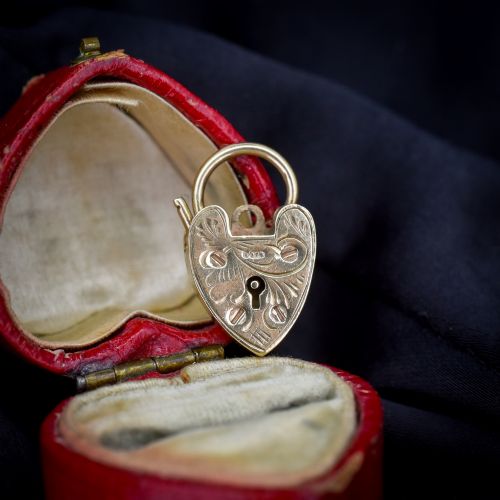
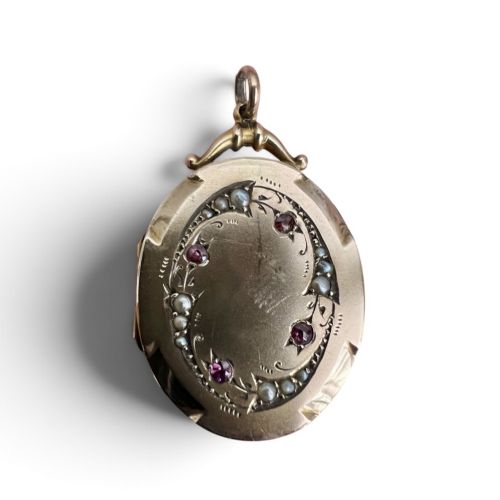
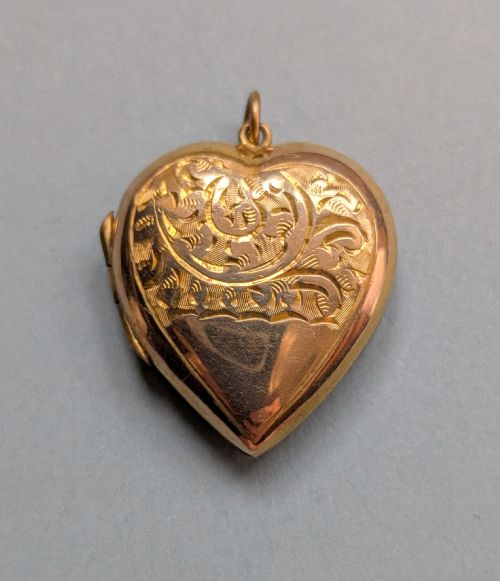
Heart shapes, round forms, and oval profiles dominate the selection, often accompanied by elaborate hand-engraved foliate patterns, engine-turned detailing, or applied gemstone motifs. Certain items utilise a glass-faced shaker format or double-sided picture frames, while others rely on a gold back and front construction.
Materials and construction methods
Jewellers shaped 9ct gold and 9ct yellow gold into hollow pendant shells, often employing stamping, casting, and hand-chasing techniques to achieve ornate relief surfaces. Engine-turned decoration required specialised machinery to cut precise geometric patterns into the metal before hand engraving added further botanical or scroll motifs.
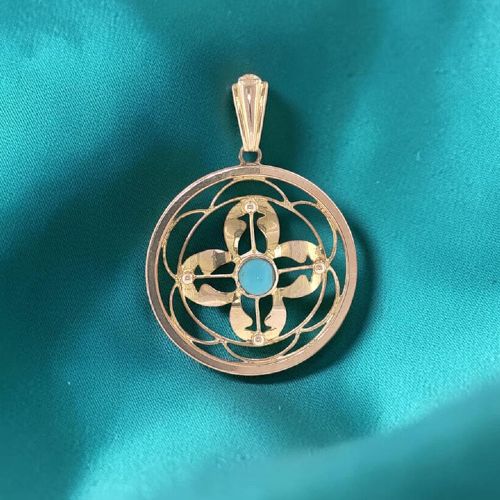
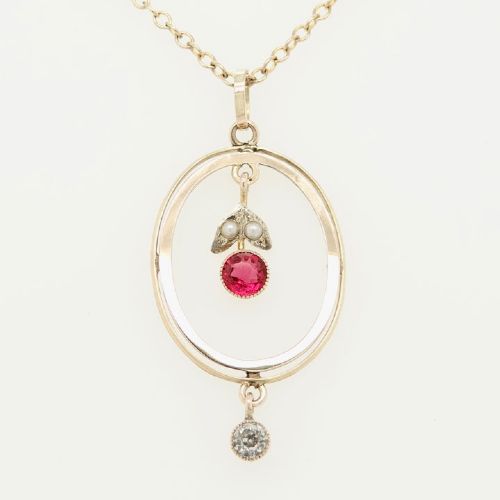
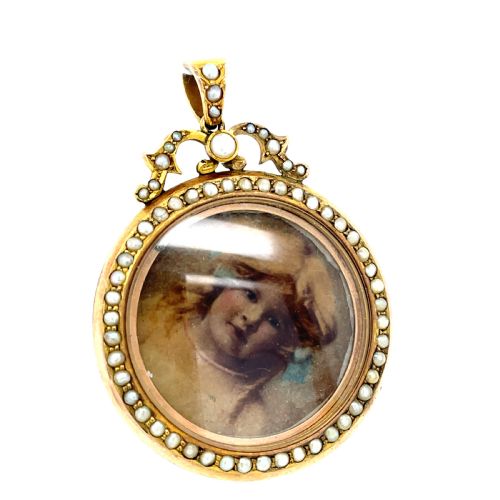
Gemstones such as seed pearls, turquoise, rubies, amethyst, and paste glass were flush-set or mounted in collets to accent the gold work. Gold back and front constructions utilised two thin sheets of solid 9ct gold fused to a base metal core, providing the appearance and wear layer of solid gold with structural rigidity.
Tiny glass shaker lockets trap loose seed pearls against the pane like miniature snow globes meant to be worn.
Factors determining the calibre
The sophistication of the hand engraving and the crispness of the engine-turned detail distinguish exceptional pieces from standard production work. Superior items display deep, deliberate cuts and well-defined floral or geometric borders that retain their sharpness over decades of handling.
The integrity of the internal hinge and snap closure dictates the mechanical quality of a piece, ensuring the compartment stays securely shut. Additionally, the presence of original glass inserts, complete photo frames, and intact gemstone arrangements elevates the completeness and craftsmanship of the locket.
Murrle Bennett
The 9ct Yellow Gold Locket Glossary
- Gold back and front
- A method of construction where thin plates of solid gold are applied to a base metal core. This technique provided affordable volume for larger pendants without excessive weight.
- Engine-turned
- A decorative technique involving precise geometric patterns mechanically cut into metal. It creates repetitive, textured backgrounds that catch the light.
- Seed pearl
- Very small, natural or saltwater pearls traditionally used in delicate clusters. They are frequently sewn or pegged onto gold settings in Victorian and Edwardian jewellery.
- Shaker locket
- A double-sided glass-fronted pendant containing loose decorative elements that move freely. These items allow miniature charms or pearls to shift within the transparent compartment.
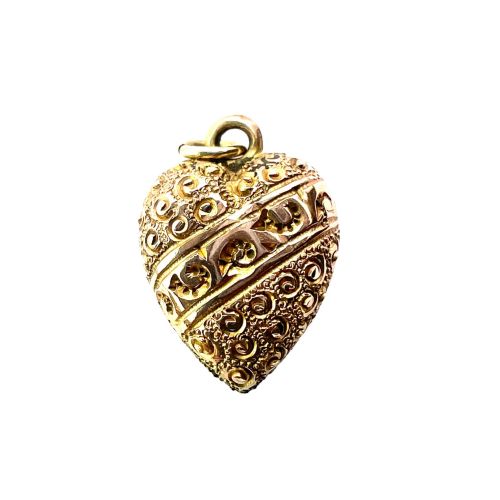
- Puffy heart
- A volumetric, three-dimensional heart pendant formed from two convex stampings soldered together. This hollow form maximises visual presence while keeping the weight manageable for a chain.
9ct Yellow Gold Locket: Frequently Asked Questions
What periods do these lockets come from?
The pieces span the nineteenth and twentieth centuries, encompassing Victorian, Edwardian, and Georgian eras alongside 1940s, 1950s, and 1960s vintage items.
Design characteristics and hallmarks help distinguish the nineteenth-century examples from later mid-century revivals.
How were old lockets worn?
Victorian and Edwardian wearers suspended these pendants from delicate gold chains around the neck, or pinned them directly to garments as brooches.
Some iterations double as charm pendants or hang from heavy chatelaines and charm bracelets.
What do gold back and front pieces mean?
This term indicates that the exterior visible surfaces are solid 9ct gold while the internal structure relies on a base metal core for support.
It allowed makers to produce larger, lightweight pendants during the Victorian and Edwardian periods.
Can I put modern photographs inside?
Most antique and vintage lockets open to reveal interior compartments intended for miniature paper photographs or fabric mementos.
Trimming modern pictures to fit the curved or oval frame allows you to carry personal photographs inside the original bezels.
What gemstones appear on these lockets?
Seed pearls, turquoise cabochons, rubies, amethysts, and paste glass frequently accent the gold work on these pieces.
Jewellers utilised these stones in star motifs, floral clusters, and borders to add colour and texture to the metal.