





Yellow Gold Garnet Ring
A yellow gold garnet ring brings deep red fire and warm golden metal together, from Victorian flower clusters to vintage dress designs.
Yellow Gold Garnet Ring
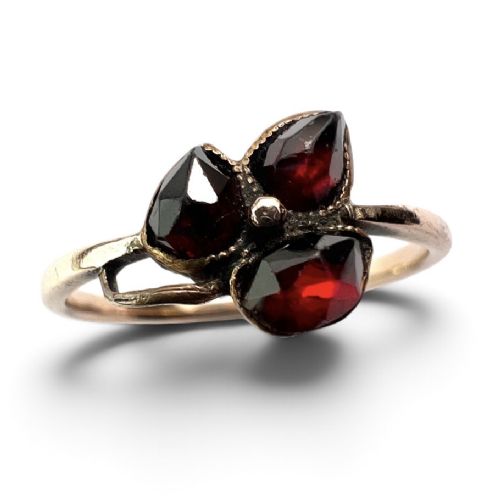
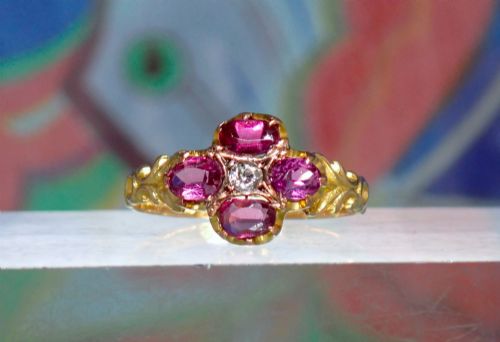
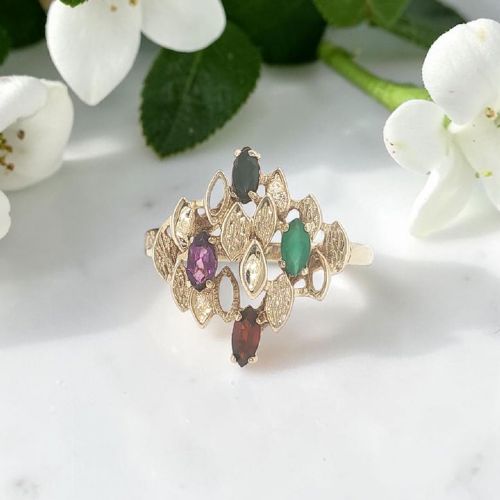
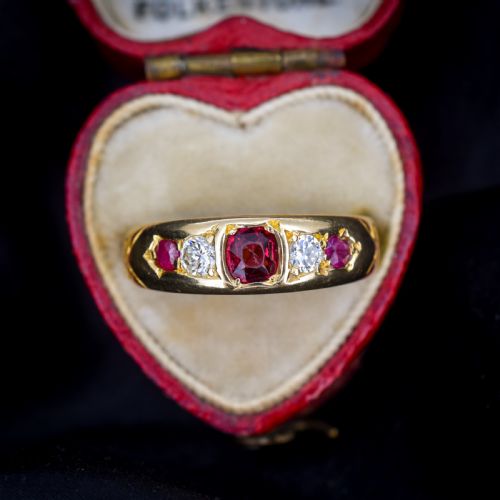
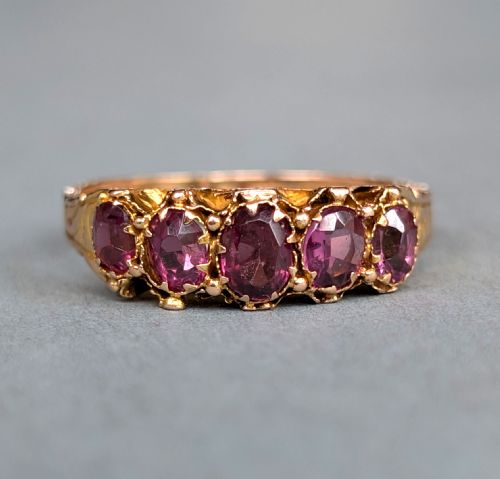
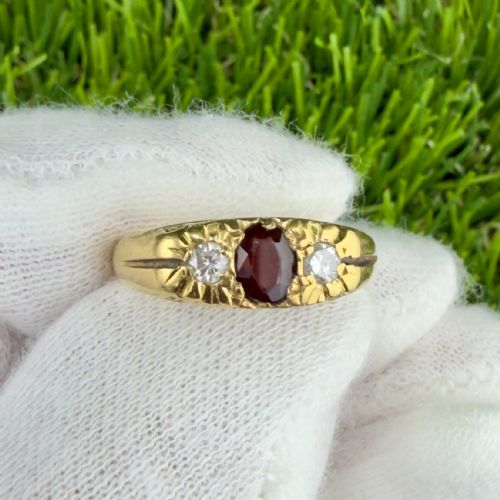
A yellow gold garnet ring spans multiple periods, bringing together the deep crimson stones characteristic of Victorian and Edwardian periods with the heavier yellow gold settings of the mid-twentieth century. Buyers seeking this phrase encounter cluster designs, flower motifs, and simple multi-stone bands that showcase the natural variety of the garnet family.
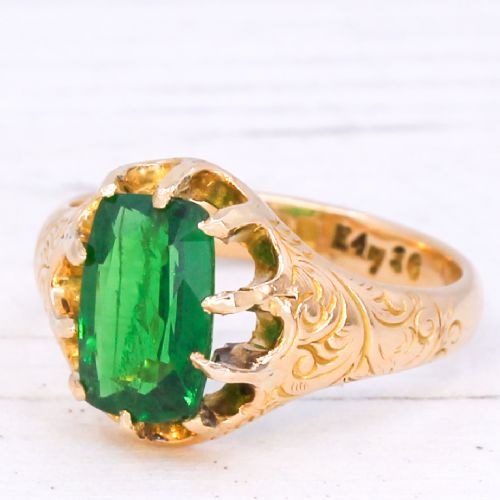
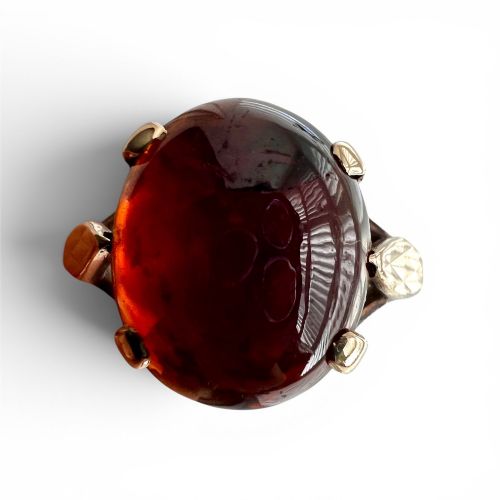
The versions most commonly met on this page range from nineteenth-century almandine garnet and diamond combinations to later vintage pieces featuring cabochon cuts and tsavorite stones set in nine carat or eighteen carat gold. These rings serve as enduring examples of how jewellers balanced rich red gemstones with warm yellow metal across successive decades.
How they were made
Garnets are set into nine carat, fifteen carat, and eighteen carat yellow gold, often accompanied by supporting diamonds, seed pearls, or alternative gems in cluster and trilogy arrangements. Goldsmiths utilised traditional claw and bezel settings to secure the stones while maximising the passage of light through the red garnet material.
Makers shaped the yellow gold into delicate floral wirework during the Victorian era and transitioned to bolder cast and banded mounts in later vintage periods. The combination of durable gold alloys and securely mounted garnets ensured these rings survived daily wear across generations.
Listings feature yellow gold garnet rings spanning the Victorian era through to the nineteen-sixties, incorporating diamonds, seed pearls, and green tsavorite stones.
What varies in quality
The intricacy of the supporting work, such as integrated diamond clusters or detailed seed pearl arrangements, elevates the standard of a piece. Superior construction ensures that individual settings remain robust and stones are held flush without movement.
The Yellow Gold Garnet Ring Glossary
- Almandine Garnet
- A deep red variety of garnet rich in iron and aluminium. It provides the dark crimson tone seen in many antique rings.
- Cluster Ring
- A ring style featuring a central stone surrounded by a grouping of smaller gems. This arrangement maximises surface brilliance.
- Cabochon
- A gemstone cut with a smooth, rounded, convex top rather than faceted planes. This technique is often used for opaque or deeply coloured stones.
- Seed Pearl
- A very small natural pearl used in historical jewellery. They frequently accent garnet clusters in Victorian and Edwardian designs.
- Trilogy Ring
- A ring set with three stones representing the past, present, and future. These often combine garnets with flanking diamonds.
Yellow Gold Garnet Ring: Frequently Asked Questions
How do I care for my yellow gold garnet ring?
Garnets have a moderate hardness and benefit from gentle cleaning with warm soapy water and a soft brush. Avoid harsh chemical cleaners and ultrasonic baths that might damage softer stones or pearls in clustered settings.
Store the ring in a fabric-lined box away from harder gems to prevent scratching the yellow gold band. Regular checks by a jeweller will ensure the claws remain secure.
Are all these rings solid gold?
The pieces listed utilise various gold purities, including nine carat, fourteen carat, fifteen carat, and eighteen carat yellow gold. Hallmarks where present help verify the metal standard used by the maker.
Solid gold construction ensures the metal can be resized and polished over time without losing its warm colour. Different carat weights offer varying levels of durability and depth of hue.
What is the difference between almandine and tsavorite garnets?
Almandine garnets provide the traditional deep red and brownish-red tones associated with antique jewellery. Tsavorite garnets offer a vivid green colour that appears in specific Edwardian and later dress rings.
Both belong to the garnet mineral group despite their contrasting colours. Their presence demonstrates the wide geological variety encompassed within the same stone family.
How can I tell a Victorian garnet ring from a vintage one?
Victorian examples often feature intricate floral motifs, claw-set almandine stones, and higher gold purities such as fifteen carat. They frequently incorporate seed pearls and delicate wirework typical of nineteenth-century workshops.
Vintage and mid-century pieces tend to utilise heavier nine carat gold bands, simpler cluster layouts, or alternative cuts like cabochons. Hallmarks and stylistic markers help establish the specific decade of manufacture.